Posted on Leave a comment

Expanded Barnet Medieval Festival promising another premier event for Wars of the Roses re-enactors and spectators

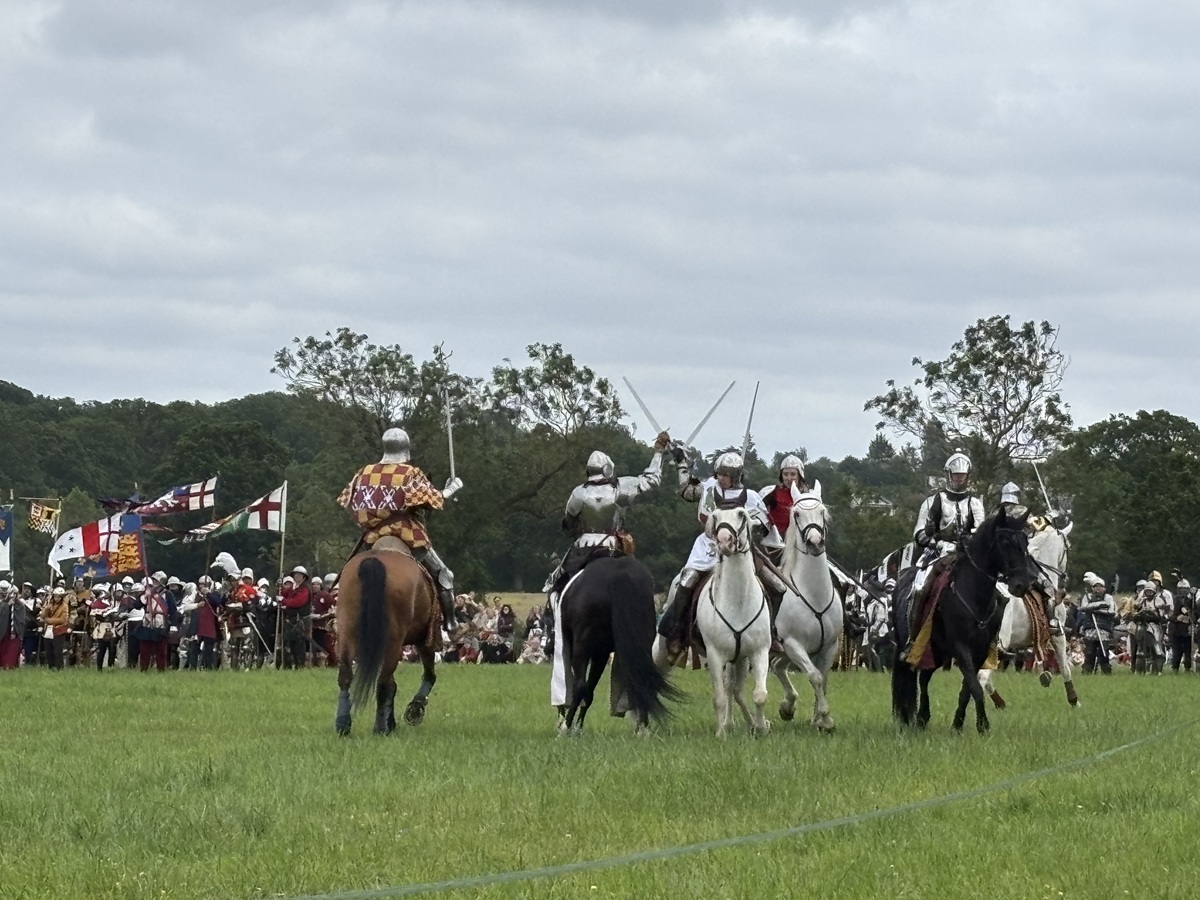
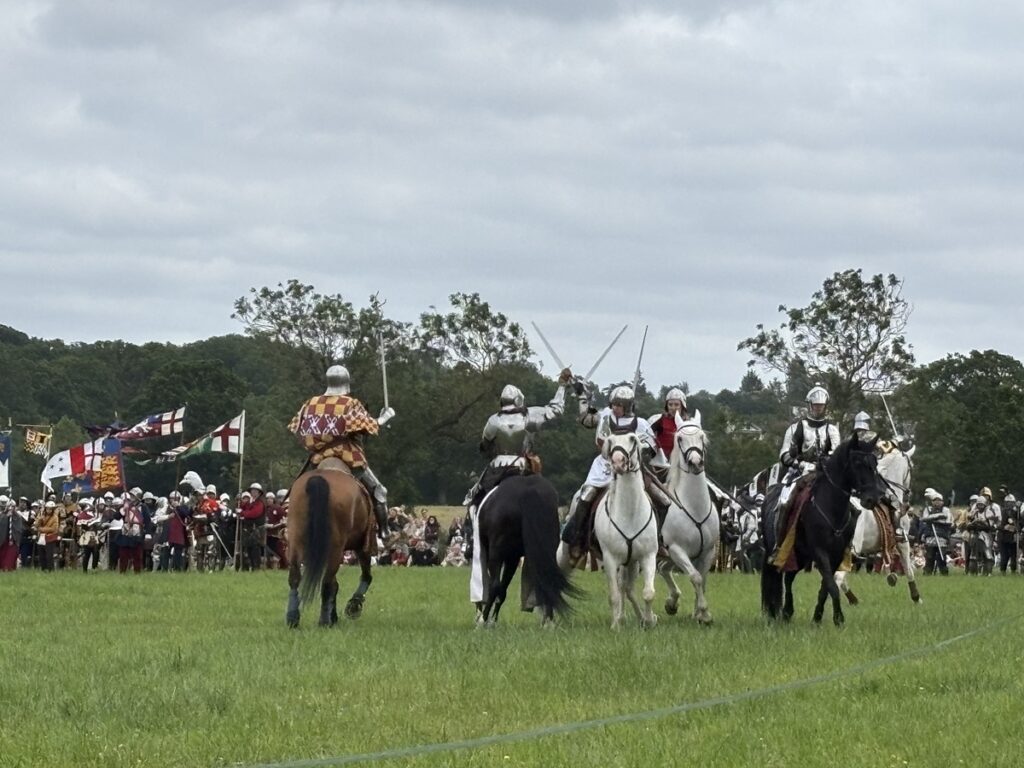
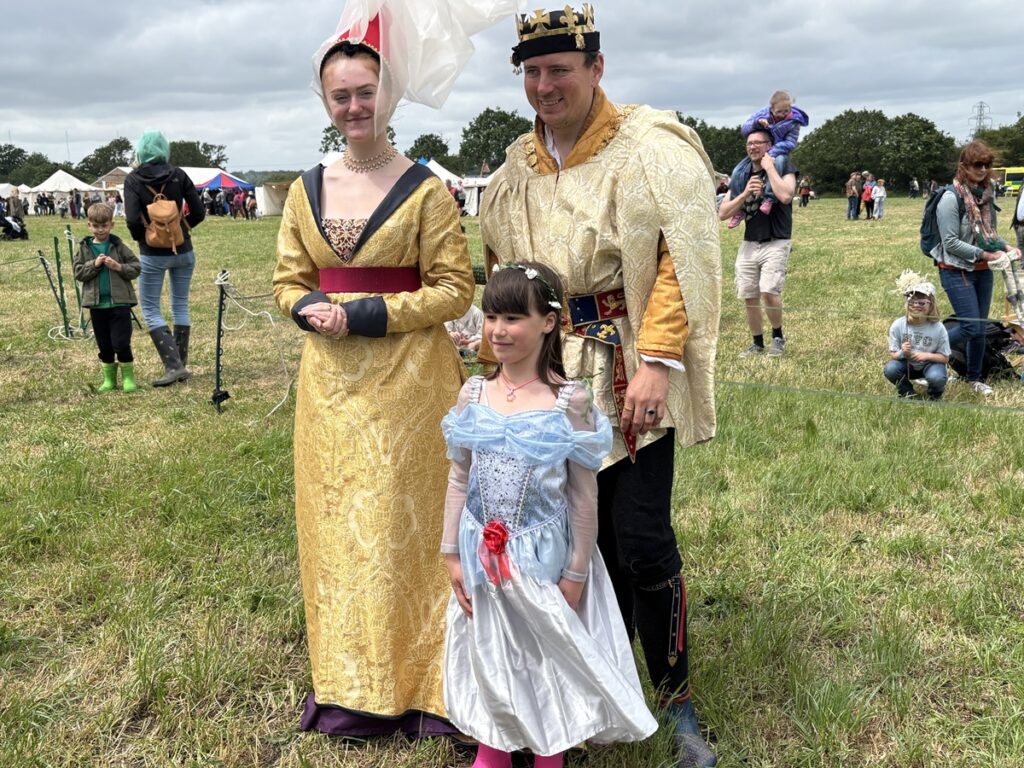
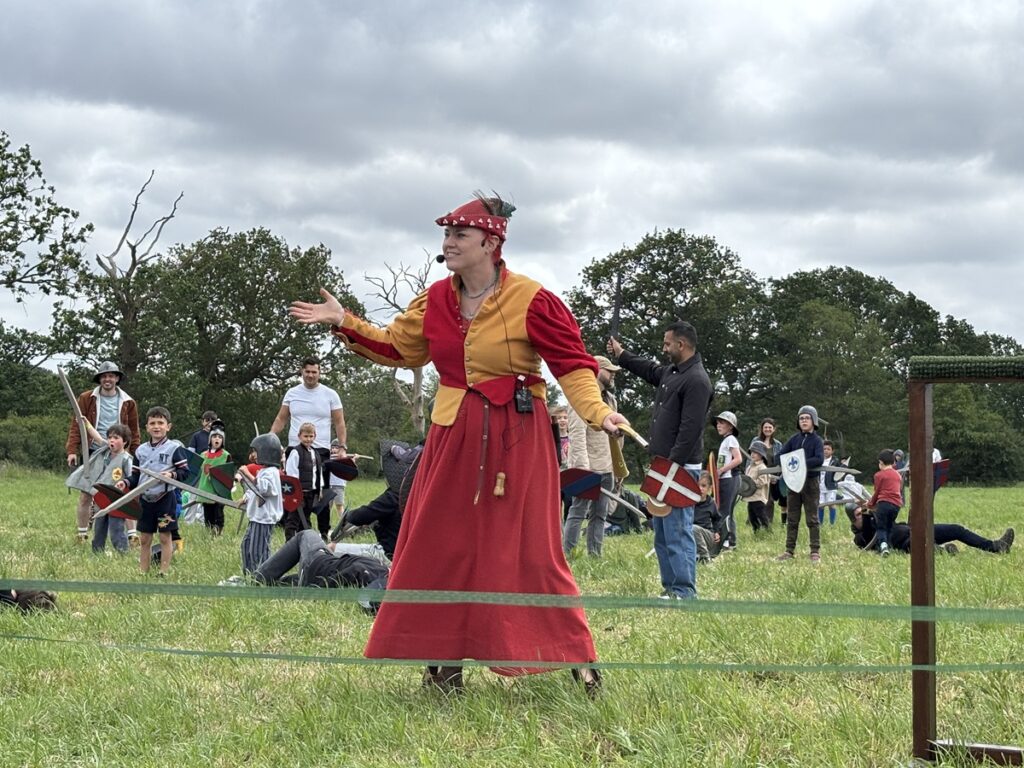
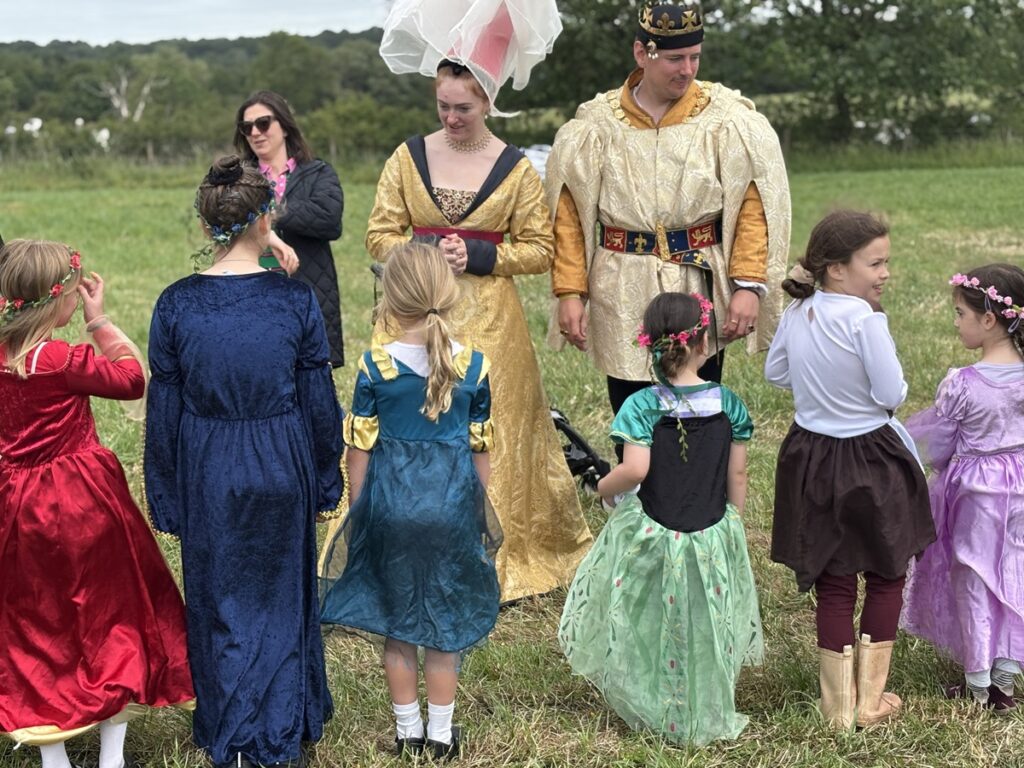
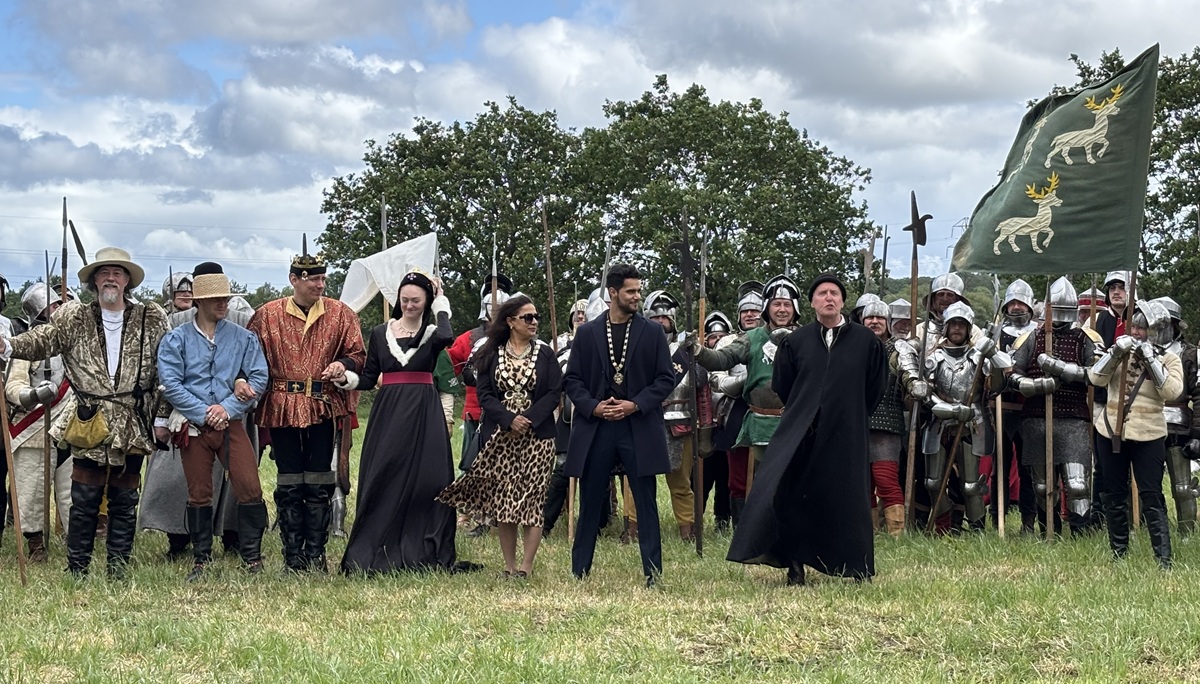
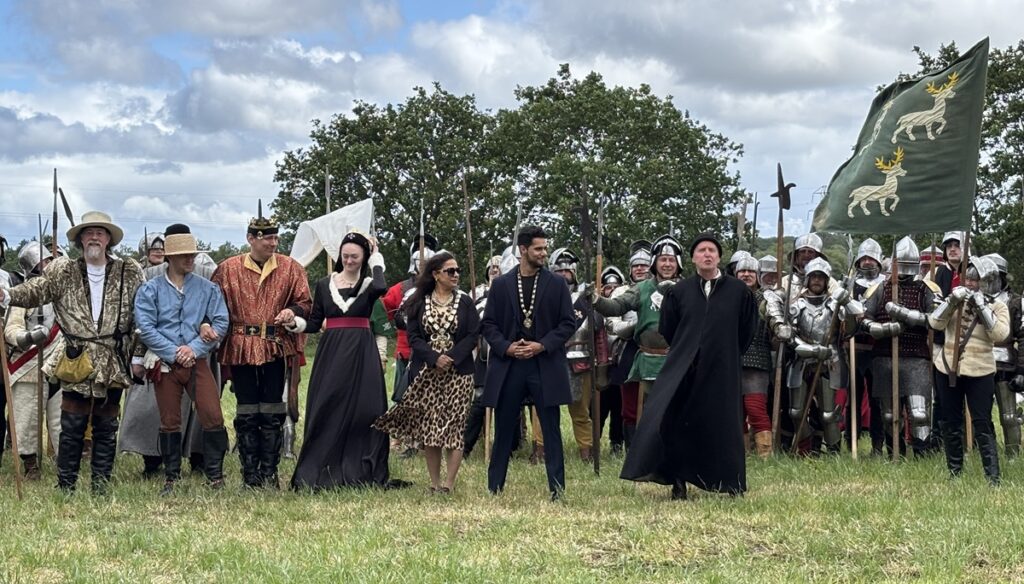
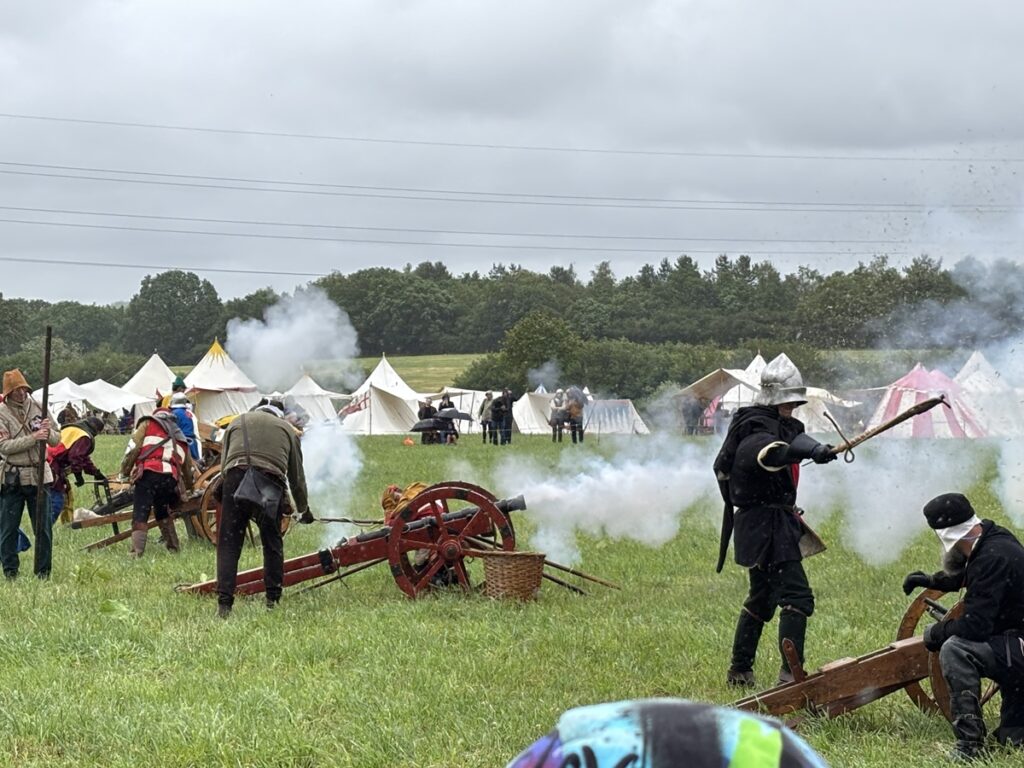
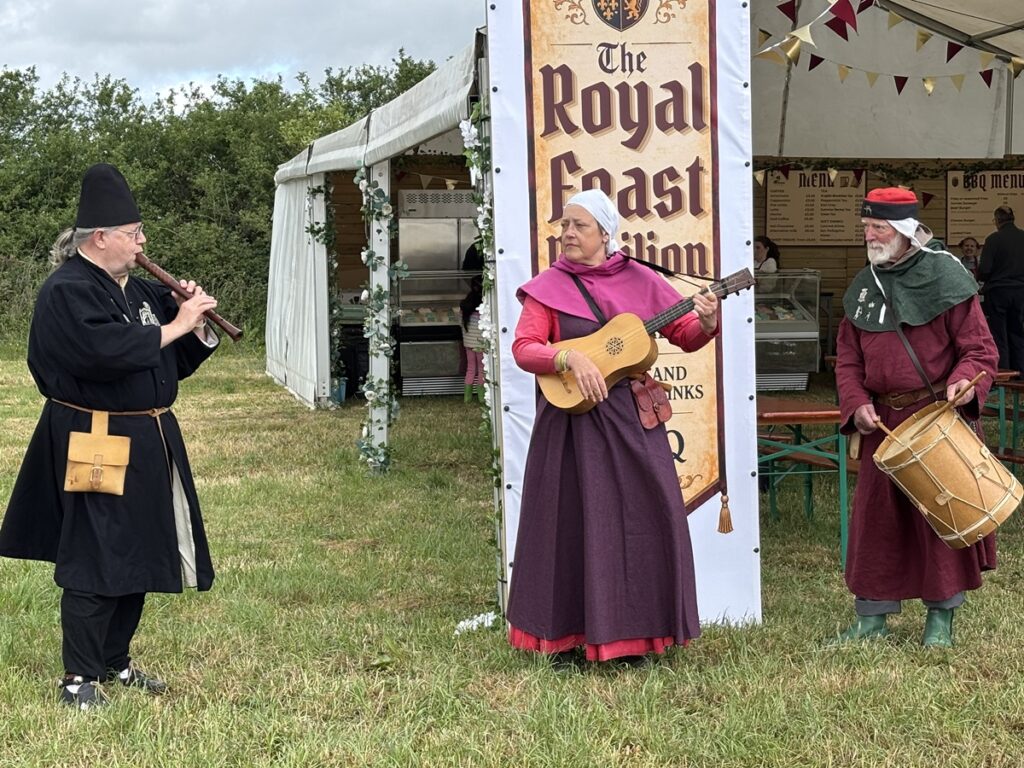
Expanded programme planned for Barnet Medieval Festival with more mounted men at arms, a falconry display and competition for youngsters in period costomes and fancy dress

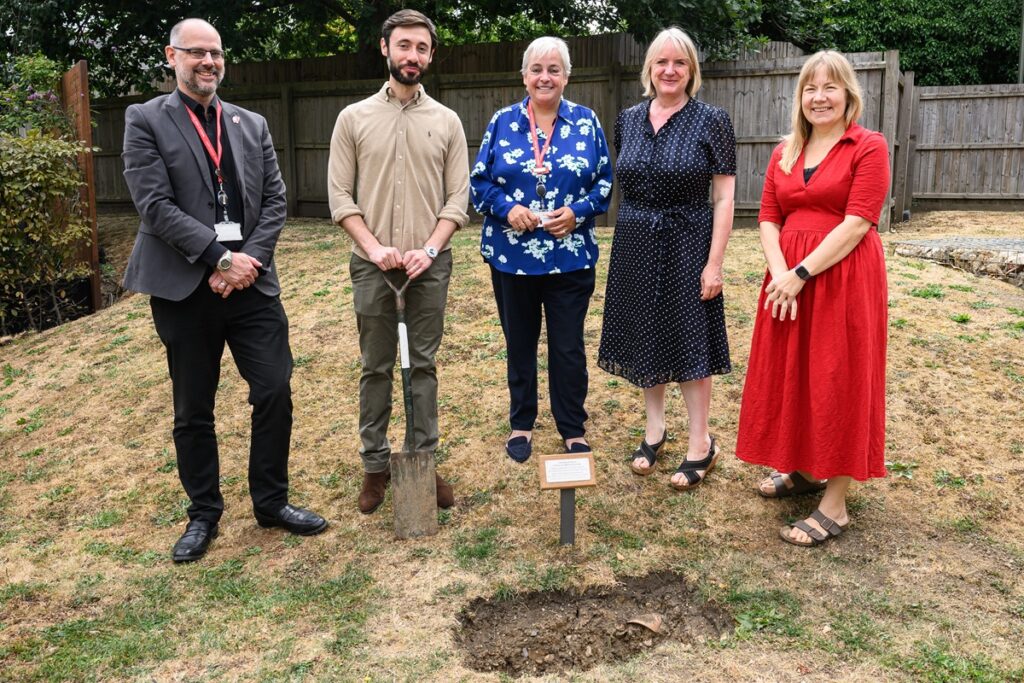
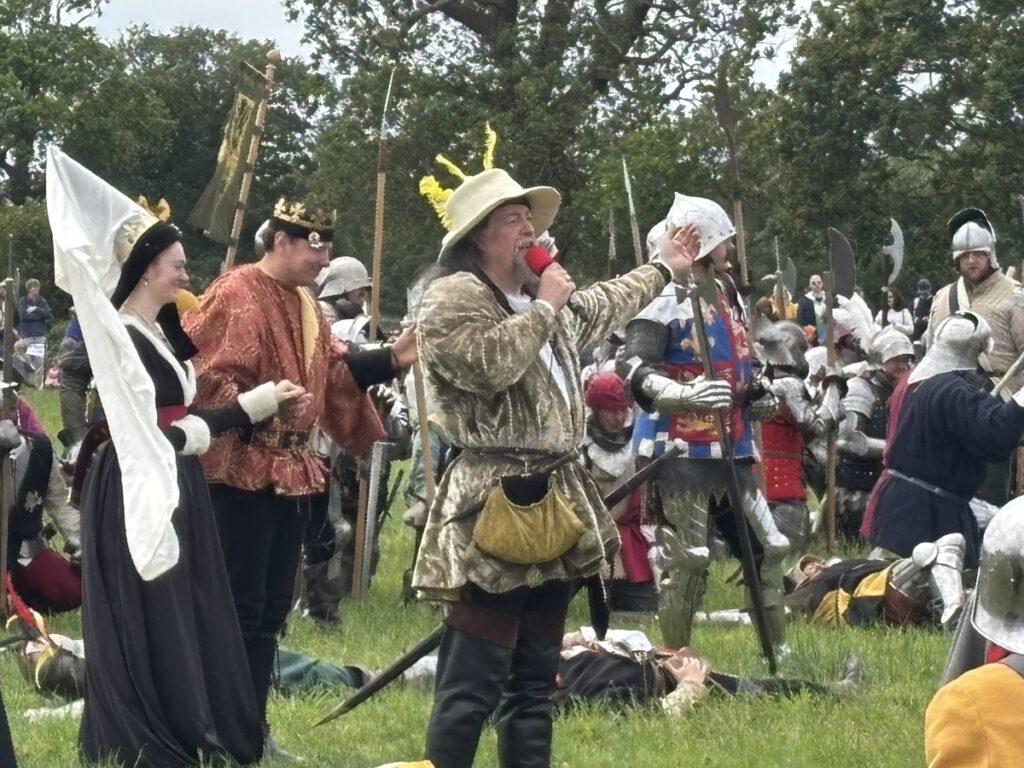
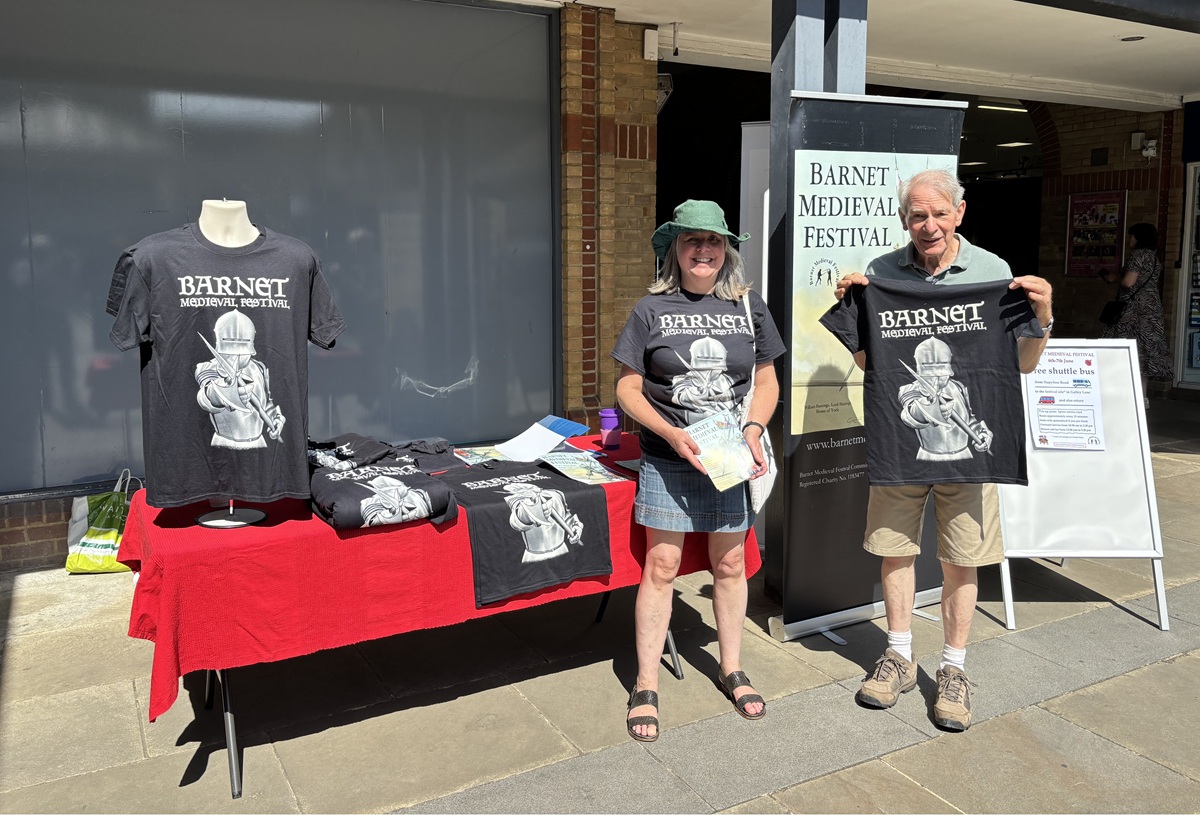
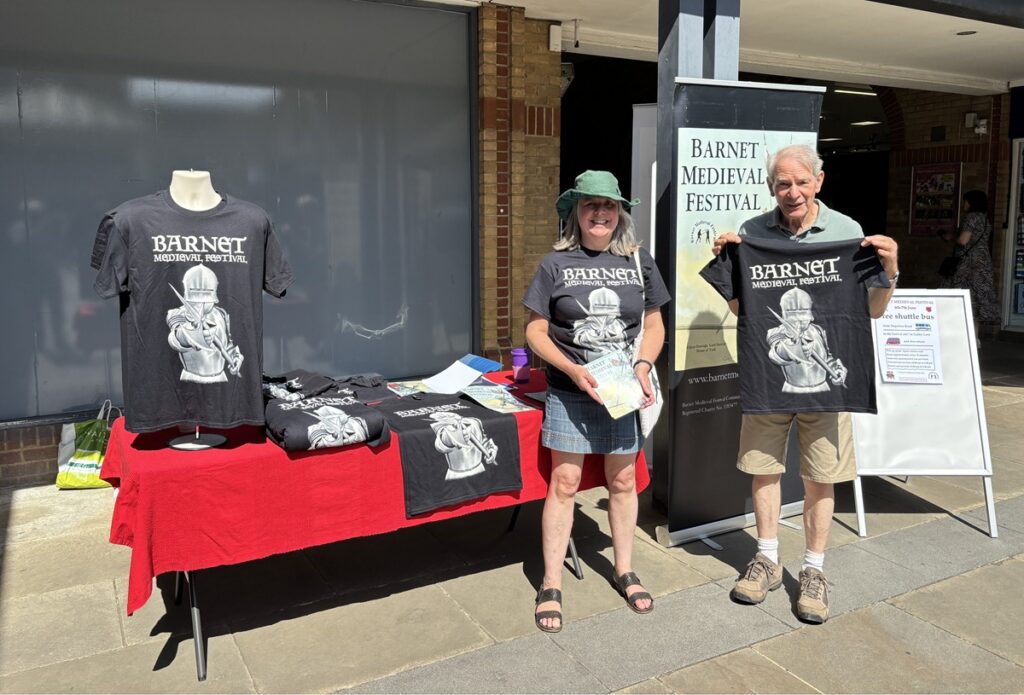
A new tee shirt commemorating the 555th anniversary of the Battle of Barnet will be on sale at the annual Barnet Medieval Festival over the weekend, on Saturday and Sunday June 6 and 7.

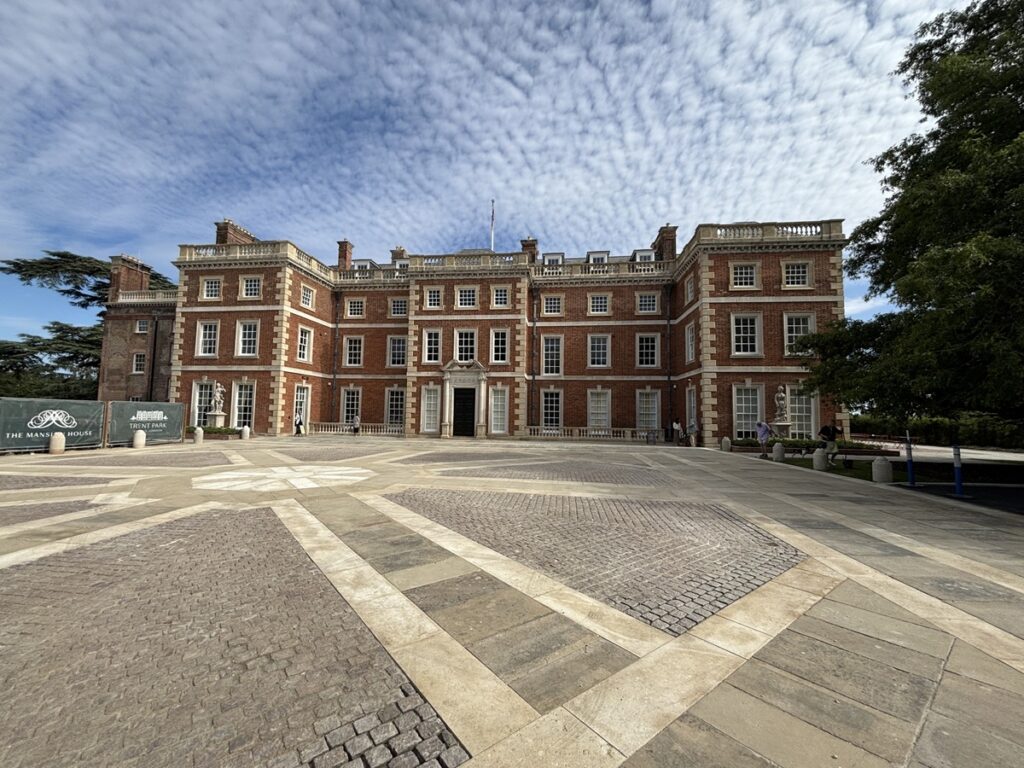
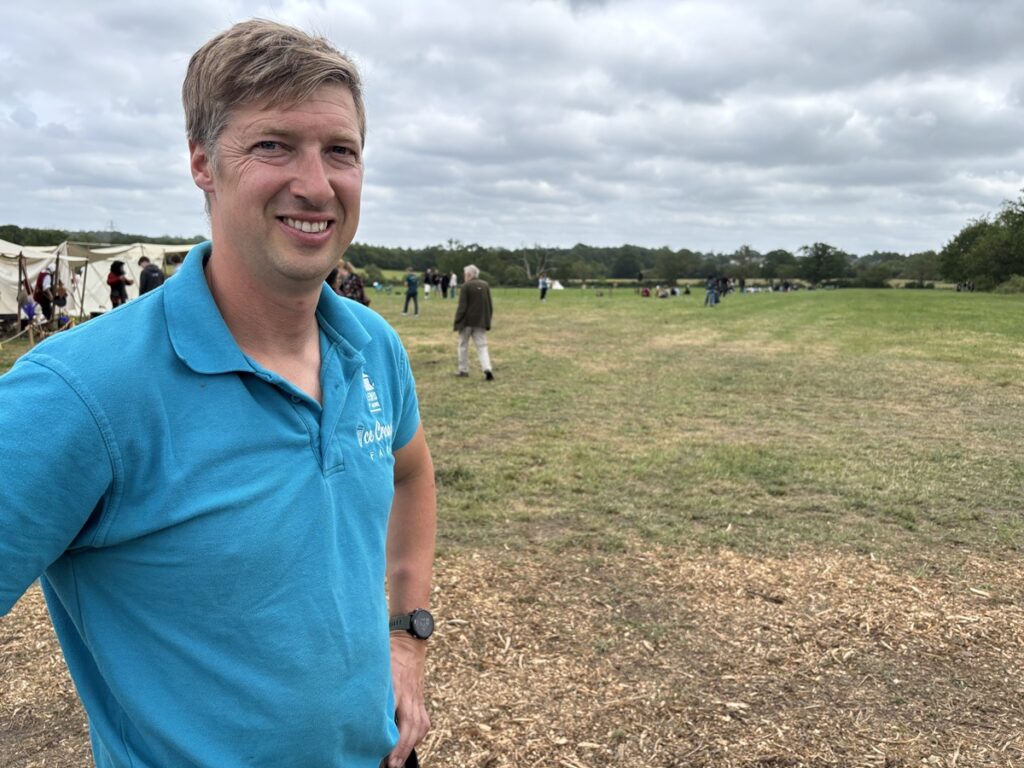
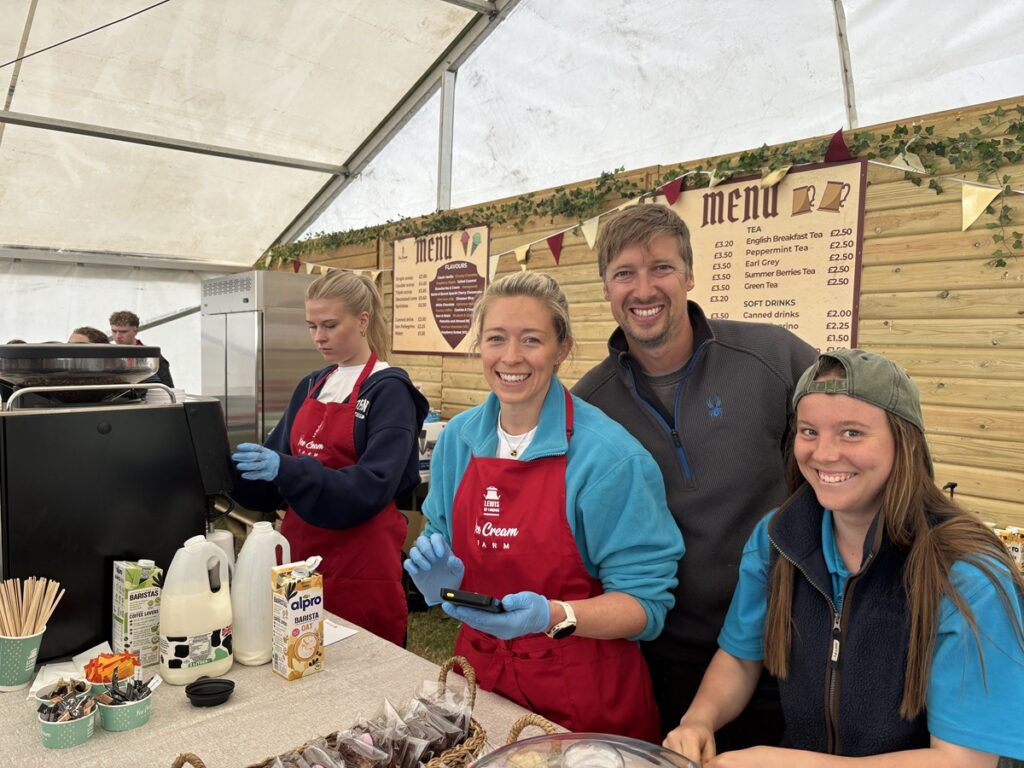
For the second year the festival is being held at its new and much larger site in the fields around the Lewis of London Ice Cream Farm in Galley Lane.

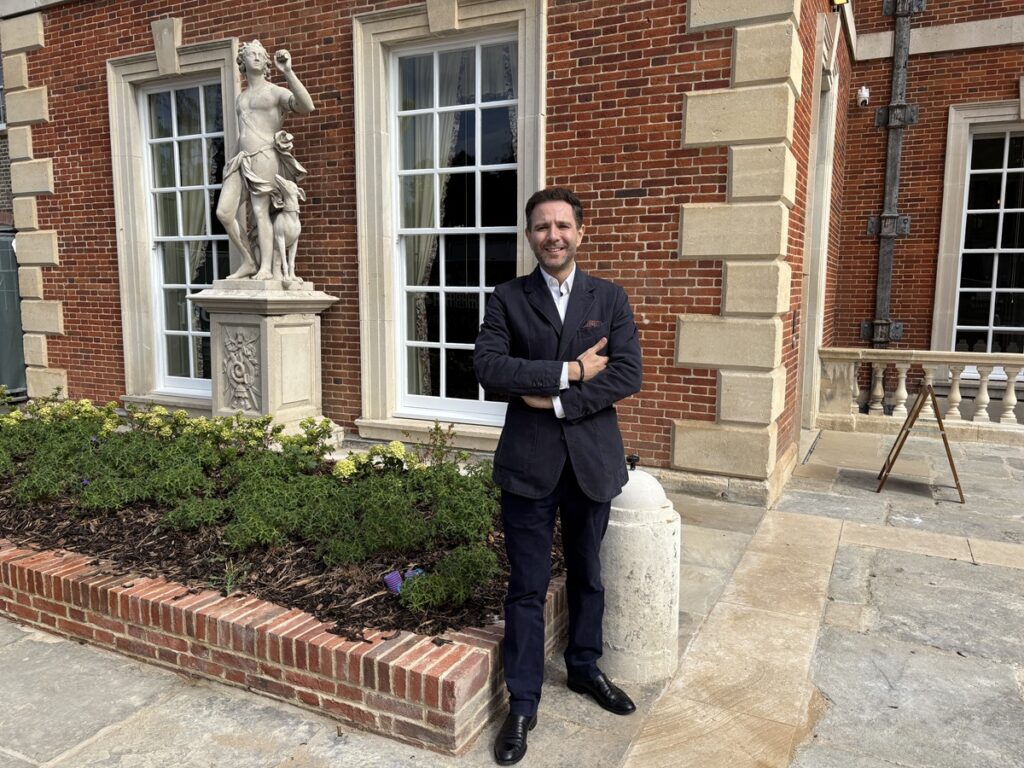
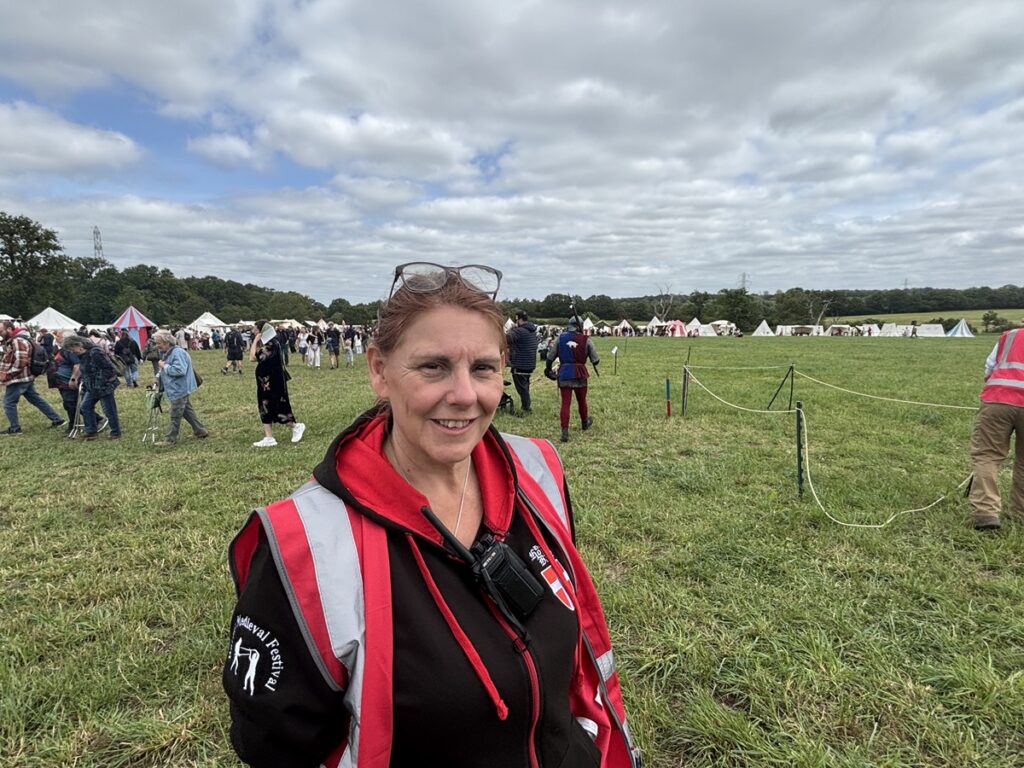
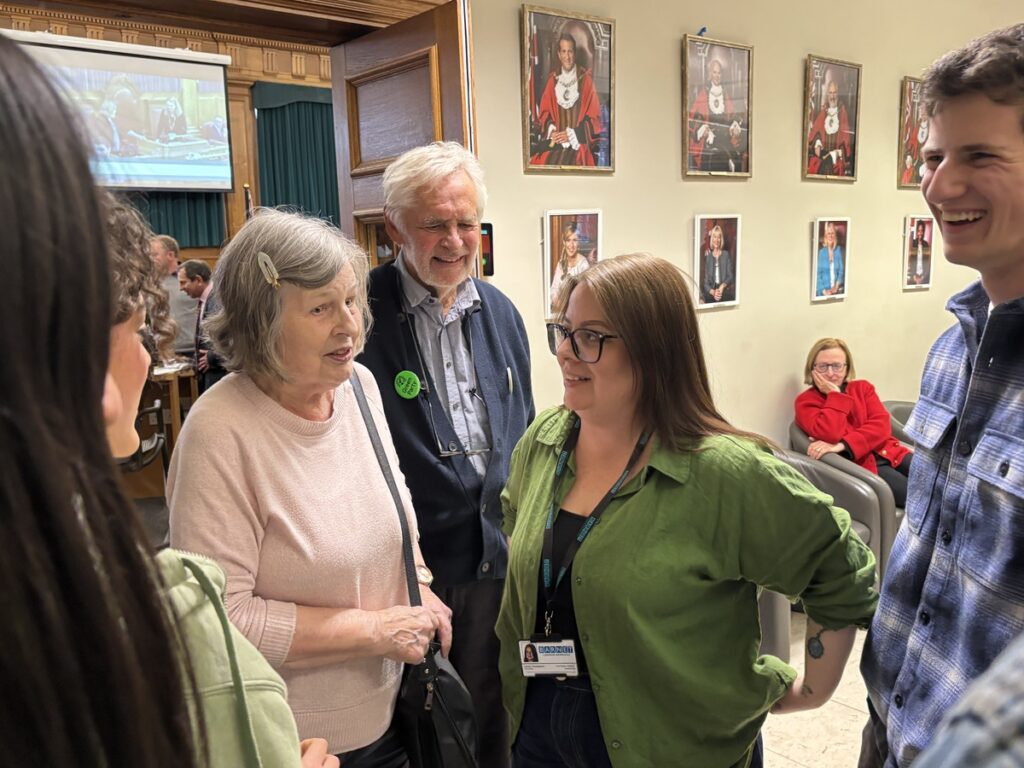
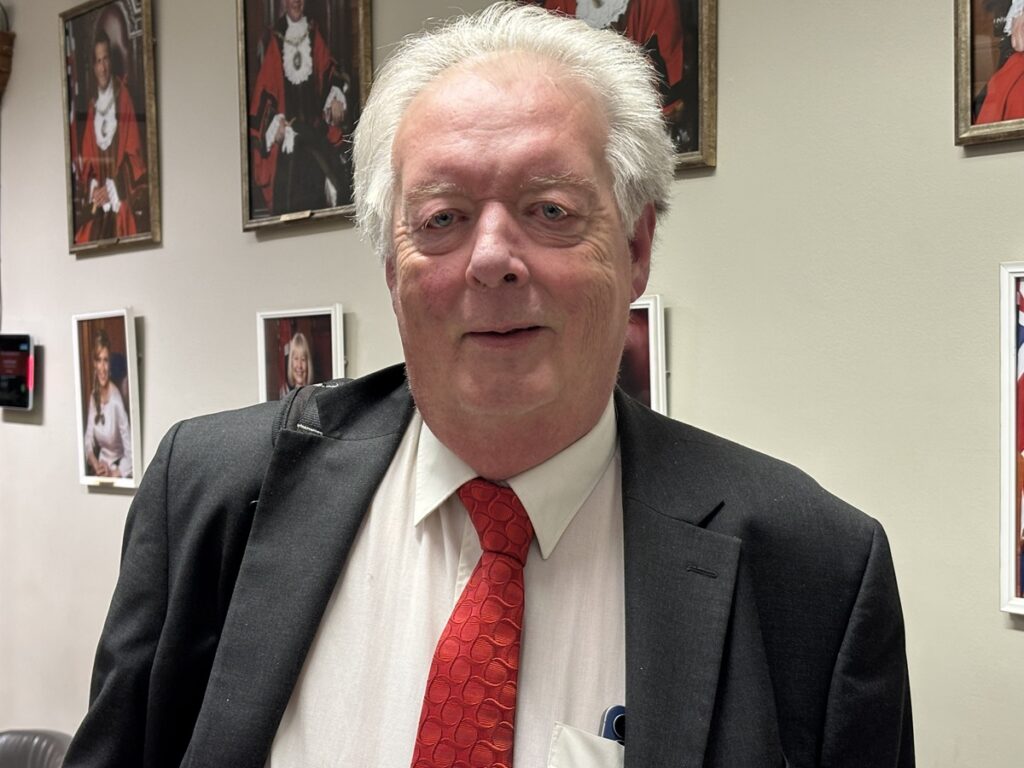
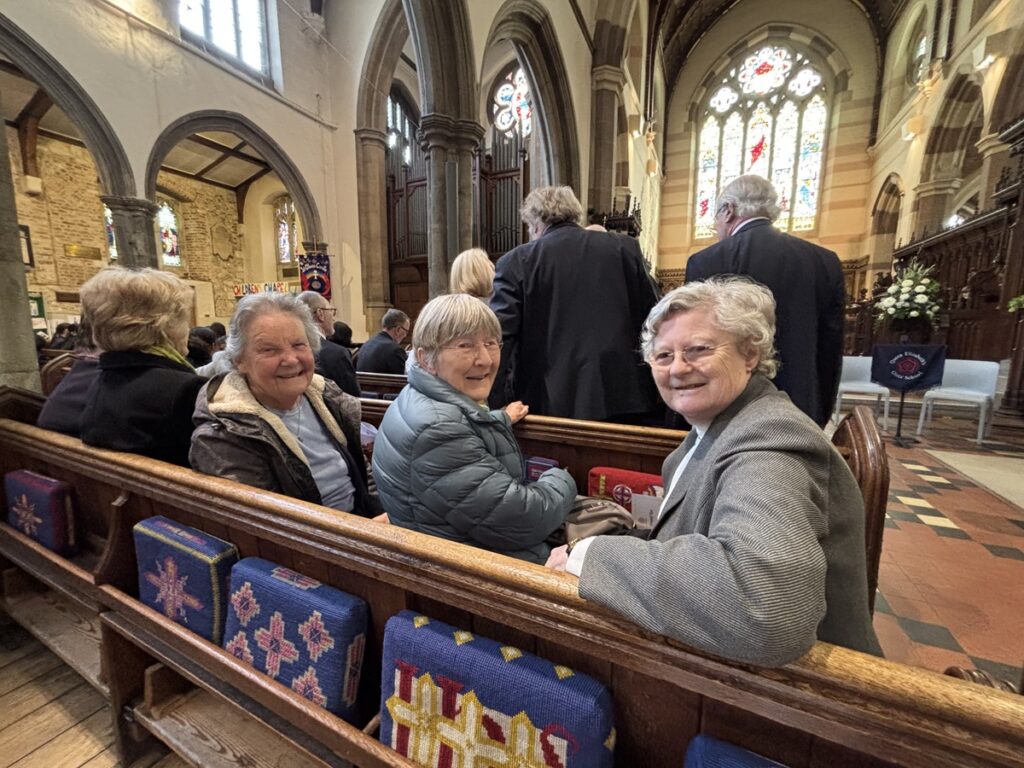
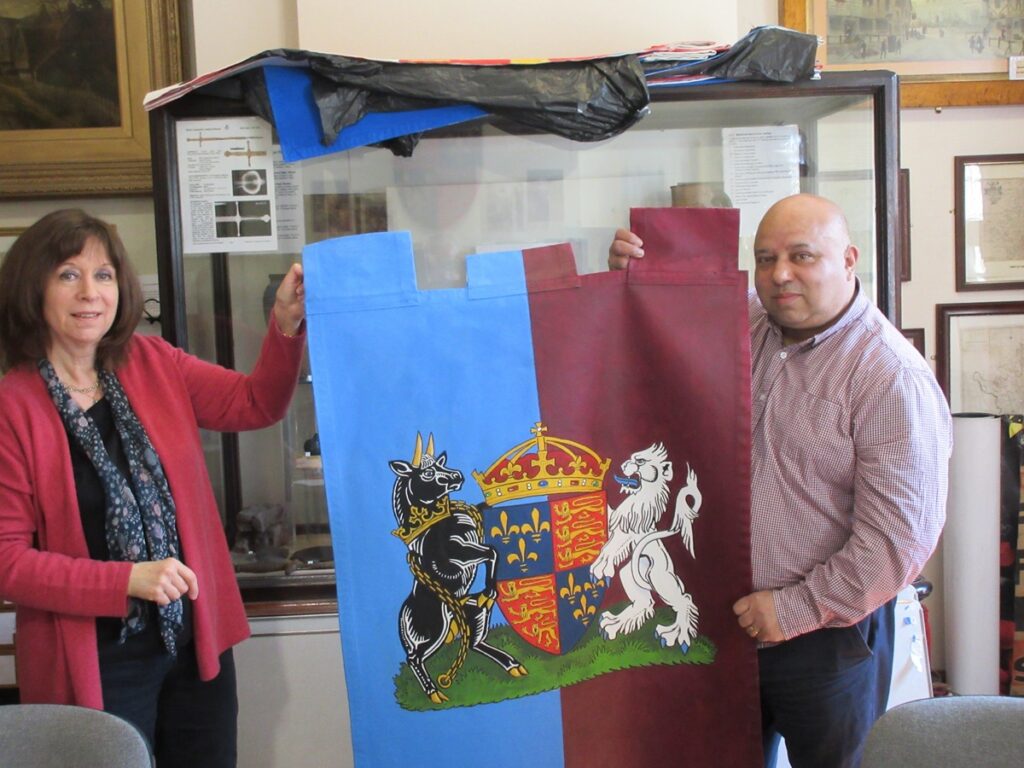
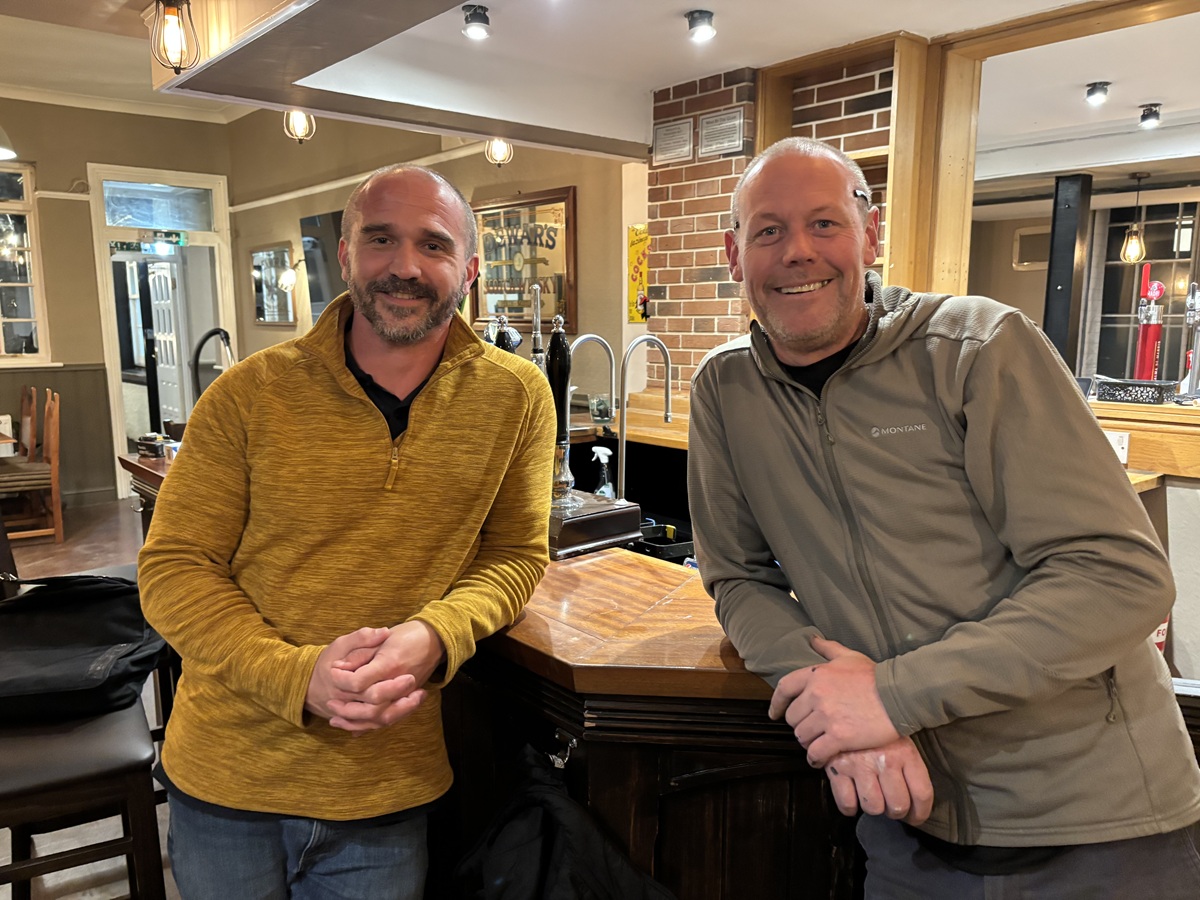
D Susan Skedd, the festival director – see above with volunteer Chris Nightingale – says the £15 new tee shirt is a special edition which she hopes will appeal to Wars of the Roses enthusiasts.

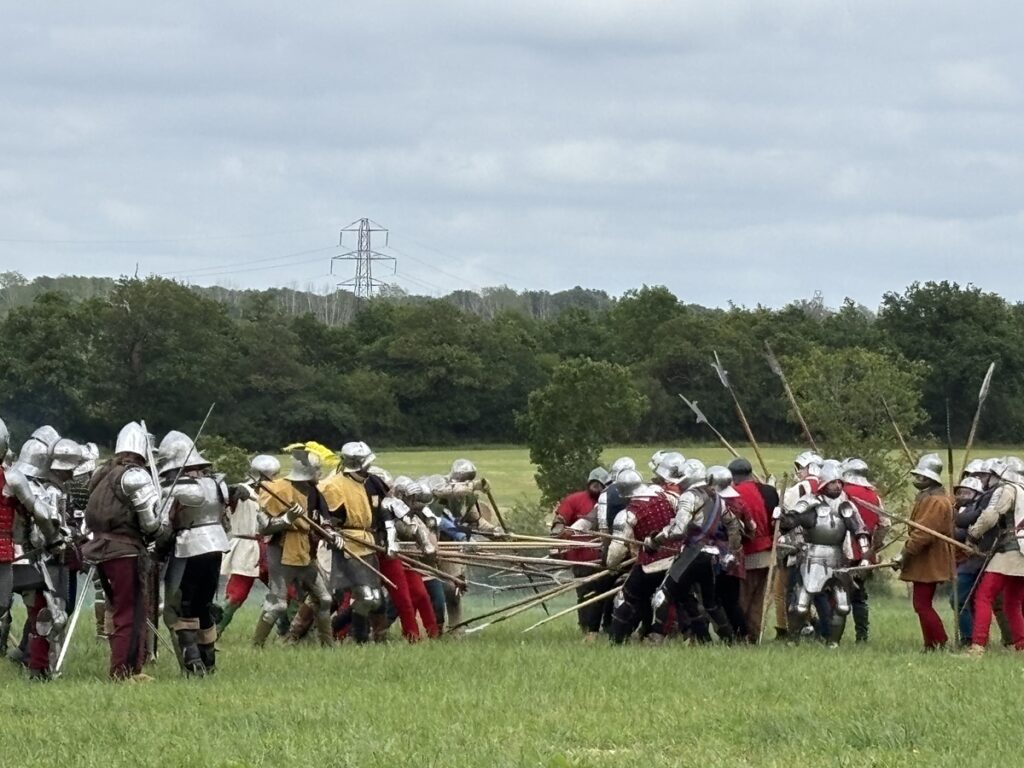
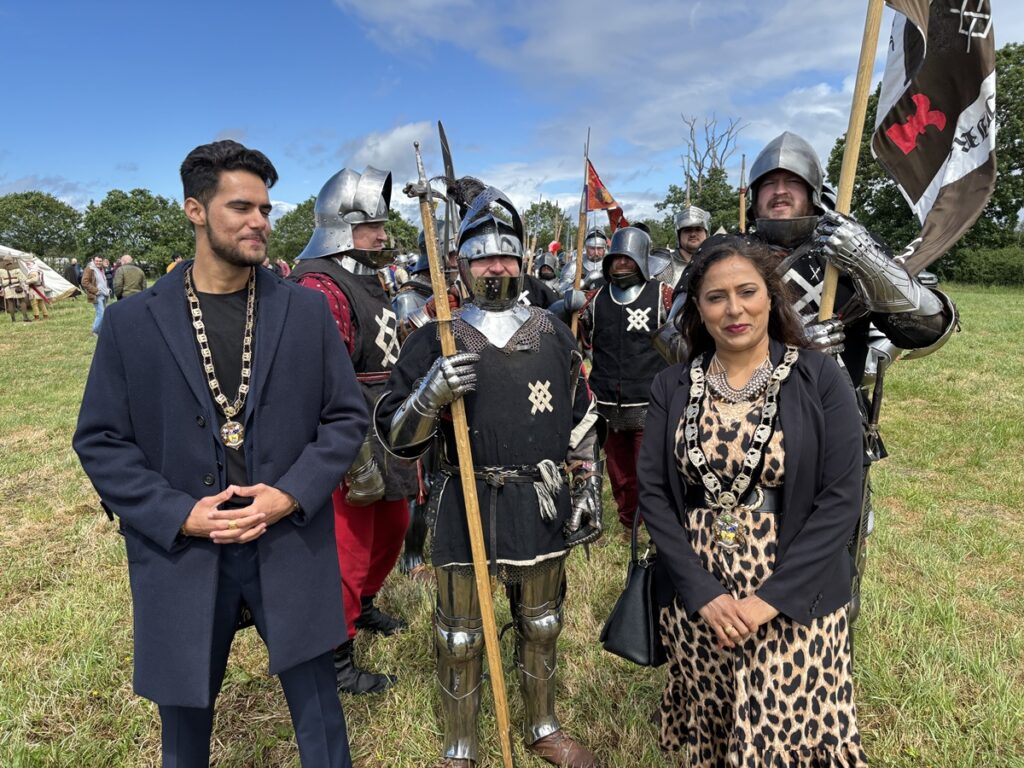
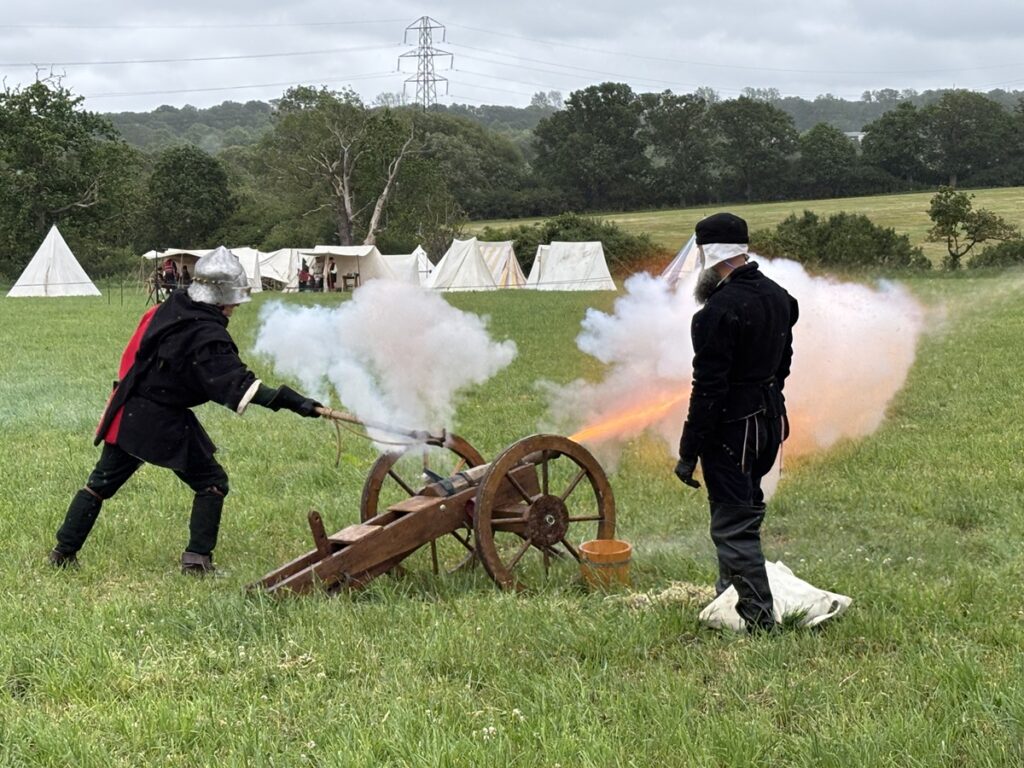
After record attendance and participation last year, the festival is becoming a premier event for among military re-enactors and medieval traders and there is again an expanded programme of events.

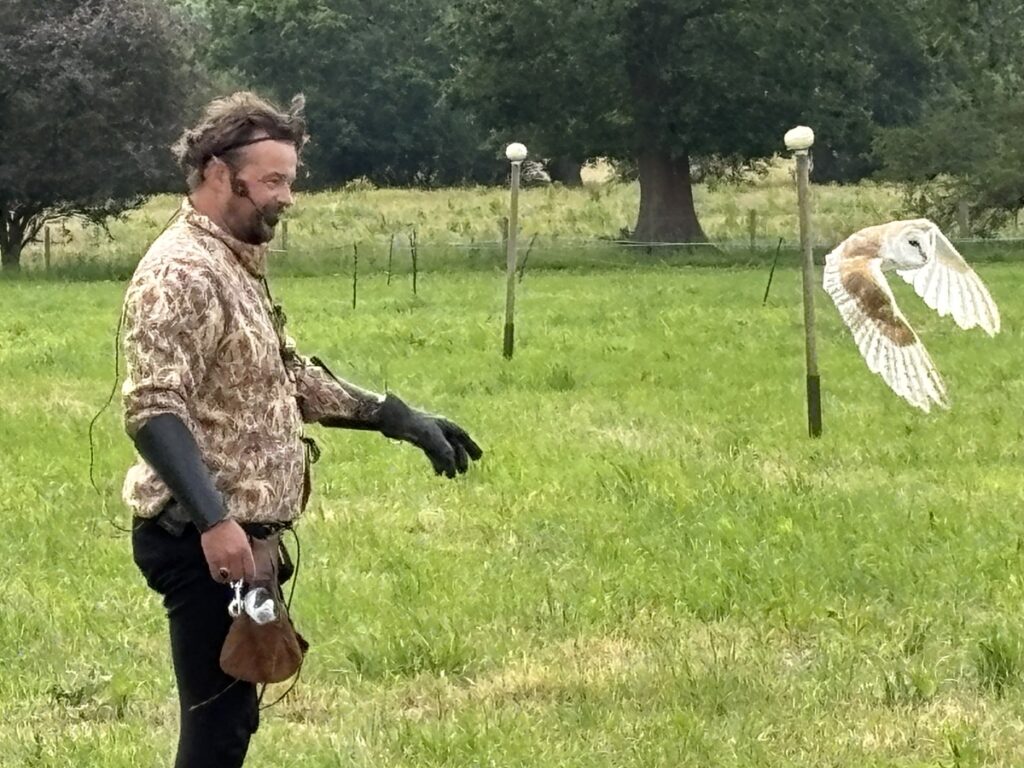
Twice as many mounted men at arms and their horses will be taking part this year and for the first time at the festival there will be falconry displays by the falconry team Hawking About.

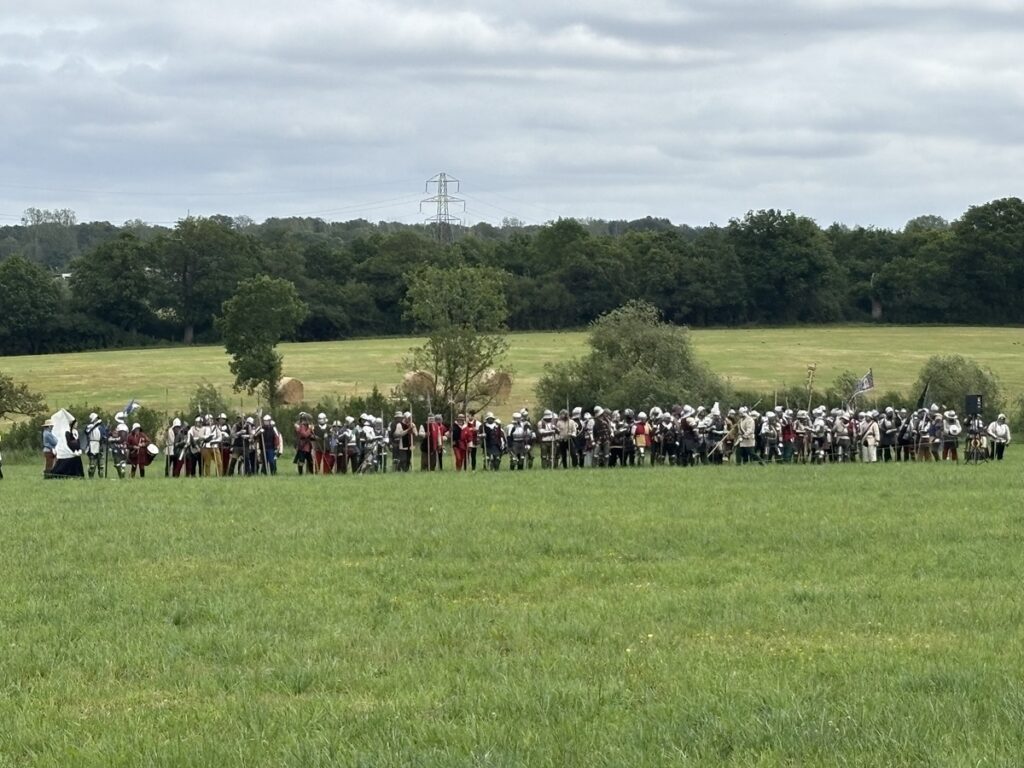
Among the highlights each day will be the re-enactments of the Second Battle of St Albans 1461 (at 12noon) and the Battle of Barnet 1471 (at 4pm).

Younger visitors under 12 will be able to take part each day in a competition for the best period costume or fancy dress (judging at 1.30pm).

Prizes will be awarded for the most historical and creative costumes.

Tickets can be bought at the gate or in advance from the online shop before June 5: www.barnet-medieval-festival-committee.sumupstore.com

There will be free parking onsite in Galley Lane, including disabled parking and taxi drop-off and a free shuttle bus that will run regularly from behind The Spires in Stapylton Road.

Full information: www.barnetmedievalfestival.org

Posted on 27 Comments

Promise of 100 affordable new homes influences final go ahead for tower blocks at High Barnet tube station and loss of car parking

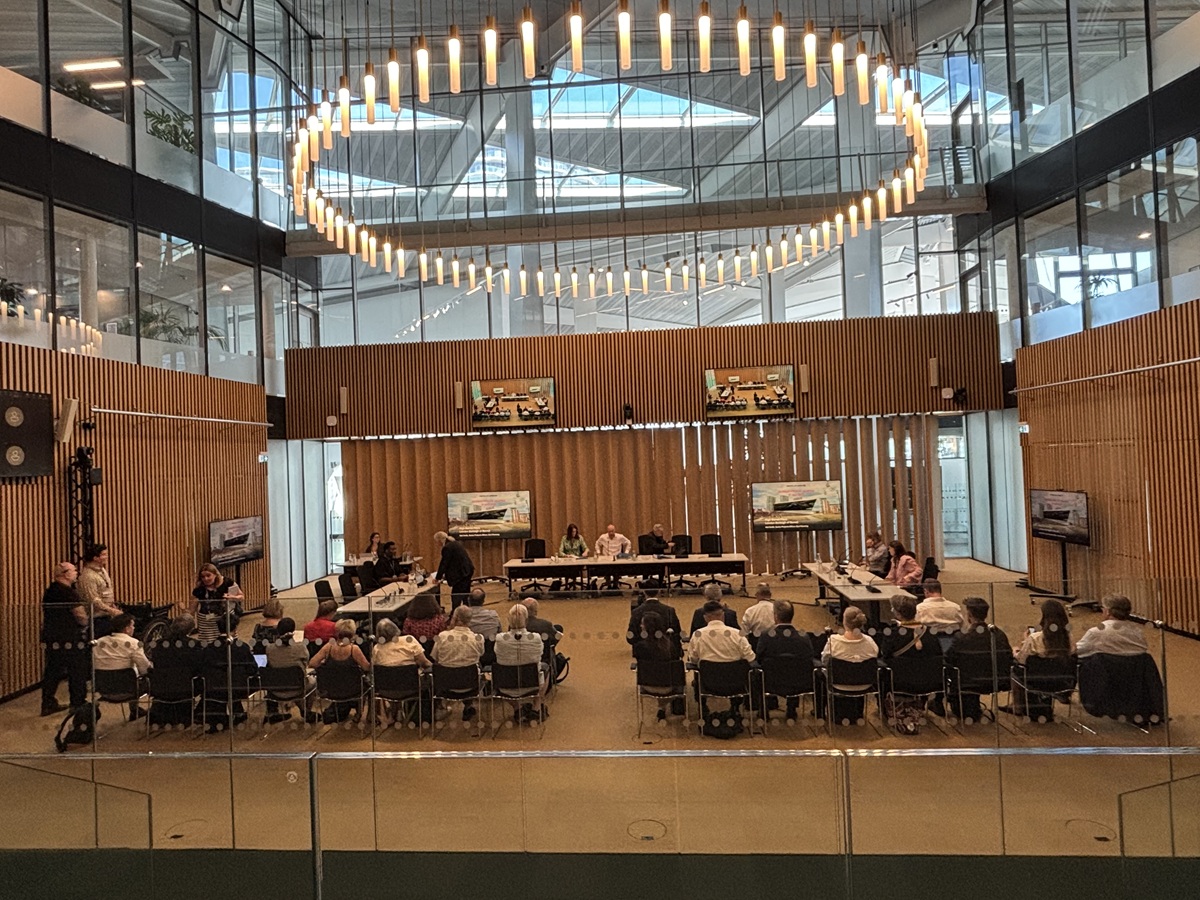
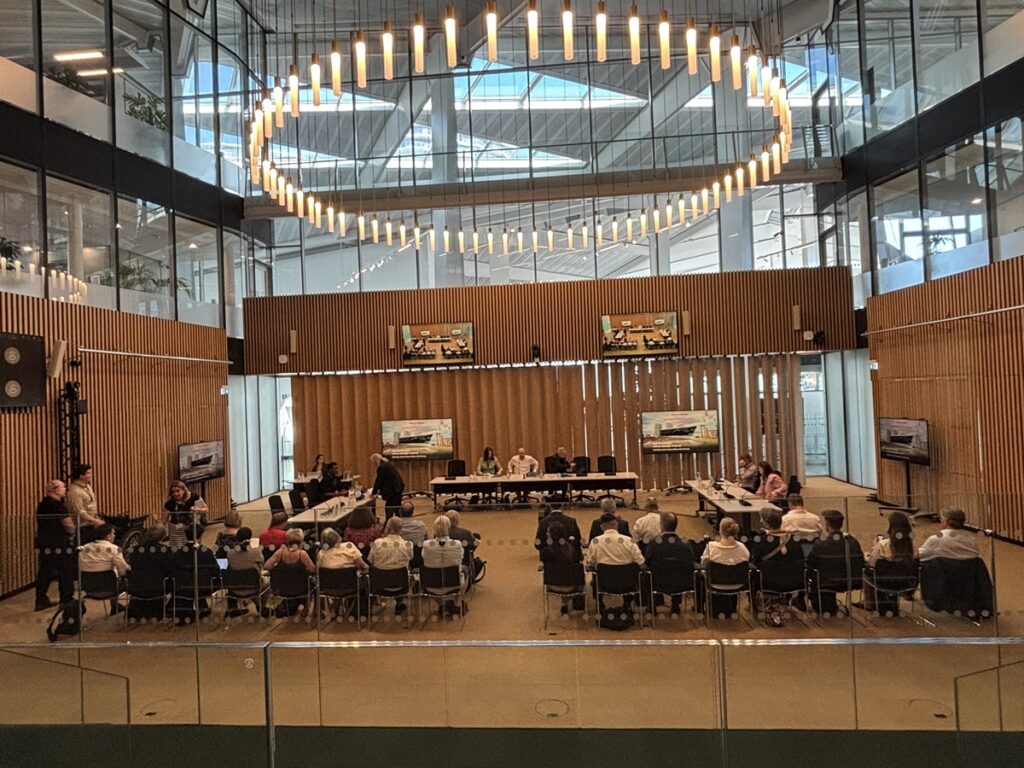
Approval has finally been given by the office of the Mayor of London for the redevelopment of land around High Barnet tube station with five blocks of flats despite warnings this would cause irreparable damage to an historic skyline.

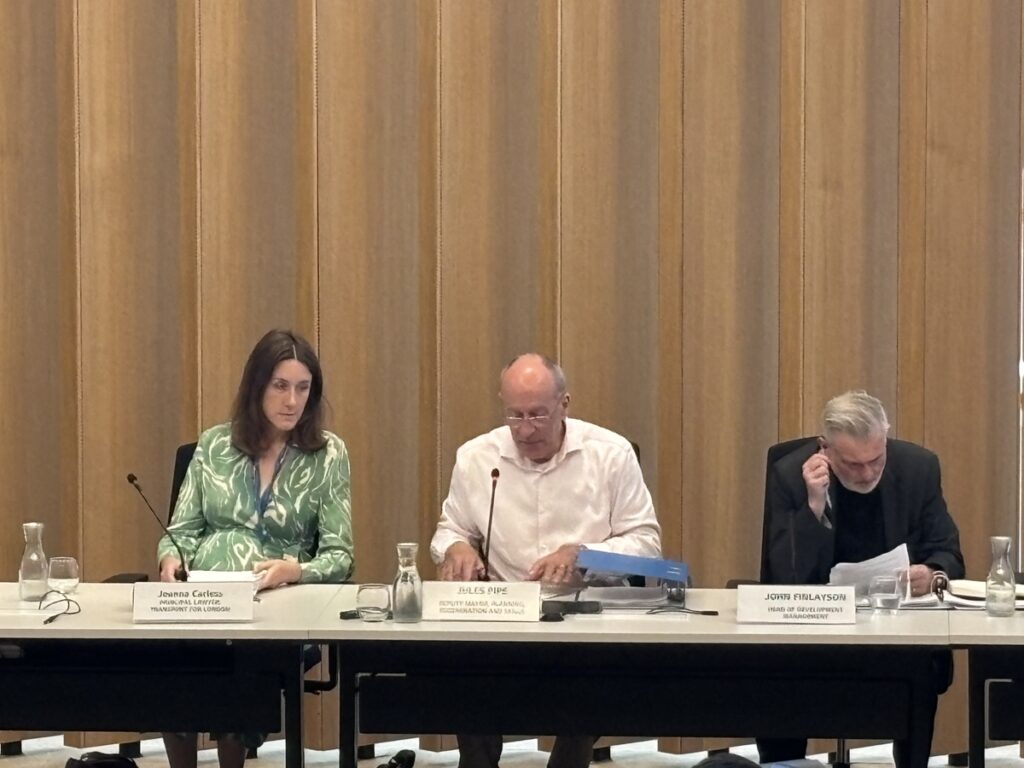
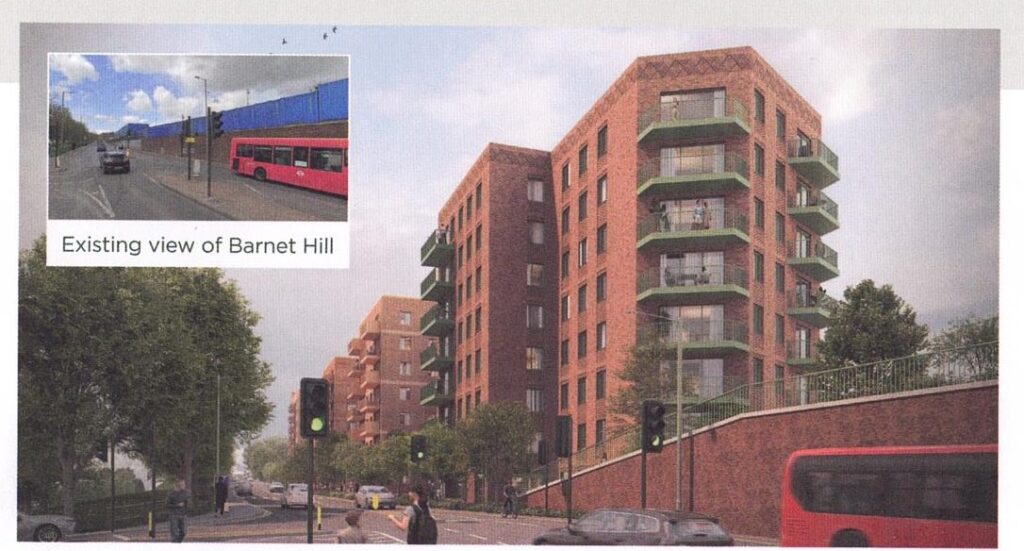
A deputation from the town’s community groups told a hearing at City Hall that squeezing 328 new homes into a narrow strip of land between the tube line and the Barnet Hill trunk road was the “wrong scale in the wrong place”.

Objections were overruled by Jules Pipe, Deputy Mayor for Planning and Regeneration, who said that although three of the blocks would exceed the seven-storey limit agreed in the Barnet local plan – and one block would be 11 storeys – the impact of the height and massing of the flats would be negligible on the neighbourhood and no reason for refusal.

Building more affordable homes was the mayor’s priority and the High Barnet Place scheme would provide 100 new homes at low-cost rent or shared ownership.

“We must take advantage of sites which offer a high proportion of affordable homes and where the key travel infra-structure is in place,” said Mr Pipe.

“Inevitably schemes like High Barnet Place would be visible, including long range views…but the alternative would be to drive such schemes to the green belt and to less sustainable sites.”

Objections to the loss 160 spaces in the station car park – and the provision of only eight places for Blue Badge holders – were rejected by Mr Pipe on the grounds that encouraging tube passengers to walk to the station or take a bus would encourage “more sustainable means of travel and improve air quality”.

Developers Barratt and Transport for London’s investment subsidiary, Places for London, hope to start construction in February next year with the first affordable homes being available in February 2029 and the scheme completed by April 2030.

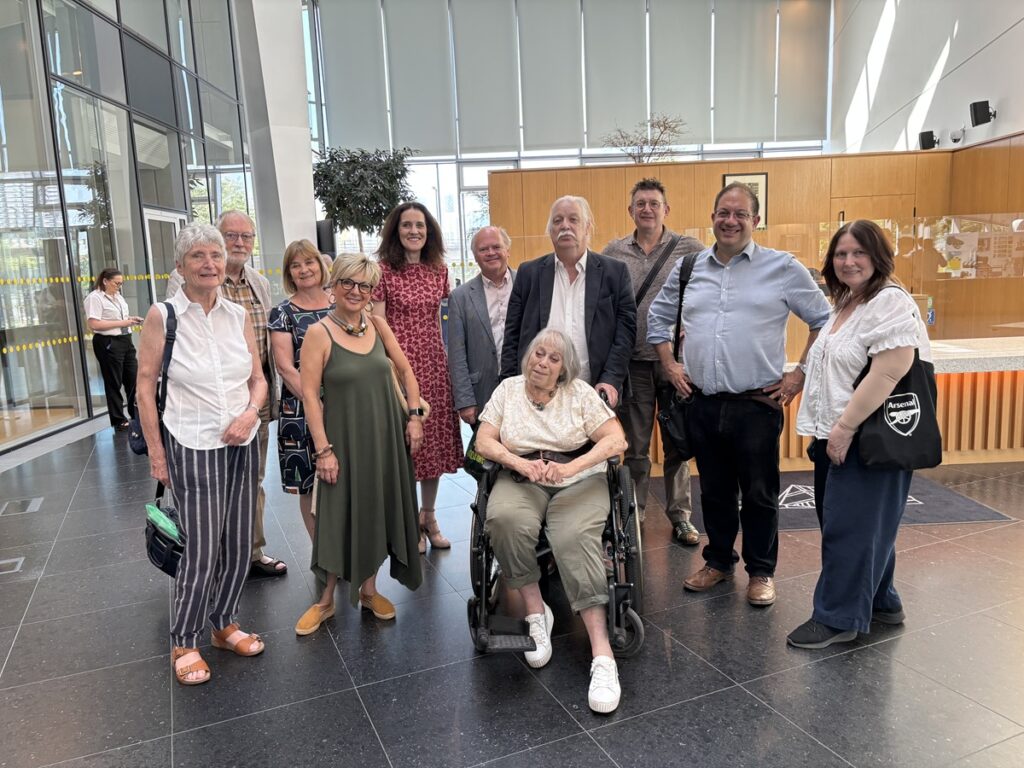
Mayor of London's office gives final go ahead for blocks of flats around High Barnet Station, Key factor 100 new affordable homes, a priority for the Mayor but station will lose its car park.

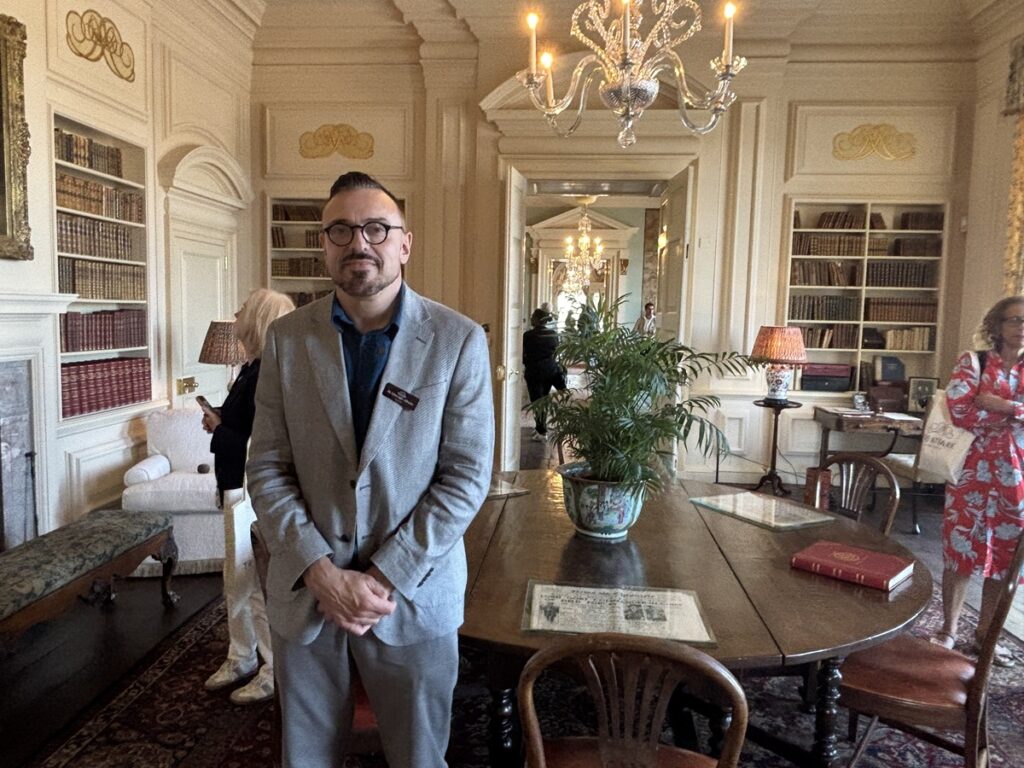
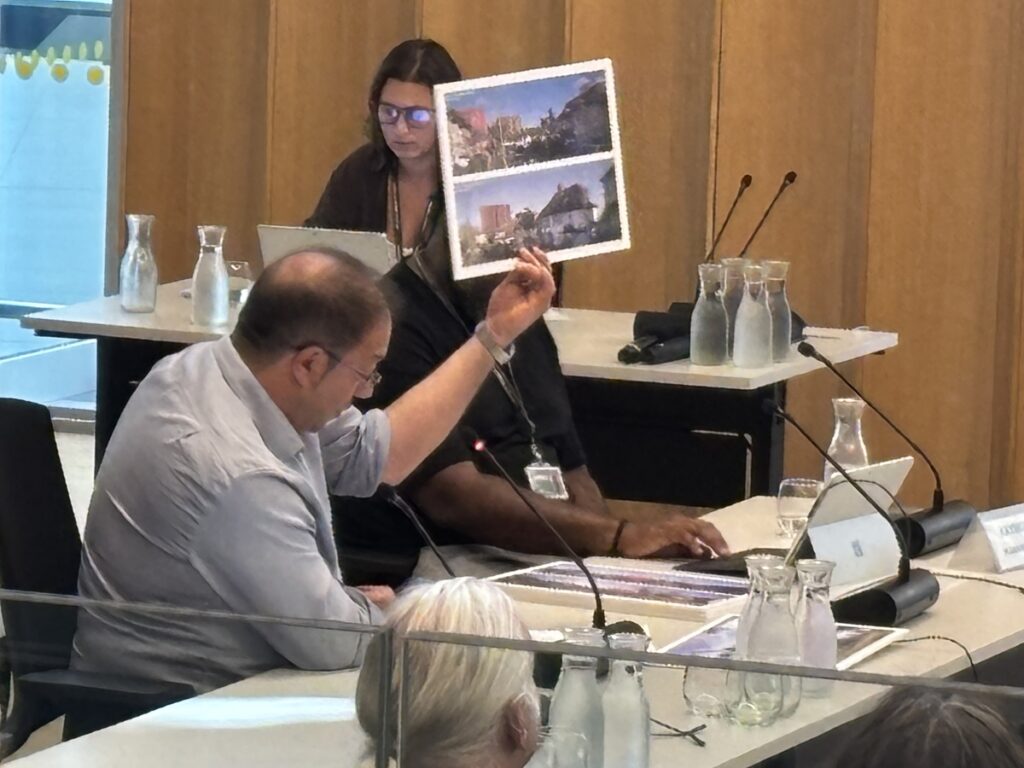
Simon Kaufman, a chartered architect (above, second from right), made a joint presentation on behalf of members of the Barnet Society and Barnet Residents Association.

He said many of the flats in the five tower blocks would be of poor quality, single aspect and reliant on mechanical ventilation.

The design of the scheme exemplified the social and management failures of high-density blocks of flats built across London in the 1960s and 1970s.

After Mr Pipe announced the scheme would go ahead, Mr Kaufman said the conscience of the objectors was clear.

“We listened to the lessons of history, and we are not prepared to see a repeat of the mistakes of the past. We did our best to prevent a development which we fear will become a disaster in years to come.”

Neil Smith, senior project planning officer for the Greater London Authority, opened the hearing by reminding the Deputy Mayor that Barnet Council had refused permission for the blocks of flats because of their excessive height and harm to the character of the surrounding area.

However, the GLA considered the height and massing of the blocks responded well to the immediate context and would make “a positive contribution to the local townscape”.

Given the loss of the car park, there would be nine drop off short-stay spaces and eight Blue Badge spaces, but otherwise the development would be car-free with an enhanced public footpath on the station approach.

A significant public benefit of the scheme would be 100 affordable new homes and there were “no material considerations of sufficient weight to justify refusal”.

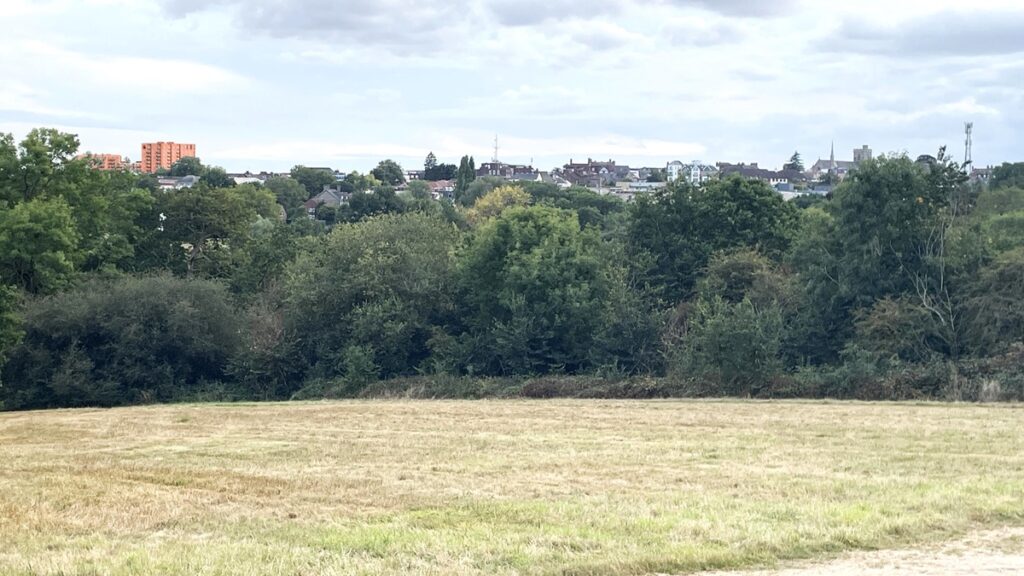
In opening for the objectors Simon Kaufman said that when seen from the surrounding green belt countryside the proposed tower blocks harmed the historic skyline of High Barnet where the defining landmark on the hill had been the parish church.

“This is an over-scaled urban insertion imposed on to an historic hill town.”

An issue which eroded public confidence was that many residents were troubled by the fact Transport for London was effectively promoting development on its own land while the Greater London Authority and the Mayor of London were the decision-maker.

Mr Kaufman criticised the removal of the station car park without providing a realistic alternative and the steep topography of the station approach meant that women, older residents and disabled users would continue to face intimidating routes, particularly after dark.

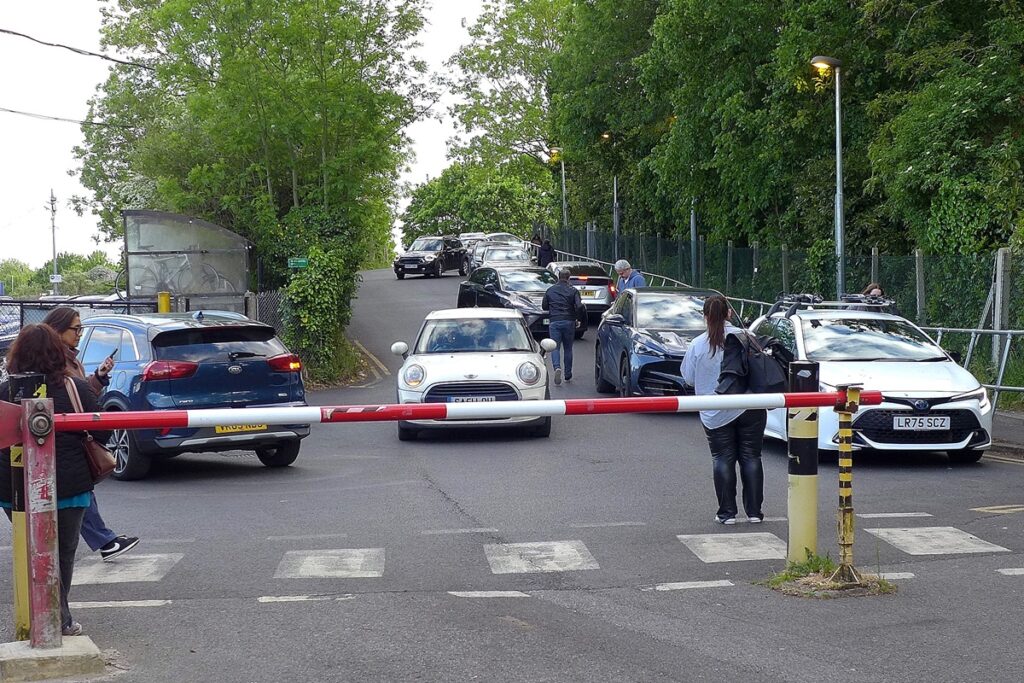
Janet Littlewood of Barnet Residents Association, speaking on behalf of Gordon Massey, said the blocks of flats on the site would add to the existing chaos on the station approach where there were often traffic jams.

The area around the station was isolated and many women would not leave the station unless they could exit by car.

Nick Saul, a retired civil engineer, warned that the loss of the car park and the failure to provide bus access to the station forecourt raised serious concerns for women and the disabled.

Serious assaults to passengers when on foot or on cycle were not uncommon where parking had already been lost at tube stations.

Flaws in the design and access in and around suburban stations were a key factor in the prevalence and location of attacks.

Dame Theresa Villiers, formerly MP for Chipping Barnet, who described herself as a resident and passenger, insisted that the loss of the station car park would damage the quality of life of many thousands of Barnet residents.

Anyone with impaired mobility would be at a disadvantage and the suggestion that more people might like to cycle to the station ignored the steepness of Barnet Hill – as she could testify personally it was “a tough climb for cyclists”.

“High Barnet station has been my station for 21 years. It is our get away to the world. Please don’t curtail the freedom of High Barnet people to live our lives the way we want to.”  

There was one speaker in support of the scheme, High Barnet student Yana Kostova, who said that given the pressure on local housing the only chance was to build upwards.

The prospect of more affordable homes was a relief. She thought High Barnet could “blossom and attract a younger generation with such schemes”.

In response to questions from the deputy mayor, Martin Scholar, head of planning for Places for London, said the developers Barratt Homes had maximised the number of affordable homes at High Barnet Place which would allow more people to get on the housing ladder.

“Forty per cent affordable homes at High Barnet is much higher than for most schemes in London” – a consideration that was given emphasis in the deputy mayor’s final decision.

In a statement issued after the hearing, Dan Tomlinson, MP for Chipping Barnet and Exchequer Secretary to the Treasury, criticised the go ahead for a scheme which was clearly not in line with the local plan.

“Planning decisions aren’t mine to make as the local MP, but Barnet Labour has made it views very clear on these proposals.

“It is in black and white in Barnet’s local plan that seven storeys is the maximum for housing on this site.

“It is not right for the GA to overrule elected councillors to approve a scheme with an 11-storey block that contravenes the plan.”

Mr Tomlinson’s statement was followed by a statement from Barnet Labour Party expressing its opposition to the go-ahead for high storey blocks of flats at High Barnet tube station and GLA approval for the Great North Leisure Park development:

“It is extremely disappointing that two local planning decisions based on the local plan and London plan and with the backing of the local community have been overturned by the GLA.

“Local councillors should be trusted to make decisions based on the best interest of their communities.”

Posted on 1 Comment

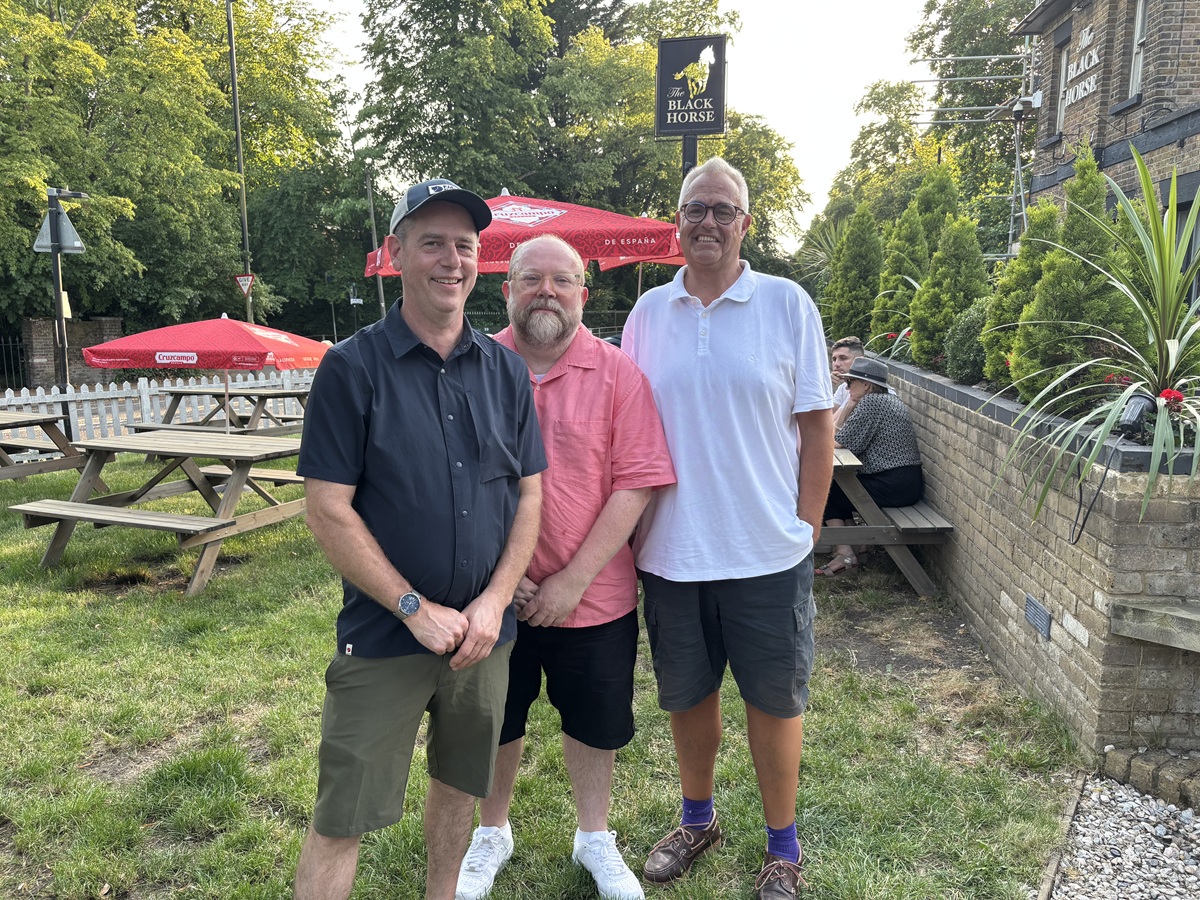
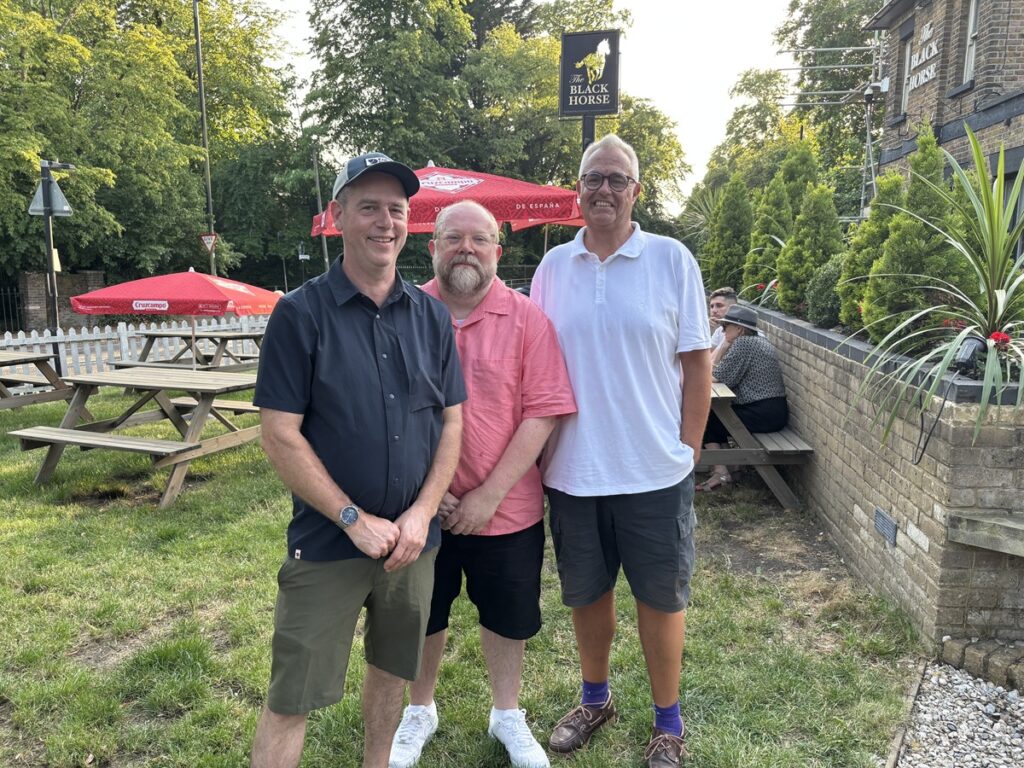
Black Horse to re-open in mid-June after extensive repairs – but uncertain future for Builders Arms now on the market for £695,000

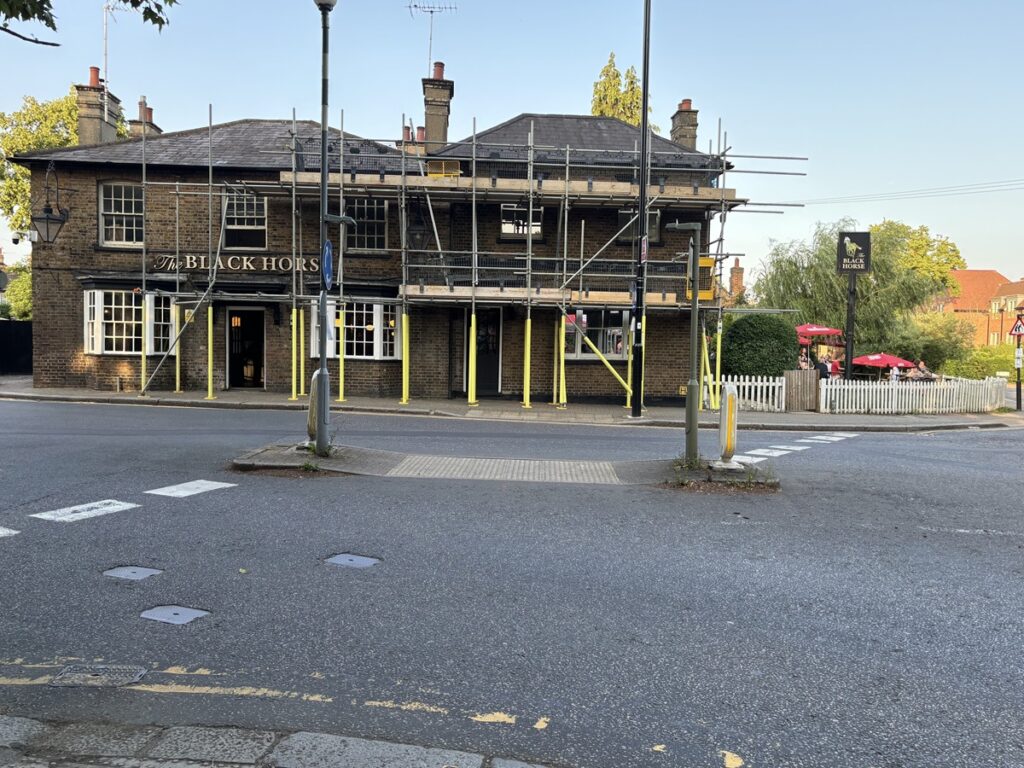
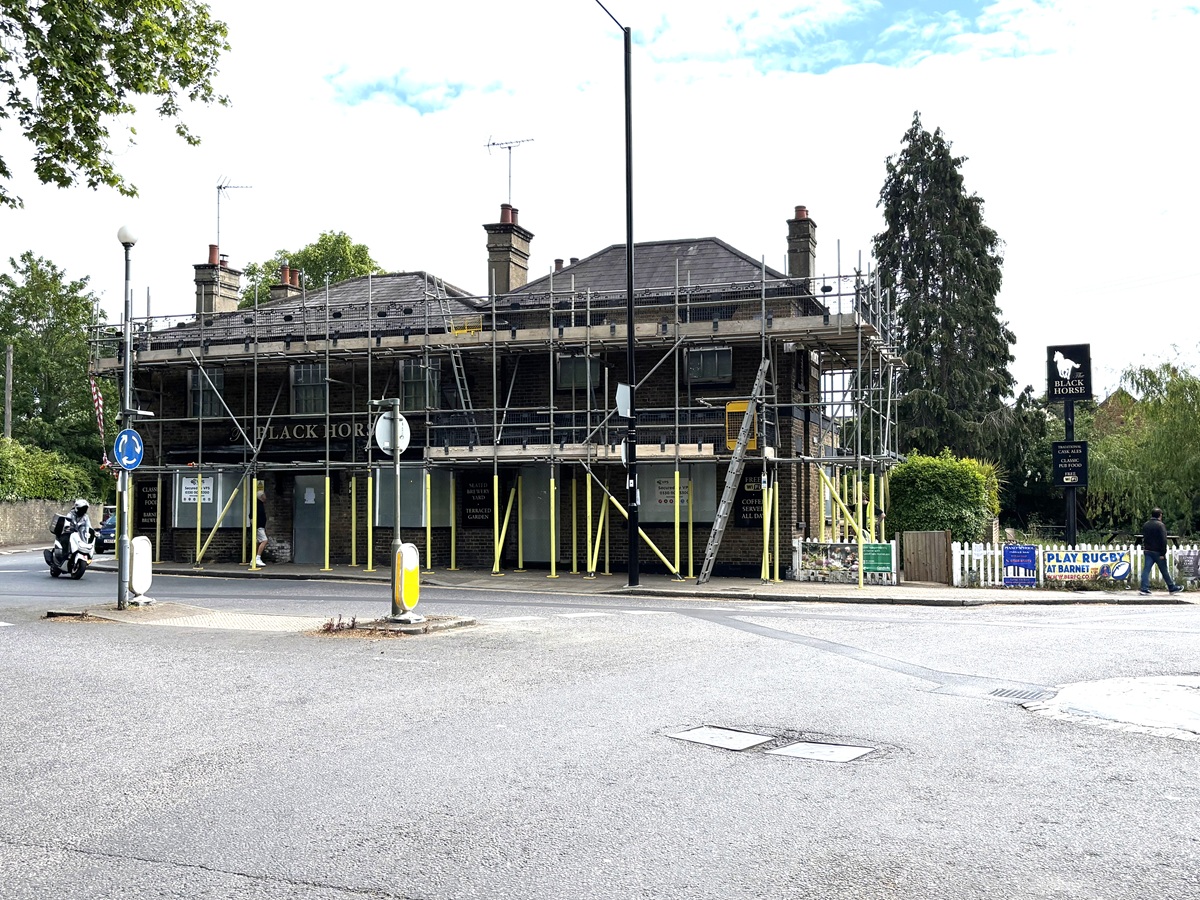
After the loss of several pubs around High Barnet in recent weeks, work has finally started on major repairs to the Black Horse in Wood Street, and it is due to re-open in mid-June after being closed since last September.

Scaffolding surrounds the building and local residents who feared the worst when metal grilles were installed across the doors and windows are delighted to hear the news.

With the approach of warm weather, they say they can’t wait for the re-opening of the pub’s garden which is popular weekend venue.

Star Pubs told the Barnet Society that additional building work has proved necessary and it will take longer than originally anticipated, but they hope the pub can re-open by mid-June.

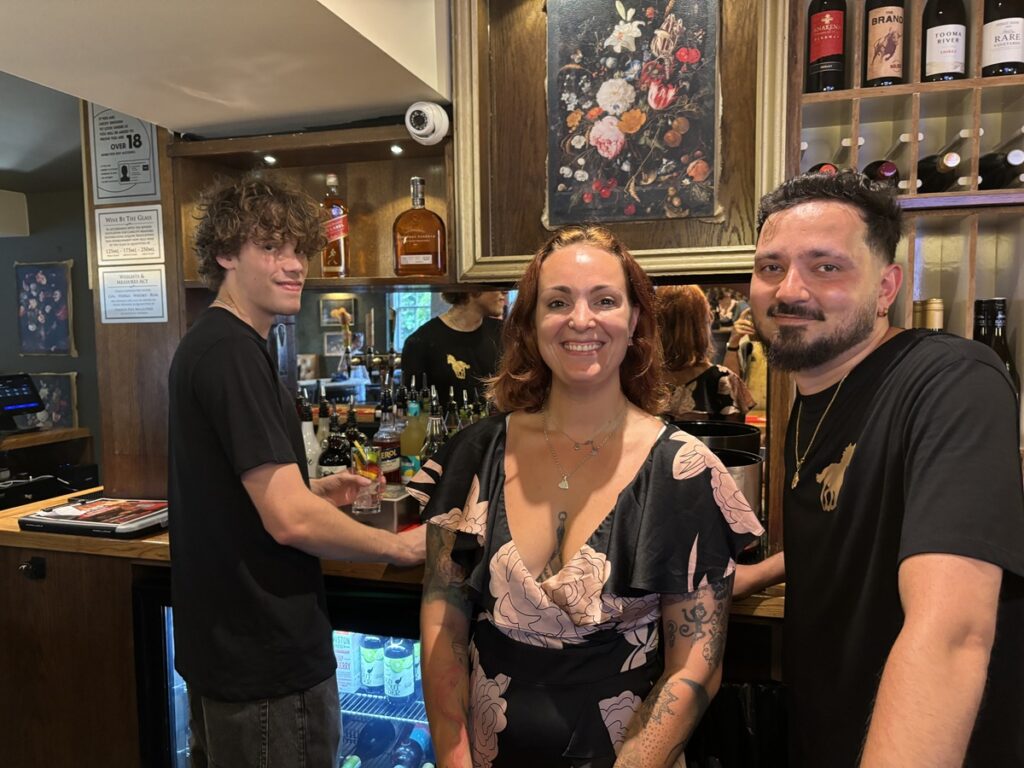
A new tenant – described as “a local businessman” – has taken on the tenancy.

To the disappointment of some previous customers, Star Pubs say the Black Horse will not be reverting to a micro-brewery which had operated at the pub in the past and produced its own ales.

Earlier this year, because of concern about the future of the Black Horse, Barnet Council accepted a community request for the pub to be protected by an order declaring the building as asset of community value.

ACV protection allows the community to enter a bid if the pub is sold for redevelopment – protection already provided for three other nearby pubs, the Lord Nelson, Sebright Arms and Ye Olde Monken Holt, as well as the Prince of Wales in East Barnet.

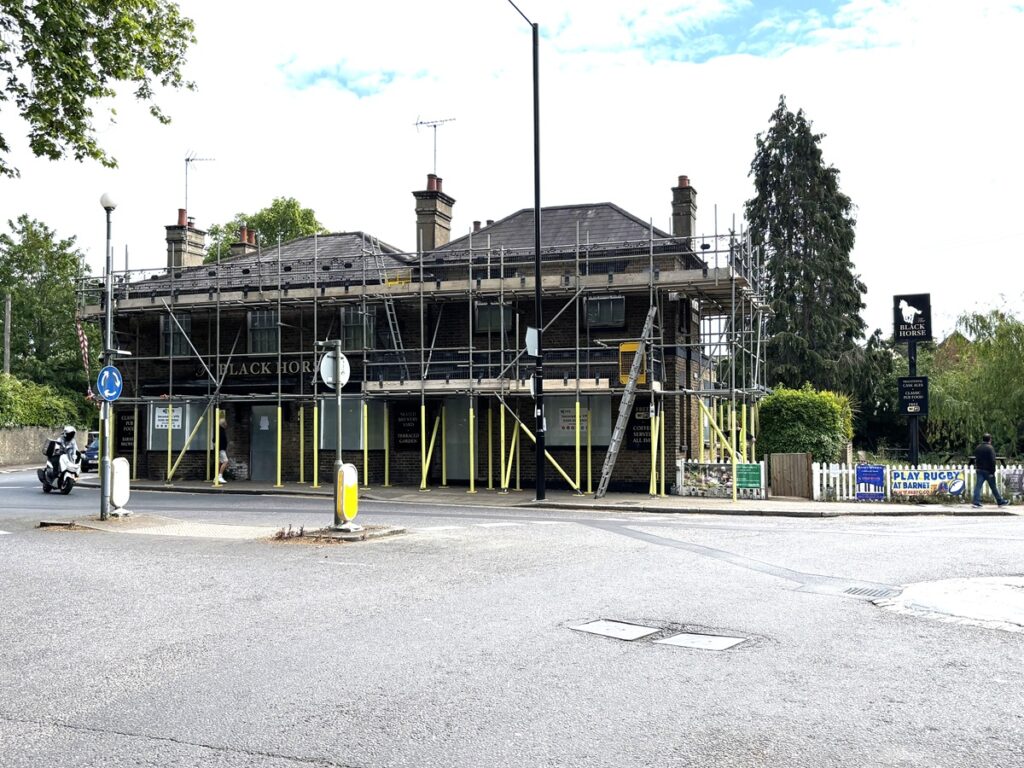
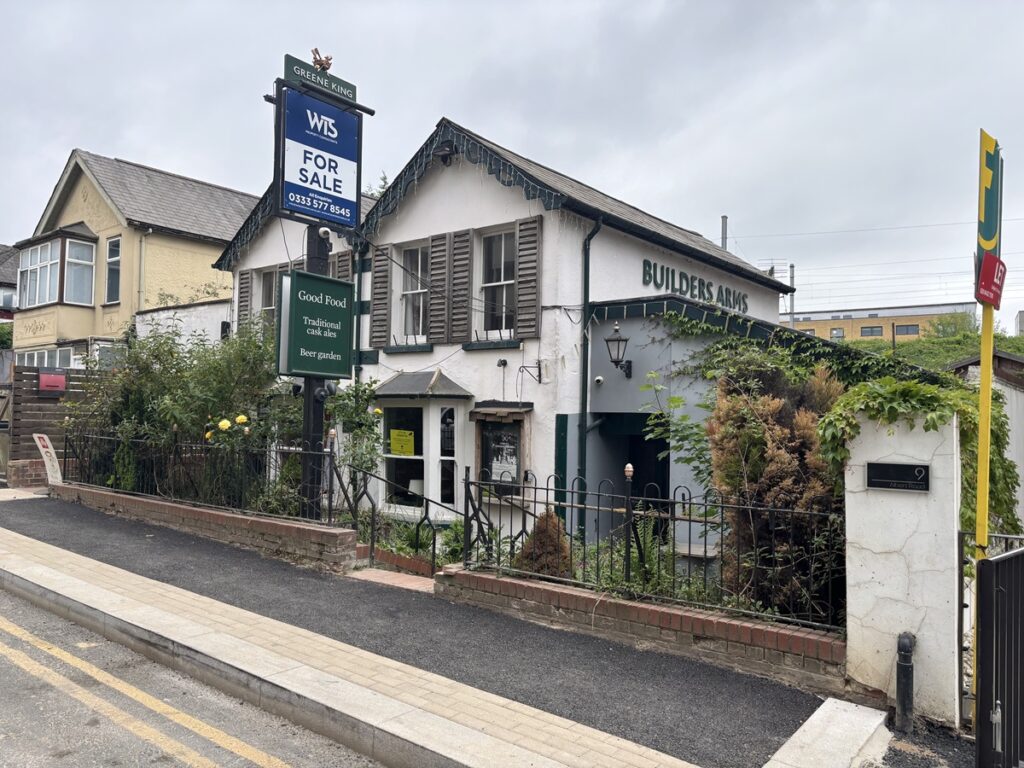
Black Horse public house in Wood Street Barnet to re-open after nine-month closure but now closed Builders Arms in New Barnet for sale at £695,000

A petition has been launched to secure ACV protection for the Builders Arms in Albert Road, New Barnet, which closed in mid-April and is now on the market for £695,000.

A two-year struggle to keep going finally defeated the pub’s landlady who blamed a loss of trade on the disruption caused by ending up in the middle of a massive construction site.

Albert Road is the main access to the site where Fairview Homes are building eleven high-rise blocks of flats to provide 420 new homes, and the pub found itself marooned in the redevelopment.

Despite considerable local support, the landlady reluctantly decided to hand her tenancy back to the brewers Greene King raising local concern about the future of a pub praised by the Campaign for Real Ale.

Former customers and friends started the petition in an attempt to preserve what they say is a “much loved local institution”.

Greene King, which is reported to be planning to sell off 300 of its tenanted and managed pubs, put the Builders Arms on the market soon after it ceased trading in mid-April.

WTS, agents for the sale, say the building does offer the potential for alternative use, subject to planning consent, and the property might appeal to “local licensed operators, developers, builders and investors.”

Another recent pub closure was that of the Hadley House bar and restaurant in Barnet High Street, which in previous years was known as the King George and earlier as the King of Prussia – but another High Street hostelry, the King’s Head, which closed for a month for renovations is due to re-open on June 12.

Posted on 2 Comments

Control over Barnet Council remains with Labour after an agreement with the Conservatives results in key votes to end the uncertainty  

Labour has kept control of Barnet Council following a post-election pact with the Conservatives to ensure administration of the authority and services to residents continue without interruption.

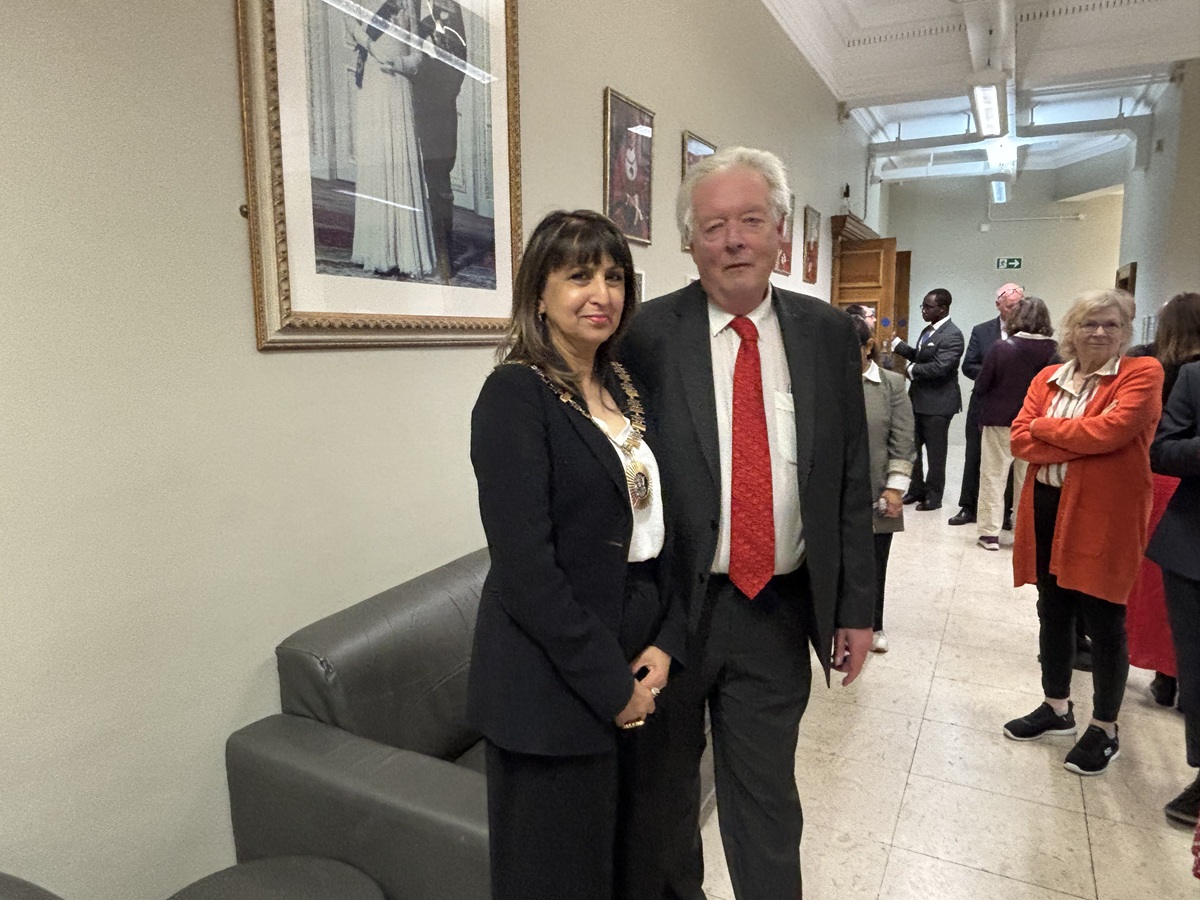
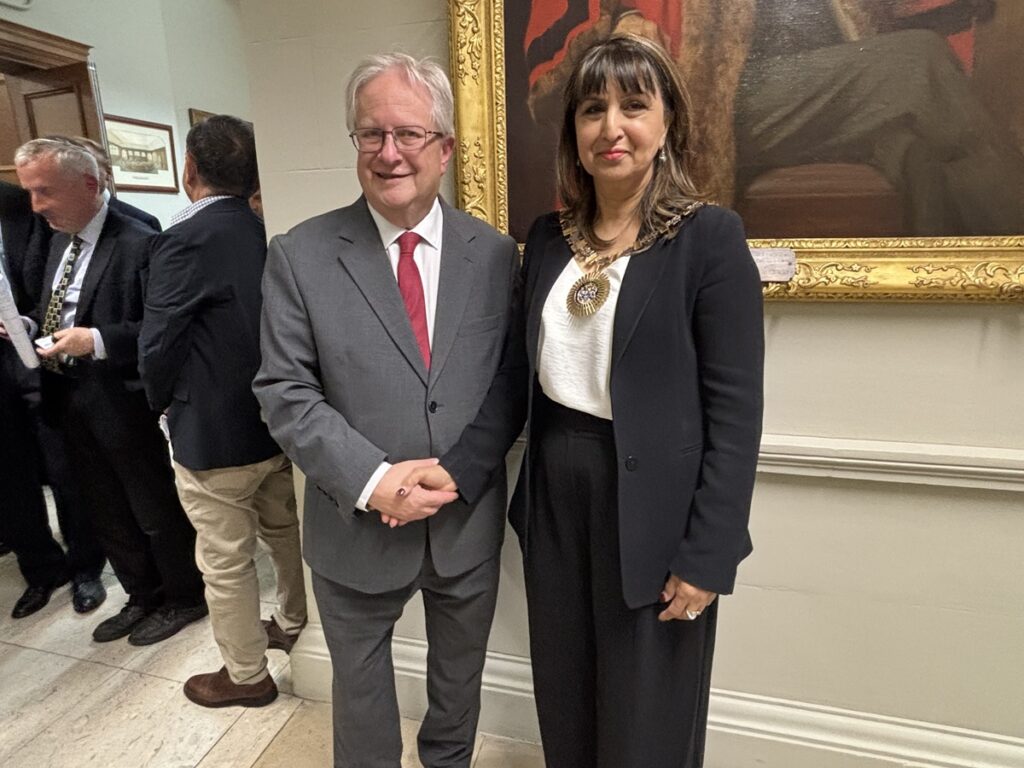
A “very relieved” councillor Barry Rawlings (above right), who was re-elected to the post of Labour leader of the council, congratulated Underhill Labour councillor Zahra Beg on her appointment as the new Mayor of Barnet.

A tied result in the council elections on May 7 – with both Labour and the Conservatives gaining 31 seats – forced the two sides to get together and agree a voting procedure for the first meeting of the new council (19.5.2026).

With advice from the council’s chief executive Cath Shaw and her staff, councillor Rawlings and the Conservative leader, councillor Peter Zinkin, reached a co-operation agreement.

The deal accepted that as the outgoing Labour mayor councillor Danny Rich held a casting vote, the presumption should be that to preserve continuity Labour should retain control of the council.

However, under the agreement, it was agreed the first vote should be whether to appoint Conservative councillor Zinkin as leader.

This was defeated 32 votes to 31 votes on the casting voting of the council’s Green Party councillor Charli Thompson.

Once councillor Thompson had voted against councillor Zinkin and he had been defeated, the Conservatives councillors all abstained on the second vote which resulted in councillor Rawlings being re-elected as council leader for four years by 31 votes in favour, 31 abstentions and one vote against (Green).

In discussions which started immediately after an election result which had left the council with no overall control, councillor Rawlings said that he and councillor Zinkin had accepted they had to work together to avoid deadlock in council business and ensure services to residents continued without interruption.

The agreement with the Conservatives was designed to make sure the council didn’t slip into no political control given that one Green Party councillor held a casting vote.

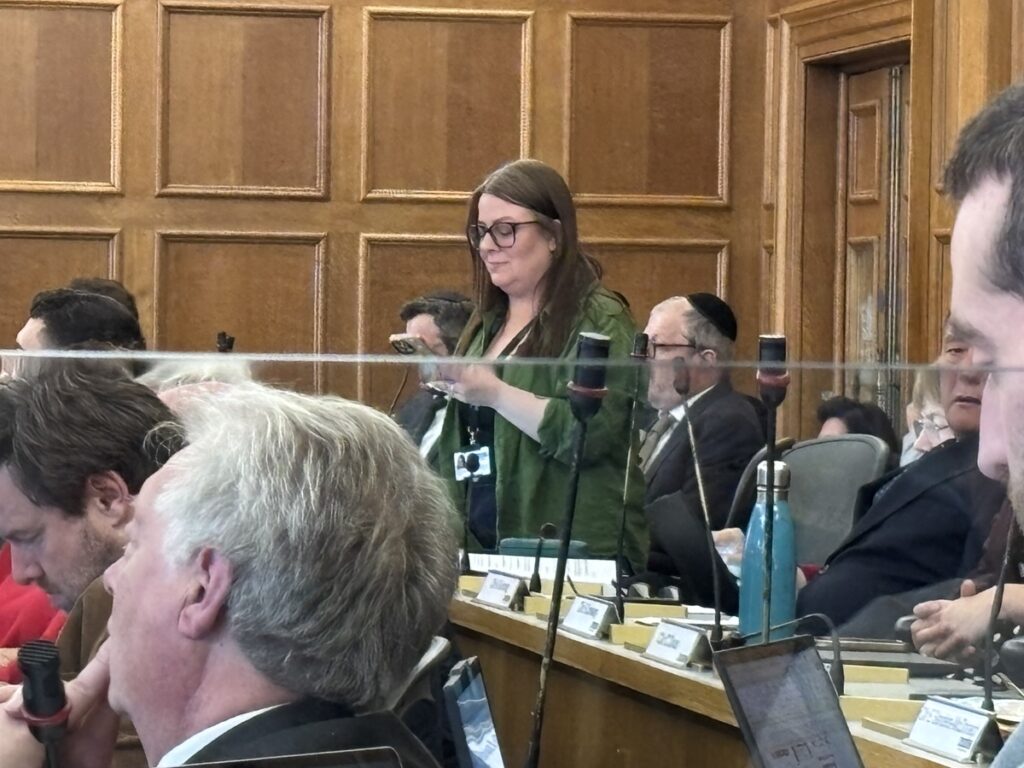
Councillor Thompson, who won her seat for the Greens in Woodhouse ward, and who is a High Barnet resident, was cheered by her supporters in the public gallery for a series of interventions – see above – in which she challenged the way Labour and the Conservatives had done a deal “behind closed doors”.

She said that the Greens had secured 16 per cent of the total vote in the Barnet Borough elections yet their representative was being excluded – an act that would lead residents feeling disconnected from council decision making.

After the meeting her mother Christine Thompson (above left) joined in the congratulations for the stand her daughter had made in challenging the refusal of Labour and the Conservatives to allow her to work with them on improving adult social care and care of the disabled.

Barnet Council remains under control of Labour Party after post-election pact with the Conservatives to agree on key votes which resulted in re-lection of Labour leader councillor Barry Rawlings

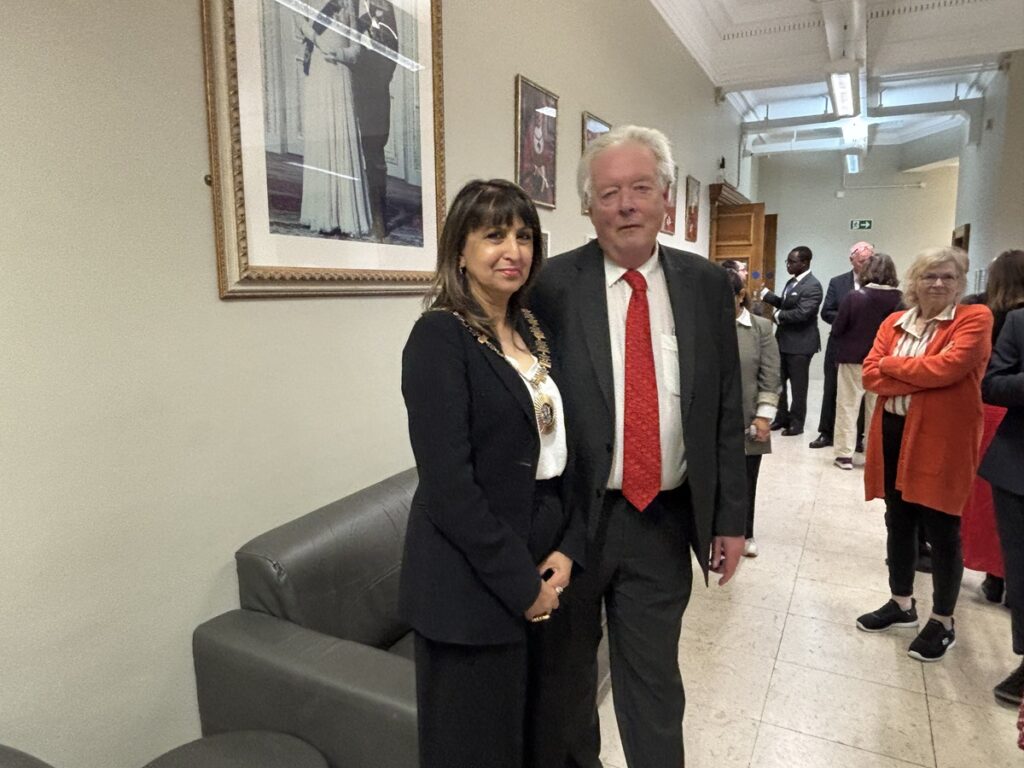
Councillor Beg – seen above with the outgoing Mayor of Barnet Councillor Danny Rich – was praised by fellow councillors for the way she had shown real skill in working across communities and faiths within the borough.

Councillor Rich had opened the proceedings with an appeal to residents to support each other following recent hate attacks in Golders Green.

 A seventh of the borough’s population was Jewish and an eighth Muslim. “Our priority is to the safety of Barnet residents and bringing those responsible for these outrageous incidents to justice.”

He praised the visit by the King to Golders Green which had been “a profound gesture from His Majesty.”

Voting for a new council leader was preceded by a short debate. Councillor Ross Houston said he was proud to nominate councillor Rawlings for re-election based on his track record of dealing with significant challenges, including the delivery of 1,000 new council homes.

In acknowledging that the election left the council with no overall control, he said that the mayor’s casting vote was reserved for occasions when it was necessary for the administration to preserve continuity and the best result would be for councillor Rawlings to be re-elected.

Councillor Richard Cornelius, a former Conservative group leader, proposed councillor Zinkin, reminding the council that in the election the Conservatives had won the popular vote in the borough – gaining 102,246 votes (35.4 per cent), well above Labour’s vote 79,353 (27.5 per cent).

To laughter from fellow councillors, he said that he had never been a supporter of proportional representation but perhaps now was the time.

“It is important we get this right. An agreement has been made (with Labour) and we must make it work.

“We are looking forward to co-operating, and we can co-operate to make Barnet better. Let’s hope we can have some solid achievements, especially on housing.”

Councillor Zinkin thanked the council’s officers for helping the two parties through some “unusual and quite difficult” negotiations, but this had achieved the continuation of an “effective council” which was in the interests of residents.

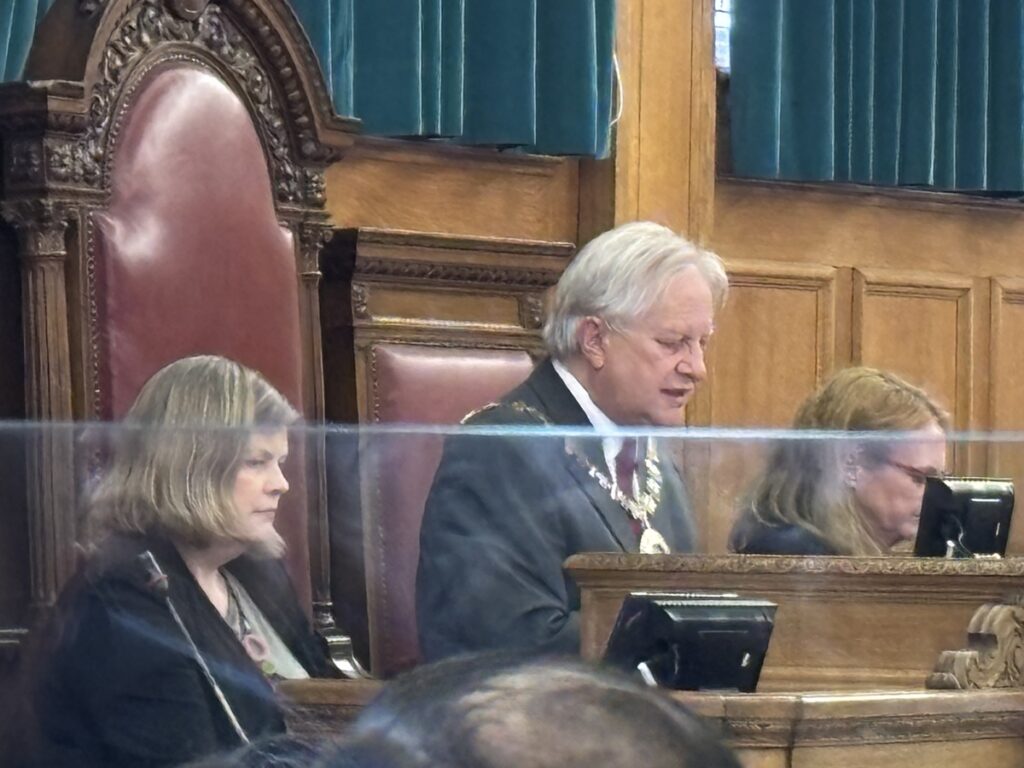
Councillor Rawlings (above) agreed it had been difficult to achieve the agreement, but it was vital the council continued to run, and the electors had depended on the councillors to find a solution.  

But there was a pointed reminder that if Labour were to lose a seat to the Conservatives during the next four years, the tables might well be turned, the council would no longer be tied, and the Conservatives might take control.

Councillor Cornelius fired the warning shot: “We must make this agreement work…until the next council by-election.”

Posted on Leave a comment

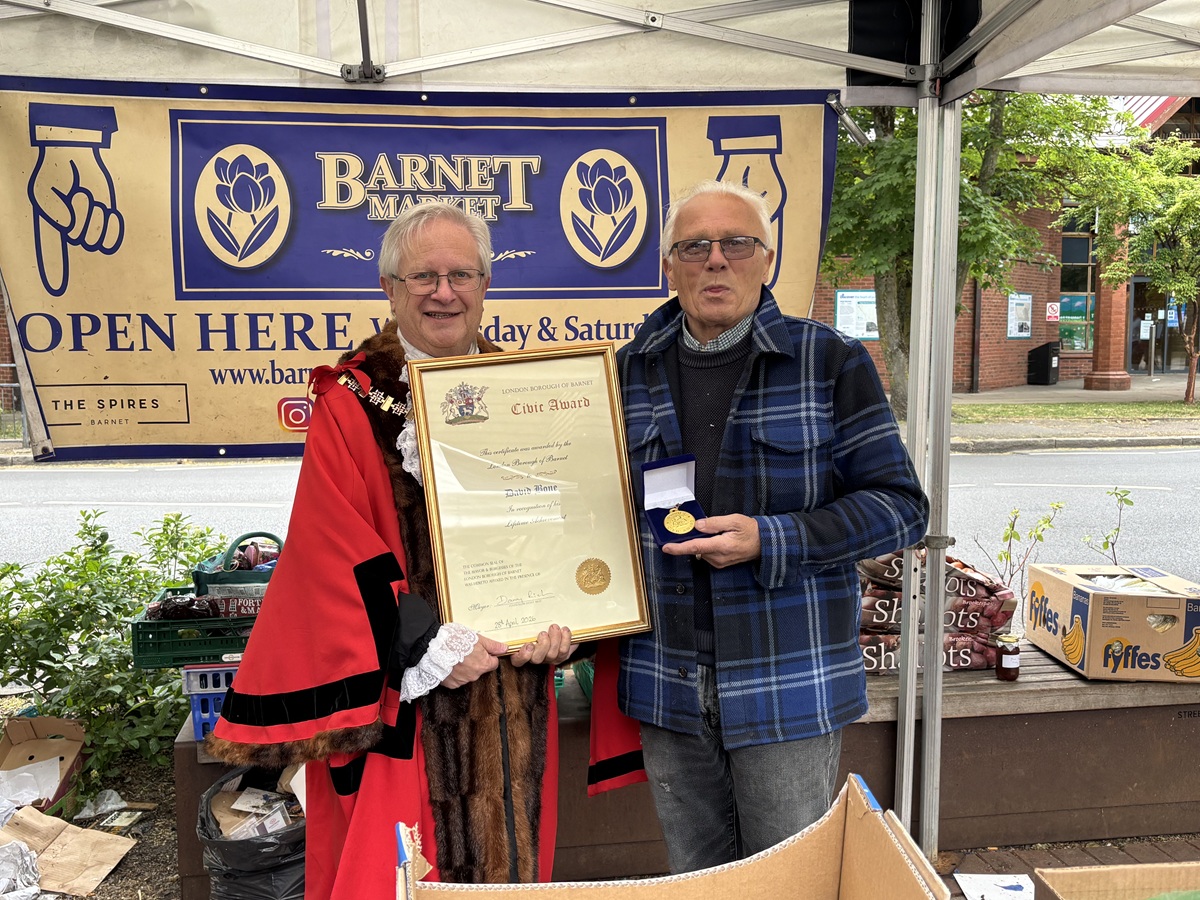
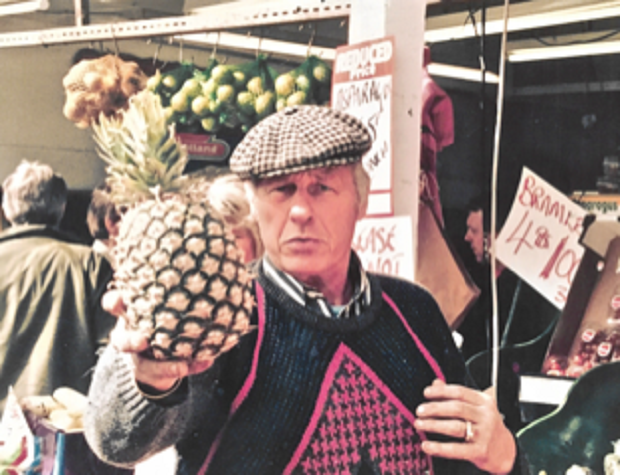
Lifetime achievement award for Barnet Market stallholder who had his first pitch at the age of eight selling cauliflowers

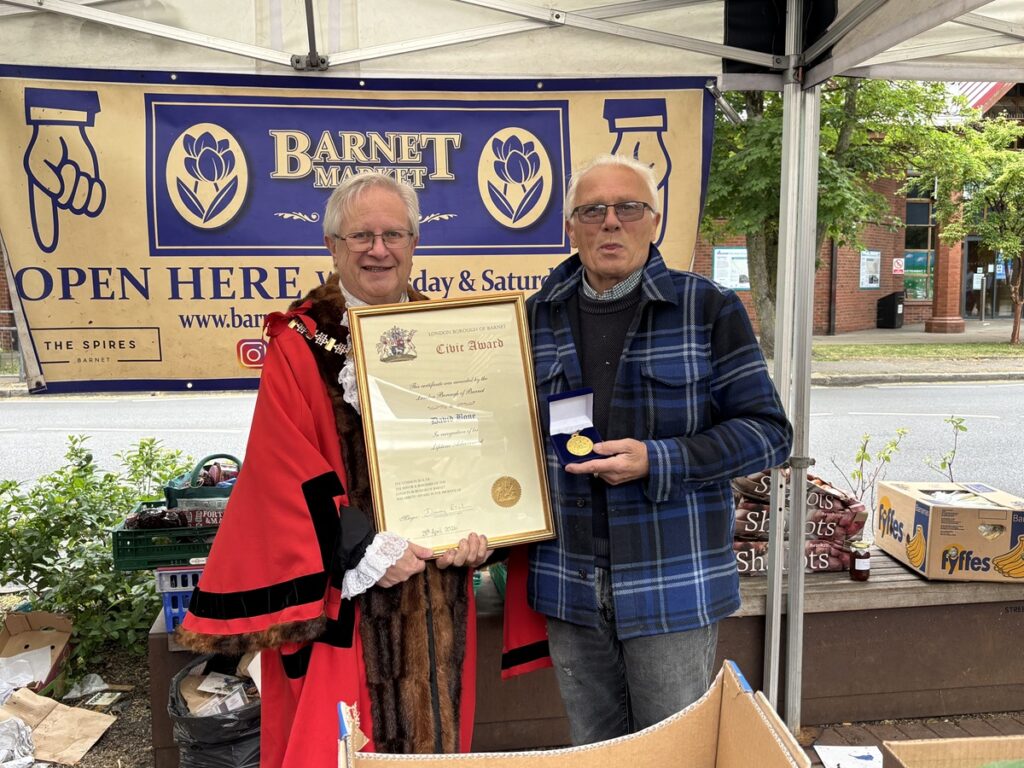
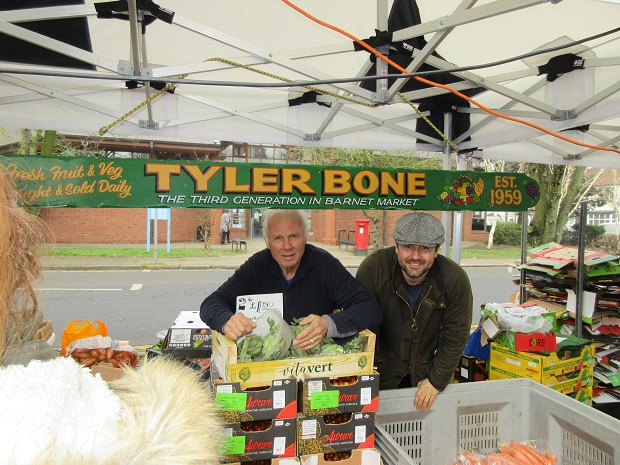
David Bone broke off from selling fruit and vegetables to accept a Civic Award for Lifetime Achievement in recognition of 65 years of service at the twice weekly Barnet Market.

He was unable to attend the annual awards ceremony at Hendon Town Hall, so the Mayor of Barnet, Councillor Danny Rich, paid an official visit to the Saturday market.

David, now 74, told the mayor he started at the age of eight helping his father Albert who in 1959 had opened the first fruit and vegetable market at what was then a cattle market.

“I was only eight, just a boy. My father gave me a jam sandwich, pushed me out, and told me to stand in the market selling cauliflowers.”

In presenting the award, the mayor told assembled shoppers that David had been “a fantastic” part of the market.

“That is what is so special about Barnet: people giving their time, devoting their life to serving the community.

“Barnet only runs so well as a town because of people like the Bone family.”

Barnet Market stall holder David Bone pressented with Borough of Barnet Civic Award for Lifetime Achievement by Mayor of Barnet, Councillor Danny Rich

David told the mayor that his son Tyler was now running the stall.

He said his grandfather, Albert Bone senior, had helped his father with the stall, so four generations had been selling fruit and vegetables at Barnet Market.

“Without my son Tyler running the stall, I would not be here today.”

 The citation for David’s 2026 Borough of Barnet Award for Lifetime Achievement recognised his “unwavering commitment and dedication” to serving generations of Barnet residents through rain, snow and sunshine.

Posted on 1 Comment

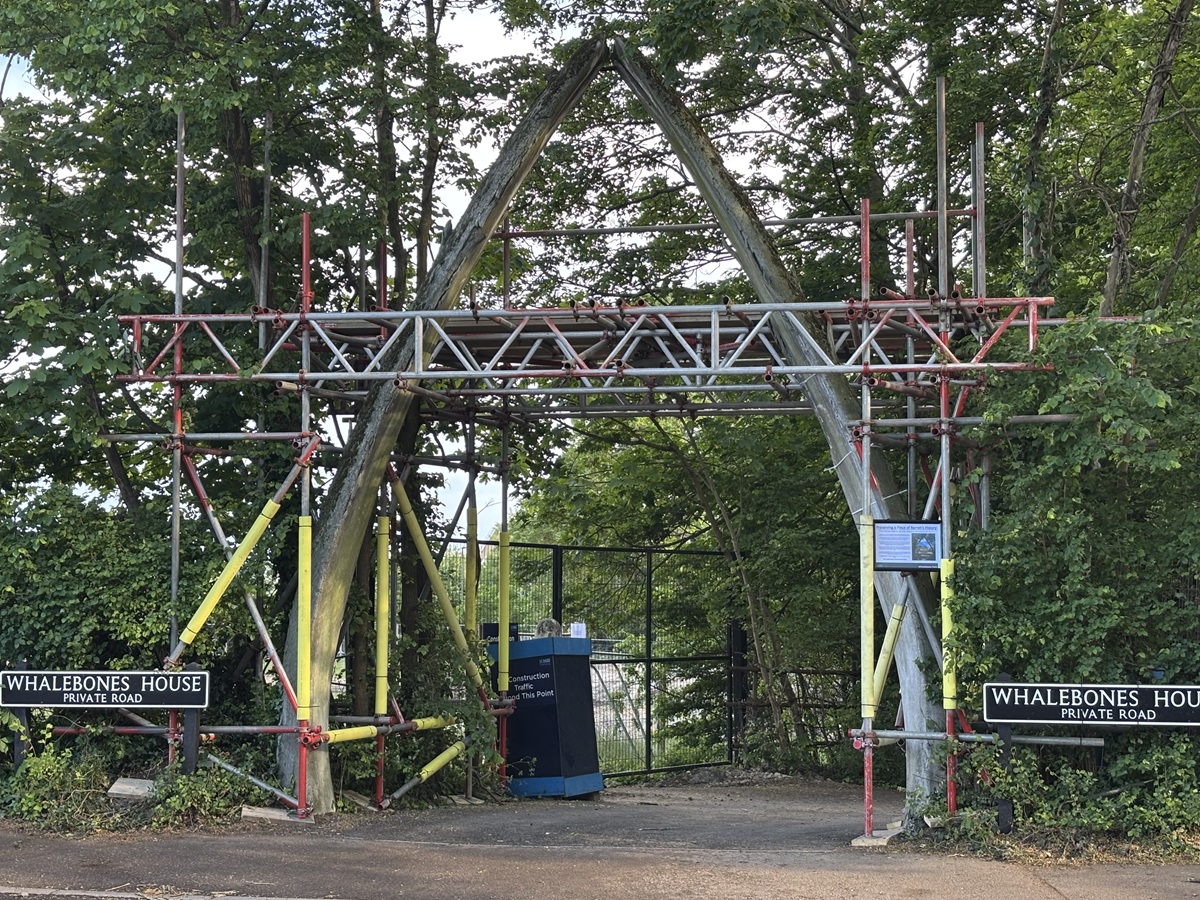
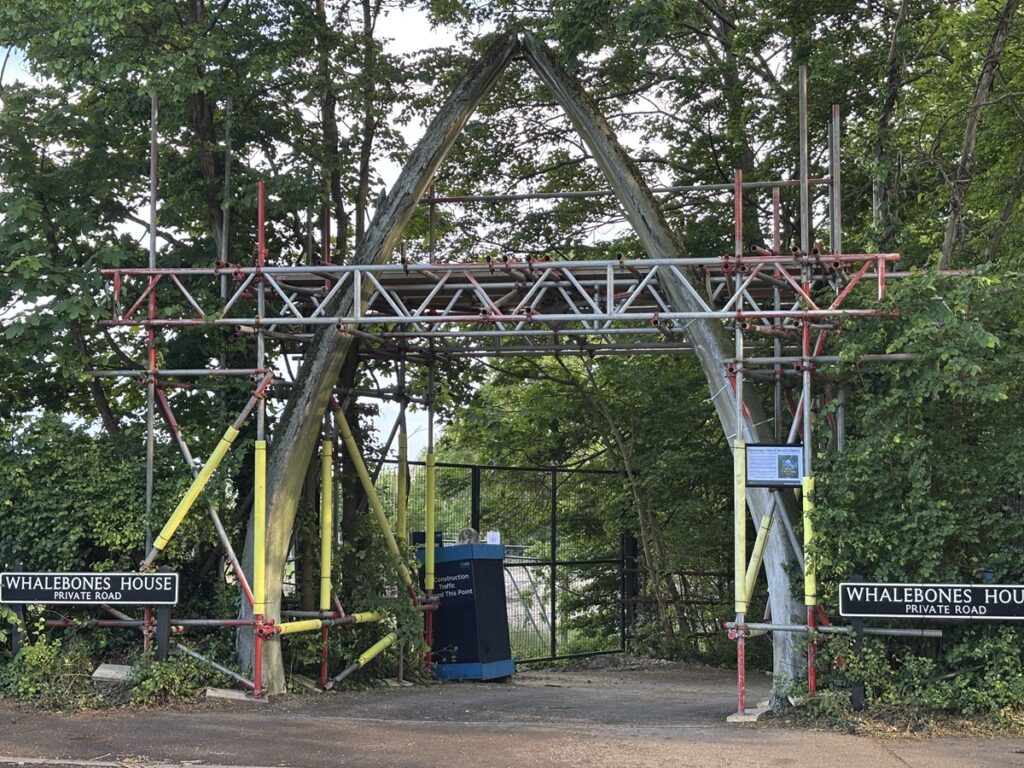
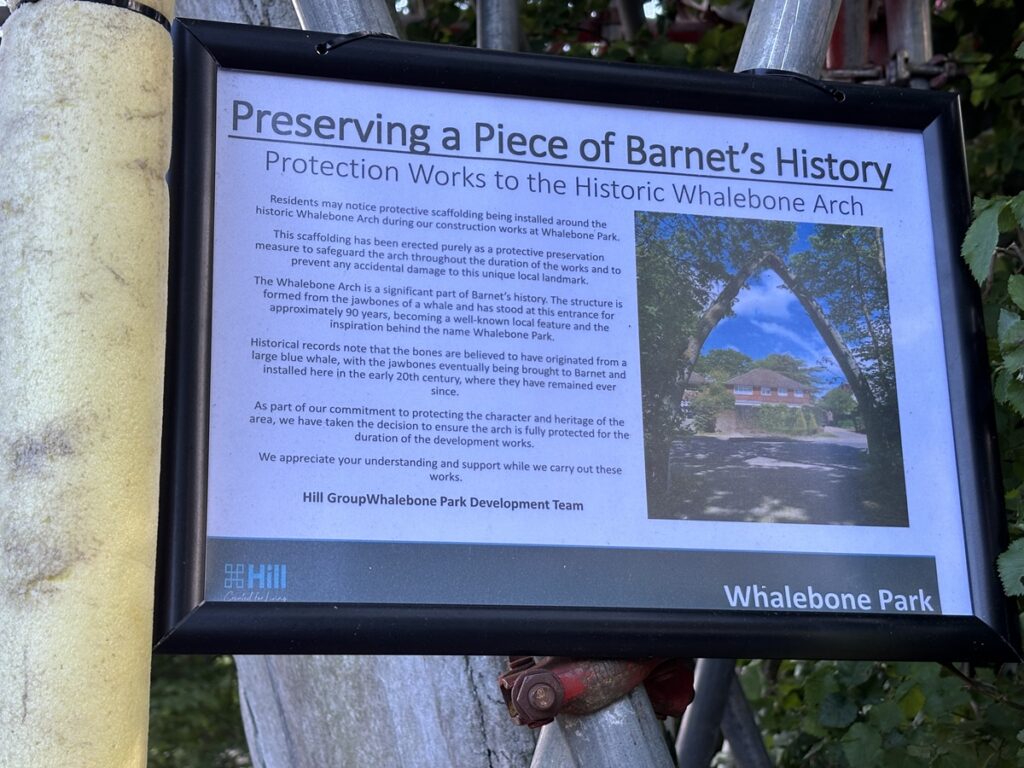
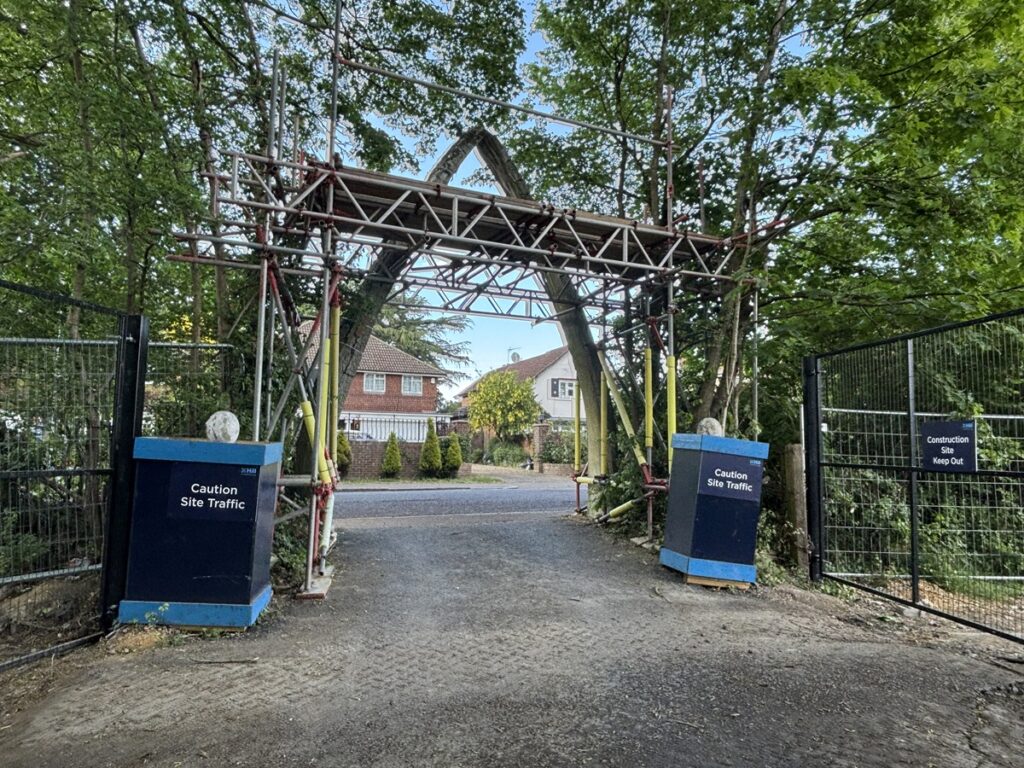
Facing an uncertain future: unsteady state of Barnet’s iconic whalebones archway – can it be repaired or replaced with a replica?  

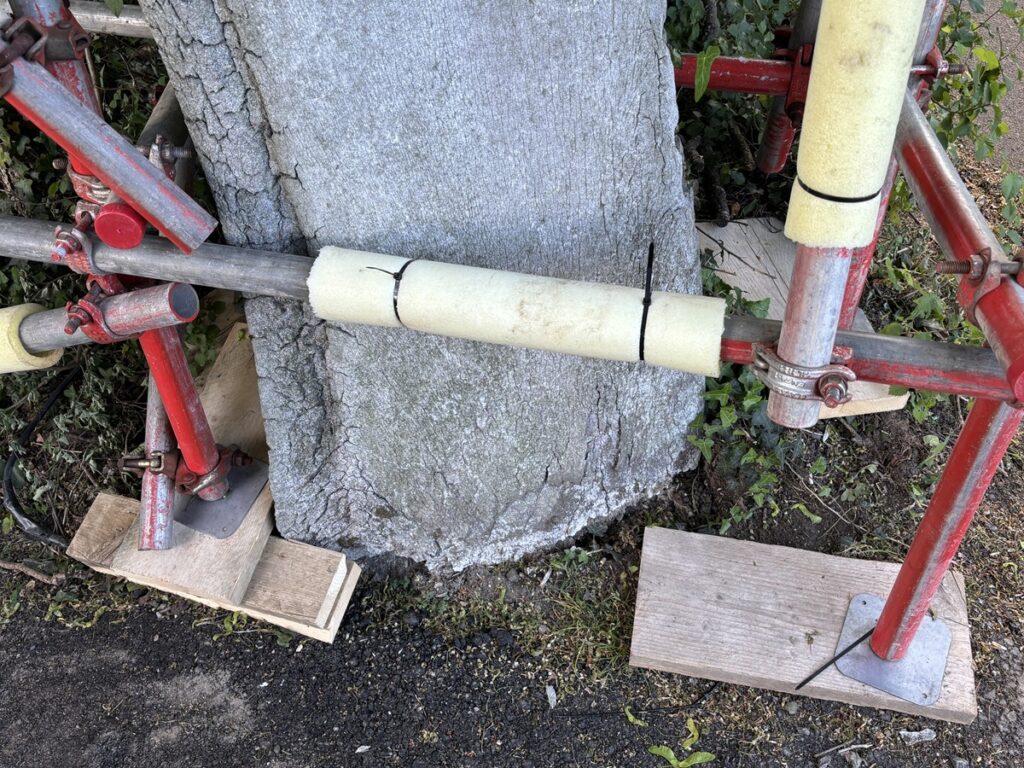
An historic whalebones arch beside Wood Street, High Barnet, has had to be encased in scaffolding after the owners of Whalebones House feared it might collapse and cause an injury to passersby.

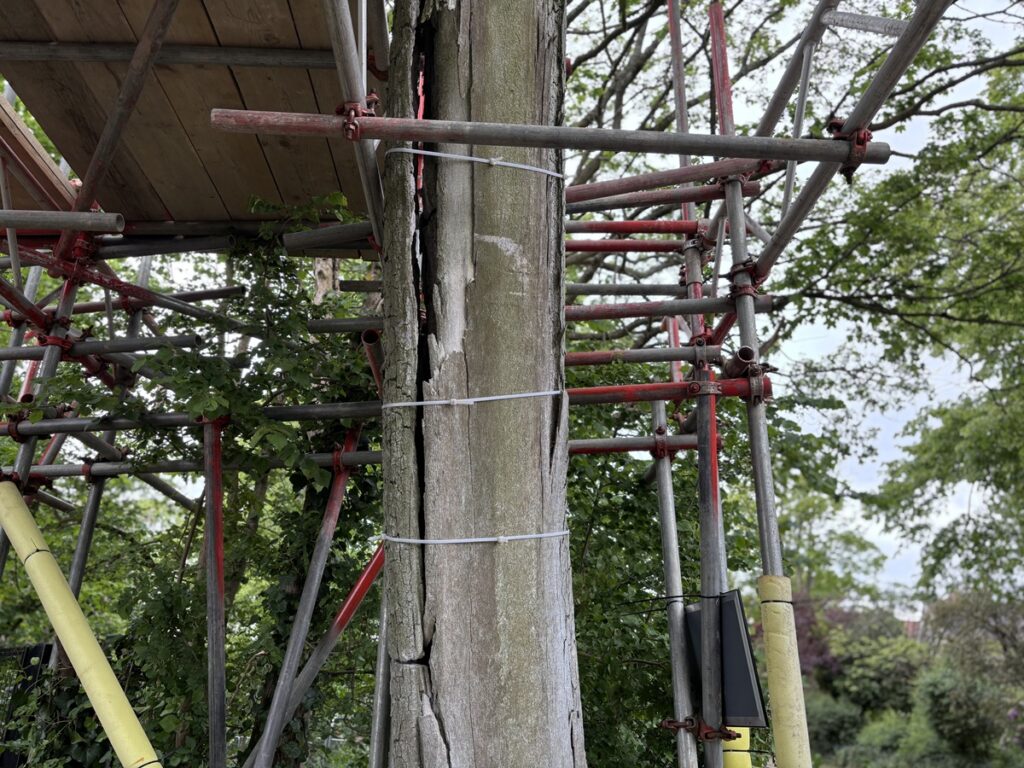
Signs of movement in its footings and cracks in the archway – once the jaw bones of a ninety-foot-long blue whale – prompted concern about its safety.

Hill Group, who are building 115 new homes in adjoining fields, installed the scaffolding as a protective measure to safeguard the arch and to preserve “a unique local landmark”.

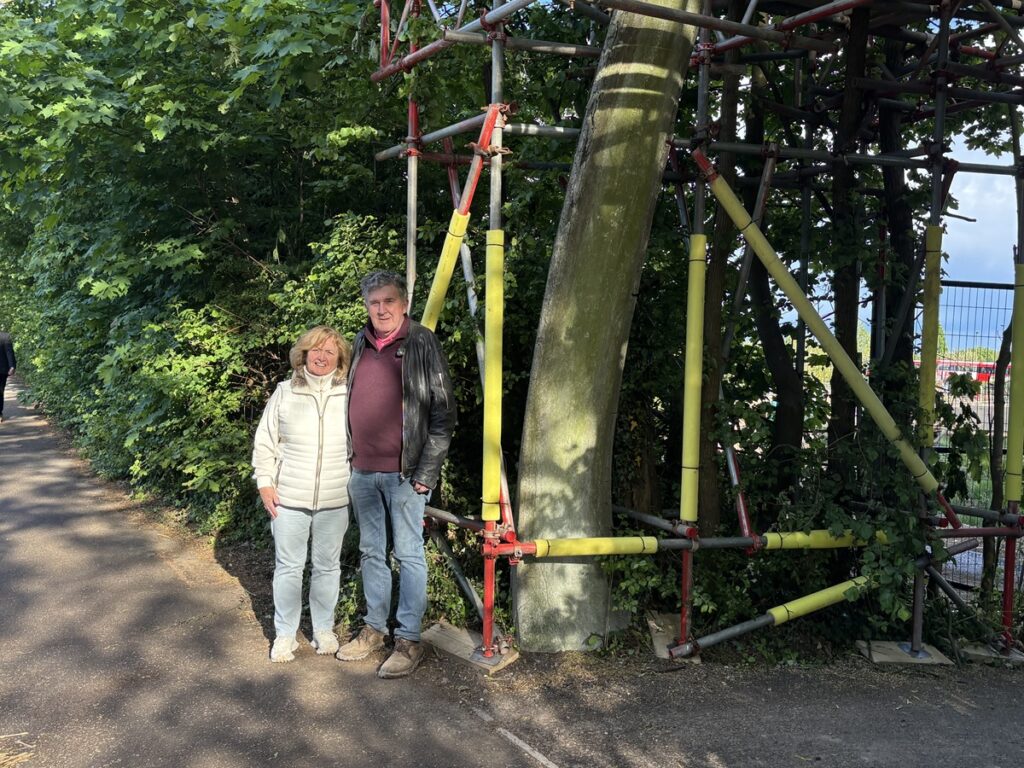
Hill’s intervention has been welcomed by the owners of Whalebones House, Patrick Shanahan and Helena Boland, who say urgent action is need to either repair the whalebones or replace them with a replica archway.

Straps have been applied around the surface to ensure there is no further fragmentation of the structure.

A set of jawbones was first erected as a gateway to Whalebones House in the 1860s or perhaps even earlier.

They were last replaced in 1939 by former owner of the house, Miss Gwyneth Cowing, whose family owned the Barnet Press newspaper.

She paid for two jawbones, each weighing three-quarters of a ton, to be transported to Barnet from Norway where the carcase of the whale, which had been captured in the South Seas, had been dismembered.

It took half a dozen workmen, under the direction of local builders W. Foster & Sons, all day to manoeuvre the gigantic jawbones into place and set them in six feet of concrete.

Cracks in the jawbone on the Arkley side of the drive started appearing at Easter; then its footing became dislodged; and it became clear the archway was in danger of collapsing.

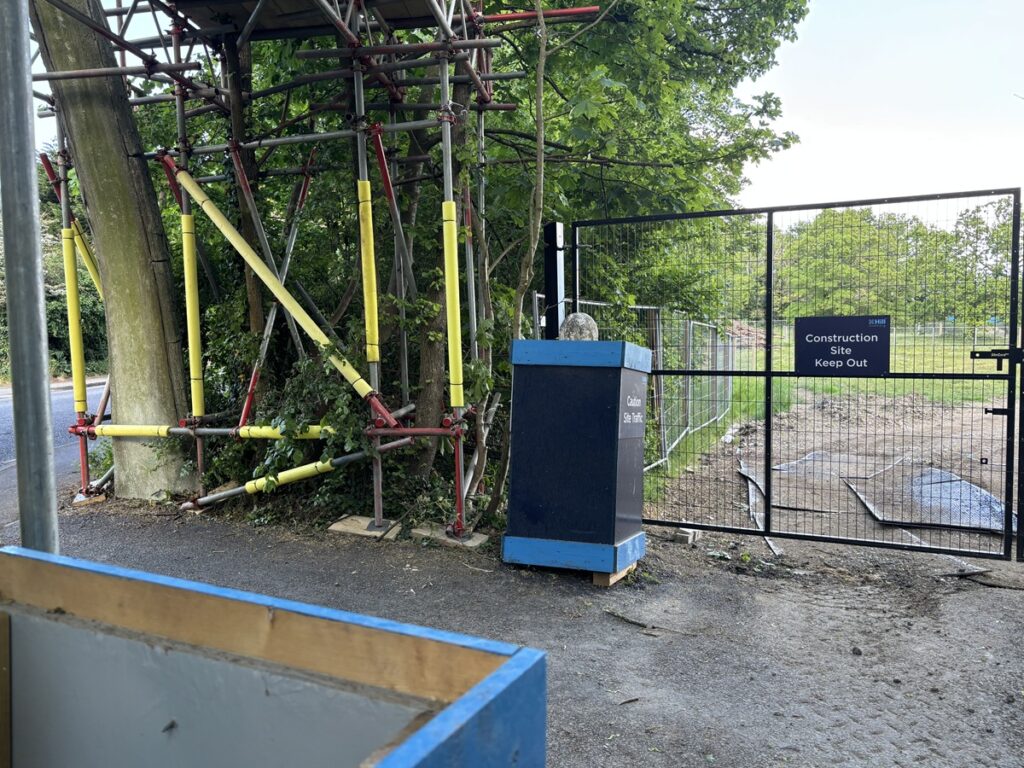
Mr Shanahan said he first became aware of the damage after heavy equipment being used by the contractors started crossing the driveway less than three metres from the jawbones.

“Excavators and piling equipment kept being moved to and from the main construction area to a smaller site off Wellhouse Lane where there is to be a new community building and studio for the Barnet Guild of Artists.

“Because of the fragile state of the jawbones we have asked the contractors to stop crossing the driveway and generating the kind of vibration which has clearly been having a devastating impact.”    

After alerting the Hill Group to what had happened, the owners of Whalebones House asked for advice from Barnet Council on the historic status of the whalebones and whether permission would be needed to dismantle the archway and install a replacement.

They hope that the Hill Group and the trustees of the Gwyneth Cowing estate – which sold off the farmland for housing – will contribute to the cost of repairing or replacing the archway.

“Hill are going to call their new housing estate and gardens Whalebone Park, so they have a responsibility to ensure the whalebones remain an integral part of the whole development,” said Mr Shanahan.

“So far we have been unable to gain any assistance from Barnet Council’s planning or heritage departments, and we are anxious to work out how best to safeguard the future of the archway.”

Whalebones House is a Grade II listed building of special interest and the whalebones at the entrance to the drive are specifically referred to in the appraisal for the Wood Street Conservation area which includes the Whalebones estate.

It says that the whalebones at the entrance sit within “a notable tree boundary and create an entry feature to the space.”

Mr Shanahan says former fishing and whaling communities which have historic whalebone arches, including Whitby in Yorkshire and coastal ports in Scotland, are facing similar challenges over how best to protect them.

“Resin bonding has been used to repair some arches. Others have been replaced with replica arches made from synthetic compounds, steel or even brass.

“We need advice and help in working out how the arch can be preserved or replaced.”

There are competing theories as to how and why whalebones were first erected in Wood Street.

One report in the Barnet Press suggested the famous polar explorer John Franklin (1786-1847) once lived in Whalebones and according to local thinking installed the first set of whalebones as early as the 1830s.

A week later the paper published an alternative version: Frederick Brown, who lived at 92 Wood Street, said his sister was married to Mr Easton, a Thames waterman, who had lived at the house and started the tradition.

Mr Easton had joined the firm of Smith and Sons, whalebone and sealskin merchants, who plied their trade from the Thames, and he obtained a pair of whalebones which it was thought were erected in the 1860s and gave the house its name.

Records at Barnet Museum suggest the house was built in 1815 and the first reference to it being named Whalebones was on a map dated 1872.

Motorists travelling along Wood Street often miss seeing the jawbones, especially when the trees and hedges are in leaf and much of that side of the road is filled in parked cars.

Pedestrians get a far better view and might like to renew an old Chipping Barnet custom: according to local legal it was good luck to walk under the archway, make a wish or share a kiss.

Over the years countless Barnet youngsters have marvelled at the size of the jaw bones from a blue whale, the largest species captured in the South Seas.

Angela Morris of King’s Road, Barnet, remembers that as a seven-year-old in the 1950s she attended a Brownie pack that met in the barn at Whalebones.

“In those days there were another two sets of whalebones, only much smaller. One was at the gateway to the house and one that had fallen down beside a path that went to the barn where the Brownies met.”

Posted on Leave a comment

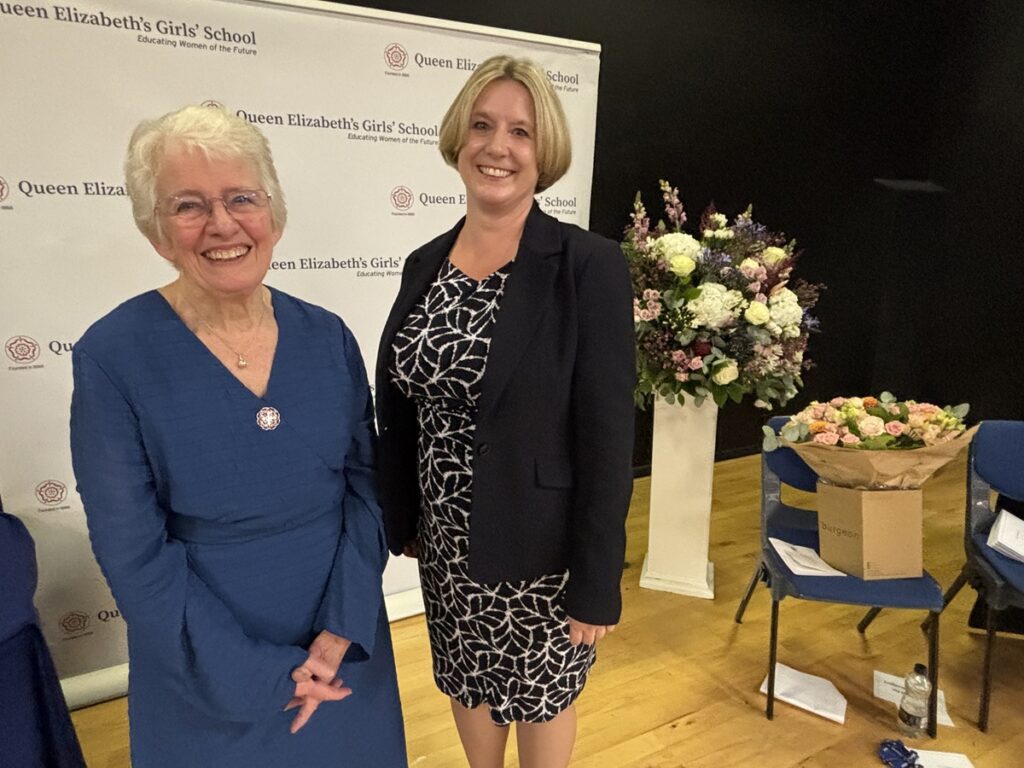
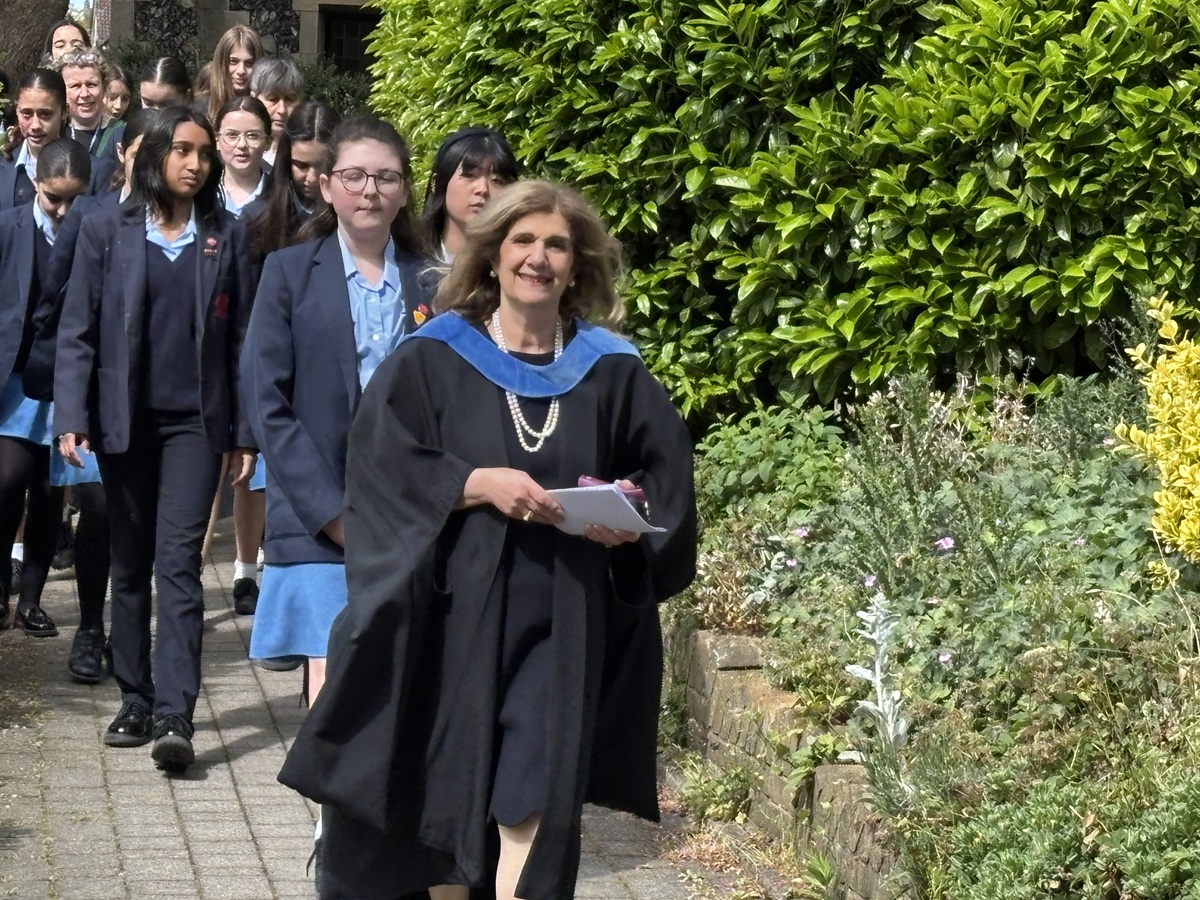
Service celebrating the founding of Queen Elizabeth’s Girls’ School – a tribute to retiring Barnet head teacher Violet Walker

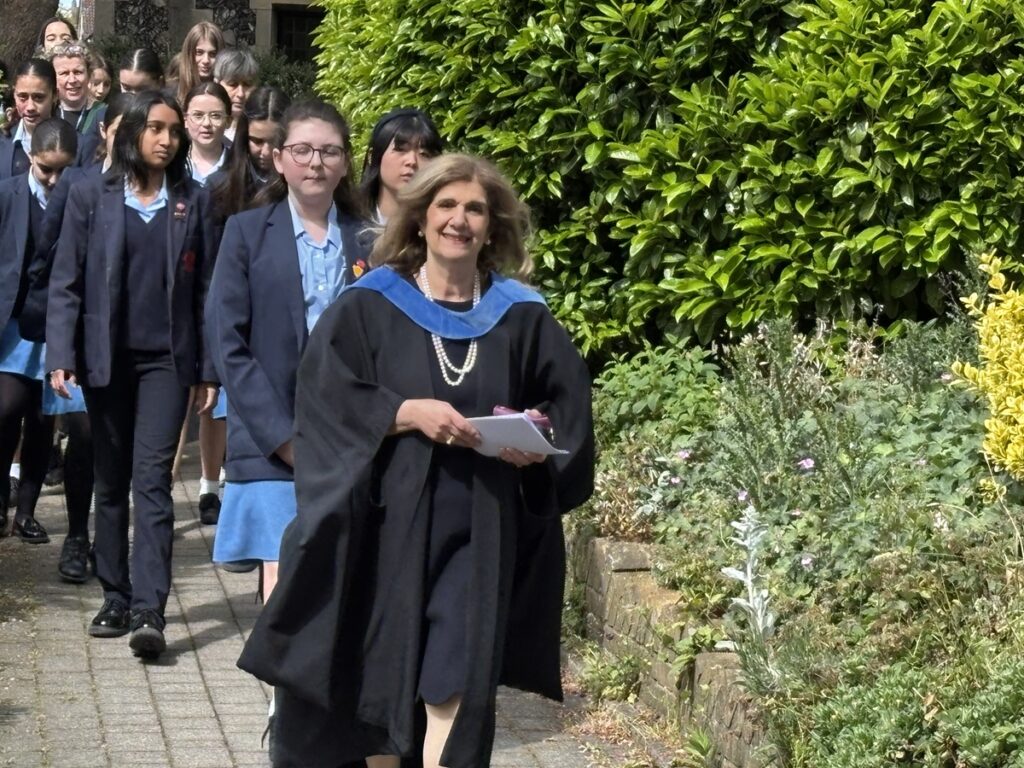
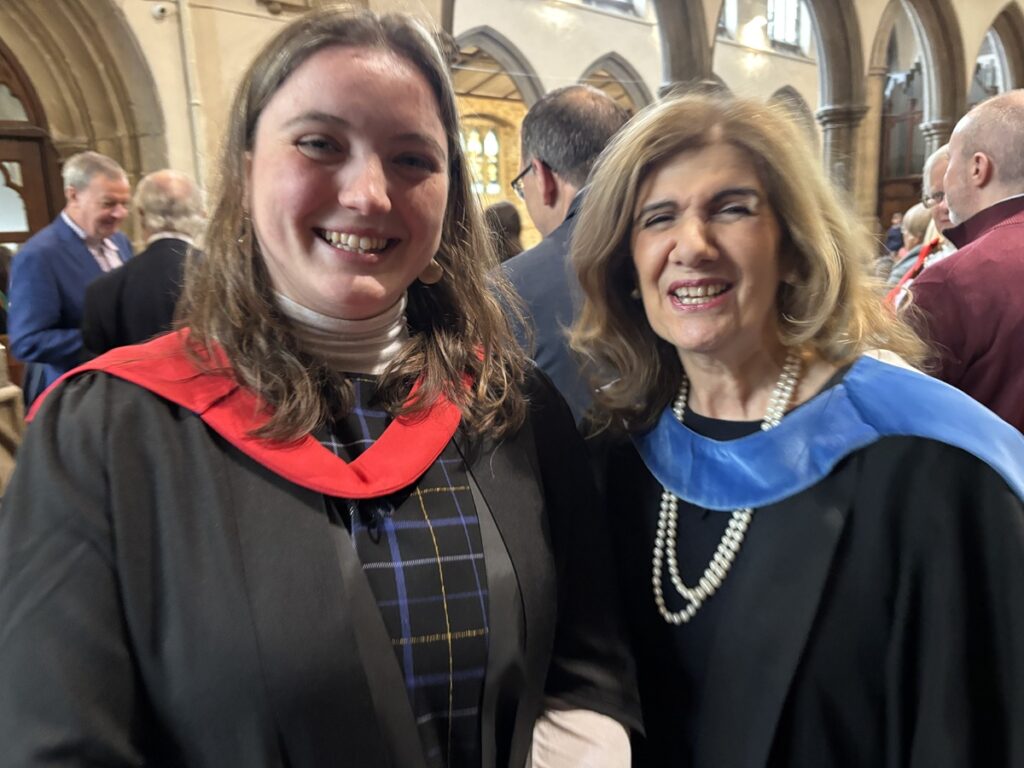
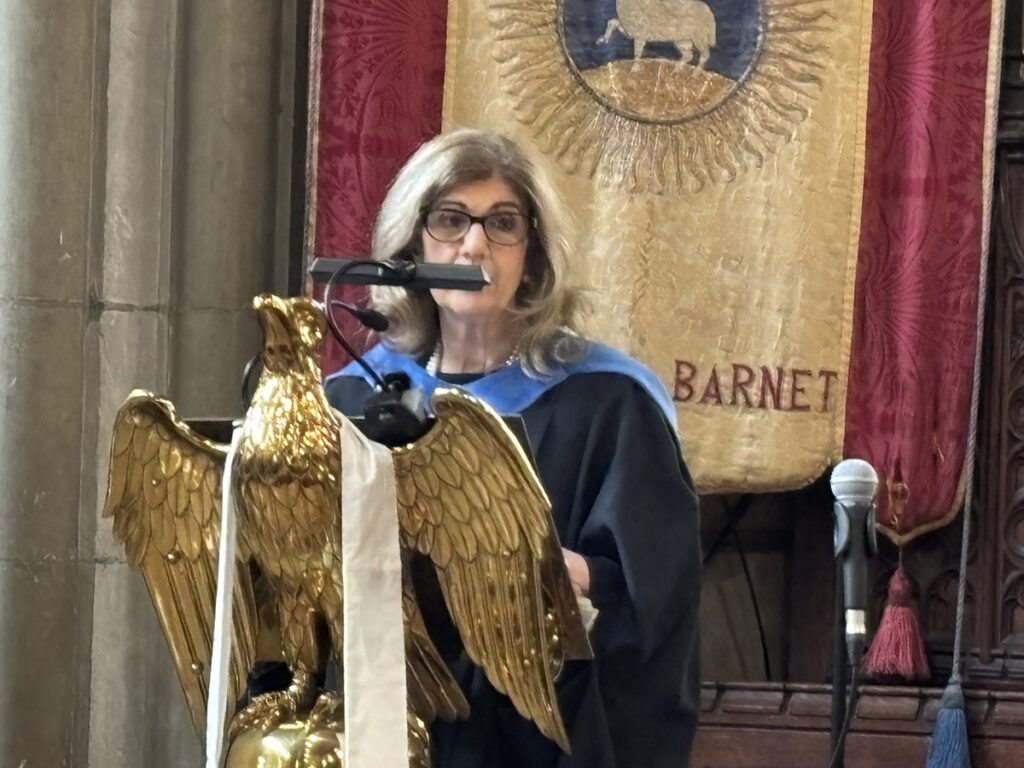
Violet Walker led her final commemoration day service as head teacher of Queen Elizabeth’s Girls’ ahead of her retirement at the end of the summer term.

Pupils walked in a procession up Barnet High Street to the parish church of St John the Baptist for the 138th celebration of the founding of a school which is one of the oldest and most successful all girls state schools in the country.

Mrs Walker reinstated the commemoration day service the year after becoming head teacher in 2015 and her final service featured another celebration of the past – the school’s chamber choir sang the original QE Girls’ school song which had not been performed since the 1960s.

Its title was the school motto – Ever in the presence of God – which used to be printed in Greek lettering around a symbol of a Tudor rose.

Resurrecting the song and getting it performed once again by the chamber choir became a personal mission for the school’s director of music, Cosima Rodriguez-Broadbent (left) who with Mrs Walker’s help managed to track it down.

“We hunted through the school’s archives and found a manuscript with the music and text,” said Cosima.

“I had to transcribe the music and with the help of the organist Jonathan Gregory we began rehearsals. The choir had to sign the chorus in Greek, so it was a real challenge.”

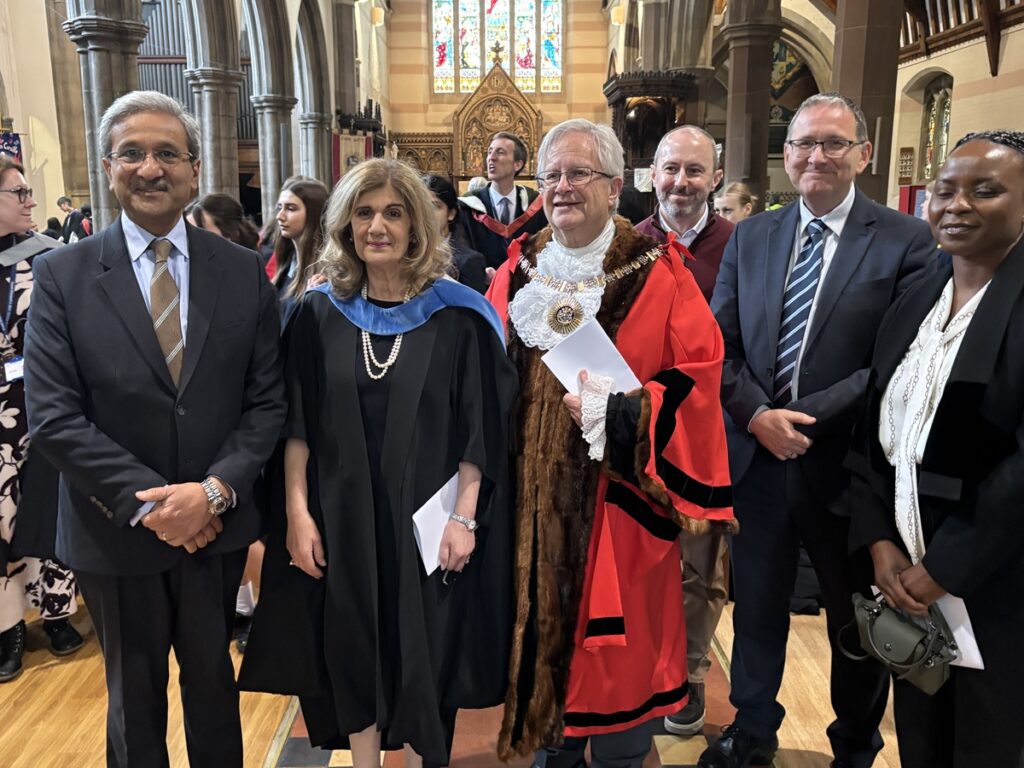
Guests at the service, who included the Mayor of Barnet, Councillor Danny Rich, congratulated the choir on a brilliant performance of what Jonathan Gegory said was a “robust song” which the pupils liked to sing.

Lines from the song reflected the school curriculum:

“Sing we the song of day that are,

When in this school those dreams come true,

When science in her heart reveals,

This old world ever new.”

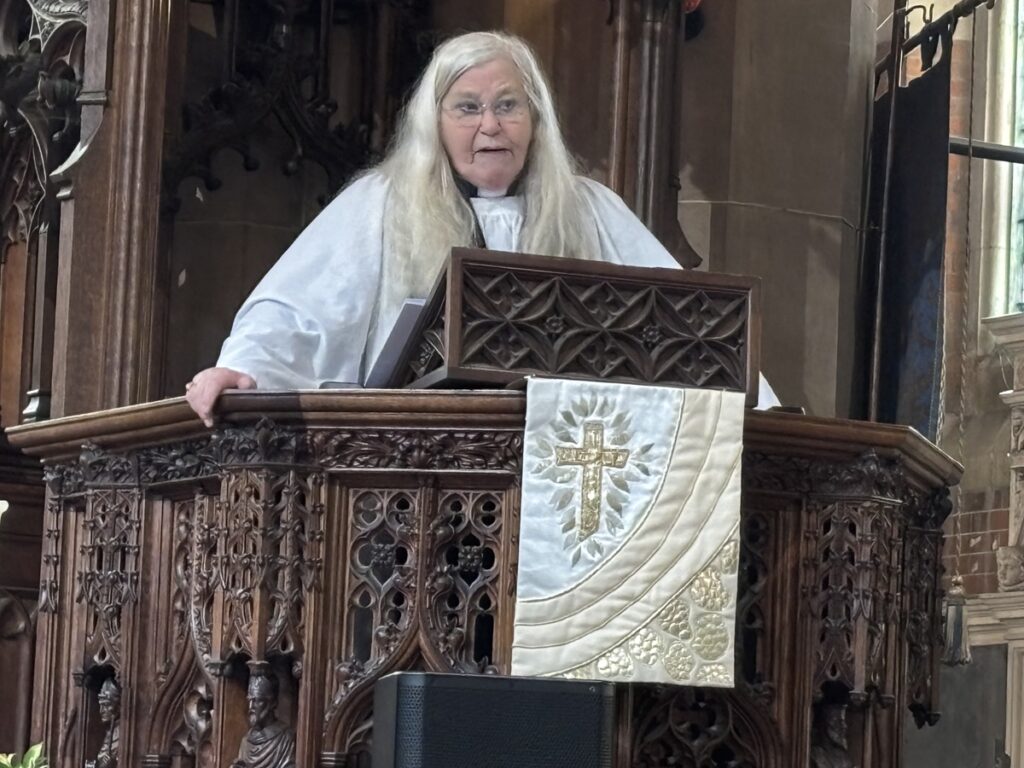
The service was conducted by the Reverend Cindy Kent who thanked the choir for reflecting on the school’s past – a reminder dedicated to Mrs Walker’s service as head teacher and whose inspiration it had been to reinstate the commemoration day service.

“Mrs Walker will be greatly missed, and I know the whole school community is so grateful for dedicated service to QE Girls.”

In her address, she advised pupils on how best to tackle tough times in their lives.

“Do try to be calm when things go wrong. Nasty things can happen and people can be unkind but do try to be nice to them.”

There was a chance for a chat with the pupils of today for three former QE Girls’ pupils – from left to right, Margaret Peart (Youngs), Val Mulder (Townsend) and Gill Williams (Rees) – who described what times were like when they started at QE Girls in the 1950s.

All three were present when Queen Elizabeth II visited the school – her first official visit to a school after her coronation.

“Remember in those days we were a grammar school and there were only around 500 pupils – far fewer than the 1,200 today,” said Margaret Peart.

“Back in those days all the girls wore Panama hats, and the police stopped the traffic for the procession from the school to the church.”

Violet Walker, Queen Elizabeth's Girls' School head teacher, leads her final commemoration day service ahead of her retirement at end of summer term

When Mrs Walker became head teacher in 2015 it was a case of coming home.

Not only was Mrs Walker a former pupil at QEGS, but she later returned to the school to complete her post-graduate training as a mathematics’ teacher.

From the start she said she intended to be resolute in her conviction that QEGS’ role was to continue to serve the Barnet area as a local community girls’ comprehensive, committed to reflecting the school’s history and traditions, while at the same time embracing the latest technological advances in teaching and research.

Mrs Walker (Violet Hamid) was a pupil at QEGS from 1969 to 1976 and has fond memories of the headmistress of her day, Miss Marjorie Payne, who was head teacher for 17 years and was widely respected.

A successor to Mrs Walker as QE Girls’ head teacher has yet to be announced.

QE Girls was established in 1888 and shares foundation trustees with QE Boys’ School, Barnet, which was created in 1573 by a charter from Queen Elizabeth I.            

Posted on 1 Comment

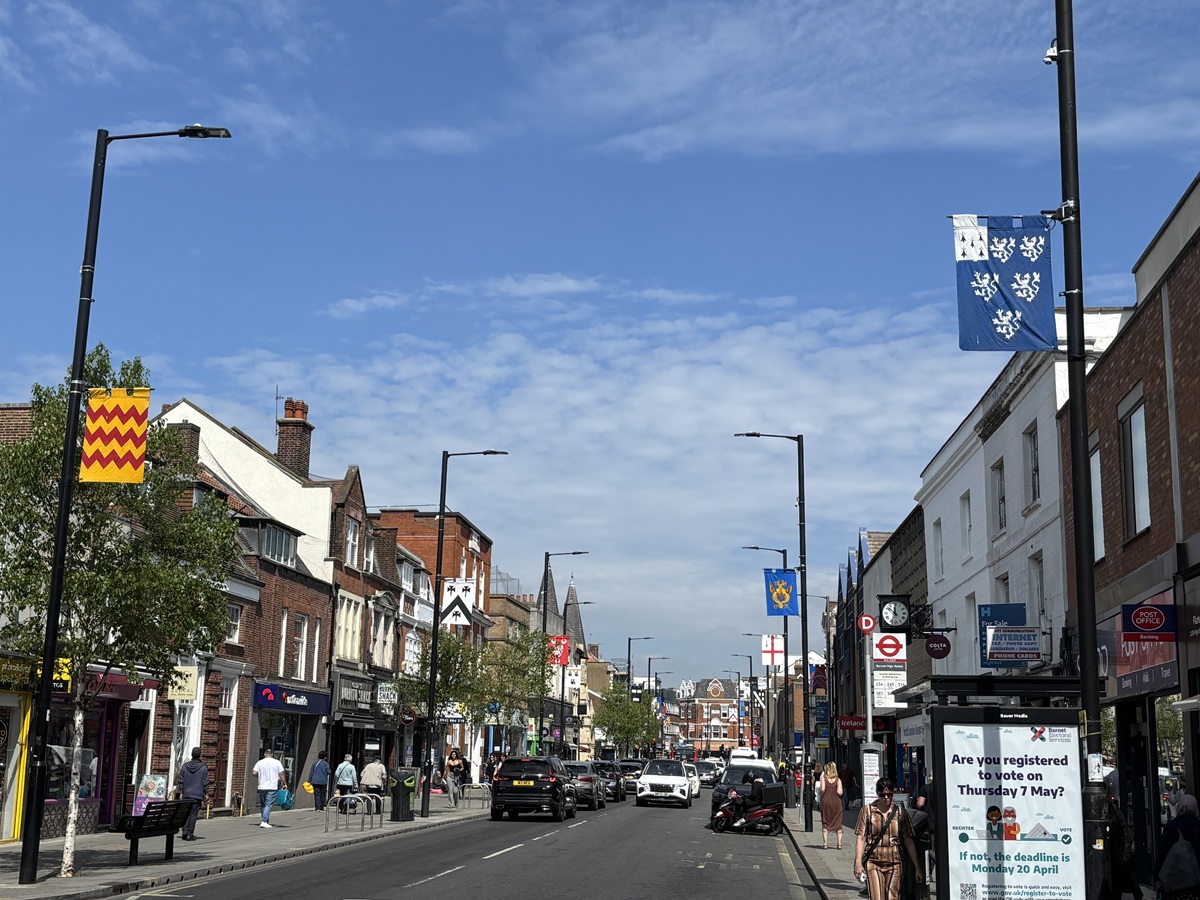
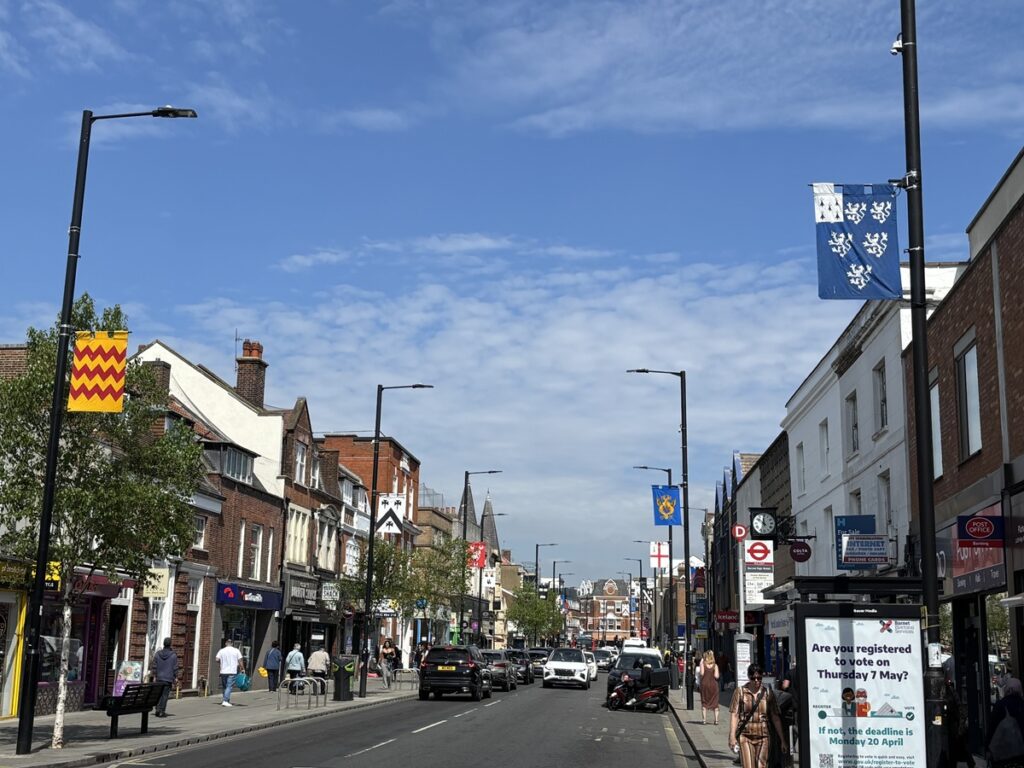
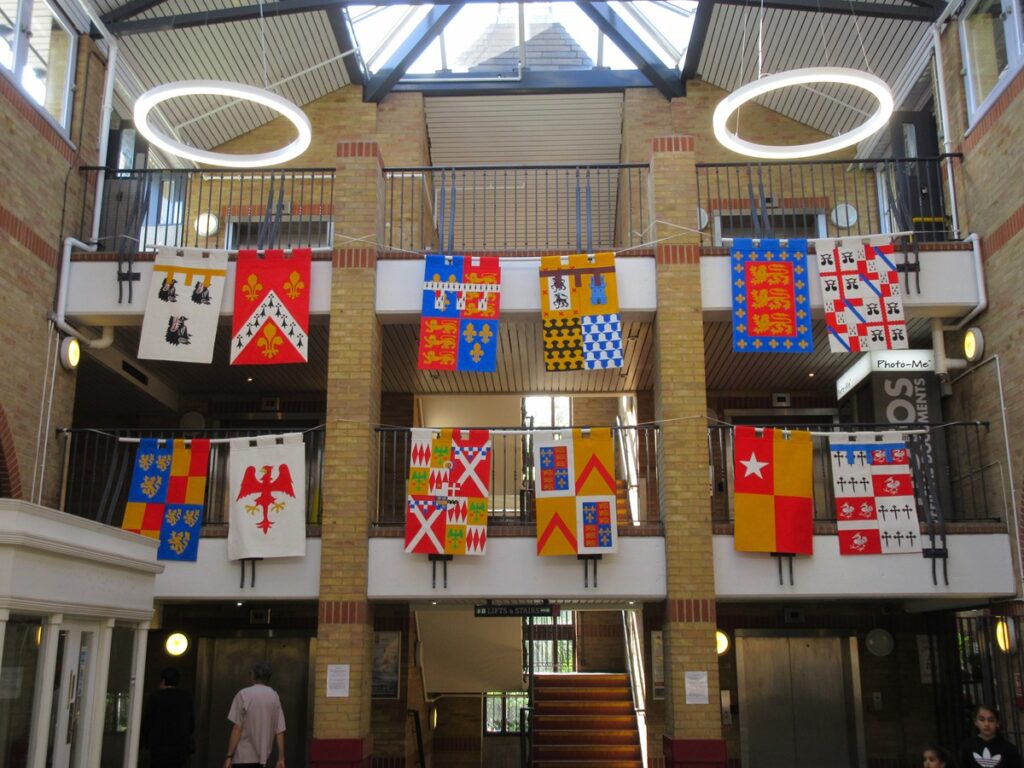
Barnet High Street has become a showcase for Battle of Barnet banners – a heritage asset which might get international recognition

Painting and caring for the Battle of Barnet banners which are displayed along the High Street each summer is an historic legacy for the town which volunteers at Barnet Museum hope might gain international recognition.

An application has been made by the museum to see if the craft of making and maintaining replicas of these medieval banners can be recognised by UNESCO as an intangible cultural heritage – a practice which is part of the cultural identity of a community.

Unlike tangible heritage, such as monuments or artefacts, an intangible heritage is passed down from generation to generation and is continuously being recreated.

Almost a decade ago Barnet Museum took inspiration from the town of Tewkesbury which has been celebrating the 1471 Battle of Tewkesbury for the last 50 years with re-enactments, a medieval festival and a display of heraldic banners.

Volunteers at Barnet Museum followed their example and started researching the history of the coats of arms of royalty and noblemen whose troops fought in the Battle of Barnet on April 14, 1471, the month before the Battle of Tewkesbury on May 4, 1471.

The application to UNESCO for a listing of intangible cultural heritage is now being made in conjunction with Wars of the Roses enthusiasts at Tewkesbury.

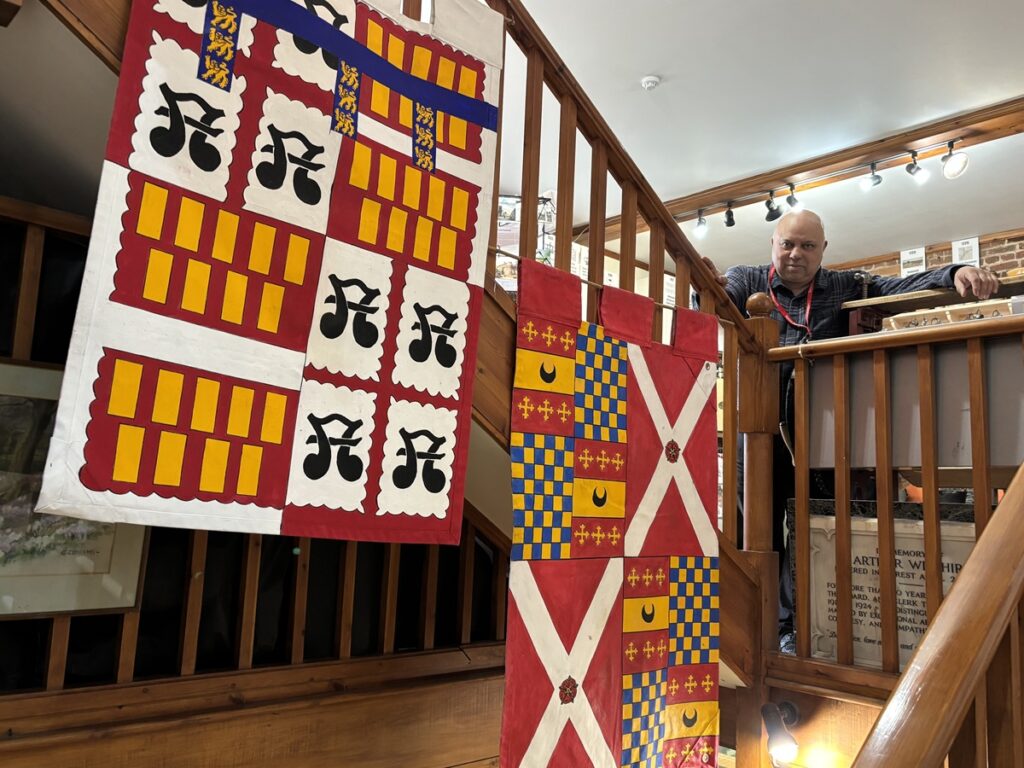
One of the first heraldic banners to be reproduced in Barnet was that of King Henry VI – seen above in 2018 with the museum’s curator Mike Noronhan and the deputy curator Hilary Harrison.

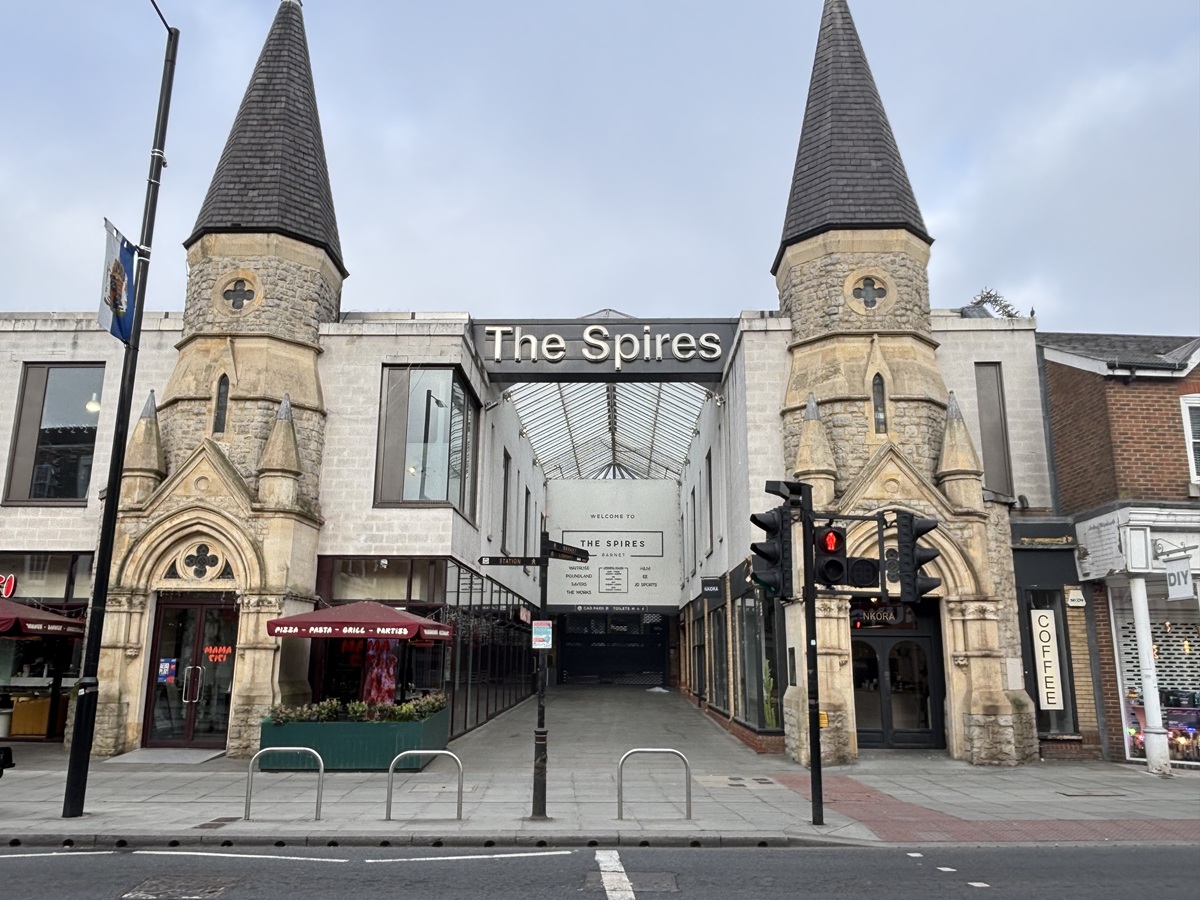
Permission was granted for a display of banners in The Spires Shopping Centre and agreement was reached with Barnet Council for them to be hung from lampposts along Barnet High Street.

All told the museum volunteers have now researched and painted 106 banners – of which 76 currently hang in the High Street and another 26 are displayed in various locations around the town including The Spires.

Barnet Museum is applying to UNESCO for recognition of its work painting and caring for Battle of Barnet heraldic banners to be declared an intangible cultural heritage

Mike Noronha said that once the museum staff heard about the UNESCO scheme for registering an intangible cultural heritage they decided to work with Tewkesbury in making an application.

“Painting, maintaining and displaying the banners is a real craft which we think we have mastered and which we think should be recognised.

“Each winter the banners have to be repaired and sometimes repainted as they get damaged in high wind, so this is an ongoing task for the museum.”

Mounting costs involved in hanging the banners along the High Street has become an issue.

Last year when it seemed there was some doubt as to whether they would be able to go ahead the Chipping Barnet Town Team stepped in and agreed to pay half the cost of the installation, work which was carried out by Barnet Council’s street lighting contractor.

This summer the council stepped in to meet the installation cost of £3,500, for which Mr Noronha said the museum was “hugely grateful”.

Posted on Leave a comment

Centenary of 1926 General Strike is a reminder of its impact in High Barnet and the role of the non-unionised Barnet Press

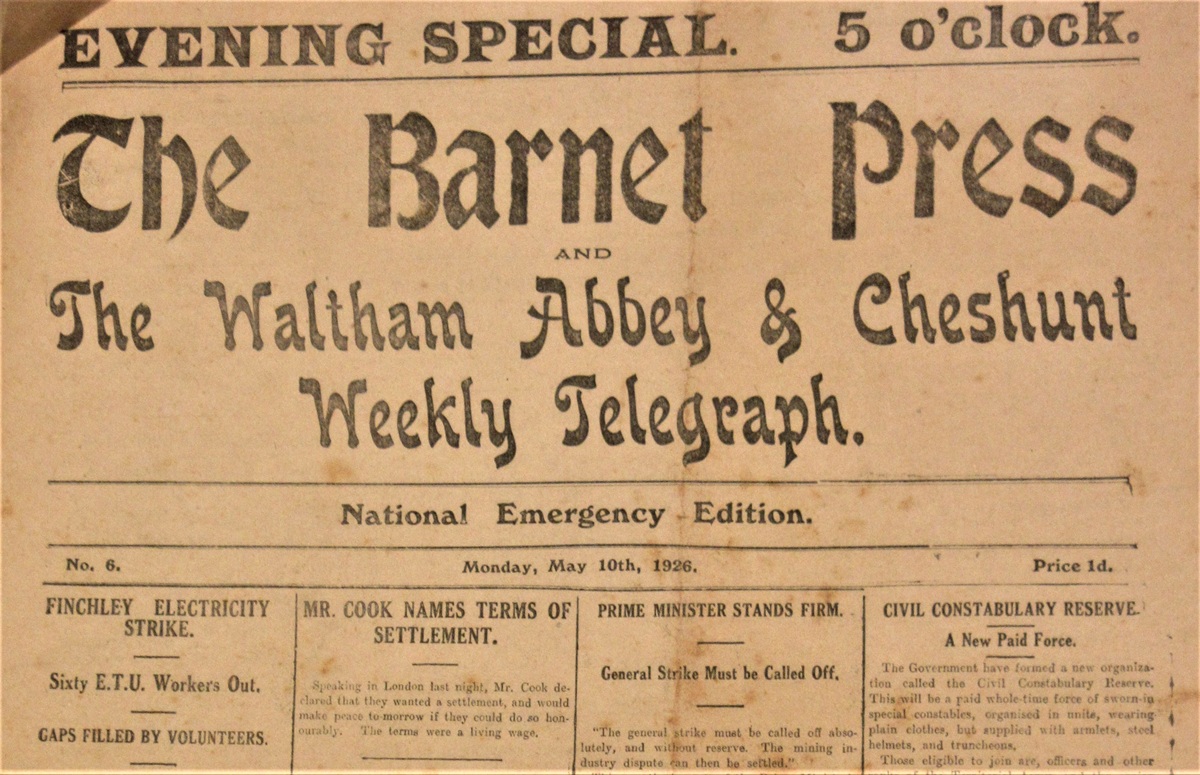
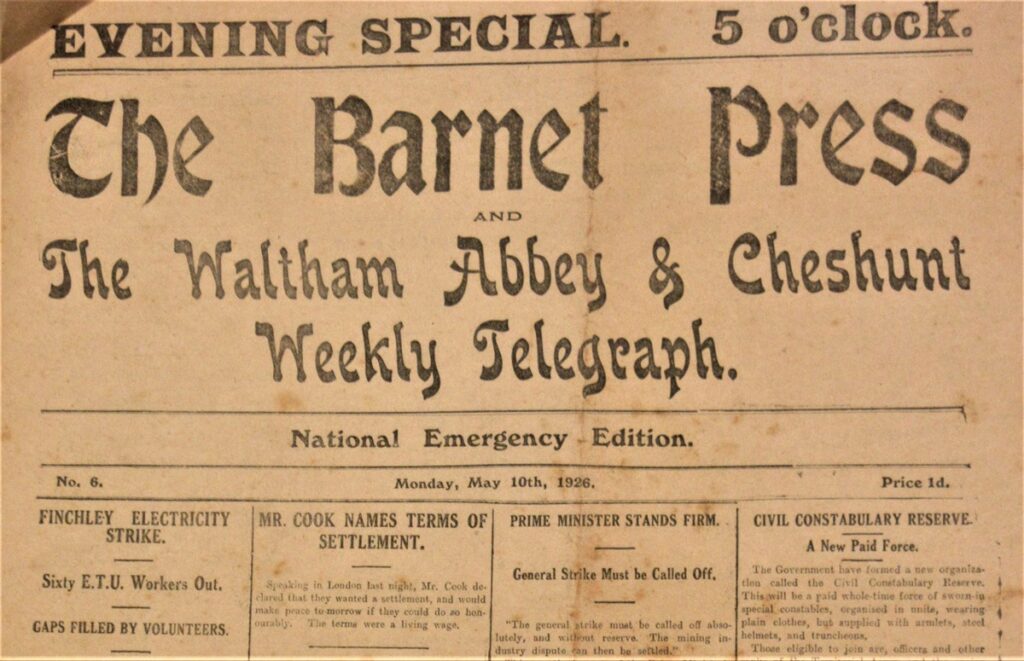
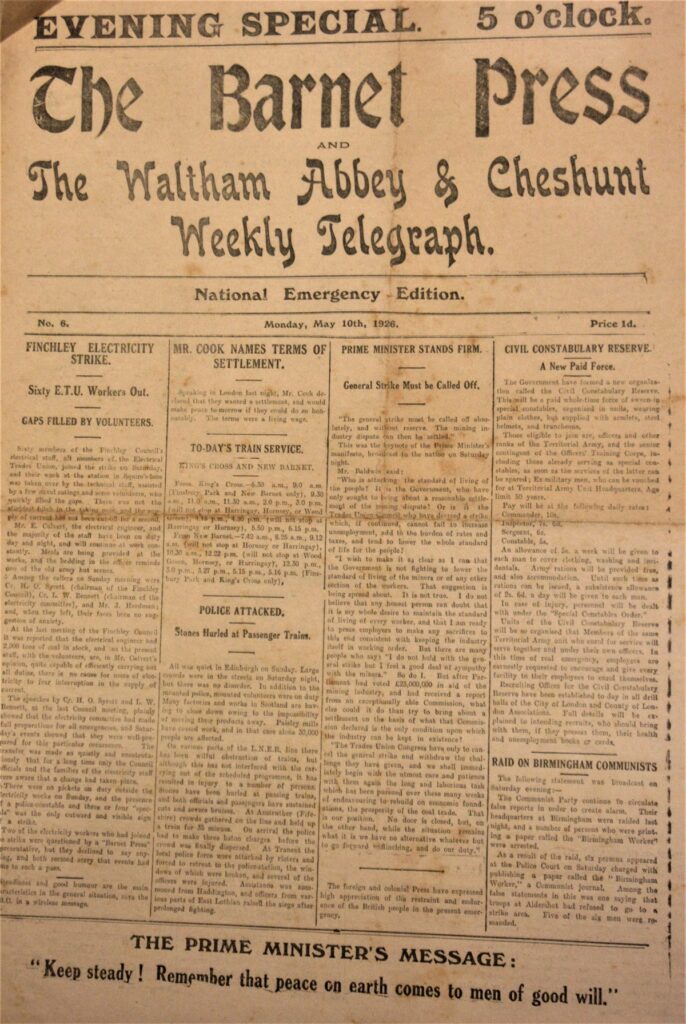
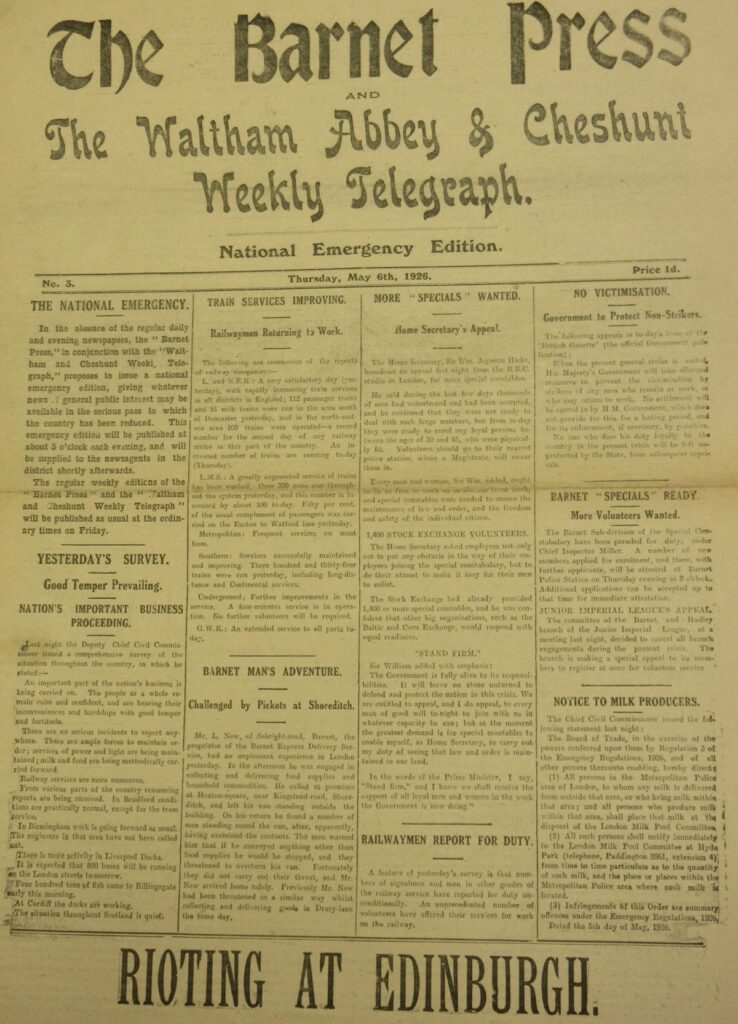
Such was the success and respect for Barnet’s former weekly newspaper, The Barnet Press, that a century ago it published an emergency edition on sale each evening in central London during the 1926 General Strike.

For just over a week there were no streetlights in Barnet town centre, an appeal was issued for volunteers for Barnet Special Constabulary, but food supplies in the town remained normal.

Nearly two million workers led by railwaymen, transport workers and printers joined the strike in support of a miners’ pay dispute.

Local action included a strike by 60 members of the Electrical Trades Union who worked at Finchley’s coal-fired power station in Squire’s Lane.

Finchley Council said there was not the slightest hitch in supply as technical staff and volunteers took over. The station had 2,000 tons of coal in stock. Meals were provided and there was bedding in the offices.

Historians describe the strike as the greatest act of working-class solidarity in British history.

Local newspapers around the country which were non-unionised seized the opportunity to print more copies as the national newspapers had been forced to suspend publication of all but a few emergency editions.

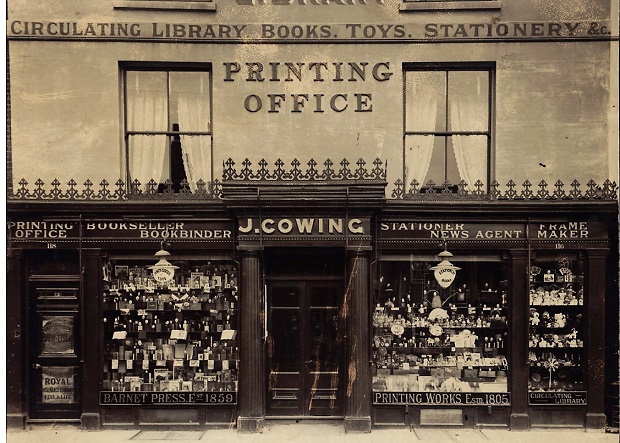
The Barnet Press, first published by George Cowing in 1859, was a family-owned weekly newspaper which defended its political independence and whose workers who were not trade union members.

The editor wanted to ensure that the public were informed about the strike.

A reporter was assigned to listen to BBC news bulletins and then write up news stories for a special daily edition as the Cowing family was anxious to inform readers about the “serious pass to which this country has been reduced”.

A 5 o’clock National Emergency Edition was printed for sale in central London.

The BBC – or British Broadcasting Company as it was then known – had only recently been established and had become a rival source of news to the newspapers.

By 1925 it was being broadcast across the UK. It was supplied with news and information by the Reuters news agency. Sales of radios increased dramatically during the strike.

BBC news bulletins became a vital source of national news for these small non-unionised local newspapers which upped their print runs to meet the extra demand generated by the absence of national dailies.

John Reith, then the managing director, was said by historians to have “prudently self-censored” the BBC’s output so as not alarm ministers fearing that government might requisition the service.

A selection of front-page headlines from The Barnet Press gave an indication as to why the Cowing family had not recognised the print unions: “Prime Minister stands firm”, “Rioting at Edinburgh”, “Motor cars attacked”, “Government to protect non strikers”.

It was not until the Second World War that printers at the Barnet Press joined a trade union, the National Graphical Association.

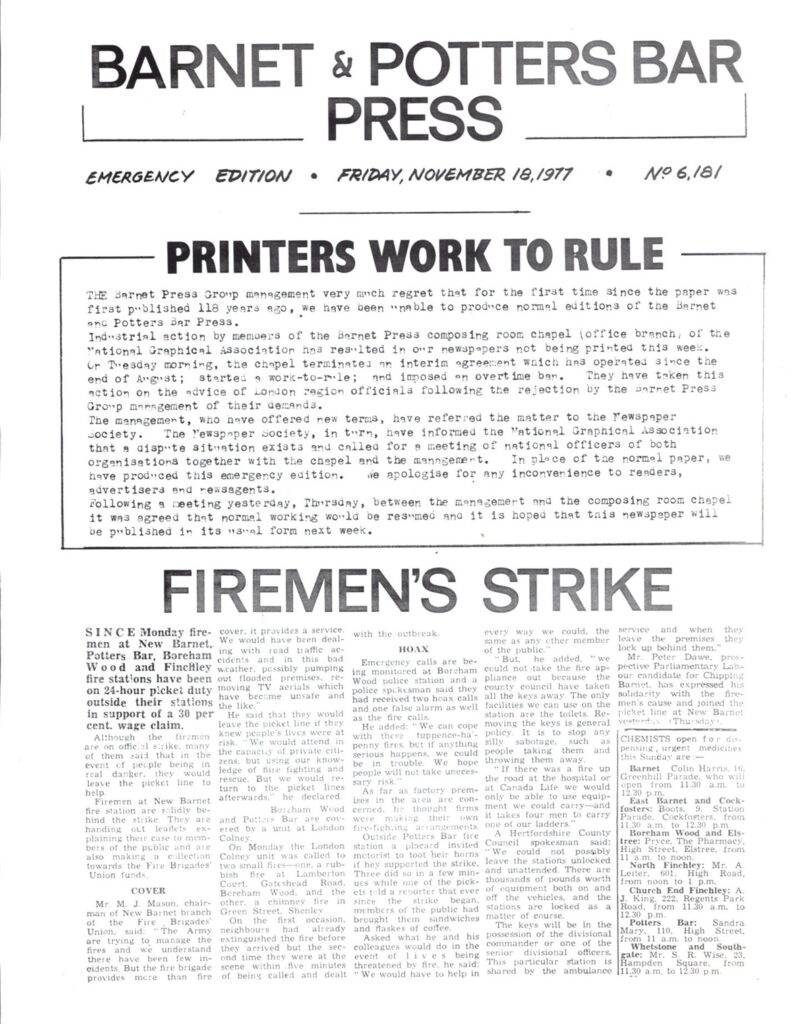
Publication of The Barnet Press was halted by industrial action in November 1977 because of work to rule.

A front-page statement on an emergency edition explained that had happened:

The Barnet Press group management very much regret that for the first time since the paper was first published 118 years ago, we have been unable to produce normal edition of the Barnet and Potters Bar Press.

“Industrial action by members of The Barnet Press composing room chapel of the National Graphical Association has resulted in our newspaper not being published this week.”

Trustees for the Cowing estate sold off The Barnet Press in the 1990s. It continued publication under new ownership in Hendon until its final closure in August 2017.

Posted on Leave a comment

Civic awards for legendary Barnet Market trader David Bone and Barnet Museum’s deputy curator Hilary Harrison

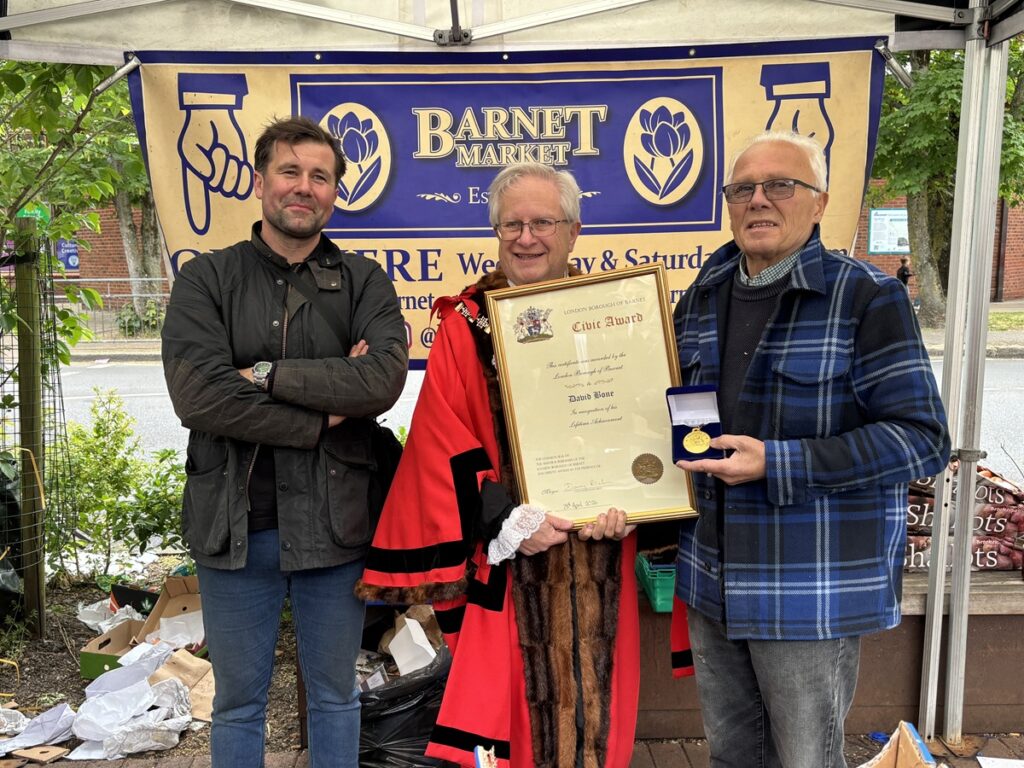
Barnet Market stalwart David Bone, who has been selling fruit and vegetables since he started as a boy at the age of seven helping on his father’s stall, has been awarded a 2026 Borough of Barnet Civic Award for Lifetime Achievement.

His award is recognition of 65 years of “unwavering commitment and dedication” to serving generations of Barnet residents through rain, snow and sunshine.

David – above left, with his son Tyler who now runs the family stall – was praised for his legendary reliability among customers and fellow traders.

Other award winners included a Civic Award for Lifetime Achievement for the late Christine Shields, for her contributions to the East Barnet Residents’ Association and the East Barnet Festival and her role as school governor and hospital volunteer.

A Civic Award for Outstanding Service to the Community went to Sheila Gallagher, in recognition of her initiative in setting up and sustaining the Chipping Barnet Foodbank.

Hilary Harrison, deputy curator of Barnet Museum, was awarded a Civic Award for Outstanding Service to the Community for her work “championing Barnet’s history, heritage, culture and identity”.

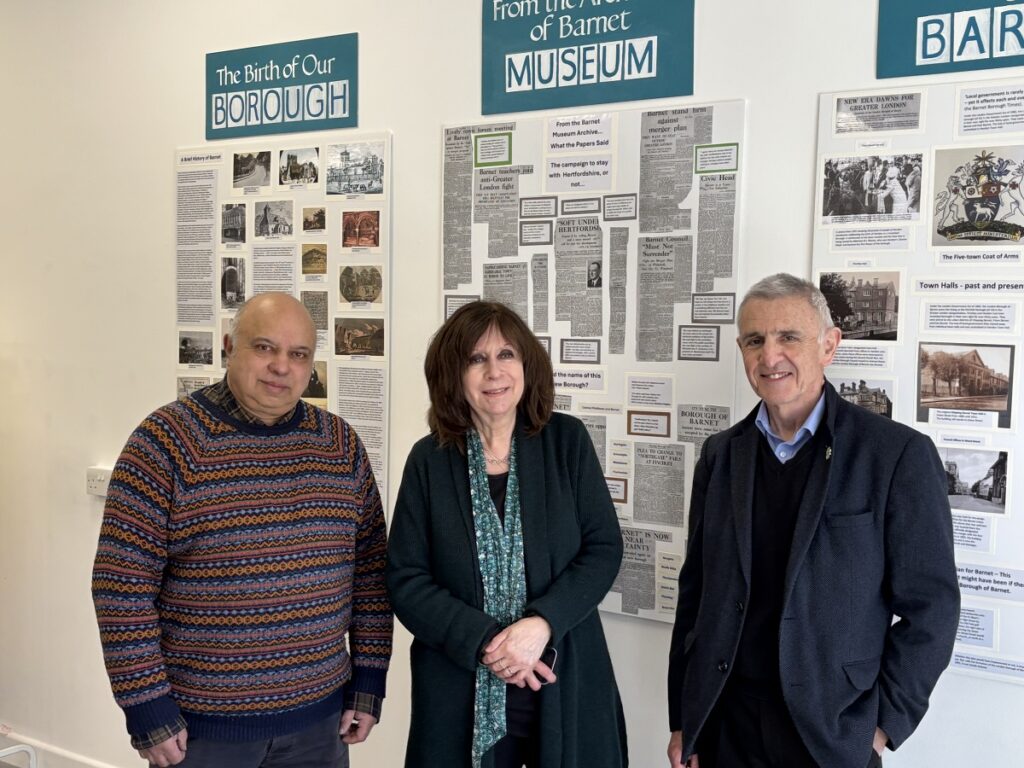
An exhibition for which she collected and assembled the information was the display at The Spires to mark the 60th anniversary of the London Borough of Barnet – see above, from left to right, Mike Noronha, Barnet Museum curator; Hilary Harrison, deputy curator; and Councillor Paul Edwards.

In the citation for her award, Hilary was praised for her role in organising the 60th anniversary display, her work in preparing the annual display of Battle of Barnet banners and for her role at Barnet Museum leading education and outreach activities with local schools and community groups.  

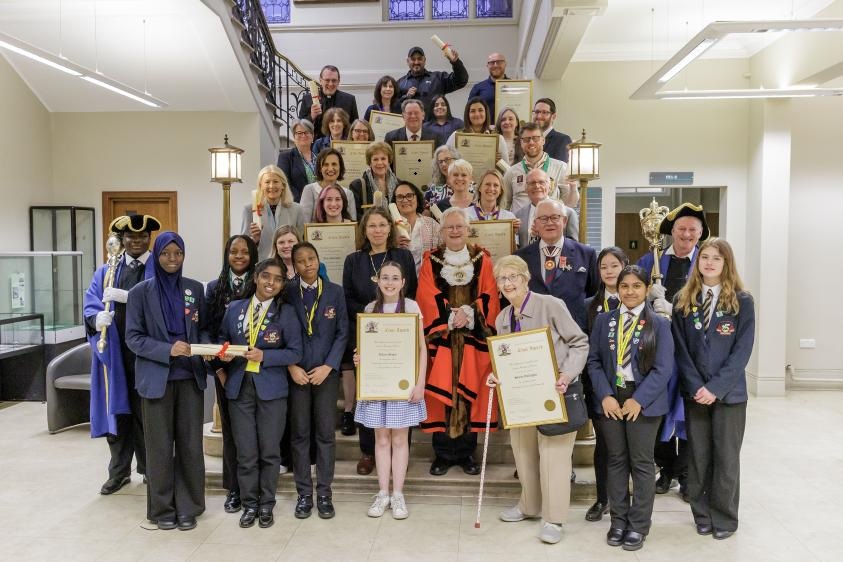
The 2026 civic awards ceremony was held at Hendon Town Hall where the Deputy Lieutenant for the Borough of Barnet, Martin Russell, read the individual citations for the awards which were presented by the Mayor of Barnet, Councillor Danny Rich.

Civic awards for Barnet Market trader David Bone after 65 years' legendary service and for deupty curator at Barnet Museum, Hilary Harrison

David Bone’s long connection with Barnet Market began in 1959 when his father Albert – see above – opened the first fruit and vegetable stall at what was then the Barnet cattle mark.

Albert, who died in 2021 at the age of 95, was helped on the stall by his wife Joan, his son David, and his sisters Roma and Rachel.

David started a separate vegetable stall next to his parents’ pitch when he left school, and he now assists his own son Tyler who runs the family business.

“It’s always been a family affair. My father’s father, Albert Bone senior, used to help, and now my son Tyler runs the business. So that’s four generations who have been serving customers in Barnet.”

Posted on 3 Comments

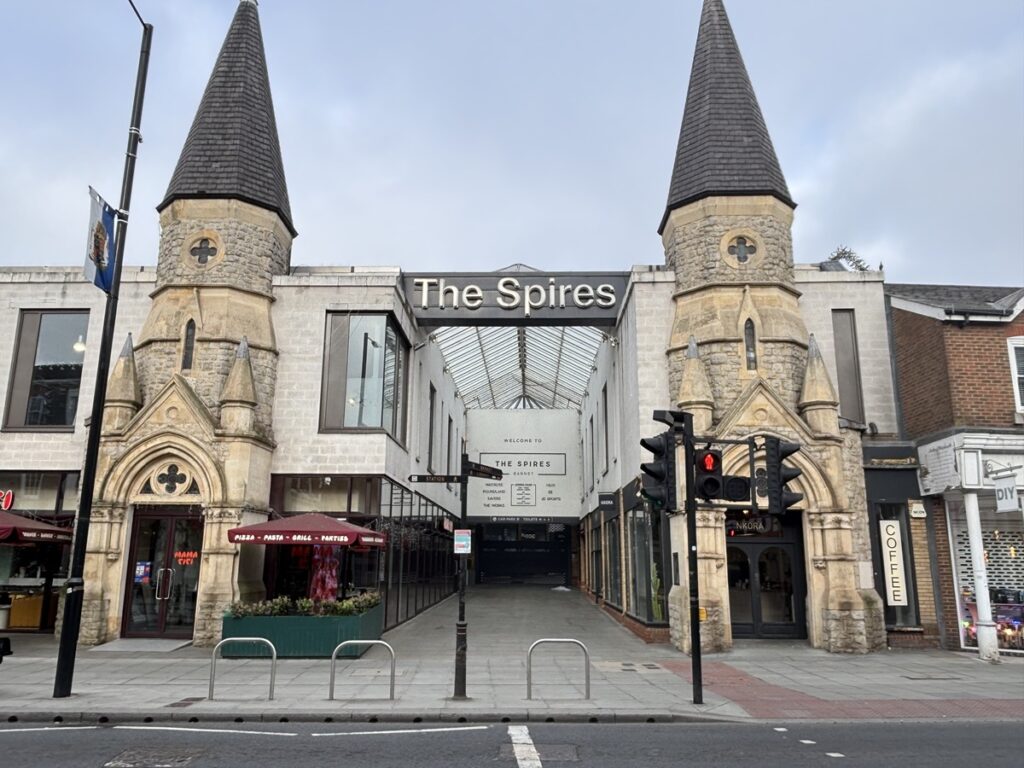
Leaseholders of The Spires Shopping Centre in administration – Chipping Barnet Town Team seeking full explanation 

Chipping Barnet Town Team are seeking a full explanation given concern about leaseholders of The Spires Shopping Centre in administration.

A renewed attempt is being made to get up to date information on the future ownership of The Spires Shopping Centre in High Barnet following a second intervention by the High Court appointing administrators for companies involved with its leases.

Purchase of The Spires for £28 million in 2021 was made in the name of BYM Capital which went into administration in 2023.

Freehold of The Spires’ site is owned by Barnet Council.

Companies House has now confirmed new administrators have been appointed to take control of NEG The Spires Ltd, named as the holder of the leases.

An associated company NEG Barnet Market Ltd, which owns the freehold of the former site of Barnet Market, is also under the control of the same administrators.

Given the new situation and the possibility, the adjacent sites could now be split up – and the added grave uncertainty about the future of one of the town’s key assets – the Chipping Barnet Town Team is seeking to make contact with the new team of administrators.

“Community groups and other key stakeholders in the town are desperate to find out what is going on,” said town team secretary Eamonn Rafferty.

“We have all been left in the dark for far too long.”

“Bearing in mind the strategic importance to the town of The Spires precinct of shops, the Waitrose supermarket and the multi-storey car park, we think the Town Team must be consulted before any key decisions are taken about their future.

“We want to know more about the options being considered by the administrators. If there is a complicated break-up of the assets it could put the future of the entire shopping centre at risk.”

Barnet Councillor David Longstaff, a member of the Town Team, and the Chipping Barnet MP Dan Tomlinson, have both indicated they will try to gain more information. 

When administrators were first appointed in November 2023, Barnet Council – which owns the freehold of The Spires’ site – insisted that there would be no interruption in the running of the shopping centre.

Operation of the centre and its facilities such as public conveniences – conducted through the management of Savills Property Management – was said to be the responsibility of a separate company which the council had been assured was not in the hands of the administrators and would continue without interruption.

FMX Urban Property Advisers, which took on responsibility in March 2024 for leasing retail units in the shopping centre, told the Barnet Society that it was “business as usual” when it came to seeking for new tenants for vacant outlets.

“Our role as letting agents is not affected” said FMX.

In promotional material, it describes The Spires as a “primary retail destination…boasting an affluent surrounding catchment and benefiting from excellent transport links and a 440-space multi-storey car park”.

FMX said their instructions were to help implement a “dynamic and proactive retail strategy” for The Spires.

Prior to going into administration BYM Capital held discussions with Barnet Council and public consultations about possible redevelopment.

There were proposals – about which nothing further has been heard – to convert the shopping centre into a new retail thoroughfare with blocks of flats and shops below together with more flats above the car park and on the site of the former market.

Currently the market site is a car park operated by Britannia Parking, which also operates the multi-storey at the shopping centre.

Concern over how best to safeguard the future of the shopping centre, prompted the formation of a resident’s “Save The Spires” campaign which handed out leaflets calling on Barnet Council to take active steps to preserve “a safe, quiet and much used” civic space at the heart of High Barnet.

Covered walkways and squares within the shopping centre were an important amenity because they were “free of traffic and deserved to be maintained and kept open to the public”. 

Posted on Leave a comment

Repairs needed to earth bank at Jack’s Lake after leak in dam wall threatened Monken Hadley Common beauty spot  

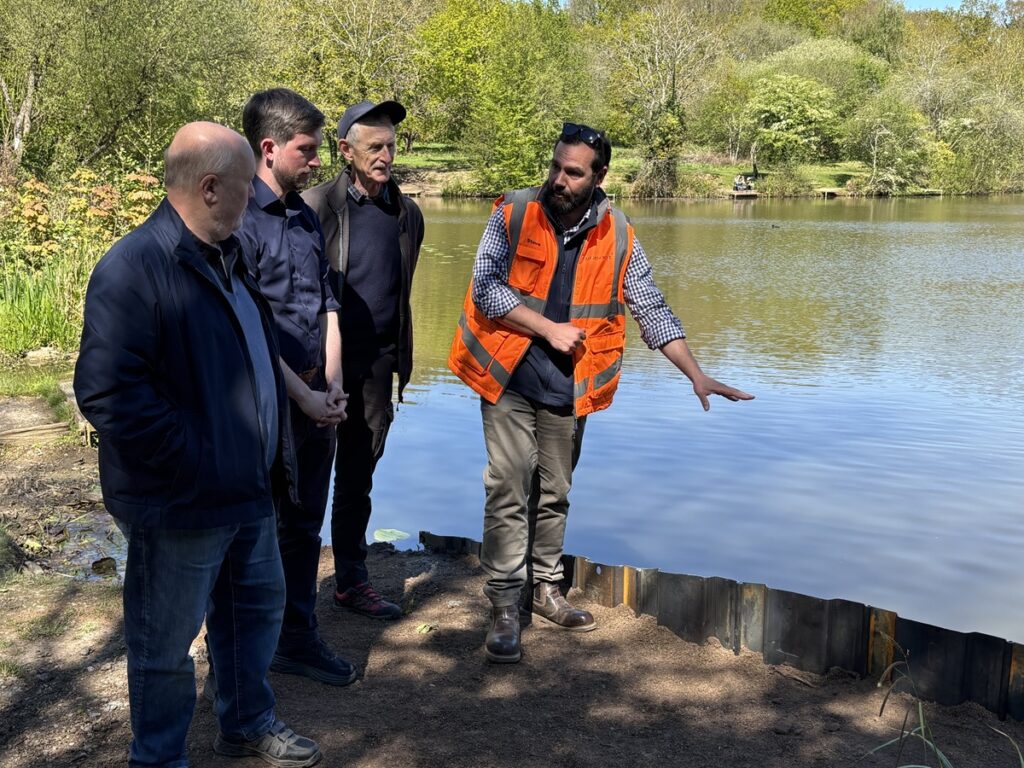
Steel piling has been used to strengthen the retaining wall along the side of Jack’s Lake in Monken Hadley Common after the bank sprang a leak which was posing a danger to the long-term future of one of Barnet’s most popular beauty spots.

Barnet Council provided a grant of £40,000 from community infrastructure money to pay for the work which will include the restoration of the bank with water loving plants and foliage.

Steel piling was inserted to a depth of 3.5metres along a 25-metre-long section of the retaining wall and then backfilled with 36 tons of pudding clay to provide a permanent plug to stop further leaks.

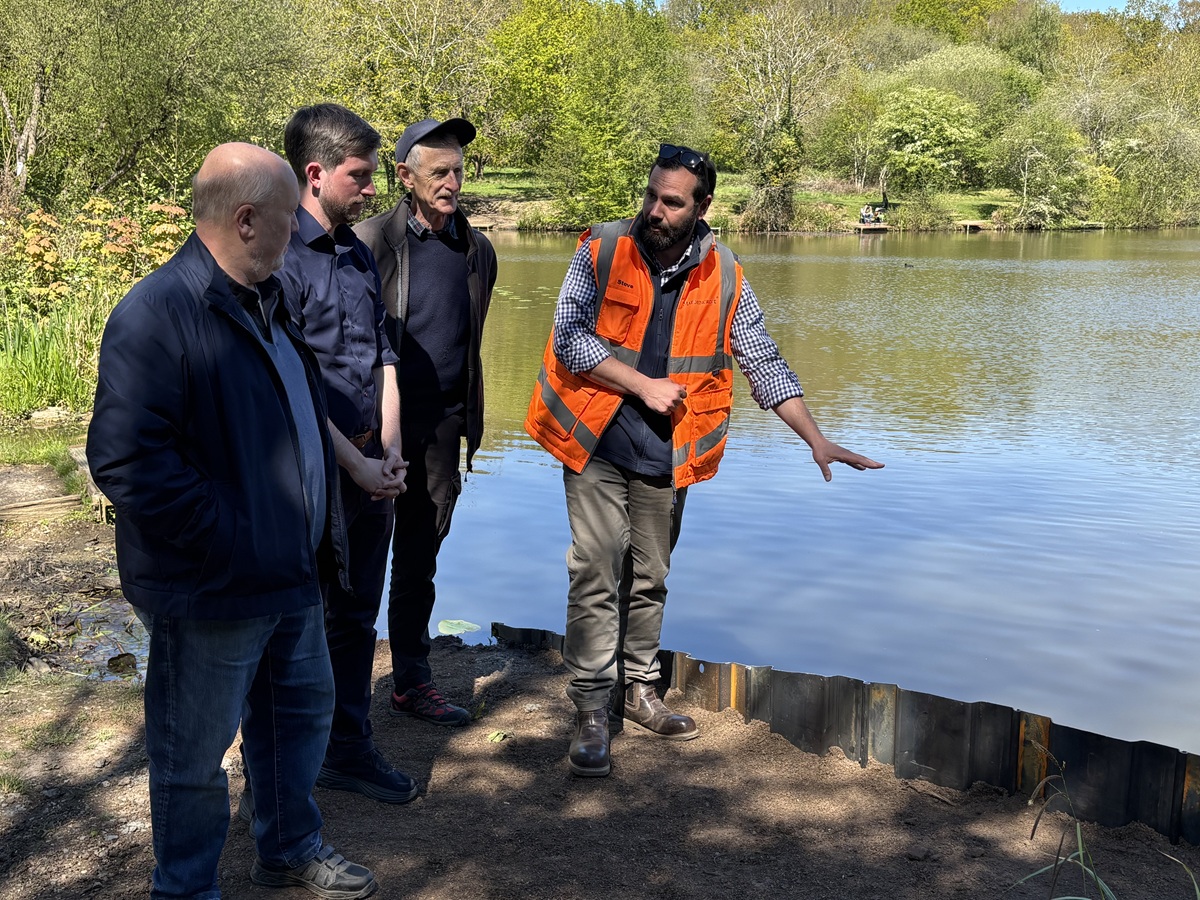
Dan Tomlinson, MP for Chipping Barnet, was shown progress on the two-week project – above, from left to right, Phil Keown, treasurer of Monken Hadley Common Trust, Dan Tomlinson, Hadley Common duty curator Roger De La Mare, and Steve Johnson, project manager.

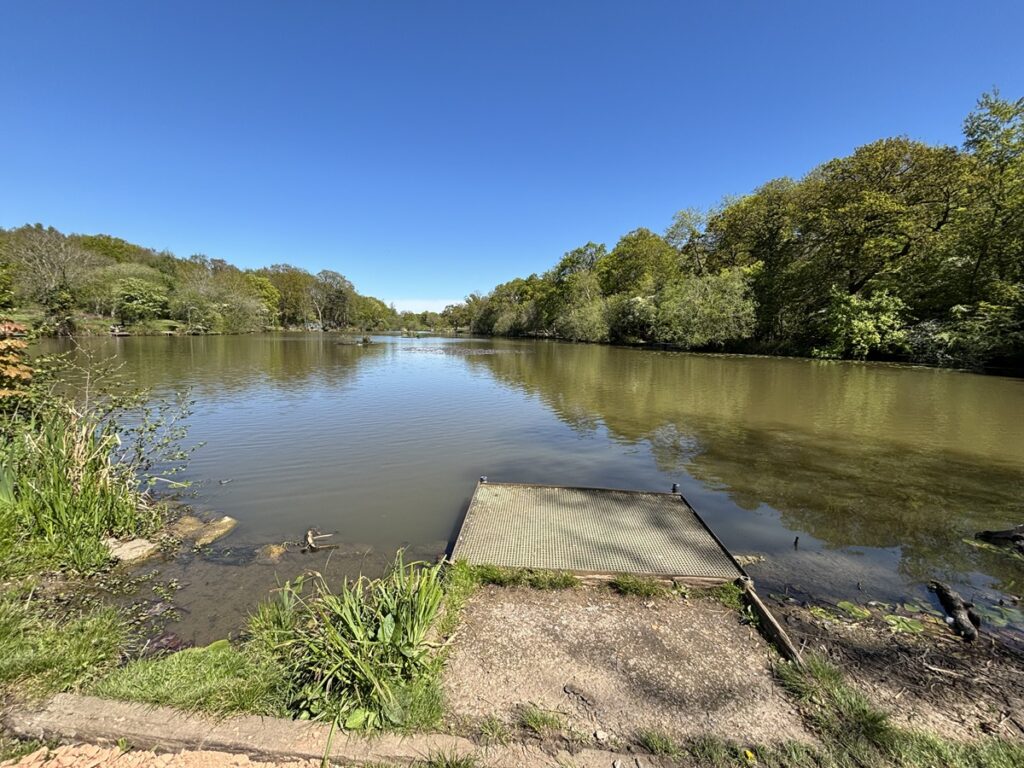
Jack’s Lake – established in around 1770 – is one of several ponds which continue from the common through Hadley Wood Golf Course. They are all fed by local streams.

The retaining wall, which holds in Jack’s Lake, is alongside the footpath from Monken Hadley to Cockfosters – where the overflow from the ponds joins Pymmes Brook.

Until the 1950s, Jack’s Lake was a popular boating lake, and it is now the preserve of the Hadley Angling and Preservation Society.

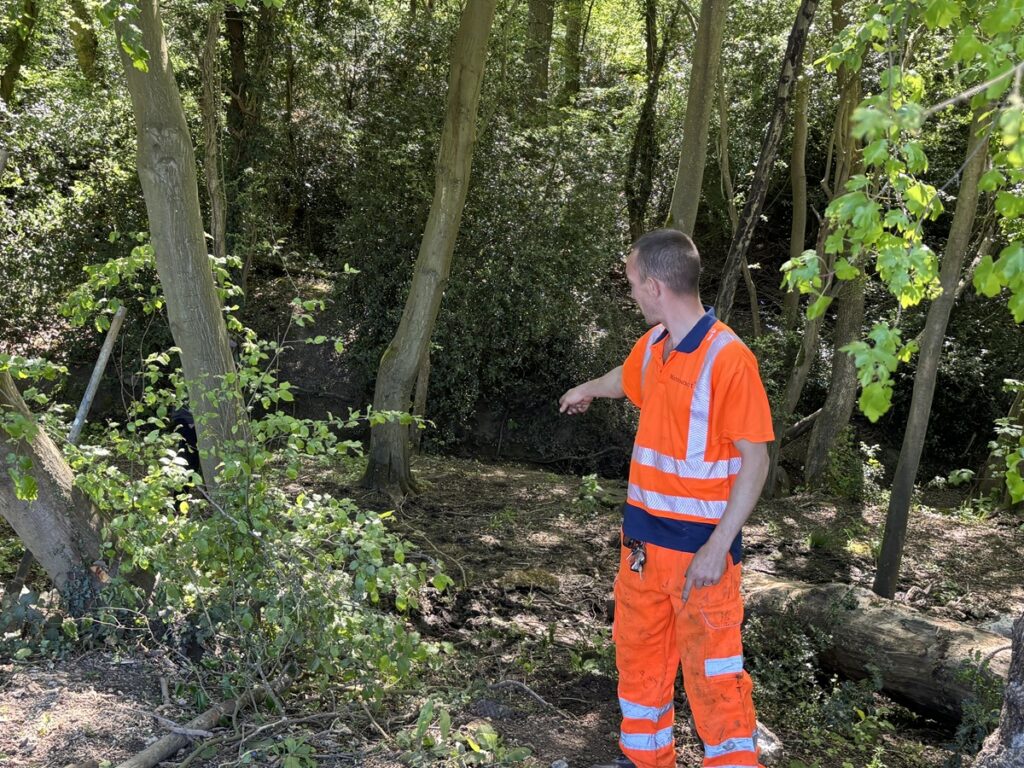
Project leader Martin Vaughan (above) said the leak was causing serious erosion in the retaining bank and had needed a full repair.

The next phase of the project would be to lay coir matting over the top of the piling which would provide growing space for reeds and plants, and which would encourage lakeside wildlife.

Urgent repairs after a leak in retaining wall at Jack's Lake in Monken Hadley Common paid for by a grant from Barnet Council.

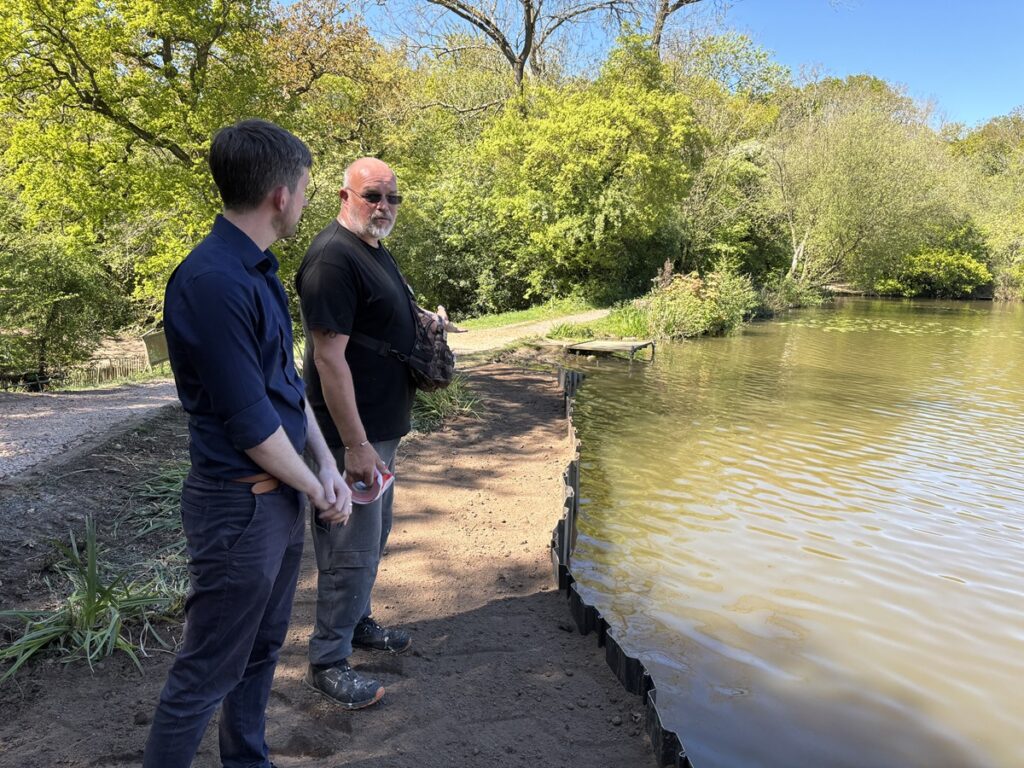
Andrew Langford, a volunteer bailiff for the angling society, described to Mr Tomlinson how the vegetation would recover and once again provide a natural habitat.

Mr Tomlinson, who is Exchequer Secretary to the Treasury, congratulated the trust on doing so much to safeguard the common and Jack’s Lake and for the support of East Barnet councillor Edith David.

“As a Treasury minister I must say how happy I am to see that £40,000 of public money has been really well spent on stopping a potentially dangerous leak and in ensuring that the public can go on enjoying Jack’s Lake for years to come.”  

Posted on Leave a comment

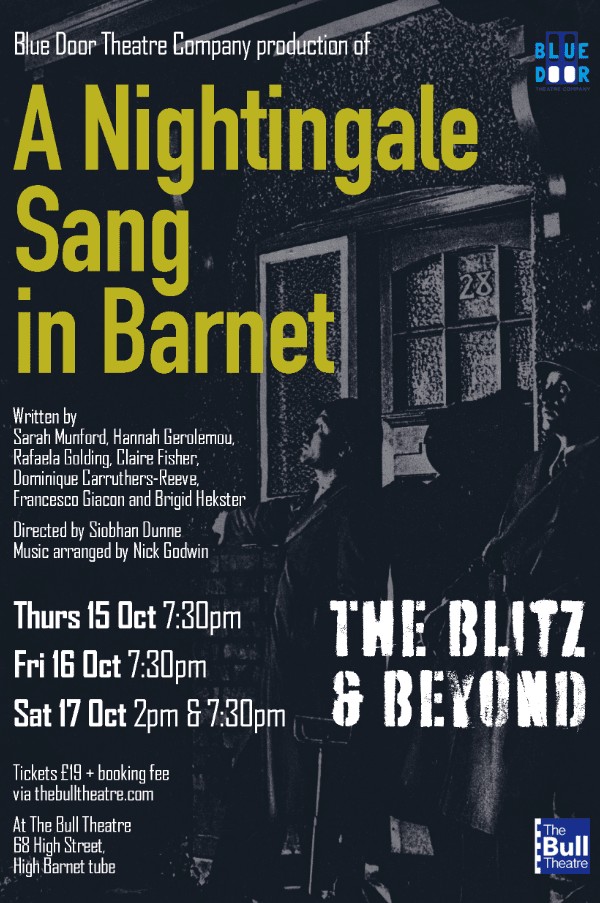
Imagining what happens when Charles Dickens gets stranded in Barnet – latest theatre production puts the author of the spot

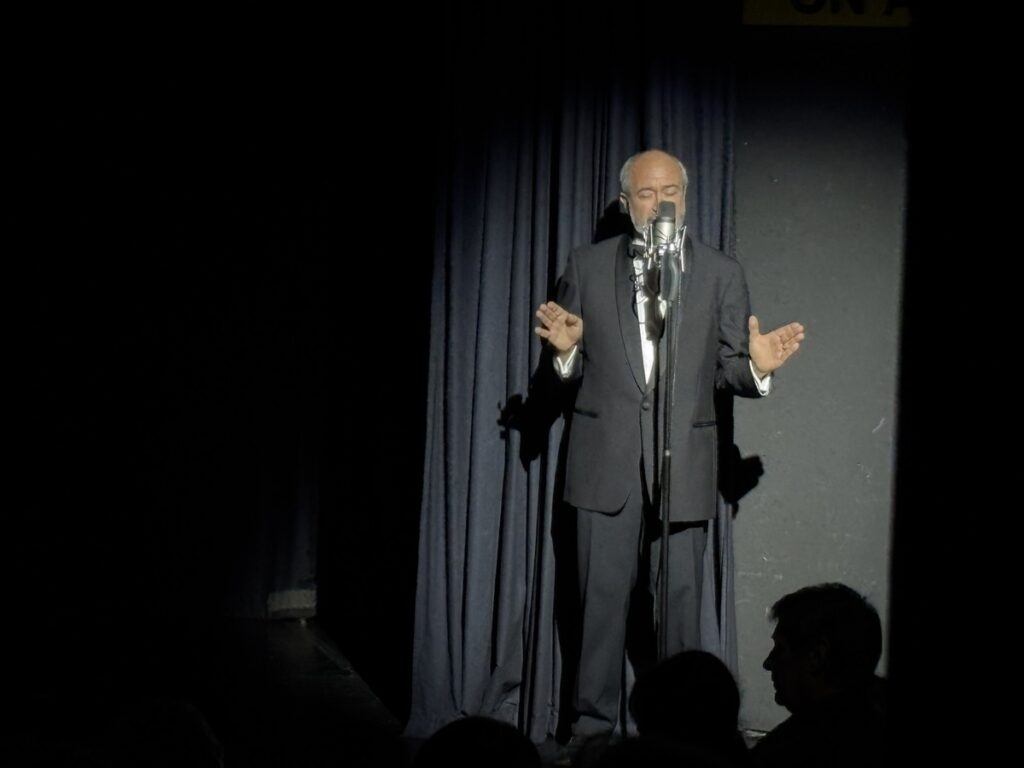
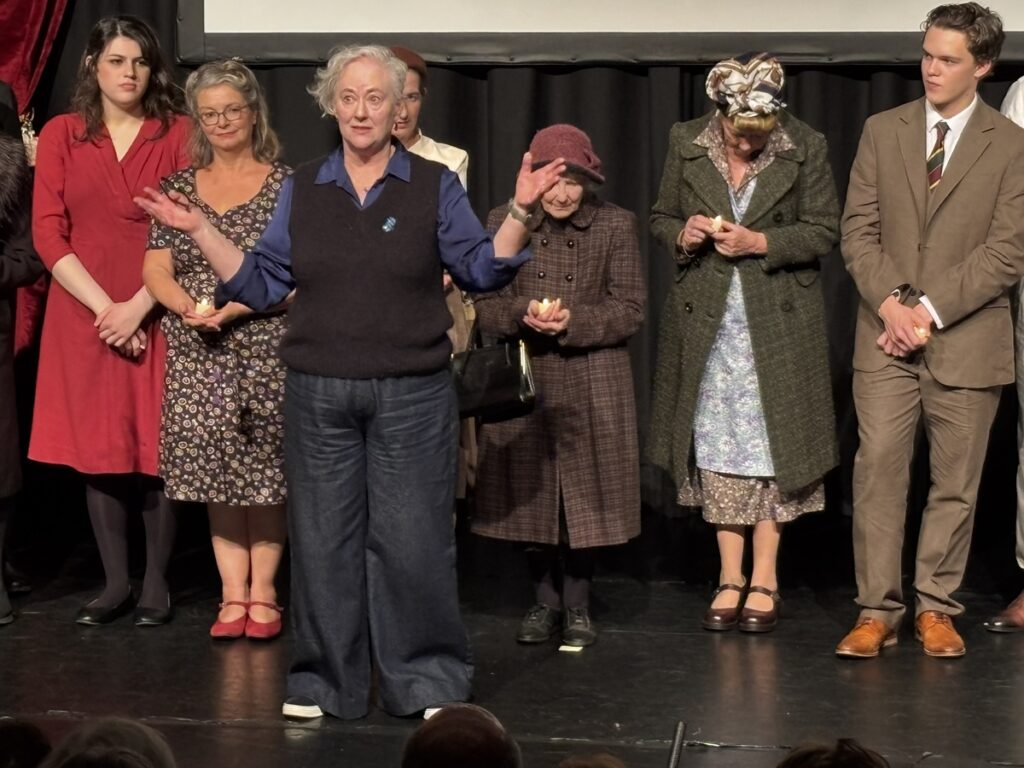
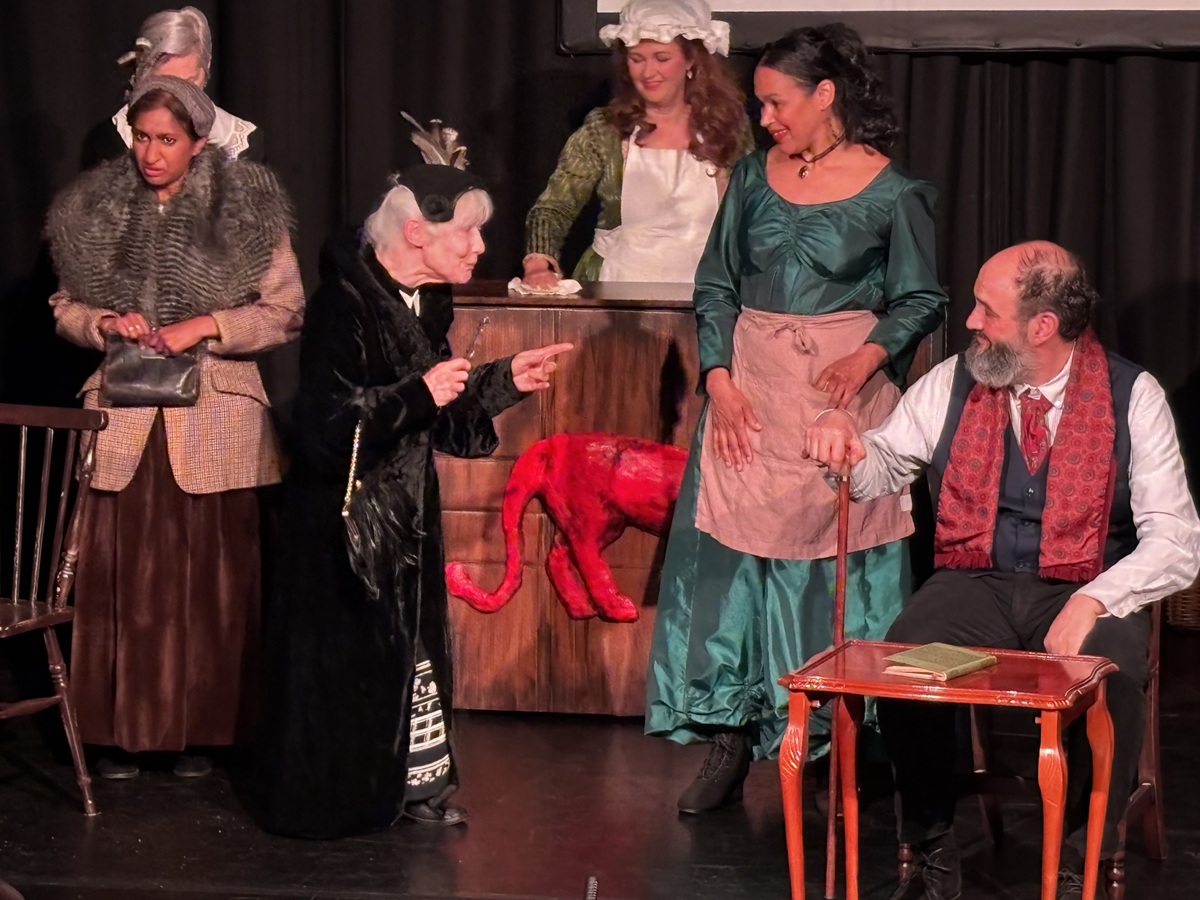
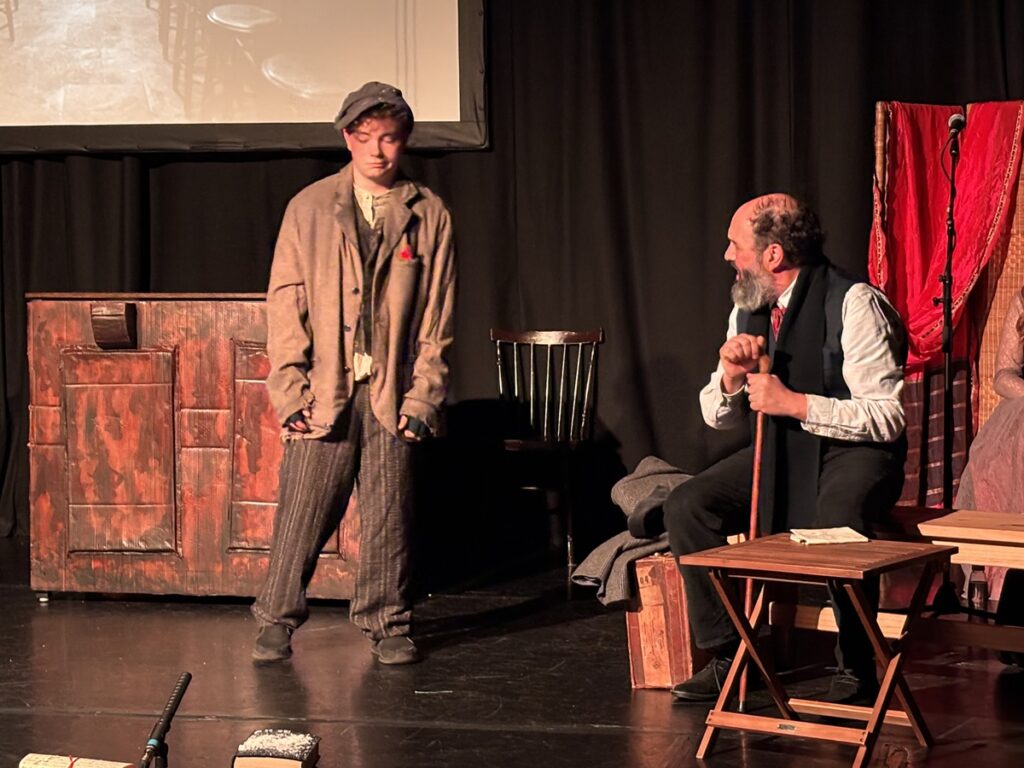
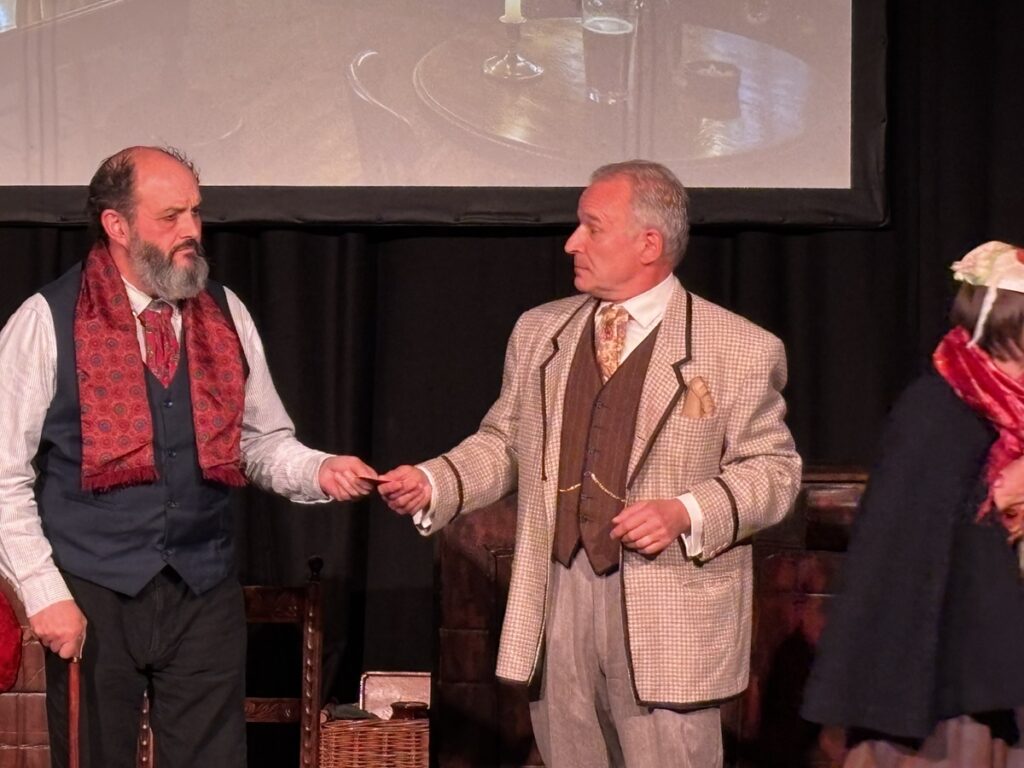
When Charles Dickens was forced the spend the night at the Red Lion in Barnet he faced some harsh truths – a challenging story line delivered with style and conviction by the cast of Between the Lines, which had its first night at The Bull Theatre in a run of sell-out performances.

Barnet’s rich history and literary connections are brought to life in the latest original production by the Blue Door Theatre Company.

When the town is snowed up halting all coaches to and from London, Dickens takes refuge at the Red Lion along with other stranded passengers whose enforced stay leads to some awkward conversations and unexpected revelations.

Dickens, by now an old man with a walking stick, died six months later.

The thrust of the story line created by Barnet playwright Sarah Munford and her co-writer Claire Fisher is to encourage the audience to form their own view about Dickens and whether he had been misogynistic towards women.

Dickens (Chris Browning) was heading north when his coach was halted by a snowstorm.

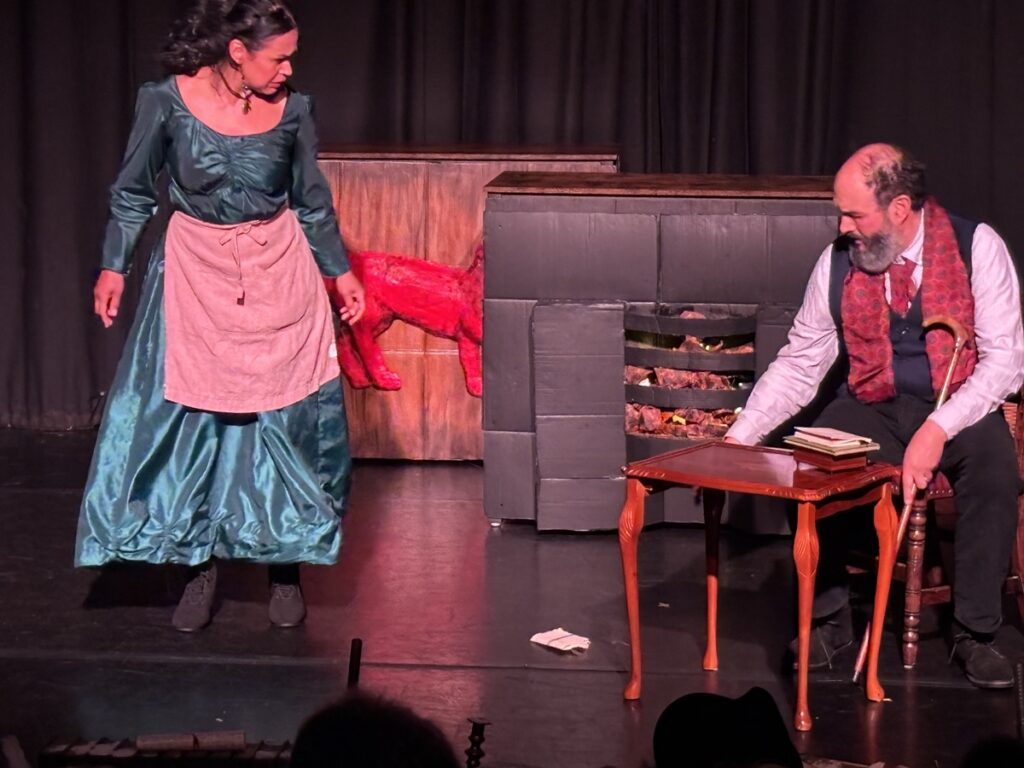
He was welcomed to the Red Lion by the landlady Peggy (Naomi Richards) who catches her visitor by surprise – she was one of the many prostitutes taken off the streets of London with the author’s help and who later made a success of her life.

Reminders of Dickens’ earlier visits to Barnet – and the inspiration he found in the town – provide material for a range of script lines.

An opening scene is a meeting of the guardians at Barnet Workhouse who are hearing an application from a blacksmith’s widow from Finchley and her son.

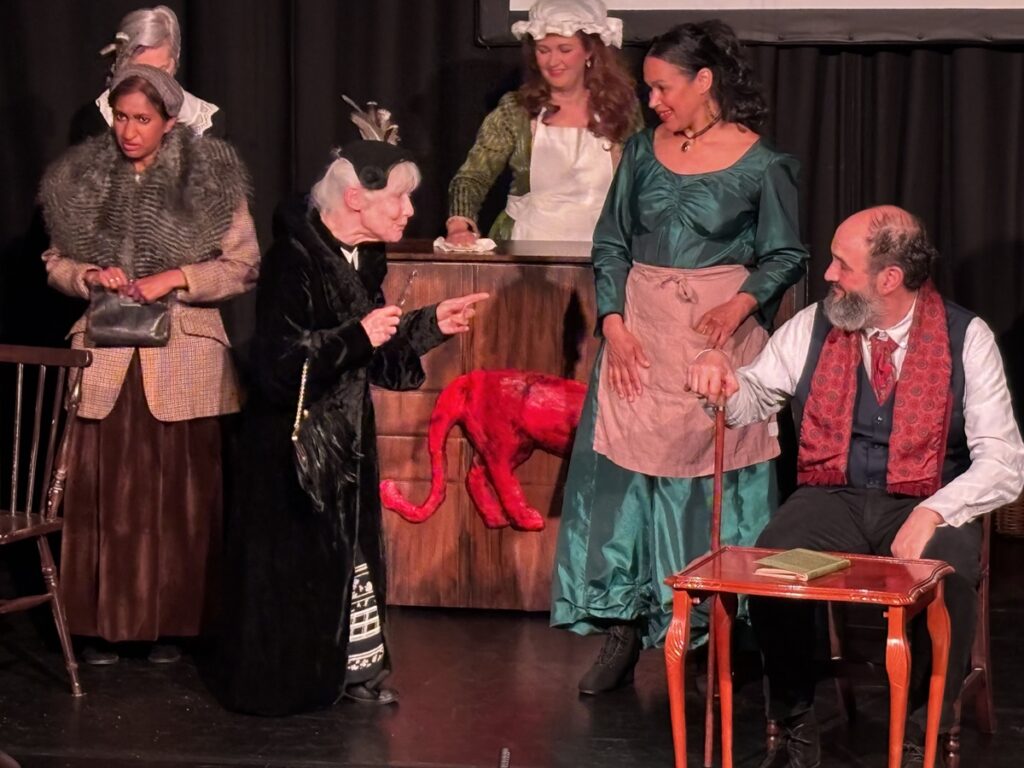
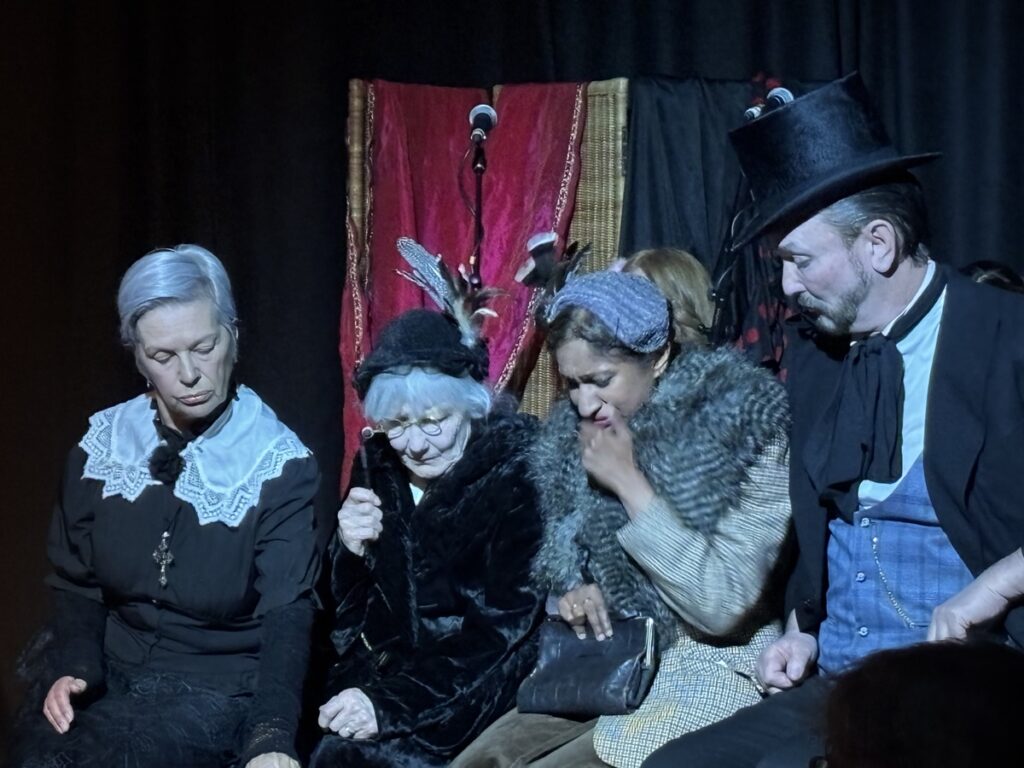
The guardians are divided on what to do – from left to right above, Miss Pooley (Lynne Austin), Lady Huffington (Jan Parker), Constance Dribble (Niki Patel) and Norman Nunhead (Gary Murphy).

Another flashback is in the capable hands of Abel Abel (Ross Wilson) whose conversations with Dickens hark back to the time he was said to have found inspiration at the steps in the High Street of the former Victoria Bakery – the location in Oliver Twist where Oliver was thought to have met the Artful Dodger.  

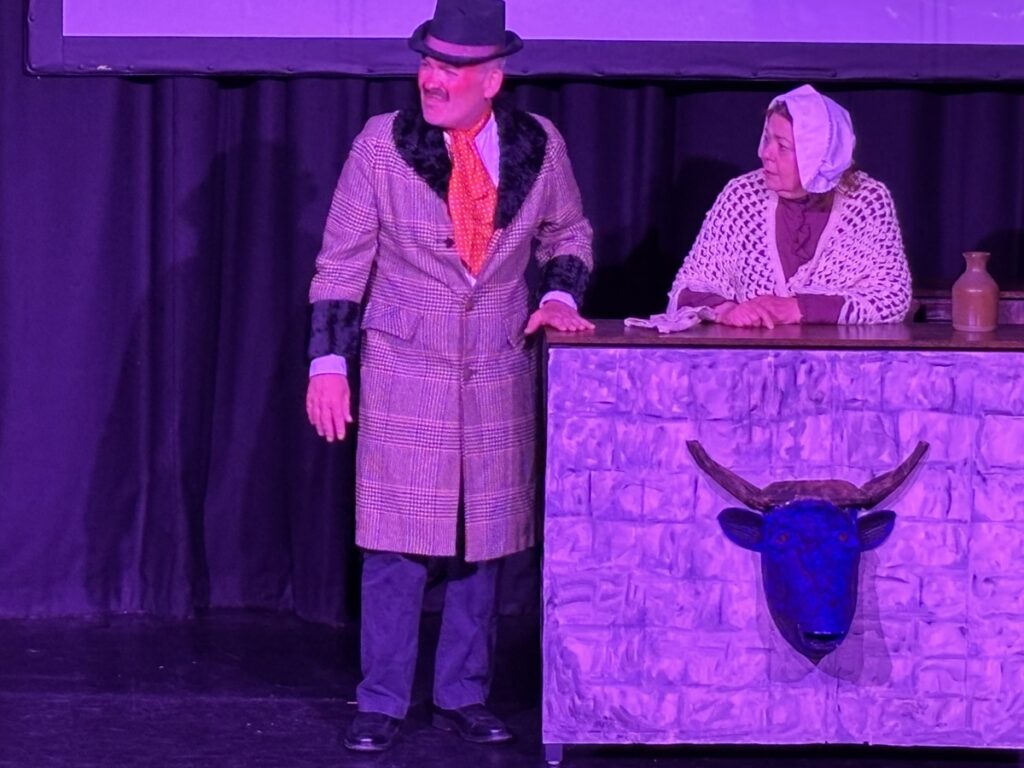
Most of the action features Barnet’s lowlife, including the Barnet Belles – as named by Dickens – who were a group of prostitutes based across the road from the Red Lion at The Bull public house.

Revelations come thick and fast as women share memories and anecdotes of past liaisons and encounters.

Such is the rich tapestry of recollections that newspaper reporter Percy Perchance (Francesco Giacon) – who is also marooned in “desolate, deepest North London” – is spoilt for choice and is soon writing the headline for his own story: Dickens Unmasked. 

Rivalry between the Red Lion and The Bull in offering a welcome to the loose women of Barnet provides some graphic commentary – and a chance for a pertinent and amusing piece of casting.

Susie Earnshaw, founder of the Susie Earnshaw Theatre School, which is based at The Bull Theatre takes on the role of The Bull’s landlady. A well-known regular is the notorious Barney Betteroff (Tony Nagle).

A key moment is when Peggy finally confronts Dickens with letters which she wrote to him but never posted and which delve into the author’s past relationships with women – a confrontation full of contradictions which Dickens does not enjoy being reminded of!

A constant backdrop to the production are the blow-ups of photographs from the Barnet Museum collection showing how the town centre looked in the Victorian era – images which are all the more powerful because some capture period buildings like the Red Lion and the parish church during heavy snowfall.  

Interspersing the scenes are songs written by the musical director Nick Godwin of The Silencerz.

Latest production at The Bull Theatre, Barnet, imagines what might have happened when author Charles Dickens is marooned for the night in the Red Lion on the opposite side of the High Street.

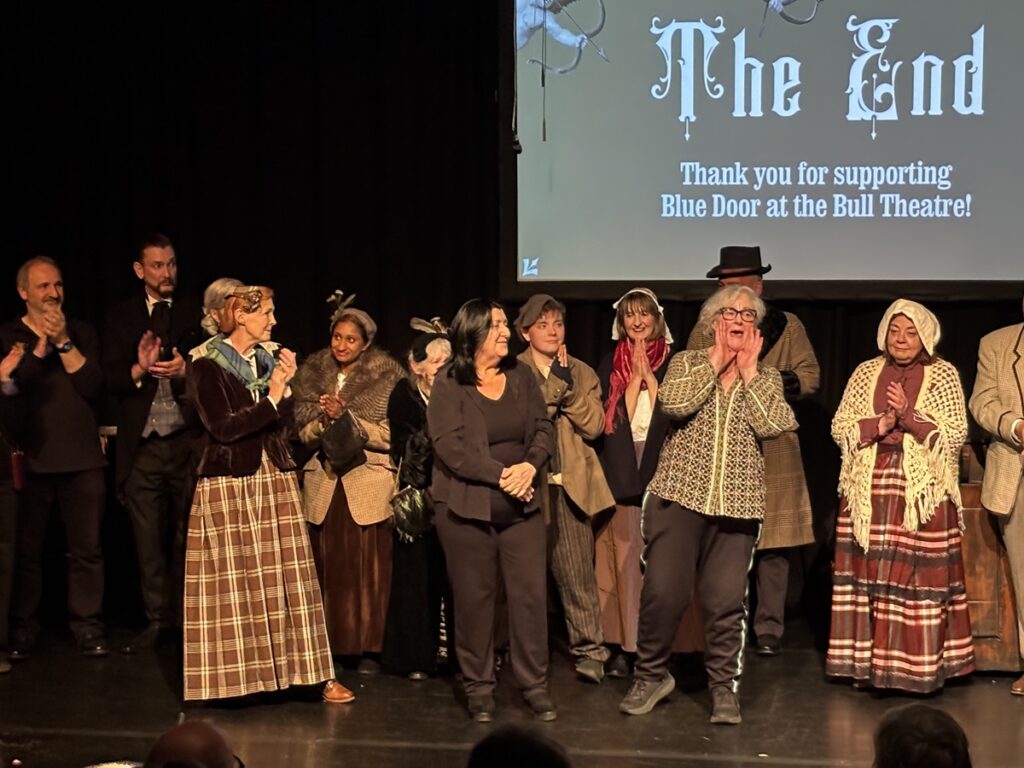
Paying tribute to the cast and all those who had contributed behind the scenes, director Siobhan Dunne said Blue Door Theatre Company was proud of its work in providing community theatre for the town – above, front row, from left to the right, Claire Fisher, Sarah Munford, Siobhan Dunne and Susie Earnshaw.

Their aim was to continue producing one original and locally written play a year as well as a published text.

She made a heartfelt plea to the audience to support an appeal to raise £10,000 to help with the cost of new theatrical equipment for The Bull.

Posted on Leave a comment

Concert at Monken Hadley parish church to support financial appeal for new community hall to replace original Church House

A six-year fund-raising campaign for a new community hall at Monken Hadley is not far short of its £1.3 million target with the hope it might be possible finally to start to demolish the existing unsafe Church House by the end of the year.

The latest event to help towards pushing the appeal over the line is An Evening of Song at Monken Hadley parish church on Monday 20 April at 7.30pm.

Event organiser Katie Morris and chair of fund-raising Elaine Padmore — see above, from left to right – are hoping that tickets sales and further donations will help get the appeal to within touching distance of being able to authorise a start to the work.

So far £980,000 has been raised through events, donations and grants towards providing a new community hub for Monken Hadley residents and local organisations.

The Evening of Song concert will feature countertenor Will Prior and pianist Matthew Clemmet.

Will Prior, who studied music at Magdalen College, Oxford, is currently finishing a master’s in vocal performance at the Royal College of Music.

As a concert soloist, he has recently performed locally with the UK Japan Choir in Bach’s St John Passion and Handel’s Messiah, as well as in Bach’s Mass in B Minor with the Orchestra of the Age of Enlightenment.

Matthew Clemmet is an Oxford music graduate who is currently pursuing his postgraduate studies at the Royal College of Music.

He specialises in song, opera, and chamber music and won the pianist prize in the RCM Lieder Competition and second prize in the Joan Chissell Schumann Competition.

Renovation of Church House was ruled out because of continuing subsidence, due to the lack of adequate foundations, which has rendered the building unsafe and had to be closed to the public.

The appeal to construct a new community building was launched six years with a highly successful Son et Lumiere and the fund has been built up with help of a contribution from the community infrastructure levy collected by the London Borough of Barnet.

The new community hall will include a main assembly room for events, a large kitchen, toilets, showers and changing facilities for the cricket club.

There will be full wheelchair access, and the garden will be renovated to create a safe enclosed space for events.

An Evening of Song concert at Monken Hadley parish church to raise money for the appeal for a new community hall

A caption to an early photograph in the church archives says that Church House, which dates to the 18th century, was once the stables to Beacon House.

During the French revolution two French priests fled from France and were given refuge by the Rector, the Reverend John Burrows.

The building was then improved and used as a house, known as Hadley Cottage, home to a Miss Burrows, daughter of the Rector, and then Miss Bourier.

In 1910 it was converted for use as a parish hall and later a school room. 

e sHe 

Posted on 2 Comments

Historic prayers and verses add a moving to tribute to the men who lost their lives in the 1471 Battle of Barnet

A service of commemoration and laying of wreaths marked the 555th anniversary of the Battle of Barnet – a service researched and devised by the recently appointed rector of Monken Hadley parish church, the Reverend Francesco Aresco.

He read from texts which would have been known by the men who fought in the battle, most of whom left no name and who were buried in unknown graves in the vicinity of Hadley Highstone.

Francesco said the service was a moment to stand at the Highstone and remember their dying before God:

“These men who woke that morning, laced their boots, felt the fog on their faces, and did not come home.”

Whatever divided the Lancastrians and Yorkists on the battlefield, the ground around them received those who died without distinction and “has held them these five hundred and fifty-five years” since the day of the battle, 14 April 1471.

Dr Susan Skedd (above, right) director of the annual Barnet Medieval Festival, led the wreath laying ceremony – seen with Dame Theresa Villiers, the former MP for Chipping Barnet.

Her wreath – made from recycled flowers by Ursula Stone of the Flower Bank community project in New Barnet – included red and white roses and carnations “perfectly arranged” to reflect the colours of the Lancastrians and Yorkists.

Other wreaths were laid by Martin Russell, Deputy Lieutenant of Greater London; Monken Hadley church; East Barnet Royal British Legion branch and club; and by Barry Swain of the Barnet Tourist Board.

Francesco, who was appointed rector of Monken Hadley parish church in February last year, said that he had carried out his own research into the Battle of Barnet and hoped that the service reflected the momentous events that day.

His order of service – see illustration above – began with a prayer which the church of 1471 would have used, in the Latin the men at the battlefield would have known:

“Gloria Patri et Filio

et Spiritui Sancto”

Many of the men who assembled for the battle did not leave. “They were men of a world ordered by oath and obligation, by the faith they owed their lord and the faith they owed their God.”

Martin Russell then read verses which were composed in England some five hundred years before the Battle of Barnet by a poet whose name is lost.

“They were made for exactly this: for standing at the edge of a world that is no more and asking where the dead have gone”:

“The halls have fallen. The rulers lie dead.

Where is the horse gone? Where the young warrior?”

Wreath laying and service of commemoration to remember the men who died in the Battle of Barnet of 1471, Special service for 555th anniversary

Ursula Stone’s Flower Bank project has been providing a wreath for the Highstone commemoration since the services were introduced in 2021.

“We are always full of admiration for the wreaths which Ursula designs for us and this year the red and white roses and carnations are so appropriate,” said Susan Skedd.

Ursula’s flower arranging classes using surplus flowers from shops and events have been widely praised and her initiative was recognised in 2023 with a Barnet Council award for outstanding service to the community.

The wreath laying ceremony was an opportunity help publicise this year’s Barnet Medieval Festival which is to be held at the Lewis of London Ice Cream Farm, in Galley Lane, Barnet, over the weekend of June 6 and 7.

New attractions this year will include mounted knights in combat and a falconry display.

To highlight this year’s 555th anniversary celebrations, Barnet Tourist Board is hoping to announce a fresh attempt to determine the site of the Battle of Barnet.

Researchers Brian Carroll and Barry Swain have been drawing up plans to enlist a team of metal detectors to conduct a fresh search.

They were looking into new theories about the route taken by Yorkist army as it left London and headed for Barnet to meet the Lancastrians.

Cromer Road Primary School in New Barnet is one of the sites which the Yorkists might have passed and then returned to London after their victory.

“Close to the school is a small wood – which was once of playing field – where there could be a sweep by a team of metal detectors,” said Brian Carroll.

“We think this part of New Barnet is very promising as we know that someone who lived in Clifford Road said their grandfather discovered bit and pieces of a musket in the garden.”   

Posted on Leave a comment

Visiting East Barnet and a chance to admire an English Heritage blue plaque to an eminent philosopher was quite an achievement 

Stopping outside a house in a quiet residential street near Oakleigh Park, East Barnet, was mission accomplished for London Ambulance administrative officer David Sleep who is a lover of history and a great supporter of English Heritage blue plaques honouring the lives of famous people.

A mid-terrace house in Burlington Rise proudly displays a blue plaque in honour of the philosopher Sir Karl Popper and it was the last on David’s list to see in Greater London.

David has now visited a total of 1,028 blue plaques since being introduced to their significance three years ago on a walk in Clapham and Battersea organised by Dr Susan Skedd (above right) who is a blue plaque historian for English Heritage.

Susan, who is a member of the Barnet Society, and who is Director of Barnet Medieval Festival and who organises history walks in and around High Barnet, said she was delighted to join David for the moment he was able to tick off the last of the blue plaques on his list.

“I met David again in March on a walk in Pimlico and when he told me he had seen nearly every English Heritage blue plaque in Greater London.  I promised to join him in Burlington Rise.”

On each visit, David always takes a selfie of himself with the plaque in the background, and his hobby is of great value to English Heritage because it helps staff monitor the condition of the plaques.

“For the last three years I have been going out every weekend to see another plaque on my list – on Good Friday I saw the blue plaque in Parkside, Mill Hill, commemorating the motor racing driver Graham Hill and now on Easter Monday here I am in East Barnet for the Karl Popper plaque.”

David gets great pleasure from learning about the people commemorated by the plaques, about the homes where they lived, and what was happening to them at that time in their lives.

He is a member of English Heritage and a volunteer at Eltham Palace which is close to his home in southeast London.

Sir Karl Popper, who was born in Vienna, is considered to have been one of the 20th century’s most influential philosophers of science.

In 1928 he earned a doctorate in psychology and started work on his first book, which he needed to complete in order to get an academic position in a country safe for people of Jewish descent.

Finally, in 1937, he managed to secure a post as lecturer in philosophy at the University of New Zealand in Christchurch where he wrote his influential work, The Open Society and Its Enemies.

After the Second World War, he moved to the UK in 1946 and became a reader in logic and scientific method at the London School of Economics.

With his wife Josefine, they moved to Burlington Rise, Oakleigh Park, East Barnet, which was their home for four years until 1950 when they moved to Penn in Buckinghamshire.

The Popper plaque in Burlington Rise was installed in 2008 following an upsurge in research into the former residences of famous people out in the London suburbs.

“So many of the English Heritage plaques are all around inner London and the outer boroughs are catching up,” said Susan.

“We unveil a dozen new plaques every year and the first of this year’s new plaques is due to be revealed in April.”

She said the importance of the plaque to Sir Karl was that it captured the time he moved to the United Kingdom when he had established his name as a philosopher and had recently published his highly influential book The Open Society and Its Enemies.

Mission accomplished for history lover who visits English Heritage blue plaque in East Barnet to eminent philosopher Sir Karl Popper

A key conclusion of the book, which Susan came armed with for David’s visit, deserved to be quoted:

“Our fear of admitting responsibility for our ethical decisions is entirely ours and cannot be shifted to anybody else, neither to God, nor to nature, nor to society, nor to history. We cannot shirk this responsibility, whichever authority we may accept, it is we who accept it.”

Posted on 6 Comments

Final days at Builders Arms, New Barnet, as customers sign a petition to get asset of community value order to safeguard pub’s future  

A two-year struggle to keep going amid the disruption caused by ending up in the middle of a construction site has finally defeated the landlady of the aptly named Builders Arms in New Barnet.

She has reluctantly decided to hand her tenancy back to the brewers Greene King raising local concern about the future of a pub praised by the Campaign for Real Ale.

A petition has been launched by customers and friends to preserve what they say is a “much loved local institution”.

The aim of the petition organisers, Danielle Holiday and Nikki Hill, is to secure the registration of the Builders Arms as an asset of community value with Barnet Council while exploring other possible business models for the pub.

East Barnet’s councillors – Phil Cohen, Edith David and Simon Radford – have all signed the petition and are promising their support in the bid to safeguard the pub’s future by gaining ACV status.

Landlady Silva told the Barnet Society that once construction work started in 2024 on the massive housing development on the site of the former New Barnet gas works customers found it increasingly difficult to reach the pub.

Albert Road is the is the main access to the site where Fairview Homes are building eleven high-rise blocks of flats to provide 420 new homes – and a street view shows how the pub is dwarfed the scale of the redevelopment.

Initially Albert Road was blocked regularly by lorries delivering materials and construction equipment and, because of the hindrance and possible danger to customers, the Builders Arms had to cease opening at lunch times.

“Since then, access to the pub hasn’t improved and it has been a real struggle financially. It has just proved too much.”

Silva, who took on the Builders Arms eight years ago, said that she could not hang on for another year or two until the completion of the new development when all the flats might be fully occupied.

“You simply cannot run a pub when it is in the middle of a construction site. It is so off putting for customers. We can’t survive, so our tenancy ends on Sunday 12 April.

“At present there is no through road and no parking but let’s hope that Greene King can re-open one day.”

Once news broke two weeks ago that the pub was to close there has been an emotional response on the Builders Arm’s Facebook page with an appeal to regular customers to celebrate the “happy times, the music, and the unforgettable nights” they had all enjoyed.

With the pub having to be cleared of furniture, signs and fixtures, customers were invited to raise a glass and perhaps “even take home a little piece of the Builders Arms, something that might be a treasure for you.”

CAMRA has backed the Builders Arms as a real ale pub since 1970, and it has built up considerable loyalty over the

decades.

Connie East (see above) said that serving behind the bar was a real privilege because the Builders Arms had always been part of her family.

“I was brought here first as a baby 24 years ago as my parents were regulars. It has always been a real family pub.”

Dannielle Holiday, who helped organise the petition, has an even stronger family connection.

Her grandfather was a customer, so were her parents, and her own grown-up children have followed the tradition.

“The Builders Arms is a living testament to the rich local history of New Barnet,” said Danielle.

“Hundreds of local residents are signing up and joining our effort to preserve a much-cherished local pub.”

Petition launch to get asset of community value order on Builders Arms, New Barnet, becuase of pub's closure due to construction disruption during massive housing development.

When the Barnet Society first reported on the plight of the Builders Arms in 2024 the assistant manager Nina Hristova – see above – looked on in despair as work was progressing on a block of flats immediately opposite the pub.

At the time East Barnet councillor Simon Radford and Chipping Barnet MP Dan Tomlinson intervened after the pub’s staff appealed for help in curbing the mayhem and keeping the highway clear of work.

Councillor Radford said he and councillors Cohen and David had built up considerable expertise in using the asset of community value process to safeguard threatened pubs – and exercise which had proved highly successful when campaigning for the re-opening of Prince of Wales, the only pub in East Barnet village.

“As councillors we would like to pay tribute to Silva, George, Nina and the rest of the team who have run the Builders Arms for so many years, making it truly a community asset despite such outsized challenges to the business,” said councillor Radford.

“We owe them a debt of gratitude for what they have achieved with the pub, and we would also like to thank Daniella and Nikki for leading from the front in trying to save the pub.”

Councillor David said she hoped the community would show what the pub meant to them by signing the petition.

“We can all demonstrate our links with the Builders Arms through family stories and how the pub has been there for us on special occasions. The fight to save the Builders Arms goes on.”

Posted on 2 Comments

Protective shutters installed by Star Pubs to allow for essential work before Black Horse re-opens in time for summer  

Star Pubs say Black Horse public house will re-open by early summer in time for FIFA world cup televised matches -- and protective shutters needed during essential work

Star Pubs say they hope that the Black Horse – now protected by metal grilles across doors and windows – will reopen by at least mid-June in time for the start of televised football matches in the FIFA World Cup.

Several potential tenants are being interviewed by Star’s management team.

Improvements and other essential work are to be carried out to the interior in preparation for the re-opening of a pub which is an historic Barnet landmark.

But the closure of the Black Horse since last September is another indication of the precarious trading prospects for the licensed trade.

In a move to safeguard the long-term future of the Black Horse, Barnet Council has accepted a request for it to be protected by an order declaring the building an asset of community value.

Securing protection for the Black Horse – allowing the community the right to enter a bid if the pub is sold for redevelopment – follows the declaration of similar ACVs for three other nearby pubs, the Lord Nelson, Sebright Arms and Ye Olde Monken Holt, as well as the Prince of Wales in East Barnet.  

An application to safeguard the Black Horse was made in the name of the Barnet parish church of St John the Baptist and was backed by a petition launched by Olly Gough, who is to stand as a Labour candidate for High Barnet in the Barnet Council elections in May.

He said strong support for the petition proved that the Black Horse was much loved by the community and was especially popular with its customers, which was a reminder to Star Pubs that it had every chance of remaining a viable business.

High Barnet Councillor Emma Whysall, who supported the application when it was considered by Barnet Council, said she realised the depth of local concern about the future of the Black Horse should it cease trading once again in the future.

Councillor Whysall, who had been in contact with Star Pubs’ management, welcomed the company’s promise of swift action to ensure that the Black Horse is re-opened in time for the start of the World Cup in mid-June.

She said people should not be alarmed by the installation of grilles across the doors and windows. They were needed for added security and protection and were essential to secure the building while work was carried out.

Pubs have been granted extended opening hours for the month-long contest because of the late kick-offs – until 1am for national ties and until 2am should any of the home nations reach the knock-out stages.   

Posted on

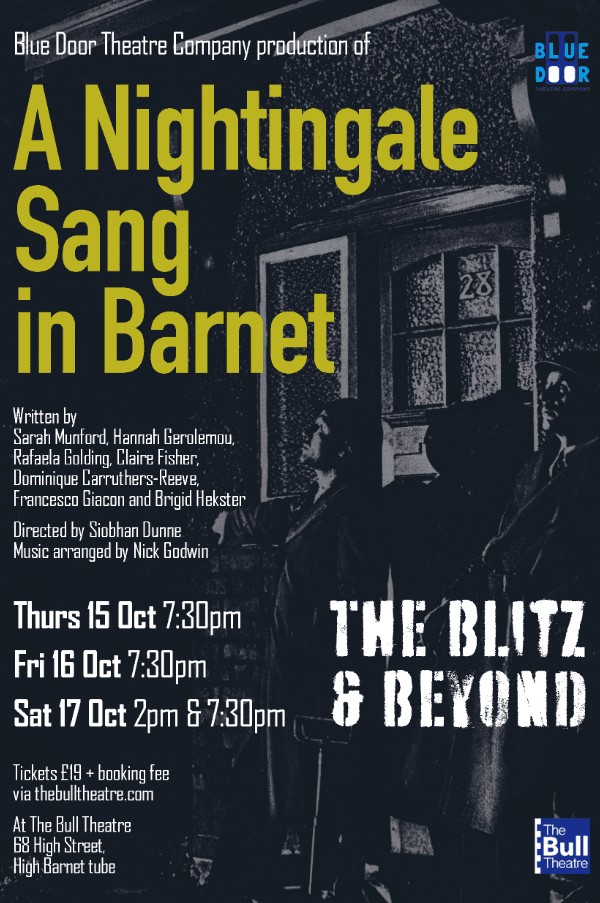
Barnet’s rich history and literary connections brought to life in a new play which explores Charles Dickens’ associations with the town

Imagining how the great Victorian novelist Charles Dickens might have spent an evening in the bar at the Red Lion public house in Barnet is the highlight of a new production at The Bull Theatre.

Dickens was said to have gained inspiration for his writing from his visits to North London so the challenge for Barnet playwrights Sarah Munford and Claire Fisher was to visualise what happened when the famous author stayed overnight in the town.

Rehearsals are well under way for Between the Lines: Dickens Comes to Barnet which the Blue Door Theatre Company is to present at The Bull Theatre, High Street. Barnet, for three nights in late April.

Dickens is forced to spend the night at the Red Lion because the road back to London is snowed up and that creates the occasion for some fascinating interaction with an array of the town’s colourful characters – some of whom have a tale to tell.

Peggy, the Red Lion’s landlady played by Naomi Richards (above), has a back history worthy of a Dickens novel and her revelations about her previous connections with the author, played by Chris Browning, are a salutary reminder of his own chequered past.

Before taking on the Red Lion, Peggy was a prostitute, one of many who was said to have been taken off the streets of London with Dickens’ help, and for her guest, by now an old man walking with a stick, his night in Barnet becomes a trip down memory lane. 

The life and times of Dickens’ fellow travellers play out against a background of some of Barnet’s low life including the Barnet Belles, a group of prostitutes who are based across the road at the Bull public house.

Sarah Munford (right) said she hoped her play would encourage the audience to form their own view about Dickens and whether perhaps he had been misogynistic towards women.

“Perhaps questions should be asked about the way Dickens treated his wife, how he tried to get her committed to an asylum after giving birth to ten children, and about his long-term affair with Nelly Ternan.”

Claire Fisher (left) who collaborated with Sarah, said she had enjoyed writing the crowd scenes and she has her own role in the play as nurse Sally Swaddle, the local midwife.

The history of Barnet offers an array of script lines – including a meeting of the guardians at Barnet Workhouse, which was on the site of Barnet House in Wellhouse Lane.

A tense scene develops when a blacksmith’s widow from Finchley and her son face some tough questions about their future.

Another reminder of an earlier visit to Barnet when Dickens was said to have gained inspiration from the steps outside the former Victoria Bakery – steps which become the location in Oliver Twist where Oliver met the Artful Dodger.

That flashback is in the hands of Abel Able (Ross Wilson) who takes on the role of an Artful Dodger lookalike who again captures Dickens’ attention.

Once again props for the production are in the capable hands of sculptor and artist Cos Gerolemou, who has worked behind the scenes on so many of the company’s productions.

He came up with the idea of a sucking pig which has pride of place on the mantlepiece above the fire in the bar of the Red Lion.

For artistic director Siobhan Dunne (above left) – concentrating with Sarah Munford at an evening rehearsal – an annual challenge for the Blue Door Theatre Company is present an original play with a theme based around the history of Barnet and its literary connections.

Her success directing the company speaks for itself: last year’s production, Mary Livingstone, I Presume, based on events surrounding the year Dr David Livingstone lived on Hadley Green, was a sell-out.

Equally popular were original productions on the 1471 Battle of Barnet and the history of once celebrated Barnet Fair.

Barnet's Blue Door Theatre Company explores Charles Dickens' literary associations with Barnet in new production at The Bull Theatre

Between the Lines: Dickens Comes to Barnet features original live songs by composer Nick Godwin of The Silencerz.

There will be four productions, Thursday 23 April and Friday 24 April at 7.30pm; Saturday 25 April at 2pm and 7.30pm

Tickets £15 + booking fee via www.thebulltheare.com

Posted on 1 Comment

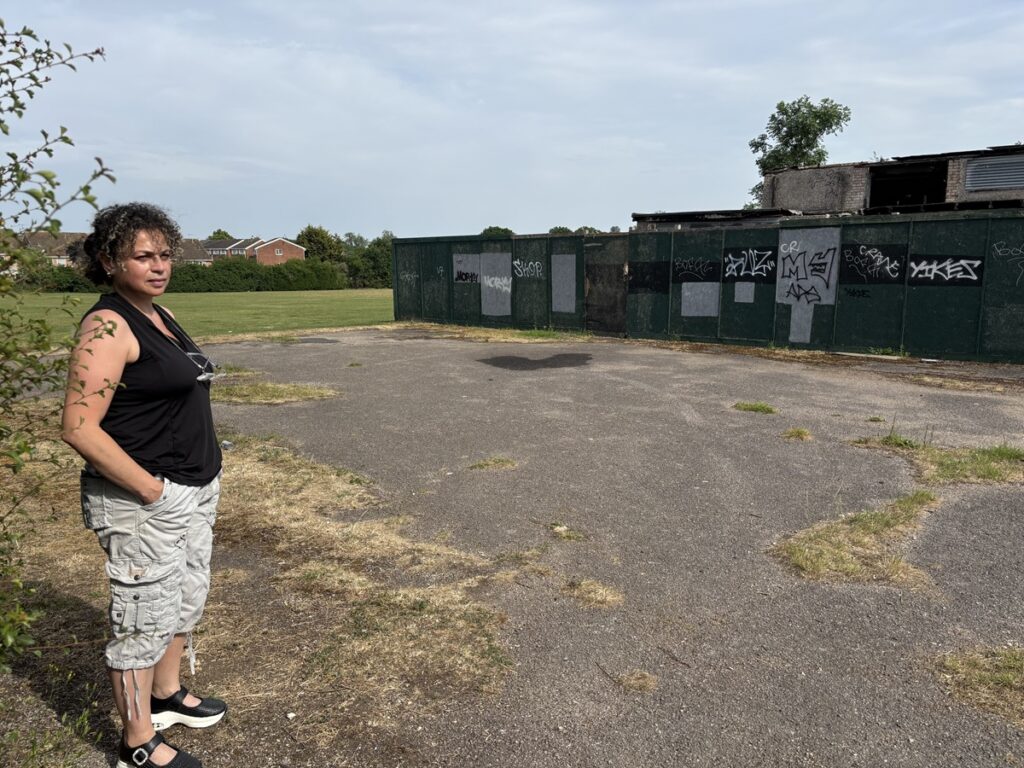
Barnet Vale residents a step nearer the day when Tudor Park’s derelict cricket pavilion might be open again for community use

A determined community effort in Barnet Vale to rescue and renovate an abandoned former cricket pavilion at Tudor Park has achieved a major objective – and to celebrate there are new artist’s impressions of what the renovated building might look like.

After lengthy negotiations, Barnet Council has finally agreed the terms of a 50-year lease with the Friends of Tudor Park and Pavilion, paving the way for the launch of a fund-raising appeal.

A binding agreement with the council would give the friends three years to present a detailed planning application to the council for rebuilding and improving a dilapidated structure which is currently closed to the public and is in desperate need of repair.

Once the paperwork is complete and the lease has been signed, the friends can start fund raising and making appeals to the National Lottery Community Fund, local charities and other groups for financial support towards a possible target of £800,000 to £1million.

Barnet Council has already agreed a £200,000 grant from community infrastructure funds.

Simon Cohen, chair of the friends’ committee who in 2020 initiated the campaign to save the 106-year-old pavilion for community use, outlined the terms of the lease at an exhibition of the latest images.

There would be no rent to pay for the first five years; £500 a year for the following five years; then increasing at £500 a year to year 20, followed by further increases in line with inflation.

A business plan prepared by the committee proposed that the pavilion would be open for community use and a variety of activities seven days a week from 9am to 9pm. A wide range of local groups have already expressed interest in making use of the building.

Committee vice chair Simon Kaufman outlined the latest proposals and images.

Consultations with the community showed the largest support was for the refurbished pavilion to include a café, overlooking the existing Tudor Park children’s playground, with accessible public toilets, indoor and outdoor seating areas and wheelchair access.

The main hall in the pavilion would be multi-functional with additional activity spaces, more toilets, lockers and storage for space for equipment.

There would be space in the central area to seat 50 people which could be expanded to take 80 people and even as many as 120 people with sliding internal walls.

Dogged community campaign in Barnet Vale to save abandoned cricket pavilion in Tudor Park a step closer with Barnet Council agreeing a 50-year lease

Instead of the metal bars which currently close off access to the pavilion the refurbished building might feature external decorative steel panels – as seen above – which could feature motifs reflecting local history and events.

The original portico of the pavilion would be preserved but along with major structural repairs, much of the interior and exterior would need to be rebuilt with installation of new windows and doors.

All those attending the presentation were urged to keep giving their opinions and making suggestions as to how they would like to see the pavilion renovated and repurposed for the use of the community.

Posted on

For almost 60 years Barnet’s Puddenecks Club has been hosting events including a meal and entertainment for the town’s elderly residents

Entertaining groups of Barnet’s senior citizens to a monthly supper evening is one of the many activities organised by one of the town’s oldest charities, the Puddenecks Club.

The Puddenecks are volunteers whose mission is to hold events which help elderly residents overcome the loneliness of being home alone.

Guest evenings in the winter months are followed by barbeques in the summer and there is a chance to keep fit at a weekly exercise class.

Like so many other community groups the club is keen to recruit additional volunteers and helpers and especially car drivers who can assist with transporting elderly guests and with fundraising.

Committee member Victor Valloti – seen above with guest Lesley Keating – said the club realised that the popularity of a monthly evening meal demonstrated of the importance of not forgetting the elderly.

Volunteers collect each of those attending an event directly from their homes and then drive them back again at the end of the evening.

“So many of the elderly, especially widows and those living alone don’t like going out on their own in the evening and our aim is to take the edge off that loneliness,” said club secretary Roger Moore.

Club members and volunteers are maintaining a contribution to the community which started in 1958 when a group of Sunday lunchtime drinkers got together in the now demolished Swan and Two Necks public house in High Road, Whetstone.

They decided to meet once a month for a steak and kidney pudding and then hold a meeting to decide how best to help older people in Barnet – hence their name, Puddenecks.

“We pride ourselves on making sure that any elderly resident we invite out is picked up at their home and then returned safely,” said Mr Moore (right) seen above signing up a new volunteer driver Larry Williams at the club’s February night out which was an evening meal with a Spanish theme at the Old Fold Manor Golf Club.

“It is quite an exercise collecting 75 or so senior citizens from their homes and then getting them back again but we know how much our efforts are appreciated.

“Many of those we collect from their homes are widows or other elderly ladies living on their own and they are just so fearful of going out on dark winter evenings, so we feel what we do is a real contribution to the community.

“We follow our monthly evenings out in the winter months with a couple of summer barbecues at Totteridge Millhillians Cricket Club.” 

Another of the precautions taken by the club to ensure the safety of their elderly guests is to invite along two volunteers from the Barnet division of the St John Ambulance Brigade.

“We realise that at one of our events we might need some medical support one day and we are so grateful for the support of their brigade’s volunteers.”

For the guests the great attraction of a meal out with the Puddenecks is the chance to chat with friends said Jenny Windsor (above, second from left) with Tony Cardosi, Angela Casali, Sandra Gallardo and Terry Gleeson.

“It is so important for us all to get out of the house and have a real chinwag with our friends. What the Puddenecks do for Barnet’s elderly cannot be praised enough,” said Jenny.

One of Barnet's oldest charities the Puddenecks Club is appealing for more volunteers to help with its evening meals and entertaintment for elderly residents

Mr Moore arrived at the club’s February evening after collecting Gillian Collison from her home. She could not wait to join her friends.

He said the club was launching an appeal for new members – and especially car drivers – because they felt there was low public awareness within Barnet for what the Puddenecks did.

Anyone who is interested in joining is asked to make contact by emailing roger.moore@puddenecksclub.org.uk or visit their website for more details www.puddenecksclub.org.uk

Each year the club raises upwards of around £40,000 to finance its activities.

A golf day at the Old Fold Golf Club in September followed by a dinner and auction is one the main fund-raising events.

There is also an annual charity dinner with a guest speaker, and these are backed up with donations and raffles, including an annual Christmas raffle at Ye Olde Monken Holt public house in Barnet High Street.
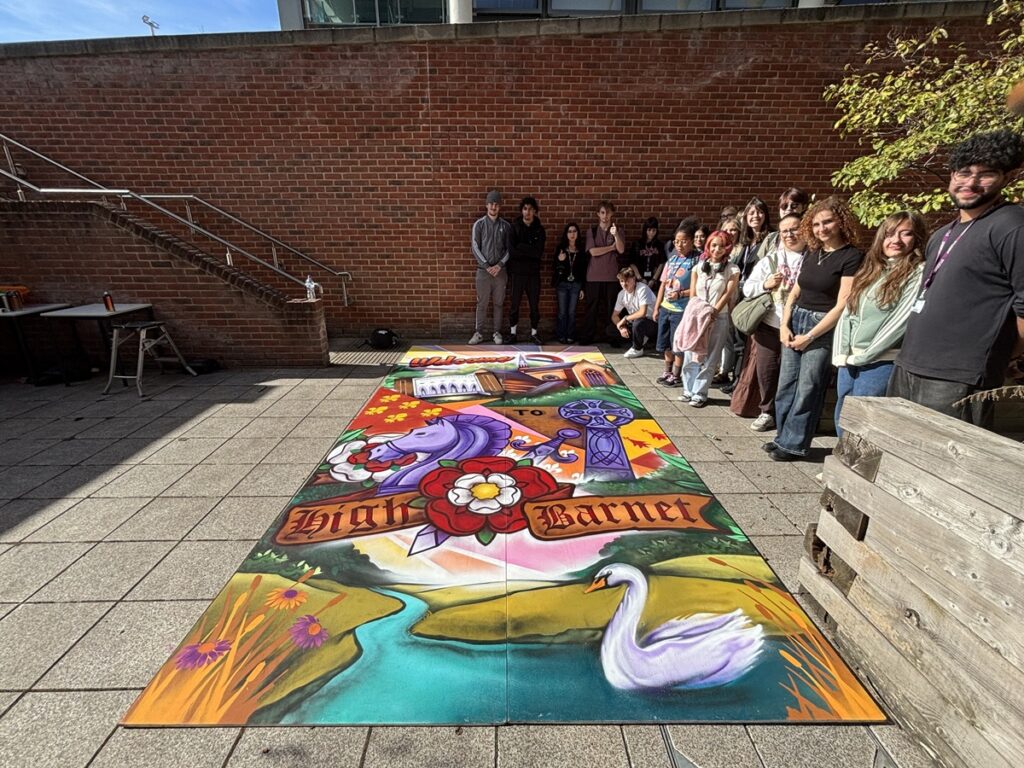
Mr Moore said the value of the club’s support for the elderly was underlined during the covid emergency when the Puddenecks delivered 100 portions of fish and chips to 100 residents twice a month.

“For those who can’t get to our guest evenings we continue to deliver 20 or so portions of fish and chips every two or three months.

“We also have an exercise class for an hour every week in the Wesley Hall – and that attracts 40 or so people who are instructed by a professional tutor.”

Probably the most eagerly anticipated event is the Puddenecks’ Christmas dinner where volunteers at the Totteridge Millhillians Cricket Club cook two meals, for a sitting at 12 noon and then another at 5pm.

Posted on 6 Comments

Queen Elizabeth’s School – a Barnet brand name that will soon be appearing on new international schools in India and Dubai

QE Boys, established by Queen Elizabeth in 1573 as a free grammar for the “boys and youth” of Barnet, is about to begin a new chapter in its history with the opening in August of the first two of three new international schools bearing the brand name “Queen Elizabeth’s School”.

Enrolment started in November at one the new schools opening in August – Queen Elizabeth’s School, Dubai Sports City (see artist’s impression above).

Some leading independent schools have already established international branches.

QE Barnet, is the first UK state-maintained school to open affiliated schools overseas, starting in the United Arab Emirates and India.

Queen Elizabeth's School Barnet about to become an international brand with new Queen Elizabeth schools in India and Dubai

Queen Elizabeth’s School, at Gurugram, near Delhi – see artist’s impression above – is the second of the two schools opening in August.

It is in the northern Indian state of Haryana, and it will be followed by another in India at Gift City, another new financial and technology hub in Gujarat province.

Any revenues received from a partnership with Global Education Holdings Ltd will be invested in furthering educational opportunities at QE in Barnet, says the school’s website.

The location of these new international fee-paying schools for boys and girls under the Queen Elizabeth brand reflects the high number of children of Indian heritage who are being educated at QE Boys.

A report in The Times (9.2.2026) into why white British pupils are falling behind in the race for a grammar school place singled out QE Barnet.
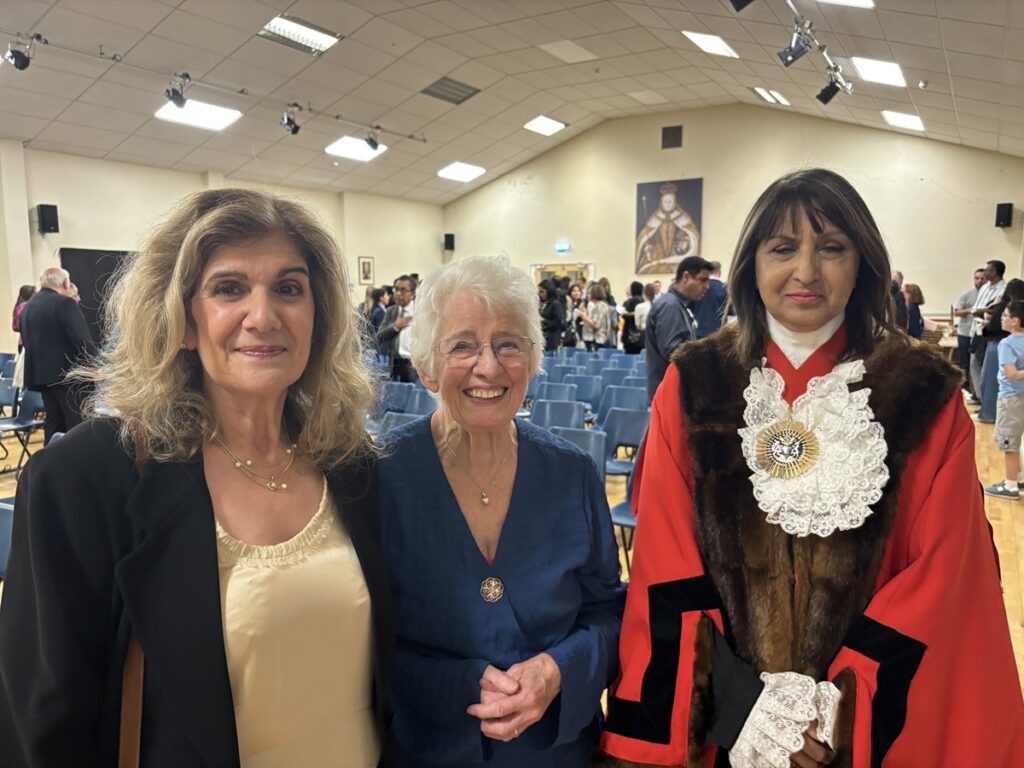
Requests by the newspaper under the Freedom of Information Act had revealed that in the last academic year (2024-25) only two boys from an intake of 192 at QE Barnet were identified as white British, down from nine in 2019-20.

The number of boys admitted to QE who were from Indian heritage had increased from 103 in 2019-20 to 120 in 2024-25.

Queen Elizabeth’s School attracted 3,300 applications for the 192 places which were available that year – a level of demand which reflects its ranking in the Sunday Times 2026 school guide as state secondary school of the year.

Since it reverted from being a comprehensive to grammar school status in 1994, and reintroduced an entrance examination, QE Boys has become heavily oversubscribed.

Its high intake of boys from Indian families who pass the entrance exam is a result of what The Times described as the emphasis which Indian heritage families place on tutoring children, often starting at the age of six.

Former QE pupils from Barnet who now live in Dubai – where 90 per cent of the population are expatriates – have been lending their support for the opening of the Queen Elizabeth’s School at Dubai Sports City.

In a video presentation describing how the new school would draw on QE Boys “incredible heritage”, the founding principal Dan Clark said he had hosted an event in Dubai for Old Elizabethans.

He said that these former pupils had “an exceptional sense of pride” about having been educated at QE in Barnet and they were “desperate to get involved” in a project which would allow children in Dubai to benefit from the experience of the “most academically successful state-maintained school in the UK”.

“I have been wondering whether Queen Elizabeth thought that a school she founded in Barnet would go on to be one of the UK’s – and the world’s – most successful academic institutions.”

Mr Clark expressed his personal delight at being able to bring the “incredible heritage” of QE to Dubai, one of the “world’s most exciting cities and one of the world’s top ten destination cities for education”.

QE headmaster Neil Enright said that he and his staff in Barnet would “play a key role in shaping and guiding the new schools, ensuring that they are worthy of bearing the proud name of Queen Elizabeth’s School”.

Management of the commercial relationship with Global Education will be in the hands of a new subsidiary, Friends of Queen Elizabeth’s International Enterprises Ltd which would ensure that the charity and the school benefited from the income generated by the new international schools.

Global Education is a UK registered education business with 60,000 students in a portfolio of establishments across 12 different countries operating as “successful education brands”.

“The new Queen Elizabeth’s Schools in India and other markets will bear the QE name and branding and will draw upon QE Barnet’s ethos and educational methodology, taking inspiration from and aspiring to its record of academic excellence and achievement.”

QE Barnet is described as being “a perfect partner” for Global Education as it seeks to offer first-class British-style schooling in international settings.

In welcoming the new partnership, Mr Enright says QE Barnet looks forward to working with Global Education to “open and grow QE branded schools internationally, and to the opportunities that students will enjoy as a result.”

In its report investigating the way white British pupils are failing to get grammar school places, The Times said that its Freedom of Information requests indicated that the girls’ grammar school Henrietta Barnet in Hampstead Garden Suburb took one white British pupil and 62 of Indian heritage in the academic year 2024-25 when there were 3,000 applications for 104 places.

Unlike QE Boys Barnet, Queen Elizabeth’s Girls’ School, Barnet, which was established in 1888, has remained a non-selective comprehensive school and continues to offer places within a wide catchment area around High Barnet.
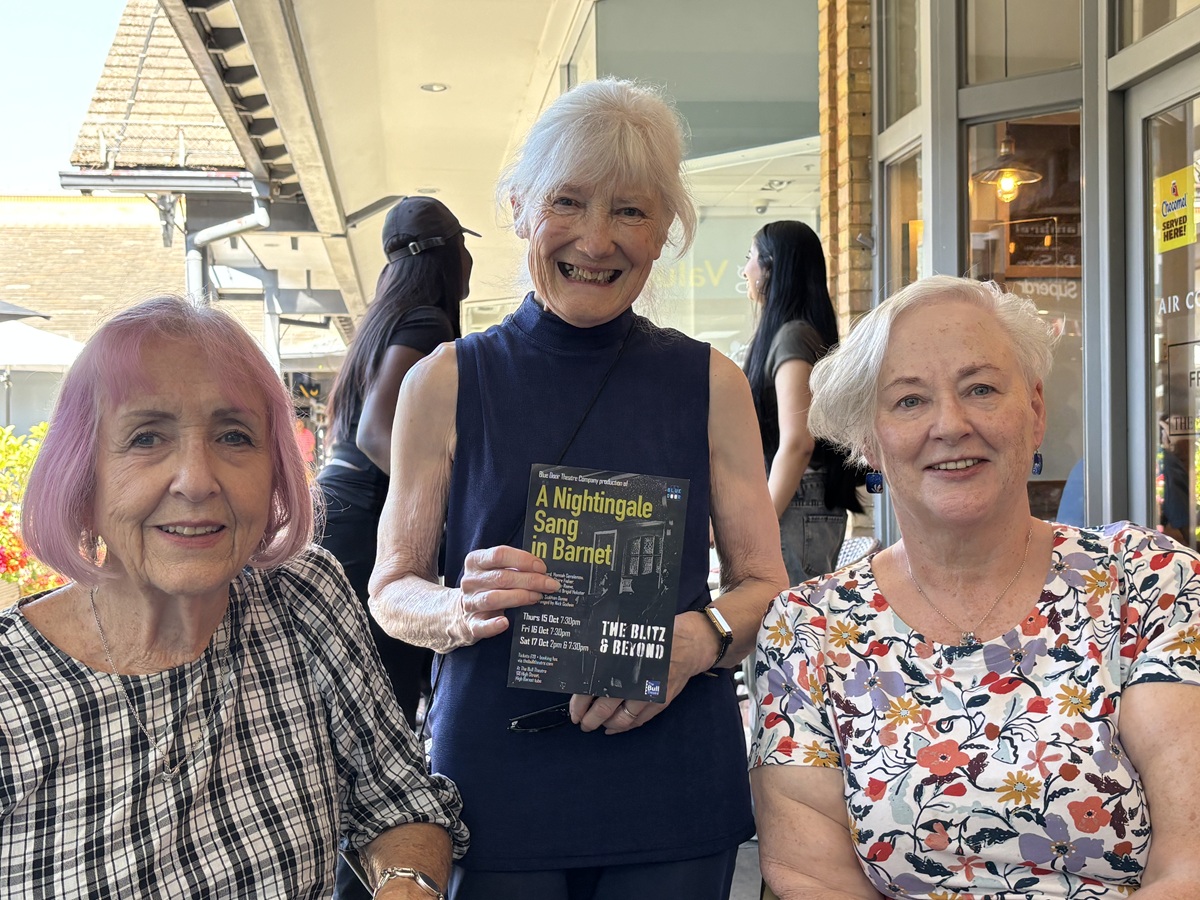
By contrast QE Boys attracts pupils from across north and west London, Hertfordshire and further afield and administers its own selection process.
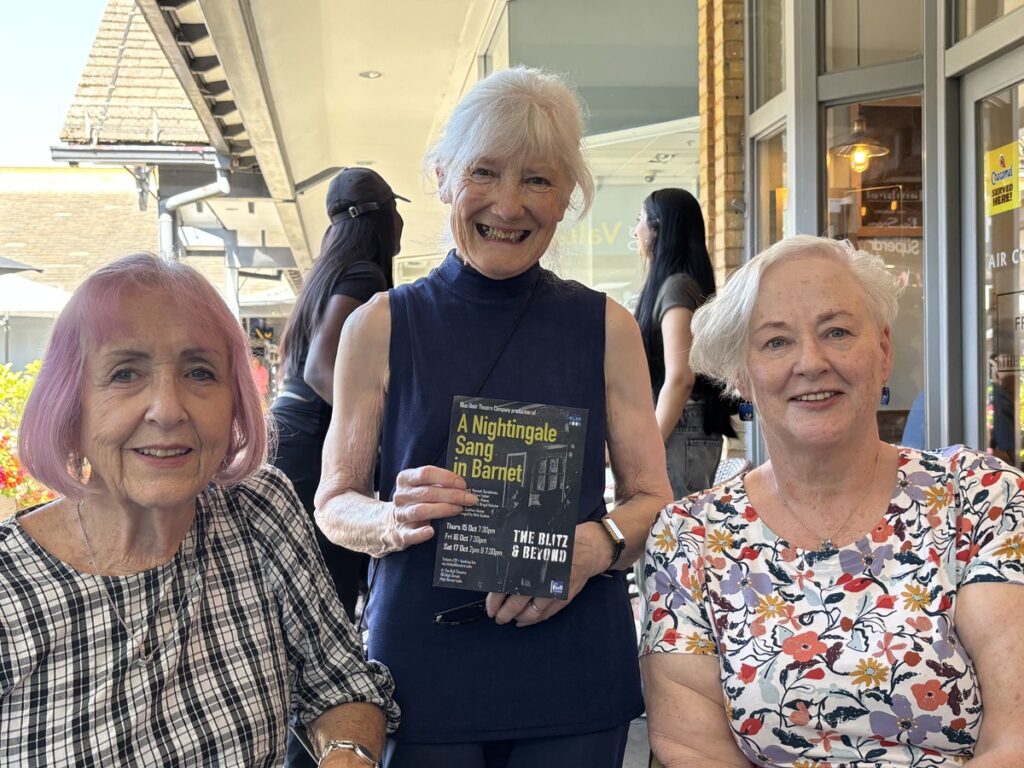
There has been discussion among education experts as to whether there should be reform of a system which allows applicants to apply to successful grammar schools regardless of where they lived.

Mark Fenton, chief executive of the Grammar School Heads Association, told The Times that schools were obliged to assess all applicants regardless of where they lived and this was a regulation which some grammar school leaders would like to see reformed.    

Posted on 3 Comments

New theories over elusive site of the Battle of Barnet are to be tested with possible metal detecting investigations and drone surveys

Fresh attempt possible with metal detecting and drone surveys to find elusive site of Battle of Barnet

Plans are being finalised for a fresh attempt to determine the site of the 1471 Battle of Barnet which has remained unidentified despite previous searches and an extensive archaeological excavation.

A team of metal detectors has already been enlisted, and an experienced drone pilot will carry out aerial investigations to look out for signs of ancient soil disturbance.

Barnet school pupils will be encouraged to take part in a project which the organisers hope will reveal more about the location – and potential burial grounds – after what was one of the most significant battles of the Wars of the Roses.

Preparations for the investigation are being co-ordinated by Brian Carroll (above, left) who is author of The Search for the Battlefield, and fellow researcher Barry Swain, who were photographed at Hadley Highstone which commemorates the battle.

They hope to announce more details about the areas they intend to search in the lead up to the 555th anniversary of the battle on Tuesday 14 April.

 After the failure over a decade or more to locate the site, Brian and Barry have spent countless hours examining the many historical accounts of the battle and have developed new theories about the route taken by the Yorkist army as it left London and headed for Barnet to meet the Lancastrians.

Schools to be approached to see if their pupils would like to take an interest and perhaps participate in the project are in New Barnet close to where the Yorkists might have passed and then returned to London after their victory.

They include the Jewish Community Secondary School, Livingstone Primary School and Cromer Road Primary School. 

Metal detecting and drone surveys with ground penetrating radar might be possible on land around the schools including perhaps playgrounds and playing fields.

“What we are hoping to do is look at areas around Barnet which have not been thoroughly probed in the past,” said Brian.

“We think previous searches, such as the most recent archaeological excavation around Kitts End Lane, were probably misplaced.

“If, as seems likely, the Lancastrians – who had arrived first – were well entrenched on the high plateau around Monken Hadley then, if we are right, the Yorkists approaching from London might well have approached from the ground below King George’s Fields.”

Brian and Barry are the founder members of the Barnet Tourist Board, which they established to help promote Barnet – and its connections to the Wars of the Roses – through the publication of booklets and videos.

“If we could establish the actual site of the battle – and answer a centuries old mystery – then Barnet would change overnight attracting tourists not only from this country but also from all over the world,” said Barry.

“Over the years we have heard so many reports of people finding items which might have been linked to the battle such as swords, cannon balls and shot.

“Perhaps it is not surprising that so many artefacts have been discovered when you think that this was a major battle fought by up to 30,000 men and that 2,000 to 3,000 were killed, or perhaps many more.

“We know there is so much more to be found and we hope our project will keep the important history of Barnet alive, so we hope as many people as possible will join us in a once in a lifetime adventure to find the site of this elusive battlefield.”

The Barnet Tourist Board has produced a video “In Search of the Battlefield” in support of its attempt to launch a new investigation to find precisely where the battle took place and those who were killed might have been buried:

Posted on

Barnet pub with a tradition of community and creative engagement included in sale of 30 licensed premises by Hertford brewers McMullen’s

Sebright Arms in Alston Road is one of three Barnet public houses which the Hertford family-owned brewers McMullen’s have sold to Punch Pubs & Co.

Two others included in the sale of a total of 30 pubs are the Kings Head in Barnet High Street and the Queens Arms, next to the Everyman cinema.

James Croft, Punch Pubs’ strategy and commercial director, said the company was delighted to have acquired a collection of pubs with such strong community roots and the focus would be to continue to invest in their licensed premises and to support their publicans and managers.

McMullen’s joint managing director Tom McMullen was confident Punch Pubs was committed to supporting the Sebright Arms and other pubs included in the sale.

“Punch Pubs have indicated a willingness to invest £4 million in the 30 pubs we have sold and to protect their long-term future.”

These assurances have been welcomed by the Sebright Arms Community Group which says Punch Pubs have “responded positively” in recognising “the Sebright’s established place at the heart of the local community”.

Ken Rowland, co-chair of the Barnet Residents Association, had been encouraged by the “proactive engagement” by Punch Pubs.

Because of previous uncertainty about its long-term future, the Sebright was registered with Barnet Council as an asset of community value, a safeguard which continues until 2027.

“The Sebright holds particular significance in Barnet,” said Mr Rowland.

“It has long served as a creative and community driven hub, hosting open microphone nights, quiz evenings, charity fund raising events and a wide range of residential led activities.

“Its role extends well beyond that of a traditional pub, providing a welcoming space where friendships are formed and local talent is supported.”

Mr Rowland said Punch Pubs’ reassurances were especially significant as the Sebright prepares to host its largest charity event to date on July 11, a celebration of the life and legacy of Graeme Hall, a much-loved regular and key figure in the Barnet music scene.

More than 25 acts have already committed to performing, reflecting the depth of affection and respect he inspired.

News of the sale of the Queens Arms and the Kings Head follows a temporary closure of the two pubs last year while waiting for new tenants and the BRA says it hopes they thrive under new ownership.

Other McMullen’s pubs included in the sale to Punch Pubs are the Builder’s Arms, Potters Bar, and the Windsor Castle, East Finchley.

All 30 were described by Punch Pubs as having strong trading histories, distinctive heritage and established positions.

Sebright Arms, Alston Road, one of three Barnet pubs sold by Hertford bewers McMullen's to Punch Pubs

In his statement Tom McMullen said it had been important to transfer the pubs to a new owner who possessed both the “scale and strategic direction” to offer tenants improved support and willingness to provide the pubs the financial commitment they deserved.

Posted on 1 Comment

Bid to safeguard Black Horse public house for community use amid continuing doubts about its future despite Star Pubs’ re-assurances

An attempt is being made to safeguard the long-term future of a Barnet landmark, the Black Horse public house, which has been closed to the public since mid-September last year.

Barnet Council is being asked to declare the building an asset of community value which would ensure the community had a chance to buy the property should there be an attempt to sell it for redevelopment.

Star Pubs, which said before Christmas that it hoped to find a new tenant starting in the New Year, has admitted that the company, which is part of Heineken UK, is still has no nearer to saying when the pub might re-open.

“The Black Horse is a much-loved pub, and we are committed to keeping it as such,” said Star Inns in a statement to the Barnet Society.

“We remain keen to re-open it as soon as possible but are unable to provide timings at this stage.

“As soon as we have more information, we will be happy to share it.”

The application for an asset of community value order has been submitted in the name of the Barnet parish church of St John the Baptist on behalf of the community, says Olly Gough.

Olly, who is to be a Labour candidate for the May elections to Barnet Council, has organised a petition to the save pub which has attracted over 3,500 signatures.

Barnet Council has eight weeks to make a decision on the application and, if approved, Olly says the ACV order would given the community “a real say in the pub’s future and help protect it as a proper local”.

In his campaign to save the pub, Olly has been publicising one of the early pictures of the Black Horse back in the day when a horse drinking trough and lamppost formed an effective mini roundabout at the Ravenscroft Park junction of Wood Street and Stapylton Road.

He says the strength of support for the petition reflects the news coverage which has been given to his campaign by the BBC, London Evening Standard, Barnet Post, Morning Advertiser and the Barnet Society.

“Thanks to everyone who has backed this campaign. Fingers cross for a good outcome.”

An ACV was issued in March 2024 to safeguard the future of the Prince of Wales public house in East Barnet which was closed by the Stonegate Group but was finally rescued and re-opened by the Heartwood Collection group of inns and hotels.

Once an ACV is registered, an owner wishing to sell the asset or to lease it for more than 25 years, is legally obliged to notify the relevant local authority.

Barnet Council will then inform those making the application – in this case the Barnet parish church – which would signal an interim moratorium period of six weeks during which the community could express an interest in taking on the asset.
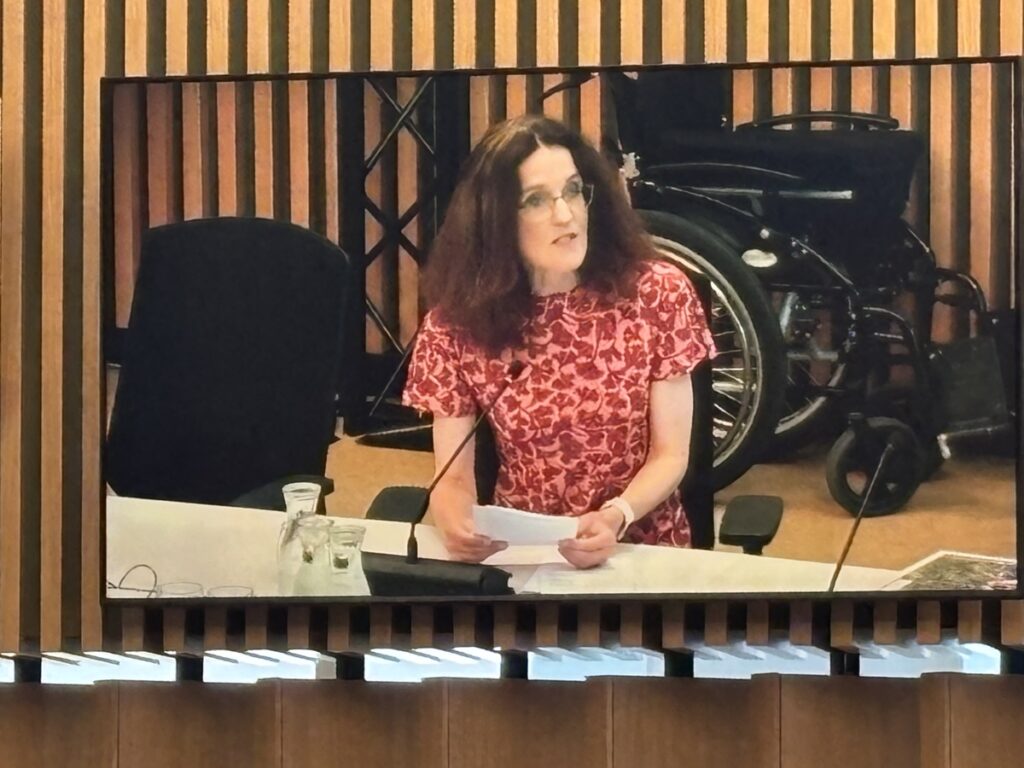
If a community does express an interest in taking on the Black Horse, then a full moratorium is triggered and the property may not be sold on the market for a six-month period, which would give time for the formation of a residents’ group to consider their options.

Posted on 5 Comments

Loss of pub motto from new signs at The Gate, Arkley, prompts memories of some of the pub’s famous – and infamous – customers  

New signs outside The Gate public house at Arkley have resulted in the disappearance of a much-loved historical pub motto which used to adorn a miniature five-bar gate that has been the inn’s trademark for probably a couple of centuries.

Motorists stuck at the traffic lights at the junction of Barnet Road and Hendon Wood Lane — or passengers on the 107 bus – are said to have learned the words off by heart:

                           THIS GATE HANGS HIGH

                              AND HINDERS NONE

                               REFRESH AND PAY

                                AND TRAVEL ON

The Gate public house is included in Barnet Council’s local heritage list as being a landmark of significant architectural interest and the loss of the motto – which was painted on both sides of the miniature gate – has disappointed both residents and passers-by.

When asked by the Barnet Society, The Gate’s management said they had no intention of replacing the missing words – the suggestion seemed to be that after a new coat of white paint the mini gate now stands out more clearly and suits the modern, stylish lettering on the side of the wall.

The installation of a small five-bar gate as a pub sign dates back to when it was known as The Bell.

It was opened in the mid seventeenth century and was mentioned in a War Office survey of 1756 as being kept by John Williams.

A drawing of 1807 shows the inn as a thatched cottage with a porch and a gate alongside, close to the wall.

The gate’s purpose was to keep cattle and horses within the common which then stretched to the town of Barnet two miles distant.
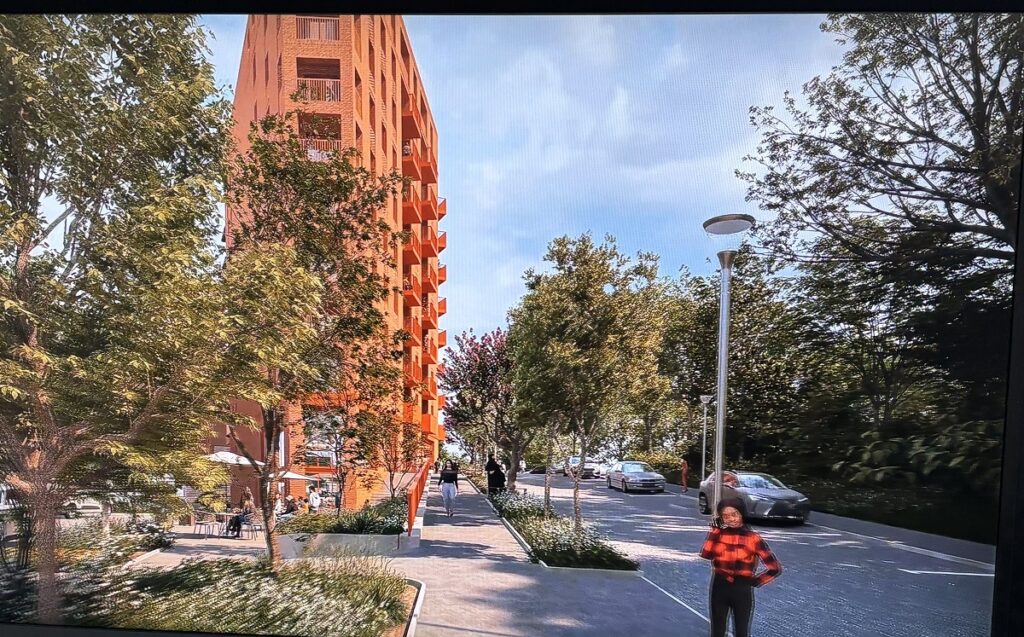
Legend has it that when the gate was removed a replica was added to the inn sign.
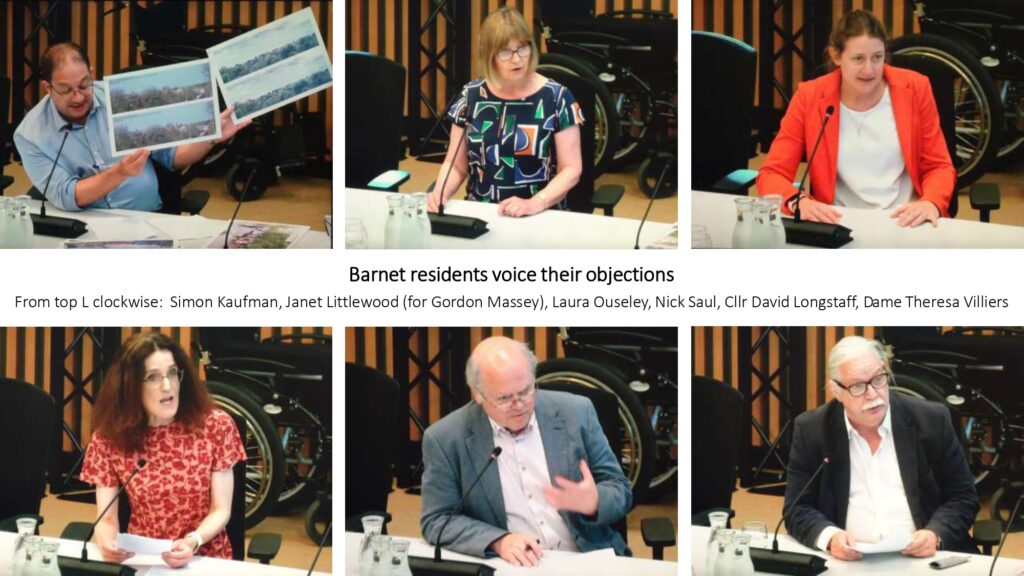
At the time, the pub was often described as the Bell at the Gate or the Bell and Gate and the above picture (1898-1903) – from the Barnet Museum photographic collection – shows a replica gate above a sign depicting a bell.

The first words of the historical pub motto do differ – instead of “This gate hangs high” it sometimes says, “This gate hangs well.”

Replica gates with the motto are often displayed on inns on turnpike toll roads, meaning the gate is well maintained, does not block the traffic and requires a small payment for refreshments before travellers can continue on their journey.

In other cases – as at Arkley – the gate appears above inns on rural roads where a gate was used to keep animals in the owner’s land or within a common.

Over the years The Gate has served some notable characters – perhaps the most chilling was the American homeopath Dr Crippen who was hanged in 1910 at Pentonville Prison for the murder of his second wife.

In an article published in 1957 in the spring issue of Hertfordshire Countryside, Dorothy Prince, the daughter of a former licensee of the Bell Inn at Barnet Gate, recalled that when her father took on the pub in 1908 it still retained a good deal of its Victorian character.

Newly painted signs at The Gate public house Arkley fail to include the words of historic pub motto and prompt memories of famous -- and infamous -- customers

The postcard above – from Barnet Museum’s collection – promotes the then proprietor, J. Prince, Dorothy’s father

Motorists, who were rarely seen in those days, were regarded by Mr Prince as being “eccentric or flighty” as ordinary folk preferred their “bicycles or a nice little pony and trap for their country outings”.

One afternoon Dorothy’s sister served a meal in the parlour to a “small and furtive man, with a drooping moustache” and she remembered that his companion “seemed much younger and rather nervous”.

“A few months later the whole country was startled and horrified by the news of a dreadful crime. Pictures appeared in the newspapers, and my sister recognised her parlour customers.

“The man with drooping moustache was Dr Crippen and the young lady was his friend, Ethel le Neve.”

Dorothy recalled that one summer afternoon a party of very lively people alighted from several carriages and ordered tea to be served in the garden.

“Trooping on to the velvety lawn, they moved the tables and chairs and then started to dance – to dance in a way that seemed strange and fairy-like to my childish eyes. Soon the news leaked out.

“It was a party of dancers from the Russian Ballet, then appearing at Covent Garden, and I was told afterwards that I had probably seen the great Pavlova dancing.”

In later years The Gate became a regular haunt of the British film actor, Trevor Howard, who lived nearby in Rowley Lane.

Barnet Council’s local heritage list describes the association in rather more brutal words: “It is said that Trevor Howard drank himself to death in the pub”.

More recently social media posts recall visitors and regulars seeing other celebrities in the pub including the Irish American actor Patrick McGoohan, the actress Claire Bloom and another nearby resident, Tony Blackburn, the disc jockey and television presenter.

Posted on

Arkley’s two leading football teams met up for a local derby which put the village on the map and revived memories of past encounters  

Arkley has a new claim to fame – its top two football clubs are now in the same division and when they play each other their home matches are thought to be the closest local derby among leading English football leagues.

Until this season Liverpool and Everton held that honour because of what previously was the close proximity of their stadiums.

Local football fans believe that Arkley village may now have become the setting for perhaps the hottest local derby in the top eight tiers of English football.

The two clubs are based less than a mile apart.

Hadley FC’s stadium and clubhouse is in Brickfield Lane, next to Arkley village hall, and London Lions FC are a ten-minute walk away in Rowley Lane.

London Lions won promotion this season to the Southern League Division One Central and their first away fixture to Hadley ended in a 2-1 victory after they snatched the winning goal a minute from the end.

Hadley, hit recently by a bad run of injuries, had been hoping for a win and were in high spirits during the warmup – see above, from left to right, Hermes Gbio, Hedley Ogbebor, Jordan Edwards and Hadley goalkeeper coach Tim Teixeira.

London Lions under their skipper for the day Adam Lipman – see above with long-time Lions supporter Paul Woolfson – were disappointed when Hadley were deservedly 1-0 up at the end of the first half after striker Lenny Asamoah had made no mistake from close range.

Zan Appleson-Fidler equalised for the Lions in the 60th minute and a minute from time Daniel Creese clinched the match for the visitors from six yards.

Veteran London Lions fan Neville Zeller (87) – above right with Darren Zeller – is no stranger to the local football scene. He has been a supporter of the club since he was 15.

The last time the two teams met was in 2014 when Hadley ran out 4-0 winners in a Spartan South Midlands League Premier Division match.

A decade ago, the two clubs were both ground sharing – Hadley at Potters Bar Town and London Lions at Hemel Hempstead Town but after ground improvements both returned to Barnet.

Hadley FC president Tristan Smith – above – is hoping for a better result when the two teams meet again at the London Lions’ stadium in Rowley Lane on 28 March.

Arkley became the permanent home of Hadley FC – which was established in 1882 and is the oldest football club playing in Barnet – after the club secured a long-term lease on the sports ground at Brickfield Lane in 2016 – where the regular chant is now “Come on You Bricks.”

Since 2016 the club has spent £1.3 million in improvements to its ground and facilities, including the installation of an all-weather training pitch.

The latest addition are new changing rooms which have been in use since the start of the season, and which were funded with the help of grants from the Football Foundation and Barnet Council.

Despite having been hampered since early November by having up to 13 players unavailable through injuries, club director Oliver Deed – far right above with club chairman Steve Gray and first team coach Mick Hore – is hopeful Hadley might make it to the playoffs for promotion.

“We reached the first round of the FA Trophy, as we did last season, and although we are mid table, we have still got a chance of reaching the playoffs in 2026. It’ll but tough, but we are hopeful.”

Arkley's two top football teams Hadley FC and London Lions FC clash in local derby which gives village a new claim to fame.

For club members perhaps the next phase in the club’s development programme might be improvements to the bar and seating area in their clubhouse at Hadley Pavilion.   

Posted on 1 Comment

Sad loss of an imposing Victorian villa built when New Barnet was developed after the opening of its main line railway station

One of New Barnet’s last remaining large Victorian villas – 33 Lyonsdown Road – is being demolished much to the disappointment of community and heritage groups who fear it will be replaced by blocks of flats.

There is no certainty about future development of this prime site as two planning applications by the owners Abbeytown Ltd have been rejected by Barnet Council.

A spirited campaign was launched in 2017 to try to secure the restoration of what was considered one of the last and best examples of the imposing private villas and terraced houses which were constructed after the opening of New Barnet station in 1850.

After failing to secure approval for a five-storey block of flats – and losing two planning appeals – Abbeytown was granted permission in 2022 to demolish 33 Lyonsdown under permitted development rights.

Demolition contractors have finally moved heavy equipment onto the site, and the roof of the building was off within a matter of days.

In his monthly newsletter the Chipping Barnet MP Dan Tomlinson said that residents had raised concerns about the state of the property at a consultation event in Barnet Vale. He said he was “pleased to report that demolition work started this week”.

Robin Bishop, who leads for the Barnet Society on planning and the environment, was appalled by the sad loss of one of the few surviving buildings from the first Victorian settlement at New Barnet.

“Despite being on Barnet’s heritage list, a quirk in the planning law has allowed the owner, Abbeytown, to demolish it without reference to the planning committee.

“For five years the local community, together with the society, fought off earlier plans to replace 33 Lyonsdown with characterless blocks of flats.

“We raised substantial funds for top level legal advice and even designed a more acceptable scheme to retain and extend the villa, all without success.

“A new planning application is doubtless already in the pipeline.”

33 Lyonsdown had a chequered history variously having been a private home, an outpost of London’s Foundling Hospital, a women’s refuge and a base for missionary priests.

In her time as the Chipping Barnet MP, Dame Theresa Villiers, intervened to prevent the demolition, writing to the development company Abbeytown at the offices of estate agents Martyn Gerrard.

She supported the society’s campaign arguing that it was “sad to see such a beautifully designed villa, which was such a feature of New Barnet”, being threatened with demolition.

Simon Kaufman Architects prepared a full feasibility study and visibility assessment to demonstrate a more conservation-led approach to retain a building that had become a heritage landmark.

Under the proposal, the existing building would have been converted into apartments, retaining its original richly detailed stone porch, panelled entrance hall and other original feature.

This would have delivered a comparable floor area and improved sales values when set against total redevelopment.

Alongside the restoration, there was a proposal for a modest new-build block within the grounds which would have mirrored key proportions and materials while maintaining distance from neighbouring properties.

Simon Kaufman insisted this alternative vision was supported with site plans, financial appraisals, and heritage justification, and those opposing demolition had been anxious to engage with the owner to promote a design-led conservation strategy that would have protected the unnecessary loss of an important local building.      

Posted on 1 Comment

Star Pubs say Black Horse in High Barnet is unlikely to re-open until 2026 as hunt is still on for a new publican

Black Horse pub in High Barnet unlikely to re-open until 2026 as hunt is still on to find a new tenant after pub closed in September

Any hopes on the part of former customers that The Black Horse public house might re-open in time for Christmas and the New Year have been all but ruled out by Star Pubs.

A statement from the company made it clear it is “unlikely” the pub will re-open this year, but the company said efforts are being stepped up to find a new tenant.

The Black Horse closed in September on the departure of the previous tenant.

Continuing uncertainty about its future has attracted well over 3,000 signatures to a petition promoting a campaign to get the pub listed as an asset of community value.

Posts on social media have expressed strong support for a co-ordinated attempt to persuade Barnet Council to safeguard the future of one of High Barnet’s “most cherished pubs”.

In its latest statement, Star Pubs acknowledges the depth of local concern about what locals fear might become an indefinite closure.

“We are keen to re-open the Black Horse as soon as possible and we plan to advertise details on our website as soon as we are able.

“It is unlikely the pub will reopen this year but as soon as we have more details to share with you, we will of course let you know.”

Said to have been founded in 1720 as a coaching inn, The Black Horse – at the junction of Wood Street and Union Street – had its own stables which were converted into a small micro-brewery before becoming the pub’s kitchen.

The name Black Horse is steeped in the history of former coaching towns like Barnet and inns with that name were a trusted stop for travellers and their horses.   

The pub’s significance locally – and its echoes of coaching inns and associations with Barnet Fair – has attracted widespread publicity and support for the petition – https://www.change.org/p/save-the-black-horse-chipping-barnet-list-it-as-an-asset-of-community-value

Barnet Council have indicated that a formal application will have to be made to apply for The Black Horse to be declared an asset of community value and that will involve more than simply adding names to a petition.

Posted on

Safeguards agreed by Barnet Council add greater protection for Quinta Village Green and could help to restore derelict youth club

Quinta village green and derelict Quinta youth club one step closer to being brought under residents' control after Barnet Council agrees asset of community value protection.

Quinta Village Green and the abandoned former Quinta Youth Club are one step closer to being brought under the control of a group of residents living in and around Mays Lane, Barnet, who have been campaigning for years to safeguard their open space and reopen a derelict clubhouse.

Barnet Council has agreed to list the whole site as an asset of community value, a safeguard which the Quinta Village Green Association hopes will be the first step towards establishing new facilities for the community.

ACV status for the green and clubhouse gives the community the right to apply for a potential community asset transfer which would allow a residents’ organisation to manage and operate the land and building for the benefit of the community.

An application is now being made to register the association as a community interest company which could develop and maintain community facilities on a non-for-profit basis.

Councillor Barry Rawlings, leader of Barnet Council, agreed to list the green and clubhouse as an ACV after meeting representatives of the village green association.

They outlined their vision for reviving the youth club building and enhancing the village green as a community-led hub.

Gina Theodorou, chair of the association, said the membership was thrilled that the importance of the green and club had been recognised and that the council had shared their vision that this was a place where people could come together.

“We can now start planning for a sustainable future with the hope that ACV status will ultimately lead to a full community asset transfer, ensuring the site remains protected and accessible for generations to come.”

She thanked Councillors Rawlings and Councillor Zahra Beg (Underhill) and Paul Frost from Barnet Council for their support.

The site was registered as a village green in 2010 following a public inquiry. Residents had argued that it should be preserved as an open space for community use and maintained by the council.

Local volunteers built the clubhouse in the 1960s and it served first as a youth club and community hub, later becoming a nursery and meeting place.

It has been vacant since 2006 when it was boarded up but in recent years residents have become increasingly concerned about continuing vandalism and anti-social behaviour around the building.

Planning approval was given in 2021 for use of the clubhouse to be changed from community use to become a store for the library service for schools in the Borough of Barnet but the proposed refurbishment did not take place, and the building has fallen further into disrepair.