
Facing an uncertain future: unsteady state of Barnet’s iconic whalebones archway – can it be repaired or replaced with a replica?
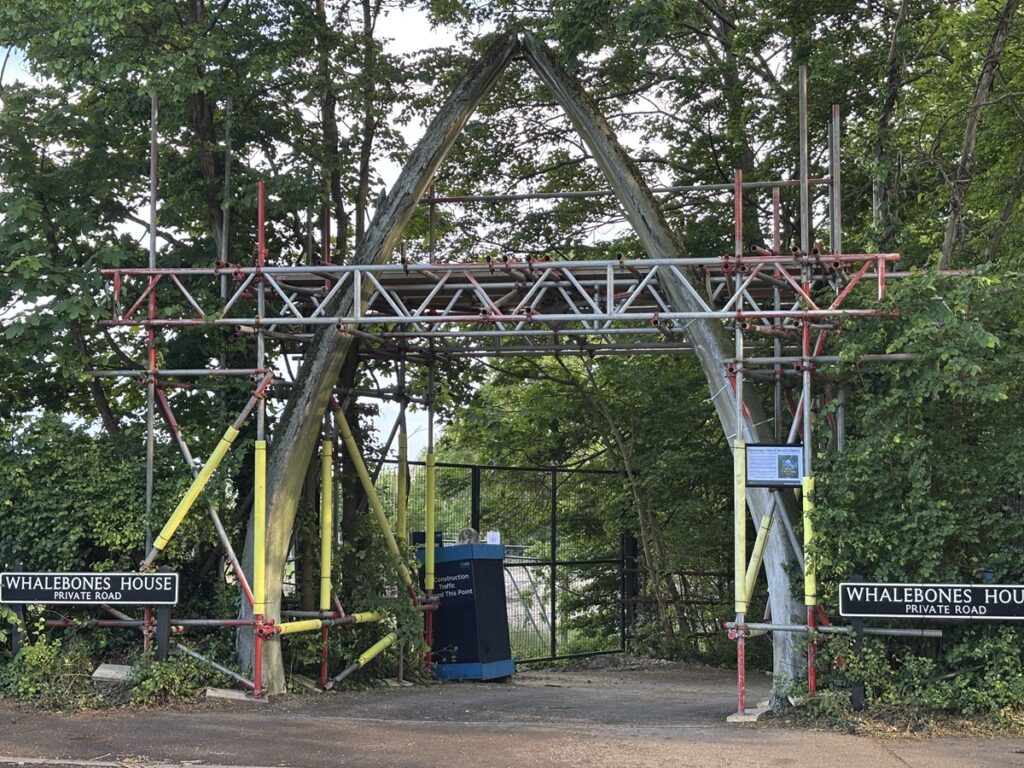
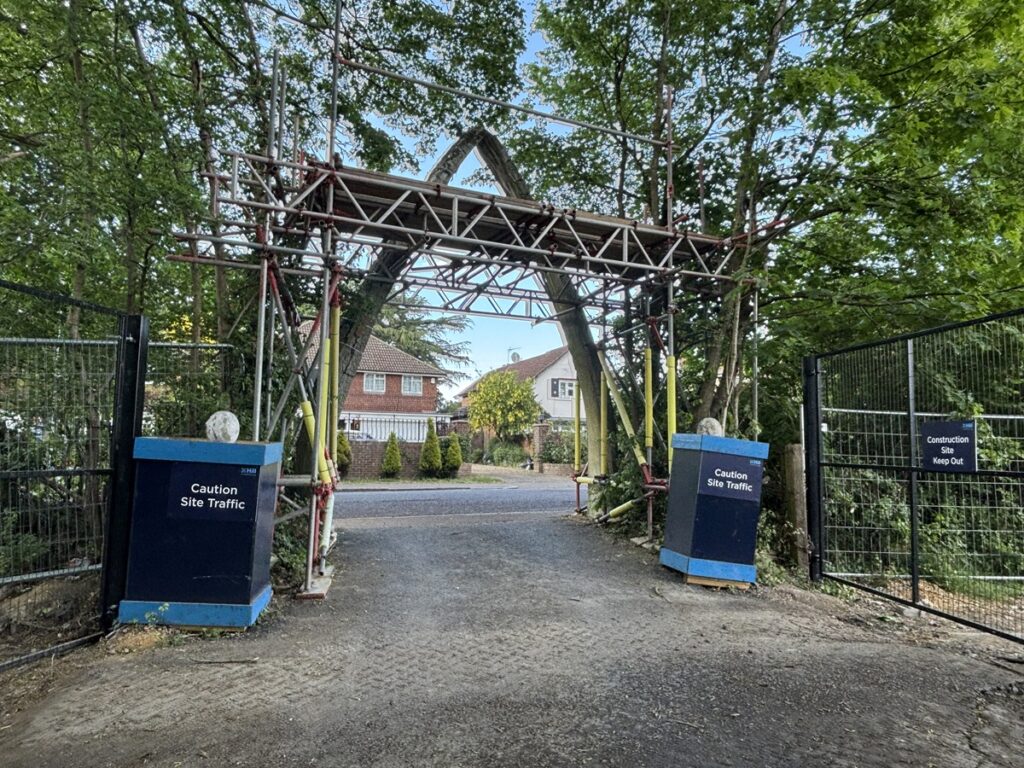
An historic whalebones arch beside Wood Street, High Barnet, has had to be encased in scaffolding after the owners of Whalebones House feared it might collapse and cause an injury to passersby.
Signs of movement in its footings and cracks in the archway – once the jaw bones of a ninety-foot-long blue whale – prompted concern about its safety.
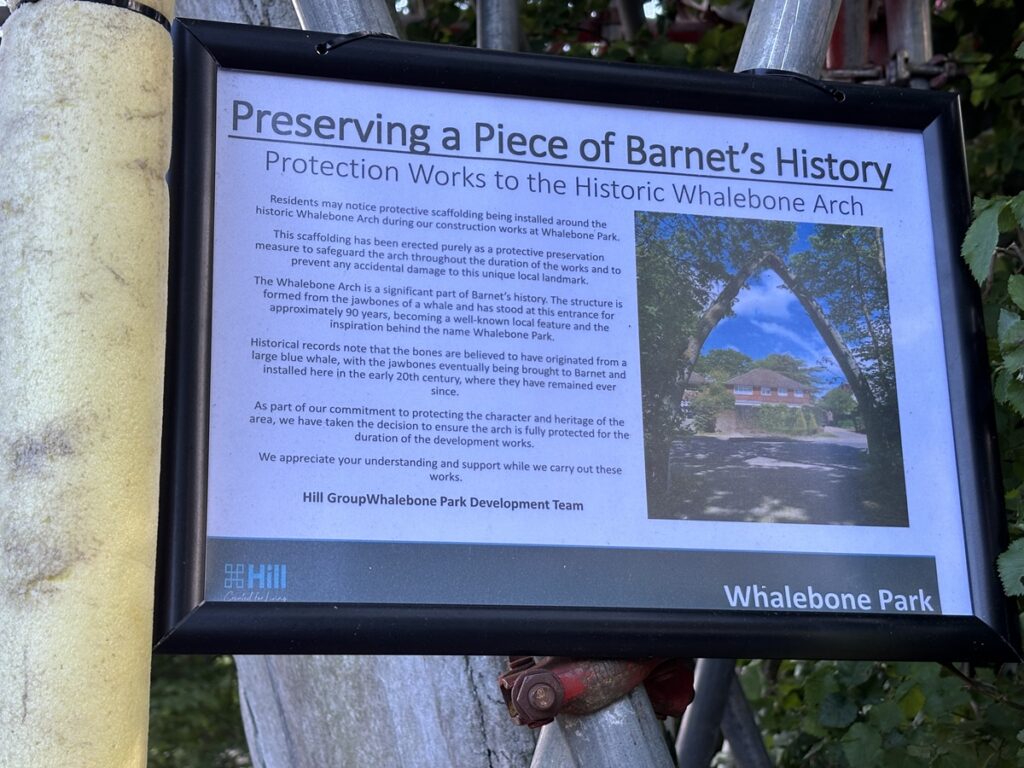
Hill Group, who are building 115 new homes in adjoining fields, installed the scaffolding as a protective measure to safeguard the arch and to preserve “a unique local landmark”.
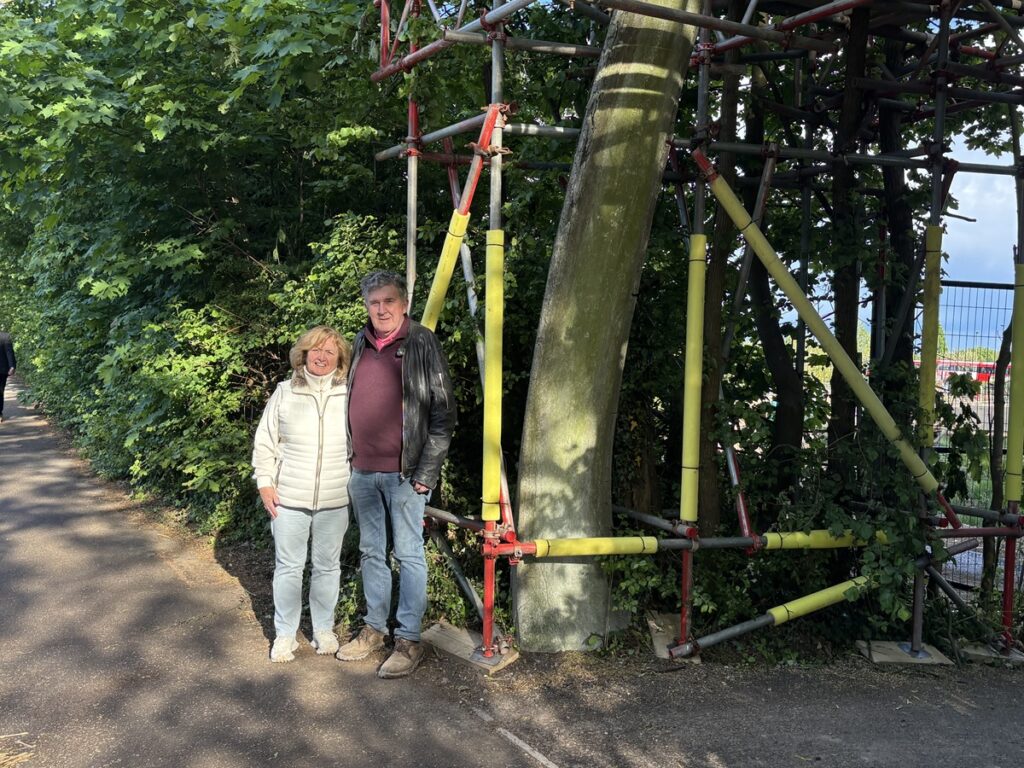
Hill’s intervention has been welcomed by the owners of Whalebones House, Patrick Shanahan and Helena Boland, who say urgent action is need to either repair the whalebones or replace them with a replica archway.
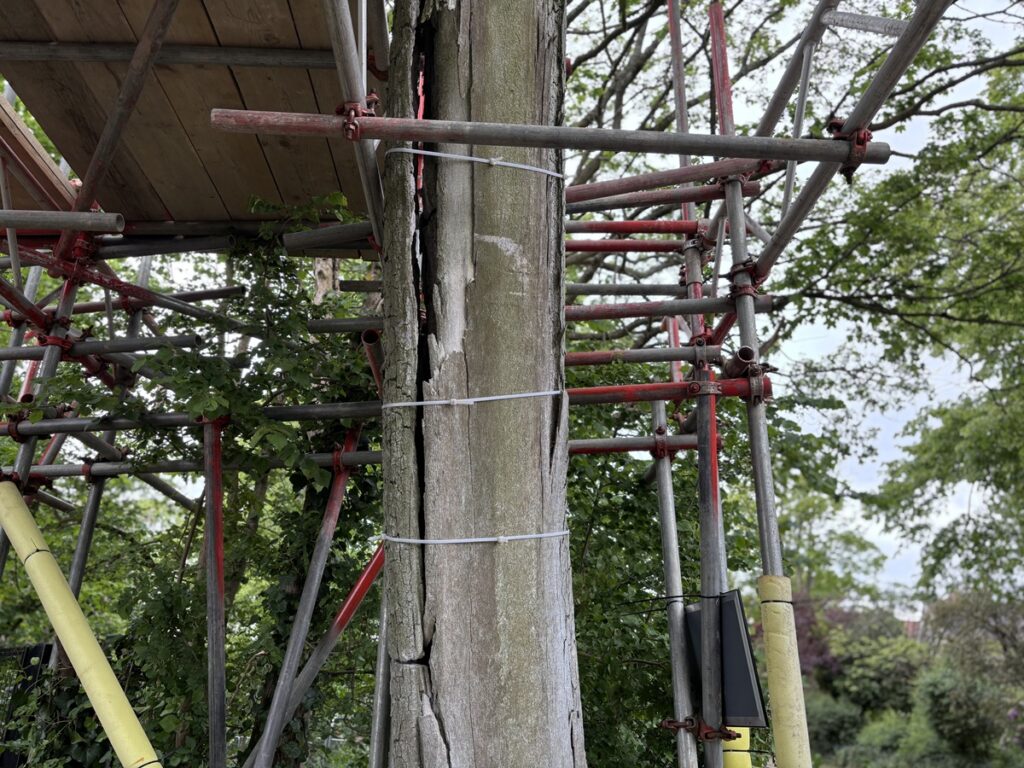
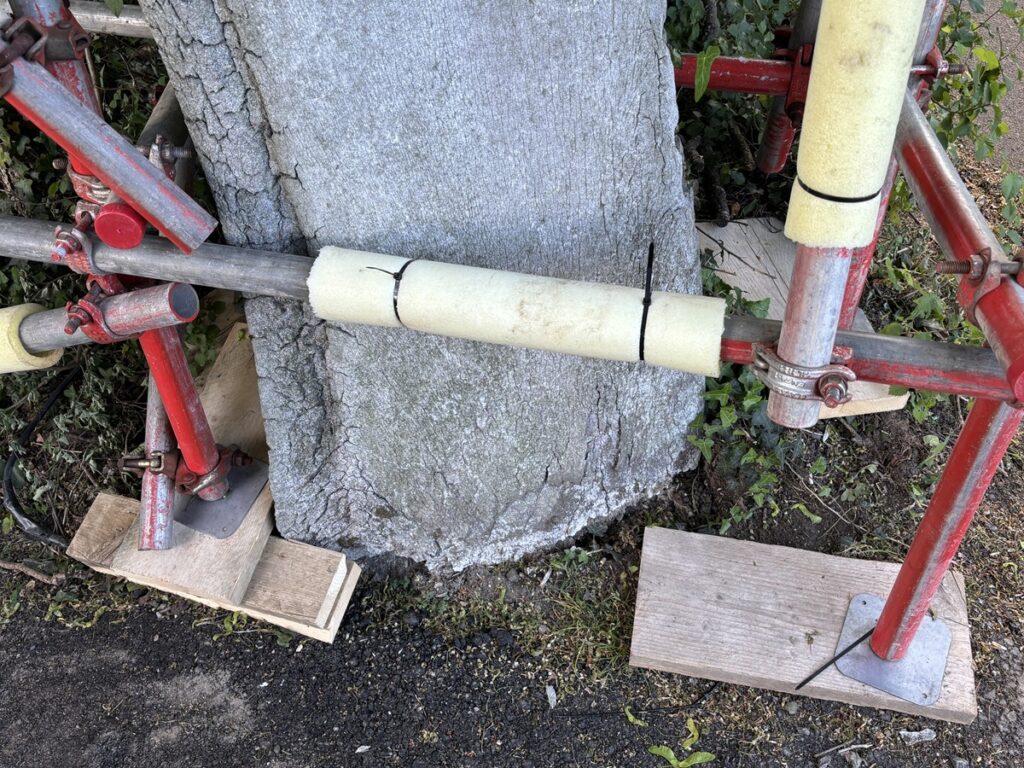
Straps have been applied around the surface to ensure there is no further fragmentation of the structure.
A set of jawbones was first erected as a gateway to Whalebones House in the 1860s or perhaps even earlier.
They were last replaced in 1939 by former owner of the house, Miss Gwyneth Cowing, whose family owned the Barnet Press newspaper.
She paid for two jawbones, each weighing three-quarters of a ton, to be transported to Barnet from Norway where the carcase of the whale, which had been captured in the South Seas, had been dismembered.
It took half a dozen workmen, under the direction of local builders W. Foster & Sons, all day to manoeuvre the gigantic jawbones into place and set them in six feet of concrete.
Cracks in the jawbone on the Arkley side of the drive started appearing at Easter; then its footing became dislodged; and it became clear the archway was in danger of collapsing.
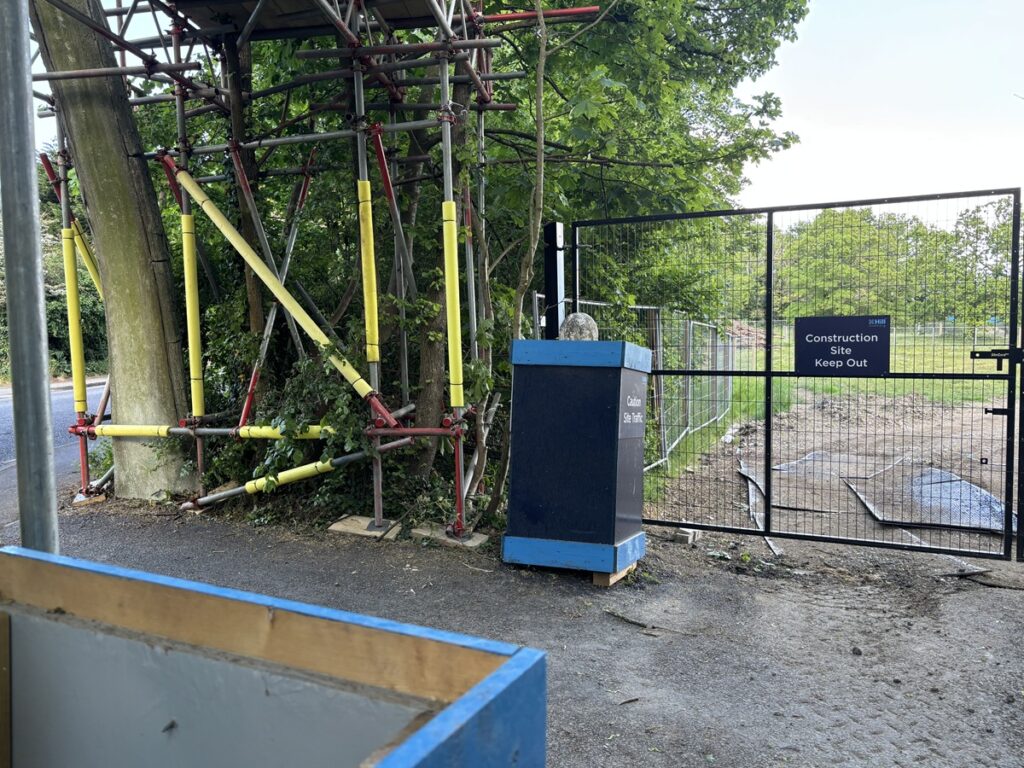
Mr Shanahan said he first became aware of the damage after heavy equipment being used by the contractors started crossing the driveway less than three metres from the jawbones.
“Excavators and piling equipment kept being moved to and from the main construction area to a smaller site off Wellhouse Lane where there is to be a new community building and studio for the Barnet Guild of Artists.
“Because of the fragile state of the jawbones we have asked the contractors to stop crossing the driveway and generating the kind of vibration which has clearly been having a devastating impact.”
After alerting the Hill Group to what had happened, the owners of Whalebones House asked for advice from Barnet Council on the historic status of the whalebones and whether permission would be needed to dismantle the archway and install a replacement.
They hope that the Hill Group and the trustees of the Gwyneth Cowing estate – which sold off the farmland for housing – will contribute to the cost of repairing or replacing the archway.
“Hill are going to call their new housing estate and gardens Whalebone Park, so they have a responsibility to ensure the whalebones remain an integral part of the whole development,” said Mr Shanahan.
“So far we have been unable to gain any assistance from Barnet Council’s planning or heritage departments, and we are anxious to work out how best to safeguard the future of the archway.”
Whalebones House is a Grade II listed building of special interest and the whalebones at the entrance to the drive are specifically referred to in the appraisal for the Wood Street Conservation area which includes the Whalebones estate.
It says that the whalebones at the entrance sit within “a notable tree boundary and create an entry feature to the space.”
Mr Shanahan says former fishing and whaling communities which have historic whalebone arches, including Whitby in Yorkshire and coastal ports in Scotland, are facing similar challenges over how best to protect them.
“Resin bonding has been used to repair some arches. Others have been replaced with replica arches made from synthetic compounds, steel or even brass.
“We need advice and help in working out how the arch can be preserved or replaced.”
There are competing theories as to how and why whalebones were first erected in Wood Street.
One report in the Barnet Press suggested the famous polar explorer John Franklin (1786-1847) once lived in Whalebones and according to local thinking installed the first set of whalebones as early as the 1830s.
A week later the paper published an alternative version: Frederick Brown, who lived at 92 Wood Street, said his sister was married to Mr Easton, a Thames waterman, who had lived at the house and started the tradition.
Mr Easton had joined the firm of Smith and Sons, whalebone and sealskin merchants, who plied their trade from the Thames, and he obtained a pair of whalebones which it was thought were erected in the 1860s and gave the house its name.
Records at Barnet Museum suggest the house was built in 1815 and the first reference to it being named Whalebones was on a map dated 1872.
Motorists travelling along Wood Street often miss seeing the jawbones, especially when the trees and hedges are in leaf and much of that side of the road is filled in parked cars.
Pedestrians get a far better view and might like to renew an old Chipping Barnet custom: according to local legal it was good luck to walk under the archway, make a wish or share a kiss.
Over the years countless Barnet youngsters have marvelled at the size of the jaw bones from a blue whale, the largest species captured in the South Seas.
Angela Morris of King’s Road, Barnet, remembers that as a seven-year-old in the 1950s she attended a Brownie pack that met in the barn at Whalebones.
“In those days there were another two sets of whalebones, only much smaller. One was at the gateway to the house and one that had fallen down beside a path that went to the barn where the Brownies met.”
Tags: #Barnet Council #Development #High Barnet #People And Personalities #Planning
1 thought on “Facing an uncertain future: unsteady state of Barnet’s iconic whalebones archway – can it be repaired or replaced with a replica? ”
Comments are closed.

Why not become a member? Receive our latest newsletter hot off the press four times a year, and support our work with a membership.
If you have some local news, history or want to bring something to our attention please email us.
What a tricky predicament. Whilst I am strongly against the hunting of these magnificent animals, I am also fond of the Whalebones arch. Obviously they would not last forever, though it sounds as if the recent works there, have sped up their demise.
Personally, if replacement ones could be sourced, from an old whaling station, or such, I would like to see them replaced. Failing that, replica ones, possibly Oak, as that’s what I always thought they were as a youngster, had no idea a whale could be that size!