Posted on 1 Comment

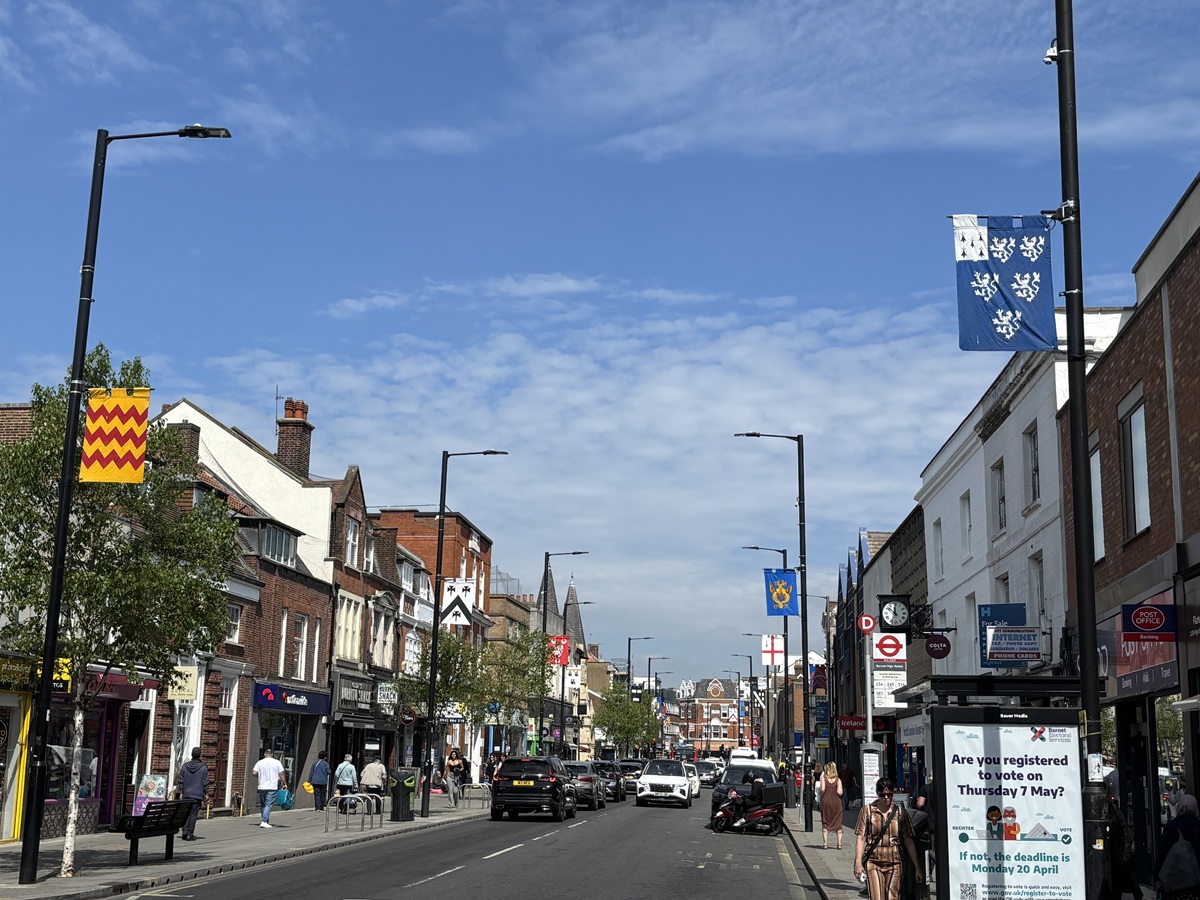
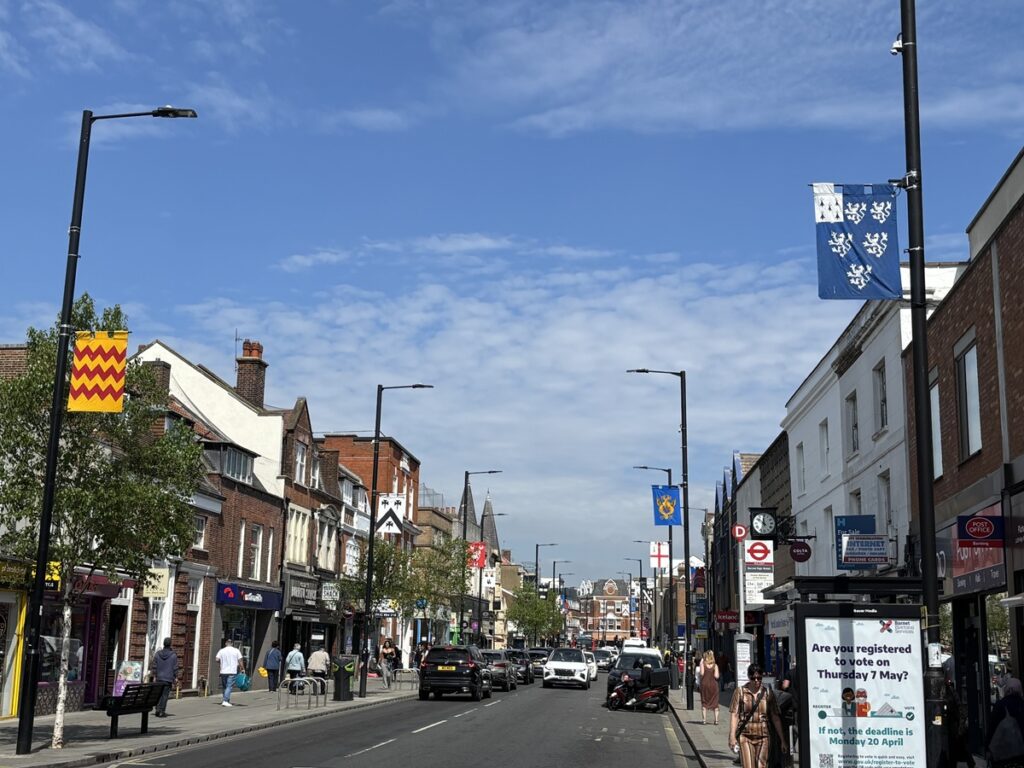
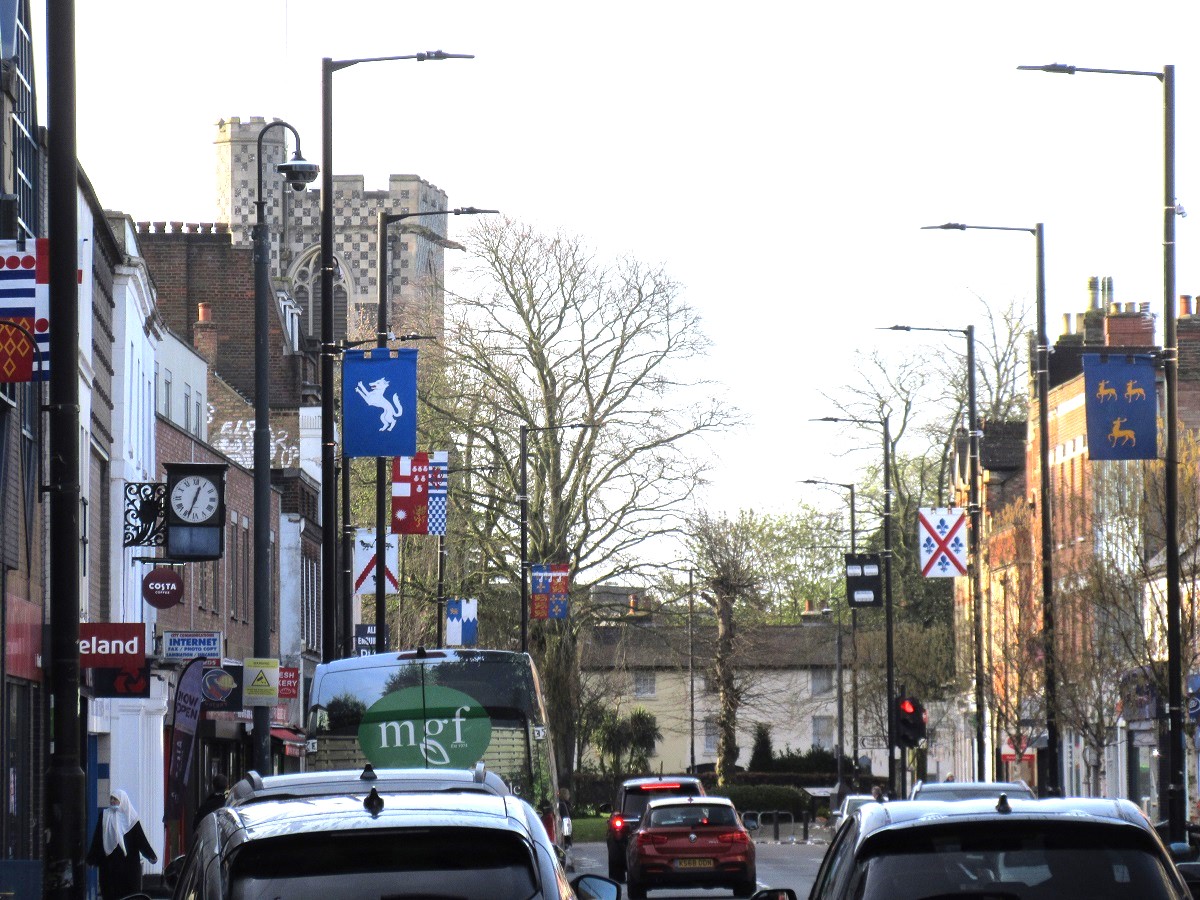
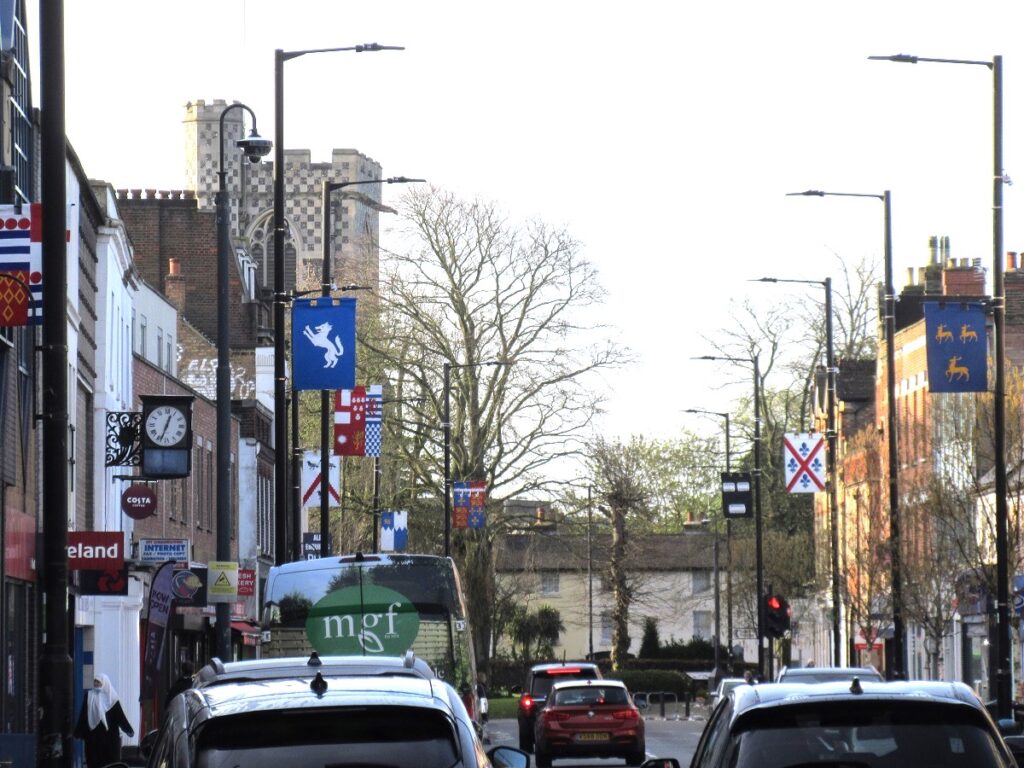
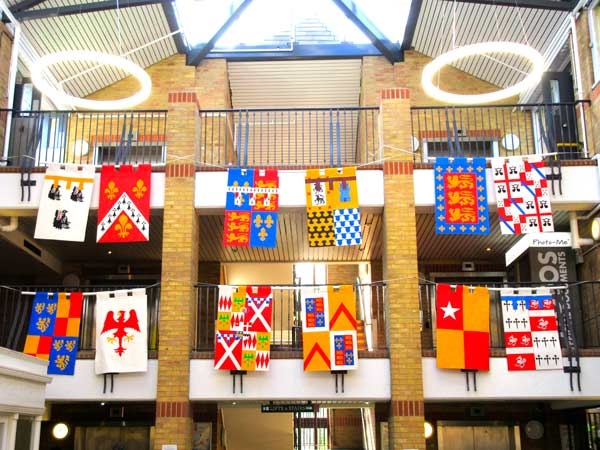
Barnet High Street has become a showcase for Battle of Barnet banners – a heritage asset which might get international recognition

Painting and caring for the Battle of Barnet banners which are displayed along the High Street each summer is an historic legacy for the town which volunteers at Barnet Museum hope might gain international recognition.

An application has been made by the museum to see if the craft of making and maintaining replicas of these medieval banners can be recognised by UNESCO as an intangible cultural heritage – a practice which is part of the cultural identity of a community.

Unlike tangible heritage, such as monuments or artefacts, an intangible heritage is passed down from generation to generation and is continuously being recreated.

Almost a decade ago Barnet Museum took inspiration from the town of Tewkesbury which has been celebrating the 1471 Battle of Tewkesbury for the last 50 years with re-enactments, a medieval festival and a display of heraldic banners.

Volunteers at Barnet Museum followed their example and started researching the history of the coats of arms of royalty and noblemen whose troops fought in the Battle of Barnet on April 14, 1471, the month before the Battle of Tewkesbury on May 4, 1471.

The application to UNESCO for a listing of intangible cultural heritage is now being made in conjunction with Wars of the Roses enthusiasts at Tewkesbury.

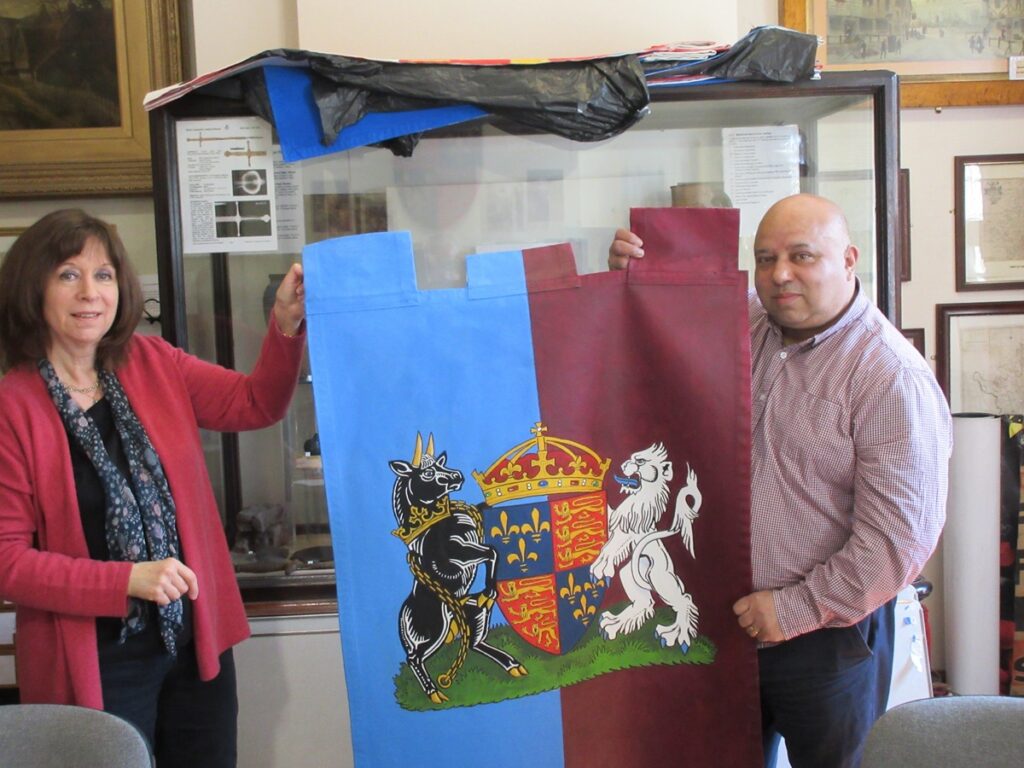
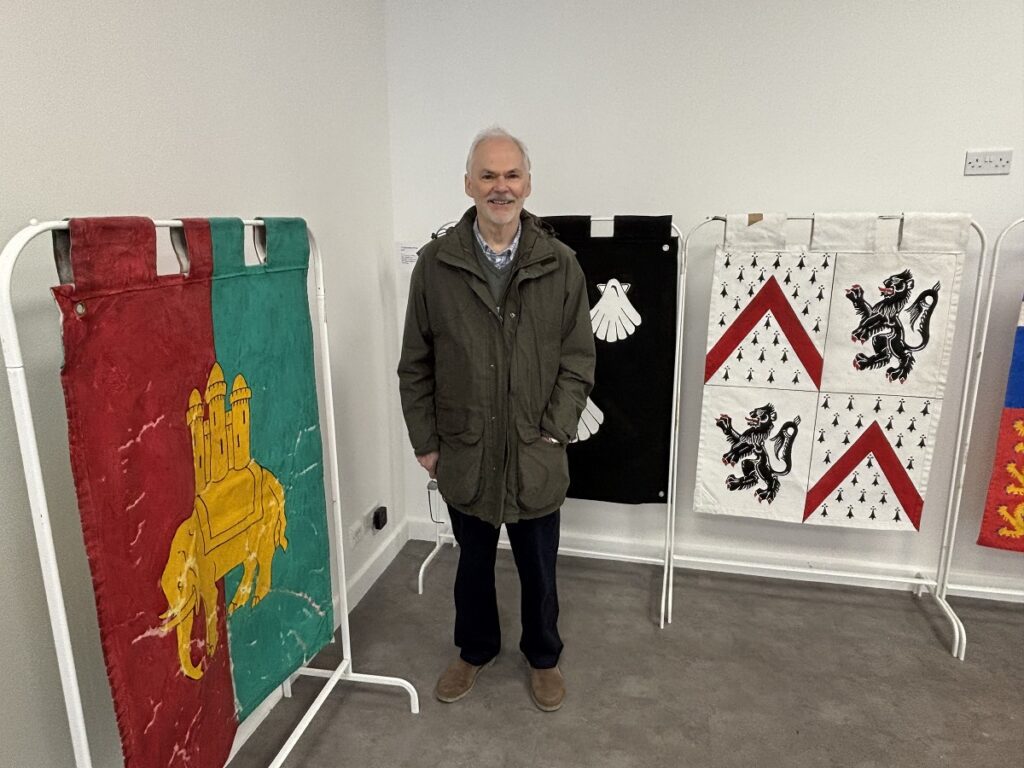
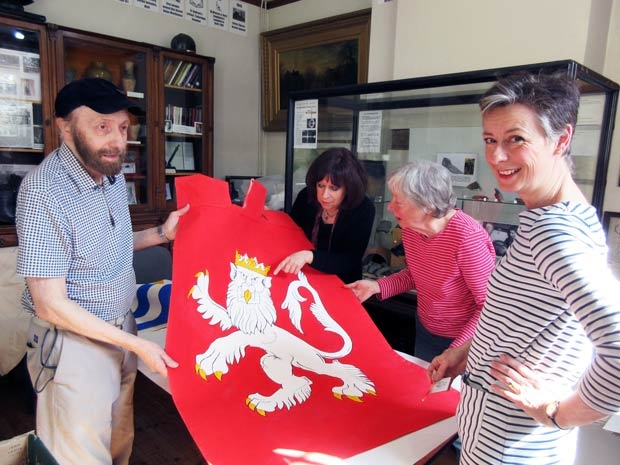
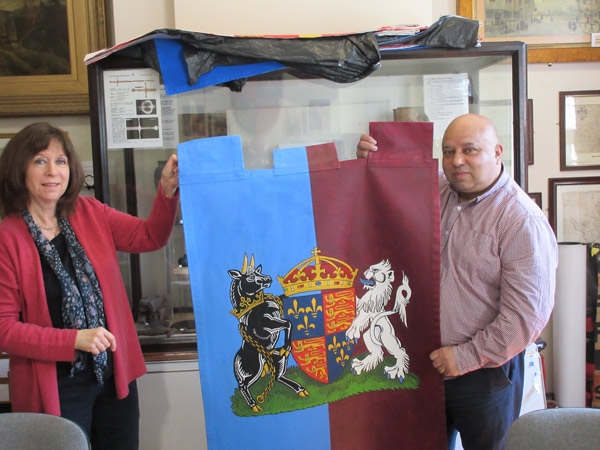
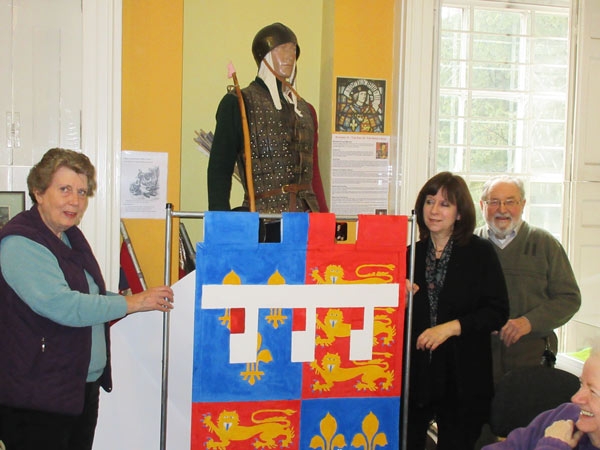
One of the first heraldic banners to be reproduced in Barnet was that of King Henry VI – seen above in 2018 with the museum’s curator Mike Noronhan and the deputy curator Hilary Harrison.

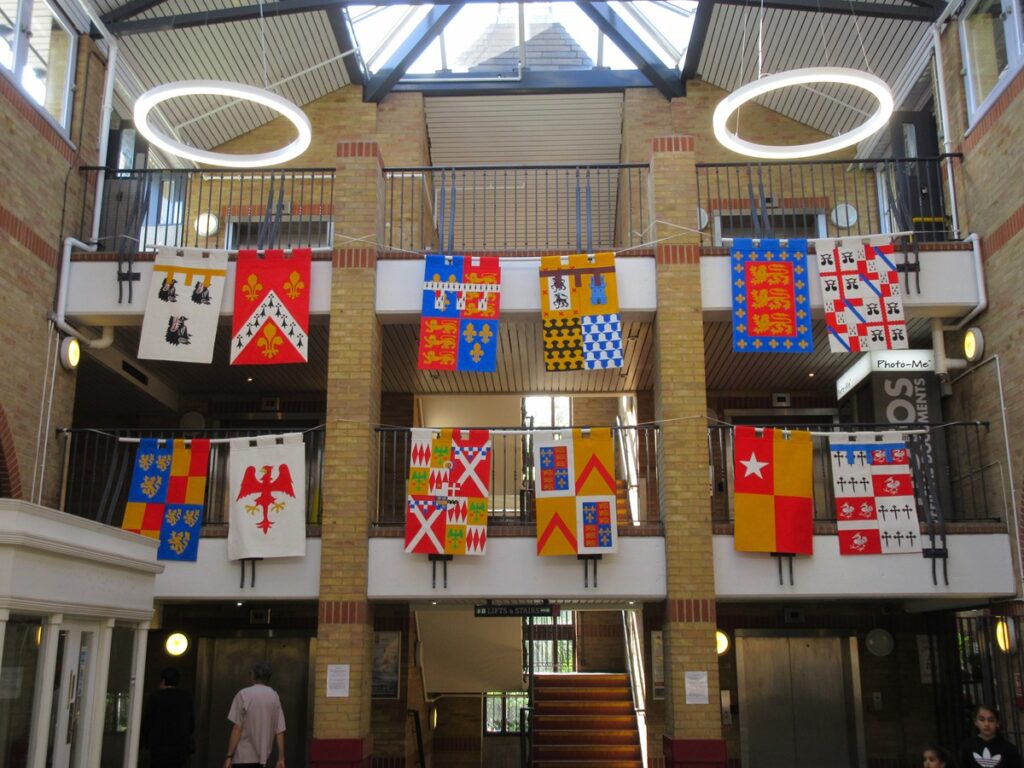
Permission was granted for a display of banners in The Spires Shopping Centre and agreement was reached with Barnet Council for them to be hung from lampposts along Barnet High Street.

All told the museum volunteers have now researched and painted 106 banners – of which 76 currently hang in the High Street and another 26 are displayed in various locations around the town including The Spires.

Barnet Museum is applying to UNESCO for recognition of its work painting and caring for Battle of Barnet heraldic banners to be declared an intangible cultural heritage

Mike Noronha said that once the museum staff heard about the UNESCO scheme for registering an intangible cultural heritage they decided to work with Tewkesbury in making an application.

“Painting, maintaining and displaying the banners is a real craft which we think we have mastered and which we think should be recognised.

“Each winter the banners have to be repaired and sometimes repainted as they get damaged in high wind, so this is an ongoing task for the museum.”

Mounting costs involved in hanging the banners along the High Street has become an issue.

Last year when it seemed there was some doubt as to whether they would be able to go ahead the Chipping Barnet Town Team stepped in and agreed to pay half the cost of the installation, work which was carried out by Barnet Council’s street lighting contractor.

This summer the council stepped in to meet the installation cost of £3,500, for which Mr Noronha said the museum was “hugely grateful”.

Posted on Leave a comment

Centenary of 1926 General Strike is a reminder of its impact in High Barnet and the role of the non-unionised Barnet Press

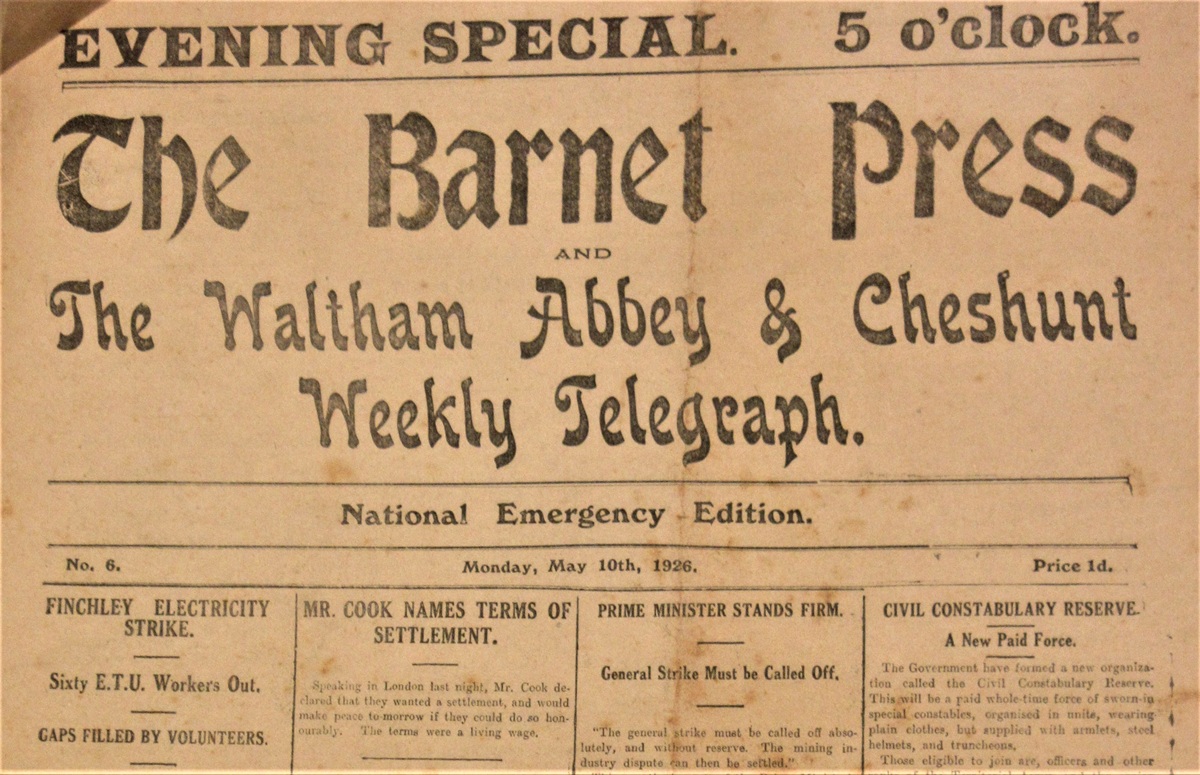
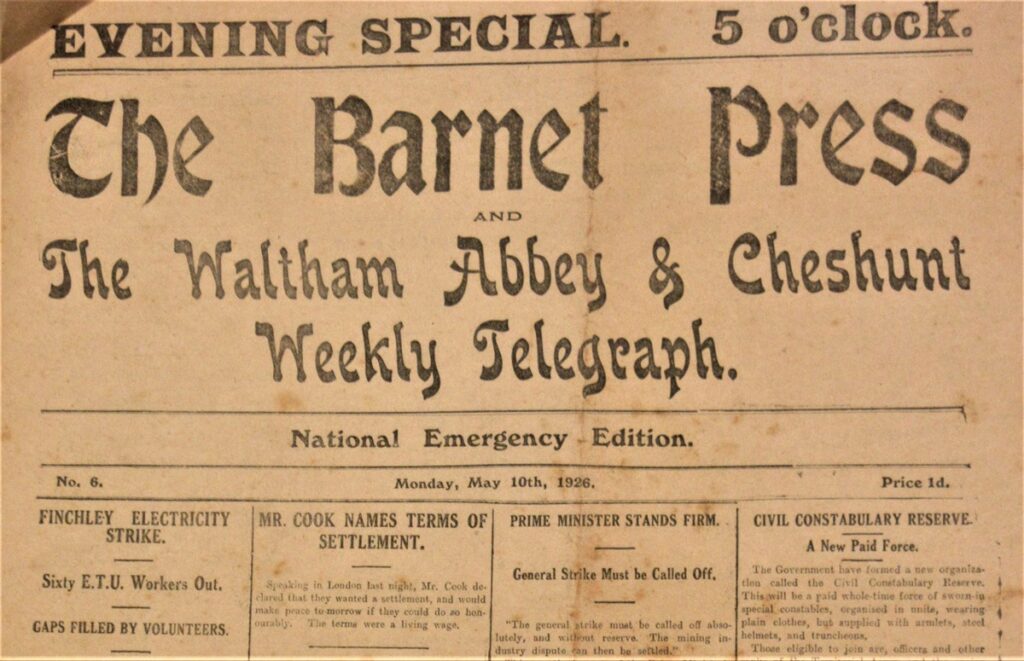
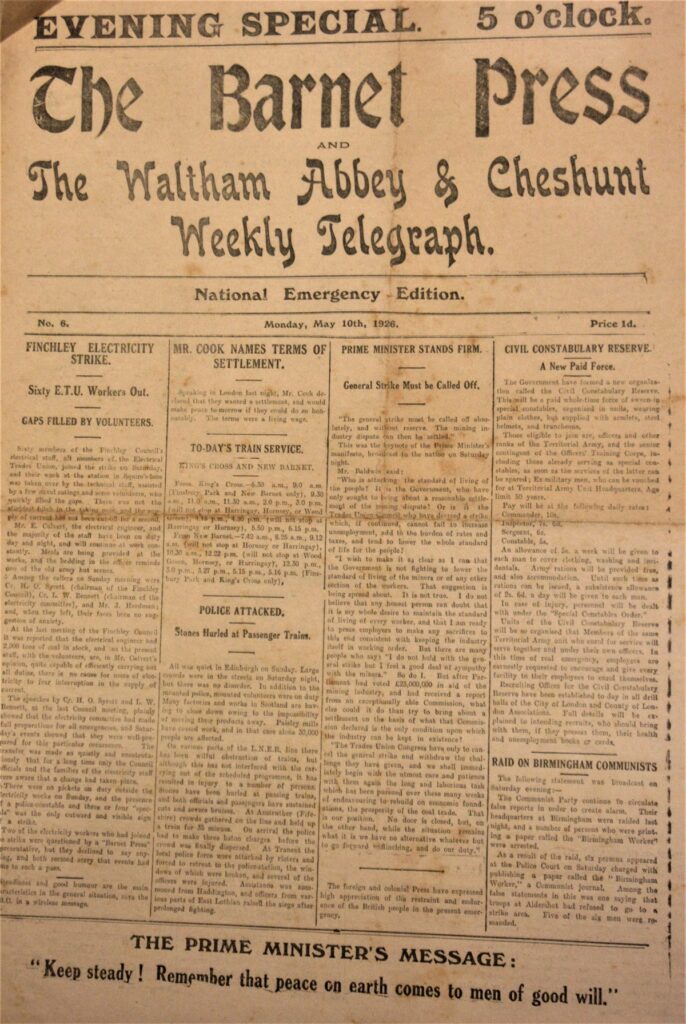
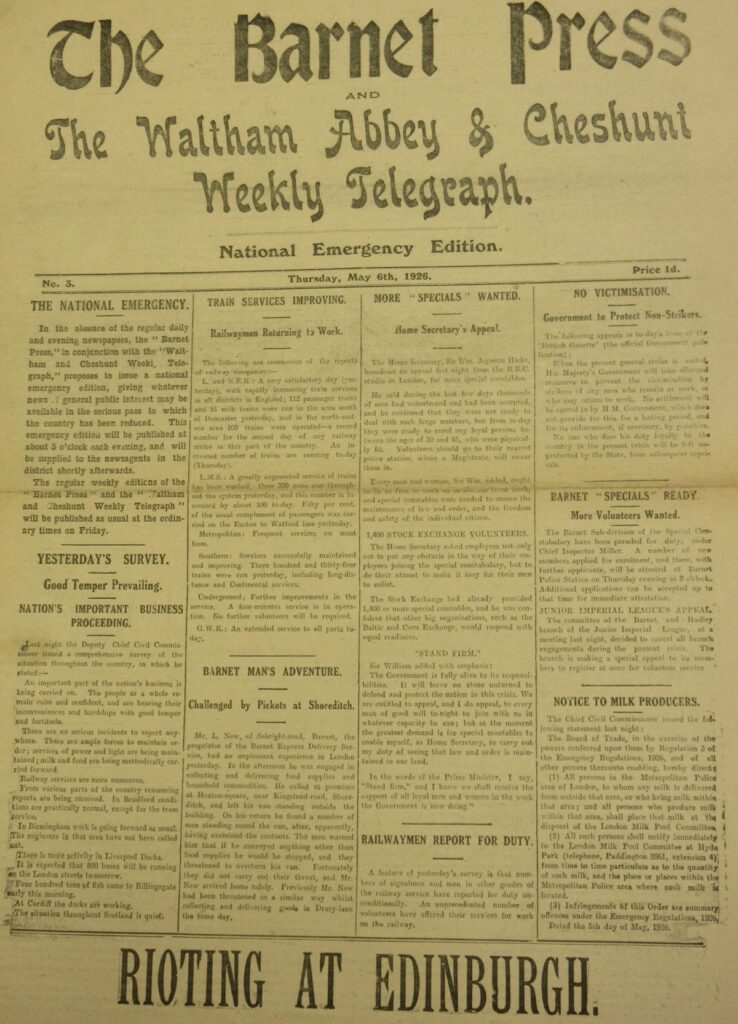
Such was the success and respect for Barnet’s former weekly newspaper, The Barnet Press, that a century ago it published an emergency edition on sale each evening in central London during the 1926 General Strike.

For just over a week there were no streetlights in Barnet town centre, an appeal was issued for volunteers for Barnet Special Constabulary, but food supplies in the town remained normal.

Nearly two million workers led by railwaymen, transport workers and printers joined the strike in support of a miners’ pay dispute.

Local action included a strike by 60 members of the Electrical Trades Union who worked at Finchley’s coal-fired power station in Squire’s Lane.

Finchley Council said there was not the slightest hitch in supply as technical staff and volunteers took over. The station had 2,000 tons of coal in stock. Meals were provided and there was bedding in the offices.

Historians describe the strike as the greatest act of working-class solidarity in British history.

Local newspapers around the country which were non-unionised seized the opportunity to print more copies as the national newspapers had been forced to suspend publication of all but a few emergency editions.

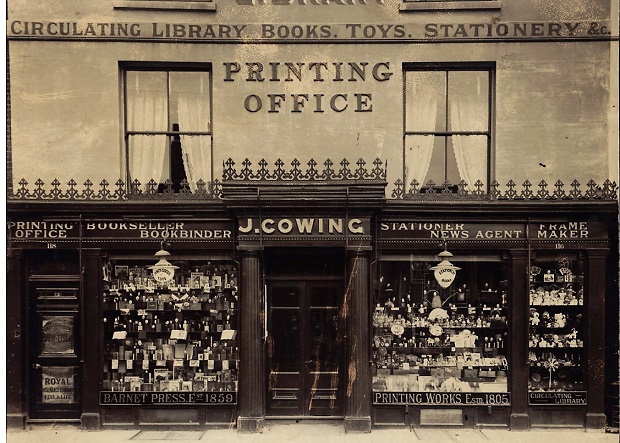
The Barnet Press, first published by George Cowing in 1859, was a family-owned weekly newspaper which defended its political independence and whose workers who were not trade union members.

The editor wanted to ensure that the public were informed about the strike.

A reporter was assigned to listen to BBC news bulletins and then write up news stories for a special daily edition as the Cowing family was anxious to inform readers about the “serious pass to which this country has been reduced”.

A 5 o’clock National Emergency Edition was printed for sale in central London.

The BBC – or British Broadcasting Company as it was then known – had only recently been established and had become a rival source of news to the newspapers.

By 1925 it was being broadcast across the UK. It was supplied with news and information by the Reuters news agency. Sales of radios increased dramatically during the strike.

BBC news bulletins became a vital source of national news for these small non-unionised local newspapers which upped their print runs to meet the extra demand generated by the absence of national dailies.

John Reith, then the managing director, was said by historians to have “prudently self-censored” the BBC’s output so as not alarm ministers fearing that government might requisition the service.

A selection of front-page headlines from The Barnet Press gave an indication as to why the Cowing family had not recognised the print unions: “Prime Minister stands firm”, “Rioting at Edinburgh”, “Motor cars attacked”, “Government to protect non strikers”.

It was not until the Second World War that printers at the Barnet Press joined a trade union, the National Graphical Association.

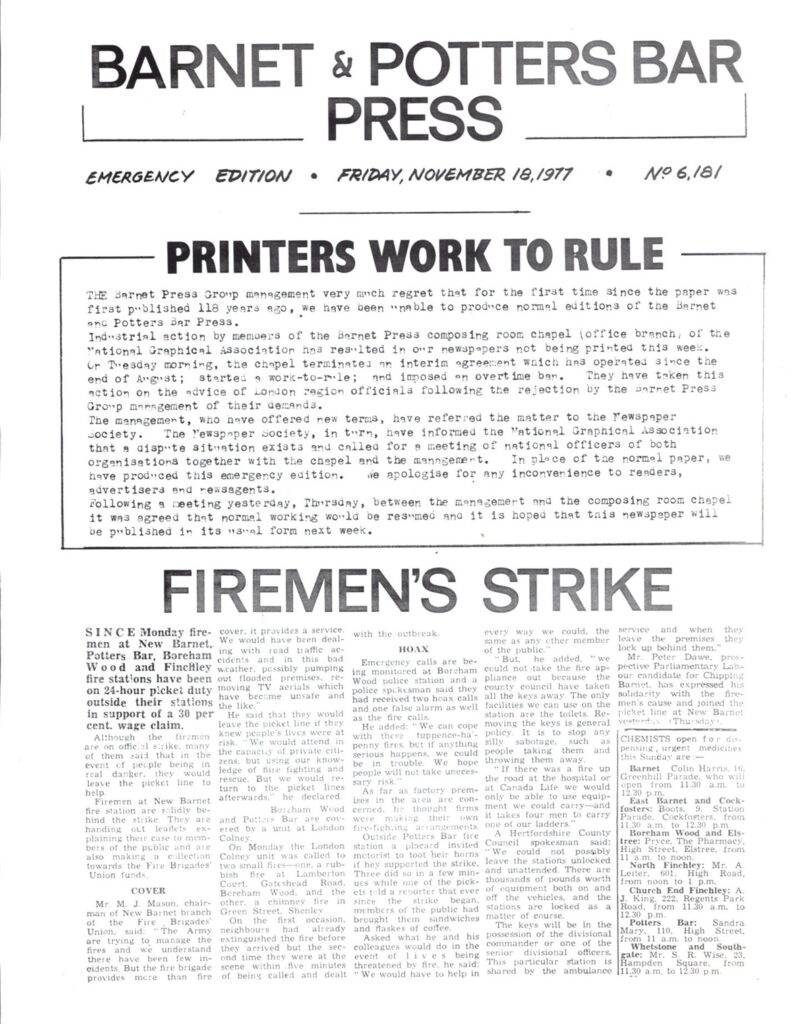
Publication of The Barnet Press was halted by industrial action in November 1977 because of work to rule.

A front-page statement on an emergency edition explained that had happened:

The Barnet Press group management very much regret that for the first time since the paper was first published 118 years ago, we have been unable to produce normal edition of the Barnet and Potters Bar Press.

“Industrial action by members of The Barnet Press composing room chapel of the National Graphical Association has resulted in our newspaper not being published this week.”

Trustees for the Cowing estate sold off The Barnet Press in the 1990s. It continued publication under new ownership in Hendon until its final closure in August 2017.

Posted on Leave a comment

Imagining what happens when Charles Dickens gets stranded in Barnet – latest theatre production puts the author of the spot

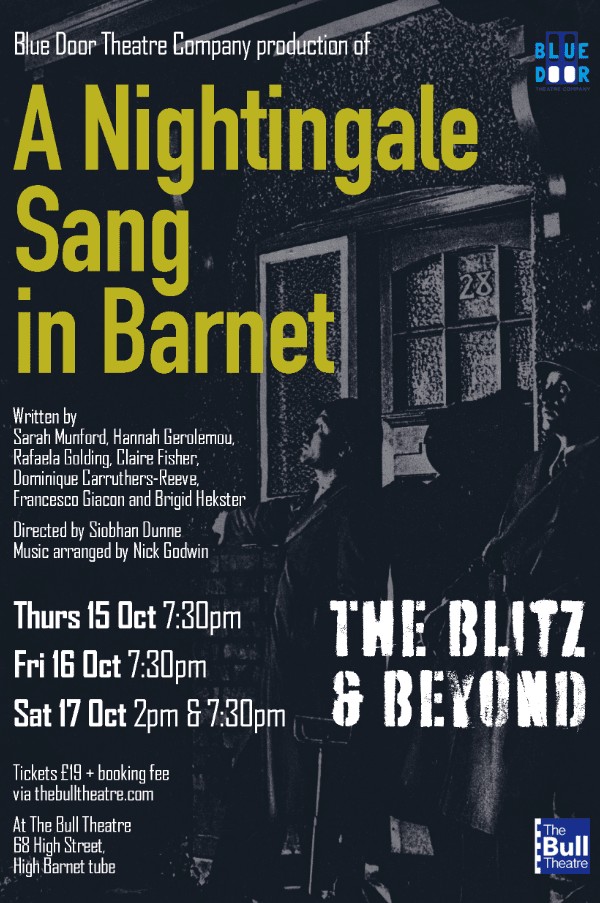
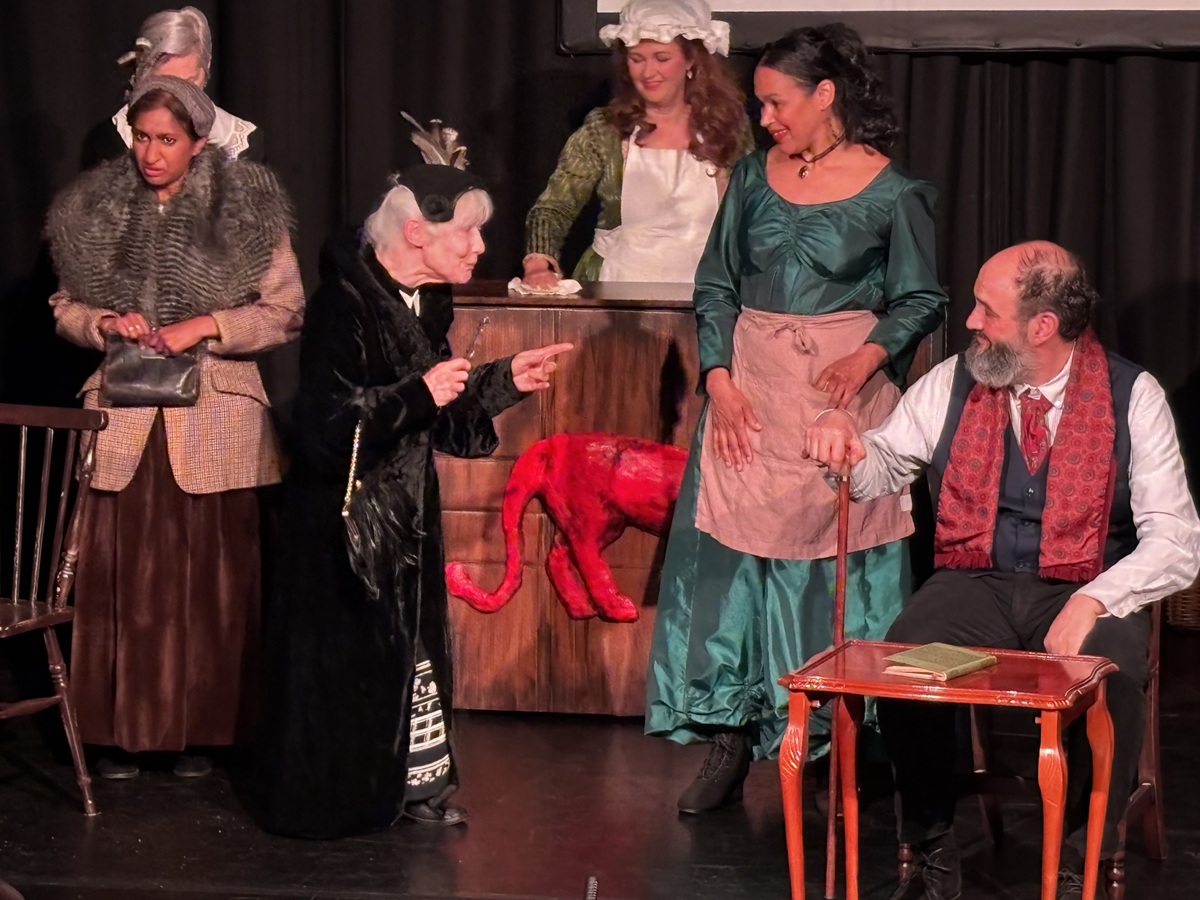
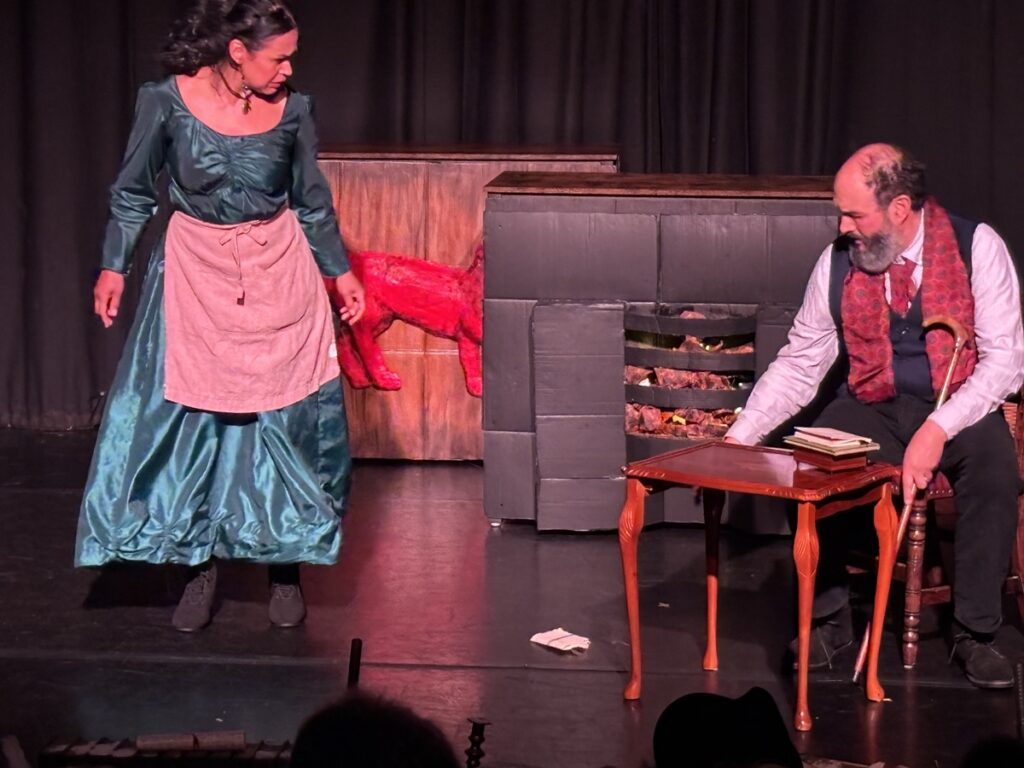
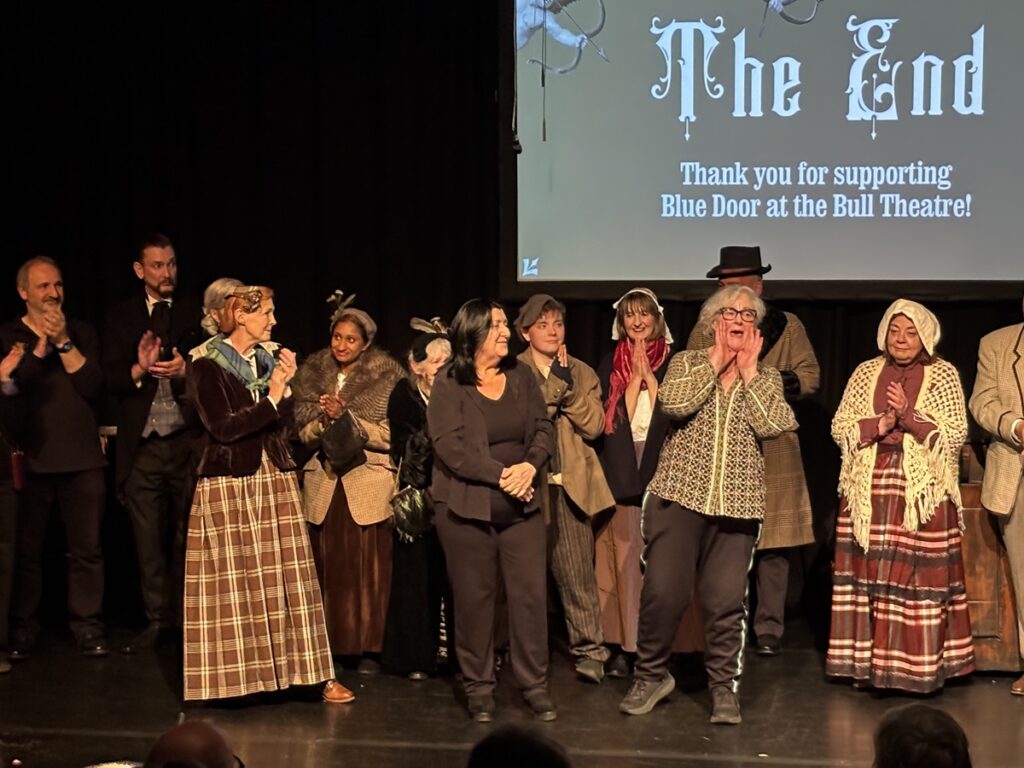
When Charles Dickens was forced the spend the night at the Red Lion in Barnet he faced some harsh truths – a challenging story line delivered with style and conviction by the cast of Between the Lines, which had its first night at The Bull Theatre in a run of sell-out performances.

Barnet’s rich history and literary connections are brought to life in the latest original production by the Blue Door Theatre Company.

When the town is snowed up halting all coaches to and from London, Dickens takes refuge at the Red Lion along with other stranded passengers whose enforced stay leads to some awkward conversations and unexpected revelations.

Dickens, by now an old man with a walking stick, died six months later.

The thrust of the story line created by Barnet playwright Sarah Munford and her co-writer Claire Fisher is to encourage the audience to form their own view about Dickens and whether he had been misogynistic towards women.

Dickens (Chris Browning) was heading north when his coach was halted by a snowstorm.

He was welcomed to the Red Lion by the landlady Peggy (Naomi Richards) who catches her visitor by surprise – she was one of the many prostitutes taken off the streets of London with the author’s help and who later made a success of her life.

Reminders of Dickens’ earlier visits to Barnet – and the inspiration he found in the town – provide material for a range of script lines.

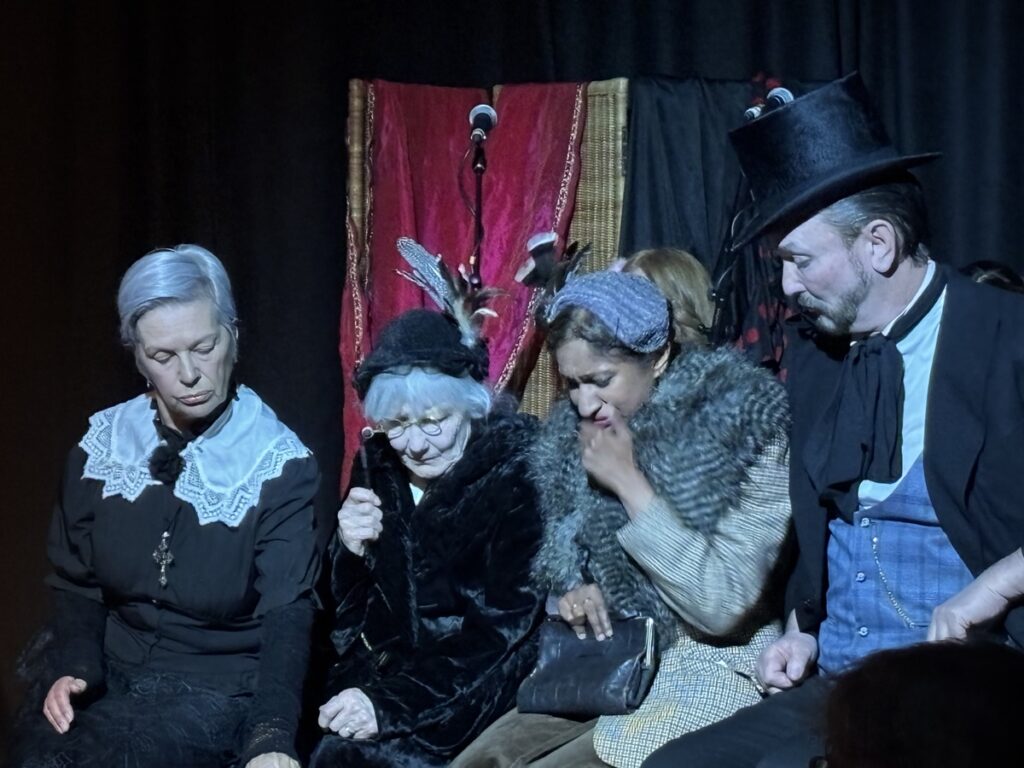
An opening scene is a meeting of the guardians at Barnet Workhouse who are hearing an application from a blacksmith’s widow from Finchley and her son.

The guardians are divided on what to do – from left to right above, Miss Pooley (Lynne Austin), Lady Huffington (Jan Parker), Constance Dribble (Niki Patel) and Norman Nunhead (Gary Murphy).

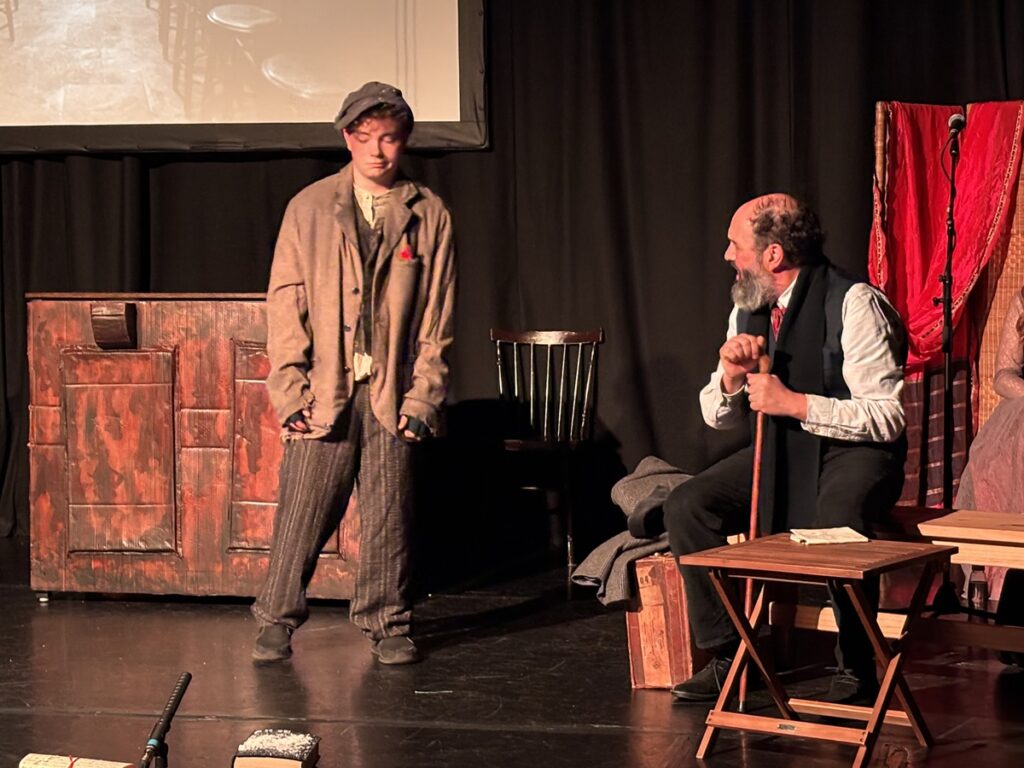
Another flashback is in the capable hands of Abel Abel (Ross Wilson) whose conversations with Dickens hark back to the time he was said to have found inspiration at the steps in the High Street of the former Victoria Bakery – the location in Oliver Twist where Oliver was thought to have met the Artful Dodger.  

Most of the action features Barnet’s lowlife, including the Barnet Belles – as named by Dickens – who were a group of prostitutes based across the road from the Red Lion at The Bull public house.

Revelations come thick and fast as women share memories and anecdotes of past liaisons and encounters.

Such is the rich tapestry of recollections that newspaper reporter Percy Perchance (Francesco Giacon) – who is also marooned in “desolate, deepest North London” – is spoilt for choice and is soon writing the headline for his own story: Dickens Unmasked. 

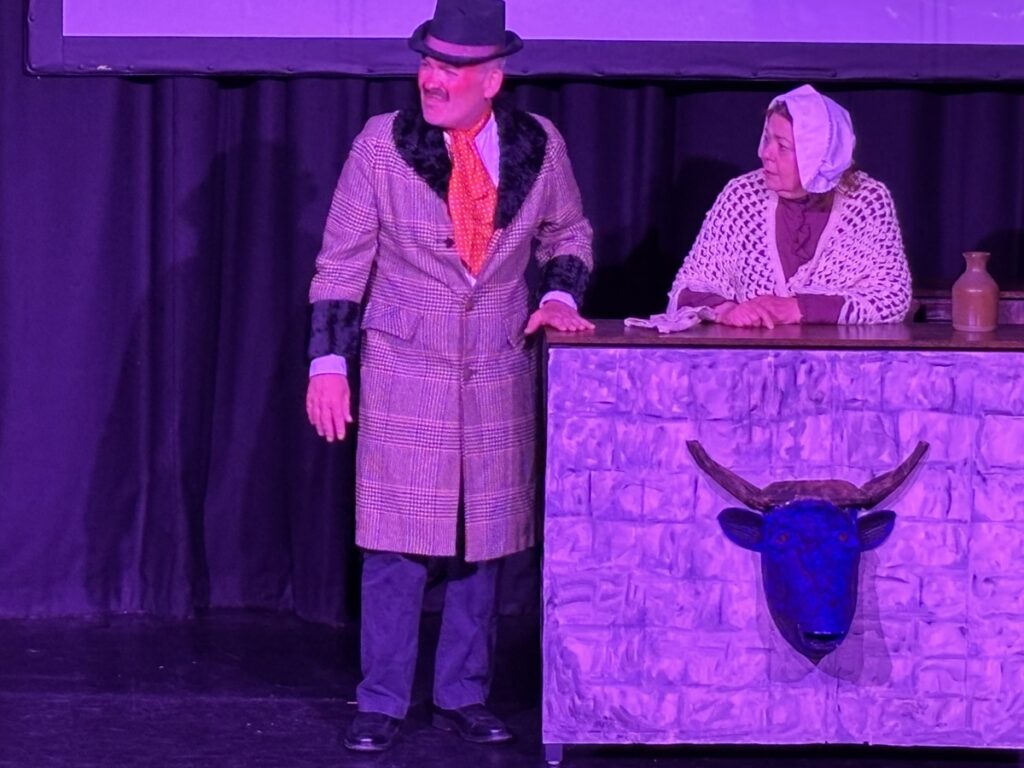
Rivalry between the Red Lion and The Bull in offering a welcome to the loose women of Barnet provides some graphic commentary – and a chance for a pertinent and amusing piece of casting.

Susie Earnshaw, founder of the Susie Earnshaw Theatre School, which is based at The Bull Theatre takes on the role of The Bull’s landlady. A well-known regular is the notorious Barney Betteroff (Tony Nagle).

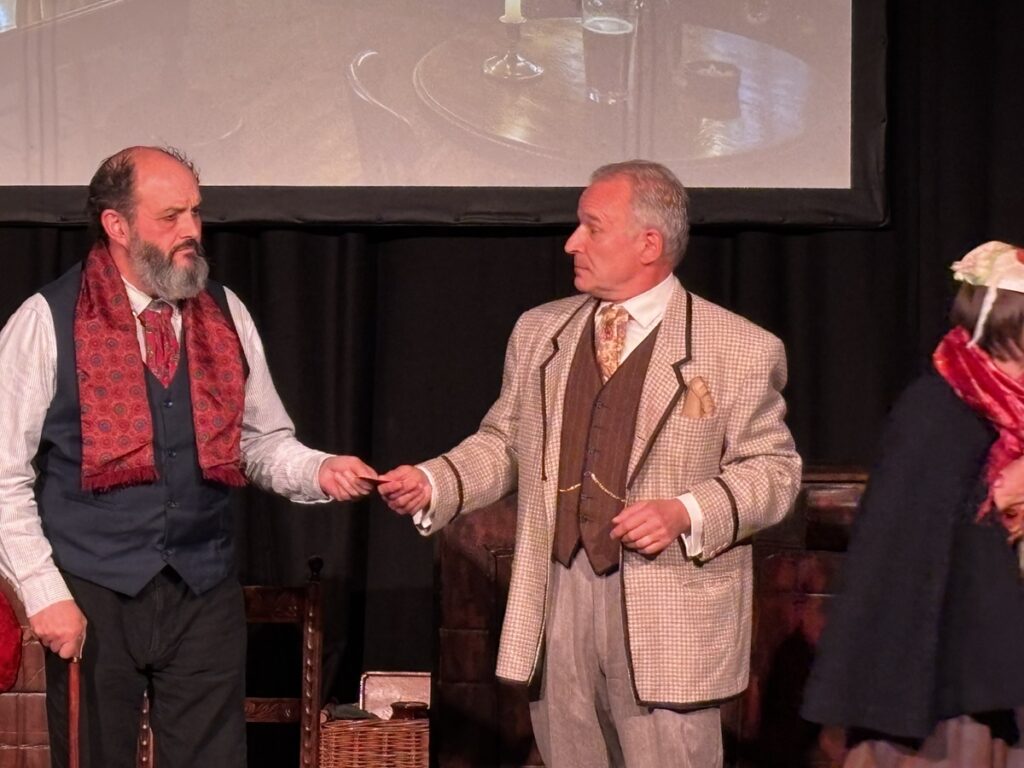
A key moment is when Peggy finally confronts Dickens with letters which she wrote to him but never posted and which delve into the author’s past relationships with women – a confrontation full of contradictions which Dickens does not enjoy being reminded of!

A constant backdrop to the production are the blow-ups of photographs from the Barnet Museum collection showing how the town centre looked in the Victorian era – images which are all the more powerful because some capture period buildings like the Red Lion and the parish church during heavy snowfall.  

Interspersing the scenes are songs written by the musical director Nick Godwin of The Silencerz.

Latest production at The Bull Theatre, Barnet, imagines what might have happened when author Charles Dickens is marooned for the night in the Red Lion on the opposite side of the High Street.

Paying tribute to the cast and all those who had contributed behind the scenes, director Siobhan Dunne said Blue Door Theatre Company was proud of its work in providing community theatre for the town – above, front row, from left to the right, Claire Fisher, Sarah Munford, Siobhan Dunne and Susie Earnshaw.

Their aim was to continue producing one original and locally written play a year as well as a published text.

She made a heartfelt plea to the audience to support an appeal to raise £10,000 to help with the cost of new theatrical equipment for The Bull.

Posted on 5 Comments

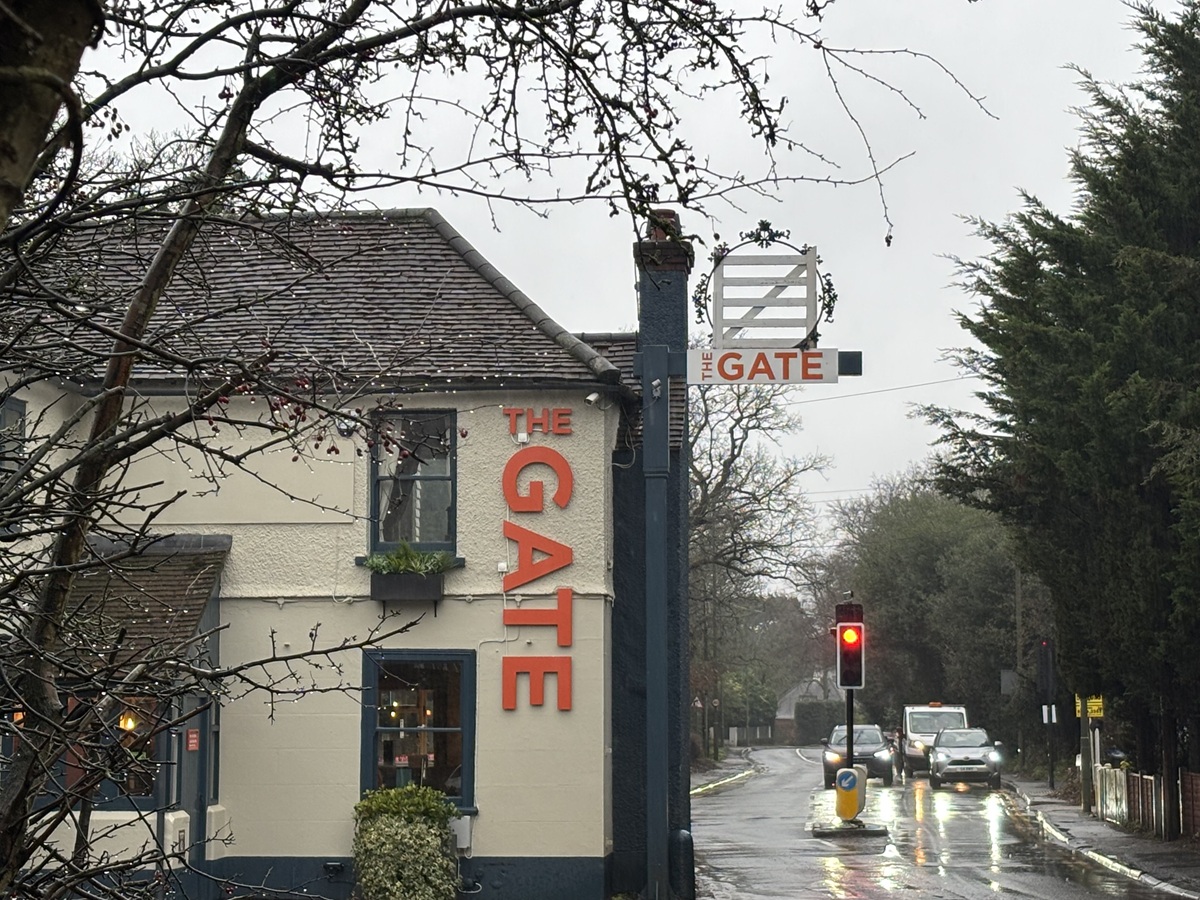
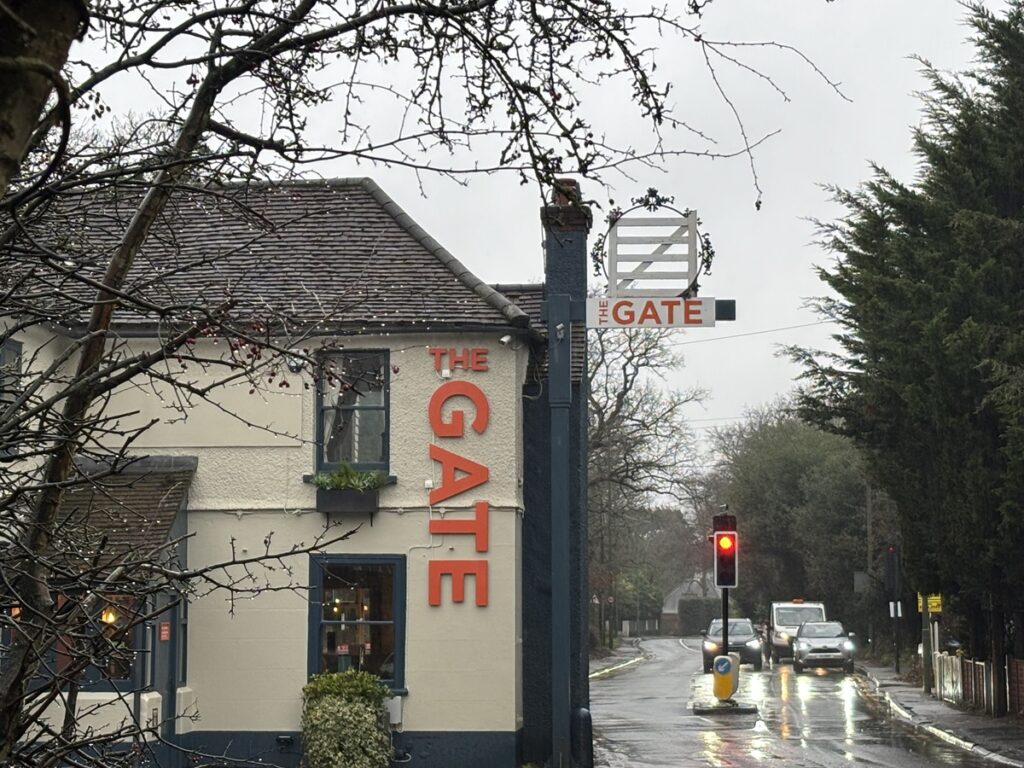
Loss of pub motto from new signs at The Gate, Arkley, prompts memories of some of the pub’s famous – and infamous – customers  

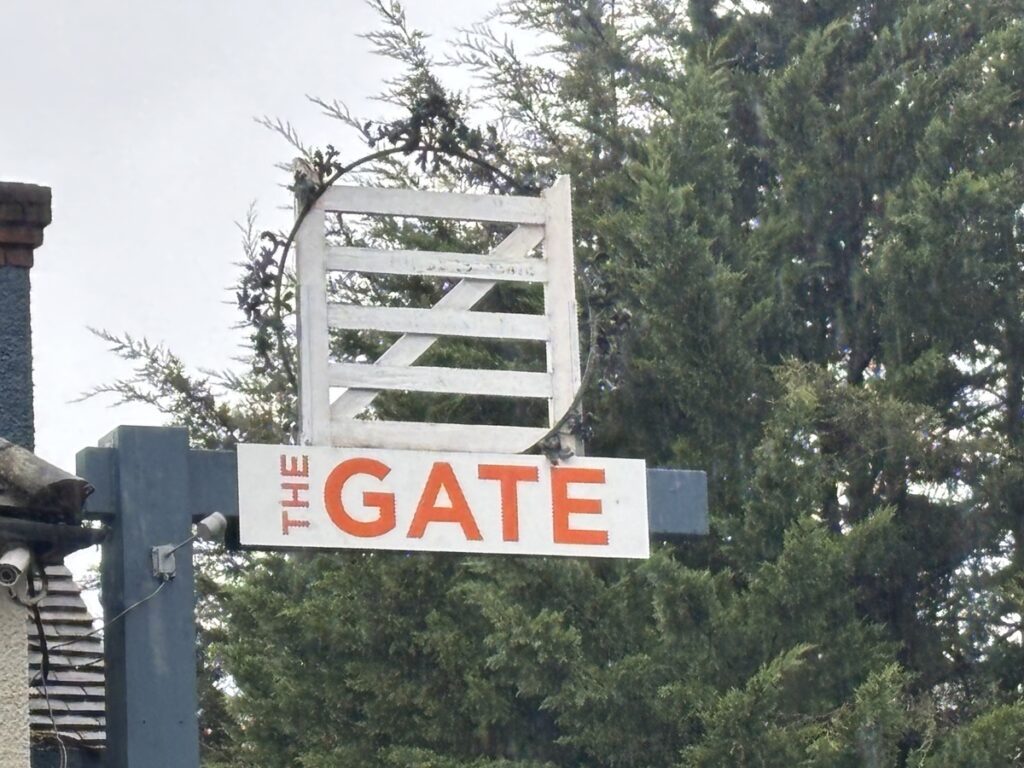
New signs outside The Gate public house at Arkley have resulted in the disappearance of a much-loved historical pub motto which used to adorn a miniature five-bar gate that has been the inn’s trademark for probably a couple of centuries.

Motorists stuck at the traffic lights at the junction of Barnet Road and Hendon Wood Lane — or passengers on the 107 bus – are said to have learned the words off by heart:

                           THIS GATE HANGS HIGH

                              AND HINDERS NONE

                               REFRESH AND PAY

                                AND TRAVEL ON

The Gate public house is included in Barnet Council’s local heritage list as being a landmark of significant architectural interest and the loss of the motto – which was painted on both sides of the miniature gate – has disappointed both residents and passers-by.

When asked by the Barnet Society, The Gate’s management said they had no intention of replacing the missing words – the suggestion seemed to be that after a new coat of white paint the mini gate now stands out more clearly and suits the modern, stylish lettering on the side of the wall.

The installation of a small five-bar gate as a pub sign dates back to when it was known as The Bell.

It was opened in the mid seventeenth century and was mentioned in a War Office survey of 1756 as being kept by John Williams.

A drawing of 1807 shows the inn as a thatched cottage with a porch and a gate alongside, close to the wall.

The gate’s purpose was to keep cattle and horses within the common which then stretched to the town of Barnet two miles distant.

Legend has it that when the gate was removed a replica was added to the inn sign.

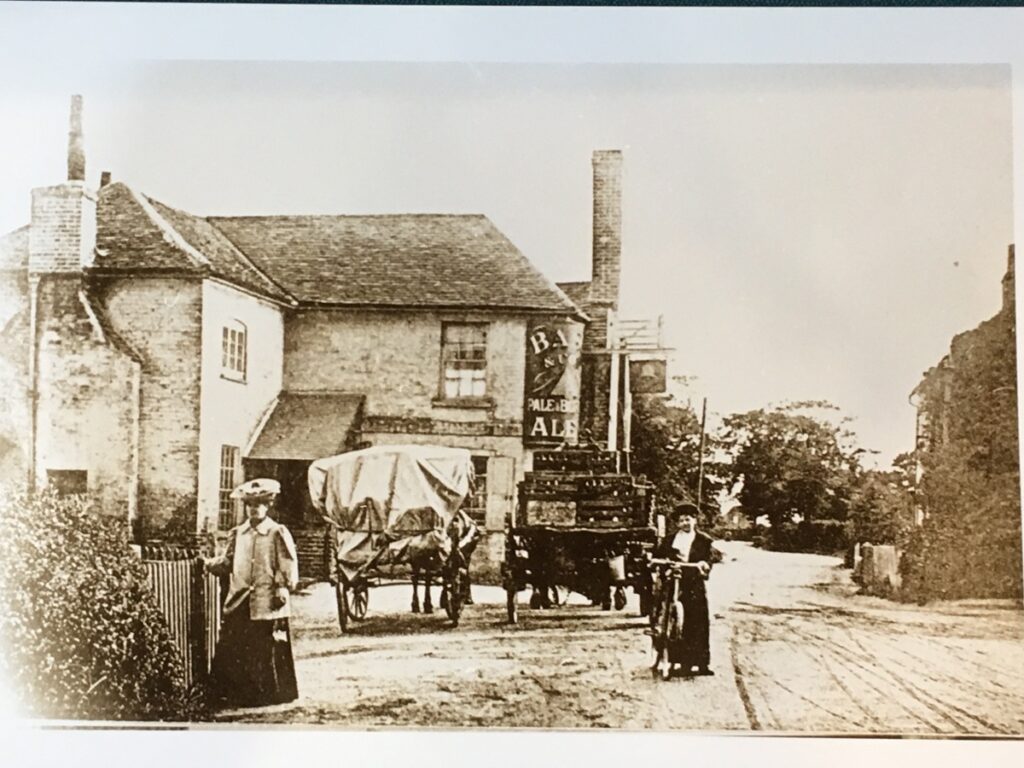
At the time, the pub was often described as the Bell at the Gate or the Bell and Gate and the above picture (1898-1903) – from the Barnet Museum photographic collection – shows a replica gate above a sign depicting a bell.

The first words of the historical pub motto do differ – instead of “This gate hangs high” it sometimes says, “This gate hangs well.”

Replica gates with the motto are often displayed on inns on turnpike toll roads, meaning the gate is well maintained, does not block the traffic and requires a small payment for refreshments before travellers can continue on their journey.

In other cases – as at Arkley – the gate appears above inns on rural roads where a gate was used to keep animals in the owner’s land or within a common.

Over the years The Gate has served some notable characters – perhaps the most chilling was the American homeopath Dr Crippen who was hanged in 1910 at Pentonville Prison for the murder of his second wife.

In an article published in 1957 in the spring issue of Hertfordshire Countryside, Dorothy Prince, the daughter of a former licensee of the Bell Inn at Barnet Gate, recalled that when her father took on the pub in 1908 it still retained a good deal of its Victorian character.

Newly painted signs at The Gate public house Arkley fail to include the words of historic pub motto and prompt memories of famous -- and infamous -- customers

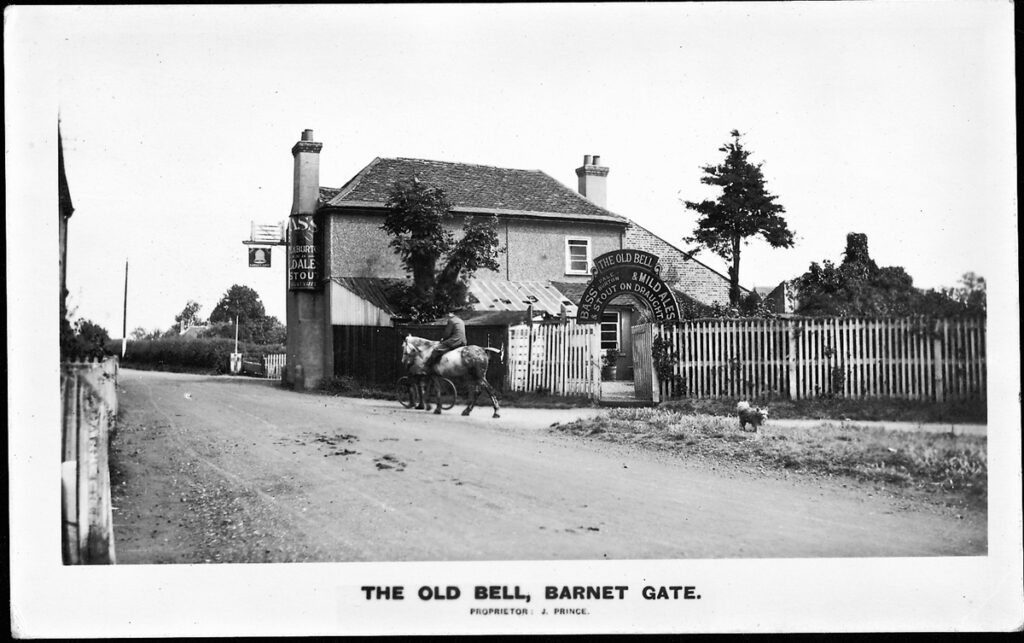
The postcard above – from Barnet Museum’s collection – promotes the then proprietor, J. Prince, Dorothy’s father

Motorists, who were rarely seen in those days, were regarded by Mr Prince as being “eccentric or flighty” as ordinary folk preferred their “bicycles or a nice little pony and trap for their country outings”.

One afternoon Dorothy’s sister served a meal in the parlour to a “small and furtive man, with a drooping moustache” and she remembered that his companion “seemed much younger and rather nervous”.

“A few months later the whole country was startled and horrified by the news of a dreadful crime. Pictures appeared in the newspapers, and my sister recognised her parlour customers.

“The man with drooping moustache was Dr Crippen and the young lady was his friend, Ethel le Neve.”

Dorothy recalled that one summer afternoon a party of very lively people alighted from several carriages and ordered tea to be served in the garden.

“Trooping on to the velvety lawn, they moved the tables and chairs and then started to dance – to dance in a way that seemed strange and fairy-like to my childish eyes. Soon the news leaked out.

“It was a party of dancers from the Russian Ballet, then appearing at Covent Garden, and I was told afterwards that I had probably seen the great Pavlova dancing.”

In later years The Gate became a regular haunt of the British film actor, Trevor Howard, who lived nearby in Rowley Lane.

Barnet Council’s local heritage list describes the association in rather more brutal words: “It is said that Trevor Howard drank himself to death in the pub”.

More recently social media posts recall visitors and regulars seeing other celebrities in the pub including the Irish American actor Patrick McGoohan, the actress Claire Bloom and another nearby resident, Tony Blackburn, the disc jockey and television presenter.

Posted on 1 Comment

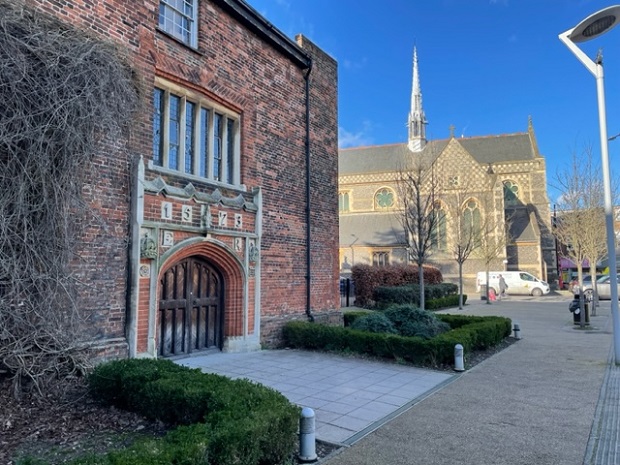
Future use of High Barnet’s historic Tudor Hall uncertain once again after Barnet Museum trustees withdraw their offer 

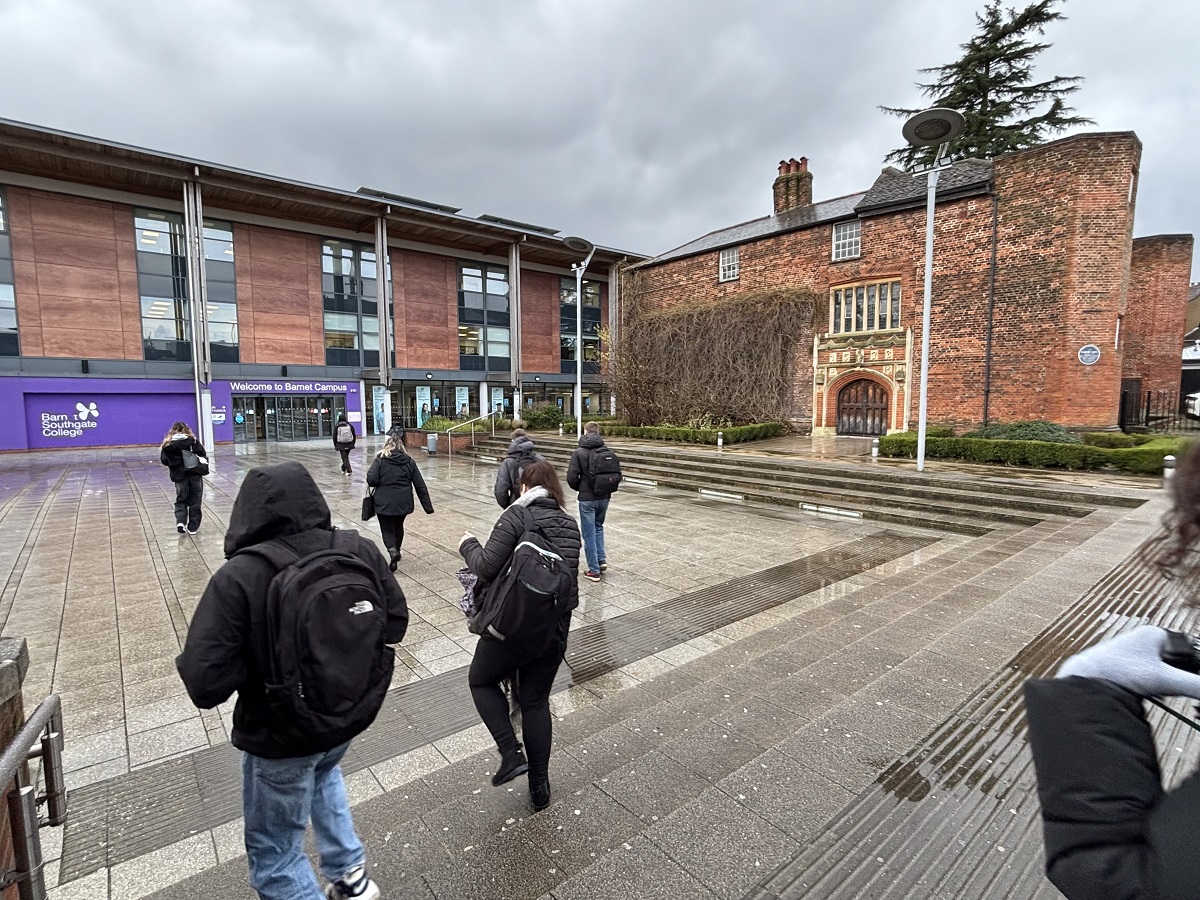
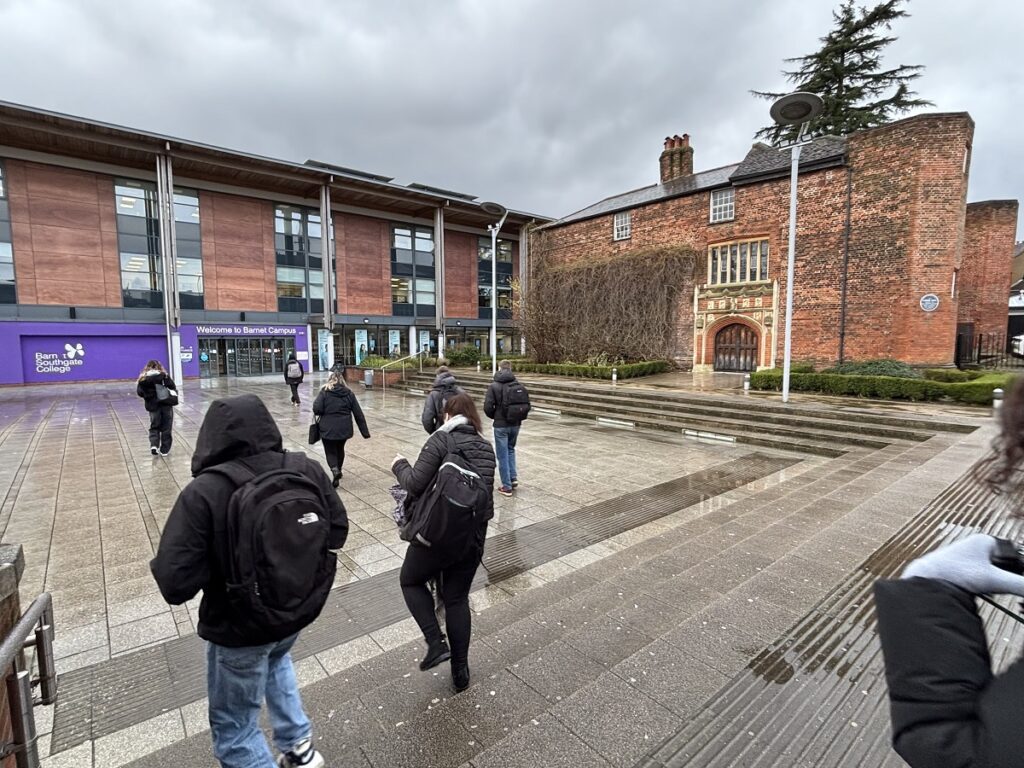
Barnet Museum’s trustees have had to withdraw their bid to save High Barnet’s historic Tudor Hall for community use because of a lack of financial resources to repair and then maintain the building.

An offer to purchase the hall – which is on the market with a guide price of £1 million – was accepted by Barnet and Southgate College earlier this year.

Prospective funding for the purchase had been secured from the Hadley Trust and the sale appeared to be going through subject to contract.

There was considerable relief among voluntary groups within the town when the museum obtained an exclusive right to buy what was originally the schoolhouse for a free grammar school granted a charter by Queen Elizabeth in 1573 and which later became part of Barnet College.

Bitter disappointment as Barnet Museum trustees have to abandon their bid to buy High Barnet's historic Tudor Hall for community use.

The hall, which is a grade II listed building by Historic England, is surplus to the college’s requirement and is on offer on a leasehold basis with vacant possession.

But the Trustees of the Barnet Museum and Local History Society say they are now “bitterly disappointed” to have announce that they cannot proceed with the transaction.

The Barnet Society understands that another offer to buy the hall for £1 million has been made to the college from a similar charity/community group.

When the hall was first put on the market in December 2023, the sales agents Colliers said it had received an offer of £1 million to purchase the building for educational use.

This led Barnet Museum to appeal to Barnet Council to declare the building an asset of community value so as to give the museum a chance to buy the hall for the use of the wider community.

After examining the cost of repairing, staffing and maintaining the building, the museum trustees say they have had to face the reality of being unable to find “additional funding within the available timescale”.

There were extensive discussions among the trustees and other interested groups as to how to maintain the Tudor Hall for community use but the stumbling block was the lack of additional finance.

Ambitious ideas included the possibility of the hall becoming a dedicated museum for the Wars of the Roses — centred on the town being the site of the 1471 Battle of Barnet — but the estimates were that a full refurbishment might cost up to £500,000.
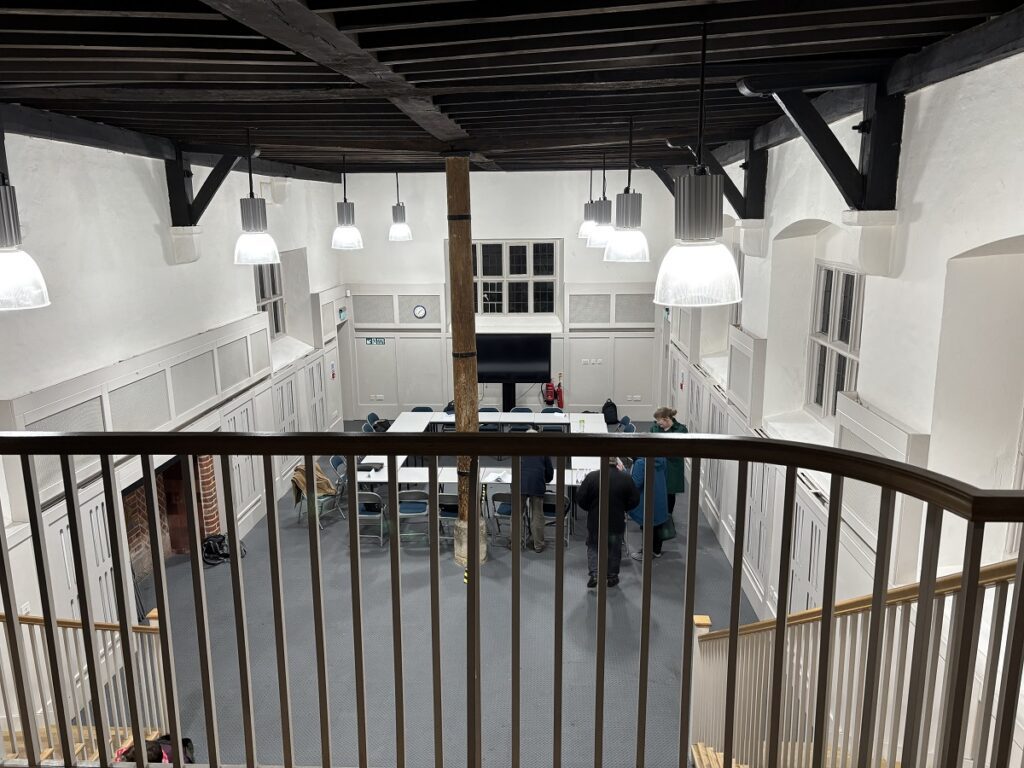
The hall’s main room – see above – has on occasion been used for public events, but ongoing cost of simply maintaining the hall and keeping it available for public use was likely to be in the regional of £50,000 a year.
In their statement the museum trustees – John Hall, Scott Harrison and Guy Wheatcroft – say they have informed the college they cannot proceed with the transaction.

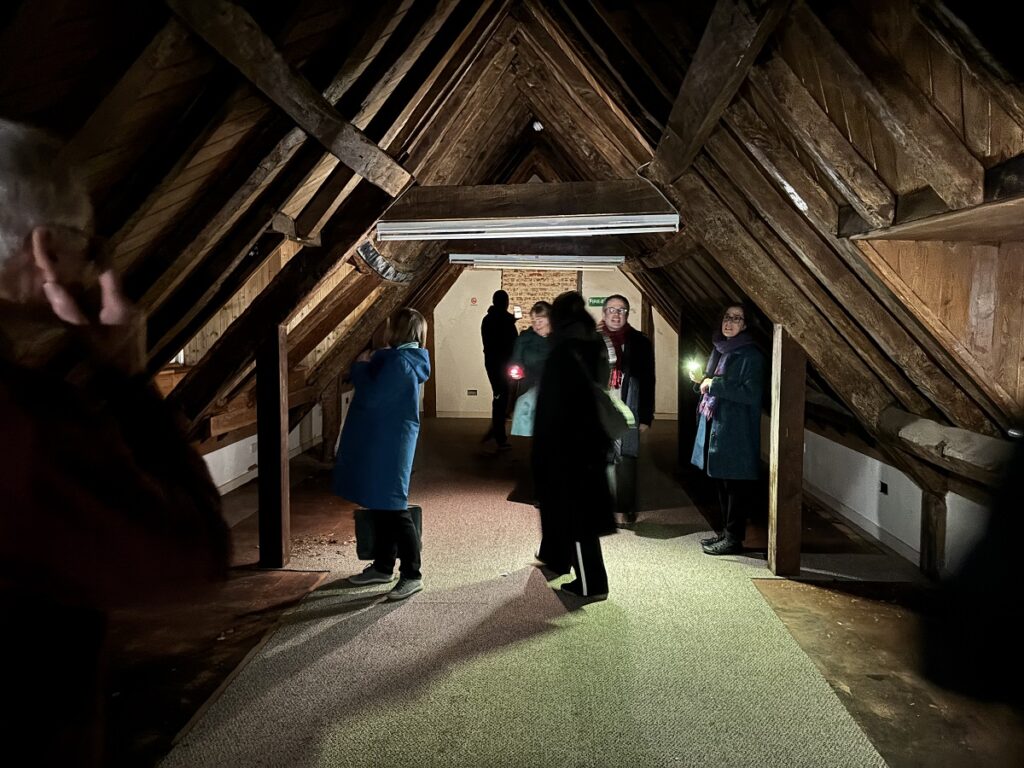
A feasibility study – which included a visit to what was the dormitory of the former schoolhouse – provided a “careful estimate” of further costs for repair, repurposing, staff and maintenance.

“Our attempt to source additional funding within the available timescale has shown the difficulties facing the heritage sector at this time, and the museum as a charity is not in a position to take on this burden of risk.

“The outcome if of course bitterly disappointing since the availability of such funding would have supported the opening of Tudor Hall to the community as a ‘Tudor Jewel’.

“We are very grateful to all those who have worked extremely hard to investigate Tudor Hall and prepare the feasibility study with such care and professionalism, and especially to the Hadley Trust for its generous offer to fund the purchase, subject to the condition of viability which sadly it has not been possible to satisfy.

“May we also extend our sincere thanks to those who participated in the public consultation meetings or volunteered help in many ways to support this important community initiative.”

Posted on 1 Comment

Barnet High Street about to become a much-admired showcase once again for the historic Battle of Barnet banners  

Recently restored and repaired medieval banners commemorating the 1471 Battle of Barnet will once again decorate the High Street during the summer months after Barnet Museum intervened with financial support.

A contractor will start the two-day process of hanging the banners from lampposts the length of the High Street from the evening of Monday 14 April – the 554th anniversary of the battle.

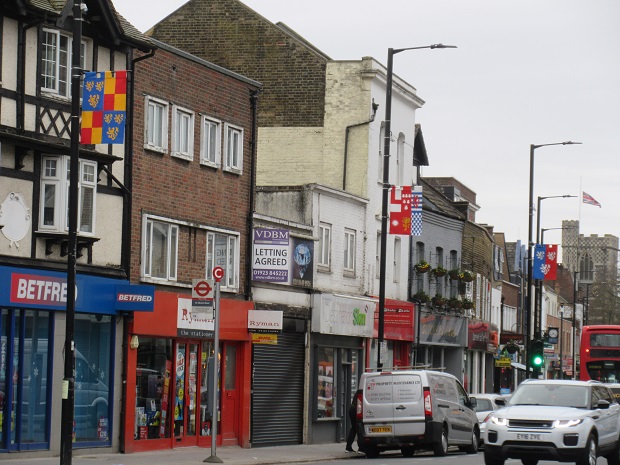
Each of the 76 heraldic banners illustrates the coats of arms of royalty and noblemen whose troops fought in the battle just to the north of Barnet on what is Greater London’s historic battlefield.

The return of the banners is a timely reminder of the annual Barnet Medieval Festival which is being held over the weekend of Saturday and Sunday June 7 and 8 at a new location on farmland off Galley Lane.

A 12-acre field will offer more space for Wars of the Roses re-enactments and camp sites for the opposing Yorkist and Lancastrian armies.

Organisers hope it will be the largest celebration in the town since the start of the recent events to commemorate the battle as more military re-enactors are expected to attend than ever before.

This summer’s re-appearance of the banners along the High Street had been touch and go because Barnet Council’s street lighting contractor told the museum that it was no longer able to afford the installation cost.

After the council found an alternative contractor who offered to do the work at a much-reduced rate, the museum agreed to fund the work from its reserves on a one-off basis.

Barnet High Street about to become resplendent once again with display of historic banners from 1471 Battle of Barnet

Museum trustee Scott Harrison – seen above in the museum’s shop in The Spires shopping centre – said there had been great uncertainty as to whether it would be possible to hang the banners in the High Street for what will be their sixth year on display.

“We have been so fortunate in the past in having the annual installation cost met by the council’s lighting contractors, but we were told earlier this year that the company had decided this was no longer a sustainable expense.

“Barnet Council found another contractor who would hang the banners at a much-reduced cost, but the museum is having to fund the bill of several thousand pounds.

“We have agreed to pay up this year, but we will have to find a sustainable source of funding. Perhaps we can arrange an appeal each year or find sponsors who will meet the cost.

“We do hope the people of Barnet value the banners so much that they will help to contribute towards the expense involved in hanging them along the High Street.”

As well as the 76 banners that will decorate the High Street, others from the collection of 107 banners will be on display in The Spires and at the museum.

A team of volunteers led by the museum’s deputy curator Hillary Harrison spent the winter repairing and repainting the banners. Those on display in the High Street are also reglazed each year to given them an extra coat of protection.

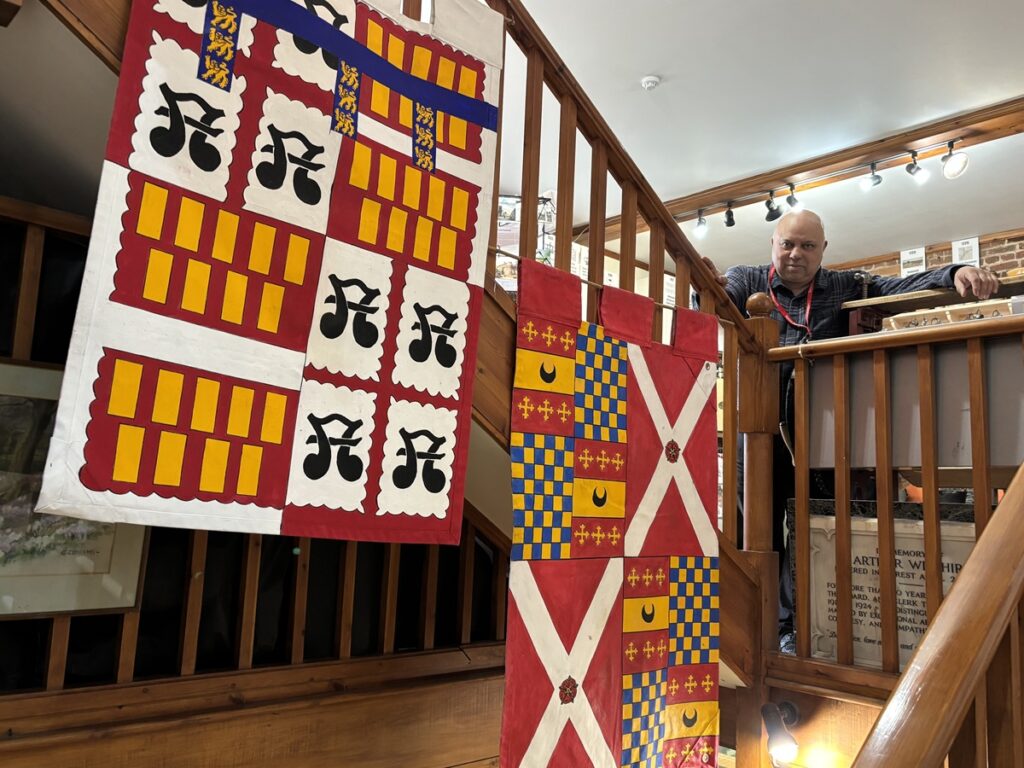
Each banner with its emblems or coat of arms belonged to an individual who took part in the battle and the challenge for the museum’s historians has been to bring to life each member of the royalty, nobility and gentry whose troops fought at Banet.

Sometimes symbols were used to represent people’s names or occupations and indicate their wealth and status.

The research conducted at Barnet – and so vividly displayed each summer in the High Street – has attracted considerable interested.

The latest group to visit Barnet for a walk along the High Street to identify – and admire the banners – are members of the Anglia Heraldry Trefoil Guild who are planning a visit in July.

Barnet Museum’s celebration and commemoration of the Battle of Barnet is not without cost. Currently the museum is applying to the National Heritage Lottery Fund for a £50,000 grant towards the cost of installing a new heating system and repairing leaky windows.

Because of the museum’s inability to maintain the correct humidity an exhibit on loan from the British Museum – displaying the Earl of Warwick’s seal and arrows from the Battle of Barnet – has had to be returned until the heating system has been fixed.     

Posted on

Reliving the argument when Finchley and Hendon lost out to the three Barnets in deciding the name of the London Borough of Barnet

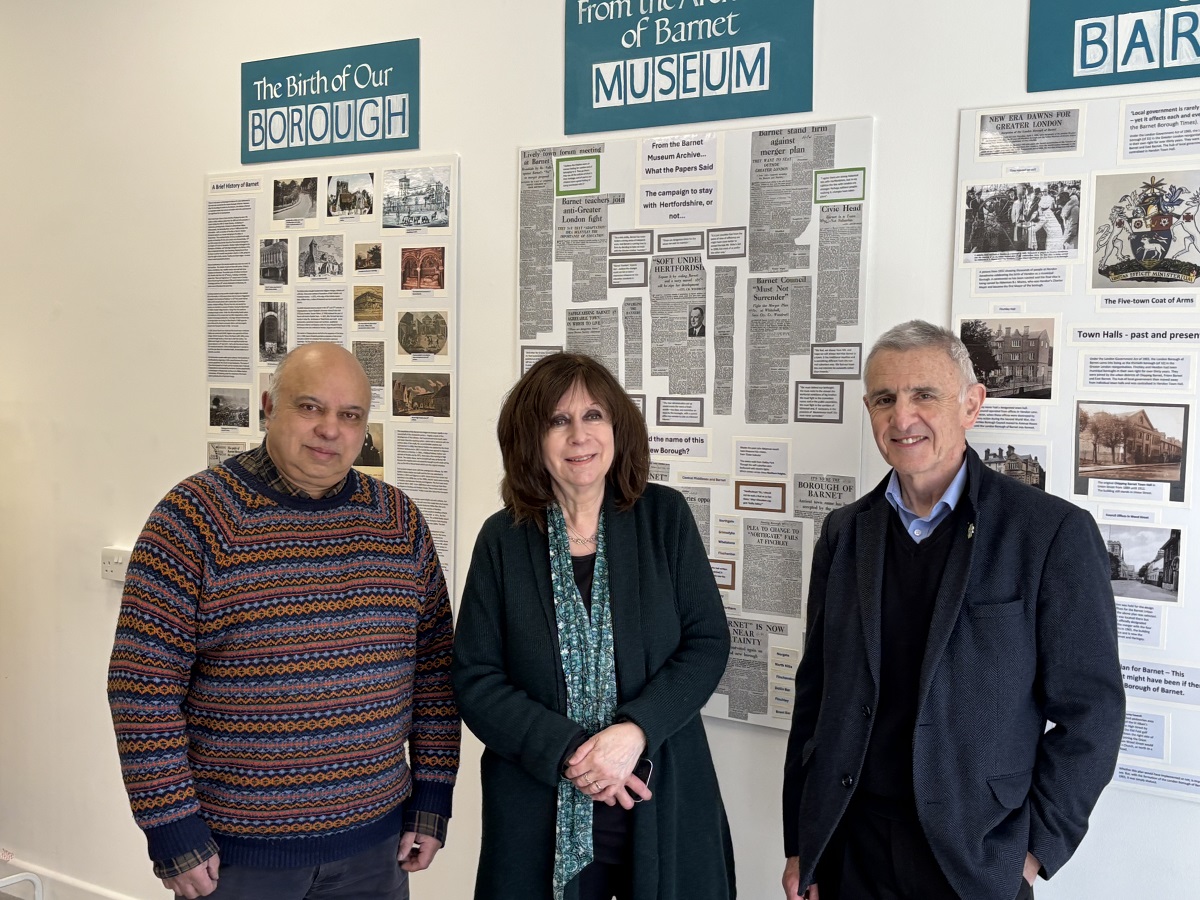
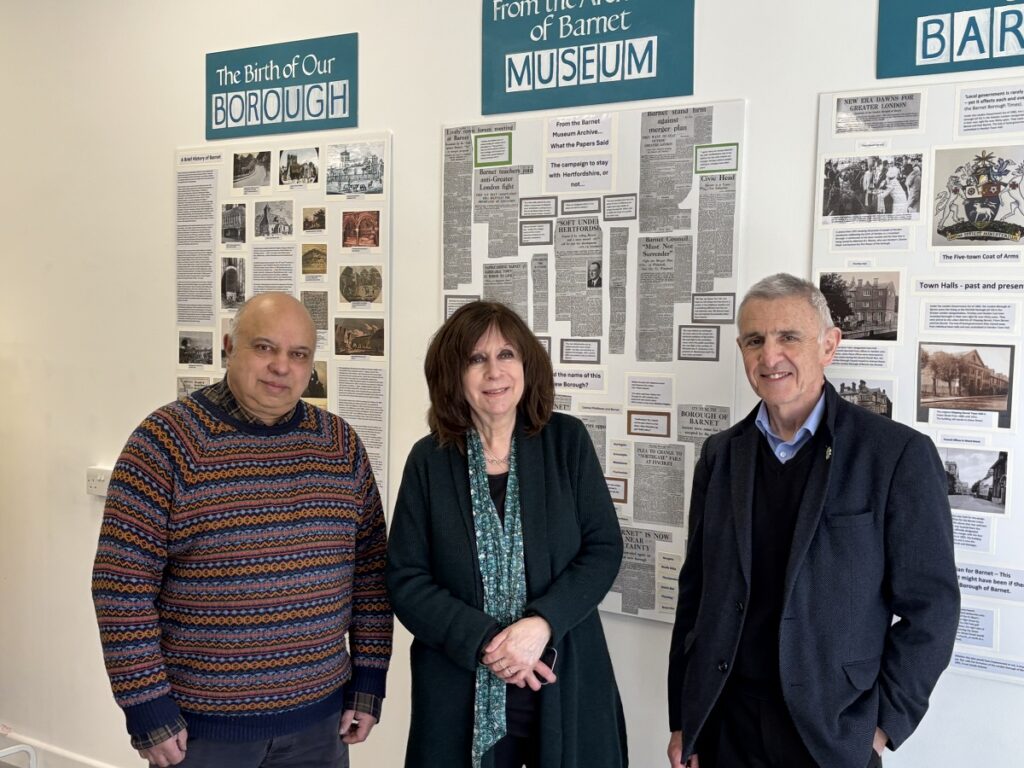
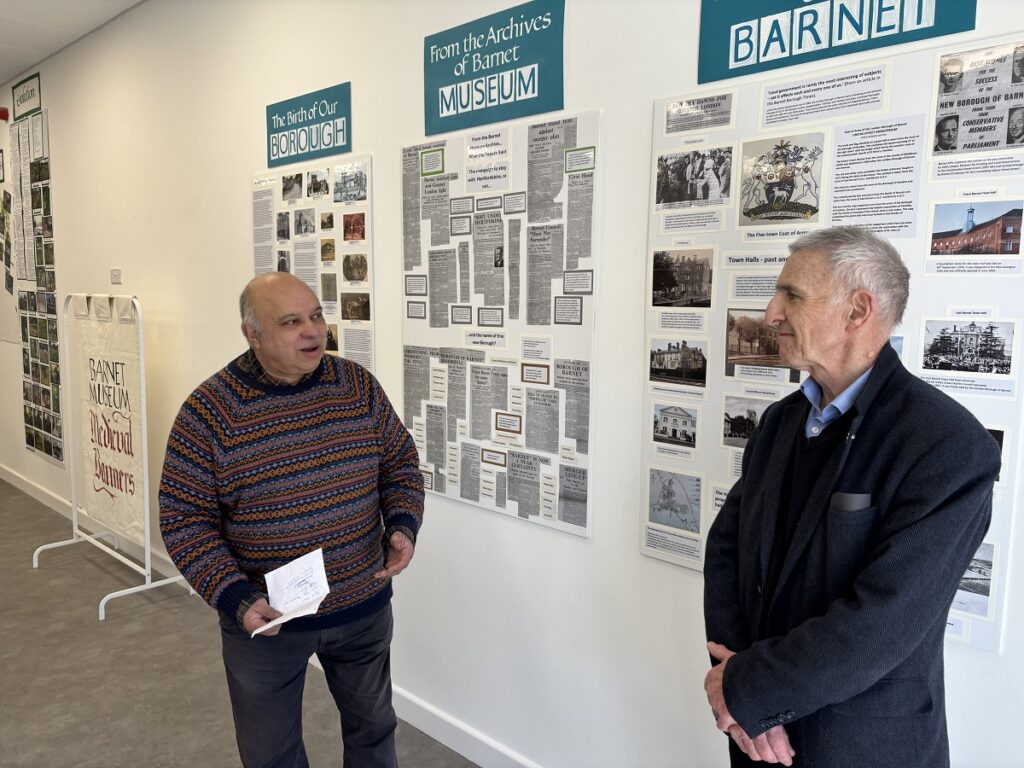
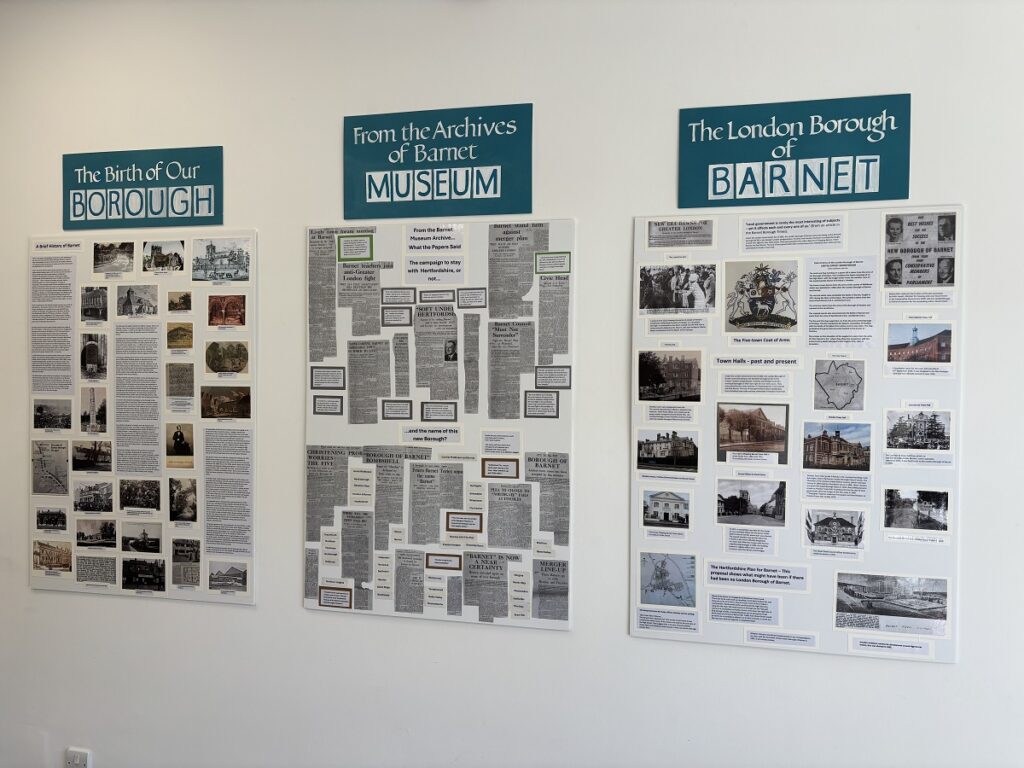
Information boards celebrating the 60th anniversary of the creation of the London Borough of Barnet are on display at Barnet Museum’s shop in The Spires shopping centre and at the Chipping Barnet Library.

Councillor Paul Edwards (above, far right), who opened the Barnet Museum display, recalled what it must have been like at the height of the disagreement about choosing a name for the new borough – especially when there was a real push at the time for Barnet to remain within Hertfordshire rather than become part of Greater London.

He believed that the Conservative minister at the time, Sir Keith Joseph, made the right decision in 1964 when the three Barnet urban district councils – Barnet, East Barnet and Friern Barnet – were amalgamated with Finchley and Hendon to establish what has become the London borough with the second largest population.

“When I used to work at Barnet Council there were still councillors who thought the Barnets should have stayed within Hertfordshire.

“I think it was the right decision to group them together within the Greater London Authority area.

“Keith Joseph made it happen. We can see now why the integration of the boroughs is crucial for the transport system and for the boroughs working together.”

Councillor Edwards was welcomed by museum curator Mike Noronha (above, left) and deputy curator, Hilary Harrison, who organised the collection and assembly of information for the display boards.

Such was the depth of the disagreement about what to call the newly created borough that a wide array of alternative names was put out for consultation – some of them made up from the local place names.

Instead of it being the London Borough of Barnet, it might have been the London Borough of Finchendon, Barnfindon, Northsex, North Ridge, Northern Heights, Dollis Valley or Grimsdyke, to name but a few.

In the end, when the five district councils failed to agree on a name, Sir Keith had to step in.

Both Finchley and Hendon were insisting they should be the borough’s designated name, but the minister opted for Barnet, despite the combined population of the outer districts failing to exceed either Hendon or Finchley.

In welcoming Councillor Edwards, Mike Noronha explained why there was every justification for naming the borough after Barnet.

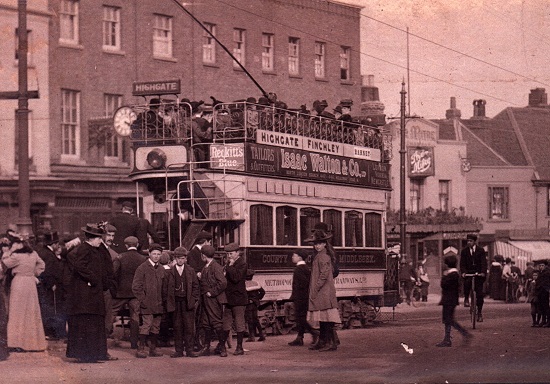
The town was granted a charter in 1199 to become a market town; in 1471 it was the scene of the Battle of Barnet; in 1588 it gained a charter for Barnet Fair; between the 1820s and 1940s Barnet became an important transport hub for London with the opening of a rail station at New Barnet and then High Barnet; trams and then trolley buses ascending Barnet Hill; the tube station opening in 1940; and became a football town when Barnet won the FA Cup in 1946.

A Royal Commission in 1921 was the first to recommend the amalgamation of the outer districts around London but no action was taken because of World War II and a second Royal Commission established in 1957 by Harold Macmillan made fresh proposals for amalgamation.

In 1963, Sir Keith began the process of choosing a new name for what became the London Borough of Barnet.

After he rejected all the various alternatives – and the claims of Finchley and Hendon – the Queen approved the name Borough of Barnet in January 1964.

The first elections for the new authority were held in May 1964 and they met for the first time on 1 April 1965 – a total of 56 six councillors and nine aldermen.

London Borough of Barnet celebrates 60th anniversary of its foundation with displays featuring controversy about choosing the name

The museum’s display boards for the 60th anniversary feature photographs of the various former town halls – in Union Street and Wood Street, Barnet; and for East Barnet and Friern Barnet.

Among the newspaper cuttings is a feature based on Hertfordshire County Council’s plans to rejuvenate Barnet if the town had stayed within the county: one project was the construction of a town centre by-pass across St George’s Fields from the ponds on Hadley Green direct to Meadway.

Posted on

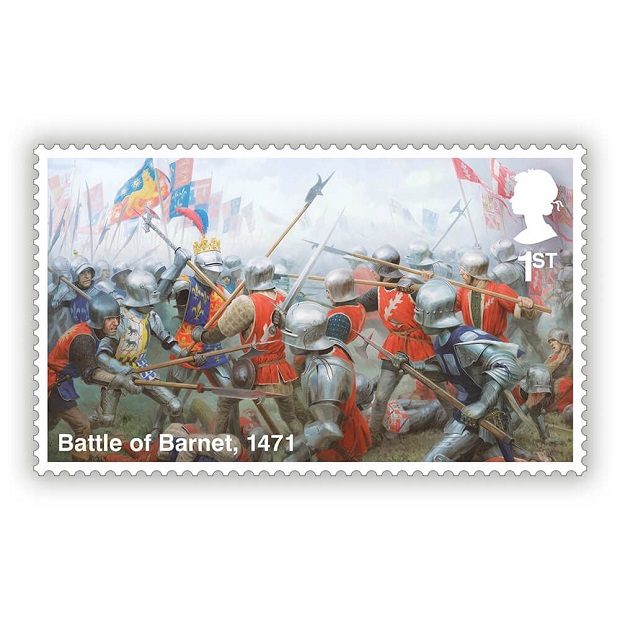
Battle of Barnet to be celebrated with a first-class postage stamp for its 550th anniversary

Celebrations to mark this year’s 550th anniversary of the Battle of Barnet will gain added impetus next month with the release by the Royal Mail of eight commemorative stamps illustrating scenes from the Wars of the Roses.

Continue reading Battle of Barnet to be celebrated with a first-class postage stamp for its 550th anniversary

Posted on

April anniversaries for arrival of steam and electric trains at High Barnet station

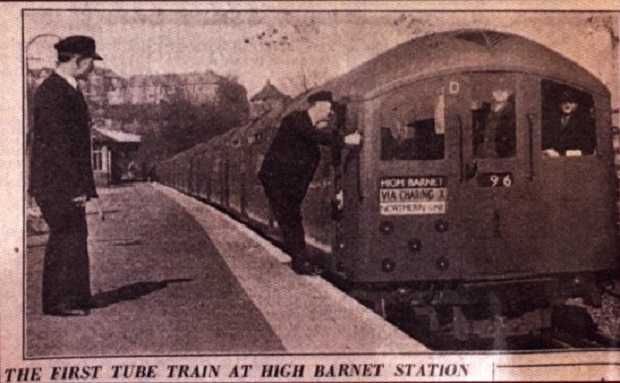
April is the most important month in the history of High Barnet station — the first steam train pulled out on 1 April 1872 and the first tube train left for Charing Cross on 14 April 1940 after the much-delayed extension of Northern Line electrification. 

Continue reading April anniversaries for arrival of steam and electric trains at High Barnet station

Posted on 2 Comments

Medieval banners helping to bring Barnet High Street back to life

Barnet High Street is once again resplendent with heraldic banners from the Wars of the Roses — just one of the many ways in which the local community will be celebrating this year’s 550th anniversary of the Battle of Barnet.

Continue reading Medieval banners helping to bring Barnet High Street back to life

Posted on

Mystery remains over lost battlefield site of 1471 Battle of Barnet

A report into the four-year project to discover the site of the 1471 Battle of Barnet explains why a team of military historians still cannot provide answers to the mystery surrounding the precise location of an epic confrontation during the Wars of the Roses.

Continue reading Mystery remains over lost battlefield site of 1471 Battle of Barnet

Posted on 1 Comment

Life of medieval women features in play celebrating Battle of Barnet anniversary

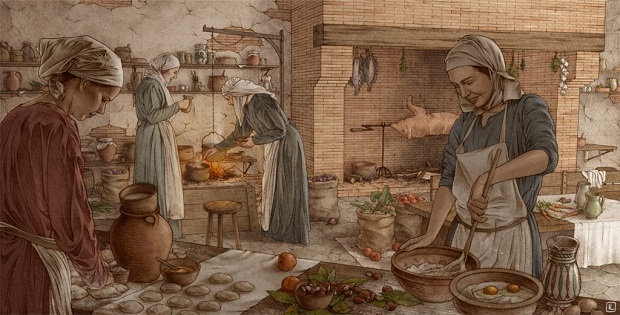
Bringing to life the daily toll of women working in a medieval kitchen is at the heart of a new play that depicts mounting tension as local inhabitants readied themselves for the 1471 Battle of Barnet.

Continue reading Life of medieval women features in play celebrating Battle of Barnet anniversary

Posted on

Barnet historians eager to see 1921 census – and getting ready for 2021

Barnet census

Barnet census

Family historians keen to research the lives of people living in Barnet in the 1920s have only twelve months to wait before the release of the much-anticipated 1921 census and its wealth of information about life in the aftermath of the First World War.

Continue reading Barnet historians eager to see 1921 census – and getting ready for 2021

Posted on 10 Comments

Hasty removal of historic Barnet sign

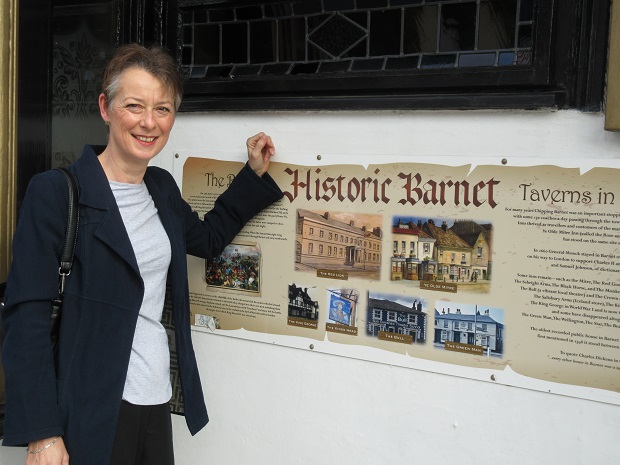
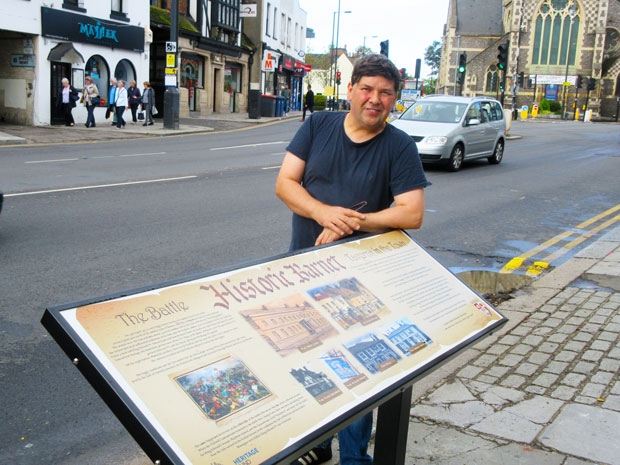
A Barnet Museum information sign that told the history of the coaching taverns that once lined Barnet High Street was removed within days after Barnet Council’s highways department declared it was a hazard for pedestrians.

Continue reading Hasty removal of historic Barnet sign

Posted on

Battle painting unveiled at Spires’ celebration

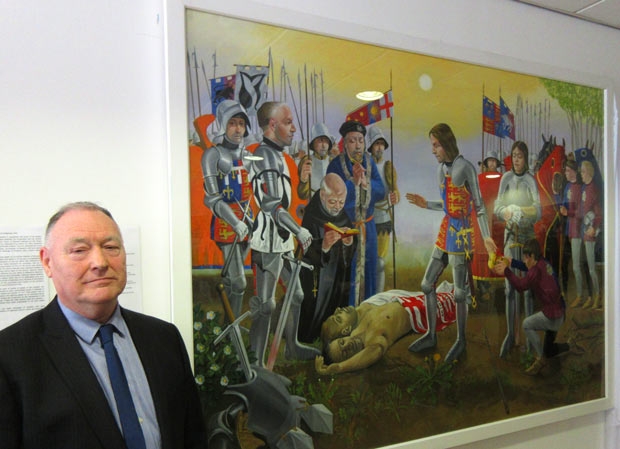
A new oil painting depicting the 1471 Battle of Barnet by local painter Keith West was unveiled in the Barnet Museum shop in the Spires – one of the events being held to celebrate the 30th anniversary of High Barnet’s shopping centre.

Continue reading Battle painting unveiled at Spires’ celebration

Posted on

Coats of arms the length of Barnet High Street

Twice as many Wars of the Roses heraldic banners will be hung from lamp standards along Barnet High Street this summer – just one of the attractions planned to commemorate the Battle of Barnet, and to promote a repeat of last year’s highly-successful Barnet Medieval Festival.

Continue reading Coats of arms the length of Barnet High Street

Posted on 1 Comment

Battle of Barnet re-enactment – a weekend to remember

Such was the enthusiastic response to a real-life re-enactment of the Battle of Barnet that military re-enactors, organisers and visitors were unanimous in their hope that the first-ever Barnet Medieval Festival can become an annual event.

Continue reading Battle of Barnet re-enactment – a weekend to remember

Posted on 2 Comments

Wars of the Roses banners for Barnet High Street

If Barnet Council gives approval, 26 hand-painted heraldic banners are to be hung along Barnet High Street to promote the Barnet Medieval Festival – a weekend of medieval displays and re-enactments of scenes from the battles of St Albans (1461) and Barnet (1471) to be held at the Byng Road playing fields on Saturday and Sunday, June 9 and 10.

Continue reading Wars of the Roses banners for Barnet High Street

Posted on 2 Comments

Re-living the Battles of St Albans and Barnet

Scenes from the battles of St Albans (1461) and Barnet (1471) – two of the engagements in the Wars of the Roses – are to be re-created as part of the Barnet Medieval Festival to be held over the weekend of June 9 and 10 at the Byng Road playing fields.

Continue reading Re-living the Battles of St Albans and Barnet