
Centenary of 1926 General Strike is a reminder of its impact in High Barnet and the role of the non-unionised Barnet Press
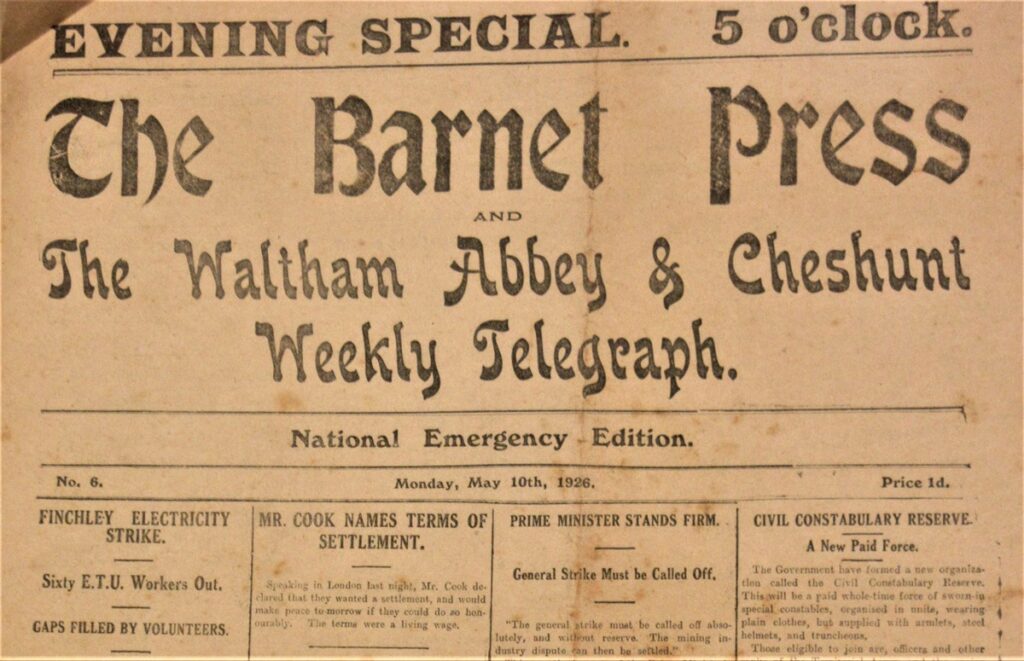
Such was the success and respect for Barnet’s former weekly newspaper, The Barnet Press, that a century ago it published an emergency edition on sale each evening in central London during the 1926 General Strike.
For just over a week there were no streetlights in Barnet town centre, an appeal was issued for volunteers for Barnet Special Constabulary, but food supplies in the town remained normal.
Nearly two million workers led by railwaymen, transport workers and printers joined the strike in support of a miners’ pay dispute.
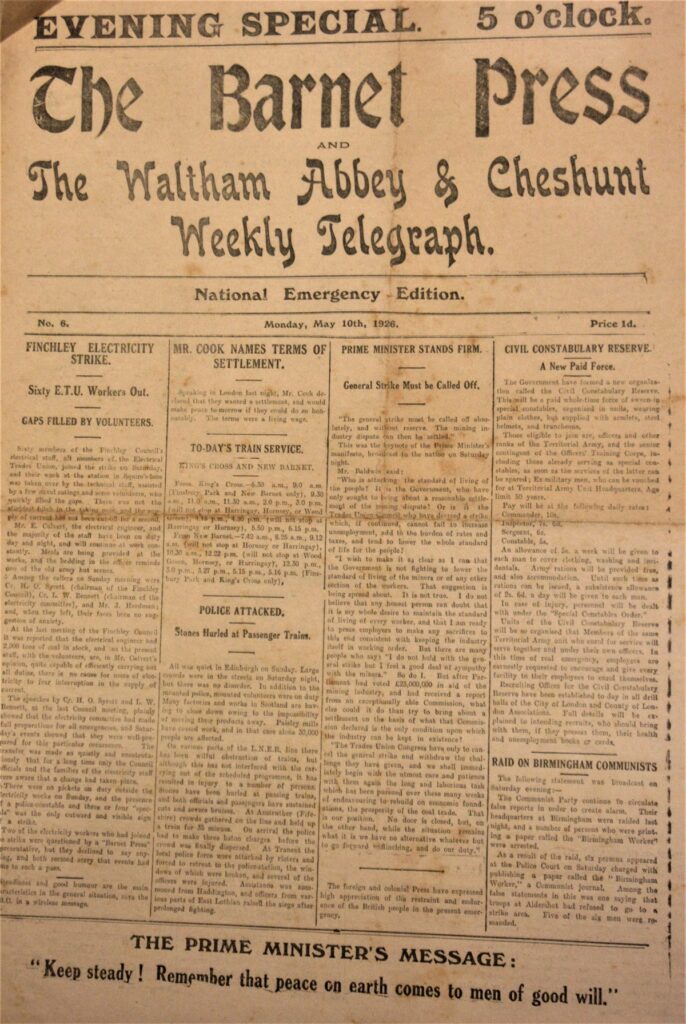
Local action included a strike by 60 members of the Electrical Trades Union who worked at Finchley’s coal-fired power station in Squire’s Lane.
Finchley Council said there was not the slightest hitch in supply as technical staff and volunteers took over. The station had 2,000 tons of coal in stock. Meals were provided and there was bedding in the offices.
Historians describe the strike as the greatest act of working-class solidarity in British history.
Local newspapers around the country which were non-unionised seized the opportunity to print more copies as the national newspapers had been forced to suspend publication of all but a few emergency editions.
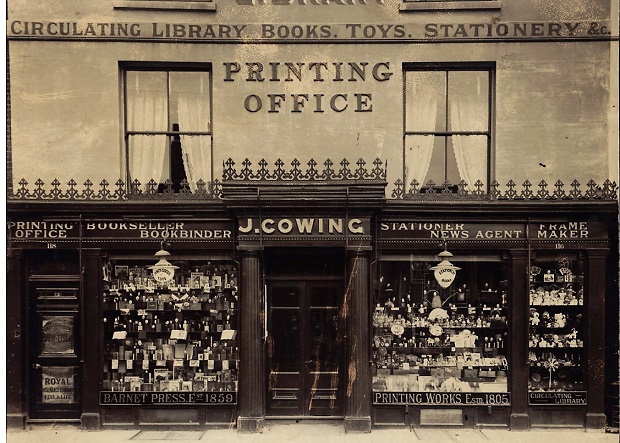
The Barnet Press, first published by George Cowing in 1859, was a family-owned weekly newspaper which defended its political independence and whose workers who were not trade union members.
The editor wanted to ensure that the public were informed about the strike.
A reporter was assigned to listen to BBC news bulletins and then write up news stories for a special daily edition as the Cowing family was anxious to inform readers about the “serious pass to which this country has been reduced”.
A 5 o’clock National Emergency Edition was printed for sale in central London.
The BBC – or British Broadcasting Company as it was then known – had only recently been established and had become a rival source of news to the newspapers.
By 1925 it was being broadcast across the UK. It was supplied with news and information by the Reuters news agency. Sales of radios increased dramatically during the strike.
BBC news bulletins became a vital source of national news for these small non-unionised local newspapers which upped their print runs to meet the extra demand generated by the absence of national dailies.
John Reith, then the managing director, was said by historians to have “prudently self-censored” the BBC’s output so as not alarm ministers fearing that government might requisition the service.
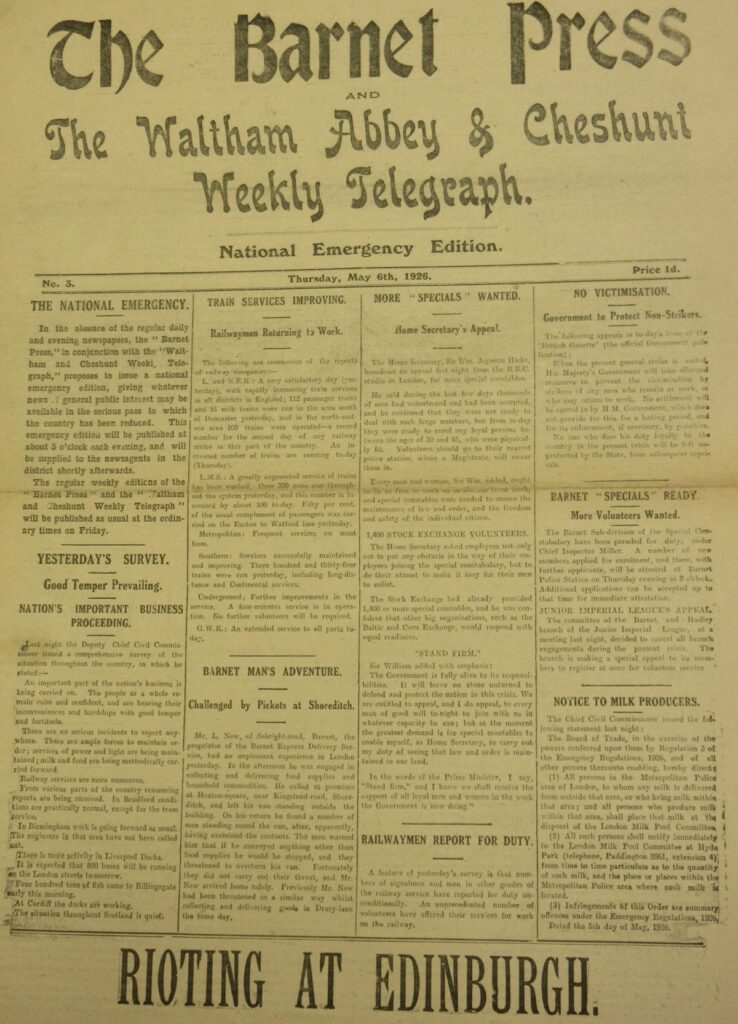
A selection of front-page headlines from The Barnet Press gave an indication as to why the Cowing family had not recognised the print unions: “Prime Minister stands firm”, “Rioting at Edinburgh”, “Motor cars attacked”, “Government to protect non strikers”.
It was not until the Second World War that printers at the Barnet Press joined a trade union, the National Graphical Association.
Publication of The Barnet Press was halted by industrial action in November 1977 because of work to rule.
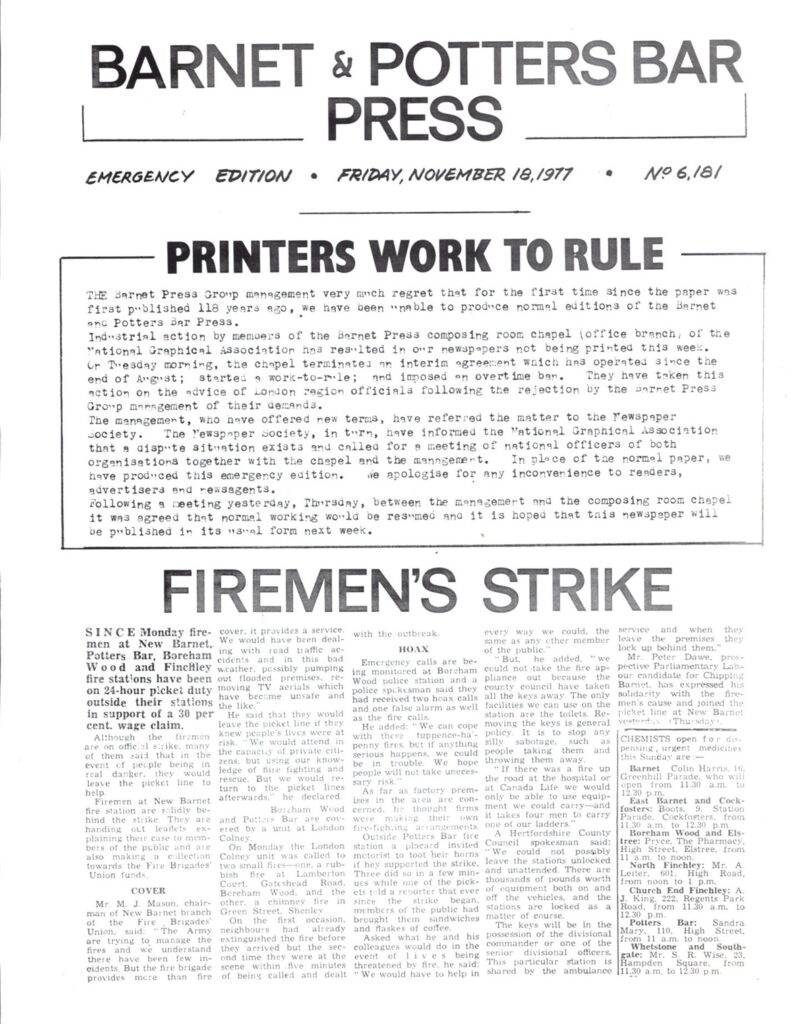
A front-page statement on an emergency edition explained that had happened:
“The Barnet Press group management very much regret that for the first time since the paper was first published 118 years ago, we have been unable to produce normal edition of the Barnet and Potters Bar Press.
“Industrial action by members of The Barnet Press composing room chapel of the National Graphical Association has resulted in our newspaper not being published this week.”
Trustees for the Cowing estate sold off The Barnet Press in the 1990s. It continued publication under new ownership in Hendon until its final closure in August 2017.
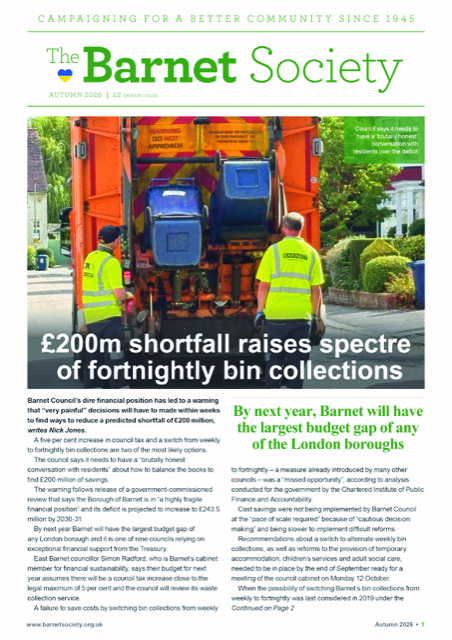
Why not become a member? Receive our latest newsletter hot off the press four times a year, and support our work with a membership.
If you have some local news, history or want to bring something to our attention please email us.