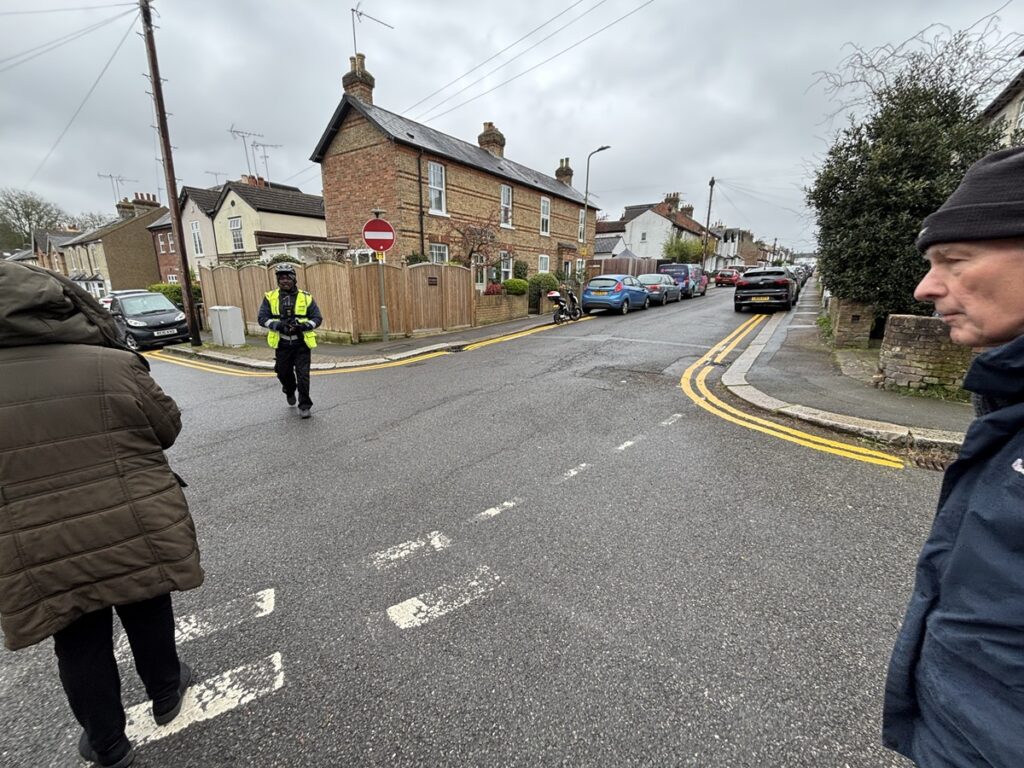
Posted on 3 Comments

US tech firm reveals more about its plans to build one of Europe’s largest data centres in green belt land just to the south of Potters Bar

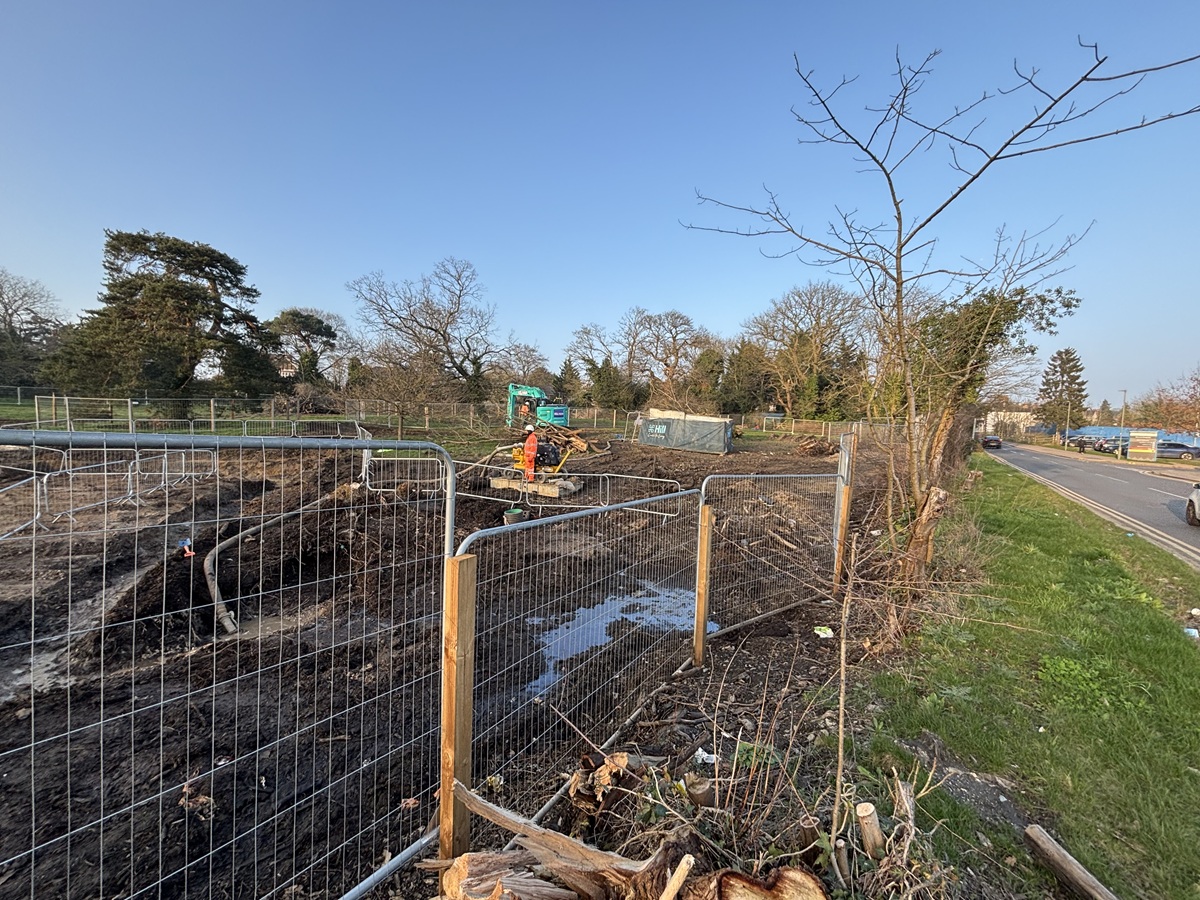
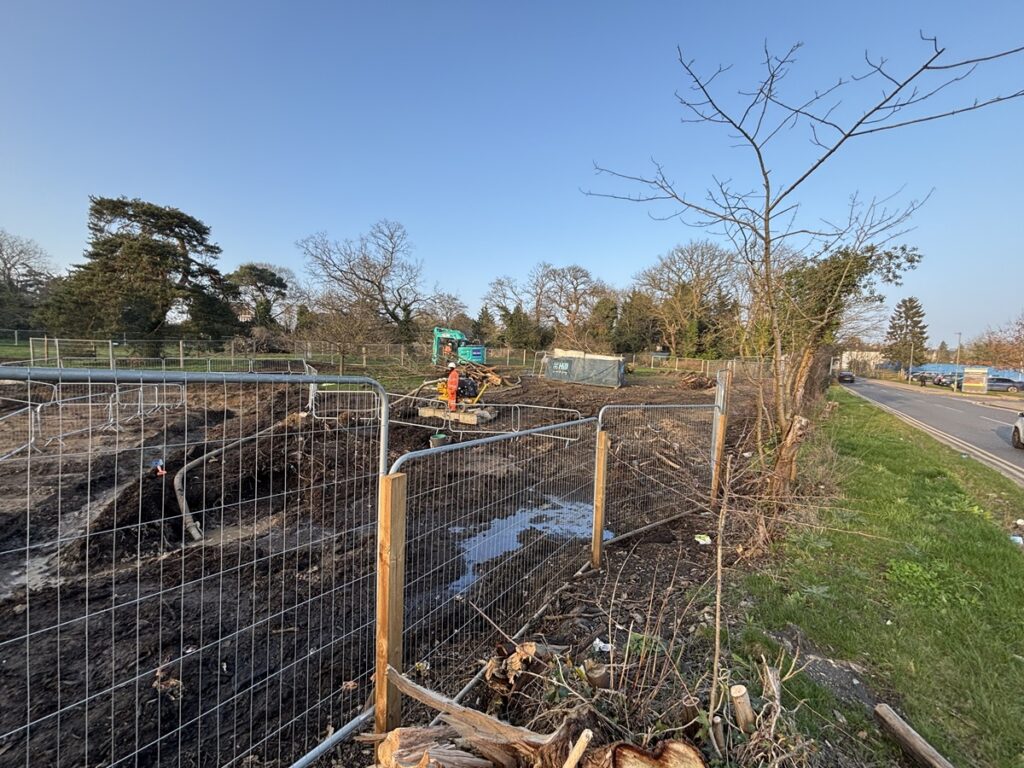
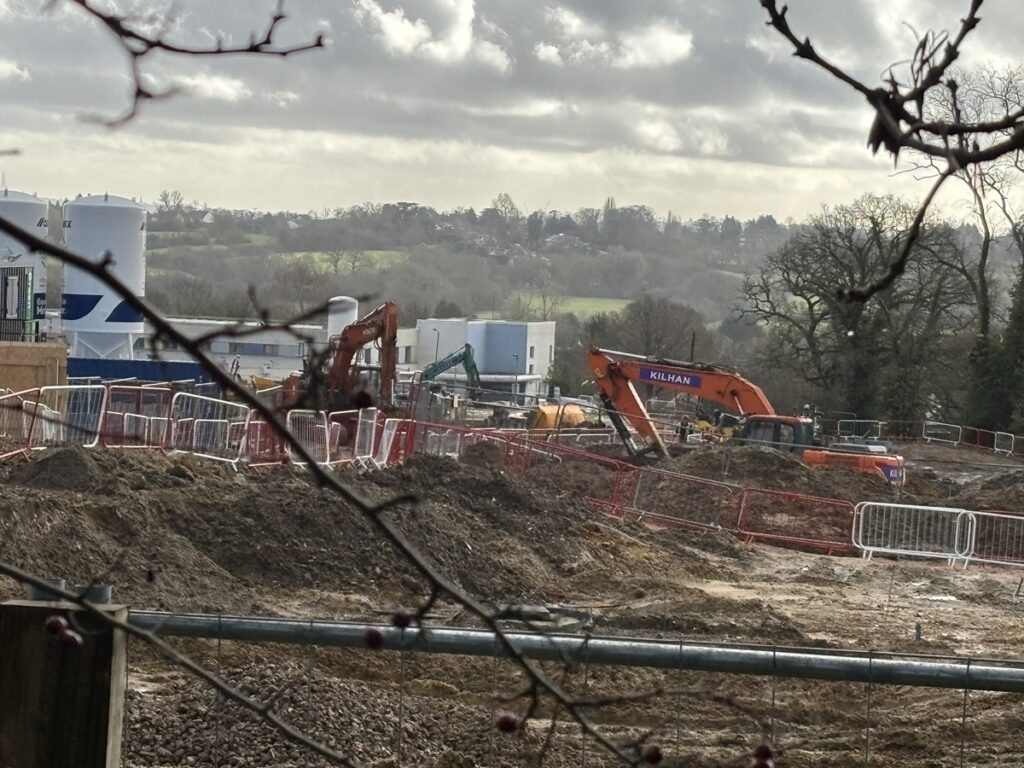
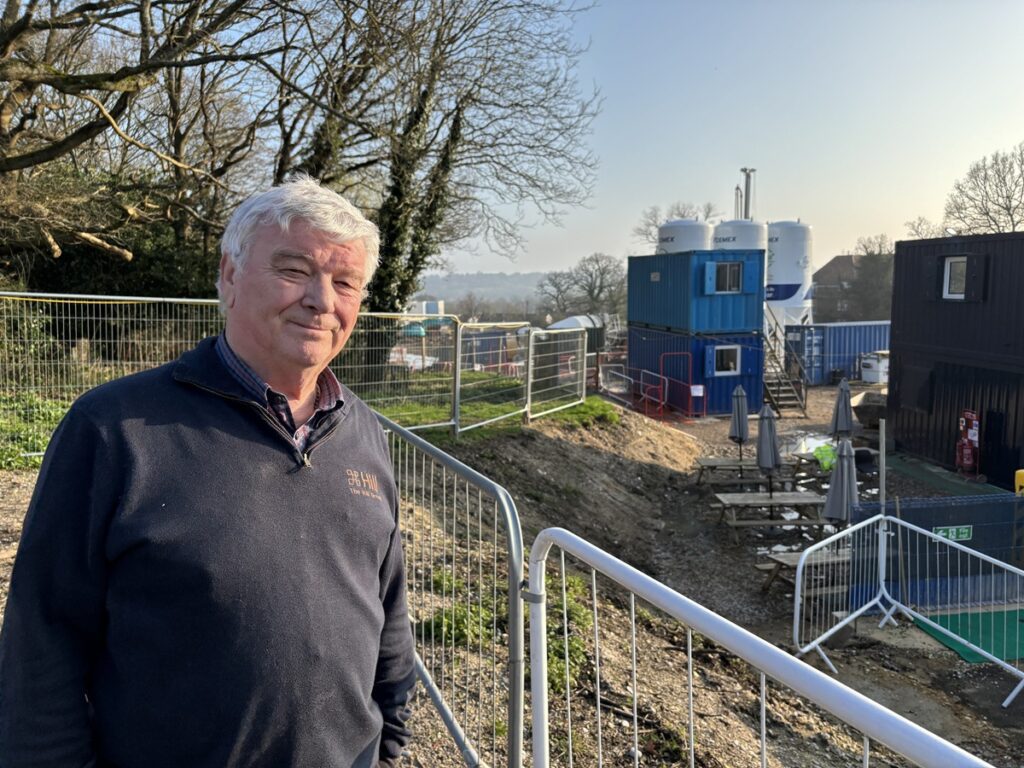
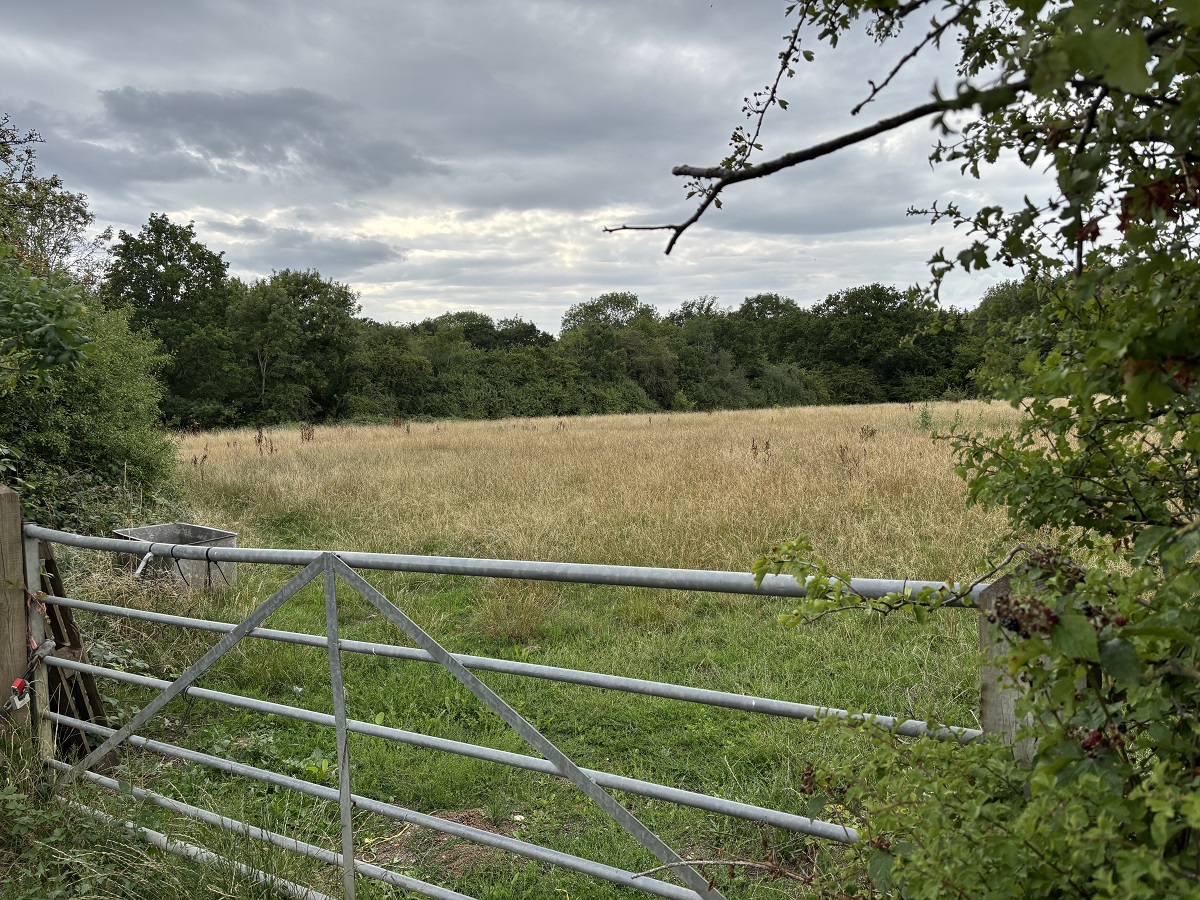
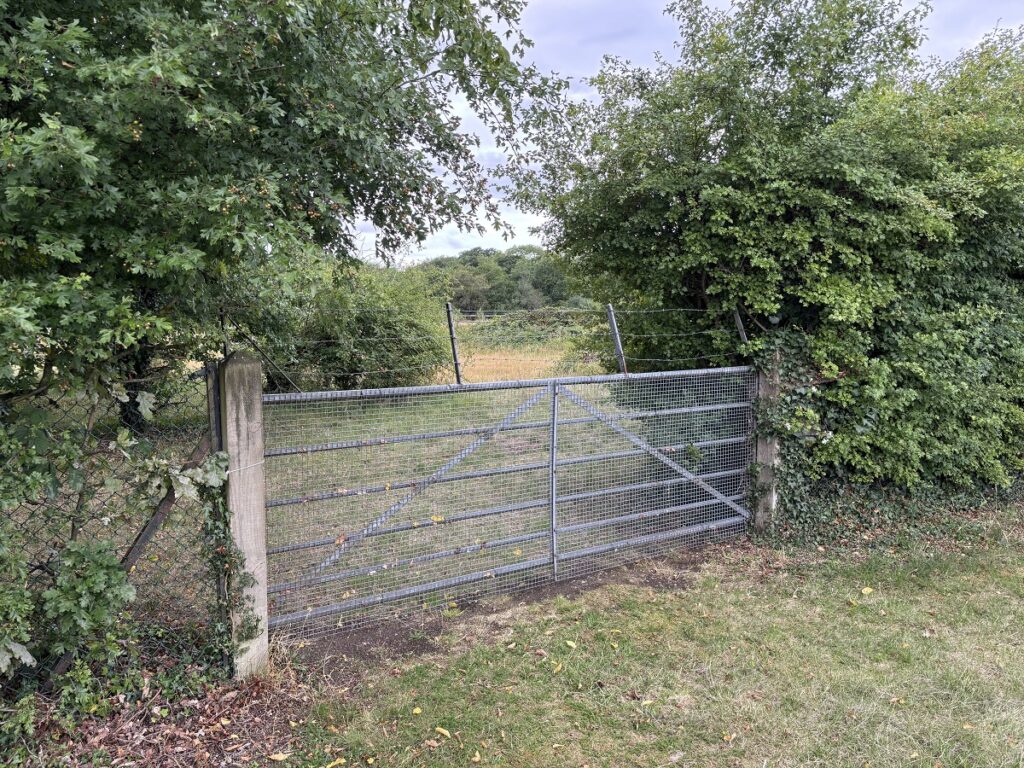
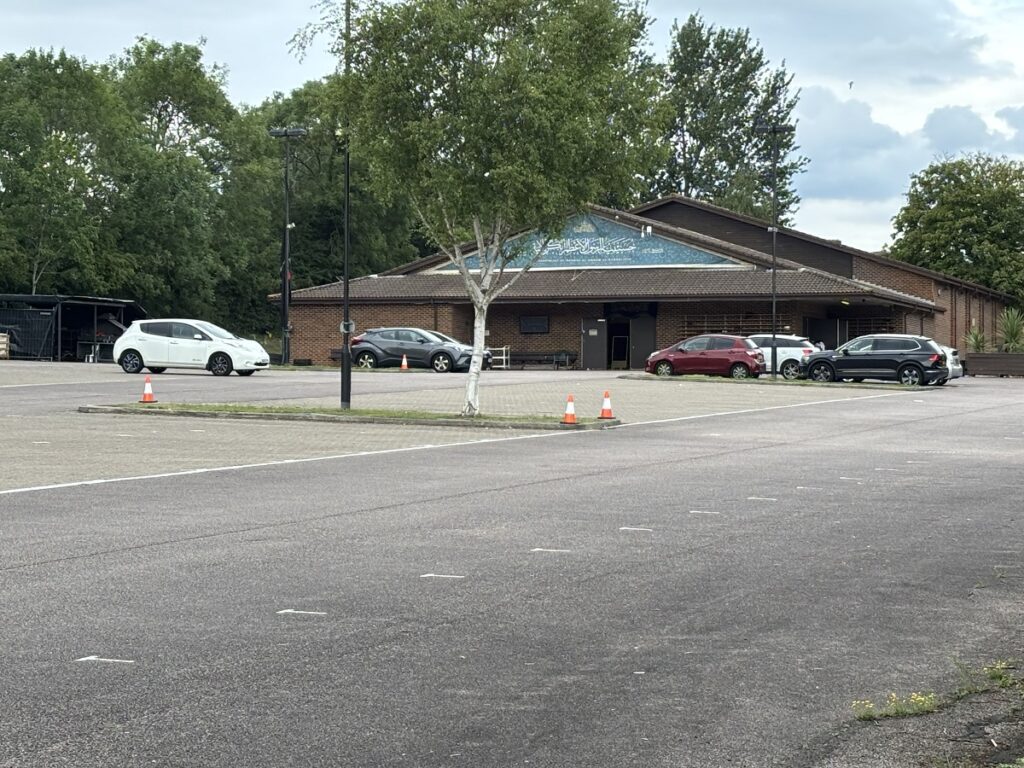
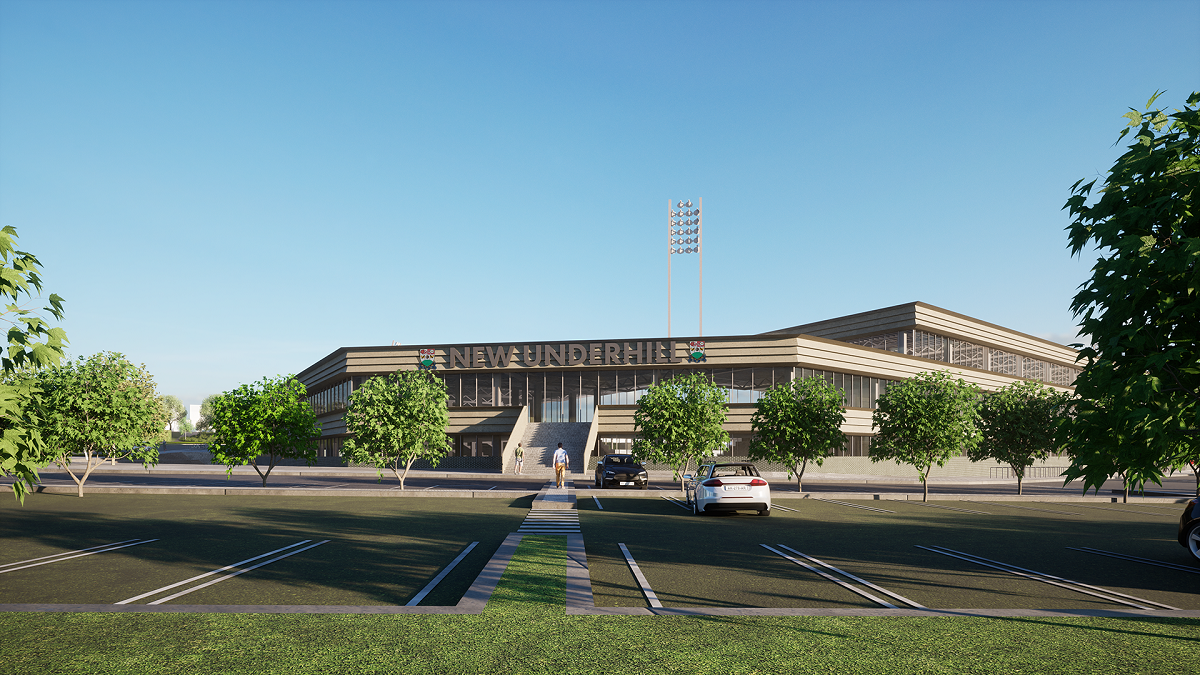
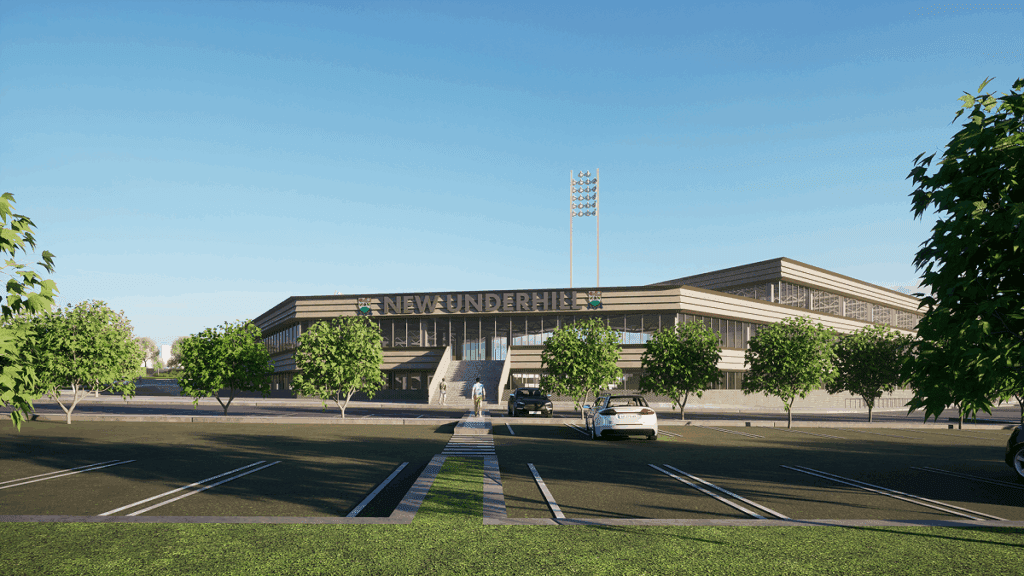
Potters Bar residents have had their first chance to learn more about a proposed data centre which is to be built on an 85-acre suite alongside the M25 motorway.

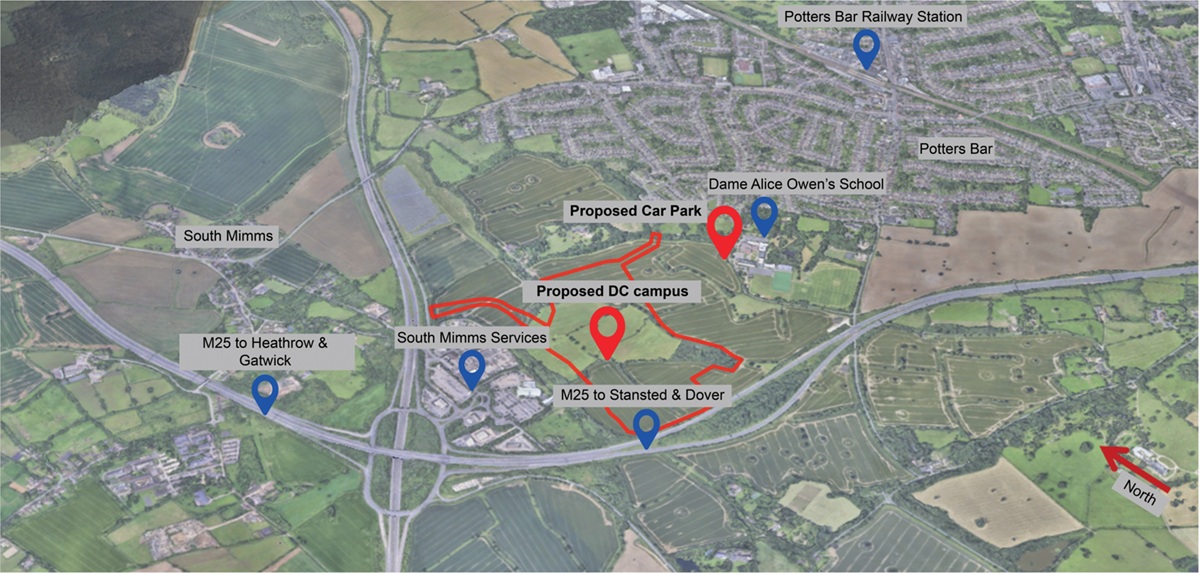
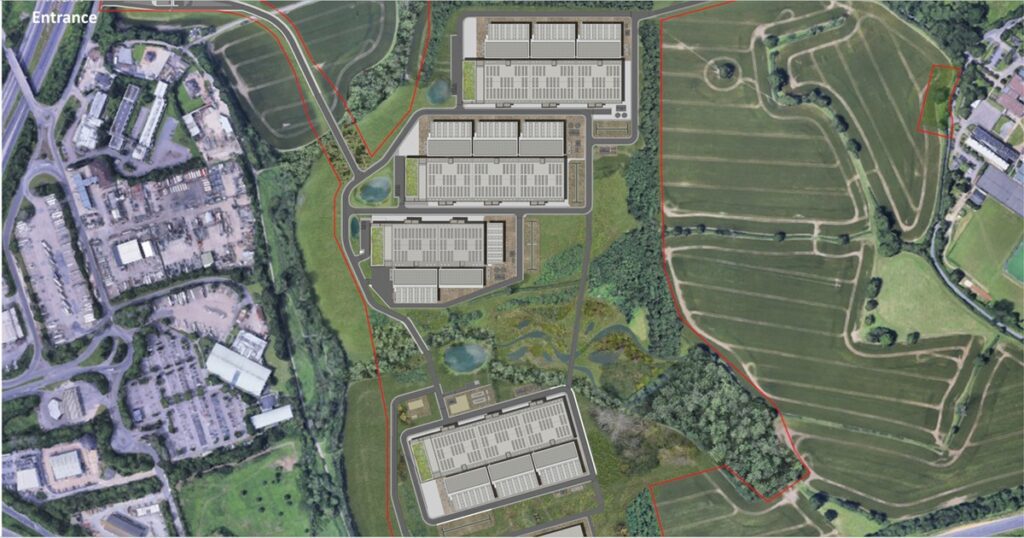
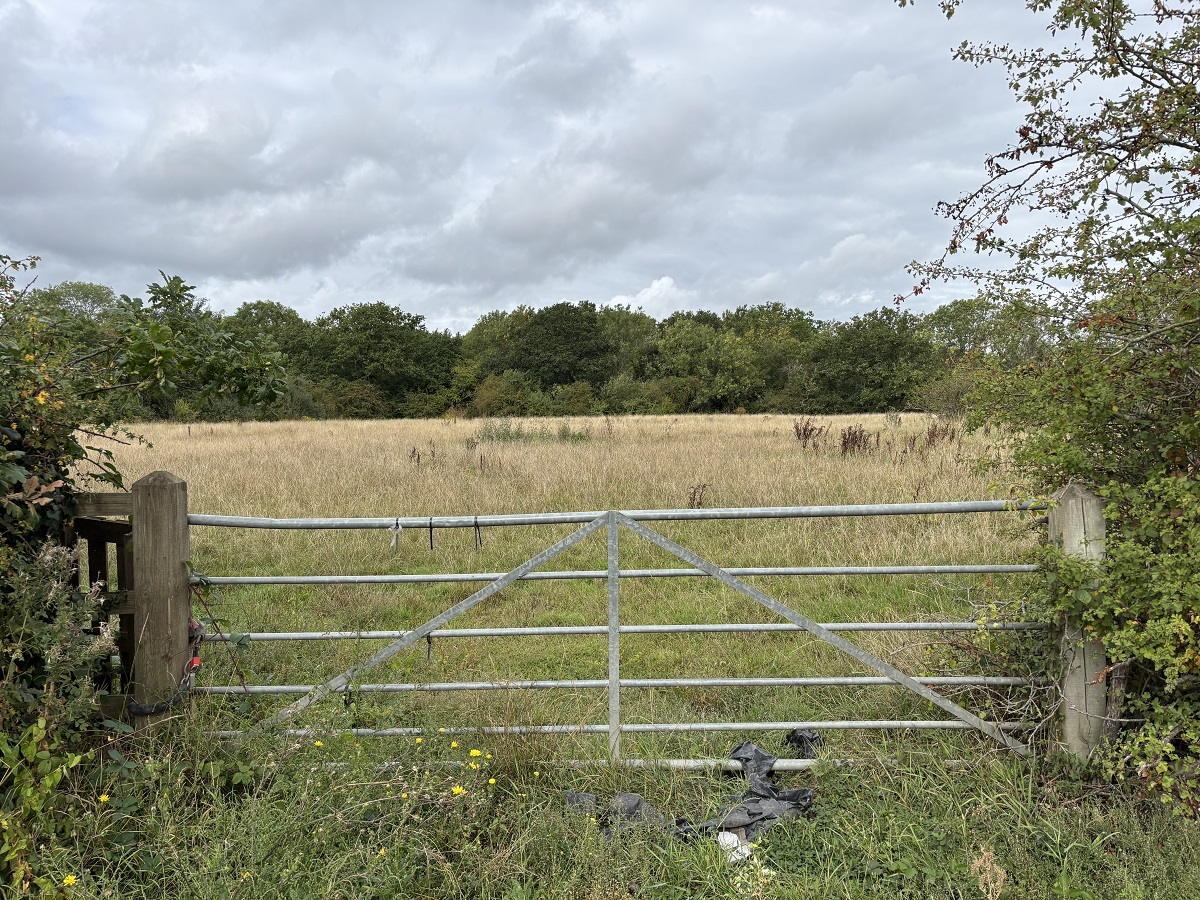
Itwill be so big it will almost fill the fields between the South Mimms service station at Junction 23 and Dame Alice Owen’s School – see diagram above.

Outline planning permission was approved by Hertsmere Borough Council a year ago for a 2 million square foot development which local objectors claim will be equal to the size of Wembley stadium and will obliterate green belt countryside.

Equinix, a US tech firm which is one of the world’s largest data centre operators, is proposing to invest £3.9 billion in the new centre which will be known as the Hertfordshire Campus, and which will be one of the largest in Europe.

The campus will require 250 megawatts of power – enough to run the equivalent of about 200,000 homes – and to meet the demand, National Grid is to supply the new campus with its own connection to the electricity grid ready for the data centre to come on stream in 2031.

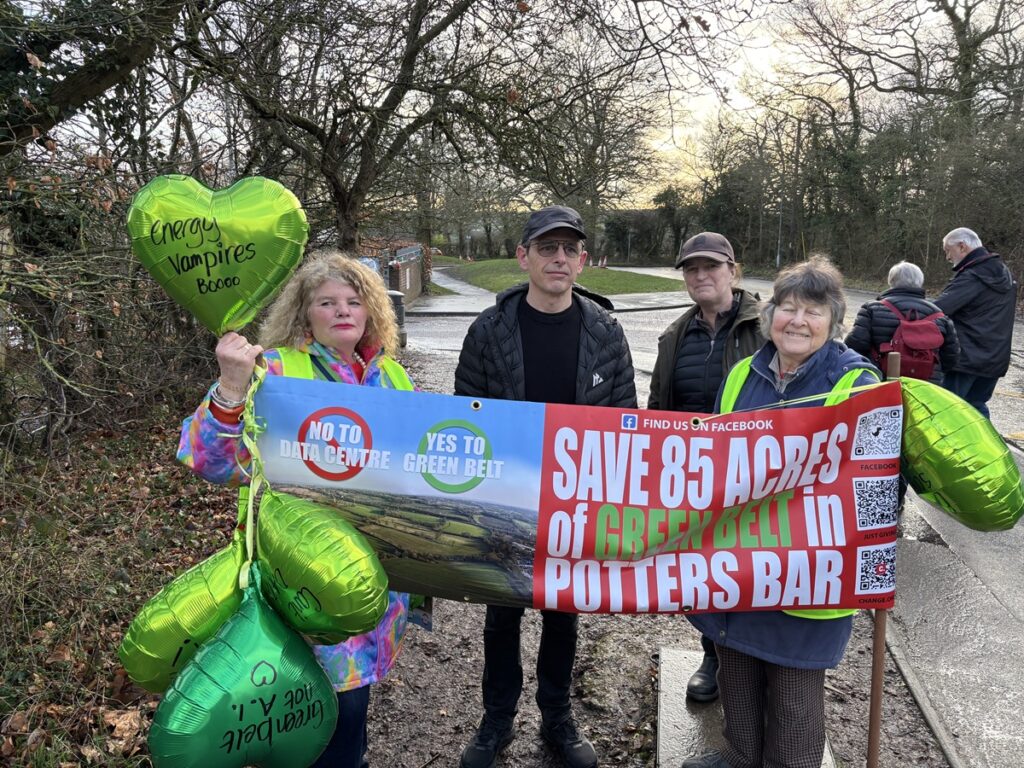
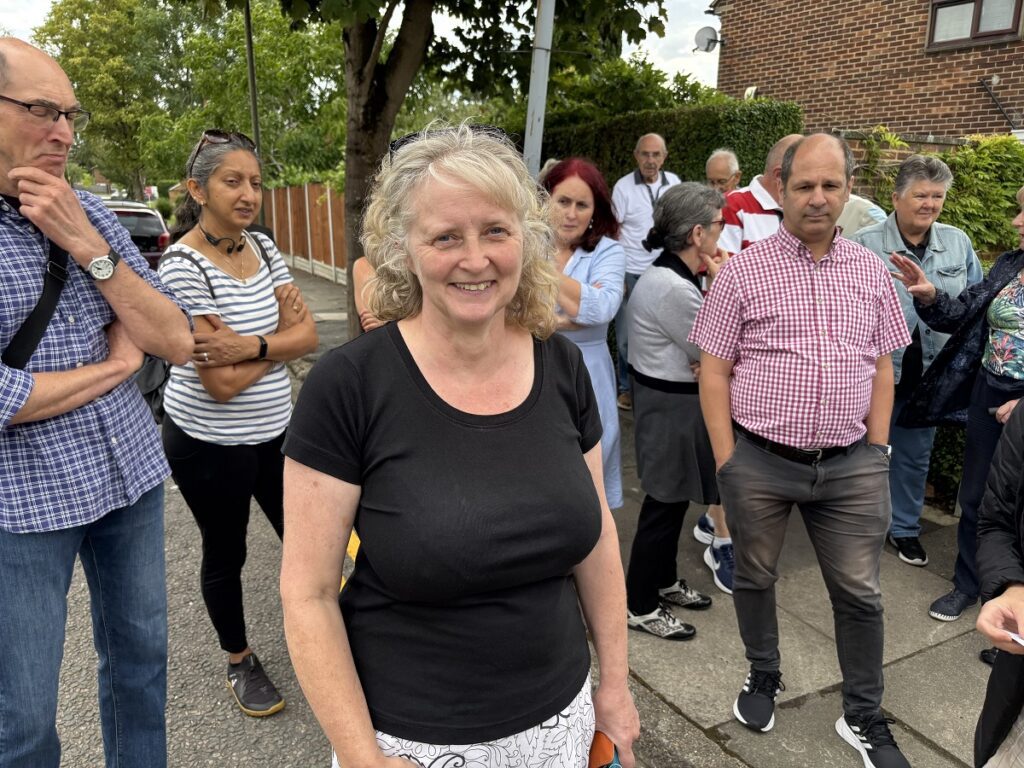
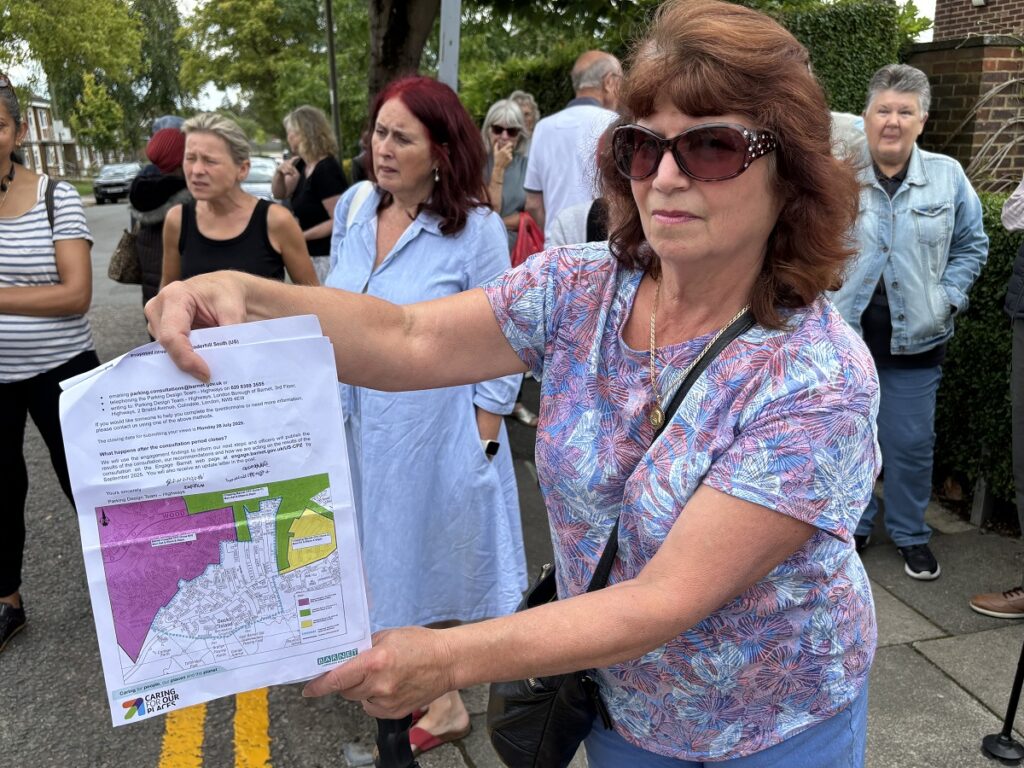
A two-day exhibition of Equinix’s plans was held at Dame Alice Owen’s School where a group of local objectors gathered outside to express opposition to the loss of “incredibly precious countryside” for a development which they say will blight the area.

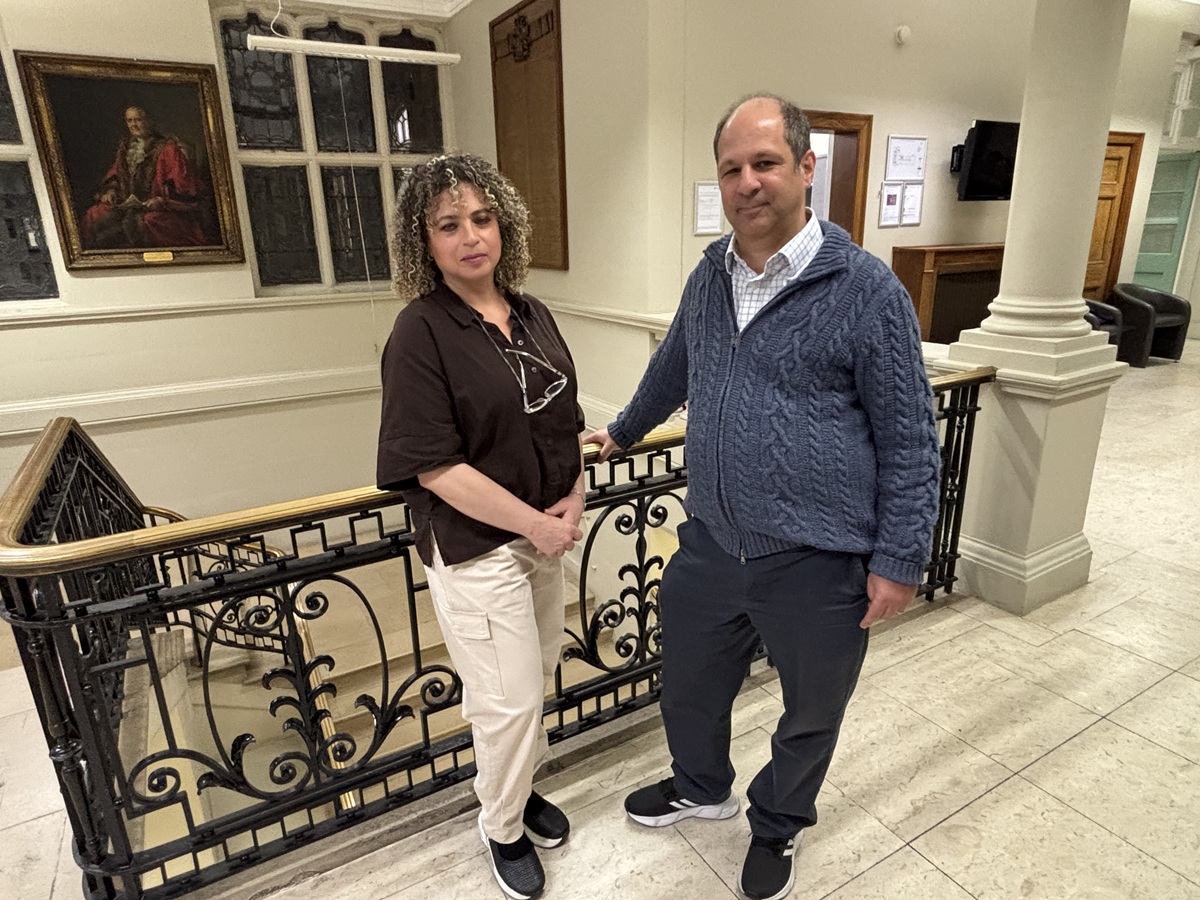
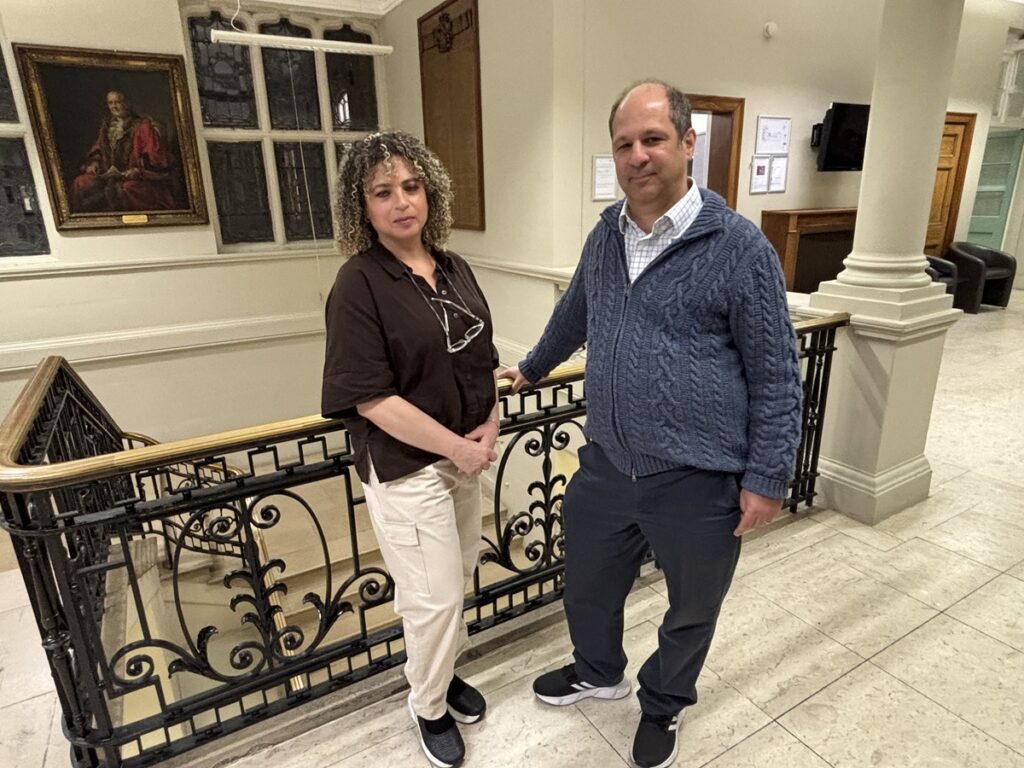
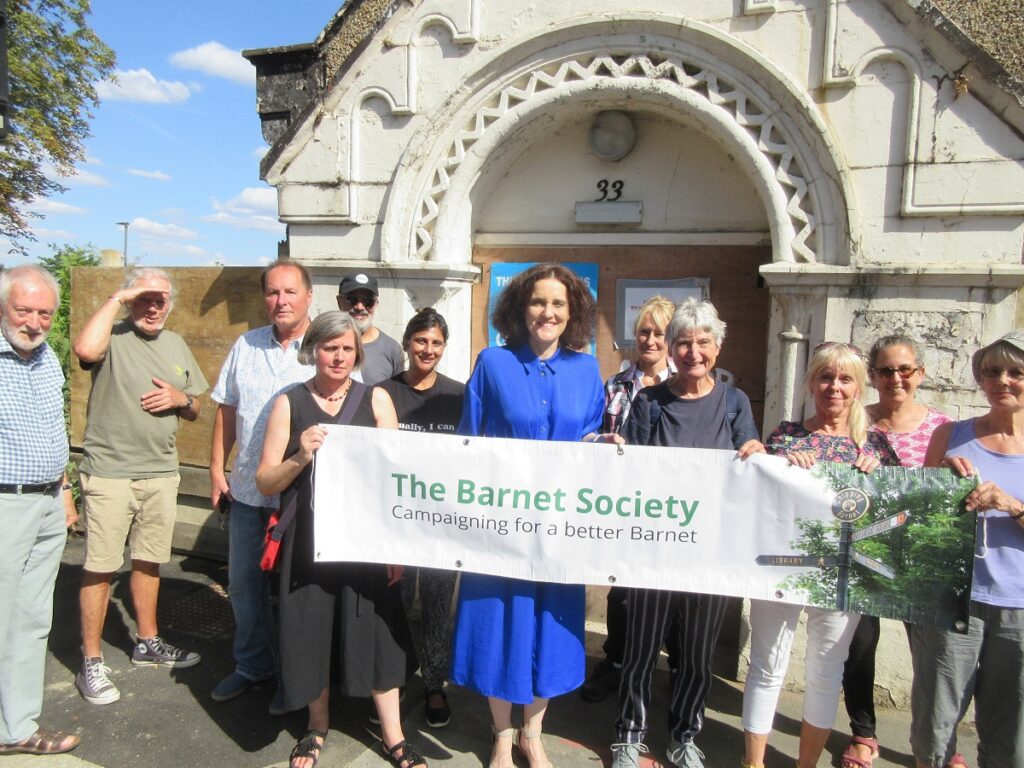
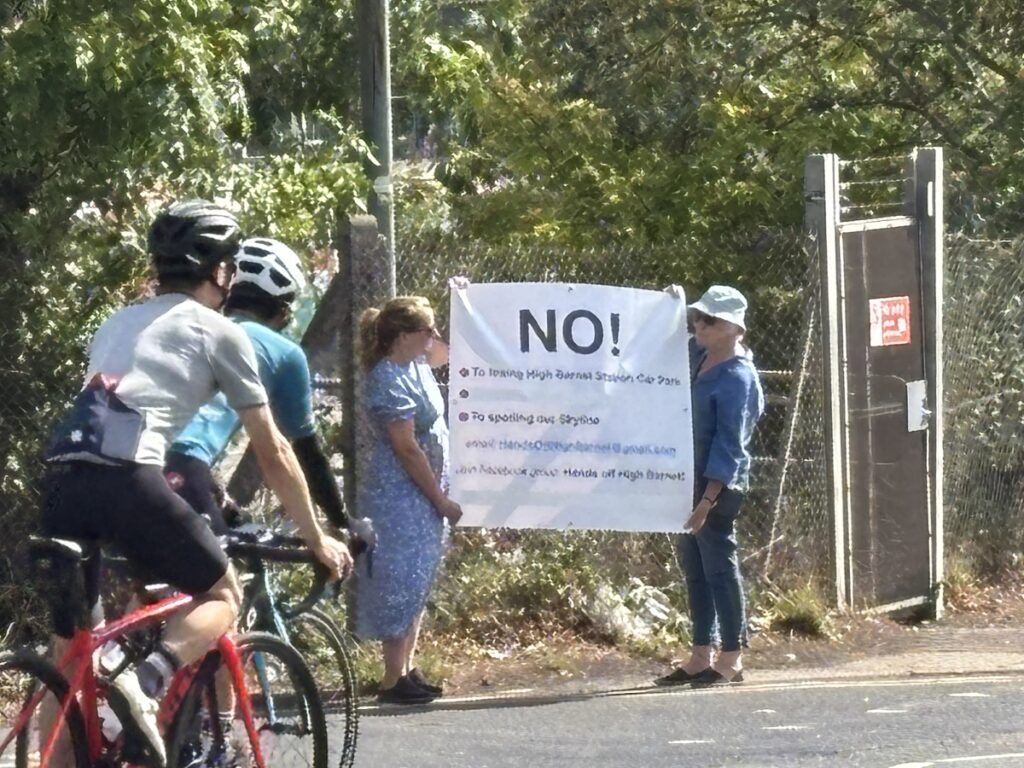
Ros Naylor (above, second from right), who is one of the lead protesters, said Potters Bar residents had enjoyed walking, riding and cycling along 11 rights of way across the fields between the outskirts of the town and the M25.

“The visual impact alone is going to obliterate local green belt land and instead we are going to have a monster development the size of Wembley stadium.”

She was joined for the protest by (from left to right) Fleur Albrecht, Councillor Simon Rhodes, and Margaret Ohren.

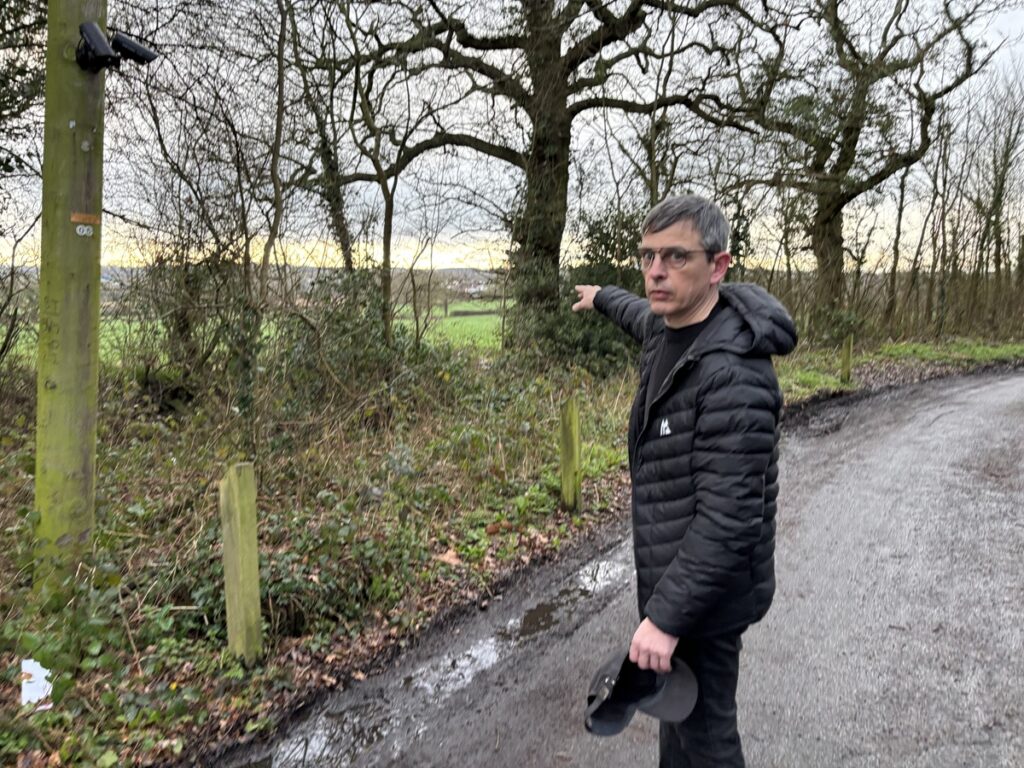
Councillor Rhodes, who serves on Hertfordshire County Council, pointed to the fields which would be lost when the data centre is built.

He had been shocked to discover that the emergency entrance would be via Bridgefoot Lane, directly opposite the entrance to Dame Alice Owen’s School.

“We are only just finding out what Equinix is proposing. We have checked with residents in around 1,500 houses nearby and none of them knew about it. Since January we have as a group registered 950 objections.”

Equinix is proposing to build a campus which would comprise four separate data centre buildings – three would be of 72-megawatt processing capacity and one of 48-megawatt capacity.

Building the campus at South Mimms would represent a £3.9 billion investment in the area, creating 2,500 construction jobs and 200 permanent skilled roles. The campus would generate £18 million a year in business rates.

Potters Bar residents get chance to learn more about massive data centre to be built alongside M25 motorway on fields between Junction 23 service station and Dame Alice Owen's School

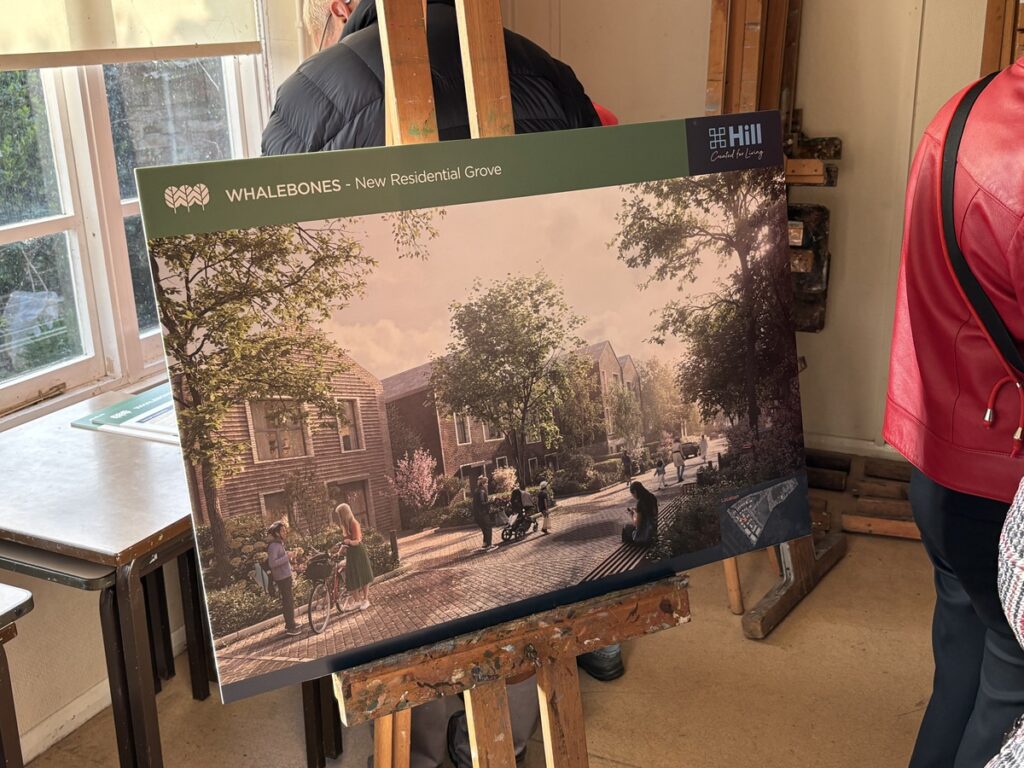
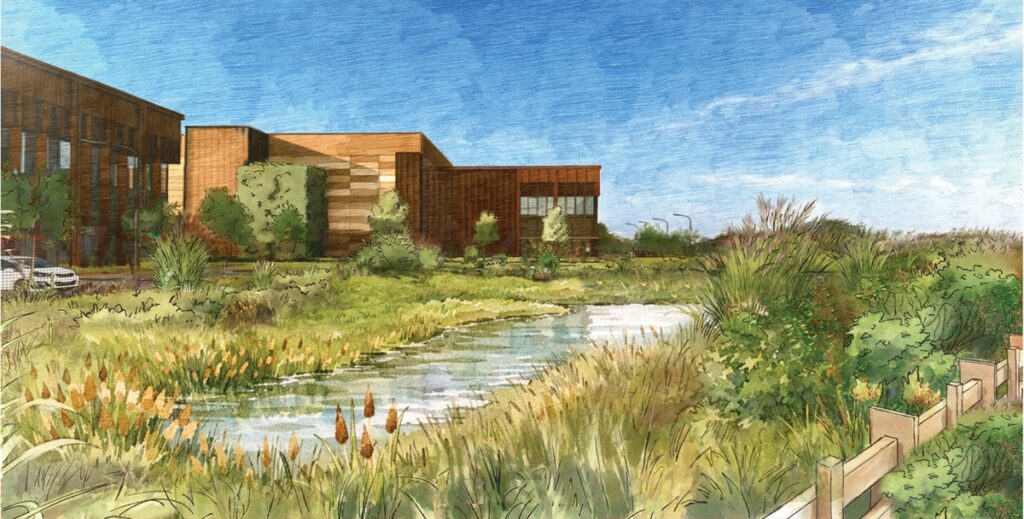
In presenting an artist’s impression of how the campus would look, Equinix said it intended to retain and improve all the pedestrian, cyclist and bridle ways across the site.

During March there would be an archaeological fields inspection of the site followed an ecological survey in May.

Outline approval for the scheme was granted to a consortium known as DC01UK.

Equinix signed up to proceed with the project and the company’s aim is to submit a detailed planning application in August/September in the hope of starting construction in mid-2027 and the centre going on stream in 2031.

Posted on 3 Comments

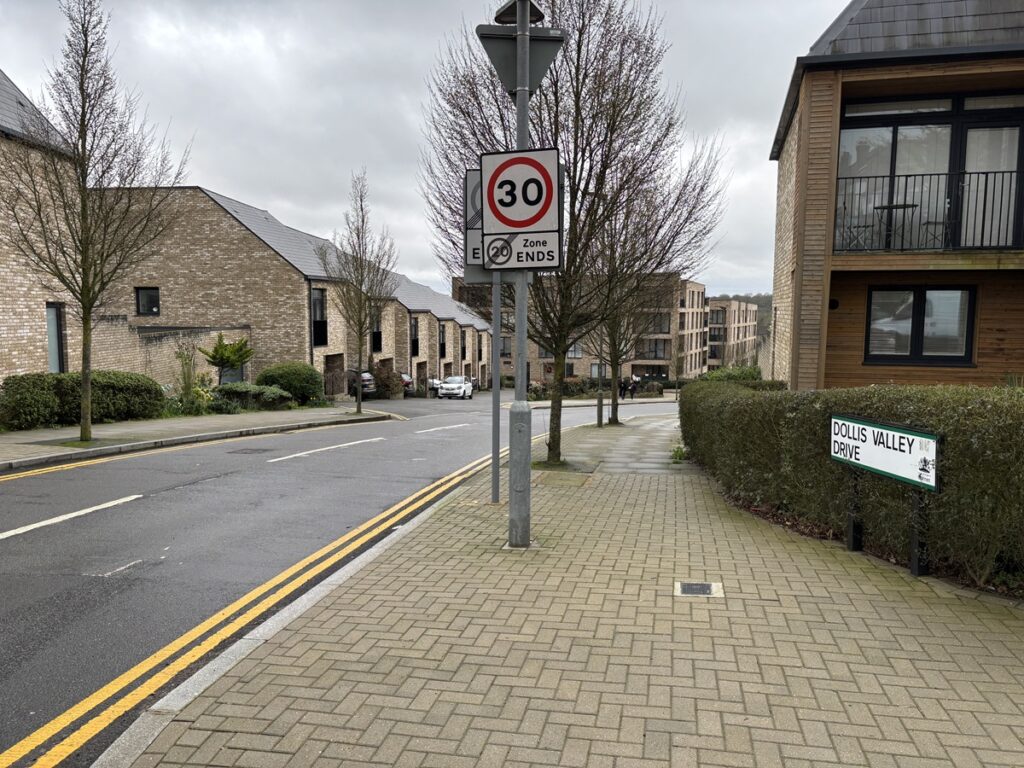
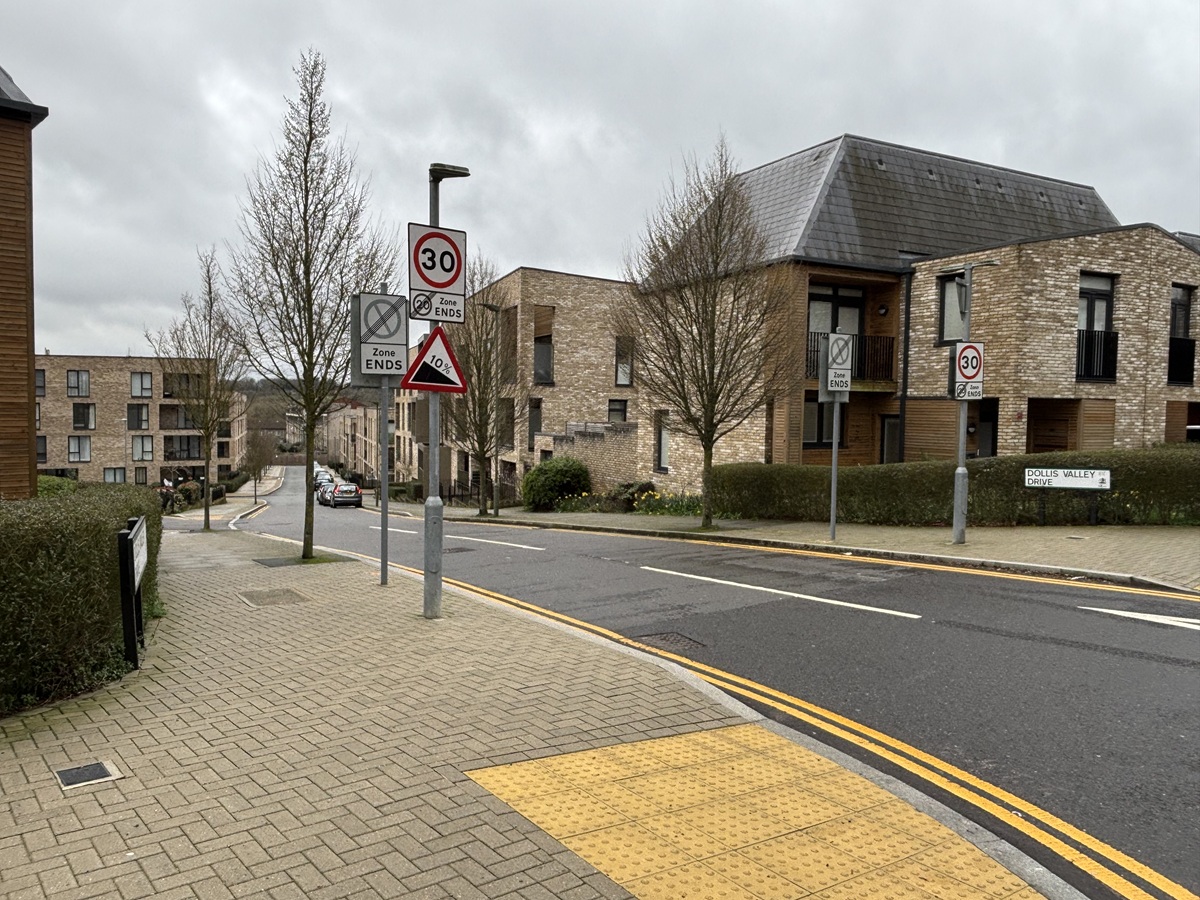
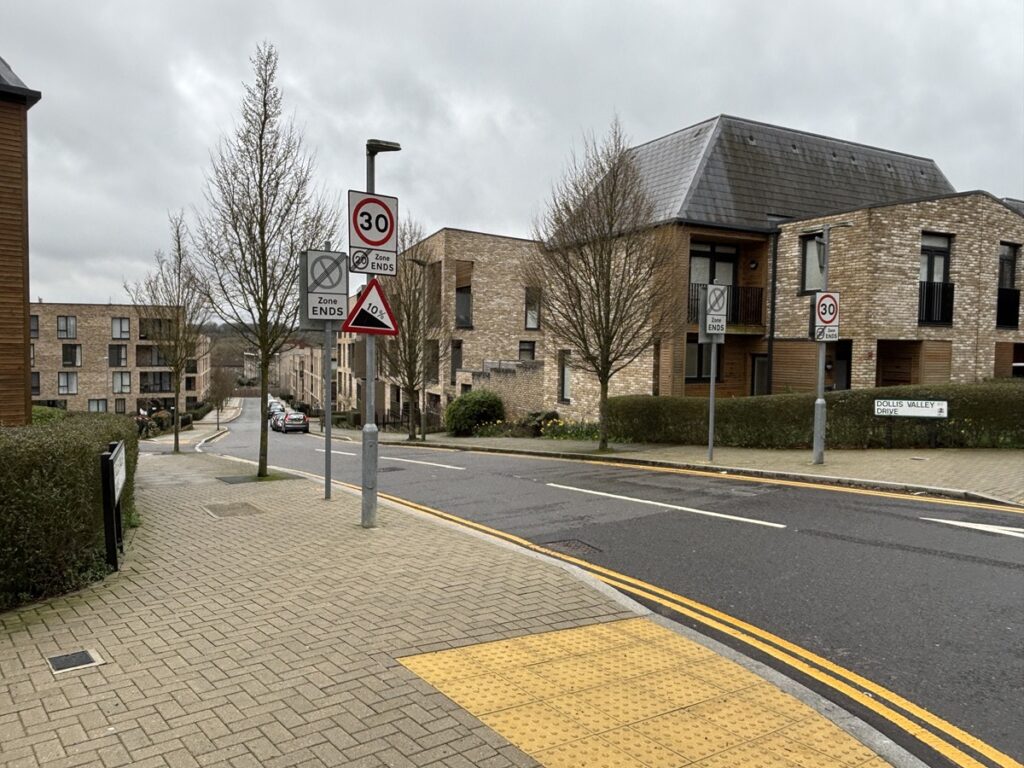
Redevelopment of Dollis Valley estate to be restarted after two year delay following go ahead for construction of 221 new homes

Completion of the Brook Valley Gardens estate off Mays Lane – which is a regeneration of the Dollis Valley estate – has moved a step closer.

Progress has been stalled since 2023, but a revised deal has been agreed with the developers and approved by Barnet Council.

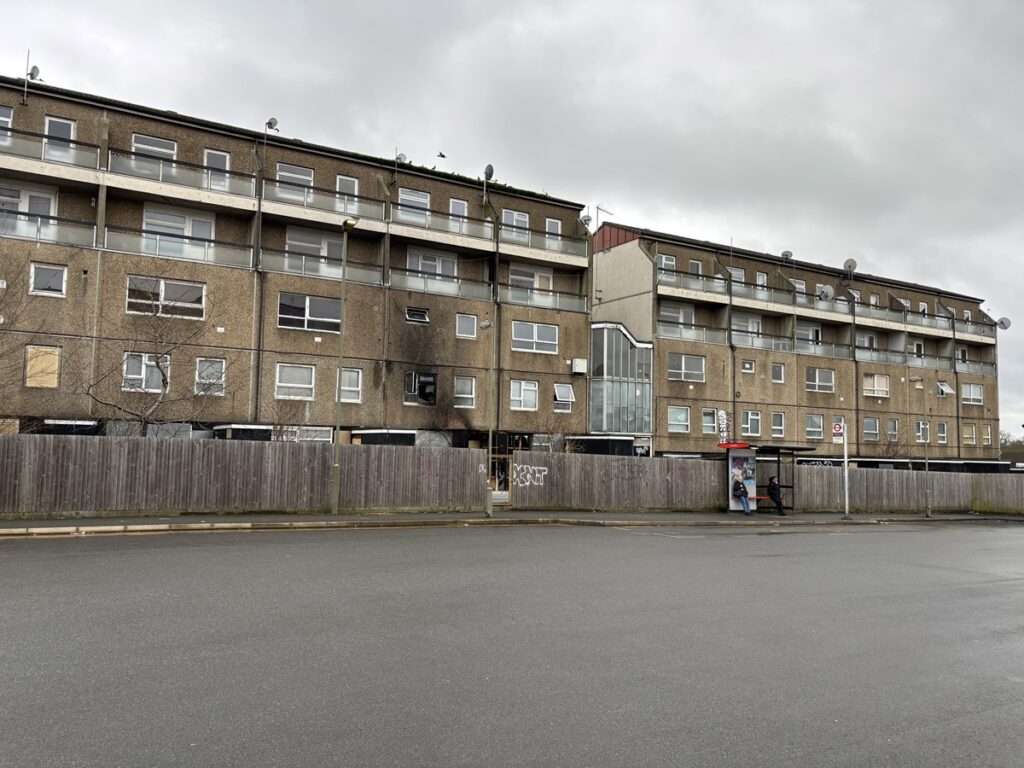
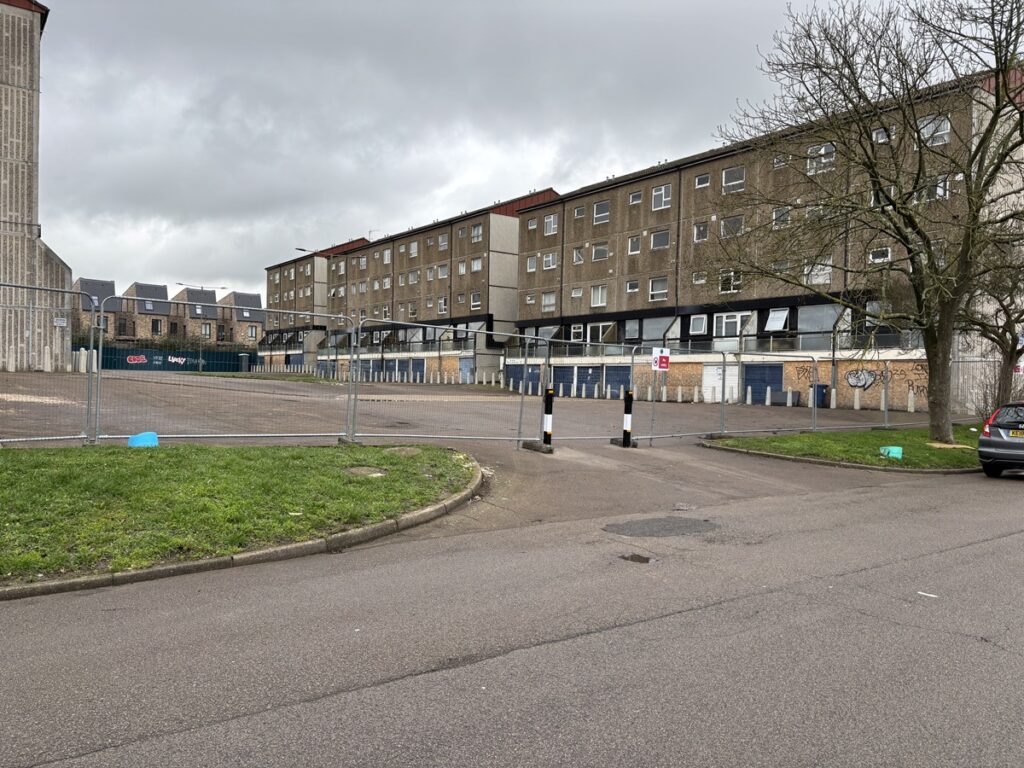
Demolition of the remaining 1960s high-rise blocks and maisonettes will take place shortly. This will allow work to start on another 221 new homes.

The redevelopment had to be halted when the developers told the council that it was no longer economically viable to build the final 221 new homes on the basis of a split between private and social housing.

To get the regeneration of Dollis Valley back on track, the council’s cabinet has decided that the new homes that are yet to be built will now all be socially rented and under the management of Barnet Homes.

However, the failure to continue – as was originally proposed – with the construction of another 128 houses for private sale, will mean that instead of Brook Valley Gardens being a mixed-tenure neighbourhood the estate will become 60 per cent social housing.

This change has angered many of householders in privately owned homes on the estate who are organising a petition to present to a meeting of the Dollis Valley Partnership board at its annual meeting in March.

They say that Barnet Council has failed to hold any consultations about a fundamental alteration to the terms under which they purchased their houses.

“Barnet Council is bulldozing this through and have been keeping residents in the dark over Brook Valley Gardens becoming 60 per cent social housing.”

Private householders are concerned about the future saleability of their properties because mortgage lenders now take into account the percentage of social v private housing on an estate.

Because the original plan was for 50 per cent private housing, high street banks were happy to lend money on Brook Valley Gardens properties but with 60 per cent social housing future owners might be unable to obtain mortgages without resorting to specialised lenders and this could “materially affect property values for existing homeowners.”  

Regeneration of Dollis Valley estate to be restarted with construction of 221 social rent homes to complete Brook Valley Gardens estate following Barnet Council approval

The remaining Mill Bridge and Garrowsfield blocks of flats and maisonettes in the Dollis Valley estate were surveyed in 2024 and were found to have widespread damp and mould.

They were deemed unsuitable for prolonged occupancy beyond December 2025 and the council decided to rehouse the tenants. Demolition is now to due start in the coming months.

The delay in finishing the estate arose because the joint developers Vistry Group (formerly Countryside Properties) and London and Quadrant declared that the original plans were no longer cost-effective.

Vistry proposed an alternative accelerated programme, and the council cabinet has now agreed to purchase 221 social and affordable rent homes from Vistry at a fixed price, subject to securing grant funding from the Greater London Authority.

On completion, Barnet Homes will manage the properties on behalf of the council. Eleven will be wheelchair accessible.

Vistry is proposing to deliver an accelerated programme of construction of replacement homes so that tenants rehoused from Mill Bridge and Garrowsfield can be prioritised to return on completion if they wish to.

Posted on 4 Comments

Request for pre-planning negotiations over possible development of a large housing estate in green belt land off Rowley Lane, Arkley

An application has been made to Barnet Council by a housing developer seeking permission to start discussions on building up to 300 homes on 17 acres of green belt land off Rowley Lane, Arkley.

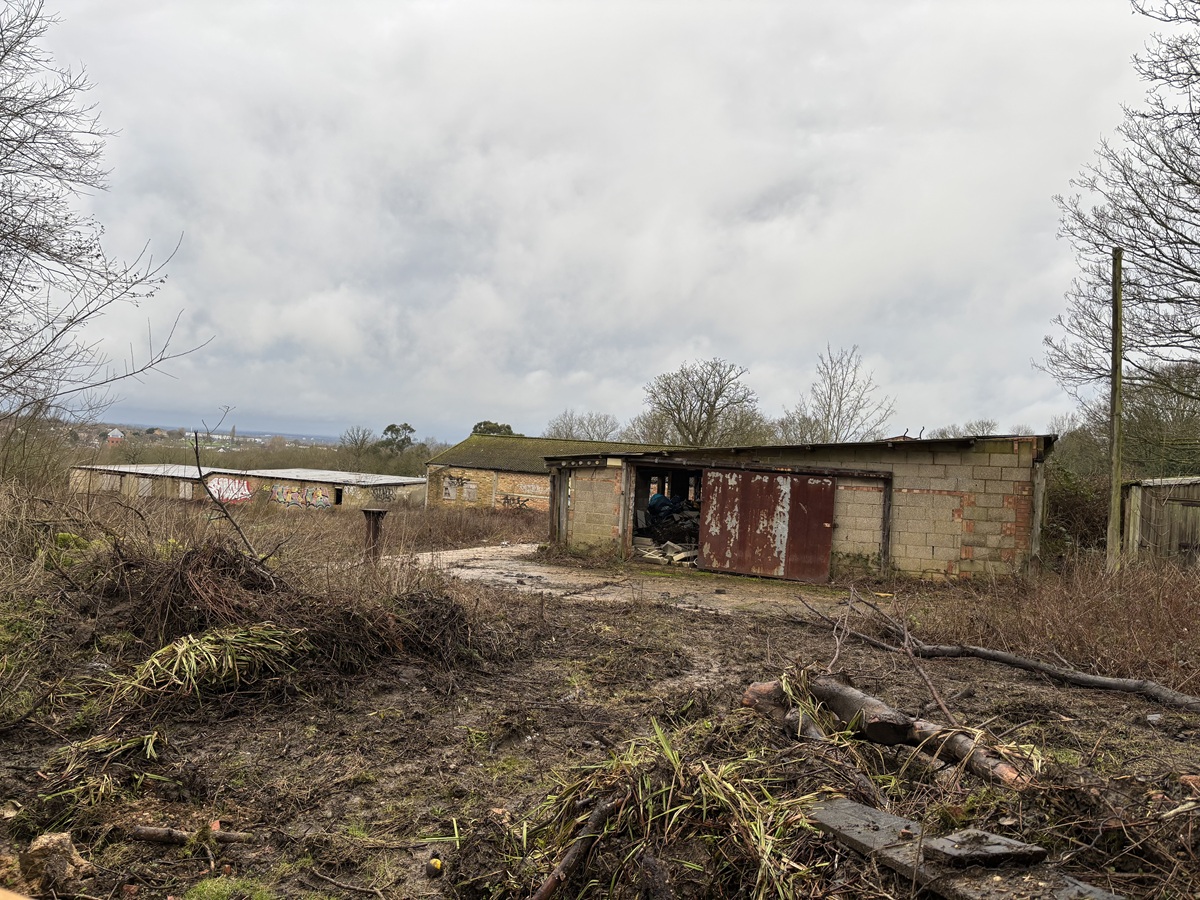
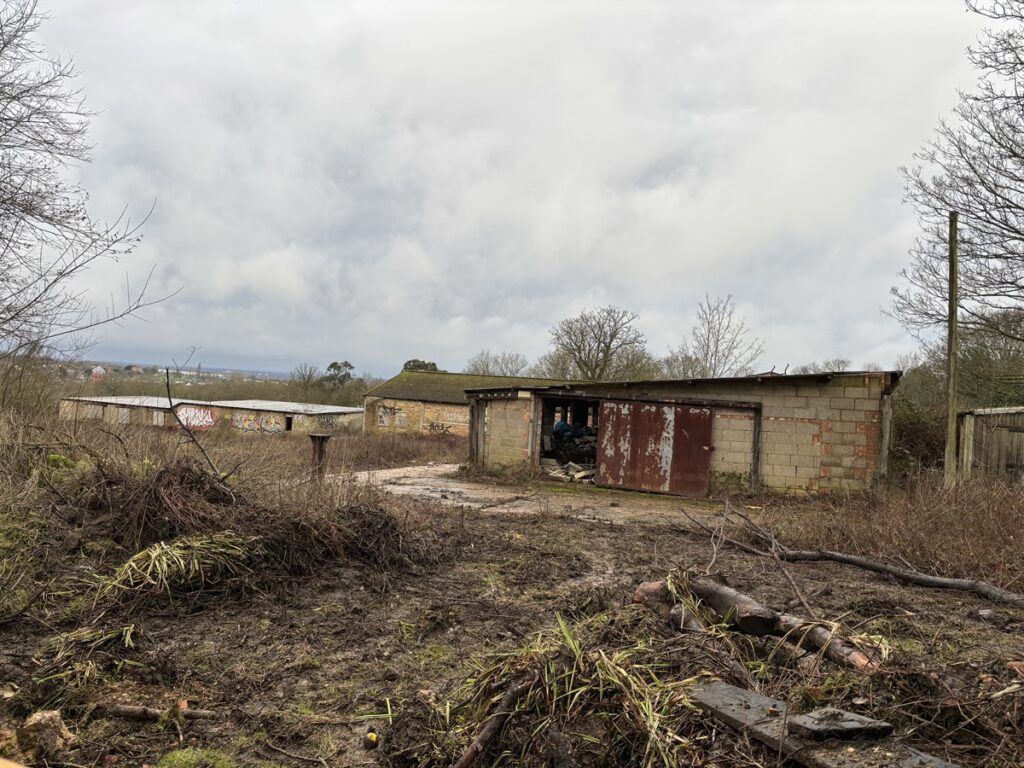
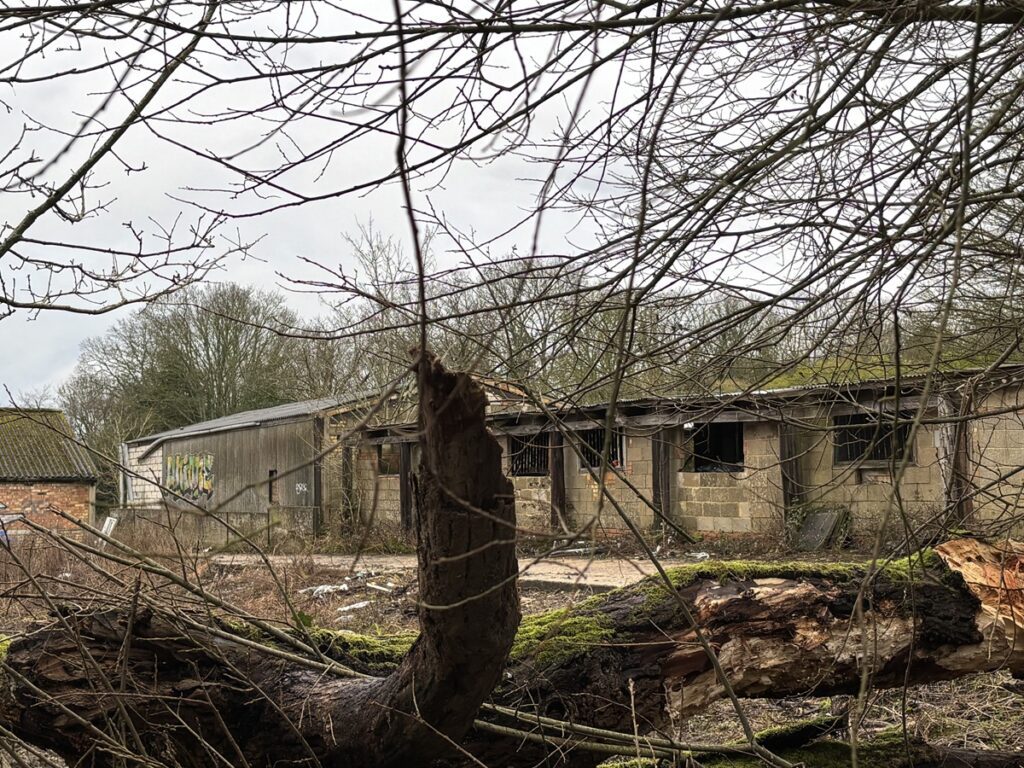
Part of the site was a former pig farm – see above – and the proposed development would take place in woods and scrubland between Rowley Lane and the A1 Barnet by-pass to the north of the Stirling Corner roundabout.

Bugler Homes of Rickmansworth is hoping to take advantage of new government guidance which came into effect a year ago and which allows for the release of some green belt land for housing.

Where there is green belt land which was “previously developed” and which does not “strongly contribute” to limiting urban sprawl, it can now be deemed grey belt land and can be developed for housing and other needs.

Arkley’s community group – Arkley Association – has been informed that Bugler Homes is at “an early stage of exploring opportunities to bring forward a grey belt application”.

The site has been purchased unconditionally by the company which says an assessment of the site indicates that it that would meet the criteria for grey belt approval.

Its “initial vision” is to build approximately 230 homes, with 50 per cent affordable housing; an 80-bed care home; publicly accessible green spaces and allotments; and improved public right of way footpaths.

“We want to work with the community to ensure the proposals reflect Arkley’s character and identity, help address local needs, and contribute positively to village life.”

Bugler has asked for a meeting with the association to discuss its proposal – a plan which has shocked and surprised many Arkley residents.

They fear that if approval is given it could connect to another large site closer to Stirling Corner which has been vacant since the demolition of a former police academy.

“Before we know it approval will have been given for housing on the whole of the triangle of land between Barnet by-pass, Barnet Road and Rowley Lane,” said one resident.

“That would desecrate the green belt, damage the village surroundings of Arkley and would lead to even more urban sprawl between Borehamwood and Barnet.”

Most of the houses in and around Arkley village are individual detached properties and except for Rockways off Barnet Road there are no significant housing developments.

If approval was given for up to 300 homes off Rowley Lane it would be Arkley’s first housing estate.

The 17-acre site which includes the former Rowley Bank Farm is to the rear of houses in Amethyst Close – see above – at the junction of Rowley Lane and Rowley Green Road.

Bugler Homes has asked to meet representatives of the Arkley Association which says it will now hold an extra-ordinary annual meeting to decide what action to take. Other interested groups will be invited to take part.

Government guidance on green belt land which might now be redesignated as grey belt says that this applies particularly to “previously developed” land such as the site of dis-used petrol stations or abandoned car parks.

Arkley Association informed of pre-planning application to build up to 300 homes on a 17-acre site off Rowley Lane. Bugler Homes to have discussions with Barnet Council.

The Arkley site includes abandoned buildings from the former pig farm – which have more recently been used for storage – and extensive hard standing.

When considering Bugler Homes’ plan, Barnet Council will be required under the government’s national planning policy framework, to assess the contribution which the site makes to the green belt and whether a grey belt approval would result in the remaining green belt in the area being “fundamentally undermined”.

Posted on 3 Comments

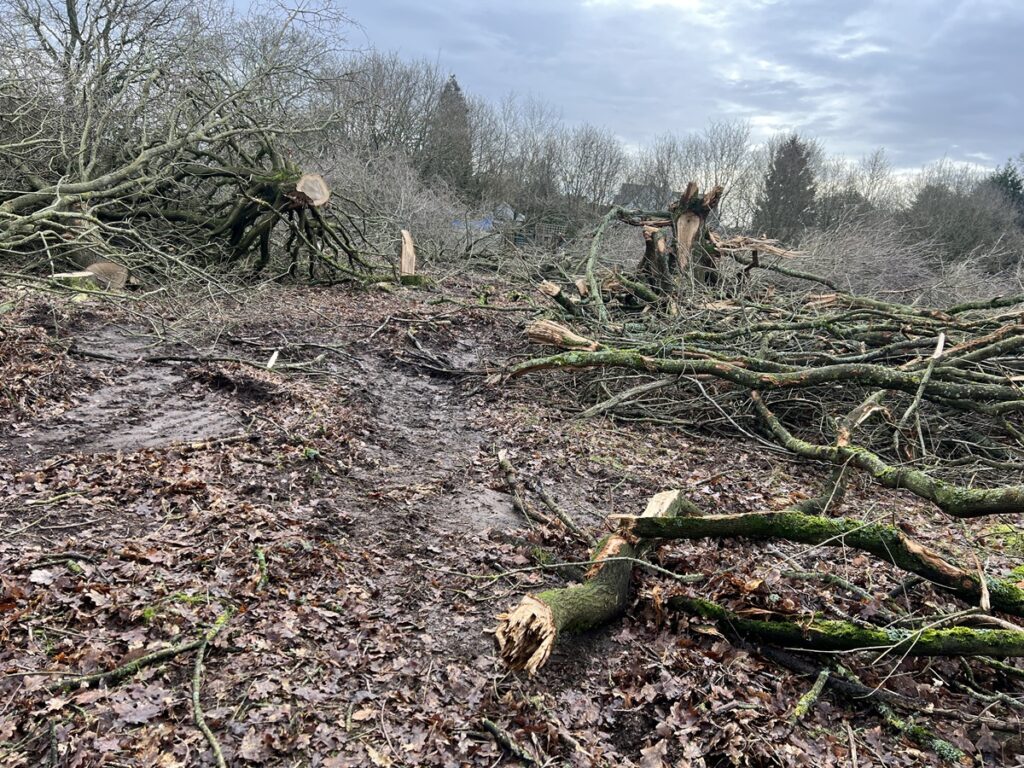
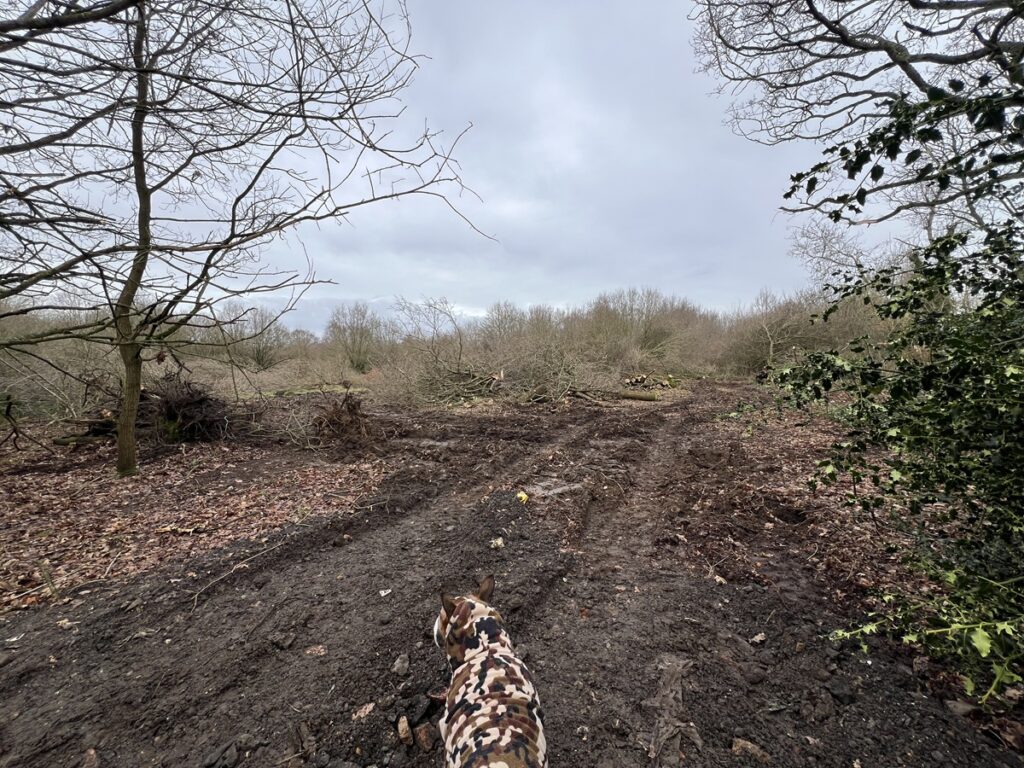
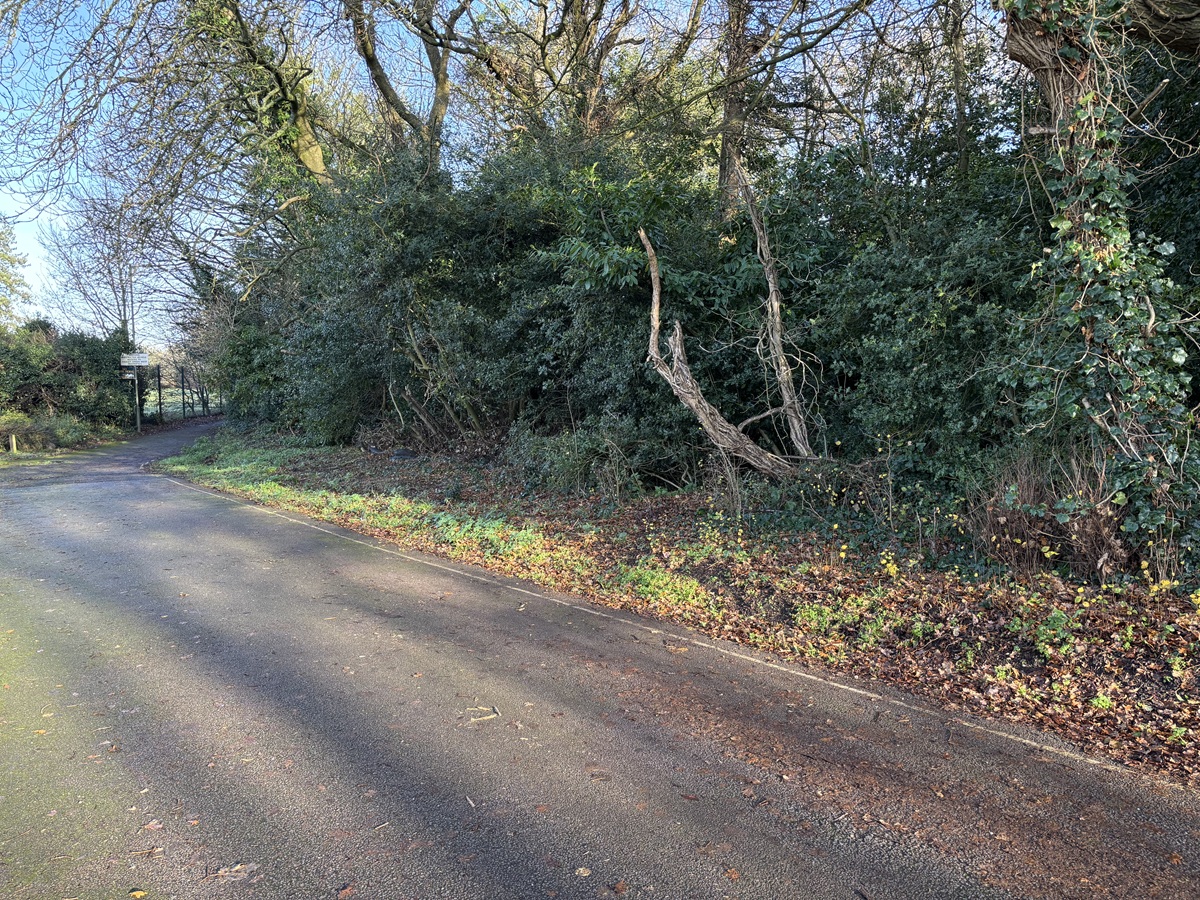
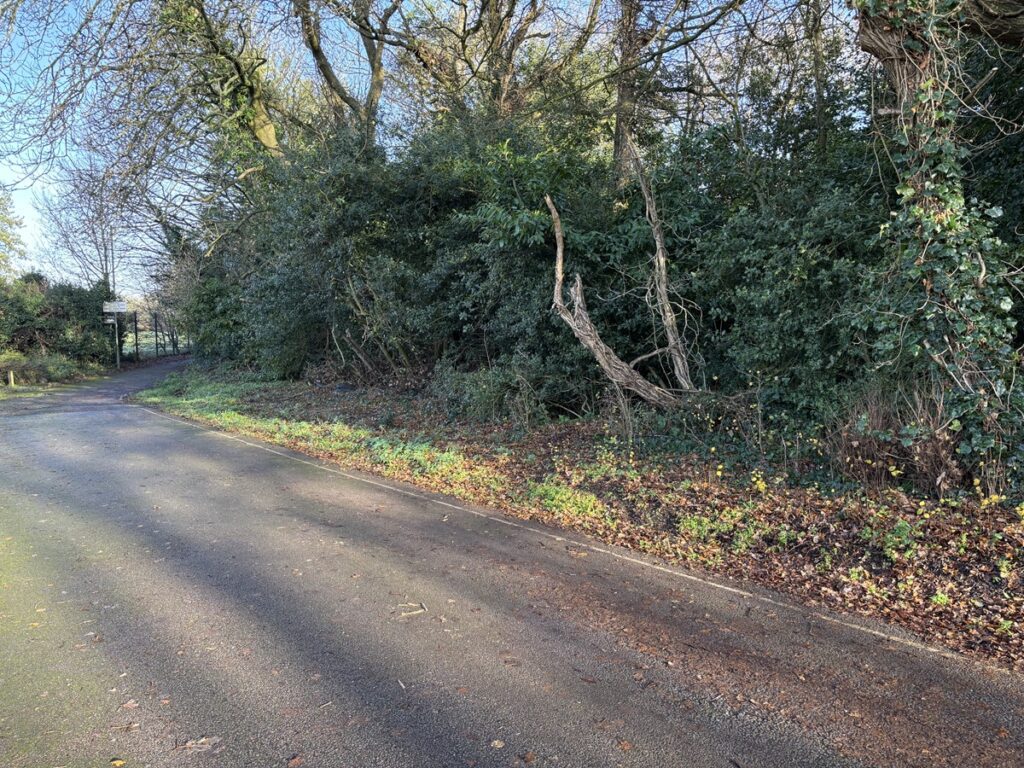
Unauthorised tree felling in protected woodland at Arkley has angered residents who fear a covert attempt to secure residential development

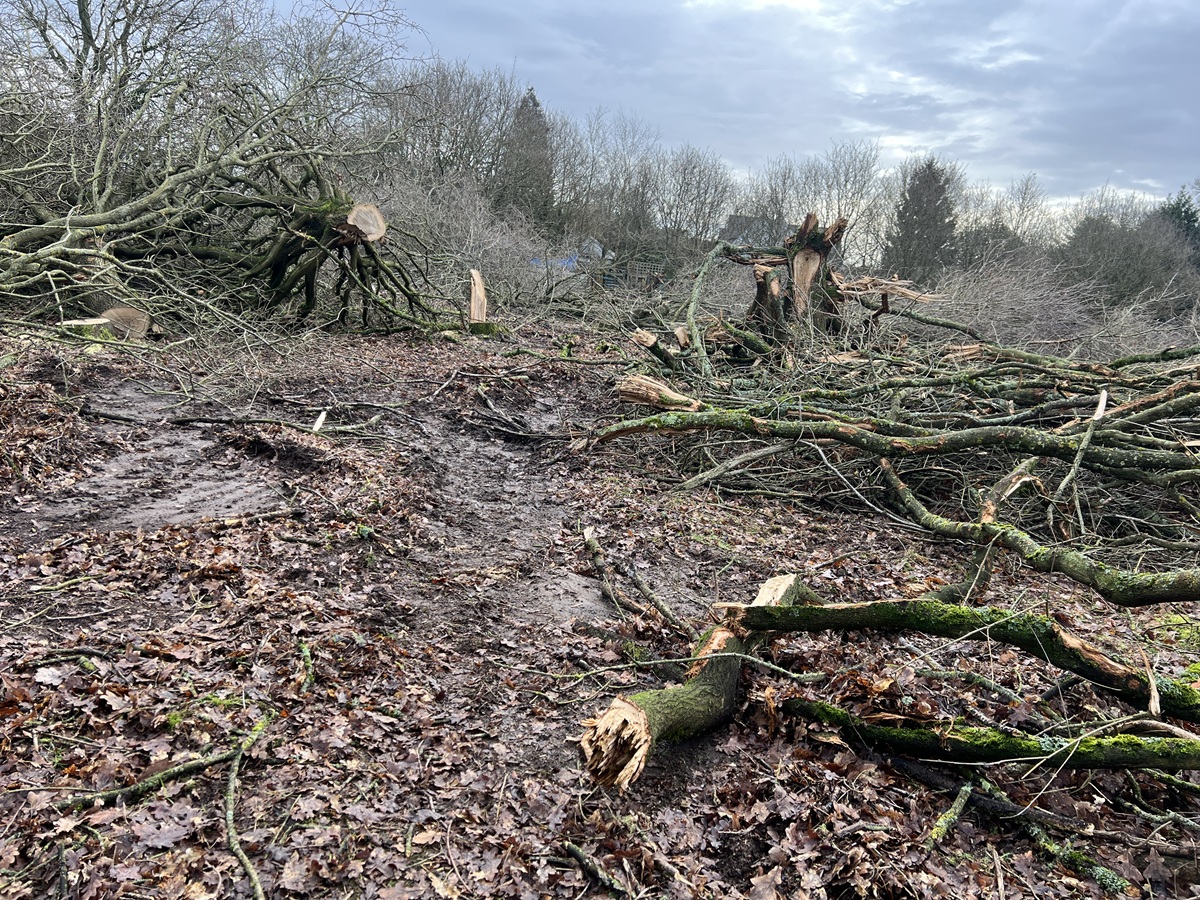
Arkley residents who have been campaigning for several years to safeguard woodland in Rowley Lane were shocked to see protected trees being felled across a one-acre plot – and their anger increased still further when Barnet Council apparently failed to take immediate action to stop the clearance.

They say it took the council’s tree protection team over 24 hours to intervene and by then most of the trees had already been cut down. Only a few that had been badly hacked about were still standing.

The plot where the clearance has taken place is part of a ten-acre woodland which is protected by a special nature conservation order designed to protect it from any land use change which might damage a protected habitat or species.

The residents fear that if developers get their way the woodland will be turned into sites for new houses.

Once this Green Belt land has been cleared of trees, the concern in the surrounding community, is that Barnet Council might be more likely to grant planning permission, despite approval having been refused in the past.  

When an adjoining one-acre plot was cleared in 2023 without permission the residents succeeded in obtaining a tree preservation order covering the whole site.

The wording of the nature conservation order was also strengthened to reflect the character of the land as “wooded with open glades of grass or scrub”.

The woodland, which is at the rear of Rowley Lodge, was sold off by a previous owner of the house and was subdivided into ten separate one-acre plots which were sold for a combined total of £1.3 million.

What has so angered the residents is that they say nothing happened on the day they complained to the council (18.2.2026) and when they notified the council again the following morning (19.2.2026) the protection team did not arrive until the afternoon.

“Within that 24-hour period the trees had been cut down. It is devastating. We now have Arkley’s very own Sycamore Gap; a woodland left with a gaping hole. It is a tragedy,” said one distraught resident.

Workmen who were challenged by the residents said the one-acre which was being cleared was being subdivided into three plots for houses.

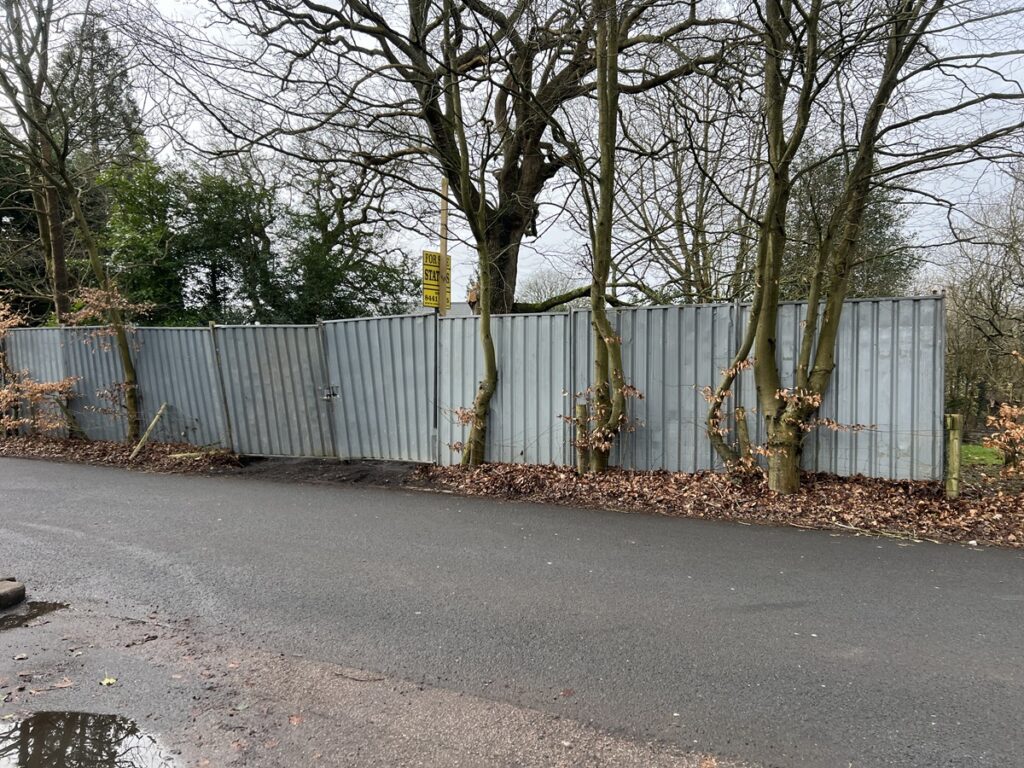
“We have been assured planning permission will not be granted because it is Green Belt but the boarded off entrance to the woodland already has an agents’ sign indicating that plots are for sale.

When the ten acres were first sold off, five of the individual acres were purchased by householders whose properties backed on to the land and who were determined that it should be preserved as a woodland.

Two of the five acres in the hands of individual plot holders have now been cleared without permission and residents fear that there might be an attempt to prepare the other three acres for residential development.

Residents have appealed to Barnet councillor Emma Whysall to intervene of their behalf.  

(Photos supplied by residents)

Posted on 1 Comment

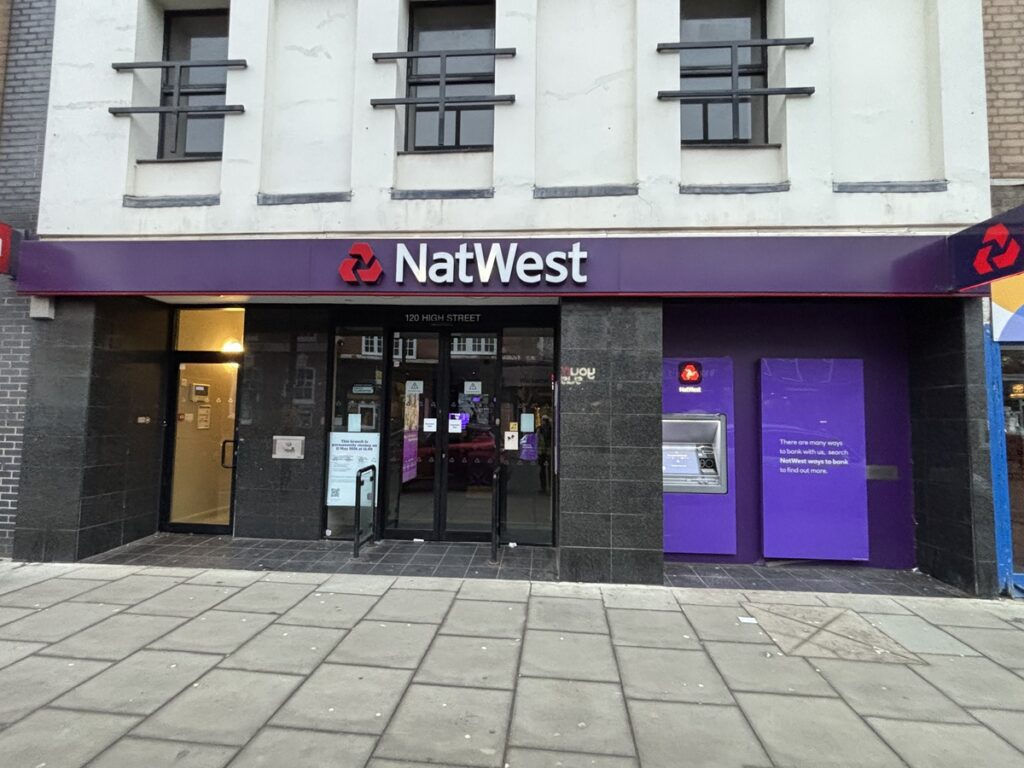
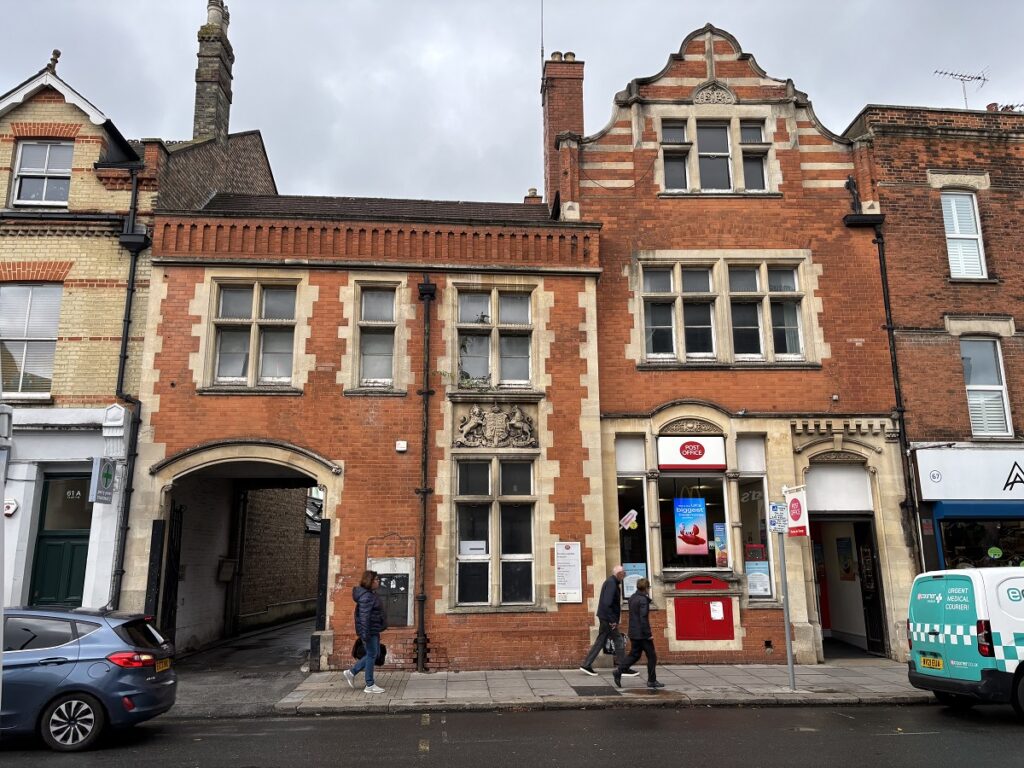
NatWest is closing its High Street branch following other big banks which have already pulled out of High Barnet

Barnet town centre is to lose one of its four remaining banks – and customers feared another might be going as well – as the big banks announced another massive round of branch closures.

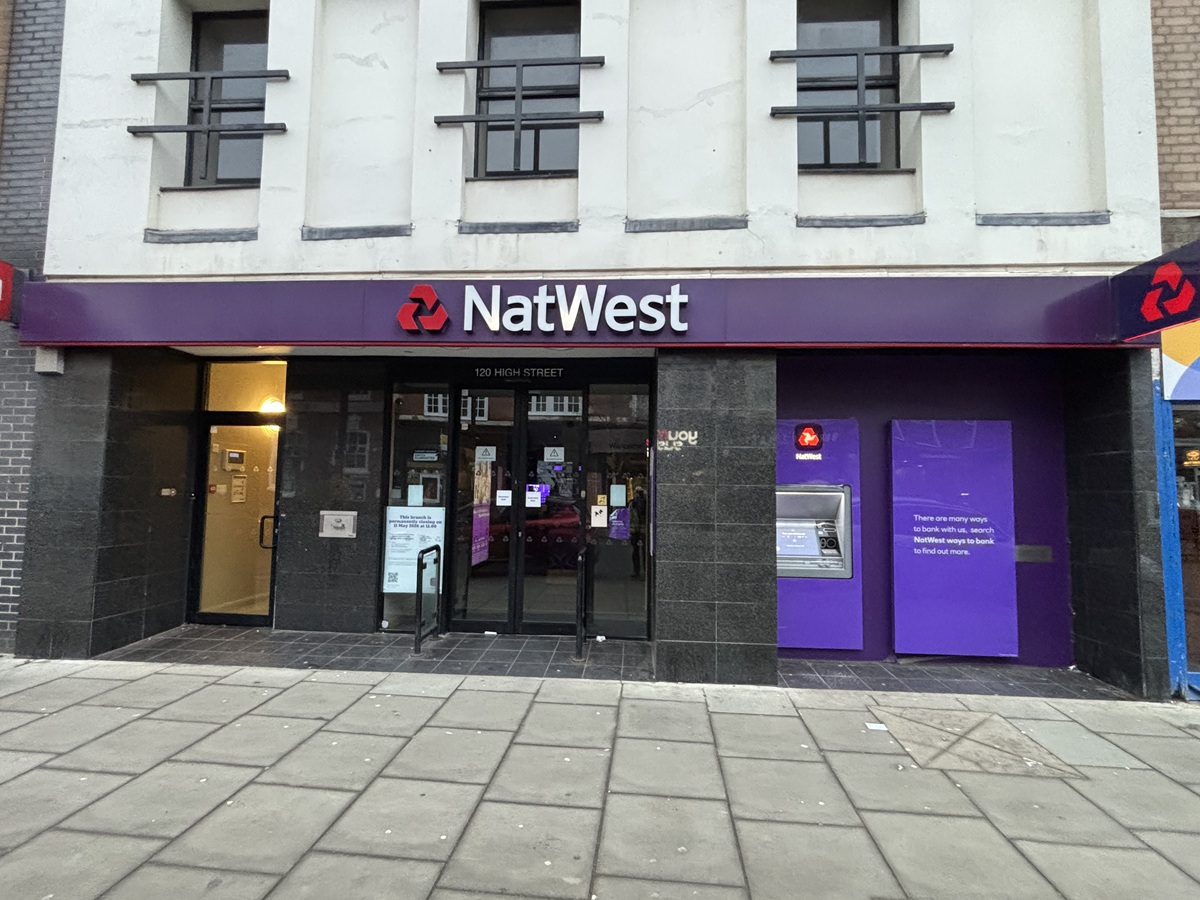
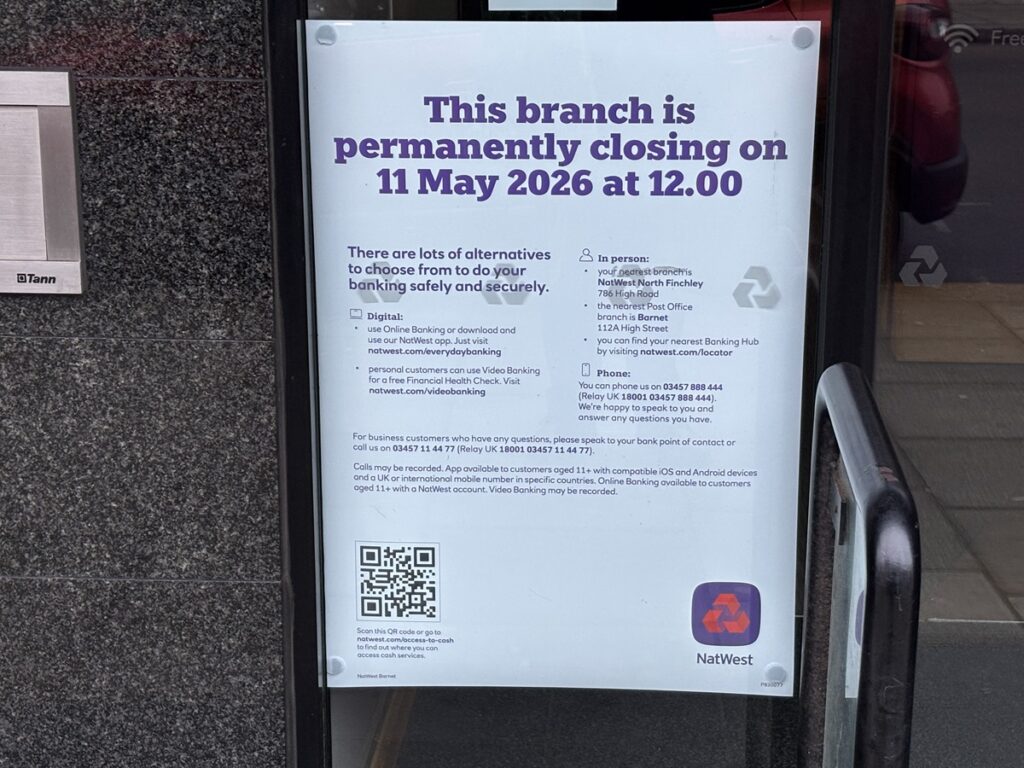
NatWest is to close its branch at 120 High Street on Monday May 11 this year, one of 32 closures to take effect by 2027.

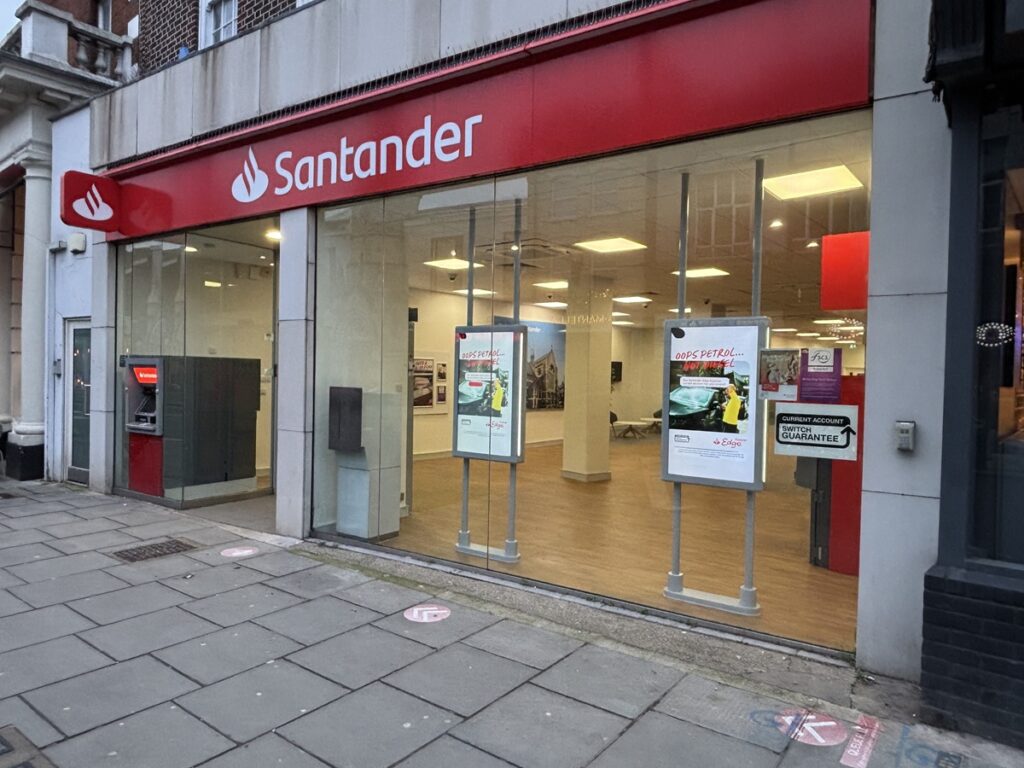
But despite Santander announcing 44 branch closures across the UK, the bank’s Barnet customers were relieved to see that their branch in the High Street is not on the closure list.

The closure notice on NatWest’s front door says the branch will be closing at 12noon on May 11.

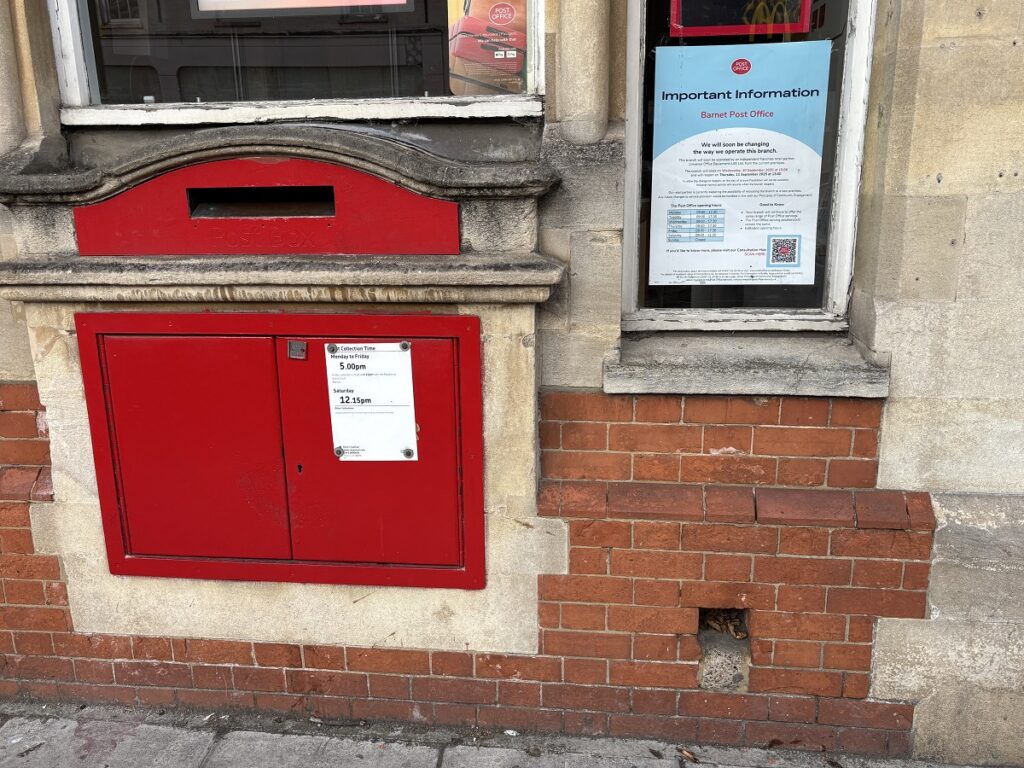
Customers are advised that the nearest NatWest branch will be at 786 High Road, North Finchley, and that cash withdrawals and deposits into bank accounts can be made at Barnet Post Office.

NatWest closed its Borehamwood branch in 2022 followed by Potters Bar the following year.

Barnet’s Santander branch – which was recently refurbished – was feared to be at possible risk because the Borehamwood and Finchley branches both closed last year.

NatWest to close its High Street branch following in the wake of other big banks pulling out of High Barnet. Only three banks remain in the town centre.

Halifax closed its Barnet branch in 2024, and alterations are being made to the ground floor of the building which is to become a Lemoge health and beauty clinic.

An application has been made to convert the upper floors of the former Halifax building into four self-contained flats.

The loss of Halifax and now NatWest follows in the wake of other closures – HSBC closed in 2021 and the building now a Gail’s Bakery, and the former TSB branch has become a Costa coffee shop.

The one High Street bank which has made a promise to retain its town centre branches is Nationwide which gave a pledge in November that it would keep everyone of its 696 Nationwide and Virgin Money branches open until at least 2030.

Posted on 2 Comments

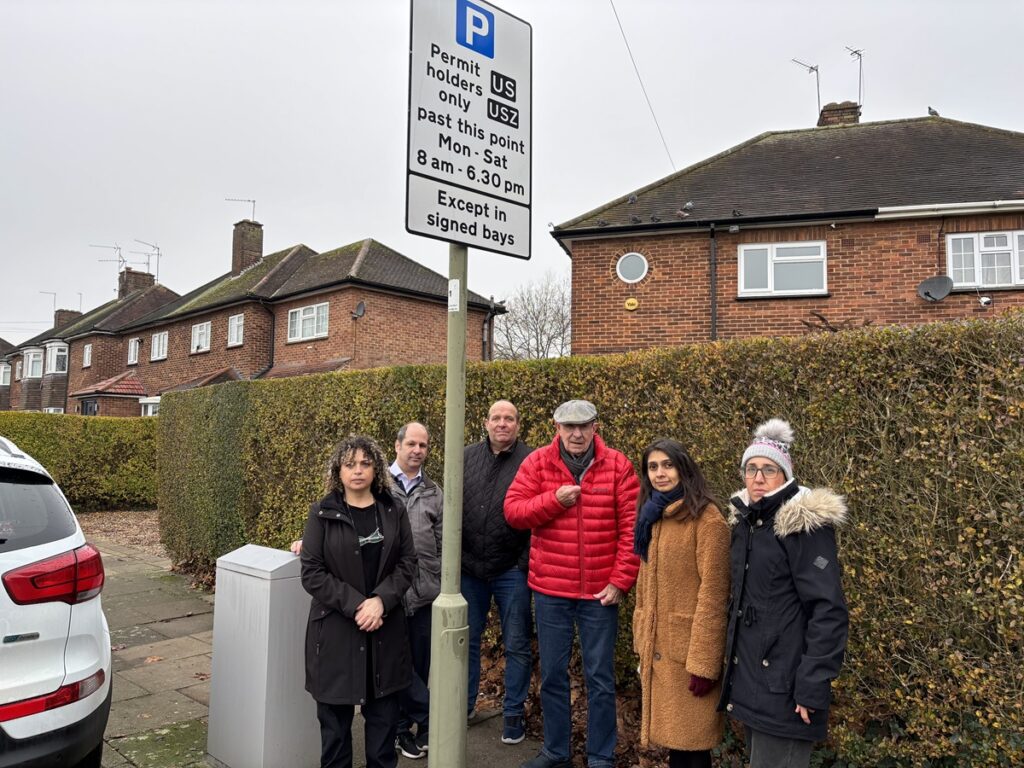
Despair among Mays Lane traders as introduction of pay-by-phone parking charges leads to a dramatic loss in customers

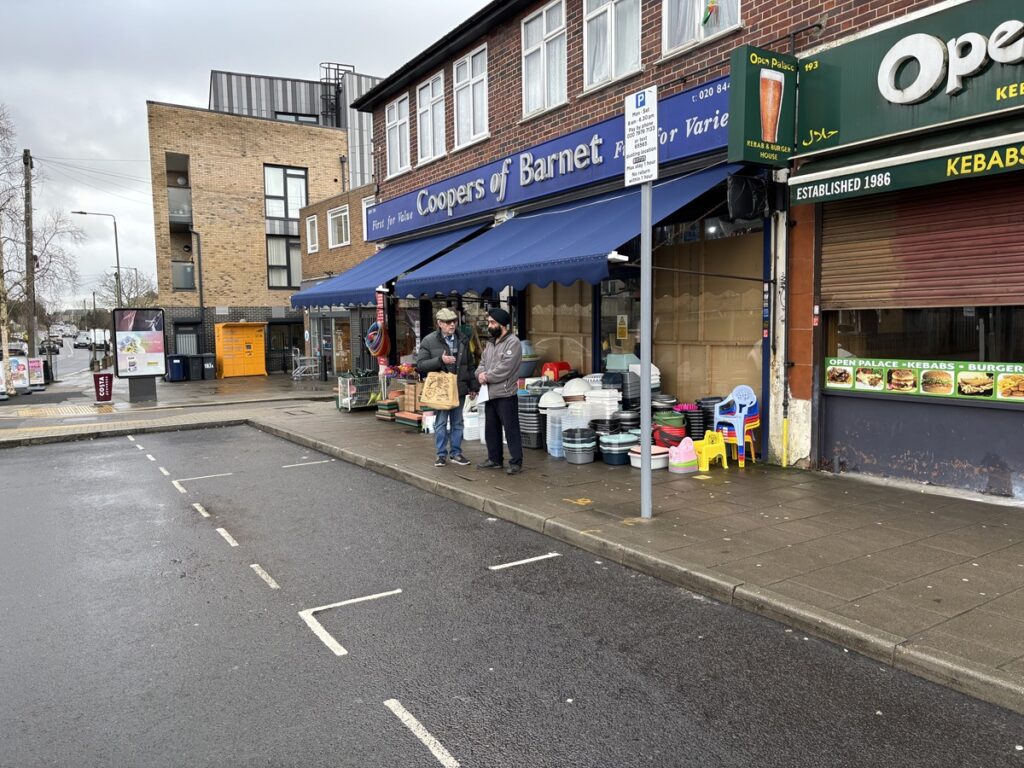
Long-established businesses fear they might have to close unless Barnet Council can be persuaded to drop parking charges which were introduced in mid-December outside the Mays Lane parade of shops.
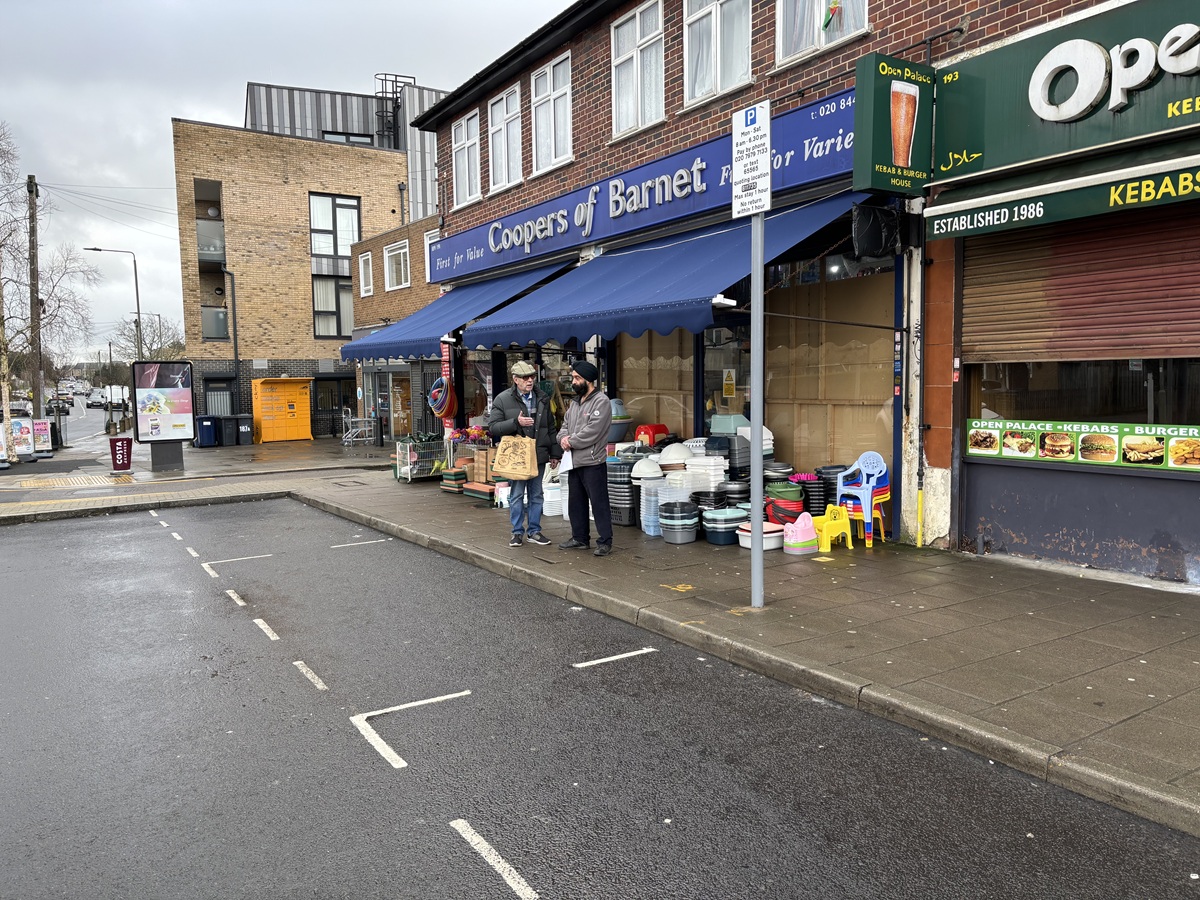
Coopers of Barnet say trade is down by 40 per cent in the last six weeks since the withdrawal of free parking in the service road outside their premises.

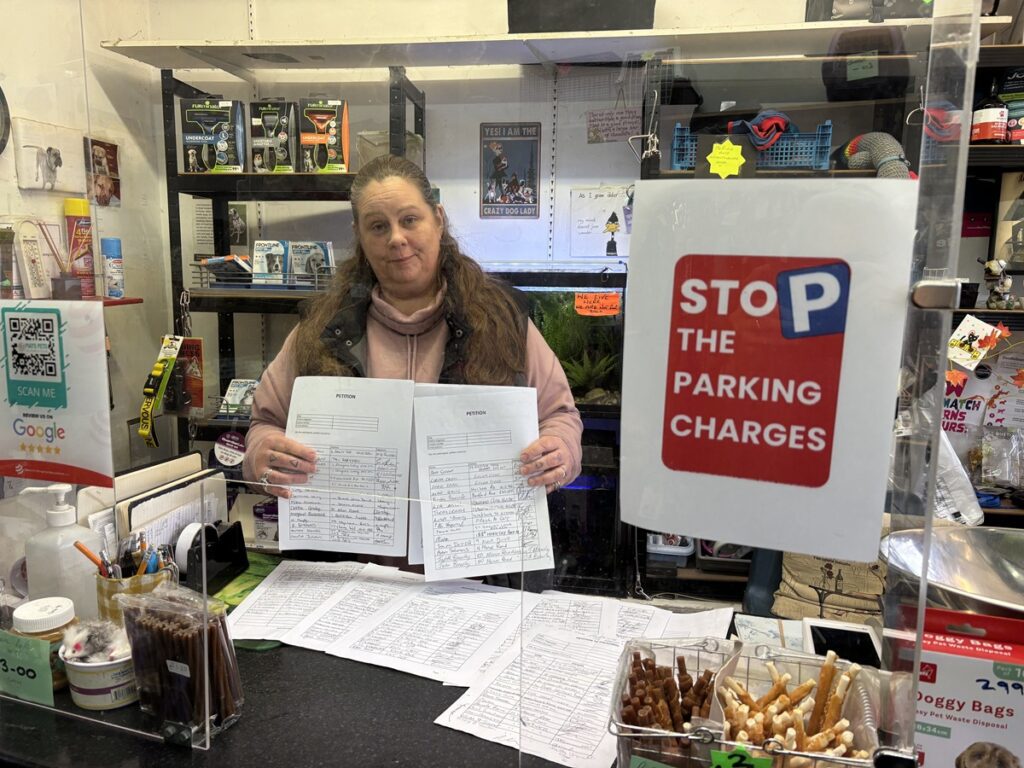
Well over 1,500 residents and shoppers have signed a petition organised by Denise Bagge, proprietor of Mays Lane Pets, to protest at the charges.

The Mays Lane shop owners say the council could easily introduce a scheme allowing free parking for 20 minutes or half an hour which would be more than enough time for most customers.

In calling for a re-think, the Mays Lane traders are adding their voice to mounting anger over parking restrictions and charges which have been imposed as part of the Underhill South Controlled Parking Zone.

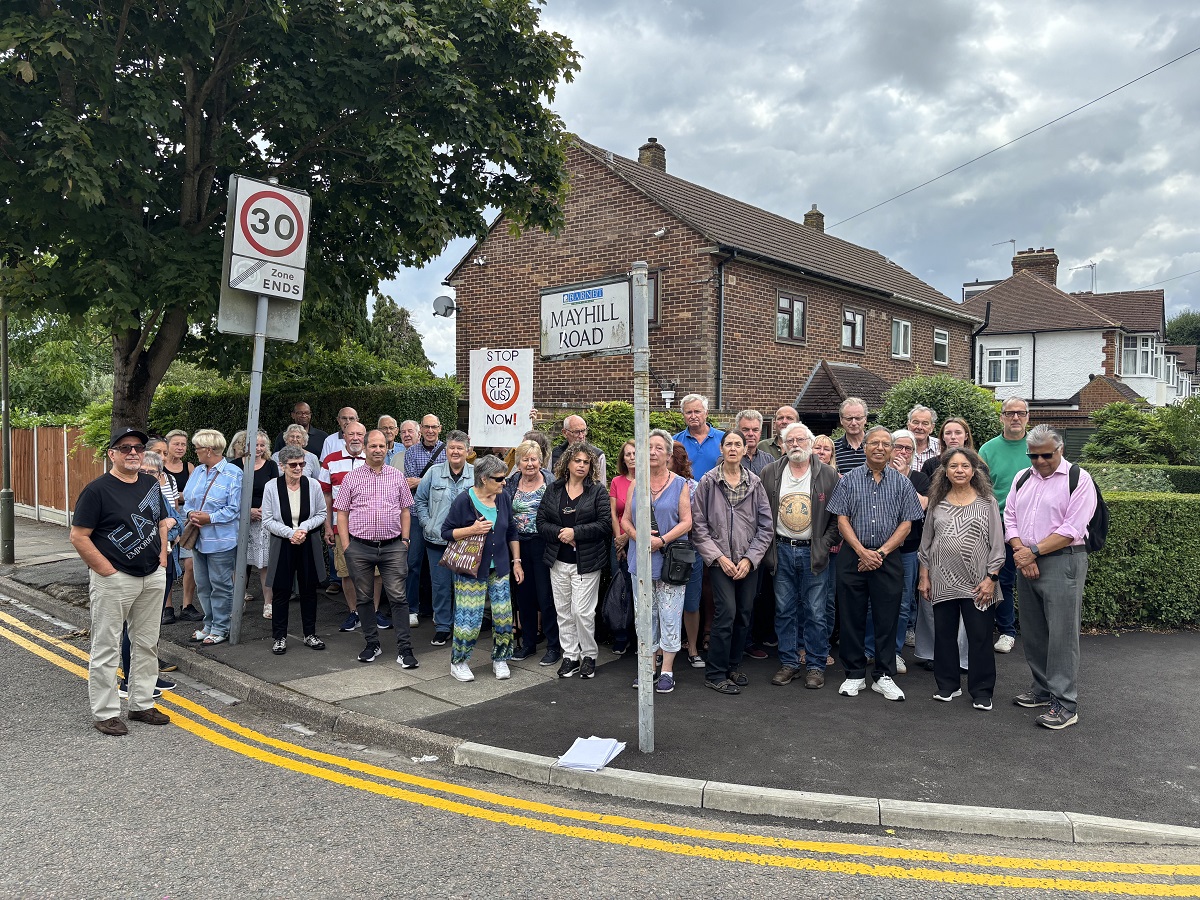
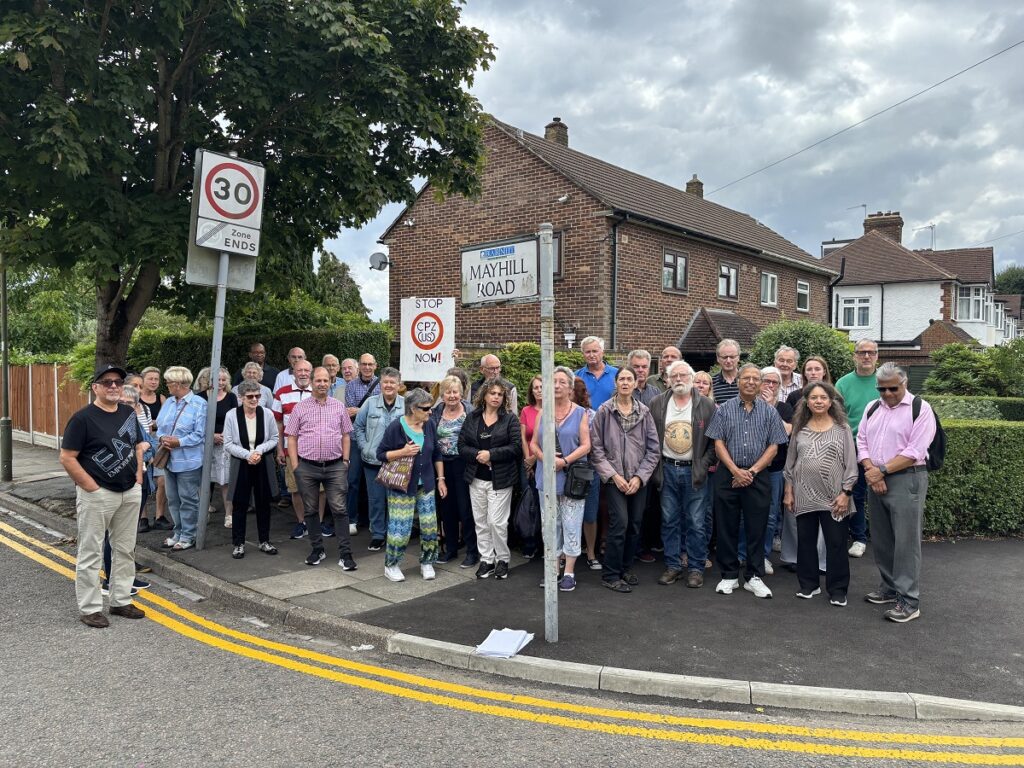
Despite opposition from 85 per cent of householders – and pleas from staff and parents at Whitings Hill Primary School – the council went ahead with the introduction of an 18-month experimental CPZ in 16 roads off Mays Lane and on either side of Chesterfield Road.

Residents can have their say during a six-month consultation period which ends of Sunday 14 June by which time the Quinta Green Residents Association and the Underhill Residents’ Group intend to have completed their own in-depth surveys and consultation to demonstrate the strength of opposition to the CPZ.

Mays Lane Pets launched the petition which is available for signing at neighbouring shops in the parade and online. (For more information email mayspets.co.uk

Shop assistant Sarah Burley (above) said they have been amazed by the response and are appealing to the Chipping Barnet MP Dan Tomlinson to visit the parade and give his support.

“This is just a money-making exercise for Barnet Council. Instead of getting tough with Barnet Hospital and forcing the hospital to build a multi-storey car park, we are all having to suffer just because there isn’t enough parking space for hospital staff, patients and visitors.”

There used to be free parking space outside the Mays Lane parade for a dozen or perhaps as many as 15 cars at time, but that has been reduced to five bays with pay-by-phone charges at the top rate for on-street parking in the borough.

“The effect on our trade has been dramatic,” said Sarah.

“Lots of elderly customers used to stop in their cars and just pop in for items like bird seeds, that sort of thing. But lots of the elderly can’t do pay-by-phone and who is going to pay £3.30 to pop in to buy a bag of doggy treats.”

Mohinder Dhingra, proprietor of Coopers of Barnet, was distraught at the loss of trade for his hardware business.

“If it continues like this, we will have to close the shop. Trade is down by up to 40 per cent since December 15.

“There was never any trouble before with the parking outside the parade.

“Now people are scared to come in. You can’t expect customers to pay a minimum of £1.70 just to park when all they want is something which might cost £1 or £1.50.

“The council could easily introduce a limit, say free parking for 20 to 30 minutes and that would work well for everyone.”

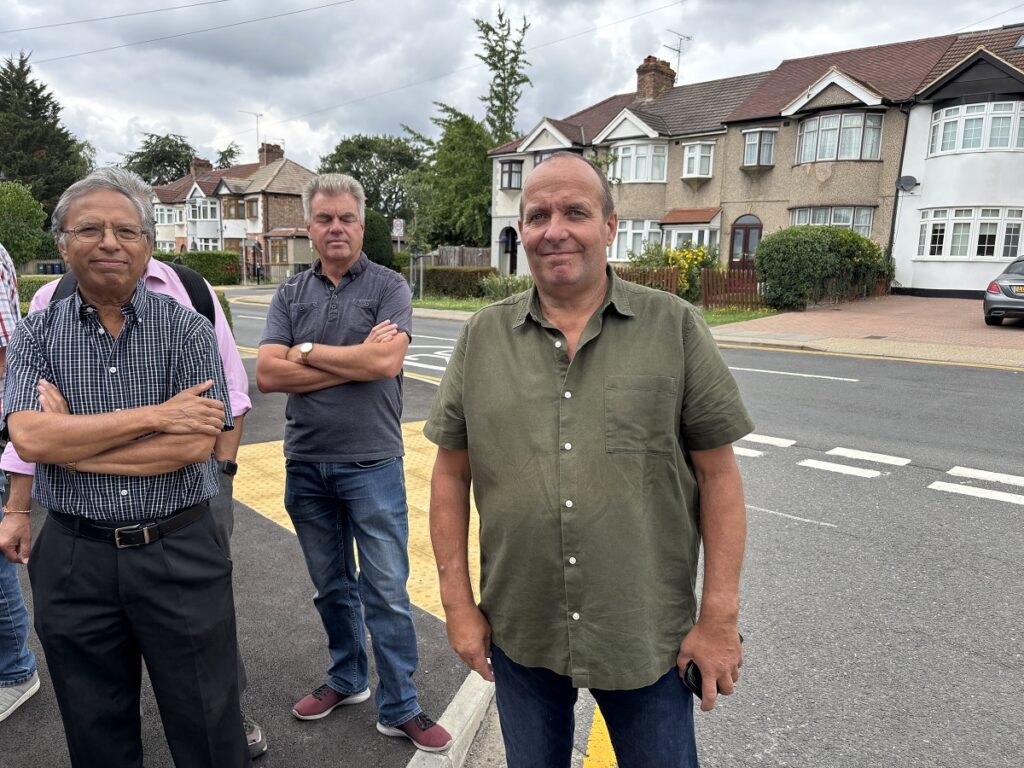
Among those who have signed the petition is Paul Marshall – above with Mohinder Dhingra in top picture – who was formerly a parking enforcement officer.

He thought the charges for such a small parade were unnecessary and felt the CPZ exercise was just a revenue earner for local councils.

“In my day councils used to say the income from parking charges would go back into the local area, but that never happens now. Just look at the potholes round here. The money certainly isn’t being spent improving the roads around here.”

Mays Lane shopping parade businesses fear closures unless Barnet Council drops pay-by-phone parking charges and reinstates free parking

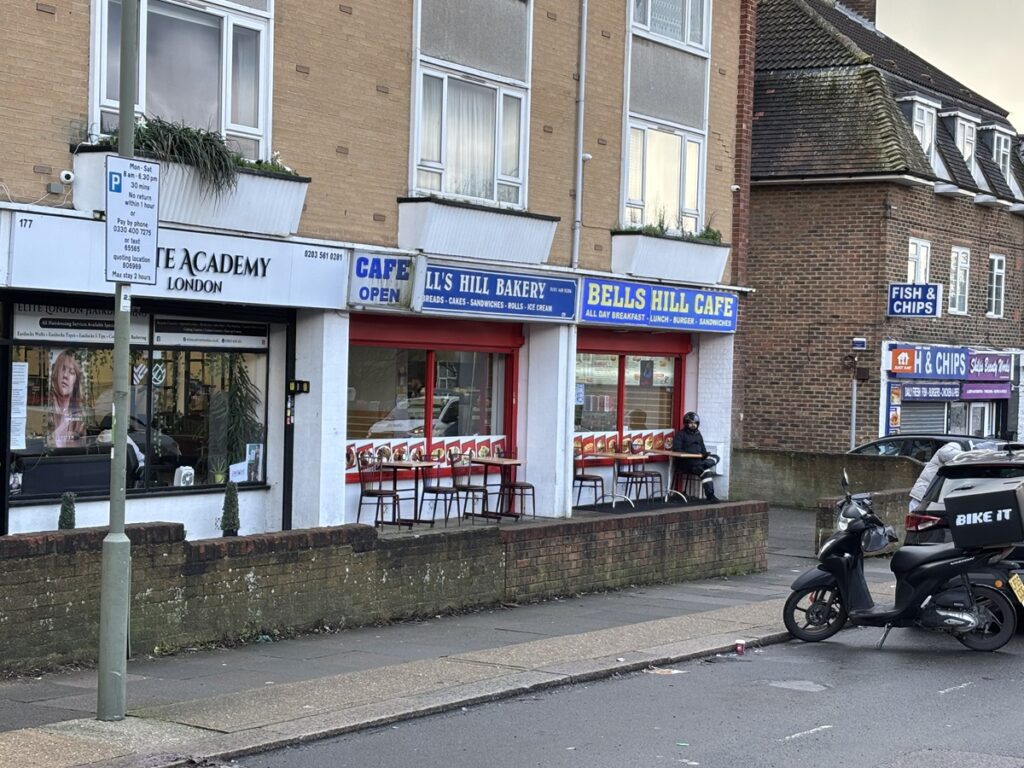
A similar scheme for parking charges has been introduced at the parade of shops in Bells Hill, again part of the Underhill South CPZ.

Quinta Green Residents Association says the justification for the new CPZ is that it is necessary because of the displacement of vehicles caused by the existing and extended Barnet Hospital CPZ.

“But displacement caused by an existing CPZ cannot be used retrospectively to justify another CPZ and we have now found the experimental Underhill South CPZ is generating displacement in roads the council originally excluded from the new CPZ.

“The council’s reasoning is circular. It is simply creating parking pressure through intervention.

“Barnet Hospital does intend to use surplus land to increase its own on-site parking, but the long-term solution is for the Royal Free Hospital Trust to build a new multi-deck car park.

“In the meantime, unresolved hospital demand – and its costs – are being transferred on to residential streets through CPZs, which are the most likely measures to become permanent even if the hospital problem is eventually solved.”

Posted on 1 Comment

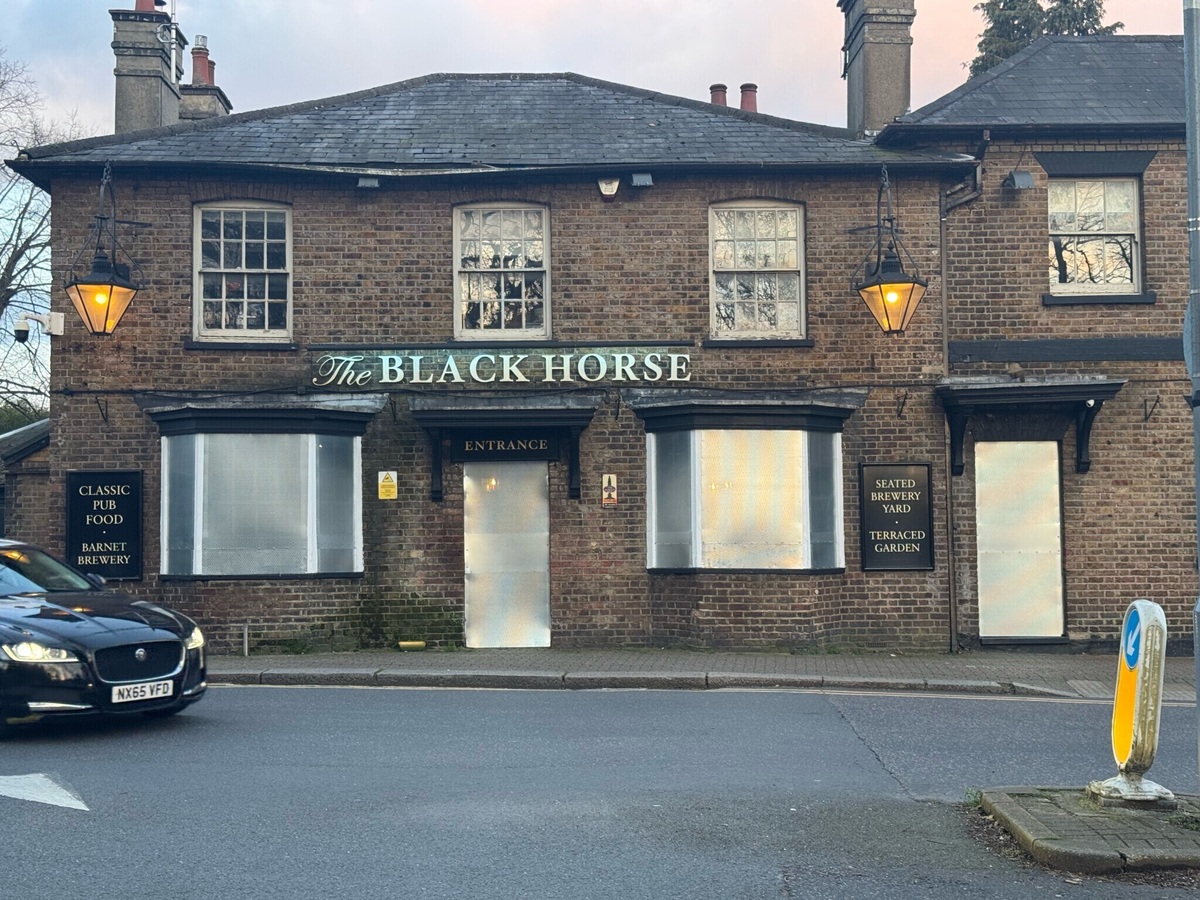
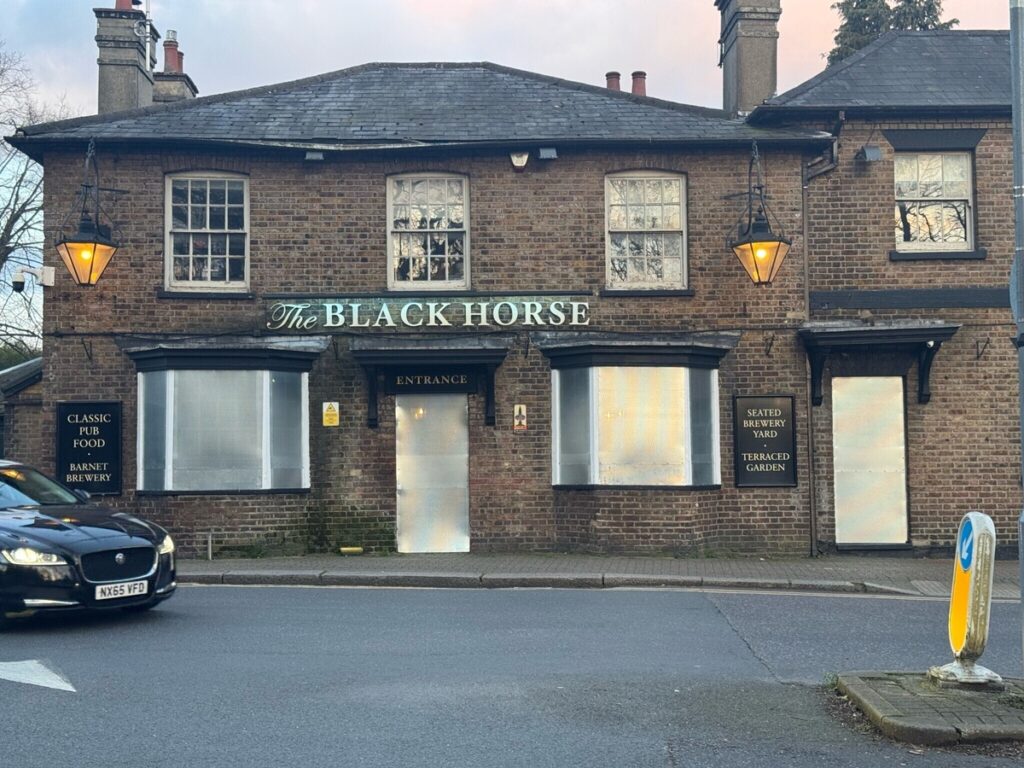
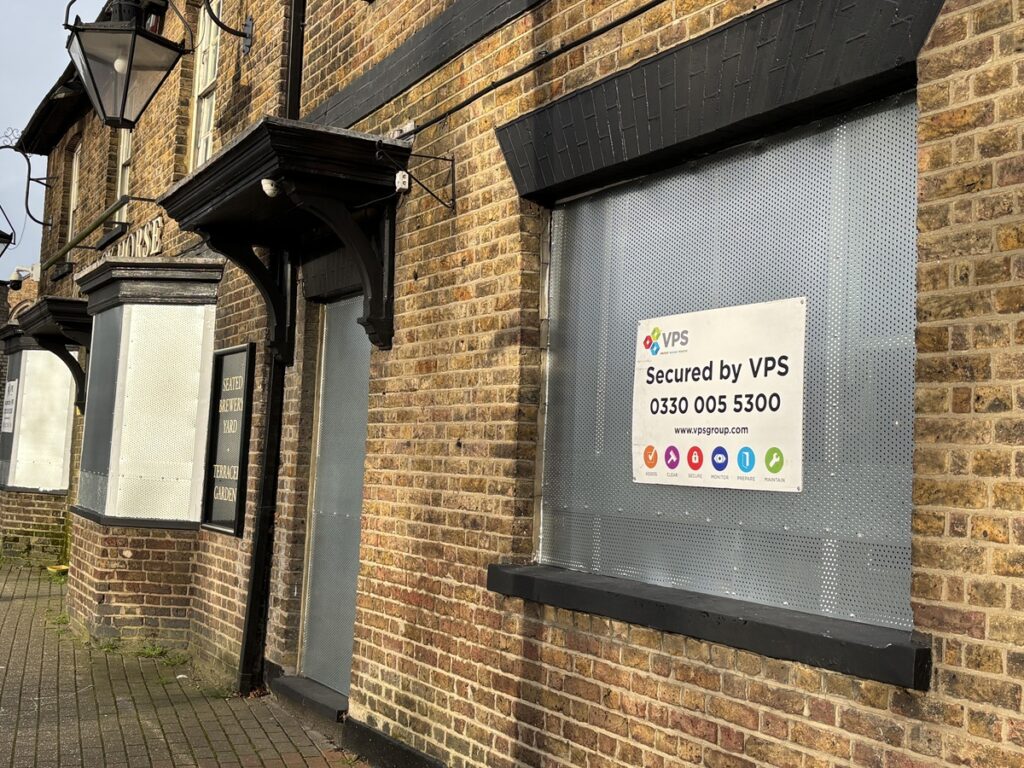
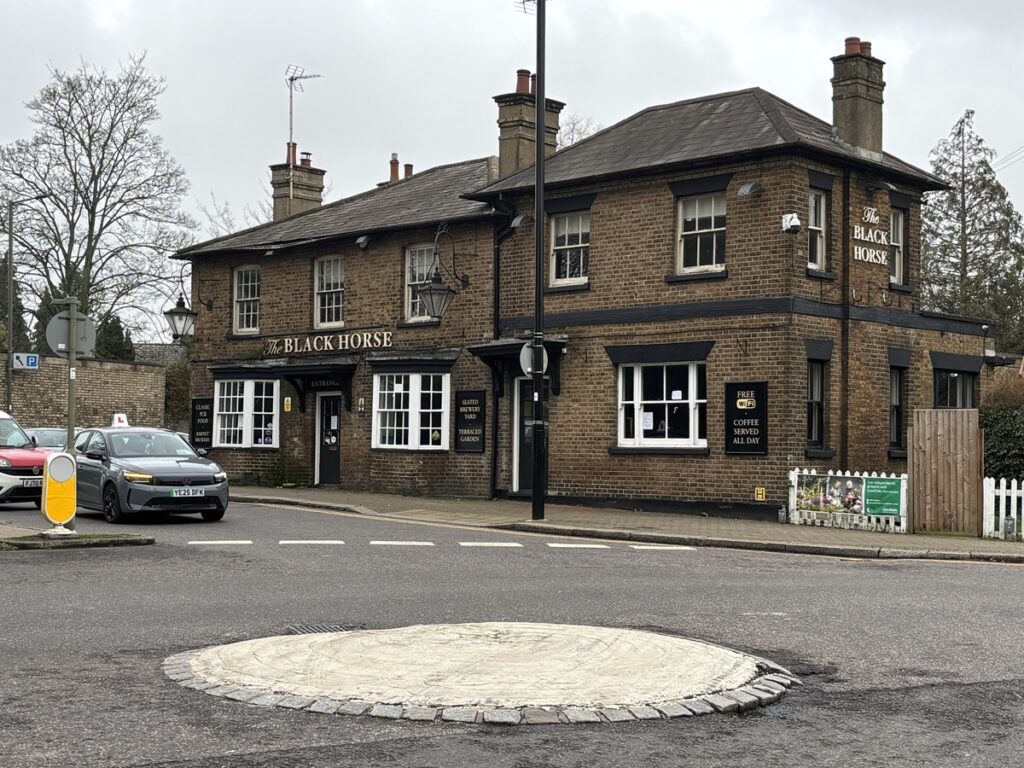
Bid to safeguard Black Horse public house for community use amid continuing doubts about its future despite Star Pubs’ re-assurances

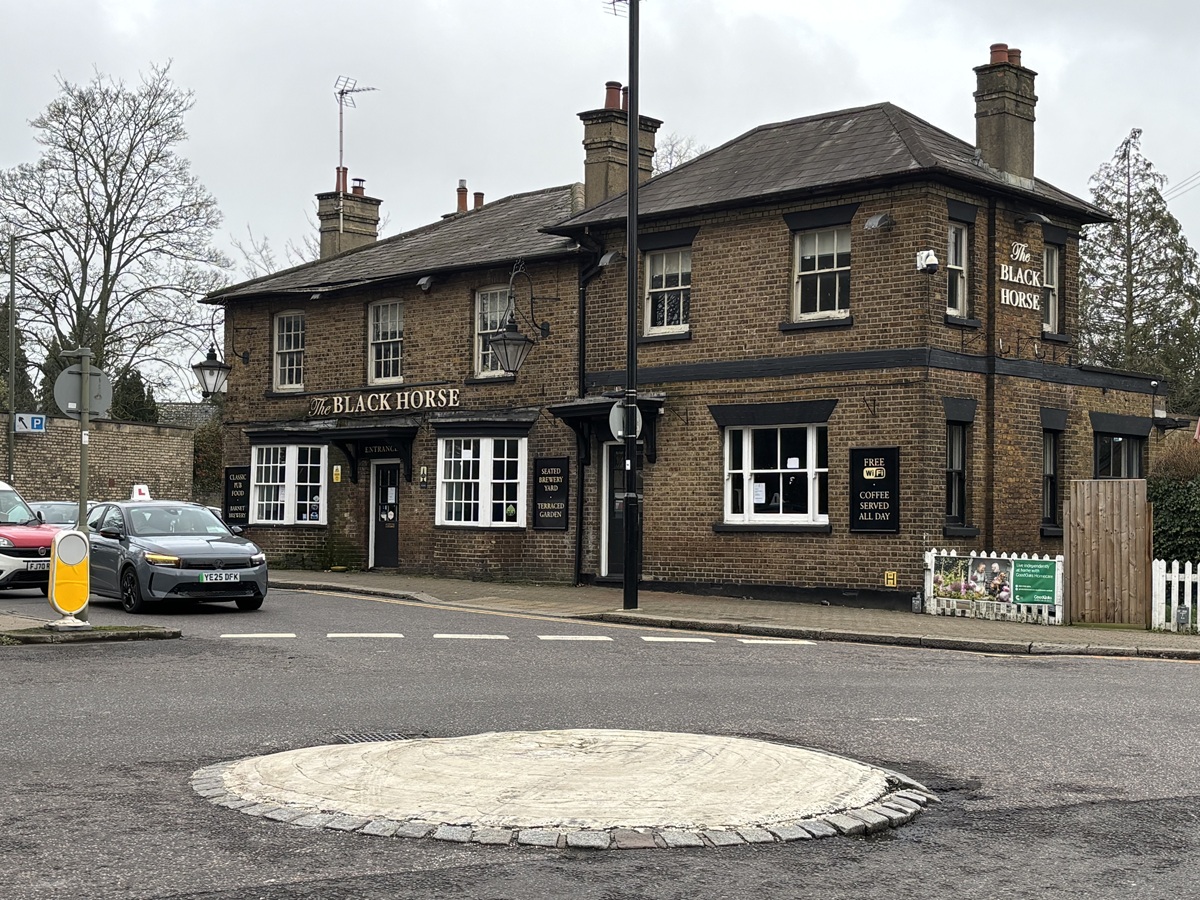
An attempt is being made to safeguard the long-term future of a Barnet landmark, the Black Horse public house, which has been closed to the public since mid-September last year.

Barnet Council is being asked to declare the building an asset of community value which would ensure the community had a chance to buy the property should there be an attempt to sell it for redevelopment.

Star Pubs, which said before Christmas that it hoped to find a new tenant starting in the New Year, has admitted that the company, which is part of Heineken UK, is still has no nearer to saying when the pub might re-open.

“The Black Horse is a much-loved pub, and we are committed to keeping it as such,” said Star Inns in a statement to the Barnet Society.

“We remain keen to re-open it as soon as possible but are unable to provide timings at this stage.

“As soon as we have more information, we will be happy to share it.”

The application for an asset of community value order has been submitted in the name of the Barnet parish church of St John the Baptist on behalf of the community, says Olly Gough.

Olly, who is to be a Labour candidate for the May elections to Barnet Council, has organised a petition to the save pub which has attracted over 3,500 signatures.

Barnet Council has eight weeks to make a decision on the application and, if approved, Olly says the ACV order would given the community “a real say in the pub’s future and help protect it as a proper local”.

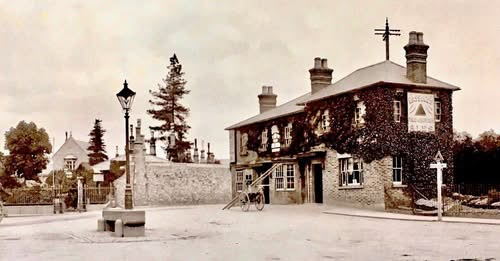
In his campaign to save the pub, Olly has been publicising one of the early pictures of the Black Horse back in the day when a horse drinking trough and lamppost formed an effective mini roundabout at the Ravenscroft Park junction of Wood Street and Stapylton Road.

He says the strength of support for the petition reflects the news coverage which has been given to his campaign by the BBC, London Evening Standard, Barnet Post, Morning Advertiser and the Barnet Society.

“Thanks to everyone who has backed this campaign. Fingers cross for a good outcome.”

An ACV was issued in March 2024 to safeguard the future of the Prince of Wales public house in East Barnet which was closed by the Stonegate Group but was finally rescued and re-opened by the Heartwood Collection group of inns and hotels.

Once an ACV is registered, an owner wishing to sell the asset or to lease it for more than 25 years, is legally obliged to notify the relevant local authority.

Barnet Council will then inform those making the application – in this case the Barnet parish church – which would signal an interim moratorium period of six weeks during which the community could express an interest in taking on the asset.

If a community does express an interest in taking on the Black Horse, then a full moratorium is triggered and the property may not be sold on the market for a six-month period, which would give time for the formation of a residents’ group to consider their options.

Posted on 2 Comments

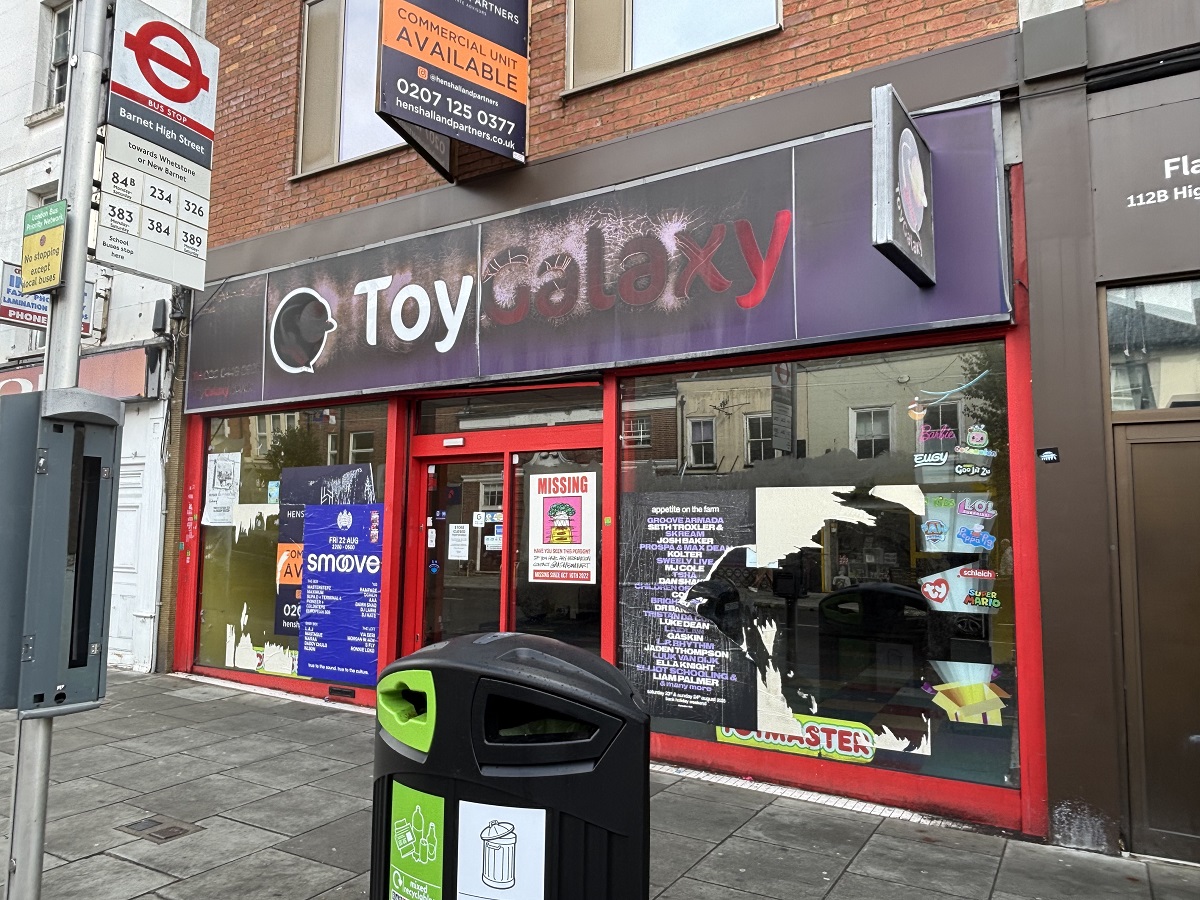
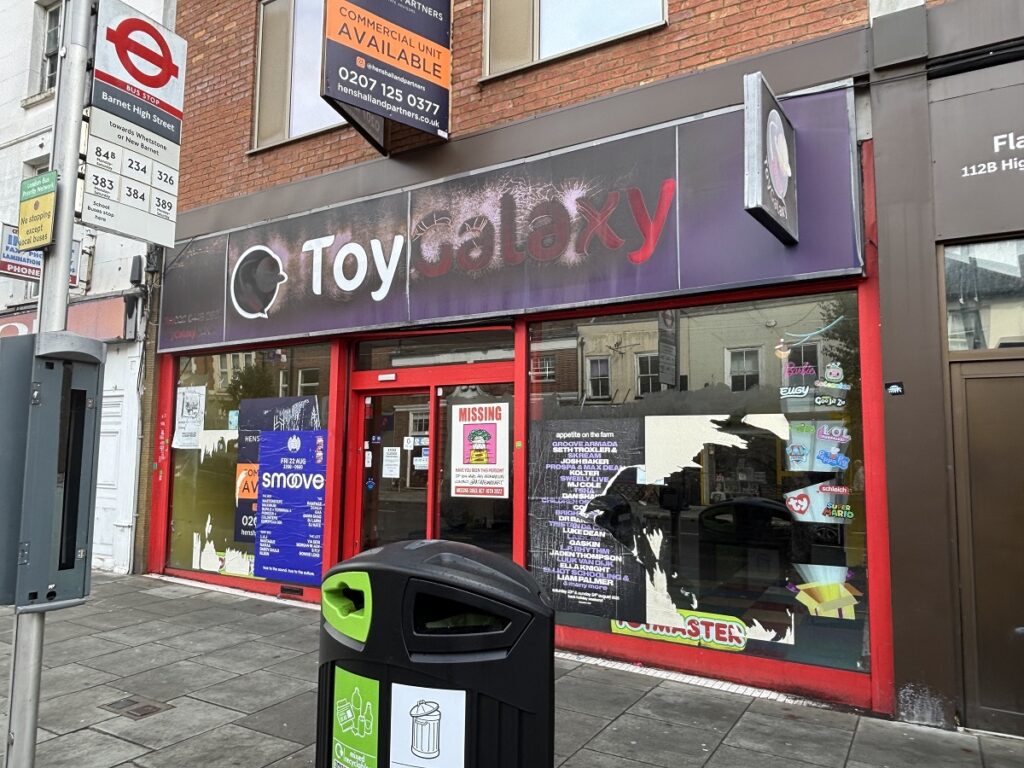
Pressure to offer and retain workrooms and offices close to Barnet town centre, but developers claim there is no demand for employment space

Barnet Council is facing another challenge to its policy of encouraging developers to keep or offer space for workrooms and offices in new housing developments close to High Barnet town centre.

So far, the council’s attempt to ensure that affordable space for employment is available is failing to attract tenants as indicated by the number of “To Let” signs.   

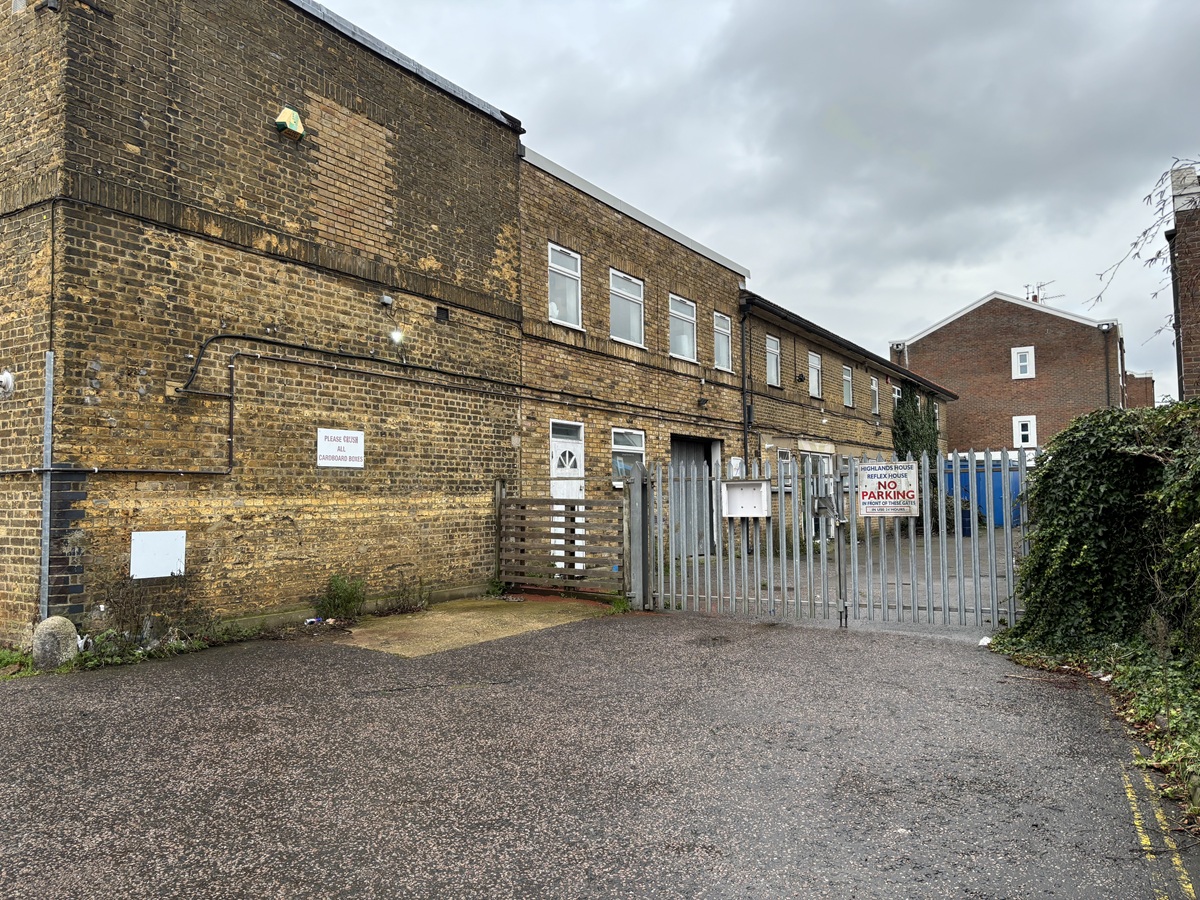
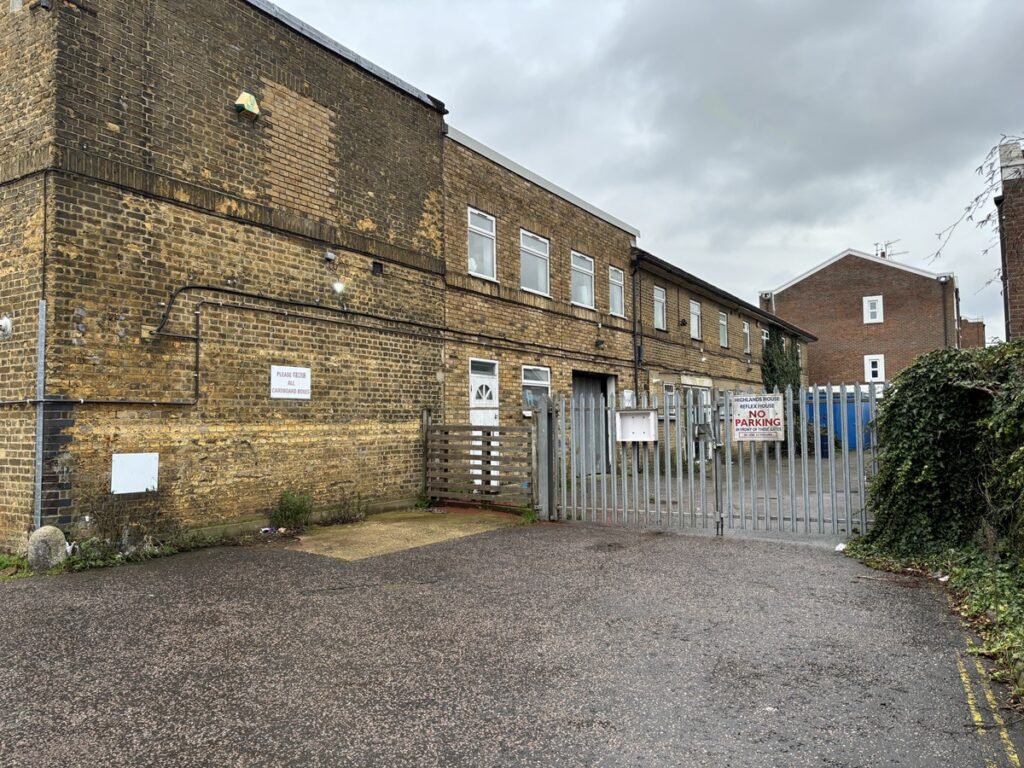
The latest challenge revolves around a fresh application to change the use of Highlands House in Bath Place, just off the High Street – see above – to provide seven self-contained one-bedroom flats.

Previously Highlands House was used for offices and graphic printing by sign makers RHM Event Graphics who have moved to premises at Borehamwood.

Subsequently the building has remained vacant, and other developers in the vicinity say the lack of demand for commercial space close to the town centre is underlined by the failure to find a tenant for a potential affordable workspace in the adjoining Lightfield housing development.

When dealing with planning applications, the council has been insisting that in line with the Barnet local plan, affordable employment space should be provided when new housing developments replace commercial and industrial premises.

In the case of Highlands House, council planners will have to decide whether prior approval is required for a change of use following new government regulations on permitted development.

An application to convert Highlands House to flats was rejected last year on the grounds that it would have a “detrimental effect” on the free flow of traffic and highway safety in Bath Place.

But this latest application states the seven flats would be car free and the developers would enter a legal agreement to restrict car parking permits.

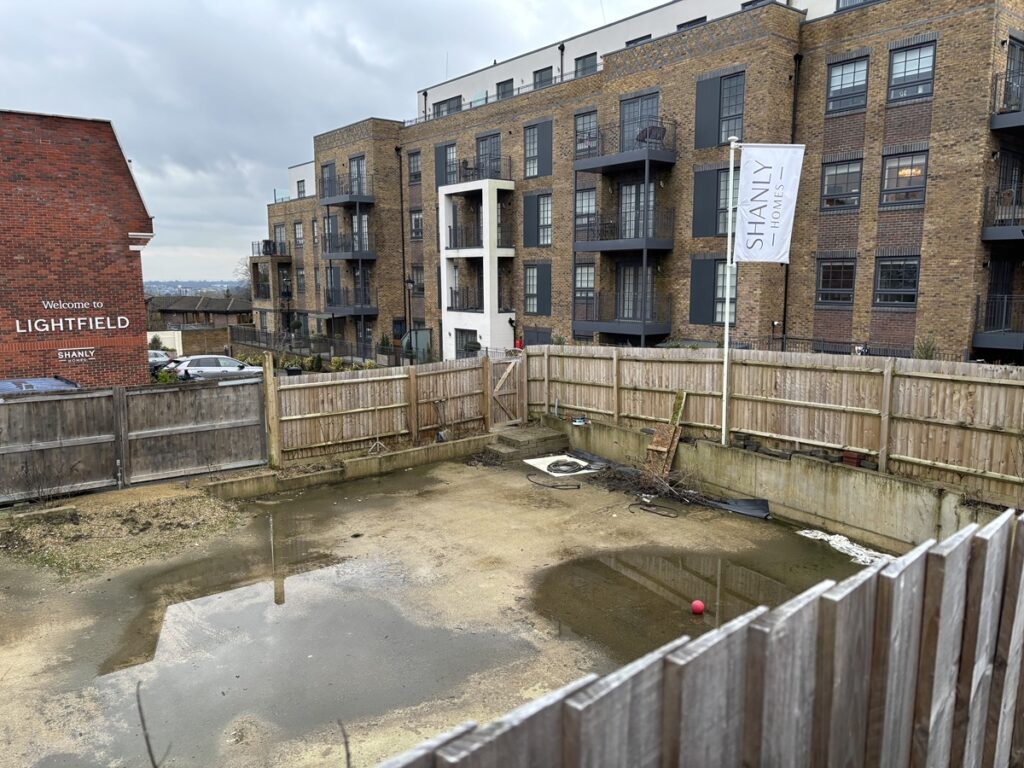
Just a few yards away from Highlands House is an empty site – see above – which was earmarked for affordable workspace when approval was given to Shanly Homes to provide 40 homes in flats and houses on the new Lightfield estate, just off the High Street.

Lightfield was built on the site of Brake Shear House which once housed 20 businesses in small factories and workshops which had a combined employment floorspace of 4,000 square metres.

When granting permission for Lightfield, the council stipulated that the site should retain 754 square metres of employment space.

Since the completion of the new estate, the developers say there has been no interest in developing the available commercial floor space and this prompted a fresh application to build a four-storey block which would have comprised eight flats with a ground floor offering 210 square metres of employment space.

However, after this application was refused, the developers took their case to a planning inquiry, only to find that the inspector backed the council.

In his report, the inspector said there was no evidence the employment space had been advertised at a genuinely competitive price; the developers had not demonstrated satisfactorily that there was no demand; and building additional flats would mean a “significant decrease in the employment potential of the site”.

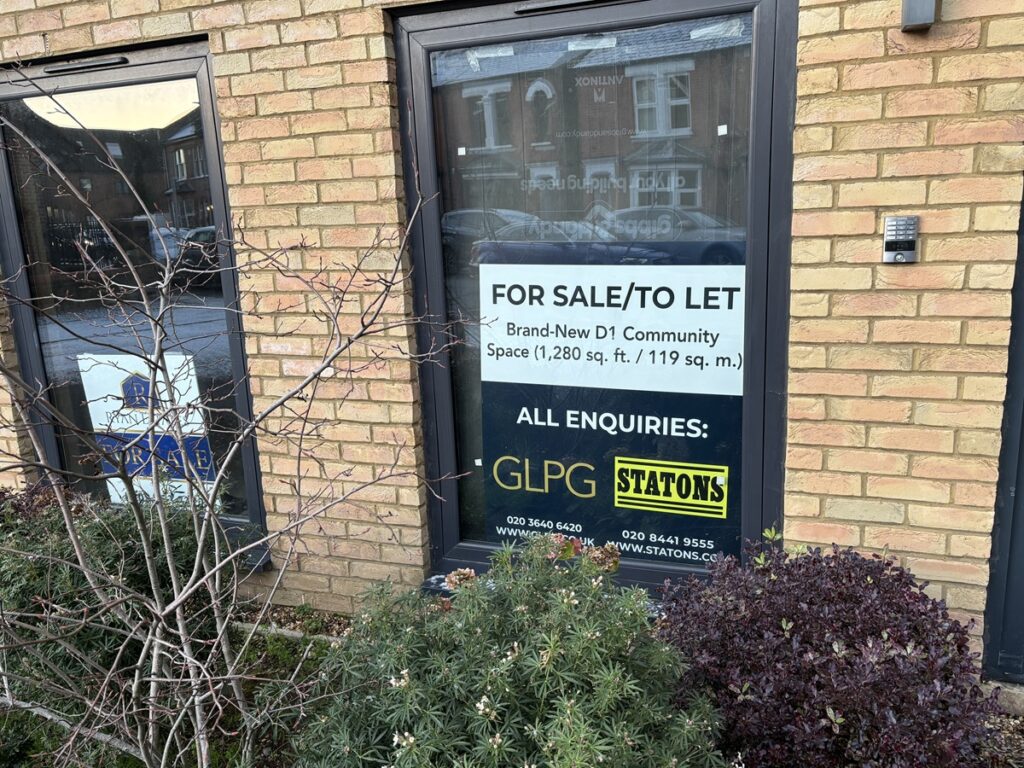
In support of its wider policy of seeking mixed development, the council has intervened to see if a tenant can be found for vacant community space on the ground floor of a new block of flats in Salisbury Road.

This follows the council’s refusal for permission to convert vacant community space on the ground floor of the new block – see above – into a three-bedroom flat.

Again, the developers say that despite having been “extensively marketed” for four years there has been minimal interest in hiring the community space.

In an attempt to find a potential tenant, the council is to contact community groups and local charities to see if there is any interest.

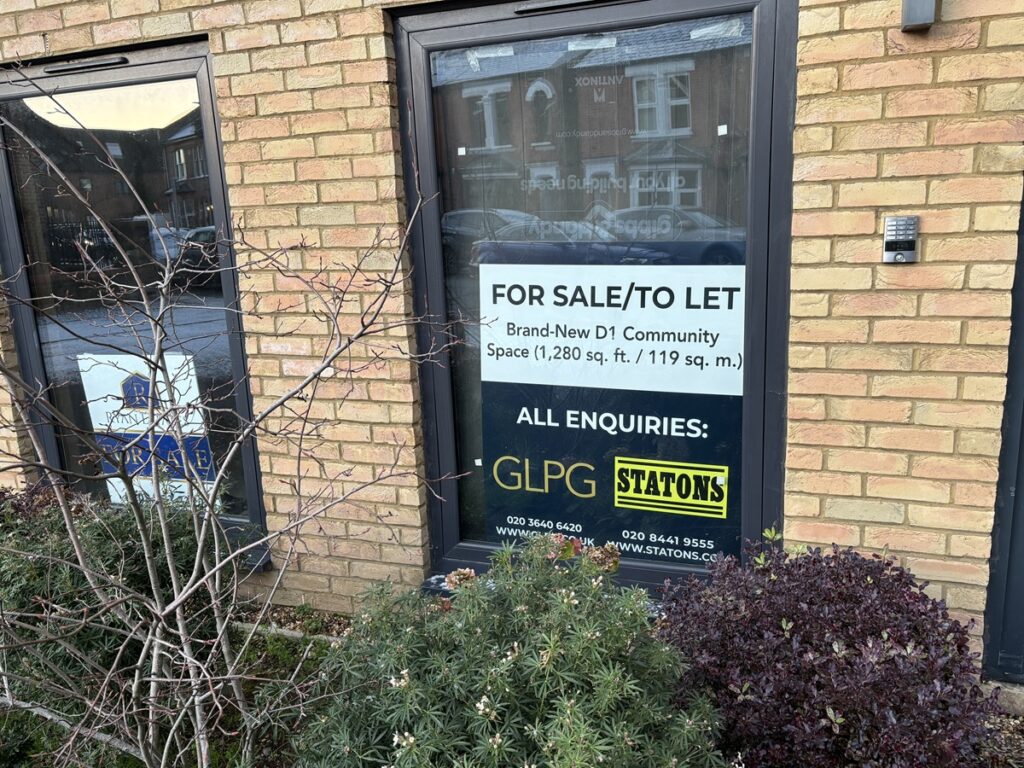
The ground floor space of 1,280 square feet is on the market for a guide sale price of £400,000 or an annual rent of £25,000.

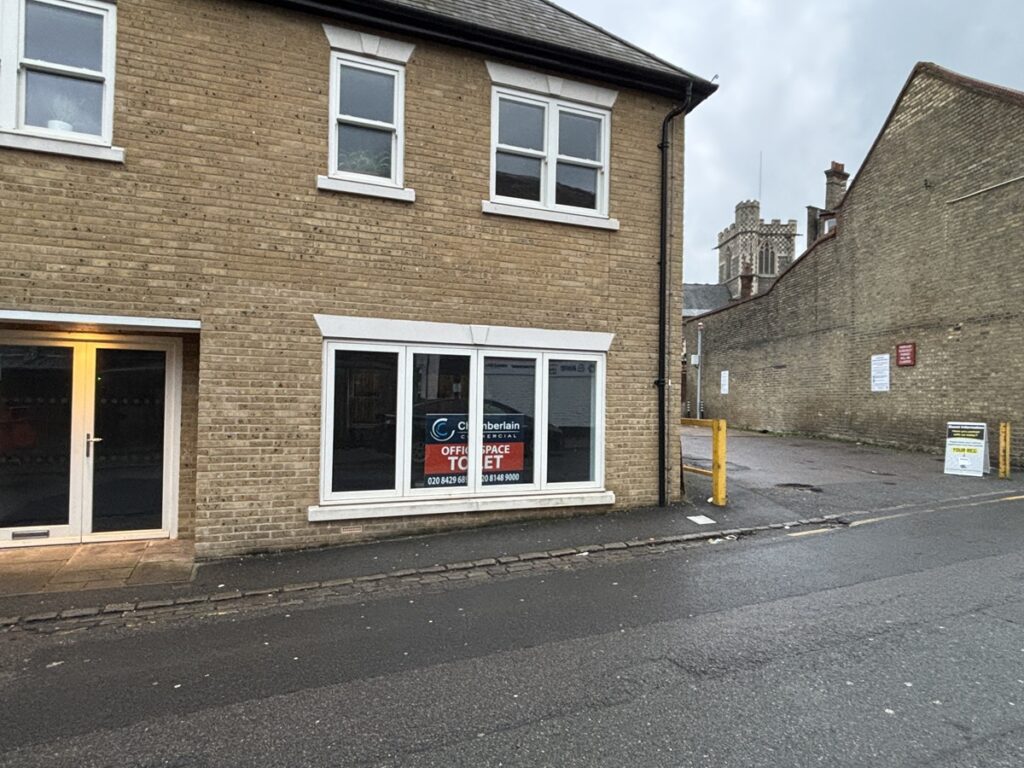
Another vacant commercial space which has been on the market for some considerable time is on the ground floor of new flats in Moxon Street – see above – which were built after the demolition of a car repair business and a former Salvation Army Hall.

Posted on 1 Comment

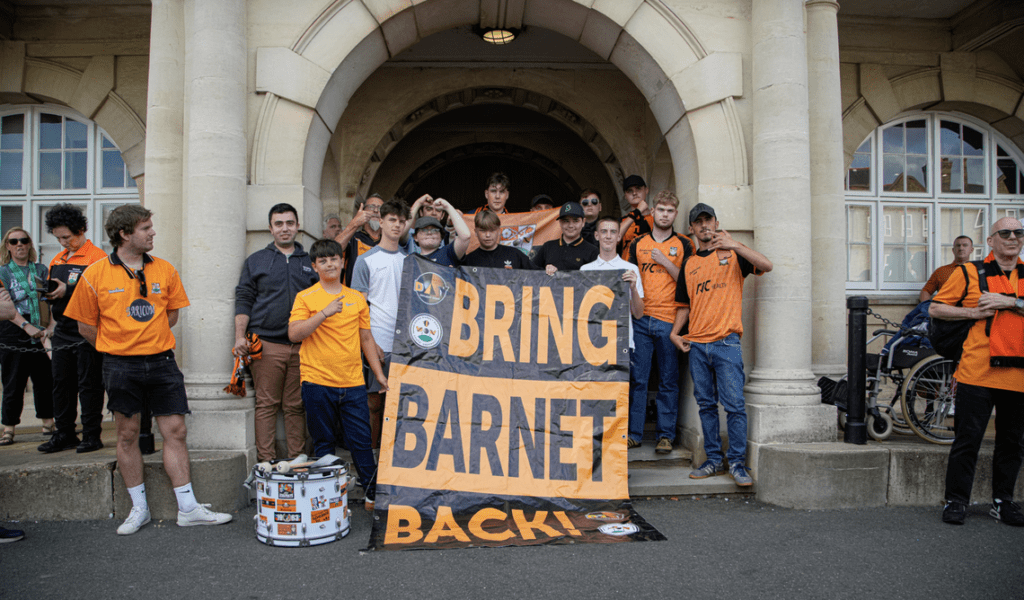
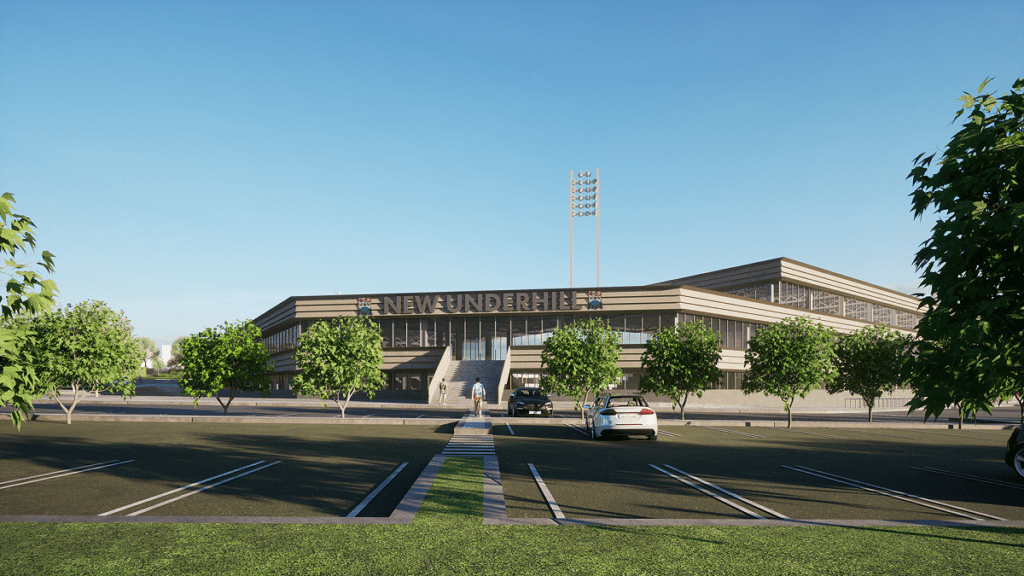
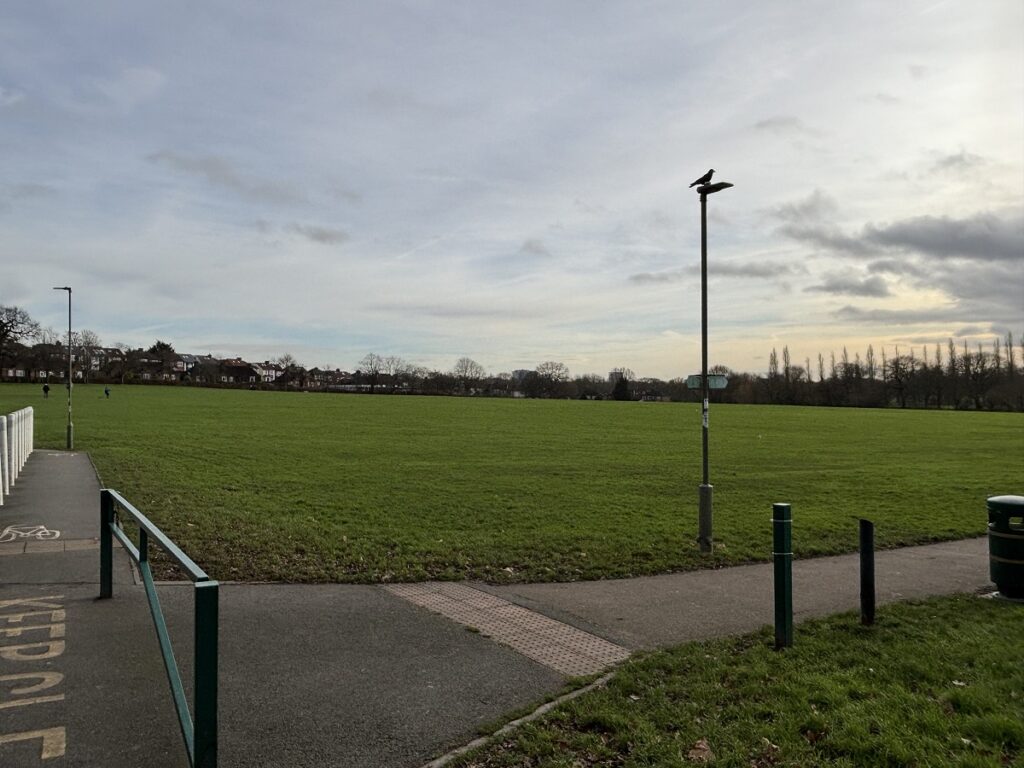
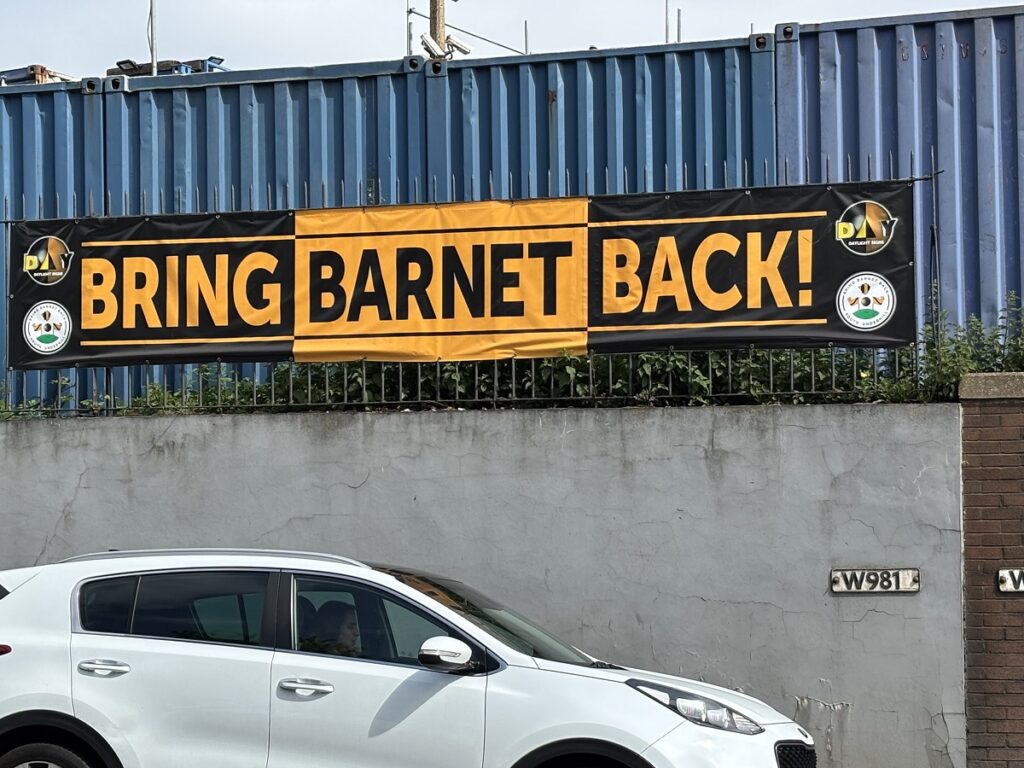
Barnet Football Club abandons planning appeal over stadium at Underhill as Bring Barnet Back identifies possible new locations   

A short list of four or five possible locations for a new stadium for Barnet Football Club is now being considered in depth by supporters of the Bring Barnet Back campaign after lengthy discussions with Barnet councillors and planners.

In view of what the campaign says is now a “very positive” dialogue, the club has decided not to appeal against the strategic planning committee’s refusal last July to approve an application for a new stadium on Barnet playing fields at Underhill.

The last date for an appeal is January 24, but the Bring Back Barnet campaigners urged the club’s chairman Tony Kleanthous against challenging the council.

“Constructive conversations” with councillors and planners have succeeded in producing a shared sense of good will over the push to secure a move from the club’s existing stadium at The Hive, Harrow, and a return to the town.

A total of 51 alternative sites for a stadium were identified and evaluated by the campaign and the highest scoring four to five sites will now be assessed in greater detail.

They are all in what is described as a “ring of suitable sites” – in an area within High Barnet, New Barnet and East Barnet.

As an indication their good faith in trying to find a site acceptable to the council, the campaigner says they will not identify sites on their short list so as to prevent the long-standing controversy over Barnet FC’s return to the town becoming a political football at the council elections in May.

Bring Barnet Back had been thinking of whether to promote candidates – or a symbolic single candidate – in the May elections to demonstrate the strength of their support but decided against the move so as not to jeopardise the constructive relationship which they have established with councillors across the political parties.

However, the campaign will establish a clear public record of which candidates “clearly articulate” their backing for the principle of the club’s return so that supporters can make “informed decisions”. 

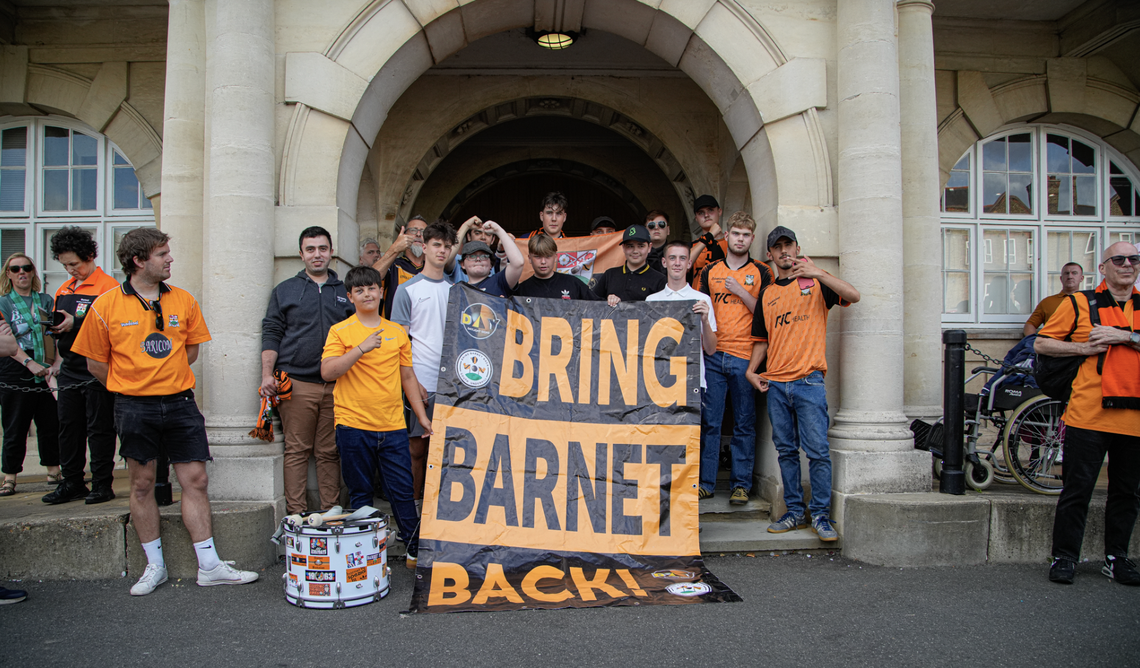
The application for a new stadium at Underhill was rejected by the strategic planning committee last July – see supporters above outside the town hall at Hendon – on the grounds that it failed to demonstrate “very special circumstances” for breaching the Green Belt.

Barnet FC’s planning consultants, WSP, and other consultants, advised that the club would have a “very good opportunity” to appeal on the grounds that the government was now encouraging certain developments within what was deemed “Grey Belt” land.

But the campaign feared an appeal might take 12 to 18 months, with no guarantee of success and even less likelihood of the council agreeing to lease a site on Barnet playing fields.

Conversations over the last few months have indicated that councillors believed the campaign had not been “sufficiently explicit” about why returning to the town was essential for the club.

At stake was the long-term sustainability of the club, given its reliance on continued financial support for the chairman.

The current stadium at the Hive is over an hour away from Barnet on public transport and over a quarter of the club’s local fans no longer attend, creating an annual deficit for Barnet FC of over £1 million.

“Without a permanent asset – a stadium – in its home town, the club’s long-term future remains structurally insecure.

“We now believe there is a shared understanding with all councillors we have spoken to that this is not a matter of sentiment, but of sustainability.”

However, the campaign recognised that the needs of the football club could not be considered in isolation and needed to be grounded in the “delivery of clear, substantial and demonstrable community benefit”.

Although the July application for a stadium had included proposals for a sports hub, medical facilities and wider economic benefits for the town, councillors were clear that a fresh application needed to be “more tightly and explicitly” linked to the need for additional community facilities and collaboratively designed to help deliver the council’s wider objectives.

Any revised plan would take into account issues like the number of school pupils with special education needs, how best to alleviate pressure on the adult social care budget, community-based medical provision and support for young people.

“Prior to these conversations Bring Back Barnet did not fully understand why the original application failed; these discussions have now provided clarity and are reshaping the approach going forward.

“Councillors stressed the importance of designing proposals with them rather than for them.

“The original application was perceived as presenting a largely complete scheme, with limited opportunity for councillors and officers to shape its form, priorities and trade-offs at an early stage.

“Finally, councillors highlighted the need for deeper consultation with key local groups prior to submission.

“In particular, the opposition from Northway School and Ark Pioneer Academy was seen as avoidable had those institutions been engaged meaningfully at an earlier stage.

“When a suitable location is identified and finalised by the planners, Bring Barnet Back will work with local groups to ensure the plans benefit as many as possible.”

Barnet Barnet Back campaign says it has short list of four to five locations for a new stadium for Barnet FC following club's decision to appeal over Underhill plan

Whereas the previously suggested Barnet playing fields site had scored strongly on technical planning grounds, it failed to meet the political test required for approval.

Therefore, any alternative site would have to command sufficient support from councillors to secure permission.

Until further enquiries, technical work and extensive private consultation, the campaign will not reveal the location of the four to five sites on its short list.

“Publishing a potential site prematurely, without full due diligence, would be irresponsible. It would risk exposing early-stage options to speculation, misinformation and unnecessary opposition.

“We fully understand – and share – the frustration this lack of public detail may cause. However, particularly in an election year, it is essential that any future proposals are robust, well-evidenced and carefully prepared.”

Bring Barnet Back statement in full: https://public.hey.com/p/76F1KjJccqW7Q9577B1aTzg3

Posted on 2 Comments

Plan for additional flat rejected as Barnet Council still hopes tenant might be found for vacant community space close to Barnet High Street

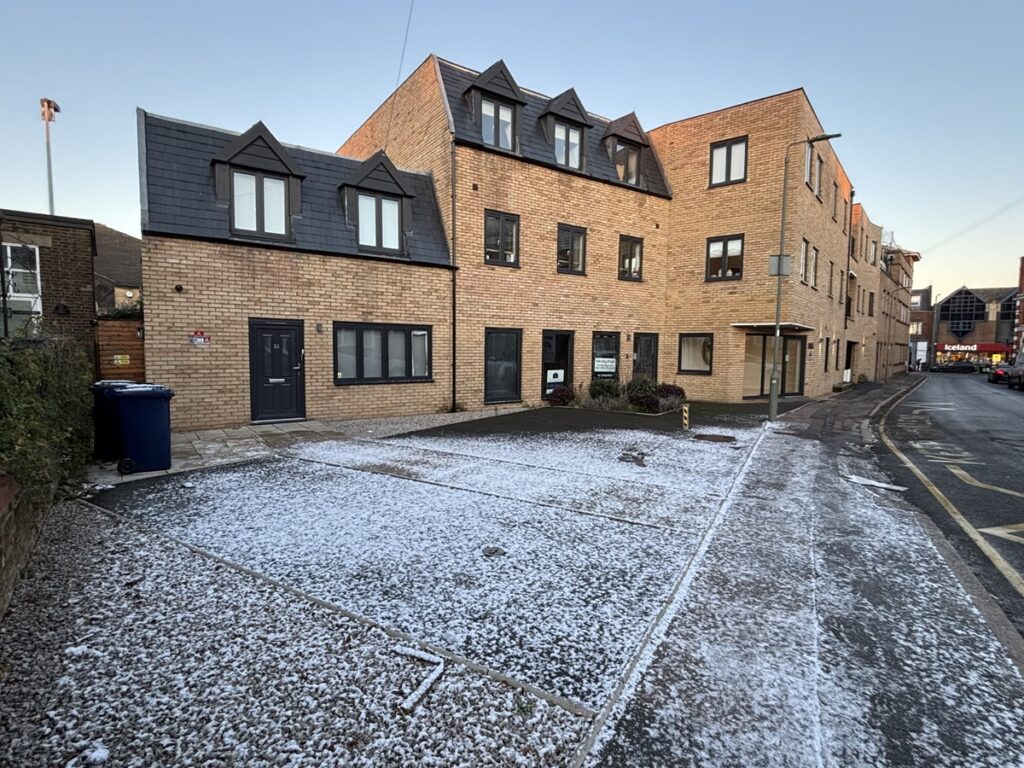
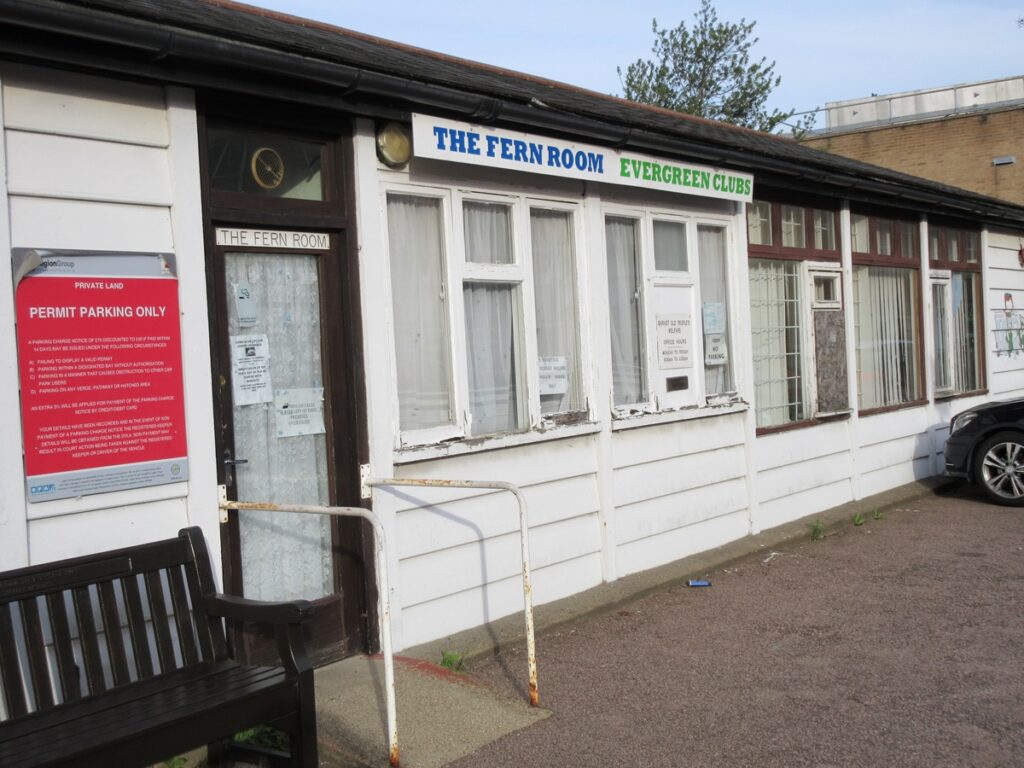
Barnet Council has intervened to see if a tenant can be found for vacant community space on the ground floor of a block of flats which were built in Salisbury Road after the demolition of the former Fern Room, once the home of Barnet Old People’s Welfare Committee.

After failing since 2021 to either sell or rent the community space, the developers applied for permission to convert the ground floor into a three-bedroom flat – an application that was rejected last year.

This refusal has now prompted the council’s intervention as the planners were not prepared to allow the loss of a possible community facility so close to the town centre.

The council says it wants to work with the developers to see if a tenant can be found for a broader range of openings including possible flexible work, retail or community use as part of the town centre improvement.

Community groups and local charities – together with Chipping Barnet Town Team – are being alerted to see if there is any organisation which might be able to make use of the space.

Given the financial pressures on the voluntary sector, it is perhaps no surprise that the developers have failed to find a new tenant – the ground floor space of 1,280 square feet is on the market for a guide sale price of £400,000 or an annual rent of £25,000.

A report presented to the council on behalf of the owners by real estate advisers Newsteer says that despite having been “extensively marketed” for four years there has been minimal interest in the space for community use.

Therefore a “logical beneficial re-use” would be to convert the space into a three-bedroom flat, but the council’s planning department disagreed.

After refusing plan for additional flat Barnet Council intervenes to see if a tenant can be found for vavant community space close to Barnet High Street

Barnet Old People’s Welfare Committee – which provided activities for Barnet’s elderly residents for 75 years – had to vacate the Fern Room in 2017 when it was purchased by SAS Investments to make way for the new of flats.

Eviction from its day centre meant the loss of a wide range of activities including coffee mornings, a social advice centre, and the running of evergreen clubs and minibus outings.

After paying £875 a quarter to rent the Fern Room, the committee realised it would be unable to afford the new community space which SAS Investments said would be increased in size to 1,600 square feet and offered for hire to a much wider range of uses including sports activities such as 5-a-side football.

In the event the new community space was reduced to 1,280 square feet – the same as the Fern Room – and the planning committee noted that it remains an empty shell although the 2019 planning approval stated it would be “fully fitted out and ready for use.”

Failure to fit out the space had made the rent “potentially prohibitive” for some prospective community use and the planners considered the developers had presented insufficient evidence that the facility was no longer required.

The proposed new ground-floor flat would have no private amenity space and high-level windows to the bedrooms would provide inadequate daylight and a poor outlook, resulting in a poor standard of accommodation.

“Consequently, the proposal would provide only a single additional residential unit and whilst in a sustainable location, would not outweigh the harm resulting from the total loss of a community facility without adequate justification.”

When first applying to demolish the Fern Room, SAS Investments said it was a “very dilapidated, inefficient building” but respected the longstanding community use of the Salisbury Road site and were anxious to work with local community groups by providing a new and much larger community space.

The loss of the Fern Room is an illustration of the on-off, piecemeal development of Barnet town centre.

The site was sold by Barnet Council to the developers of The Spires shopping centre in 2009 and passed on through the ownership of UBS, the William Pears group and Hunter Asset Management before being sold to SAS Investments for redevelopment in 2017.   

Posted on 6 Comments

Angry residents, community groups and primary school headteacher demand a rethink on Barnet Council’s new CPZ in Underhill   

High Barnet’s latest controlled parking zone took effect in Underhill in the week before Christmas sparking a furious response from residents as well as staff and parents at Whitings Hill Primary School.

Despite the opposition of 85 per cent of householders, Barnet Council imposed the CPZ on an experimental basis for 18 months on 16 roads north of Mays Lane on either side of Chesterfield Road.

Increasing demand for on-street free parking by staff, patients and visitors at Barnet Hospital has resulted in an ever-widening CPZ with the latest extension to Underhill provoking widespread community protests.

In response to criticism during Barnet Question Time that the imposition of the new Underhill South zone – to be designated the US zone – had been left in the hands of highways staff rather than councillors, the leader of Barnet Council, Councillor Barry Rawlings, gave a public assurance that the operation of the scheme would be reviewed after six months.

He said residents’ responses to the parking controls would be considered and after an assessment of the effectiveness of the CPZ, councillors would decide whether any changes should be made to the zone or whether it should be kept or abandoned.

Councillor Rawlings’ undertakings were welcomed by two community leaders who are continuing to mount a co-ordinated campaign against the CPZ, Gina Theodorou, chair of the Quinta Green Residents Association and Jon Woolfson, founder of the Underhill Residents’ Group.

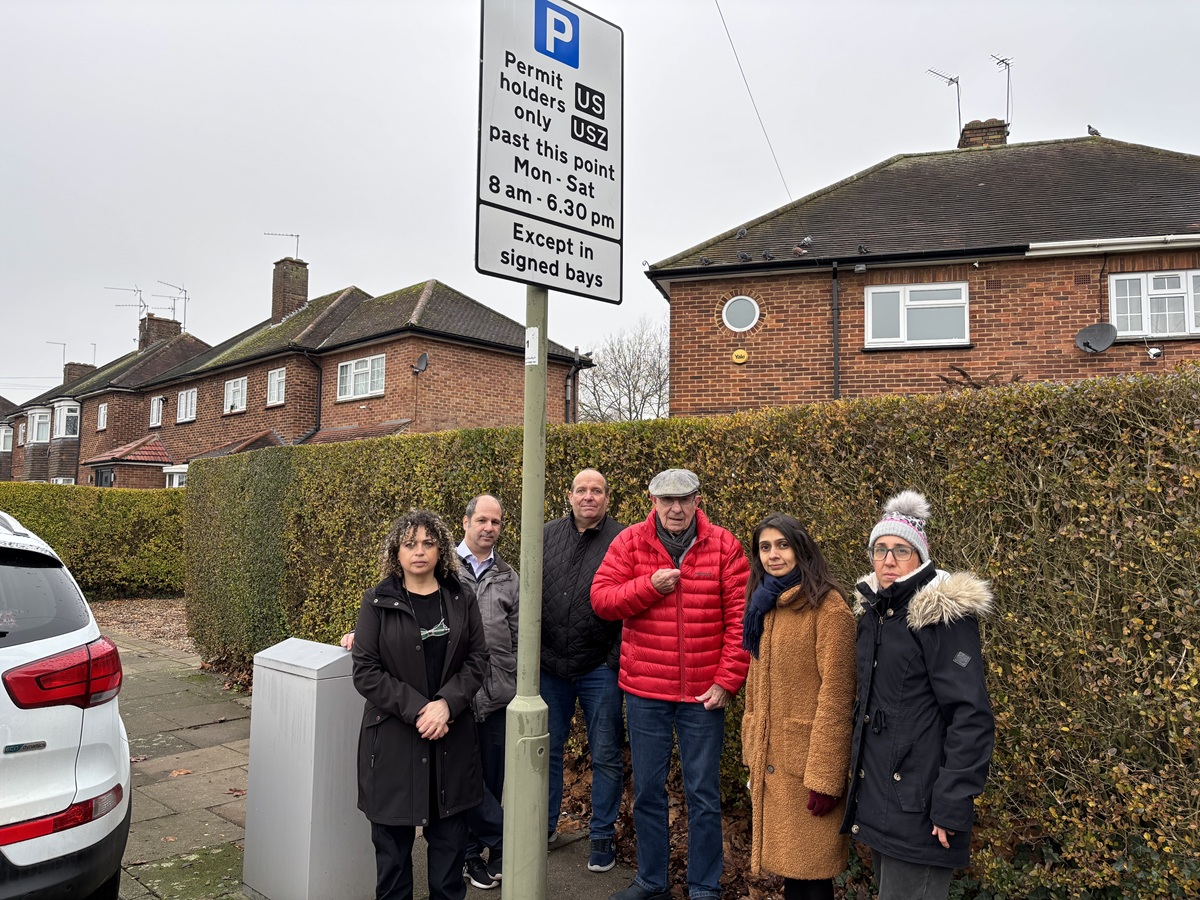
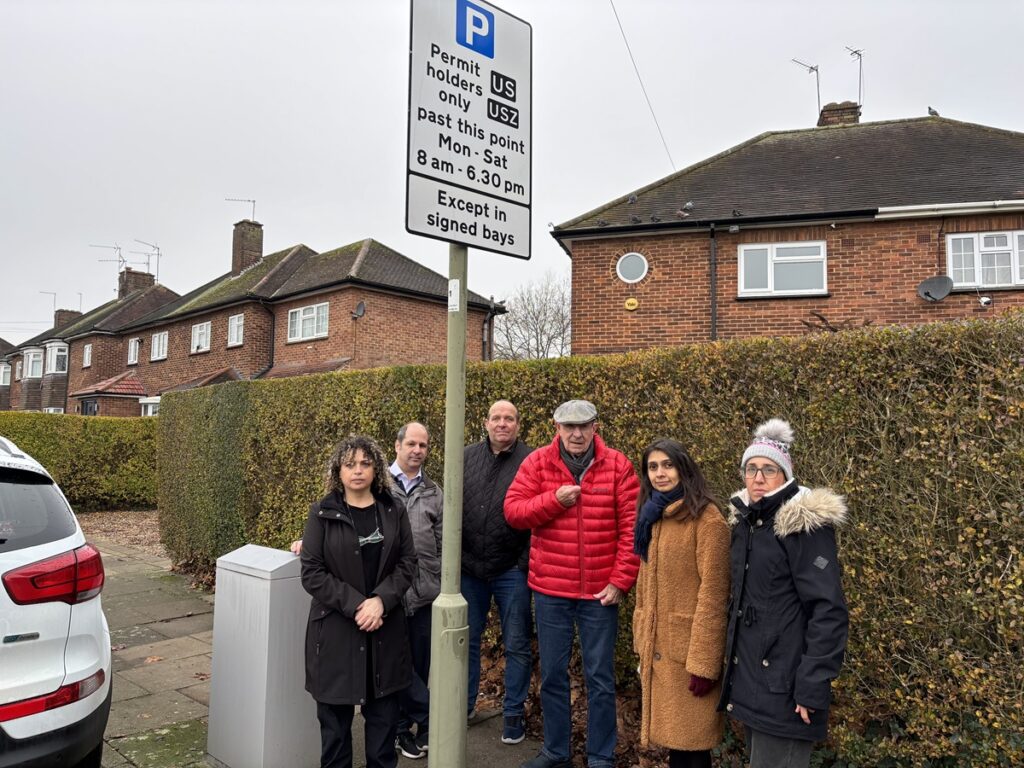
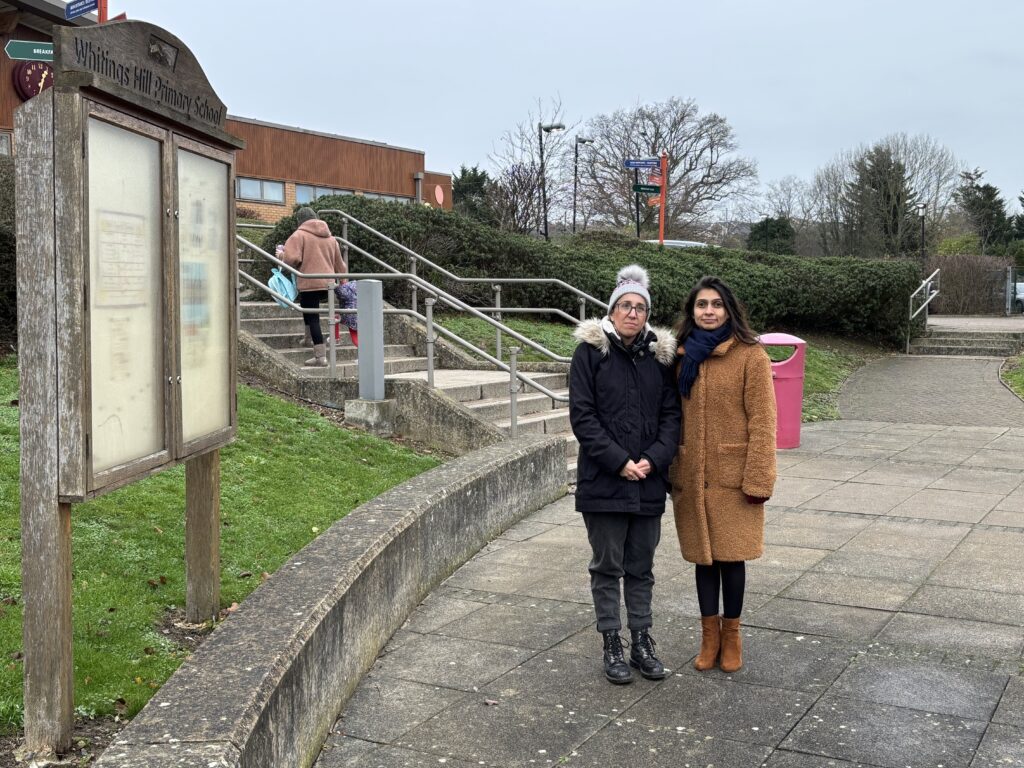
They briefed residents on how they should co-ordinate their response in the coming weeks – see above, from left to right, Gina Theodorou, Jon Woolfson, Richard Hockings, Victor Benson, Deepa Samani, headteacher at Whitings Hill Primary School, and Alison Kley, school business manager.

Mrs Samani – see above right with Mrs Kley – said the introduction of the CPZ was already having a devastating impact on the school and leading to great deal of anxiety among the staff at a time of severe teacher shortages.

“The school has only 23 parking spaces for our staff of 82 and half our teachers, especially those on low salaries, have been relying on free on-street car parking in nearby roads which has now all been withdrawn,” said Mrs Samani.

“They simply cannot afford the £6 to £7 a day cost of CPZ parking. Whitings Hill will lose teachers unless the council thinks again.”

Mrs Samani said that the school might have no option but to sacrifice all the green space in front of the building to make way for an enlarged car park.

“There has been no proper consultation about this. Highways staff told us the teachers could either pay up for parking or leave their cars much further away where there is free parking. That’s just not practical.”

Business manager Mrs Kley feared that the withdrawal of all the free parking around the school and the introduction of CPZ charging would endanger use of their swimming pool by local mothers and children.

“We depend on income from lettings for mothers and babies and other community users to help finance maintenance of the swimming pool, and we fear a big drop in revenue.”

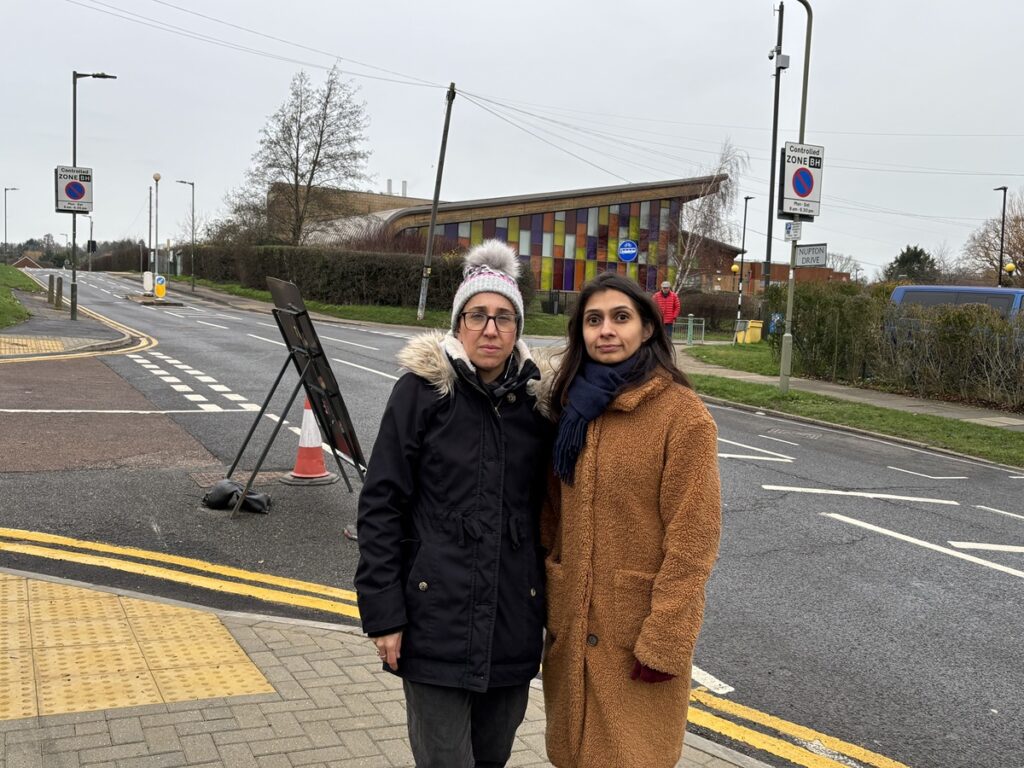
Whitings Hill School was already included in the existing Barnet Hospital CPZ (BH) but now roads to the south and west of the school have been included in the new US zone removing all on street parking within the immediate vicinity.

Mrs Samani deplored the lack of proper consultation with the school and failure to consider exemptions for essential staff.

“Pushing staff further away into neighbouring uncontrolled roads, or asking them to pay, effectively pushes the problem caused by the much larger Barnet Hospital CPZ onto local residents and vulnerable families.”

Yet another extension of CPZ around Barnet Hospital provokes furious response from Underhill residents, community group and local primary school.

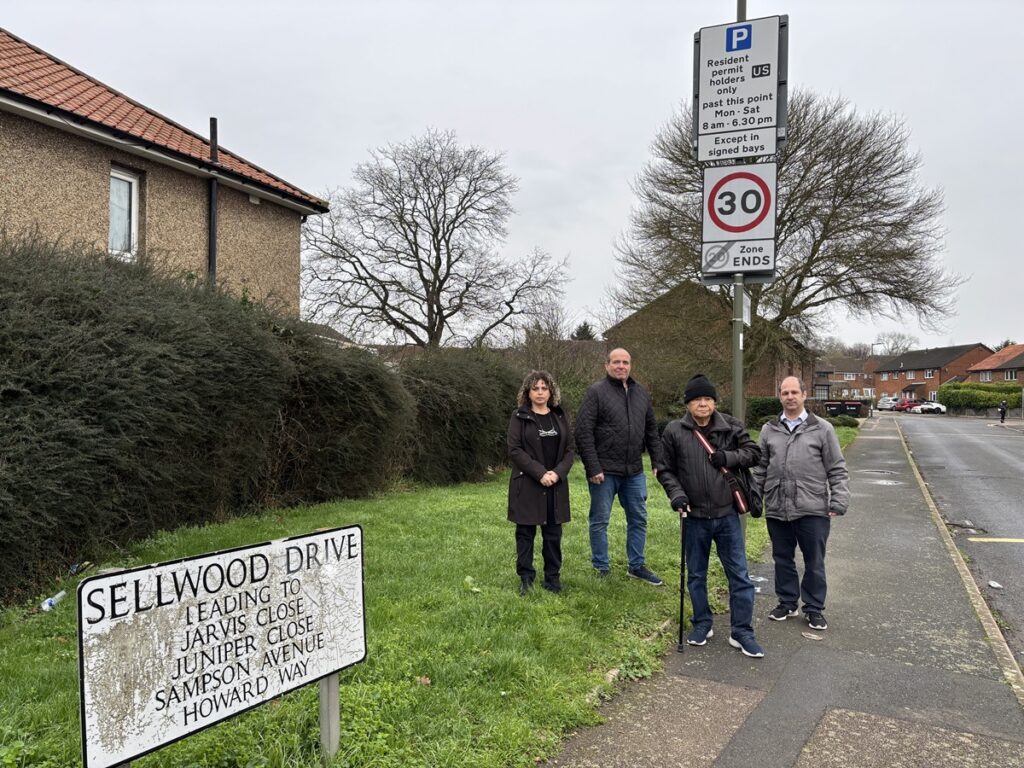
 What so upset the two leading community organisers, Gina Theodorou and Jon Woolfson – see above with residents Richard Hockings and Warlito Naval – was the failure to respect local wishes and then for councillors to absolve themselves of responsibility by leaving it to highways staff to take the final decision.

“The introduction of the Underhill South CPZ has been largely officer-led under delegated authority which has resulted in a lack of transparency about who decided what, and why,” said Ms Theodorou.

“When schemes fail or cause harm, accountability becomes blurred and residents are left with nowhere to turn.

“The result is a growing feeling that the council operates on a ‘we know best’ basis, rather than genuinely listening to local evidence or lived experience.”

Mr Woolfson said a survey had shown that 85 per cent of residents in the area opposed the proposed CPZ extension and more than 70 per cent reported having no parking problems.

Originally the council proposed the zone should extend to a total of 29 roads to the north and south of Mays Lane but after a groundswell of opposition this was cut back to the 16 roads where a council survey had indicated “extremely high levels of parking stress” caused by the demand for free off-street parking by Barnet Hospital staff, patients and visitors.

The roads included in the US zone are Chesterfield Road, Dexter Road, Dormer Close, Edwyn Close, Greenland Road, Howard Way, Jarvis Close, Juniper Close, Matlock Close, Niton Close, Nupton Drive, Sampson Avenue, Sellwood Drive, Shelford Road, St Anna Road and Stanhope Road.

Richard Hockings said his street Alan Drive was just outside the designated area of the US zone, but it was included in the original scheme and he and his neighbours feared they would inevitably be the next in line for any further extension.

Posted on 4 Comments

Hadley Green residents line up in opposition to housing development in their conservation area

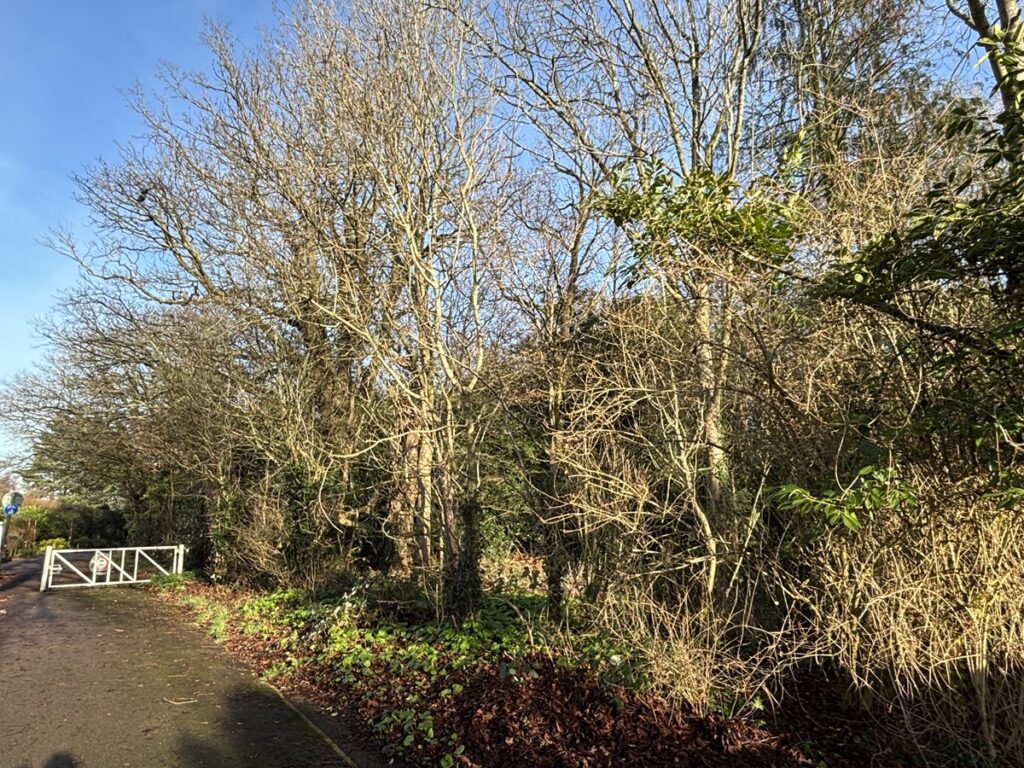
Fine period houses in their own sizeable grounds and gardens are a feature of the tree lined roads and footpaths around Hadley Green – all adding to the character of the Monken Hadley Conservation Area.

That settled harmony of the locality with its clusters of mature trees is about to challenged by a contentious proposal to seek planning permission to build a large new architect designed house with its own swimming pool.

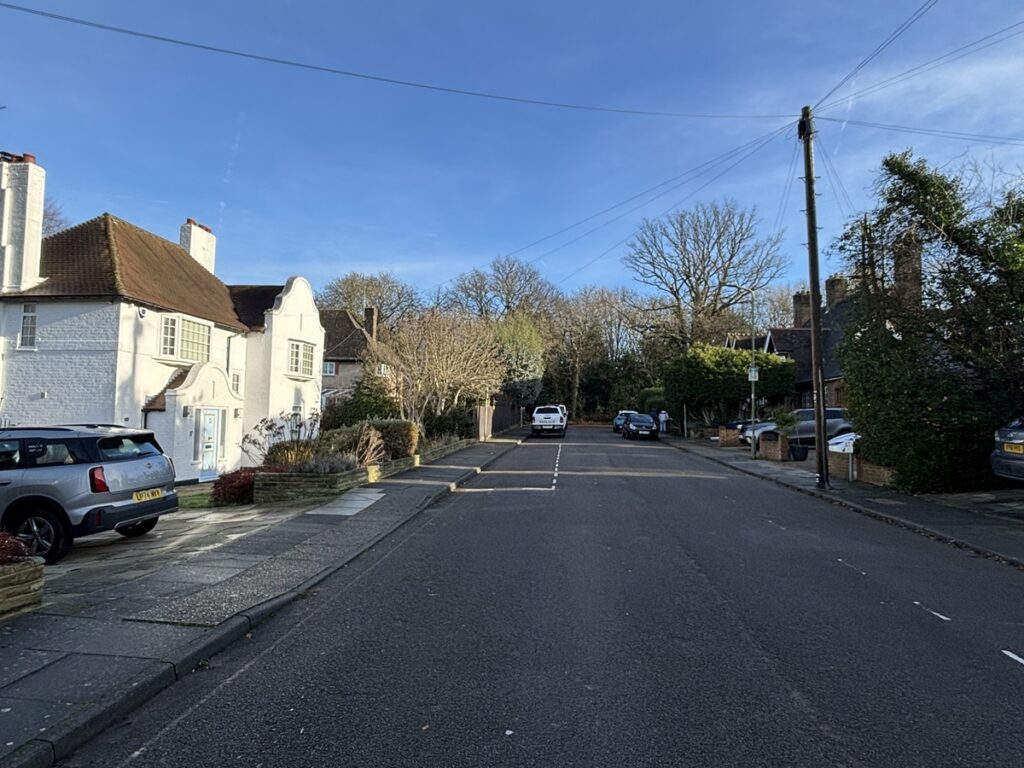
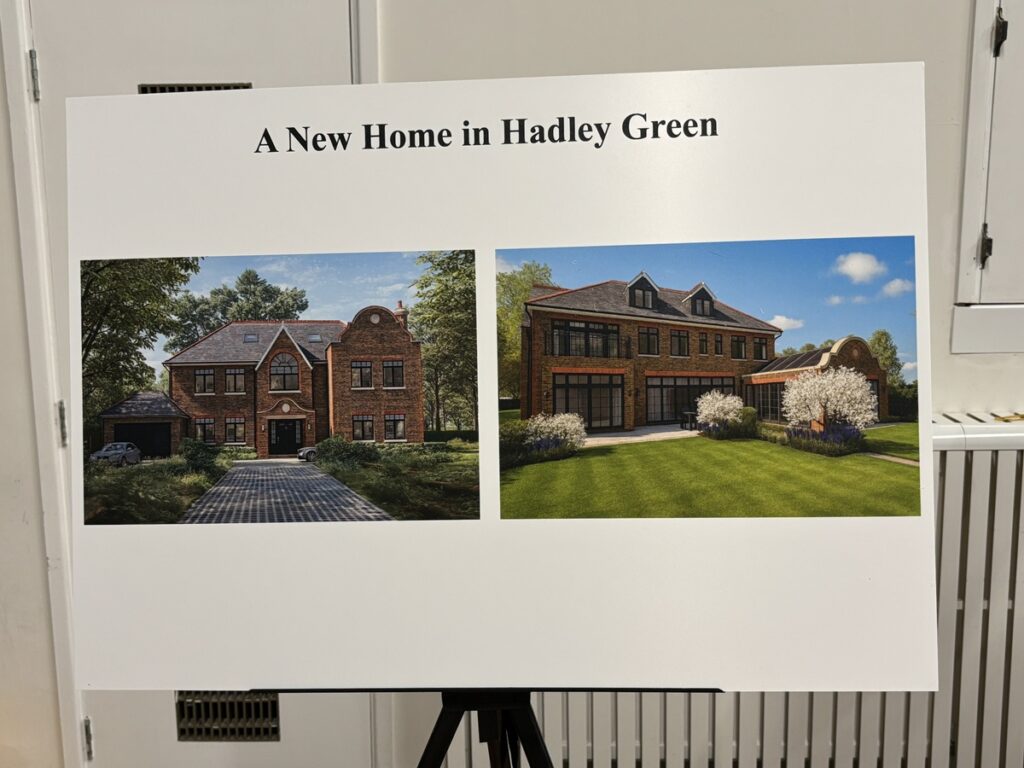
A wooded plot on the western edge of Hadley Green – alongside Christ Church Lane at the junction with Sunset View – is the proposed site for what would be a new five-bedroom double fronted property to be built in the Arts and Crafts style.

Nearby residents say the vast majority of those living in adjoining roads are firmly opposed to new housing on the one-acre plot because it would threaten protected trees and disrupt a local wildlife corridor.

They fear they are faced with a speculative proposal aimed at getting planning consent to build inside the conservation area.

Mounting opposition within the neighbourhood was all too apparent after the developers Christchurchgrove Ltd held a public consultation to unveil their plans – opposition to which was led by residents in Gladsmuir Road, Hadley Gove and Christ Church Lane.

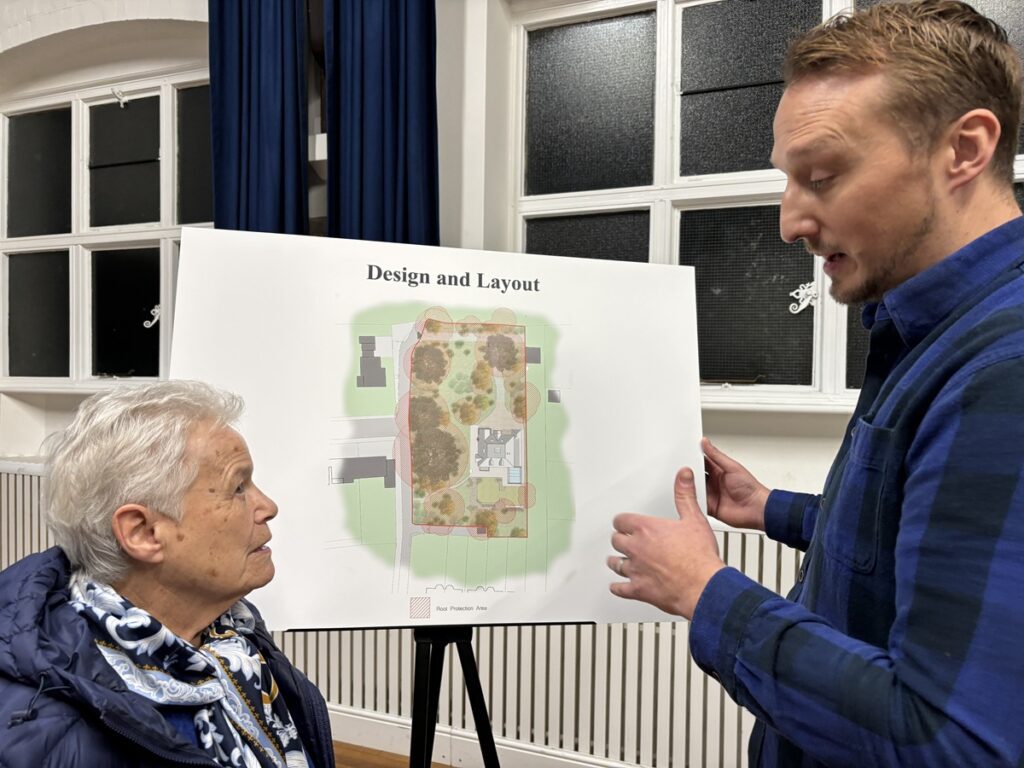
Stuart Lees of Alan Cox Architects told Jenny Remfry, a nearby resident and Barnet Society vice president, that steps would be taken to safeguard mature trees on the site, most of which are already covered by tree protection orders, and there would be other measures to enhance the biodiversity of the woodland.

In fact, the new house would be surrounded by trees and as a result would be hardly visible, which had been one of the aims in the design.

But Dr Remfry asked why have such restricted views of the new property when much was being made of the fact that it was in the Arts and Crafts style in a design which reflected the Arts and Crafts houses in Sunset View – see above.

“What makes this area so appealing is that people admire the magnificent period houses and villas in and around Hadley Green. They like looking at them.

“If the developers are going to all the trouble of designing an Arts and Crafts style new house surely it should be more visible?”

Controversial application to build a large house in Hadley Green woodland in Monken Hadley conservation area.

Mr Lees accepted that the new house would be larger than other nearby houses, but it matched the scale of the plot and was in character with the historic pattern of residential development in sizable plots with cultivated gardens.

Most of the objections revolve around the loss of natural habitat if the woodland becomes the site of a new house.

Stuart Robinson, planning adviser for the project, acknowledged that there might have been a case for building more than one house but trees on 70 per cent of the site were safeguarded by protection orders.

However, the site had “relatively low ecological value” at present largely due to the prevalence of invasive non-native plants and general neglect.

If the site was properly managed, it would contribute more to the biodiversity of the area, and the developers would be legally bound for 30 years to ensure there was a net biodiversity gain.

Similarly, in order to reassure local residents that they were not planning to build more houses on the land, there would be a covenant on the planning application to restrict the site to one house.

Project manager Andrew Robinson said that the purpose of the public presentation was to answer rumours about their intentions and to reassure residents that the application was restricted to one house and that with enhancement they were proposing there would be a biodiversity gain for the next 30 years.

Nonetheless nearby residents told the Barnet Society they remained sceptical about the likelihood of the proposed house ever being built.

They were also concerned about the ownership of the land which is currently in the joint ownership of Barnet Recreational Trust and Barnet Council.

Christchurchgrove Ltd has a purchase agreement with the council, conditional upon obtaining planning permission.

An application for planning approval is due to be presented to the council early next year.      

Posted on 11 Comments

Public consultation on proposed new house in Christchurch Lane spinney

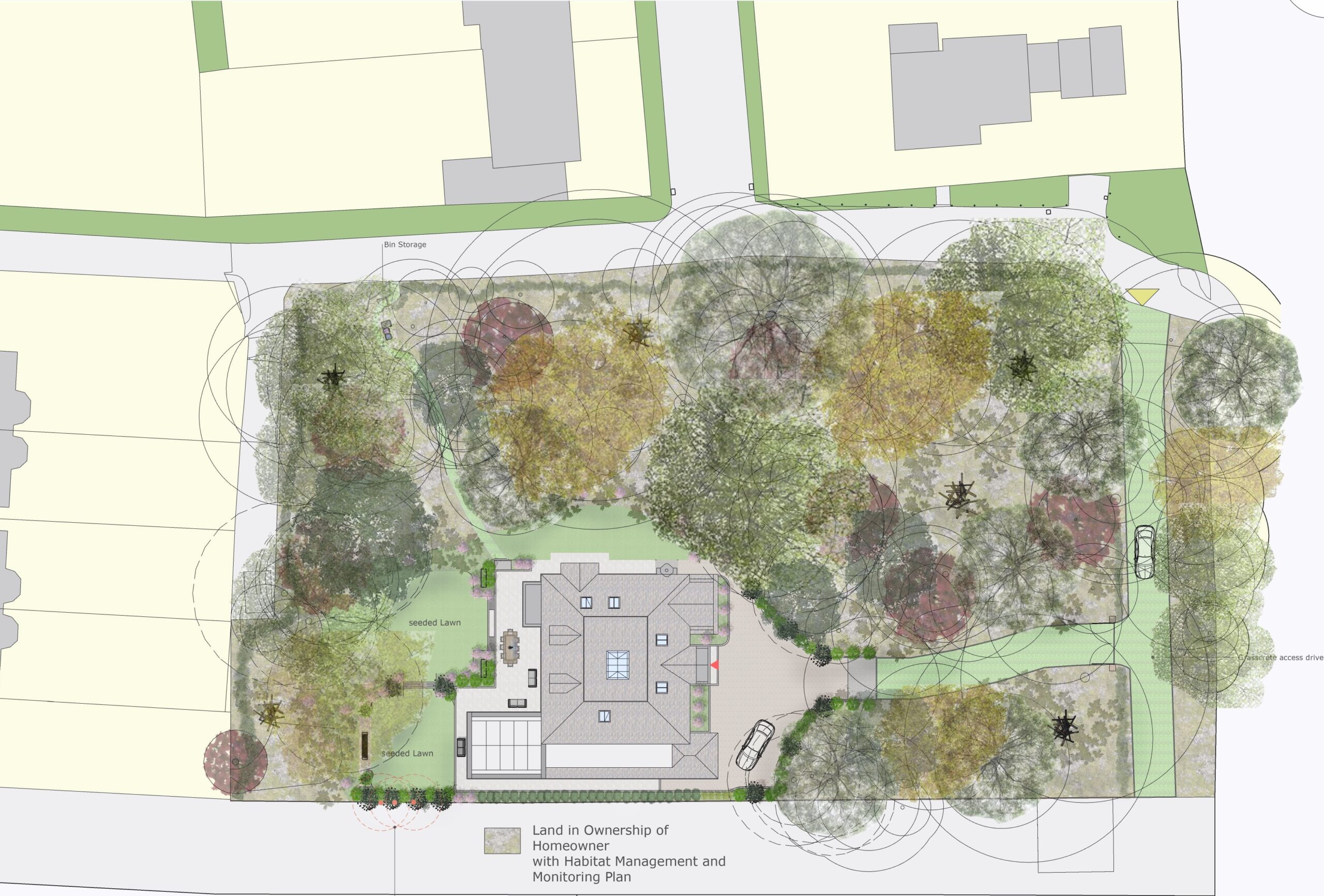
Local developer Christchurch Grove Ltd expects to submit a planning application soon to build a house within existing woodland on the east side of Christchurch Lane (see plan above by Helene Landscape and Garden Design). It raises an increasingly urgent question in Barnet: how much, if any, green space should be sacrificed for new homes?

I wrote about this peaceful haven of wildlife less than 200 metres from Barnet High Street in a recent web post. Situated within the Monken Hadley Conservation Area, with numerous trees protected by Tree Protection Orders, it forms a ‘green corridor’ between two major pieces of Green Belt land, Old Fold Manor golf course and Hadley Green. Its value for biodiversity is greater than its small size (0.438 hectare / 1 acre) would suggest. https://www.savechippingbarnetwoodland.org/ is petitioning to save it from development.

The Barnet Society got involved 18 months ago when the Council decided to sell its portion of the land for £430,000, subject to the buyer obtaining planning consent. Since the part of the site where development is proposed has the least ecological value, a case could be made for building a single house.

Our concerns were twofold. The quality of the wood had to be conserved and enhanced wherever possible. And any house and garden must be in keeping with their natural setting and built to high environmental standards.

The initial plans fell short on all counts. To the developer’s credit, the scheme has now been revised. Whether it meets our original concerns we’ll find out at a public consultation on Friday 12 December from 4.30pm till 7:00pm at Pennefather Hall (next door to Christ Church), St Albans Rd, Barnet, EN5 4AL.

The developer’s team of planning, architectural, ecology and Biodiversity Net Gain (BNG) consultants will be on hand to advise on their proposals. They are also offering to place a covenant on the site to the Barnet Planners to restrict planning permission to one residential property only, to allay concerns about any future or further development of the land.  

They trust that this transparency will dispel many negative comments, especially on the ecology and BNG improvements to the site. 

There is limited parking available on site, which is only a 5-minute walk from The Spires and alternative parking. 

Below is a visualisation of the proposed house by Alan Cox Architects.

Response from Andrew Robinson, Project Manager, Christchurch Grove Ltd.

As the person responsible for bringing forward the plans for a new home on this neglected pocket of land in Hadley Green, I am obliged to the Barnet Society, for giving me the opportunity to correct a number of errors in the recent article and the basis for the petition which has recently been organised.

Robin’s article queries that the site in Christ Church Lane, which he describes as a “haven of wildlife” has not been included in the London’s wildlife plan [Nature Recovery Plan]. The answer is simple. Whilst the site is home to a number of fine tress (all of which are protected) it has a low level of biodiversity. We know this because we have had it surveyed by an expert ecologist.

This survey has shown that there are absolutely [no] mammals living here. No badgers, foxes, bats, deer or hedgehogs as the promoter of the recent petition would have you believe or, in fact, any protected species.

Nature needs nurturing. Unfortunately, this site been left unkempt for over 60 years! Whilst many of us see an abundance of greenery as a good thing, here the result of our survey has shown that due to neglect the area has become overrun by invasive species which are undermining the quality of the soil and preventing daylight to the understorey, thereby killing of what remains of the indigenous habitat.

We all know that wildlife needs help to flourish in urban environments. That is why the scheme that we will bring forward will guarantee a habitat management scheme supervised by experts. This will cover 70% of the site with the remainder forming the garden for the new home.

Gardens themselves are good for nature of course. The RHS research has shown that levels of biodiversity are just as high in cultivated gardens and that is why Hadley Green generally benefits from having so many. Even with a new home here built within the site, we will provide a 10% increase in biodiversity!

Indeed, according to the Council’s Conservation Area Appraisal a quarter of Monken Hadley is in residential use, typically large houses, in substantial plots with cultivated gardens. So I question why would any supporter of the Barnet Society want to oppose a plan for scheme which so typifies the area.

Why would anyone support the continuation of neglect of an area where the habitat and protected trees are being slowly eroded by invasive species?

I would also like to point out that the beneficiaries of this proposal will be Barnet residents. That is because the two landowners promoting it are, the Council and the Barnet Recreational Trust. The latter is a local charity which in the last five years has financially supported almost twenty different local organisations including the Parish of Monken Hadley where it has recently donated £110,000 toward the re-building of the Church Hall. The proceeds flowing from this project would similarly be invested.

Finally, I would like to thank all those who attended our public consultation last week. I was grateful to be able to have the opportunity of providing the evidence behind the claims we have made in relation to the project. If anyone who was not able to attend would like to see the material, please do not hesitate to let me know.

Footnote I would also like to put the record straight as regards that my option deal is with Barnet Estates and not with Barnet Homes.

Posted on 1 Comment

Sad loss of an imposing Victorian villa built when New Barnet was developed after the opening of its main line railway station

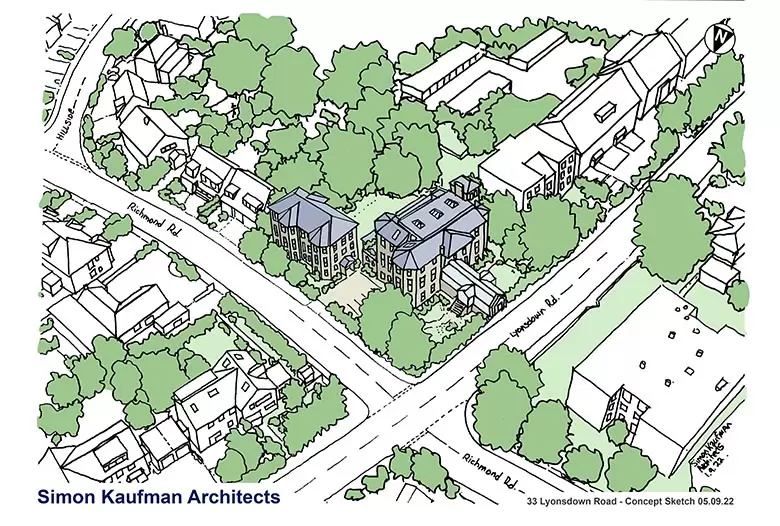
One of New Barnet’s last remaining large Victorian villas – 33 Lyonsdown Road – is being demolished much to the disappointment of community and heritage groups who fear it will be replaced by blocks of flats.

There is no certainty about future development of this prime site as two planning applications by the owners Abbeytown Ltd have been rejected by Barnet Council.

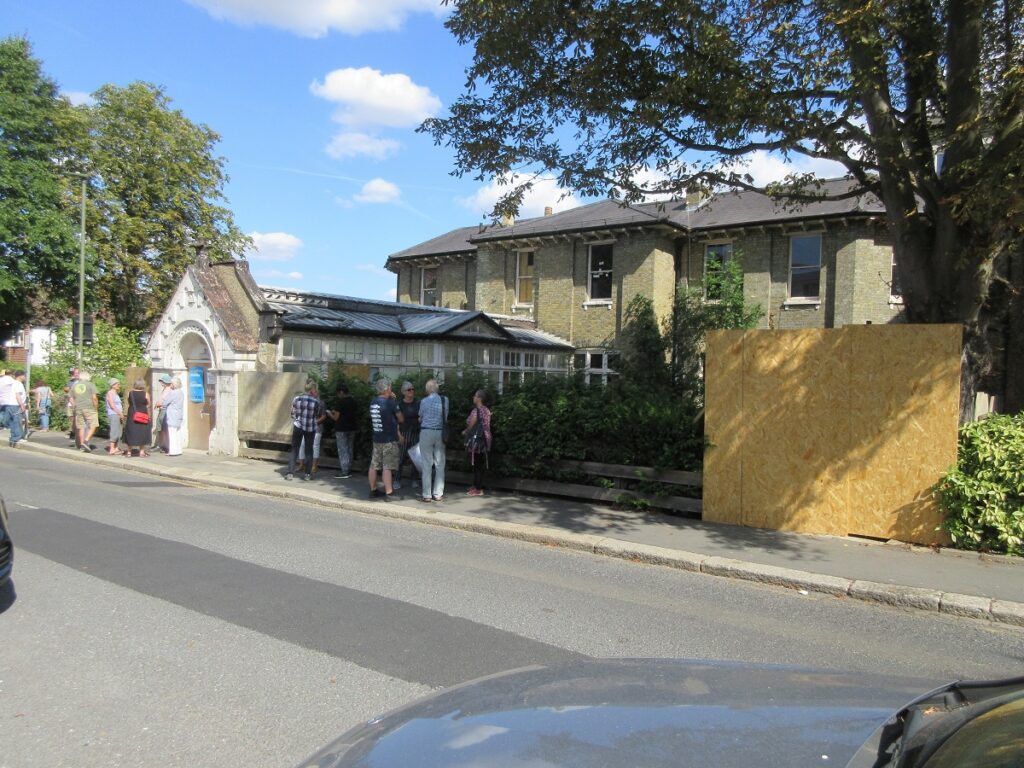
A spirited campaign was launched in 2017 to try to secure the restoration of what was considered one of the last and best examples of the imposing private villas and terraced houses which were constructed after the opening of New Barnet station in 1850.

After failing to secure approval for a five-storey block of flats – and losing two planning appeals – Abbeytown was granted permission in 2022 to demolish 33 Lyonsdown under permitted development rights.

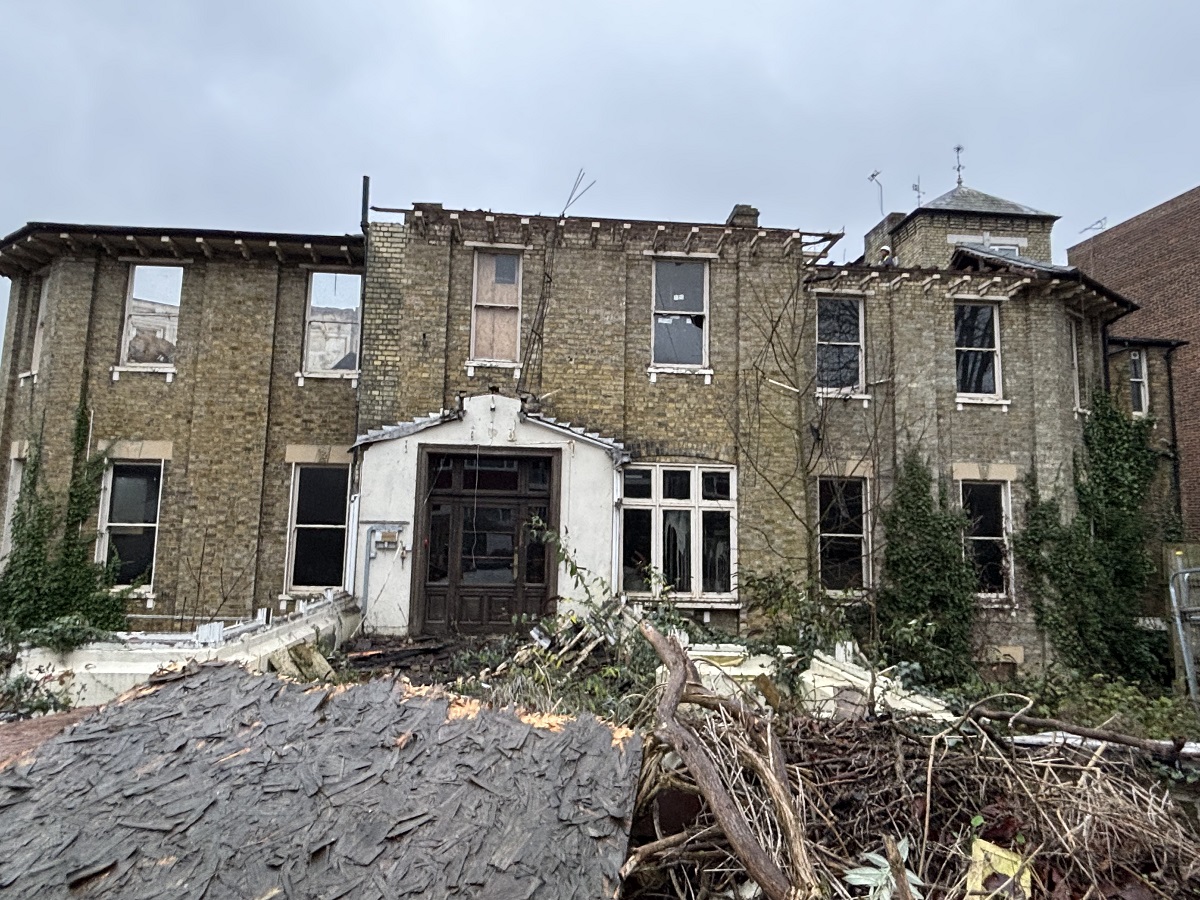
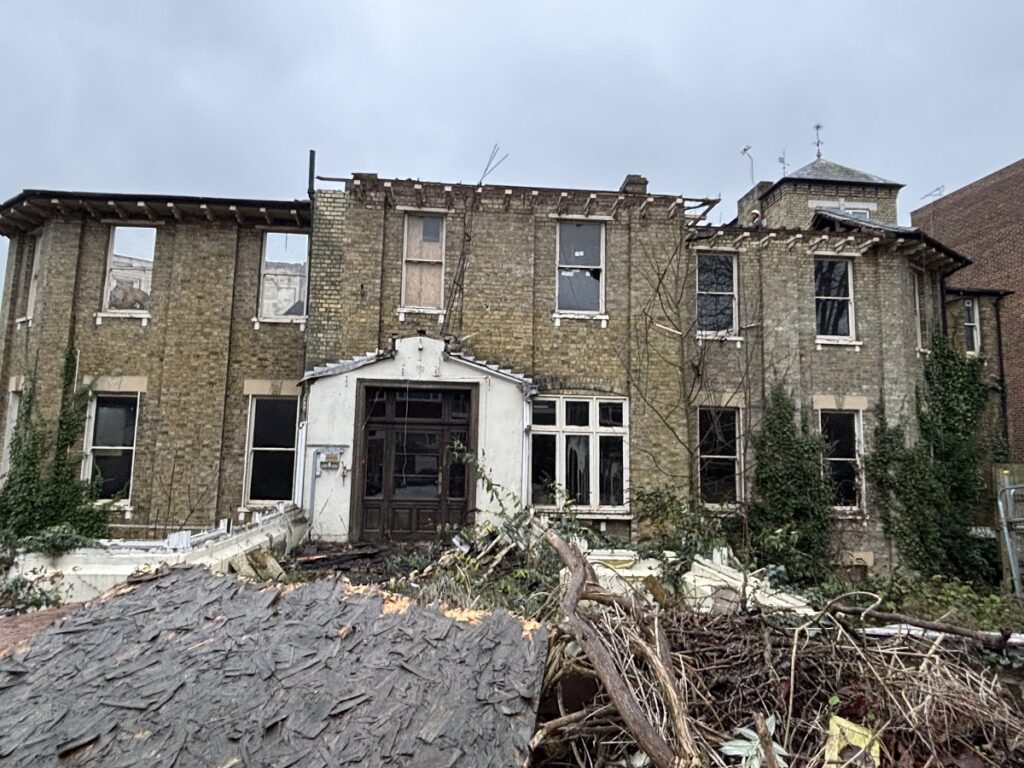
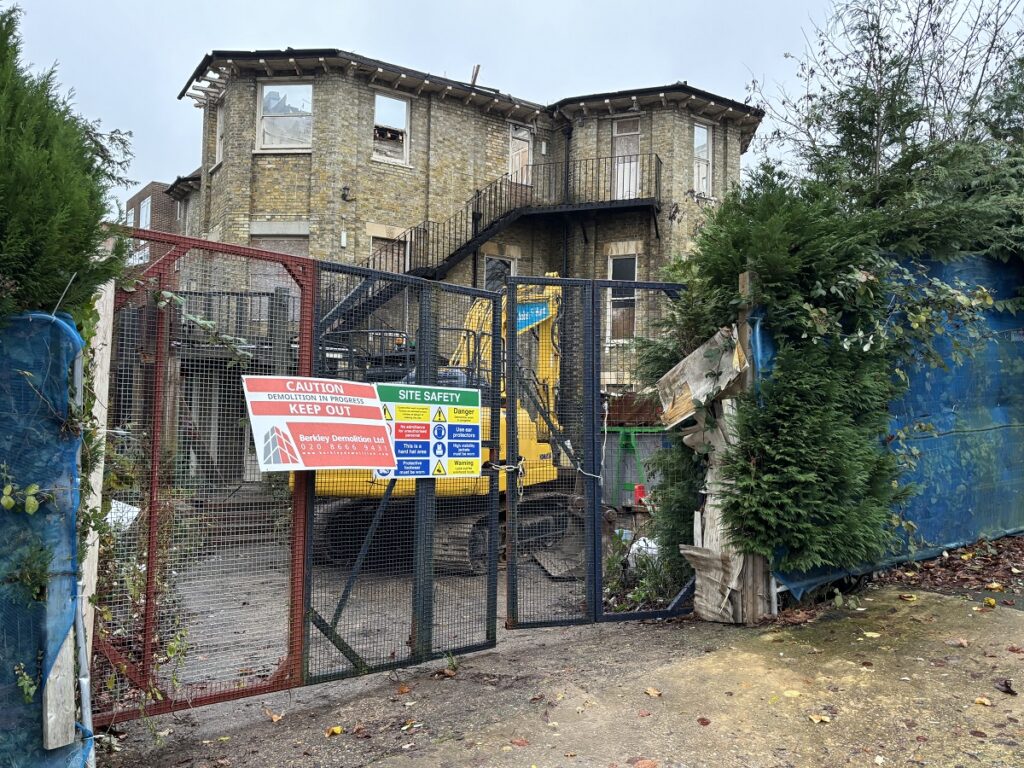
Demolition contractors have finally moved heavy equipment onto the site, and the roof of the building was off within a matter of days.

In his monthly newsletter the Chipping Barnet MP Dan Tomlinson said that residents had raised concerns about the state of the property at a consultation event in Barnet Vale. He said he was “pleased to report that demolition work started this week”.

Robin Bishop, who leads for the Barnet Society on planning and the environment, was appalled by the sad loss of one of the few surviving buildings from the first Victorian settlement at New Barnet.

“Despite being on Barnet’s heritage list, a quirk in the planning law has allowed the owner, Abbeytown, to demolish it without reference to the planning committee.

“For five years the local community, together with the society, fought off earlier plans to replace 33 Lyonsdown with characterless blocks of flats.

“We raised substantial funds for top level legal advice and even designed a more acceptable scheme to retain and extend the villa, all without success.

“A new planning application is doubtless already in the pipeline.”

33 Lyonsdown had a chequered history variously having been a private home, an outpost of London’s Foundling Hospital, a women’s refuge and a base for missionary priests.

In her time as the Chipping Barnet MP, Dame Theresa Villiers, intervened to prevent the demolition, writing to the development company Abbeytown at the offices of estate agents Martyn Gerrard.

She supported the society’s campaign arguing that it was “sad to see such a beautifully designed villa, which was such a feature of New Barnet”, being threatened with demolition.

Simon Kaufman Architects prepared a full feasibility study and visibility assessment to demonstrate a more conservation-led approach to retain a building that had become a heritage landmark.

Under the proposal, the existing building would have been converted into apartments, retaining its original richly detailed stone porch, panelled entrance hall and other original feature.

This would have delivered a comparable floor area and improved sales values when set against total redevelopment.

Alongside the restoration, there was a proposal for a modest new-build block within the grounds which would have mirrored key proportions and materials while maintaining distance from neighbouring properties.

Simon Kaufman insisted this alternative vision was supported with site plans, financial appraisals, and heritage justification, and those opposing demolition had been anxious to engage with the owner to promote a design-led conservation strategy that would have protected the unnecessary loss of an important local building.      

Posted on 4 Comments

New zebra crossings and a mini roundabout for Mays Lane area…and a new controlled parking zone is also on its way  

Barnet Council has completed a major programme of road safety measures around Mays Lane and surrounding roads.

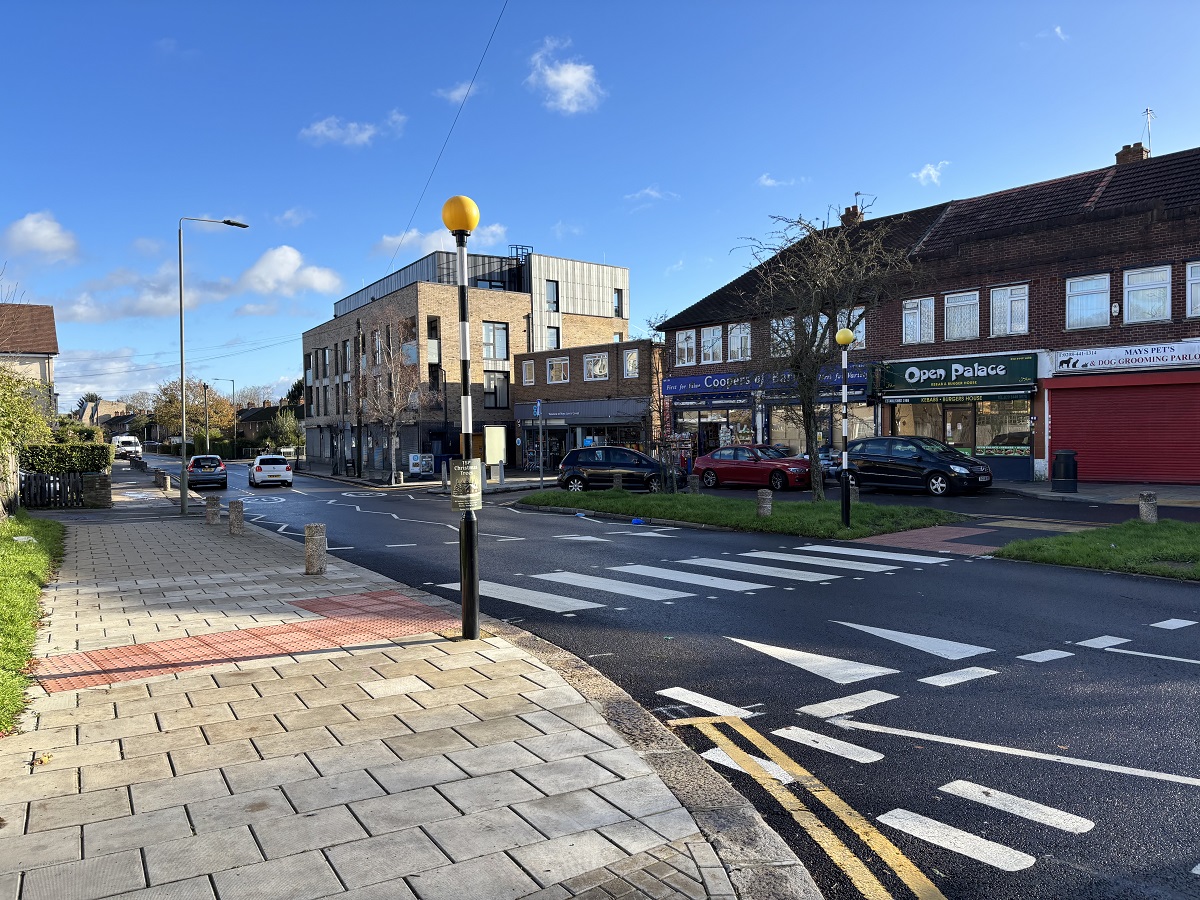
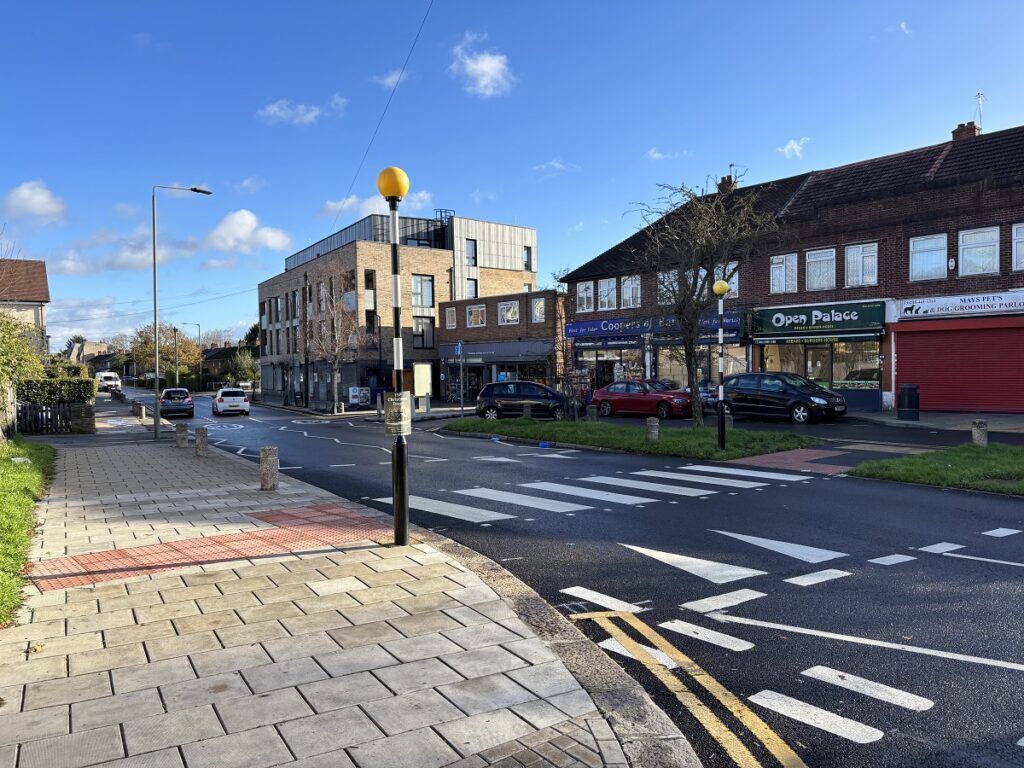
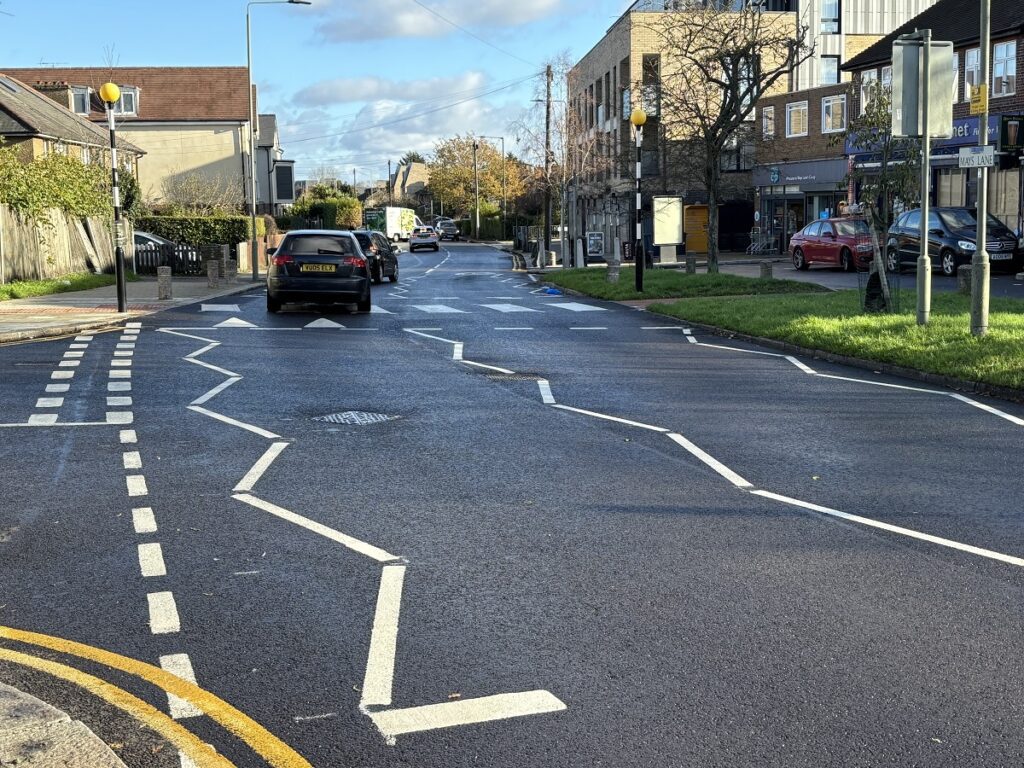
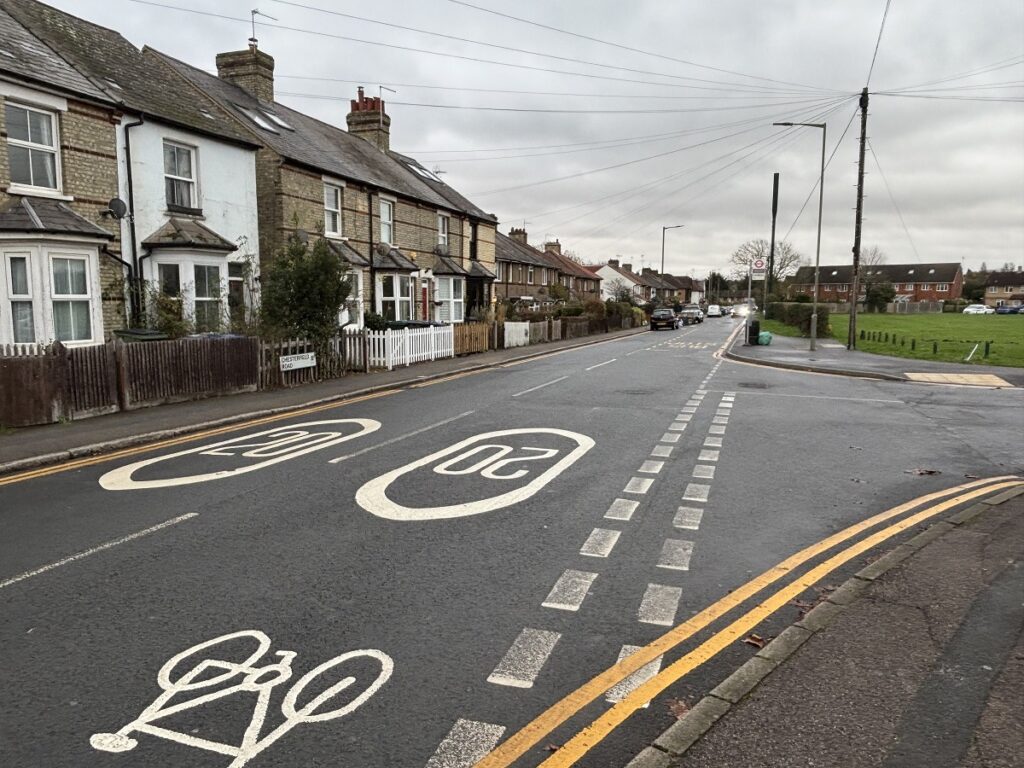
A controversial width restriction has been removed, new zebra crossings installed, a 20-mph speed limit zone extended, more yellow lines painted on the roads and dropped kerbs provided.

In announcing what it says is the completion of the largest ever such scheme in the borough’s history, the council fails to mention that further changes are about to be made.

Despite vociferous opposition from the Underhill Residents Group, the council is going ahead with an experimental controlled parking zone in 16 roads north of Mays Lane which are on either side of Chesterfield Road.

The new Underhill South zone – to be designated the US zone – is to be operated on an experimental basis for 18 months from Monday 15 December.

Originally the council proposed the zone should extend to a total of 29 roads on either side of Mays Lane but after a groundswell of opposition this was cut back to the 16 roads where a council survey indicated “extremely high levels of parking stress” caused by the demand for off-street parking by Barnet Hospital staff, patients and visitors.

The new road safety improvements in Mays Lane extend all the way from its junction with Barnet Lane in the east to Shelford Road in the west, with additional measures in Chesterfield Road, Quinta Drive and Whitings Road.

A new mini roundabout has been installed on Whitings Road at the junction Whitings Road and Bells Hill.

Perhaps the most contentious change is the removal of the width restriction on Mays Lane close to the junction with Manor Road and Leeside.

London Fire Brigade had raised concerns because the restriction impeded fire engines and reduced their response time.

There were also complaints about unacceptable levels of emissions resulting from queueing vehicles, but residents in two nearby roads – Hillside Gardens and Manor Road – claim that the removal of the width restriction has already led to increased traffic – and larger vehicles – using short cuts to avoid jams in Barnet town centre.

Quinta Village Green Residents Association says the increase in heavier vehicles along Mays Lane has fundamentally changed the nature of what was always, outside the commute period, a quiet, residential lane. –

However, on potential change following the removal of the width restriction is that it might be possible to re-route the Uno 243 bus between Barnet Hospital and Hatfield via Underhill, Mays Lane and Manor Road.

At present the 243 stops at Barnet High Street and High Barnet tube station on its route from Hatfield to Barnet Hospital and on its return to Hatfield stops at the Wood Street and Union Street junction and again in Salisbury Road.

Councillor Nik Oakley, Hertsmere Council’s cabinet member for transport – who led the campaign for the restoration of a bus service between Potters Bar and Barnet – told the Barnet Society that possibilities for amending the route of the 243 had been suggested to Uno bus.

Barnet Council completes its largest ever traffic improvement scheme in Mays Lane area -- where a new controlled parking zone is coming.

Barnet Council’s go ahead for the Underhill South CPZ – in the face of sustained opposition from the Underhill Residents Group – will require the installation of resident parking bays, yellow lines and signs and posts in 16 roads on either side of Chesterfield Road.

This work will need to be completed by the start of the scheme on Monday 15 December.

Residents in the affected roads will have a six-month period during which they give their reaction to the CPZ. A final decision on its operation will be taken by the council after the 18-month trial.

The Underhill Group has already collected over 750 signatures for a petition opposing the introduction of a CPZ which it says was opposed by a majority of the residents and had been rejected by 60 per cent of those living in the 16 roads included in the scheme.

In explaining why the CPZ was approved, the council says parking stress surveys indicated there was support for parking controls and only “the most problematic roads” had been included in the experimental scheme.

Given the introduction of extensive new double yellow lines, the Quinta Village Green Residents Association says it fears this will result in a loss of car parking spaces and only amplify the problems caused by the long-standing displacement of parking from the hospital.

The roads included in the new US CPZ are Chesterfield Road, Dexter Road, Dormer Close, Edwyn Close, Greenland Road, Howard Way, Jarvis Close, Juniper Close, Matlock Close, Niton Close, Nupton Drive, Sampson Avenue, Sellwood Drive, Shelford Road, St Anna Road and Stanhope Road.

Posted on 1 Comment

Food and hospitality on offer at the High Barnet Islamic Centre for an afternoon visit by refugees and asylum seekers

High Barnet Islamic Centre, which opened last year, extended its outreach programme of community events with volunteers welcoming over 30 asylum seekers and refugees with a full spread of snacks and refreshments.

The group travelled to the centre by coach from a nearby hotel for an afternoon of hospitality organised in conjunction with HAWA, a Hertfordshire-wide multicultural women’s group which provides a range of care services.

Extra warm clothing was offered to those who needed it including hats and scarves.

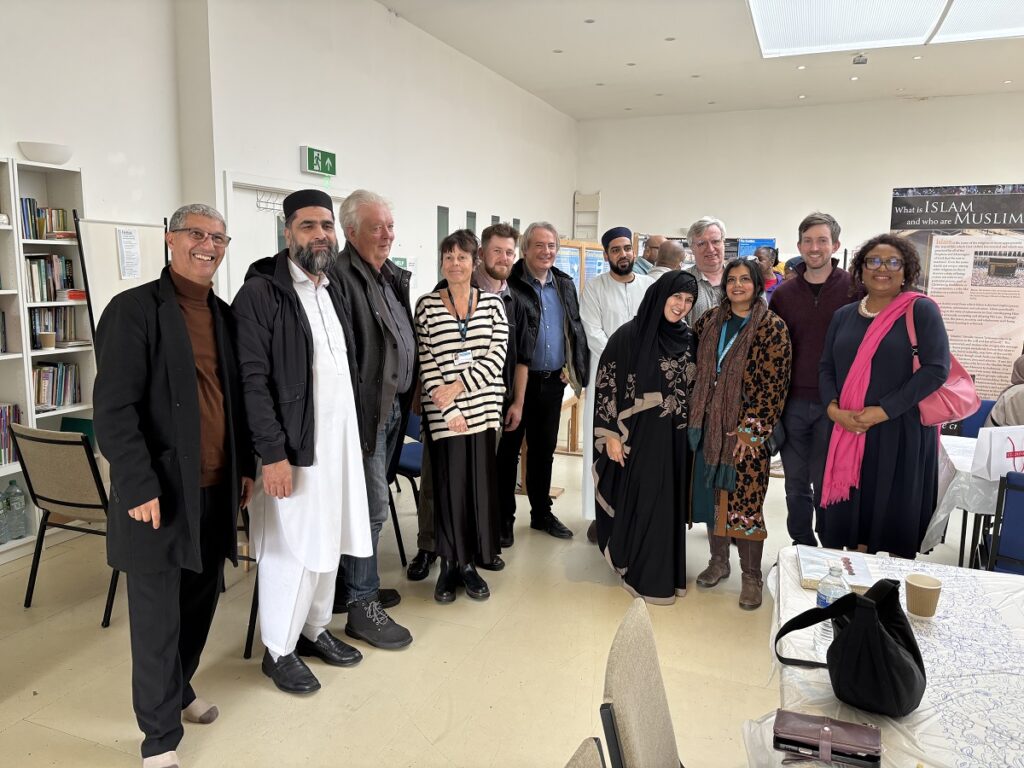
Anjim Iqbal (far right), events co-ordinator for the High Barnet centre – seen with volunteers Siham Bedjaoui and Zeenath Auleear — said laying on a high tea was just one of the initiatives which she and her volunteers hope will help strengthen inter-community relations.

Holding a monthly soup kitchen for homeless and needy families is their next project and again the aim is to reach out to the local community.

“We have already been promised support from local sponsors. They are helping us to source bread to go with soup of the day,” said Anjim.

At an open day in October, the centre welcomed a group of councillors led by Barnet Council leader Barry Rawlings and Chipping Barnet MP Dan Tomlinson, newly appointed as the Exchequer Secretary at the Treasury.

Mr Rawlings stressed the importance of the Borough of Barnet strengthening multi-faith relations and establishing strong links across its various communities and faiths, an objective fully endorsed by the constituency MP.

Mr Tomlinson congratulated the centre on opening its door to the community and for proposing an initiative like a monthly soup kitchen where there would be a warm welcome, refreshments and company.

“I have been to the High Barnet Islamic Centre a couple of times since it opened, and I have been really impressed to find a community which is so outward facing and welcoming.

“It is so heartening to see the Muslim community, like other religious communities in Barnet, uniting in their efforts to bring people together and create a strong community.”

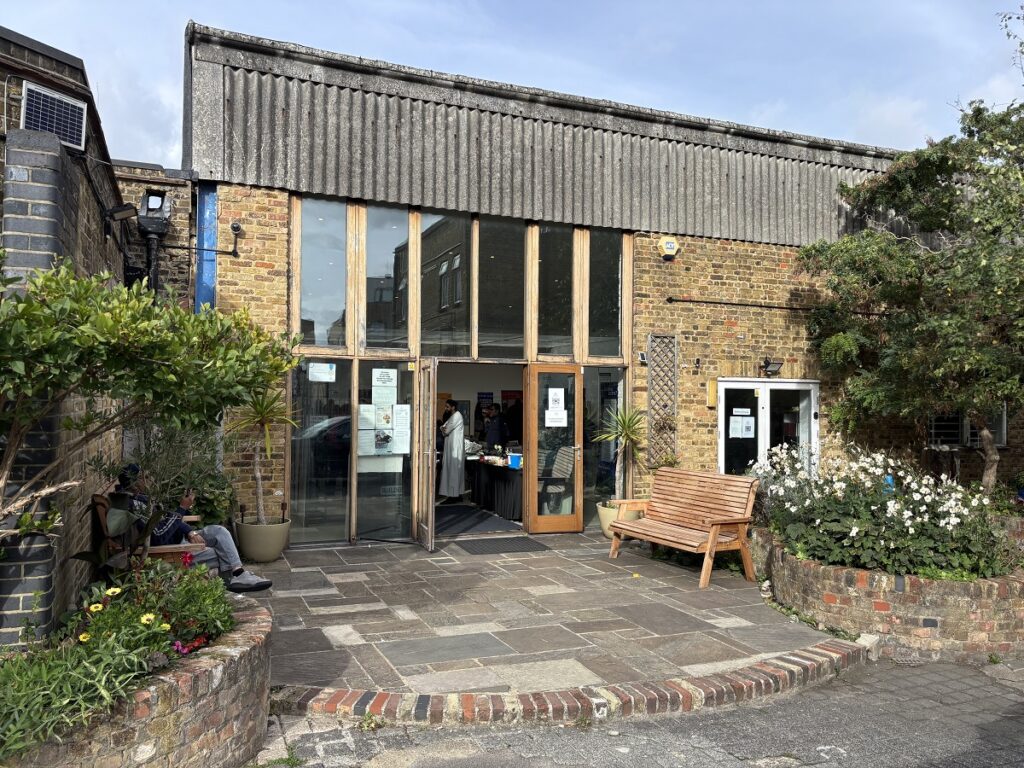
High Barnet Islamic Centre,, which opened last year, welcomed group of refugees and asylum seekers for an afternoon of refreshments and hospitality.

Since the centre, which is in Bath Place, just off Barnet High Street, opened in May last year, it has held a range of multi-cultural events such as bazaars and open days.

Darul Noor charity, which was previously based at the Rainbow Centre on the Dollis Valley estate, moved to the centre after raising £1.8 million to purchase the building from the Template Foundation.

An application has been submitted to Barnet Council for retrospective planning permission to regularise its use as a public hall and for public worship and religious instruction.

In 1995 the Template Foundation secured planning approval to use the building for education and training – permission which the centre’s consultants Absolute Town Planning say should be regularised to match the needs of the Islamic Centre.

“Unlike many planning applications nothing is proposed either physically or by way of use.  The application simply seeks to regulate what has been happening at the site for some time.”

Objections to the application have been submitted to the council on the grounds that regularising use of the building as an Islamic centre for prayer would “cause harm to residential amenities in the area and increase noise and also increase pedestrian and vehicular traffic.”

Before being used by the Template Foundation, the building had been part of small commercial complex, and it was said to be “unsuited to attracting large numbers of people”.

Supportive comments included praise for the centre’s outreach work. It had established itself as a “well managed and trusted community asset and reflects values of co-operation and respect shared across the borough.”

In backing the application, Steve Verrall, director of Barnet Community Projects, said that when Friday prayers and Ramadan were held in the Rainbow Centre at Dollis Valley, they had always been well organised.

These premises were no longer big enough and the new centre in Bath Place had already proved to be an “asset to the borough”.

Local Muslims living in and around High Barnet, who had previously attended Friday prayers in North Finchley, said they welcomed the opening of a centre in High Barnet.   

They considered the objections had been based on “misunderstandings and out-of-date assumptions”. A change of use, they said, would have no visual impact on the Monken Hadley Conservation Area.

Posted on 6 Comments

Last chance to have your say on Barnet Heights

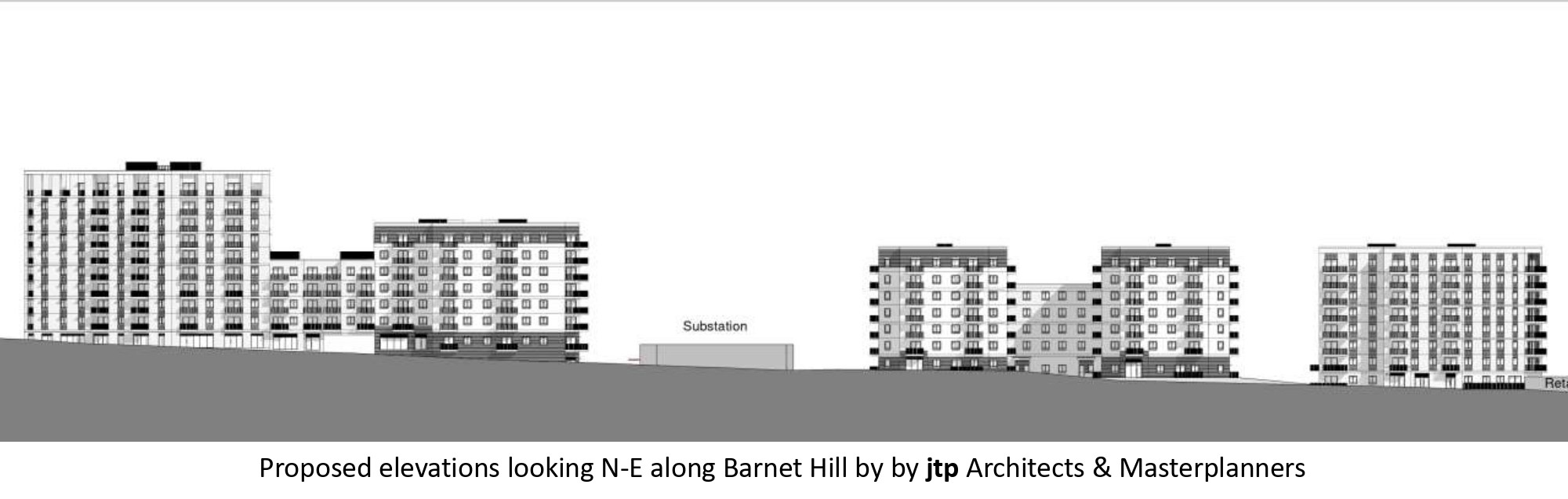
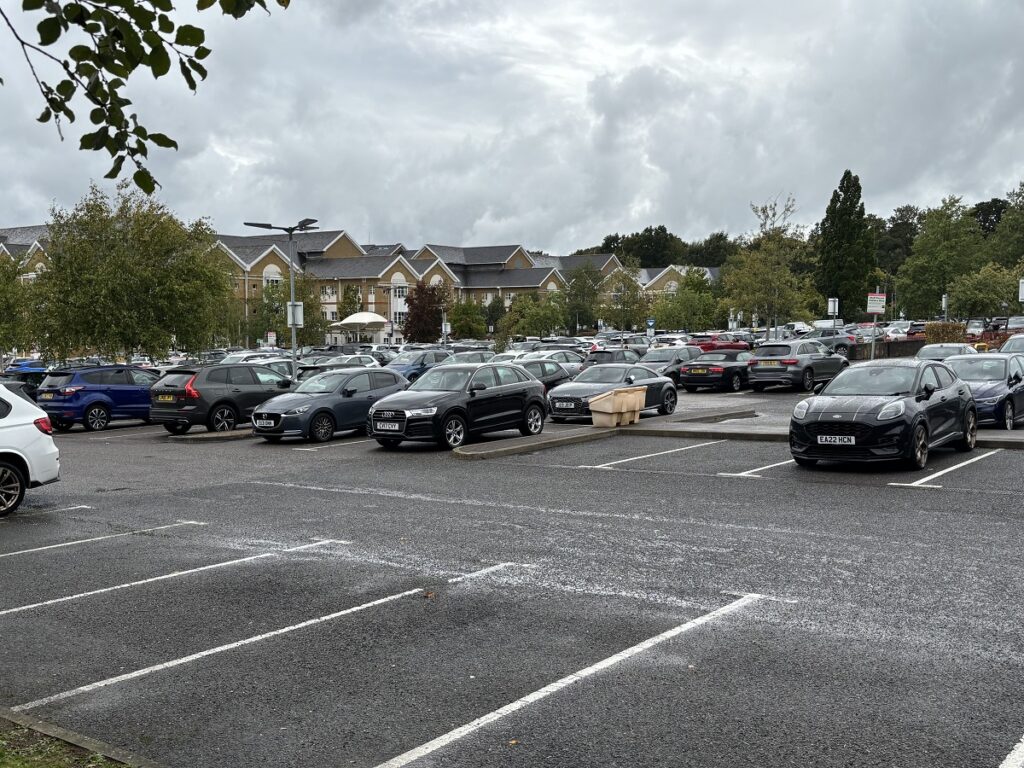
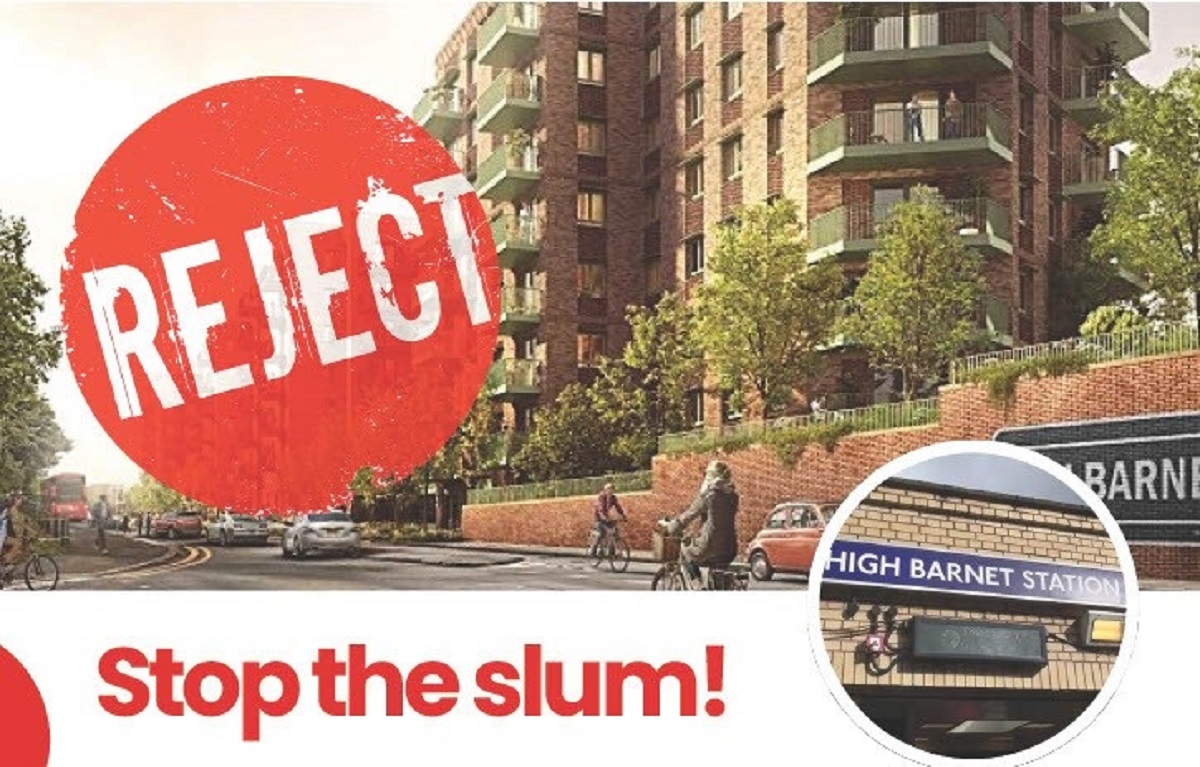
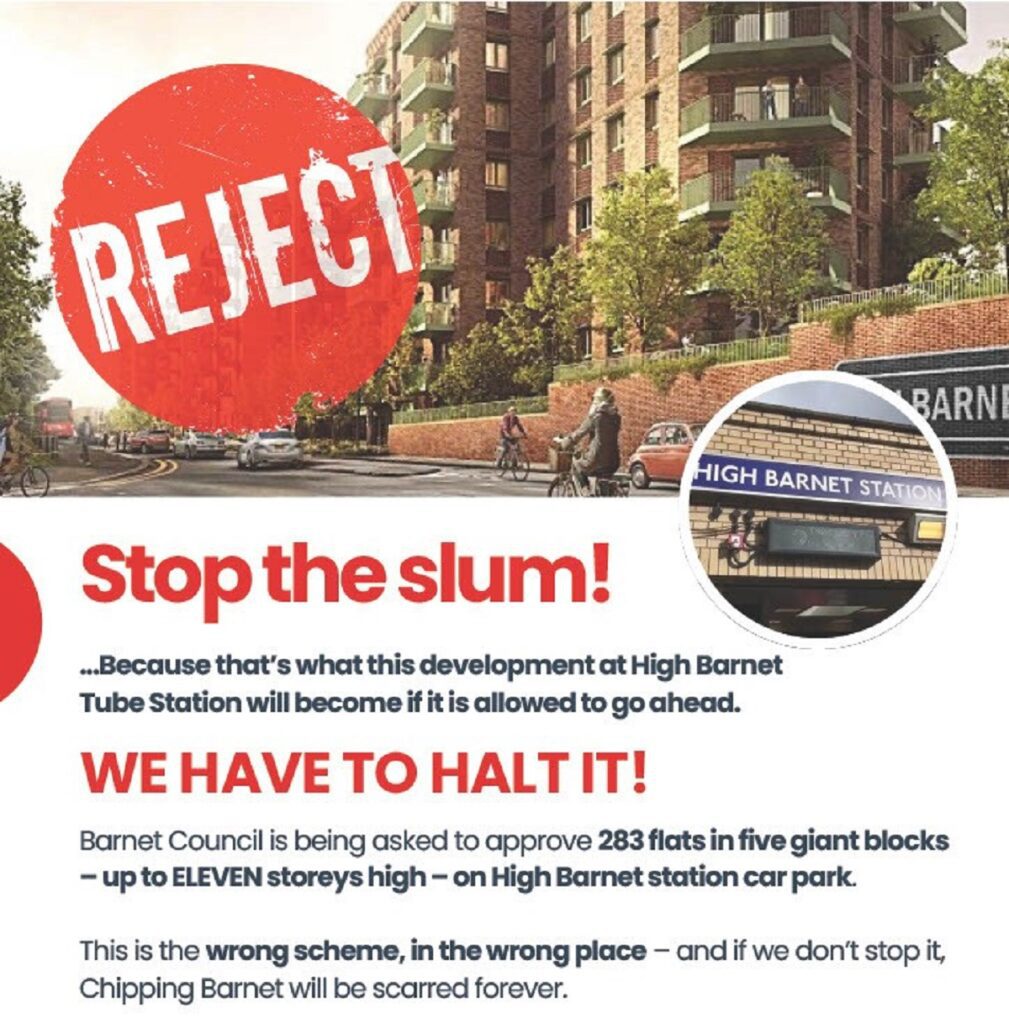
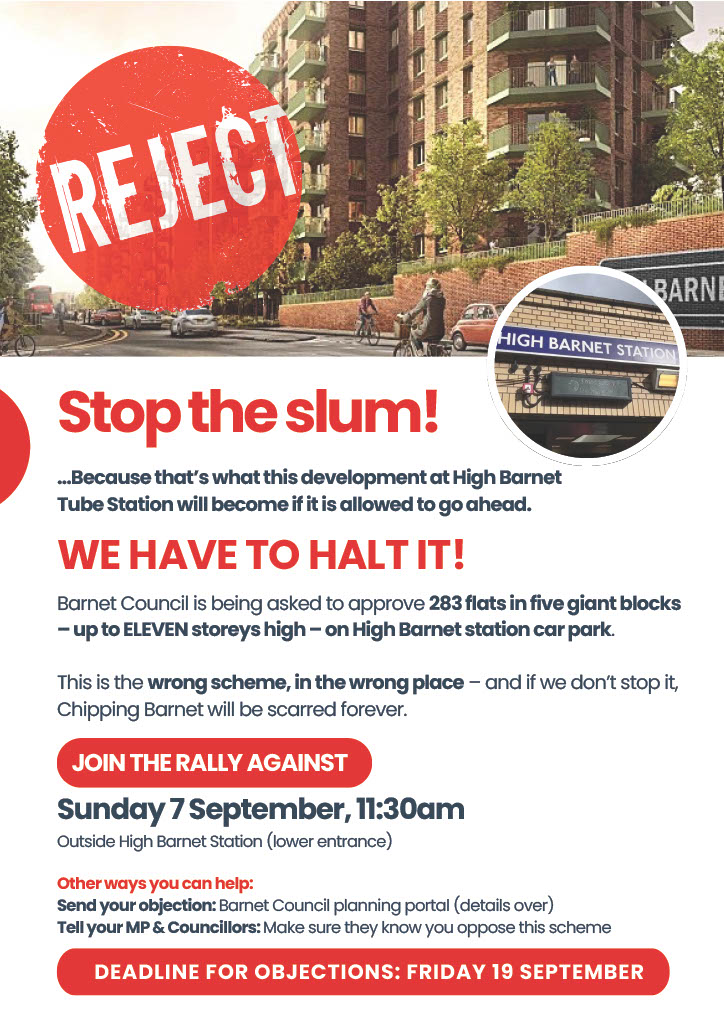
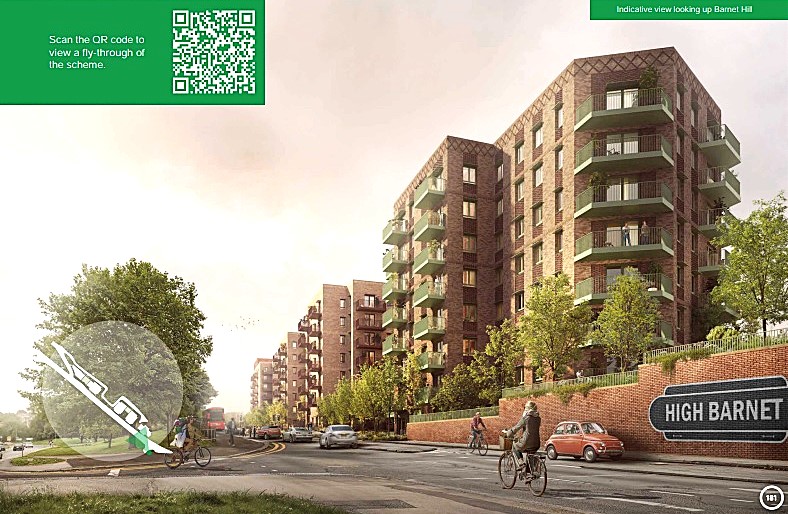
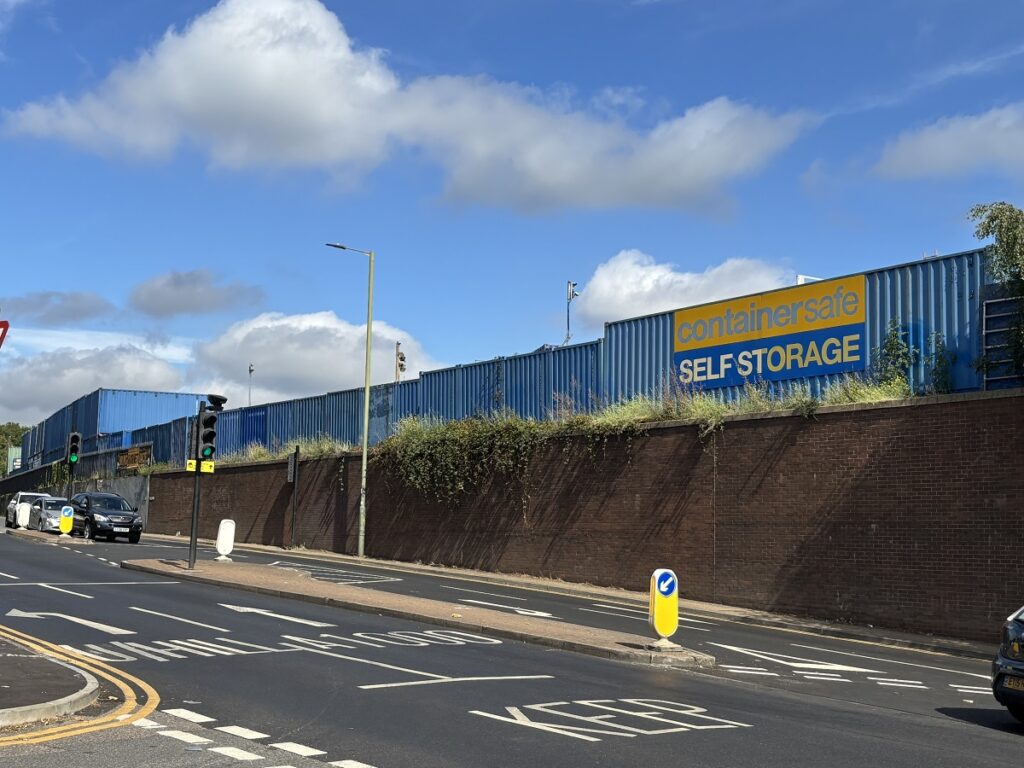
… or High Barnet Place, as the development proposed next to High Barnet Station is officially called (see above). But Barnet Heights would be a more accurate description of 283 flats over the whole of the present car park in blocks of 5 to 11 storeys high.

Whichever, it’s the most serious threat to Chipping Barnet’s character and functioning in decades. And Friday 19 September is the deadline for public comments on the planning application.

The Barnet Society strongly opposes the proposals, and urges you to do so too.

Our key reasons for objecting strongly to the current planning application are because:

  • It breaches many policies in Barnet’s recently-adopted Local Plan.
  • It would create homes of unacceptably poor safety and quality in terms of layout, detailed design and amenity.
  • It would be no more accessible – and probably less safe – than the present site.
  • Contrary to the developers’ claims, it would be unsustainable by many environmental standards.
  • It would irreparably harm the identity of the neighbourhood, nearby and from afar.
  • No compensating benefits of significance are offered in terms of transport connectivity or new/improved facilities to the existing community.

We’re currently finalising a full justification of our objections. A draft summary of them can be found here.

The Society would welcome a development that combined a genuine improvement to the public realm and public transport connectivity alongside well-designed homes at a sympathetic scale of development. But this application is not that.

As I write, over 300 objections have been posted on the Council’s planning portal – impressive, but we need more.

In March Dan Tomlinson MP’s position was neutral, but his current stance has not yet been made known. Former Chipping Barnet MP Theresa Villiers has submitted an objection.

Curiously, of the 26 supporters of the scheme, hardly any actually live in Chipping Barnet.

How you can comment

Have your say one of these ways:

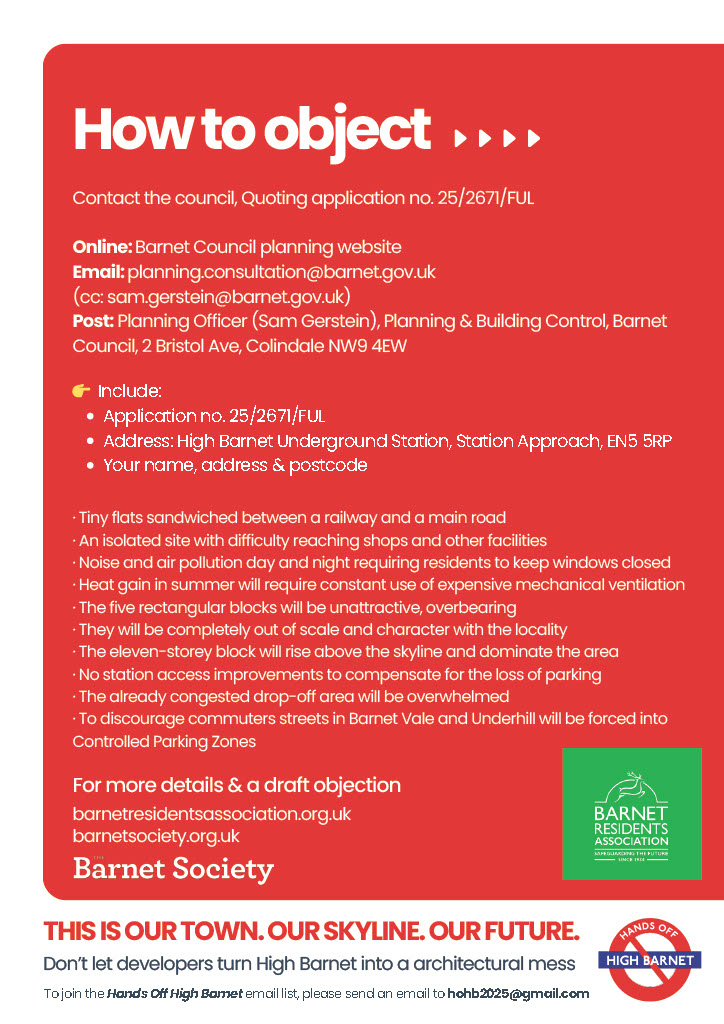
  1. on the Council’s planning portal (ref. no. 25/2671/FUL) via the Comments tab;
  2. email comments direct to planning.consultation@barnet.gov.uk (cc sam.gerstein@barnet.gov.uk); or
  3. post your comments to the Planning Officer: Sam Gerstein, Planning and Building Control, Barnet Council , 2 Bristol Avenue, Colindale, NW9 4EW.

In the cases of 2 & 3, be sure to include:

  • the application ref. no. (25/2671/FUL) clearly at the top
  • the site address (High Barnet Underground Station, Station Approach, Barnet EN5 5RP) and
  • your name, address and postcode.

Sending a copy of your comments to our MP dan.tomlinson.mp@parliament.uk and to your local Councillors will increase the effectiveness of your objection.

Posted on 7 Comments

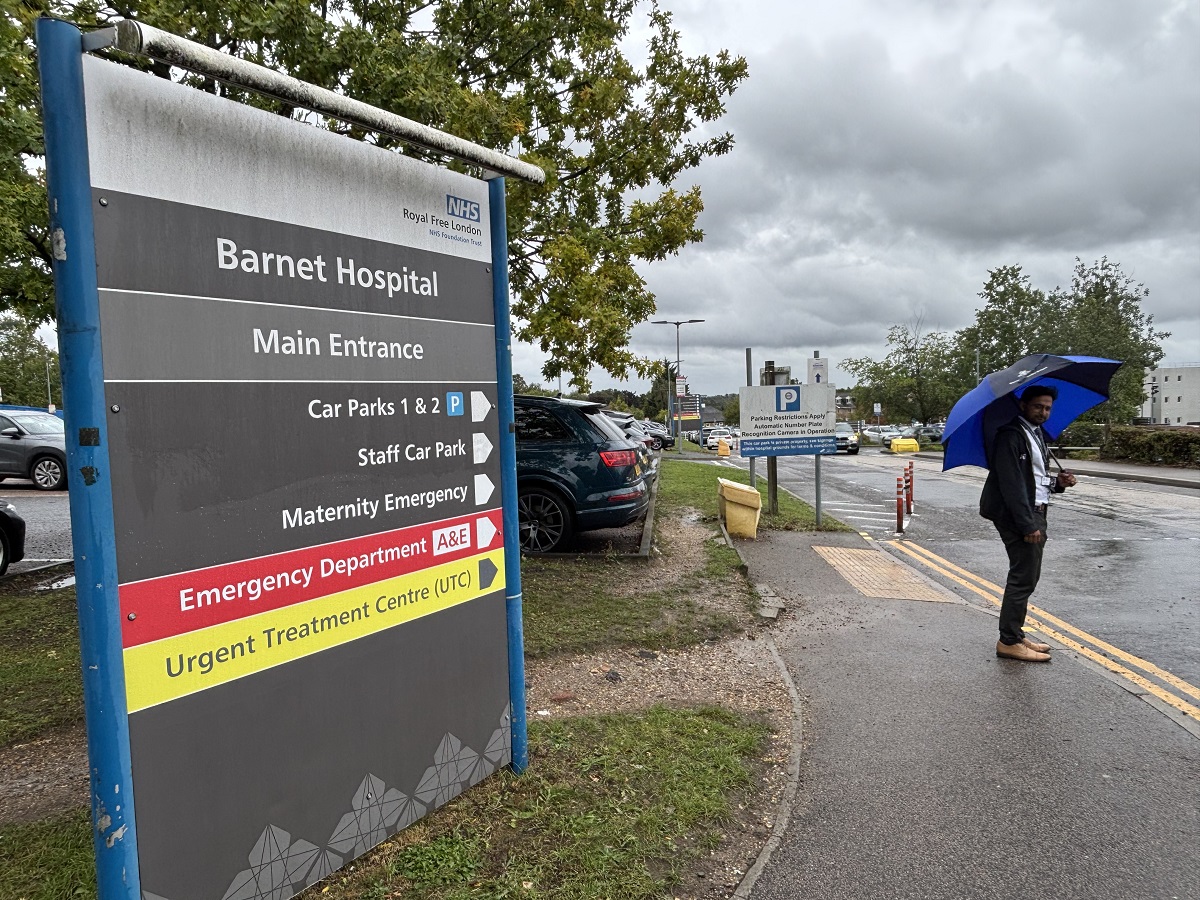
Barnet Hospital said to be in “constructive discussions” with Barnet Council over car parking pressure on nearby roads

Community organisations have welcomed assurances that Barnet Hospital will try to reduce the pressure which car parking by hospital staff, patients and visitors is placing on surrounding residential roads.

Plans for a further expansion of the ever-widening controlled parking zones around the hospital are meeting a barrage of criticism from householders who are forced to pay for parking permits.

Barnet Council officials are understood to have suggested to the Royal Free Hospital Trust that the management at Barnet should look for ways to alleviate the problem.

Nearby residents could not be expected to acquiesce as more and more local streets become a parking lot for the hospital, necessitating the introduction of an ever-expanding CPZ.

Residents’ associations understand that the trust will now examine what more can be done to increase the capacity of the hospital’s own car parks off Wellhouse Lane – by making better use of the space available – and by taking over vacant sites.

Currently Barnet Hospital has insufficient parking space for its own staff and a request for yet another increase in the undisclosed number of on-street parking permits – which are already issued for staff use – has apparently been refused.

News of what are said to be “constructive discussions” between the council and the hospital follow in the wake of further expansion of Barnet Hospital CPZ.

This has recently been extended – despite strong local resistance – to take in seven roads around Ryecroft Crescent, on the Arkley side of Quinta Drive.

Almost 80 per cent of the residents who replied to a consultation were against the introduction of a CPZ extension, but the council has gone ahead with a widening of the zone on what officials say is “an experimental basis”.

There was further uproar last month when the council held consultations on the proposed Underhill South CPZ – a new CPZ which would introduce restrictions and permits in 29 roads, including several cul-de-sacs, which are on either side of Mays Lane, extending from the junction with Manor Road all the way westwards to the junction with Shelford Road.

A council survey was said to have shown that there were “extremely high levels of parking stress” in most of the roads surrounding Mays Lane caused by the extra demand for spaces from hospital staff, patients and visitors.

But residents say a CPZ over such a wide area – extending to the Dollis Valley riverside walk – is completely unnecessary and would become extremely expensive for residents.

The Quinta Green Residents Association and the Underhill Residents Association – which are both claiming there is overwhelming opposition to a new CPZ – said they had been urging strategic solutions to the problems caused by the hospital.

Community groups welcome assurances that Barnet Hospital will take steps to try alleviate car parking pressure on surrounding streets.

They believed the hospital’s existing car parks could be reconfigured to take more vehicles and that vacant land around the hospital – such as the site above at the Wellhouse Lane-Wood Street junction – should be brought into use.

The two associations say one option might be for the hospital to reach agreements with local organisations including schools and clubs to see whether it was possible to rent additional parking spaces.

Posted on 20 Comments

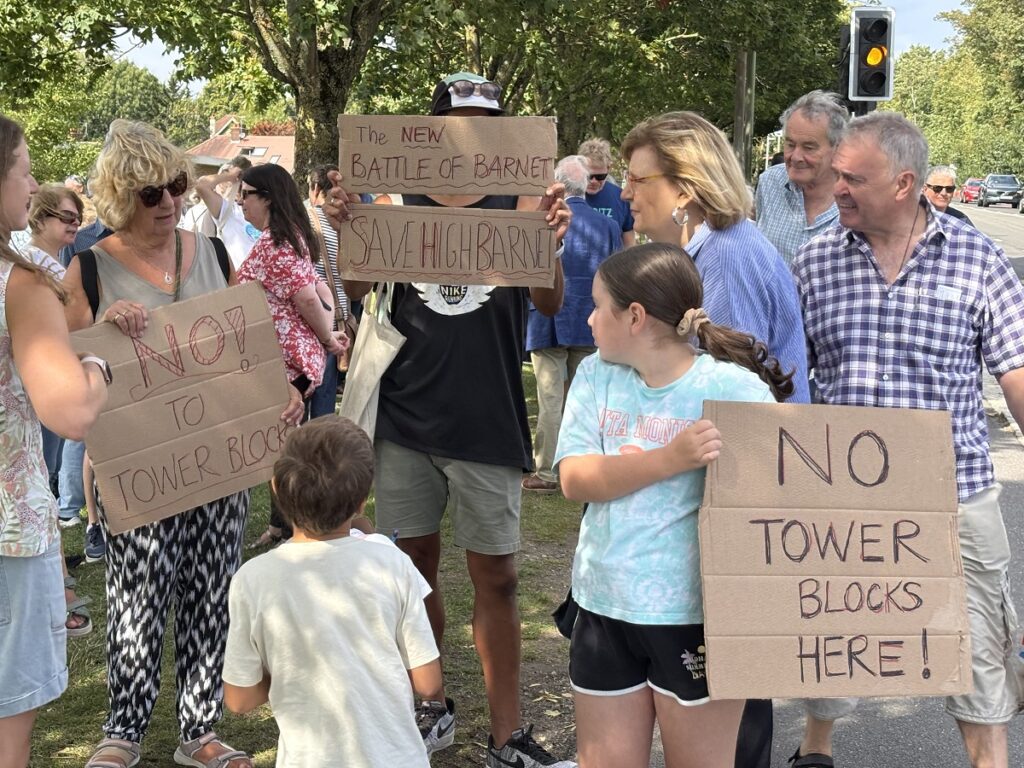
Transport for London bans flats protest rally outside High Barnet station – but across the road residents launch their “New Battle of Barnet”

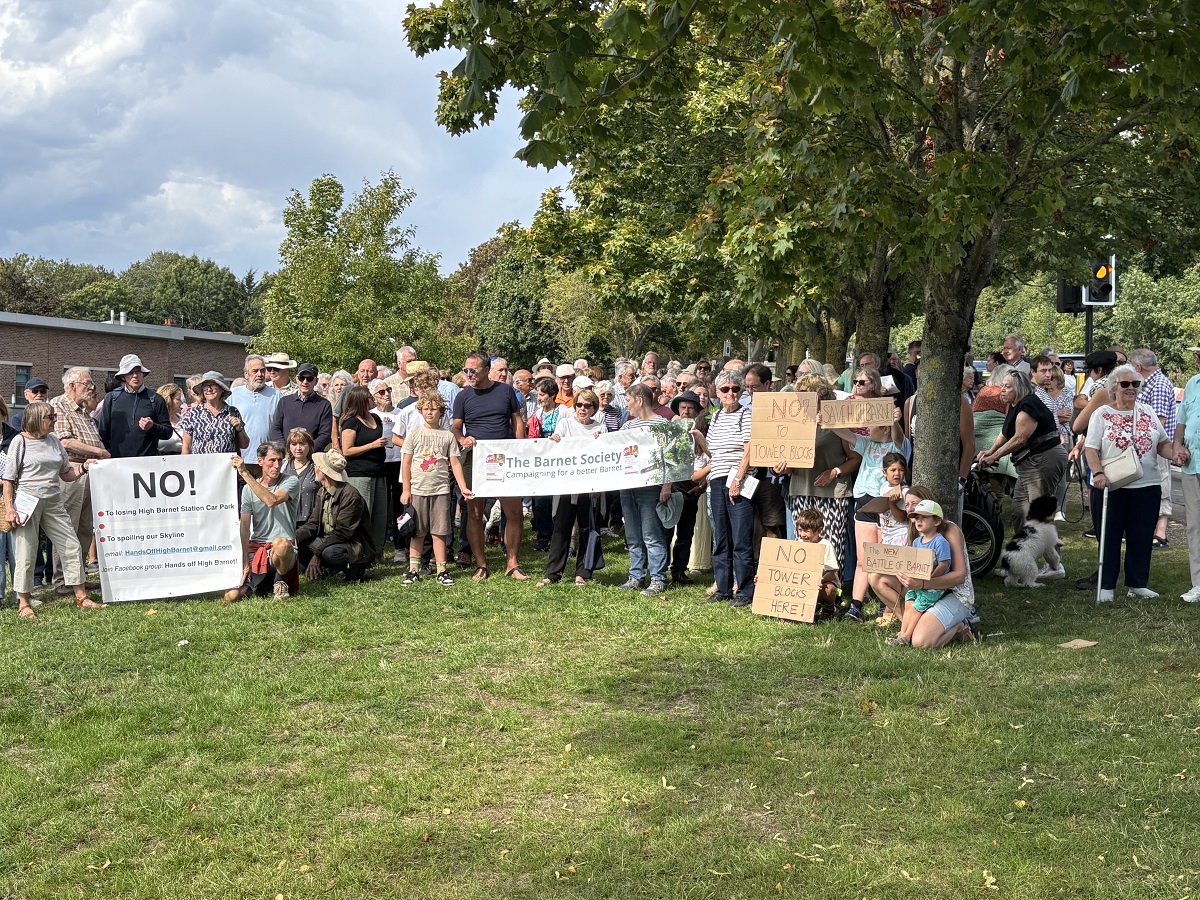
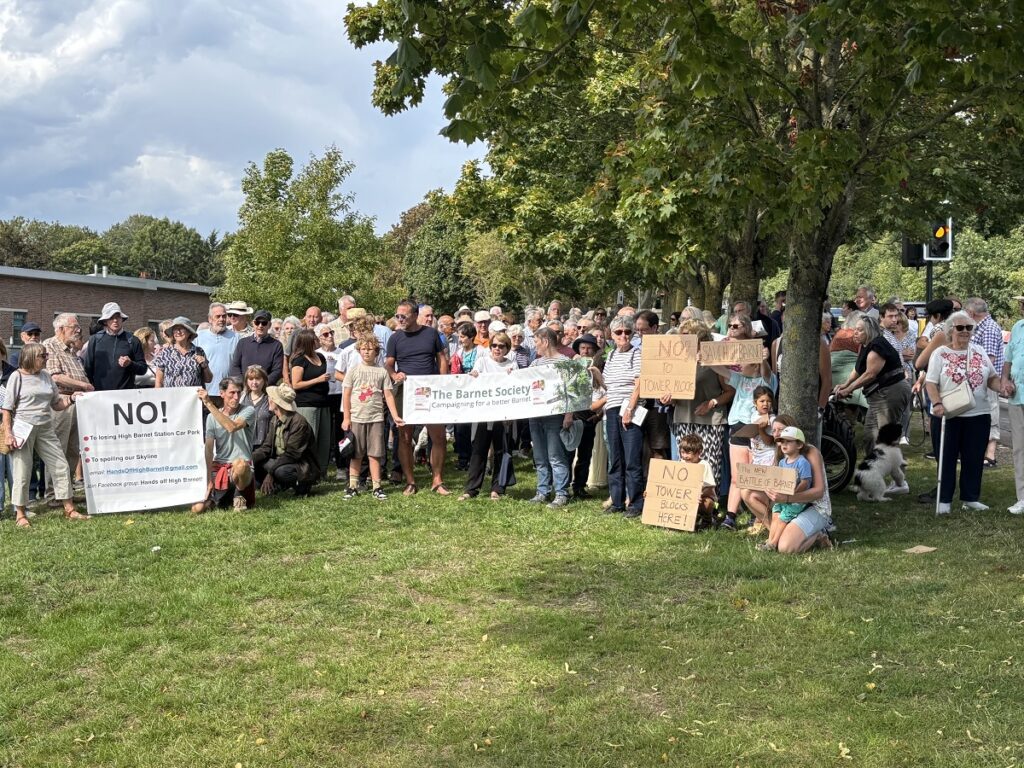
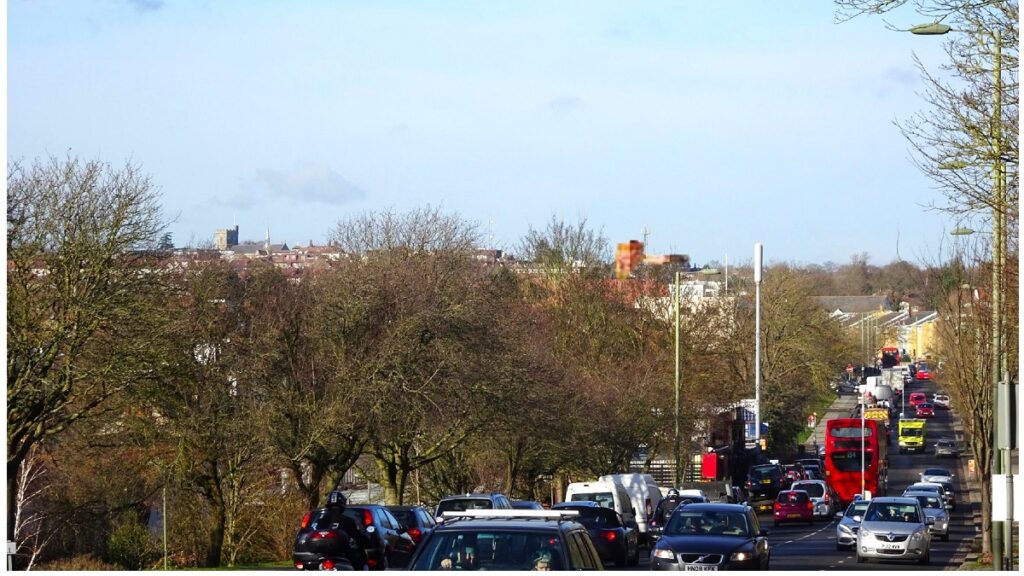
A mass protest against plans for five high-rise blocks of flats on the car park at High Barnet tube station attracted over 250 residents who were greeted with toots of support from the horns of passing motorists.

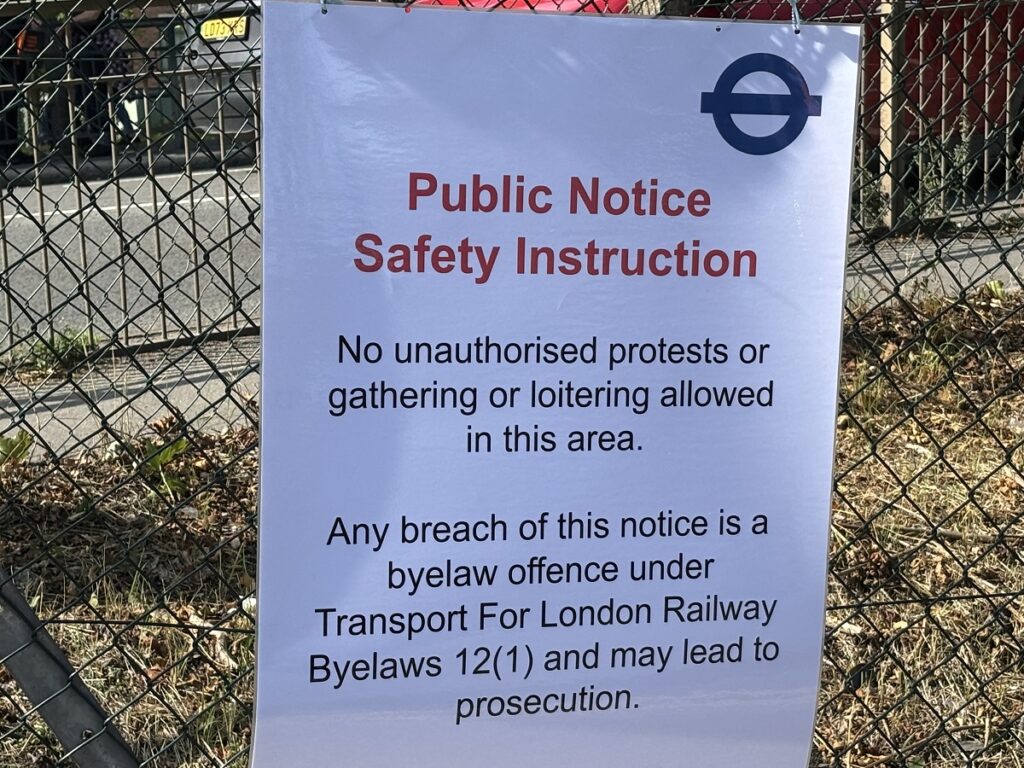
London Transport moved swiftly to warn of prosecutions if protestors gathered around the station entrance, so the rally was switched to the other side of Barnet Hill.

Fifteen posters warning of the consequences of any “unauthorised protests or gathering or loitering” had been fixed to walls and fences all around the lower entrance.

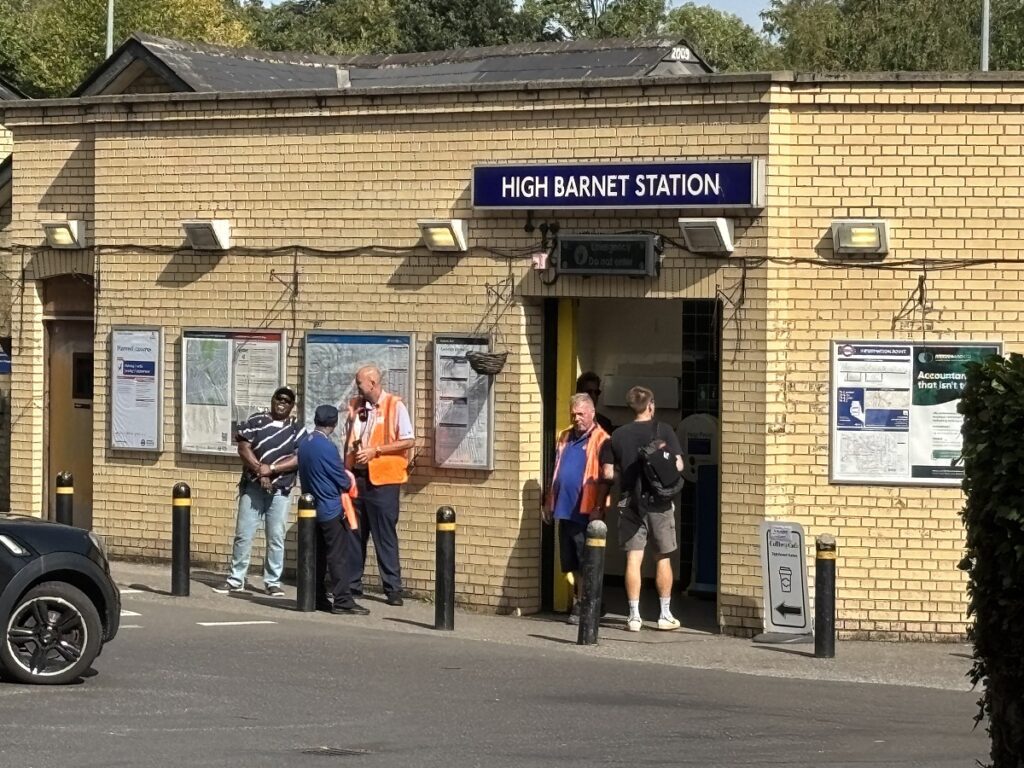
A posse of four members of London Underground staff stood at the station forecourt and were on hand in case of any breach of Transport for London byelaws.

Despite the ban on meeting in the area around the station’s lower entrance, the groups organising the protest – Barnet Society, Barnet Residents Association and Hands Off high Barnet – were determined to show the strength of opposition to a redevelopment they argue is the “wrong scheme, in the wrong place”.

As supporters were marshalled back up the slope of the station entrance to cross the road to the grassy bank on the opposite side of Barnet Hill, there were muttered protests at what was seen as TfL’s high-handed approach in banning a rally on their land.

In particular, the wording of the notices – suggesting their presence might lead to prosecutions – led some residents to complain that TfL seemed to be turning High Barnet into a police state where free speech and protest were being suppressed.

While remaining friendly and approachable, the four London Underground staff on duty outside the station entrance were a clear indication that TfL meant business – the rally had apparently been banned on grounds of health and safety.

As the crowd of protestors continued to grow in size – approaching 250 people or more on some estimates – the organisers said they were delighted by the turn out.

Four thousand leaflets had been distributed calling for support, reminding residents they had until Friday 19 September to register their objections with Barnet Council.

Gordon Massey, who analysed the scheme on behalf of Barnet Residents Association, told the crowd they had to recognise that TfL – through its subsidiary Places for London – was determined to build as many homes as possible on spare land at London Underground stations.

“283 flats on this site are far too many and the design of them is absolutely dreadful. Just listen to the noise from the road and think what it will be like living there.”

He praised the joint effort there had been with the Barnet Society whose planning and environment spokesman Robin Bishop said the society’s team approach would allow them to present Barnet Council with “a substantial submission” detailing the faults in the scheme.

As the rally continued, hand-made posters held up by the grandchildren of Jane Ouseley (far left) amused passing motorists who tooted their horns in support of the message: “No tower blocks in High Barnet”.

Summing up the defiance of the crowd was a slogan on one of the posters: “The new Battle of Barnet”.

Another poster on the roadside at the entrance to the station left passers-by in no doubt about what the protest was all about.

Ken Rowland, chair of the residents’ association, said the size of the crowd showed why residents felt so strongly about an “appalling and monstrous” development.

“We need to stop this…the children living in homes in these blocks will not be able to open the windows…they will be overlooking an electricity sub station and railway tracks, and it is not the appropriate place for a development of this size.”

Kim Ambridge, a founder member of Hands-Off High Barnet which fought successfully against a 2019 plan – later withdrawn – for high-rise flats, deplored the loss of the station car park.

Her concern was reinforced by Barnet Vale Councillor David Longstaff who thought that by building over a well-lit car park, TfL was failing to acknowledge the fears of women arriving at the High Barnet station late at night.

At the end of the rally the crowd showed their contempt for TfL’s ban on the protest outside the tube station by marching up the High Street to the parish church of St John the Baptist.

Mass protest rally against tower blocks of flats at High Barnet tube station goes ahead despite Transport for London ban on gatherings outside the station entrance

A final photo-opportunity underlined another message of from the rally – that the proposed 11-storey block of flats at the station would break the historic skyline of High Barnet and compete with the commanding presence of the church tower.

Posted on 2 Comments

From toy shop to branch Post Office – another franchised business moves into Barnet High Street

Barnet’s Crown Post Office, which is about to become a franchise operation, will move across the High Street at some point in November to new premises in a former toy shop.

Once it becomes a franchise – as from Thursday 11 September – the branch will offer customers longer opening hours to include Saturday afternoons and Sundays (11am to 4pm).

Toy Galaxy, at 112 High Street, which closed some months ago, is to be refitted as a Post Office branch and stationery store.

It will have two open plan serving positions, four self-service machines and, initially, two additional counters.

There will be level access to the new Post Office through an automatic entrance. Inside there will be low-level serving counters, a low-level writing desk and hearing loops.

The new branch will be managed by the UOE store group (Universal Office Equipment UK) which already operates a chain of franchised Post Offices around London and the Home Counties, including Potters Bar and East Finchley.

Elliott Jacobs, who is chief executive of UOE and Postmaster for the franchised business, told the Barnet Society that the empty Toy Galaxy shop would be undergoing a “major refurbishment”.

His company was proud to be enhancing the delivery of an essential service with a seven-day a week Post Office and retail stationery store.

As part of the closure process, the Post Office is to carry out a six-week consultation exercise during which customers can give their opinions on the siting of the new location, ease of access, and any other feedback. 

After always having had its own Post Office – trading for more than a century from an imposing Edwardian building close to the parish church – Barnet is one of the last 108 town centres across the country to lose its Crown office.

This follows the Post Office’s decision to cease all retail operations and offer redundancy payments to existing staff – all of whom at the Barnet Crown Office, said to number around nine, are thought to have accepted the offer.

Barnet Post Office, which was rebuilt during the reign of King Edward VII, re-opened in 1905.

It was designed by the architect Jasper Wagner and displays – right at the top – the King’s motif ER.

An early post card illustrates the prominent position of the building in the High Street and hints at its significance as the town’s Post Office.

Barnet had a distinguished history having been a regular stopping off point for mail coaches heading out of London for Scotland and the north.

Set in the wall, just to the right of the letter box, is one of the original boundary stones of the ancient parish of Chipping Barnet.

Barnet's Crown Post Office becomes a franchise business and is to move across the High Street to a vacant toy shop and offer a seven-day service.

Its massive wooden front door also has a story to tell – set within the frame is a small grille and window.

Local folk lore has it that police constables patrolling the High Street sometimes popped into the Post Office late in the evening and at night – and could peep through it unobserved to keep an eye out for any nefarious activity.    

Posted on

Barnet Council goes to High Court to challenge a planning inspector’s go ahead for a travellers’ caravan site in Mays Lane

An application has been made to the High Court to challenge the go ahead for a travellers’ caravan site on a field in Green Belt land off Mays Lane, Barnet, on the grounds that the decision was inaccurate.

A planning inspector approved the plan for pitches for two travellers’ caravans because the needs of two gypsy families with seven young children “tipped the balance” in their favour.

Barnet Council had previously refused permission but after a lengthy planning inquiry, the inspector, Graham Chamberlain, decided that the “very special circumstances” of the two families outweighed any harm to the Green Belt.

In seeking to reverse the decision through a judicial review, the council will have to indicate why it believes the inspector’s conclusion was factually flawed.

Mr Chamberlain had concluded that the best interests of the “seven young children” in case would be served by “establishing a secure permanent home” for them at the appeal site”.

But in challenging the decision, the council is expected to argue that the evidence showed that in fact only four or five children would live on the site, with just one of them enrolled in school.

Therefore, the council could insist that the inspector’s decision was legally unsound.

Quinta Village Green Residents’ Association – which opposed the caravan site, and which was disappointed by the go ahead given by the inspector – has welcomed the council’s High Court challenge.

When he overturned the council’s refusal to grant planning permission, Mr Chamberlain acknowledged that a travellers’ caravan site on a two-acre paddock, previously used for grazing horses, would result in “some modest harm to the character and appearance” of the Mays Lane area.

However, he concluded that the balance in favour of the scheme changed significantly when the personal circumstances of the two gypsy families were factored in, especially the best interests of the seven children.

“Indeed, personal circumstances tip the balance in favour of the scheme when all other considerations are contemplated cumulatively…It follows that the very special circumstances necessary to justify the development have been demonstrated.”

Members of the residents’ association have now been told of the legal challenge which is being made by the council close to what would have been the end of the six-week period for a judicial review.

In going to the High Court, the association hopes the council will emphasise that Green Belt protections carried substantial weight under national planning policy.

Inappropriate development of the kind proposed, should only be allowed in “very special circumstances”.

While the welfare of children was rightly a primary consideration, it had to be based on accurate evidence.

The inspector had relied on the advice of the barrister for the brothers Patrick and J Casey, who had made the planning application, but by seeking a judicial review the council implies these submissions were incorrect and failed to consider the actual circumstances of the children involved.

Posted on 5 Comments

Co-ordinated fight back by community groups organising a united front against plans for high rise flats at High Barnet station

Community groups are presenting a united front in objecting to Transport for London’s planning application to build five high-rise blocks of flats on a car park and strip of land alongside the London Underground station for High Barnet.

To highlight the strength of opposition to the “wrong scheme in the wrong place” a rally is to be held on the morning of Sunday 7 September at the lower entrance to the tube station starting at 11.30 am.

Barnet Council has extended until Friday 19 September the deadline for residents to respond to the scheme.

After widespread complaints about the decision to organise public consultation during the summer holidays when so many people were likely to be away, the council acknowledged extra time should be given to ensure residents understood the full impact of the application being made by TfL’s property subsidiary, Places for London.

Leading the way in opposing the scheme are the Barnet Society and the Barnet Residents Association which have both been preparing a detailed list of objections to the application to provide 283 flats in five high storey blocks, one of which would be 11 storeys high.

They say the five blocks of flats are “unattractive and overbearing” and completely out of scale and character for the locality with the eleven-storey block rising above the skyline.

Gordon Massey, who prepared a point-by-point summary of the association’s objections, says the proposed development is a “poorly designed blot on the landscape” with the expectation that the flats would be overwhelmingly purchased by buy-to-let landlords.

Living conditions on the new estate would be poor as 75 of the flats would be single aspect facing west, raising issues of noise, heat and ventilation with the likelihood that with all windows having to remain closed, they would rely on mechanical ventilation.

“We are not opposed to the redevelopment of this site for housing, but the people of High Barnet and future residents of this development deserve something much better than this.”

Mr Massey’s conclusions are in line with those of Robin Bishop, who leads for the Barnet Society on planning and the environment, and who thinks the scheme would have a brutal impact on the existing townscape and greenery of High Barnet, Underhill and Barnet Vale.

“Our main objections to the scheme are to the alien scale and character of the designs; its unsustainability as a neighbourhood; its unsafe environment; and the lack of community benefits.”  

Other community groups warn of grave consequences if the development goes ahead with the danger that sandwiching high-rise blocks of tiny flats onto a strip of land between the tube line and Barnet Hill would, in their opinion, be destined to create the slum housing of tomorrow.

Hands Off High Barnet, a campaign group which co-ordinated objections to a 2019 scheme to build seven blocks on the site – a plan which was later reduced and withdrawn – fears the same mistakes are being made once again.

Of the 283 flats being proposed, 68 would be of only one bedroom when High Barnet desperately needed more family homes.

The loss of a well-lit station car park would pose a particular danger for women returning to High Barnet late at night.

“After all the objections we made to the last application, TfL are still not making it any easier for disabled passengers who need to be dropped off or collected at the station,” said Kim Ambridge, one of the founders of Hands-Off High Barnet.

John Dix of the Save New Barnet Campaign – which fought long and hard trying to prevent too many new flats being squeezed into the Victoria Quarter site – said he thought the station scheme was “really shocking”.

The children’s play space in the new development was the “absolute bare minimum” for under 11s.

“One of the children’s play spaces is a steep slope – it drops by 3.3 metres from top to bottom – with steps down the middle underneath one of the blocks.

“They call it the ‘undercroft’ play area, but the wind assessment says it is a problem area and is not for lingering.

“How any human being could classify this dark, draughty underpass as a play area is beyond me.

“The children’s play area for the 12-18-year-olds is, wait for it…500 metres away on Barnet playing fields.”

Mr Dix said he hoped Barnet Councillors read the details of the application, refuse to give approval, and tell the developers to go back to the drawing board.

To raise awareness of TfL’s application and publicise the rally on Sunday 7 September volunteers hope to distribute a leaflet – see below – to around 4,000 households in High Barnet.

Community groups across High Barnet organising co-ordinated fight back against plans for high rise blocks of flats at High Barnet tube station
Posted on

Race is on for community groups rallying opposition to “massive” high-rise redevelopment around High Barnet tube station

Overwhelming local opposition is emerging to Transport for London’s latest application to build five high-rise blocks of flats on a car park and land alongside High Barnet tube station.

Since plans were published four weeks ago, the response has been heavily against the scheme for being a “massive overdevelopment” with the tallest 11-storey block being described as “horrendous” and “overbearing”.

But the race is now on among community groups to raise public awareness and marshal their case against the plan before the September 2 deadline for registering comments with Barnet Council.

Ward councillors and High Barnet MP Dan Tomlinson are to be briefed by the Barnet Society and Barnet Residents Association as the two organisations finalise their detailed responses.

There have been some complaints of underhand tactics: Why is a consultation on such a significant application being conducted during the summer holidays when so many residents are likely to be away? 

Some of the comments posted so far online have been in favour arguing that 283 new flats would provide “much-needed housing” and “smarten up” the area.

But comments posted on the Barnet Society website since 23 July – and direct responses to the society’s draft of its own objections to the plan – indicate mounting opposition.

Issues of greatest concern are the potential harm a massive development might have on the historic character of High Barnet; the loss of the station car park; the smallness of the flats (68 of 283 would be one-bedroom); the lack of community benefit or support for a new neighbourhood of nearly 1,000 people; and the failure to make substantial improvements to public access to the station and connections for bus passengers.

A fuller understanding of the implications of the development by TfL’s subsidiary Places for London is generating additional criticism.

To offset the loss of the station car park – and prevent commuters parking in nearby roads – new controlled parking zones are being proposed for Underhill (Barnet Lane/Sherrards Way) and Barnet Vale (Meadway, Kingsmead, Potters Lane, Prospect Road, Leicester Road and King Edward Road).

There are also increasing doubts about the poor layout inside the blocks and fears that a high proportion of the flats facing south-west could probably overheat in the summer.

Robin Bishop, who leads for the Barnet Society on planning and environment, says the five blocks of flats would have a brutal impact on the existing townscape and greenery of High Barnet, Underhill and Barnet Vale.

The tallest block of 11 storeys – seen superimposed in orange on the photograph above of the view taken from Pricklers Hill –would “break the historic skyline from several viewpoints and compete with, and detract from, the traditional pre-eminence of St John the Baptist parish church”.

“Our main objections to the scheme are to the alien scale and character of the designs; its unsustainability as a neighbourhood; its unsafe environment; and the lack of community benefits.”

Under the approved Barnet local plan, land around the tube station is earmarked for the construction of up to 300 homes but with a height limit of seven storeys.

Breaking that undertaking by approving the plan would be regarded by the scheme’s opponents as a grave betrayal by Barnet Council.

Community groups marshalling opposition to massive high rise flats at High Barnet tube station before deadline for comments on 2 September.

If the application is approved, it would mean the closure of the container yard operated by Container Safe Ltd which rents out around 120 self-storage containers on what was originally the station coal yard.

Paul and Bev Meehan, who run Container Safe, say that under the terms of their lease for the site from TfL they are subject to six months’ notice.

The couple faced the same uncertainty in 2020 when an application was made to build 292 flats on the site – a plan that was subsequently withdrawn.

They point to the fact that they do provide a vital service for many small businesses and traders in and around High Barnet who store equipment and supplies inside the containers.

Storage space has become increasingly expensive for small businesses which find the rents being demanded on new industrial units are prohibitive.

Comments on the plan can be made via the Barnet Council website quoting reference no. 25/2671/FUL.

Alternatively, you can email comments direct to planning.consultation@barnet.gov.uk or post your comments to the Planning Officer: Sam Gerstein, Planning and Building Control, Barnet Council , 2 Bristol Avenue, Colindale, NW9 4EW. In both cases you must also include the application number (25/2671/FUL) and address (High Barnet Underground Station Station Approach Barnet EN5 5RP) plus your name, address and postcode.

The Barnet Society recommends that views should also be forwarded to your local councillors.

Posted on 8 Comments

Plans for the introduction of yet another CPZ for High Barnet has provoked furious response among Mays Lane residents

A mass protest is being organised by residents of Mays Lane and surrounding roads in opposition to the introduction of a new and additional controlled parking zone which is being proposed by Barnet Council.

A campaign to force the council to abandon the idea was launched at a public meeting attended by around 170 residents.

Organisers and over 50 supporters of the protest met again at the junction of Mays Lane and Mayhill Road – see above – to discuss how best to rally further support and keep up the pressure.

The proposed Underhill South CPZ would take in 29 roads – including several cul-de-sacs – which are on either side of Mays Lane, extending from the junction with Manor Road all the way westwards to the junction with Shelford Road.

Residents say a CPZ over such a wide area – extending south from Barnet town centre to the Dollis Valley riverside walk – is completely unnecessary and would become extremely expensive for residents.

Barnet Council’s highways department says it began consultations over a new CPZ for Underhill South because of complaints from residents and businesses about excessive parking in the roads south of Barnet Hospital.

A survey had shown that there were “extremely high levels of parking stress” in most of the roads surrounding Mays Lane caused by the extra demand for spaces caused by hospital staff, patients and visitors.

The new CPZ would operate at the same time – Monday to Saturday, between 8am and 6.30pm – as the existing and much larger Barnet Hospital CPZ which takes in roads in the hospital’s immediate vicinity.

Feedback from the initial consultation is due to be considered in September.

The two leading organisers of the protest – Gina Theodorou, chair of the Quinta Village Green Residents Association and Jon Woolfson, founder of the Underhill Residents Group – said opposition to a new CPZ was overwhelming.

“There might be some residents who might have an issue with hospital parking but the vast majority of people who live either side of Mays Lane do not experience any difficulty in parking and have not complained to the council.

“We are very concerned about the accuracy of the council’s claim that there are ‘extremely high levels of parking stress in most roads within the proposed area’ and we care calling on the council’s highway department to publish details of their survey.”

After conducting his own street-by-street by inquiries, Mr Woolfson was convinced the council’s survey findings were flawed and that there was no evidence to support their assertions about extreme parking stress. Of equal concern, he said, was the evidence he had found suggesting many residents had not received any official notification from the council.

Dan Tomlinson, MP for Chipping Barnet, has told the campaign that he will be submitting an objection given the clear strength of feeling among the residents.

He intends to support Underhill ward councillor Zahra Beg who is hoping to arrange a meeting to see if the Royal Free Hospital Trust will examine possibilities for a multi-storey car park at Barnet Hospital.

“If Barnet Hospital could be persuaded to take some responsibility and invest in a pop up multi storey it would do so much to relieve parking pressures around the hospital,” said Ms Theodorou.    

Opponents of the scheme include Whitings Hill Primary School and Underhill Primary School which both say teaching and support staff often commute from outside the area and many rely on nearby on-street parking.

Underhill had a particularly wide catchment area and public transport was inadequate. Families would be inconvenienced and both schools feared that a CPZ would have an adverse impact on support for after-school and community events.

Barnet Smiles Dental Care feared that staff and patients at their dental practice in Cedar Lawn Avenue would face unnecessary expense if the CPZ went ahead.

“We have never experienced any parking difficulties that would justify a CPZ. There is sufficient turnover and availability of parking spaces through the day for residents, visitors and local businesses.”

The prospect of the expense of parking permits and vouchers for visitors was a source of considerable anguish.

Richard Hockings ( above,far right) proprietor of a small business, said that to park his van outside his house would cost him £243 a year – a considerable financial burden. Charges for commercial vehicles depended on emissions – hence the height of the charge for van with a two-litre diesel engine.

Another angry resident, Gloria Jones (above), said the introduction of a CPZ on her road would just add to the additional expense she was already having to face.

“This will be the fourth CPZ around here and it’s already a nightmare.

“I have to pay when I park outside my parents in the hospital CPZ; then outside my sister’s house in the town CPZ; and at the doctor’s surgery in another zone – and now this will be the fourth.

“Barnet Council are just out for the money. Why can’t you park in all the CPZ areas once you have signed up for a permit.”

Jenny Pymont, who lives in a warden assisted property in Mayhill Road, said that she and the other residents in the flats and bungalows believed the CPZ would be very unfair on their visitors and carers.

“We rely on people coming to see us – and now they are going to be clobbered with a parking charge.”

Residents living around Mays Lane organise mass protest at plans for a new controlled parking zone in local roads

Gina Cornock thought the wide sweep of the CPZ was quite unnecessary. “We live in a cul-de-sac and there is no problem with parking. This is just a money- making exercise for the council.”

Posted on

Family needs for travellers’ caravan site outweighs Green Belt protection for Mays Lane countryside says planning inspector

Spirited opposition by a residents’ association has failed to prevent the go ahead for the development of a site for pitches for two travellers’ caravans and other buildings on a field in Green Belt land off Mays Lane, Barnet.

An application for permission was rejected by Barnet Council but this has now been overruled by a planning inspector who said the needs of two gypsy families with seven young children “tipped the balance” in their favour.

Quinta Village Green Residents Association, which had argued that a travellers’ site would harm the openness of the Green Belt and the character of Mays Lane, expressed their “deep disappointment”.

After a lengthy inquiry, the inspector Graham Chamberlain acknowledged there would be “some modest harm to the character and appearance of the area” but there were “very special circumstances” which outweighed the harm to the Green Belt.

The application to station caravans for residential use with hardstanding and dayrooms was made by Patrick Casey who appealed against the council’s refusal to grant planning permission on the grounds that it breached the Green Belt.

Mr Chamberlain said that he understood Mr Casey, who was currently living at the Barley Mow site near Hatfield, and his brother J Casey, were both “unlawfully doubling up as a temporary measure” and needed a secure and settled site.

“The Casey brothers are gypsies, and they want to follow a traditional lifestyle that involves living in culturally appropriate accommodation, this being a caravan on a pitch.”

There were seven young children in the case and their best interests would be served by “establishing a secure permanent home at the appeal site given the lack of suitable alternatives, including where they currently live unlawfully”.

Mr Chamberlain did conclude that a travellers’ site was inappropriate development; would harm the Green Belt; and that the unmet need for caravan pitches in the London Borough of Barnet was not extensive.

However, the balance in favour of the scheme changed significantly when personal circumstances were factored in, especially the best interests of the children.

“Indeed, personal circumstances tip the balance in favour of the scheme when all other considerations are contemplated cumulatively…It follows that the very special circumstances necessary to justify the development have been demonstrated.”

In expressing their frustration at Mr Chamberlain’s go-ahead for the site, the residents’ association said that during the inquiry “no robust evidence of these personal or accommodation circumstances was provided by the appellant, despite repeated requests, and yet these claims were given decisive weight by the inspector.

“The decision overrides local and national planning safeguards, potentially setting a concerning precedent for Green Belt protection.”

Much of the inquiry revolved around whether establishing a site for travellers’ caravans on a two-acre paddock which had been used for grazing horses would extend urban sprawl along Mays Lane and encroach the countryside.

Planning inspector agrees to site for pitches for two travellers' caravans in Green Belt land off Mays Lane, Barnet, despites residents' opposition.

The field is next door to the Mays Lane car park of the Centre for Islamic Enlightening (formerly a Brethren Gospel Hall).

In his report allowing Mr Casey’s appeal, Mr Chamberlain agreed that the paddock had an open rural character free from development, and it was open land that one would expect to “strongly contribute to restricting the urban sprawl of Barnet”.

Accordingly, he recognised that a caravan site next to the Islamic Centre and opposite the Partridge Close estate, would “compound an incongruous finger of development in the countryside” – a factor which was outweighed by the “very special circumstances” he subsequently outlined.

Concerns about the impact on great crested newts and bats were among the issues raised by the residents’ association, but these were not upheld by Mr Chamberlain.

He said a survey showed there were no great crested newts present on the site, and he did not believe either that travellers’ caravans would have an adverse impact on the bat population.

When Mr Casey made his application in 2023, after purchasing the field at auction, the residents’ association raised objections with Barnet Council and welcomed the refusal to grant permission.

The association, which is named after Quinta Village Green and represents 150 families living nearby, succeeded in raising only half of the £15,000 needed for legal representation at the inquiry after already securing a barrister.

“Without access to the council’s expert evidence, the association was left to try to continue contesting the issues alone and under-resourced.

“Adding further controversy, the inspector rejected Barnet Council’s request to limit the planning permission to a five-year temporary term, instead granting permanent consent.

“Residents fear this undermines policy safeguards and opens the door to piecemeal development across London’s Green Belt.

“This is a disappointing outcome for our community, and a worrying moment for Green Belt protections in Barnet.

“Residents engaged in good faith, supported their council, and upheld planning policy – but this decision shows how fragile these protections can be when decision-makers prioritise unevidenced claims over adopted policy.”   

Posted on 6 Comments

Setback for Barnet Football Club as planning officials recommend refusal of plan for a new football stadium at Underhill

Barnet Council’s planning department has come down firmly against Barnet Football Club’s application to build a new 7,000-seat stadium on Barnet Playing Fields at Underhill.

A decision on whether or not the council should give its support is in the hands of its strategic planning committee whose members meet at Hendon Town Hall at 7pm on Monday 14 July.

So far there has been little advance indication of how the committee might respond but the planning department could not be clearer in recommending refusal.

It says the plan to build a new stadium on a “valued local park” would result in “substantial and irreversible harm to the openness and function of the green belt”.

BringBackBarnet, the group which has been campaigning in support of the club returning to Underhill from its existing stadium at The Hive, Harrow, says it is disappointed by the recommendation against the application.

Whatever the outcome of Monday’s meeting, the campaign says it will not give up.

If the plan is rejected, the supporters’ group is convinced that Barnet FC will appeal against the decision and ask for a planning inquiry.

They believe government policy is moving in favour of releasing some green belt land for development and that Barnet Council should take advantage of the offer by the Barnet FC chairman Tony Kleanthous to invest £14 million in constructing a new stadium.

Disappointment for Barnet Football Club as council planners recommend refusal of bid for new stadium at Underhill on Barnet Playing Fields

Since Barnet’s success in gaining promotion next season to League Two of the English Football League, BringBackBarnet have made much of the boost which they believe the club’s return could deliver for Barnet town centre and the local economy.

However, that argument is dismissed by the planners who say any possible “socio-economic” benefits from Barnet’s return to its historic home at Underhill – which it left in 2013 – would not outweigh the significant harm that would result from the “permanent loss of a significant portion of this protected open space”.

The club had failed to demonstrate “very special circumstances” and had failed to address the impact of displaced spectator car parking on the surrounding highway network.

Barnet FC’s full application is for a stadium, with ancillary uses including food and beverage outlets, office and community space, a club shop, a diagnostic centre, an on-site car park for 165 vehicles and parking space for five coaches.

The proposed site is within the Metropolitan Green Belt and the loss of playing field land would be in conflict with national, regional and local planning policy.

An application of such strategic importance to London — and its location within the green belt – would necessitate it being referred to the Mayor of London.  

Currently under the Barnet Local Plan, Barnet Playing Fields and the adjoining King George V Playing Fields immediately to the south of Dollis Brook, are designated as a sports hub site.

There was an earlier proposal by Barnet Council for the construction of new central facilities for the playing fields – including changing rooms and a cafe – but no detailed plan has been submitted and one of the arguments of BringBackBarnet is that a new football stadium could provide amenities for the community which Barnet Council simply cannot afford.

One issue not addressed in the club’s application is the question of whether ownership of a new stadium site would be transferred to club chairman Tony Kleanthous.

The playing fields are currently the subject of a restrictive covenant between the National Playing Fields Association and the Mayor and Councillors of Barnet which requires them to be preserved as a charitable trust in perpetuity as a memorial to King George V and the King George’s Field Foundation.

Posted on 2 Comments

More stolen vehicles being recovered but Barnet residents urge MP to press for tougher police action against organised car theft gangs

Police failures which have led to the Borough of Barnet becoming a London hot spot for gangs stealing cars provoked a heated debate at a summit on car theft held by the Chipping Barnet MP Dan Tomlinson.

A line-up of speakers which included a government minister, police inspector, Barnet councillor and specialists in tackling crime was accused of offering little more than platitudes and excuses.

A show of hands had indicated that a high proportion of the audience had been the victims of car theft.

They queued up to complain about what they judged was a lack of interest and an inadequate response by the authorities.

Mr Tomlinson (above, far right) acknowledged the anger of aggrieved constituents despite assurances from the government, police, local councils and car manufacturers they were increasing cooperation to co-ordinating their response.

As a result, more stolen cars were now being recovered.

“But I understand the strength of feelings about the police not tackling these organised crime gangs,” said Mr Tomlinson, who faced a line of audience members demanding answers.

When several of those who spoke out said that all they had been offered at the summit were the same lame excuses, their rebuke was greeted with jeers and applause in support.

Mr Tomlinson faced his critics head on.

“I know how aggrieved you are, and I hear your complaint that not enough is being done to go after these gangs. I take that flack. We must push the government, and the agencies involved to do much more.

“There is currently no nationally scaled task force to match the organised crime groups and that is what we need to go after the car thieves.”

He said his aim for the constituency was to achieve a 25 per cent reduction in car theft by 2028 – and he would be checking the statistics every six months.

Mr Tomlinson’s car theft summit, held at the Jewish Community Secondary School in New Barnet (7.7.2025), opened with his presentation of a stark statistic: 574 cars were stolen in the eight wards of the Chipping Barnet constituency during 2023, that meant ten or so were being stolen every week.

This was one of the highest rates for car theft in London.

He had been made aware of the extent of this organised crime when canvassing to become MP as in street after street people told him about their cars being stolen.

Barnet, as an outer London suburb, was particularly susceptible to car thefts because of its proximity to the M25 and other main roads which made it easier move stolen vehicles.

Many were taken to what were known as chop shops where they were broken down into sections and parts and then exported in containers for re-assembly in Africa, the Middle East or countries like Russia.

Inspector Kem Ofo, (above with Councillor Sara Conway) — who is responsible for car theft prevention and investigation in the eastern half of the borough — said the police believed there were currently no chop shops within Barnet although one in Edgware was discovered and closed last year.

He reminded the audience that in 50 per cent of thefts the vehicle had been left unlocked, and he urged the installation of steering wheel immobilisers and disc locks

Recently there had been funding for a week of targeted action on car thefts which had resulted in 40 arrests and the recovery of 20 stolen vehicles – an operation which Mr Tomlinson hoped could be repeated if funding could be found.

After an explanation from Inspector Ofo as to how the police were making better use of tracker devices, Mr Tomlinson said it was clear more needed to be done to speed up the sharing of information about stolen vehicles within the force.

Often stolen vehicles were parked nearby for a day or so while the thieves waited to see if they were being tracked and were then driven away with cloned number plates.

When challenged as to why the police often failed to follow up householders’ door cam footage of cars being stolen, the head of the National Vehicle Crime Intelligence Service, Sharon Naughton, said the tough reality was that there was not the manpower to go through all the CCTV and door cam footage being offered by members of the public.

“This is all about the level of policing which the country can afford. Threats to life, risk, harm and vulnerability especially to women and children – these threats all come above vehicle crime.”

Councillor Sara Conway, who is Barnet council member for community safety and chair of the safer communities partnership, said that in the last two years since Labour took control the council had spent £3million improving the borough’s CCTV infrastructure to strengthen support for the police in tackling vehicle-related criminal activity.

In 2023, Barnet’s CCTV cameras were not working for 70 per cent of the time. Only 27 out of 127 cameras were operational.  Now there were over 700 operational CCTV cameras across the borough and extensive coverage around transport hubs.

MP Dan Tomlinson calls for more police action against gangs stealing vehicles because Chipping Barnet constituency has become a London hot spot for car theft.

The opening speaker at the summit was Dame Diana Johnson, minister for crime and policing, who said the government hoped new legislation would be in place by the end of the year.

Electronic devices used to unlock cars – which were used in 40 per cent of thefts – would be banned and become illegal. The police would be able to take action against people supplying or using such equipment.

There would also be a quicker recovery power to allow police to enter and search premises without a warrant if they believed vehicles or parts were being hidden.

The government had established a national vehicle crime reduction partnership to tackle what she described as these “ruthless, sophisticated, and professional organised crime groups” and funding had been provided to increase the interception of stolen vehicles at the ports.

PC Adam Gibson, who is assigned to the National Vehicle Crime Intelligence Service – which is funded by finance and leasing companies – described his work at ports such as Felixstowe and Harwich intercepting containers packed with stolen vehicles heading overseas.

Four or five suspect containers were stopped every week. There could be as many as five cars packed in one container. Sometimes there might be as many as 18, all broken up into parts. One container had contained three cars stolen from the same street.

Last year they had recovered 427 whole cars and 105 chopped up cars, together worth £22 million.

To help protect constituents with valuable cars, Mr Tomlinson had arranged for a 25 per cent discount on the cost of high radio frequency trackers supplied by the Tracker technology network whose managing director Mark Rose described the success of the latest technology.

Unlike most existing trackers which could be jammed – and which had an average car recovery rate of 30 per cent – the high radio frequency technology was producing a 95 per cent rate of recovery.

In the first six months of the year, Tracker had recovered 835 vehicles worth £25 million.  Police cars were connected to the new tracking system and 50 per cent of cars were being recovered in four hours and 80 per cent within 24 hours.

Greg Culshaw, general manager of customer support at Toyota, said that since 2021 their cars had been fitted with new software which could be updated remotely, and which was reducing car theft.

Toyota had installed Tracker devices free of charge in 50,000 cars and was working in partnership with Tracker and the police.

The 25 per cent discount for Chipping Barnet constituents for the installation of Tracker technology is available at www.tracker.co.uk using code TRACKER25.

Posted on 1 Comment

Mays Lane residents are increasingly concerned about the continuing failure to restore the derelict Quinta Youth Club building

After being boarded up for the last 20 years a fresh attempt is about to be made to see whether it might be possible to get the abandoned Quinta Youth Club in Mays Lane, Barnet, refurbished or rebuilt and returned to community use.

After their success in obtaining and maintaining protected status for Quinta Village Green — which adjoins the derelict clubhouse — residents are increasingly concerned about continuing vandalism and anti-social behaviour.

Barnet Council and representatives of other local groups are to be sounded out by the Quinta Village Green Residents Association to see what could be done to restore a sadly neglected building.

Planning approval was given in 2021for use of the clubhouse to be changed from community use to become a store for the library service for schools in the Borough of Barnet.

Although said to be “derelict and in a poor condition” and vacant since 2006, the council proposed to refurbish the existing single-storey building, install new doors and windows, and use it for the storage, archiving and dispatching of library books as part of the borough’s Schools Library Resource Service.

But nothing further has happened to the building in the intervening four years, prompting residents’ concerns about continuing vandalism, resulting in their appeal for more thought to be given as to its future use. 

After the being re-established and named after Quinta Village Green, the residents’ association has been engaged in several campaigns against threats to the Green Belt and is seeking better consultation on road safety schemes in Mays Lane.

Residents to launch fresh attempt to see whether derelict former Quinta Youth Club in Mays Lanes can be restored for community use.

Gina Theodorou, the first chair of the newly formed association, promoted their work with a stall at the Arkley Village Fayre.

“Given all that we have been doing to strengthen the Quinta village community, we do think it is perhaps time to see whether something can be done about the abandoned youth club.

“As it has been boarded up for the last 20 years, we are now reaching out to Barnet Council, who own the building, and to other local partners to explore opportunities for restoring it and bringing it back into community use.”

Currently the association is crowdfunding for the cost of legal representation at a public inquiry into an application for a travellers’ caravan site on Green Belt land in Mays Lane.

So far, a crowdfunded appeal has raised half the cost, but the association still needs to raise almost £7,000.

After getting the village green registered as a public open space, the association liaises with the council to ensure maintenance of the green and to ensure that fly tipping is removed.    

Posted on 6 Comments

Plans to speed up introduction of 20mph speed limits prompting complaints about lack of enforcement of existing restrictions

Barnet Council is preparing a new procedure to allow residents to apply for a 20mph speed limit on side roads where they think driving is too fast and poses a danger to pedestrians and a risk of traffic accidents.

Stapylton Road – see above – and Salisbury Road are two residential streets close to High Barnet town centre which are thought to be at the top of the list for a reduction in the limit from 30mph to 20mph following speed surveys conducted last year.

A draft policy to allow residents to apply for lower speed limits has been agreed at a council cabinet meeting and is about to go out for public consultation.

While the council’s recognition of the need for more speed limits has been welcomed, residents in some roads where there is already a 20mph limit or traffic calming measures complain bitterly about a lack of enforcement.

Householders in Mays Lane, which is covered by a 20mph limit from the bottom of Barnet Hill and on through Underhill, complain regularly on social media about how many drivers take no notice.

They say that before the council agrees to any further 20mph zones it should install more repeater signs; more illuminated warnings of excessive speed; and investigate the possibility of installing speed cameras.   

Once the new procedure for 20mph zones is in place, residents will be able to make an application via the council’s website as is already the case when people report potholes, damaged pavements or abandoned vehicles.

East Barnet councillor Simon Radford – cabinet member for finance – said the new process would finally give Barnet residents the ability to ask — and outline the case — for a 20mph zone in the roads where they live.

He had been working with residents to reduce speeding in East Barnet, and he hoped their concerns could now be addressed with an assessment by council staff as to where there should be signs and road markings or perhaps additional traffic calming measures such as a road narrowing or speed hump.

Speed humps have recently been installed on Mays Lane (at the junction with Manor Road) where for many years previously there had been a metal barrier enforcing a width restriction.

Removal of the width restriction has angered some householders who say large vans and small lorries — which had previously been prevented from using that section of Mays Lane – are again travelling too fast and posing a danger to pedestrians, especially to customers using the Mays Lane parade of shops.

There are two sets of illuminated speed warning signs along Mays Lane but for much of its length there are few if any reminders of the 20mph limit – except for the freshly-painted signs on the road outside Underhill School and Children’s Centre.

Queens Road – leading to Queen Elizabeth’s Boys’ School and the Queen’s Road Estate – is another road where residents complain about the lack of enforcement of a 20mph speed limit.

There is only one reminder sign halfway along the road and a 20mph sign painted on the road which is so worn down it is barely visible.

Salisbury Road and Stapylton Road are likely to be prioritised by the council for a 20mph zone because of long-standing concern about speeding.

Stapylton Road by-passes Barnet High Street and is a heavily used link between the roundabout at the Black Horse public house and St Albans Road.

When parking spaces are full, the curve on the carriageway makes it difficult to see fast approaching vehicles on what is a popular cut through.

Plans for more 20mph speed limits in side roads but Barnet Council criticised for lack of enforcement of existing restrictions.

The lower section of Salisbury Road – from Stapylton Road to High Street – is largely one way but busier than the upper section because it is on the route for five bus services – 234 (Spires-Archway); 326 (Spires-Brent Cross); 383 (Finchley Memorial Hospital); 384 (Edgware-Cockfosters); and 399 (Hadley Wood).

Lowering the existing 30mph limit on Salisbury and Stapylton Roads would extend the 20mph limit which already applies in Alston Road (from the junction with Marriott Road to Salisbury Road) and the 20mph limits on Wentworth Road and Byng Road which serve Foulds and Christ Church primary schools and the Noah’s Ark Children’s Hospice.

Posted on 20 Comments

Barnet Football Club’s supporters hoping their team’s top-of-the table position in the National League bodes well for a return to Underhill

Leaflets promoting Bring Barnet Back are being distributed across the town as the campaign hots up to persuade Barnet Council to approve plans for a new football stadium at Underhill.

If playing form is any guide, the club might be hoping for a warm welcome: Barnet is currently top of the National League and well placed for promotion to League Two of the English Football League.

Barnet haven’t been beaten in their last 21 National League fixtures. The Bees have now established an nine-point lead at the top of the table after their stunning mid-week 5-0 defeat of Yeovil Town at The Hive (4.3.2025).

However promising their performances on the pitch, the chances of Barnet playing again at Underhill are finely balanced.

The outcome depends on whether Barnet Council can be persuaded that there is a special case for a new stadium to be built within the Green Belt on playing fields at Underhill, close to the site of the original stadium which was demolished to make way for the Ark Pioneer Academy.

Opponents to the project, who are against the loss of Green Belt land and who fear traffic congestion generated by a new stadium, are rallying support around a petition which has attracted over 18,800 signatures.  

A strong case is being made for the new site on the grounds that careful landscaping would reduce the visual impact of the stadium, and that the environment and biodiversity would be greatly improved with extensive tree planting and the creation of a pond between the stadium and the Dollis Valley green walk.

Supporters hope Barnet Football Club's top of the table position boosts chances of return to Underhill

Seen above with an artist’s impression of the site are Sean McGrath (left) of consultants WSP and architect Manuel Nogueira of AndArchitects

Much of the emphasis in the club’s campaign to play again at Underhill is based on the economic impact.

Club chairman Tony Kleanthous has promised to finance the building of the new stadium, at a cost of around £14 million, and the estimate is that it should sustain the equivalent of 78 full-time jobs when taking into account all those working part time on match days.

On some estimates the return of the club could add £6 million a year to the Barnet economy, including £2.1 million from extra business for the town’s traders over a 23-week season.

If the application for a new stadium fails to get approval – and Barnet are denied a chance to rebuild the strong local support which they once enjoyed – there are stark warnings that the club’s long-term future is in grave doubt.

Representatives from community groups including the Barnet Society, Barnet Residents Association and Love Barnet have been advised that attendances at the club’s current base at The Hive Football Centre are not sufficient for long-term financial viability.

What was described as “a considerable financial shortfall” is having to be made up by Mr Kleanthous, the Barnet FC chairman and owner.

The Hive, midway between Edgware and Standmore, which is also owned by Mr Kleanthous, is a separate financial entity.

Its pitch, training facilities and diagnostic centre are used by a range of other clubs as well as Barnet and because of its proximity to Wembley it is often used as a training camp by visiting teams.

Since moving to The Hive in 2013, Barnet have failed to match the attendances at Underhill.

Currently the average gate is around 1,800. A move back to Underhill could increase that to around 3,500 given the strength of local support with the new stadium having a maximum capacity of 7,000 spectators.

Additional revenue from ticket sales could bring in an extra £500,000 a season and that could be matched by an equivalent amount in sponsorship which together would be make up the current shortfall which on some estimates is around £1 million a year.

If the club fails to get approval for a new stadium there are doubts as to whether Mr Kleanthous would be prepared to make a fresh attempt to return to Barnet.

His view is that if the community are against the club’s return and there is not the support which Bring Barnet Back believe there is, then there is little more that he can do.

But without the injection of additional revenue, the fear is that within four to five years’ time Barnet might no longer be sustainable financially.
With help from the distribution of funds from the Premier League, the club says it would establish a new charitable foundation at Barnet which would offer a range of activities with an outreach to local schools and support for local clubs.
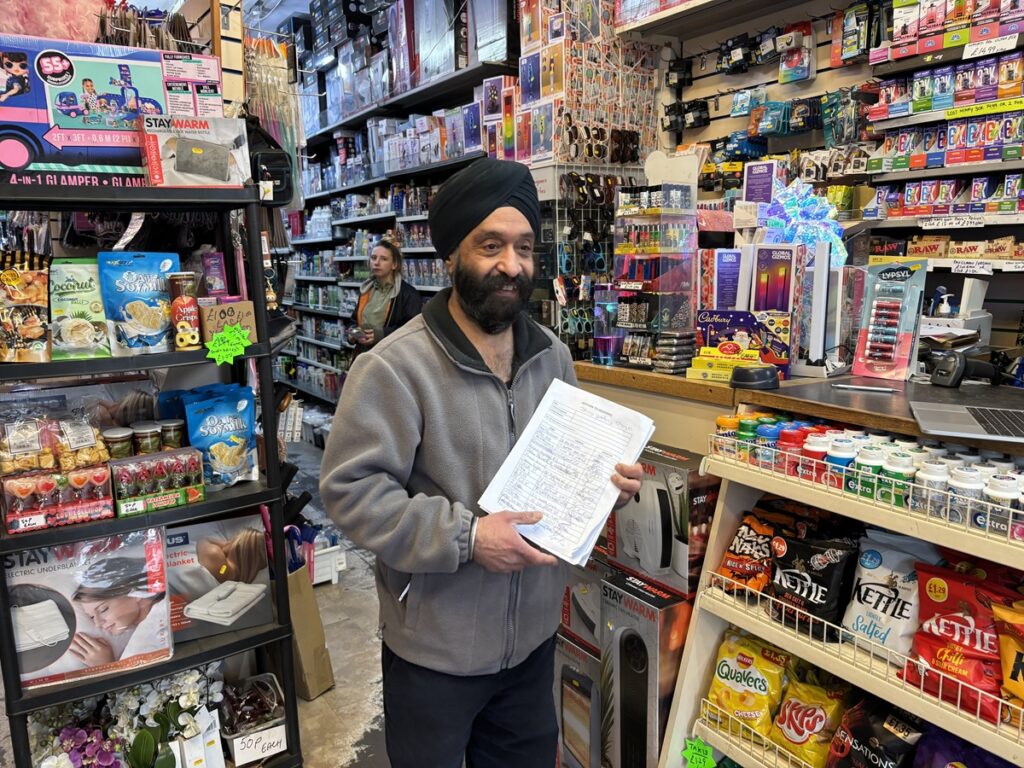
Once back in Barnet, the club’s aim would be to establish community initiatives and there any number of possibilities, including, for example, the possibility of providing space for a local foodbank or other projects.
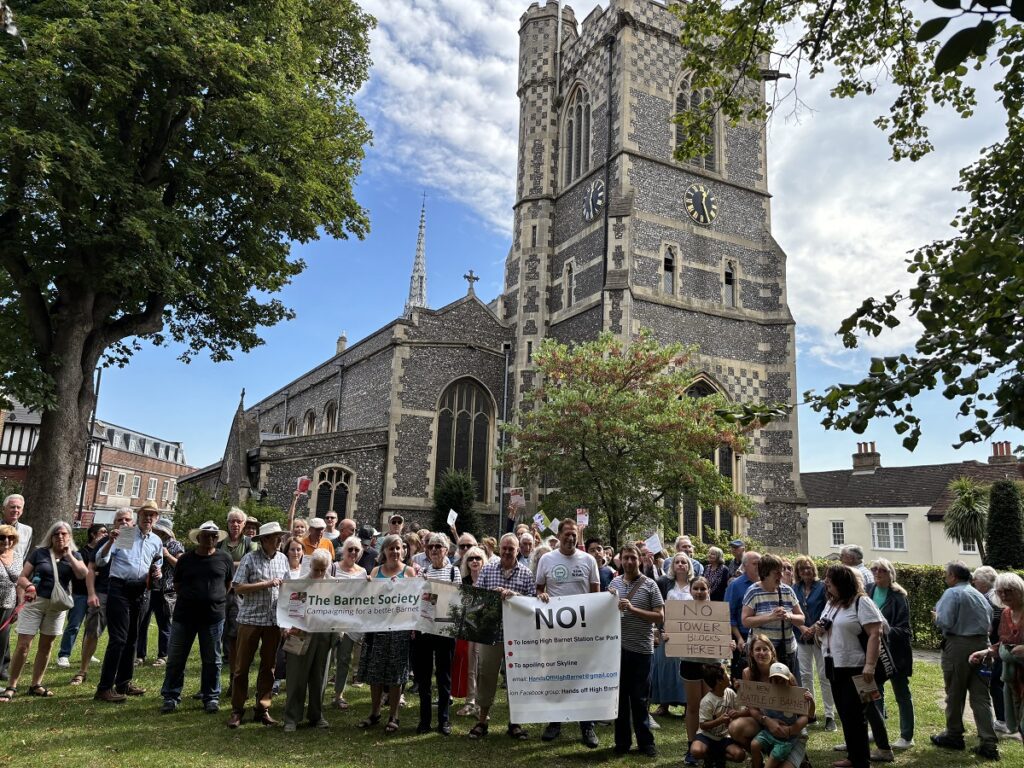
The club would open a new diagnostics and imaging centre at the new stadium in line with the facilities provided at The Hive which a said to be recognised as one of the best screening facilities at a football club.