Posted on

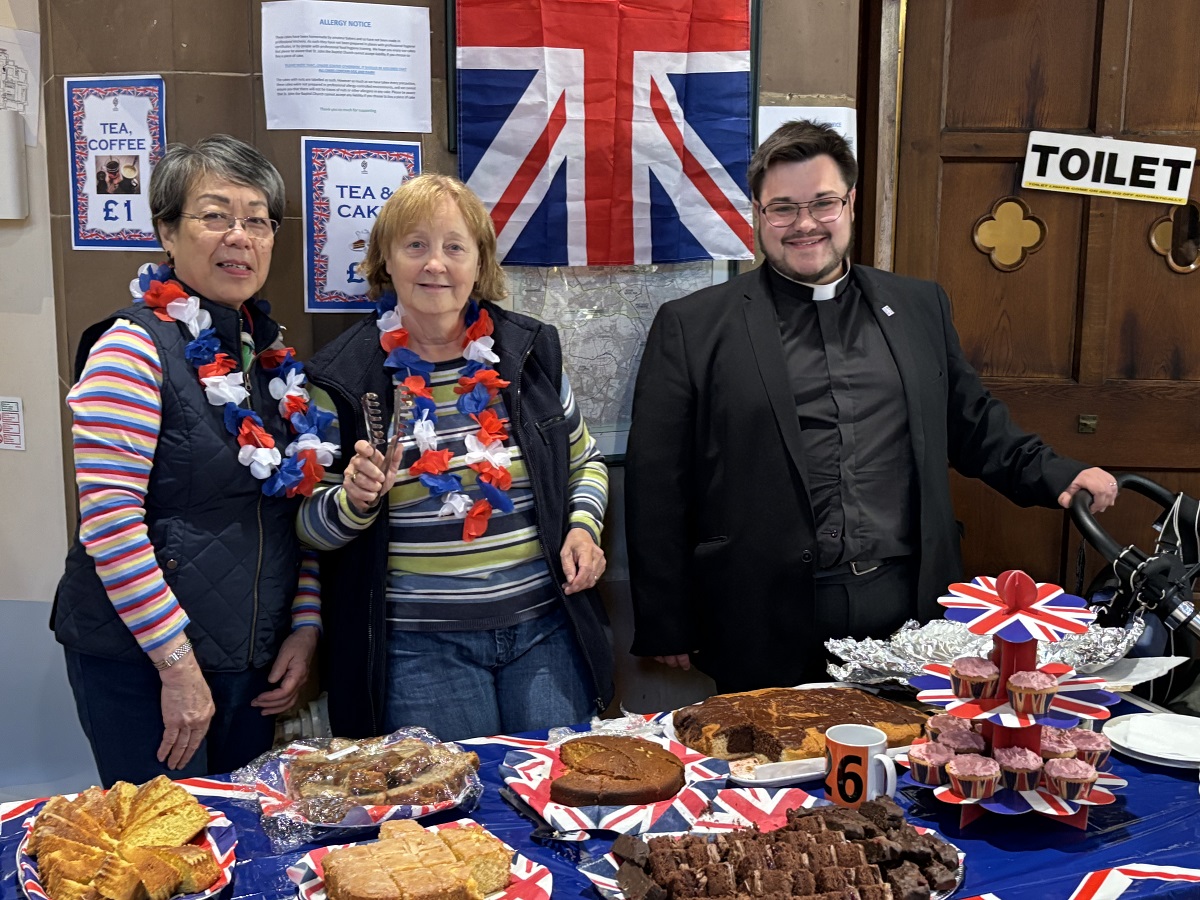
Tea and cakes at Barnet parish church after climbing the tower – just one of the celebrations for the 80th anniversary of VE Day

There could hardly have been a better way to celebrate the 80th anniversary of Victory in Europe Day than to climb the tower at Barnet parish church, admire the view, and then round off the visit with a glass of Pimm’s or a piece of cake and a cup of tea.

There was a steady stream of parishioners and visitors walking up the spiral stone steps to enjoy a special VE Day celebration at St John the Baptist Church.

Sunny weather in the late afternoon and a light wind ensured almost perfect conditions to look out over London and Hertfordshire with magnificent views of landmarks such as The Shard, Canary Wharf and the Wembley stadium arch.

Keeping busy on the cake stall – see above – were Catherine Liu (left) and Kris Webb with the support of the team vicar, Father Sam Rossiter-Peters.

Whenever the tower is open to the public there is usually no shortage of people ready to climb to the top catching their breath halfway up in the bell ringing chamber.

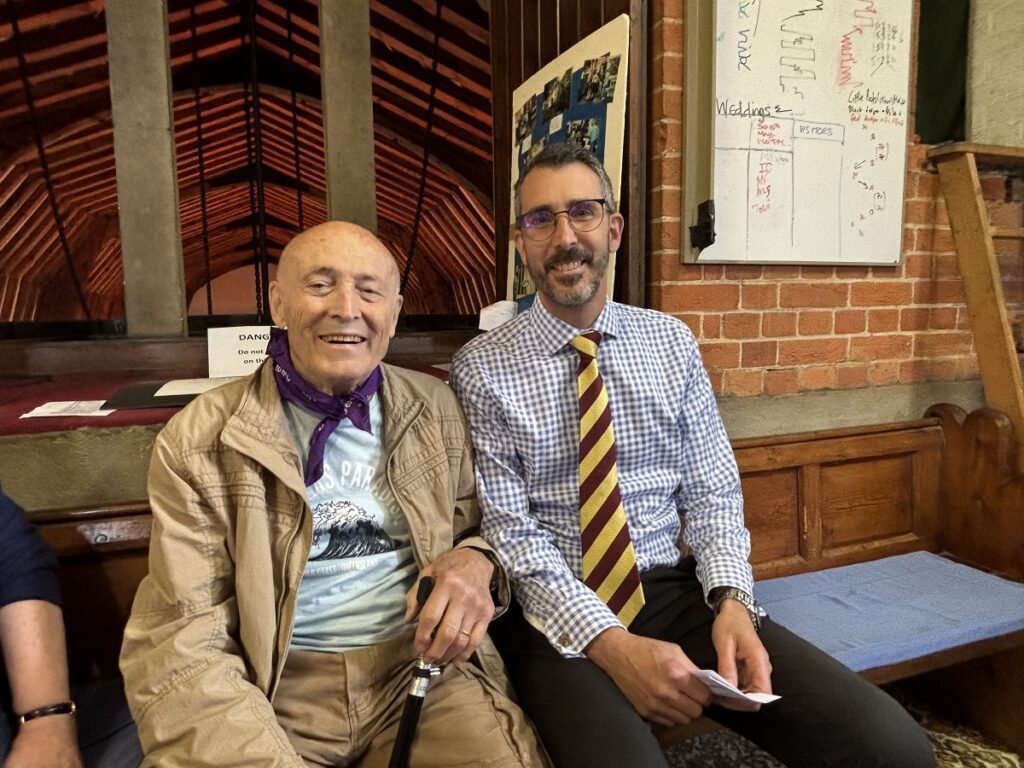
Resting before the final climb were Bruno Roncarati – see above –who at the age of 90 was determined to take in the view. With him was his son Paolo.

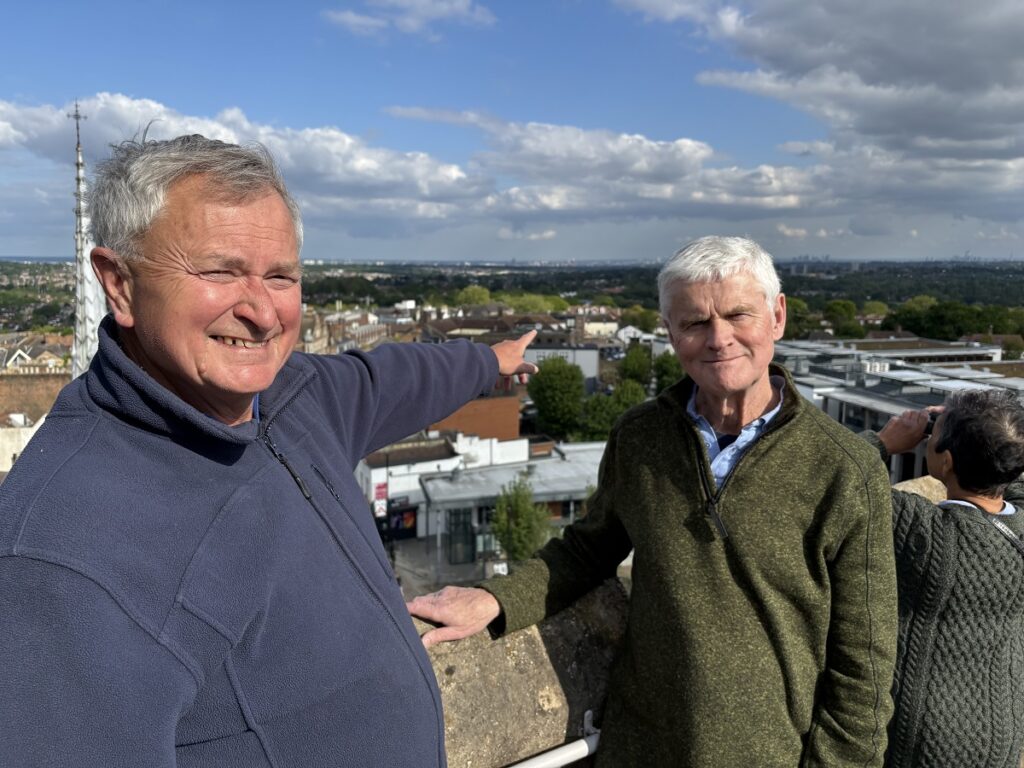
Two guides at the top of the tower – Ian Peacock (left) and Jim Jenkins – were on hand to point out the sights.

Opening the tower to visitors was just one of the VE Day celebrations organised by local churches.

The anniversary was celebrated at the Monken Hadley Church of St Mary the Virgin with an evening concert of music and songs dating back to the 1945 with plenty of wartime numbers.

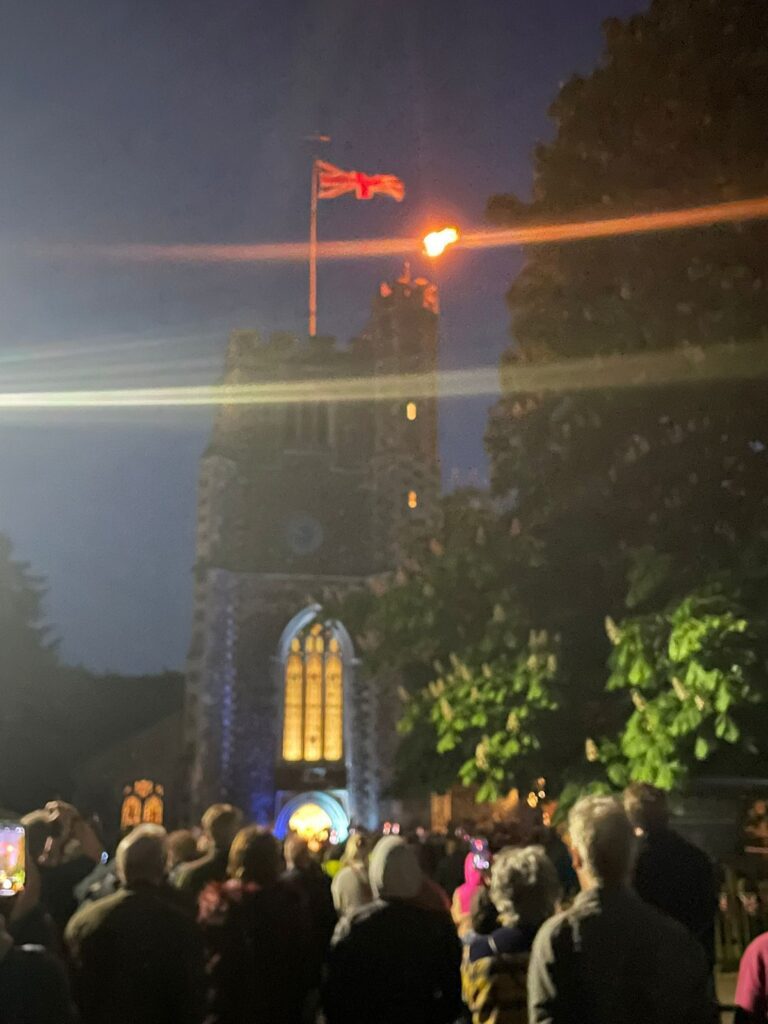
A ceremonial lighting of the beacon rounded off the evening.

Celebrations for 80th anniversary of Victory in Europe Day included visits to the top of the tower at Barnet parish church.

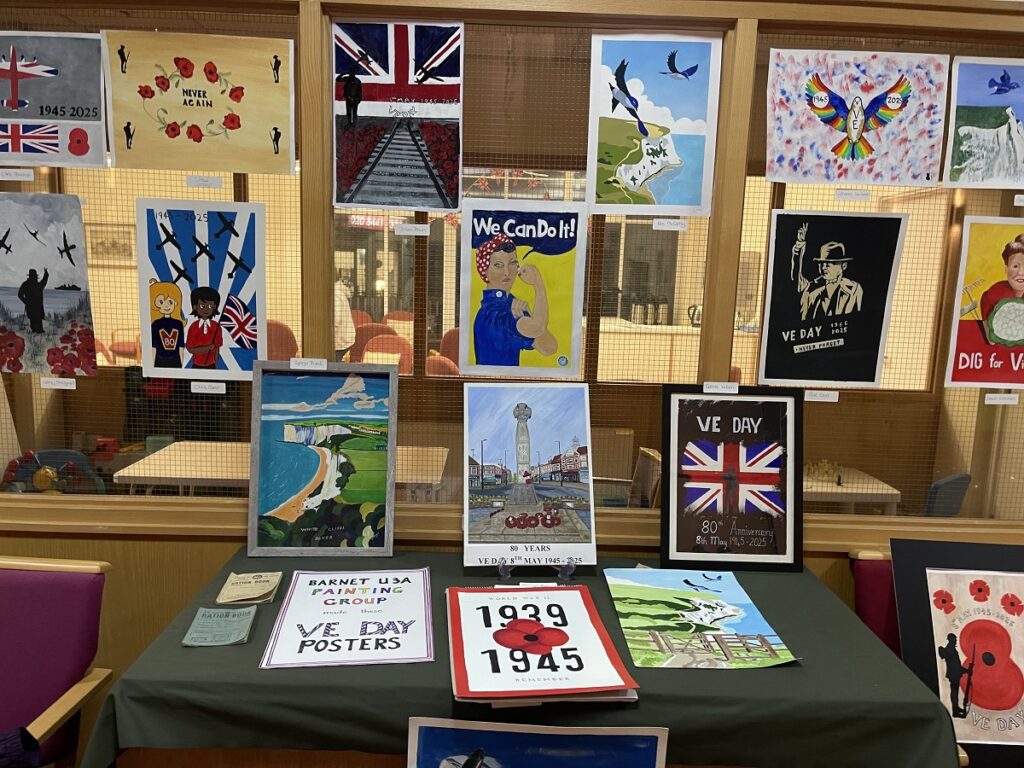
Brookside Methodist Church in East Barnet hosted an impressive display of wartime posters by members of the Barnet U3A painting group.

Posted on

Changing face of Barnet town centre with refurbishment of historic premises and creation of flats above High Street shops

Planning applications have been approved for changes to several of the iconic buildings at the historic heart of High Barnet’s conservation area.

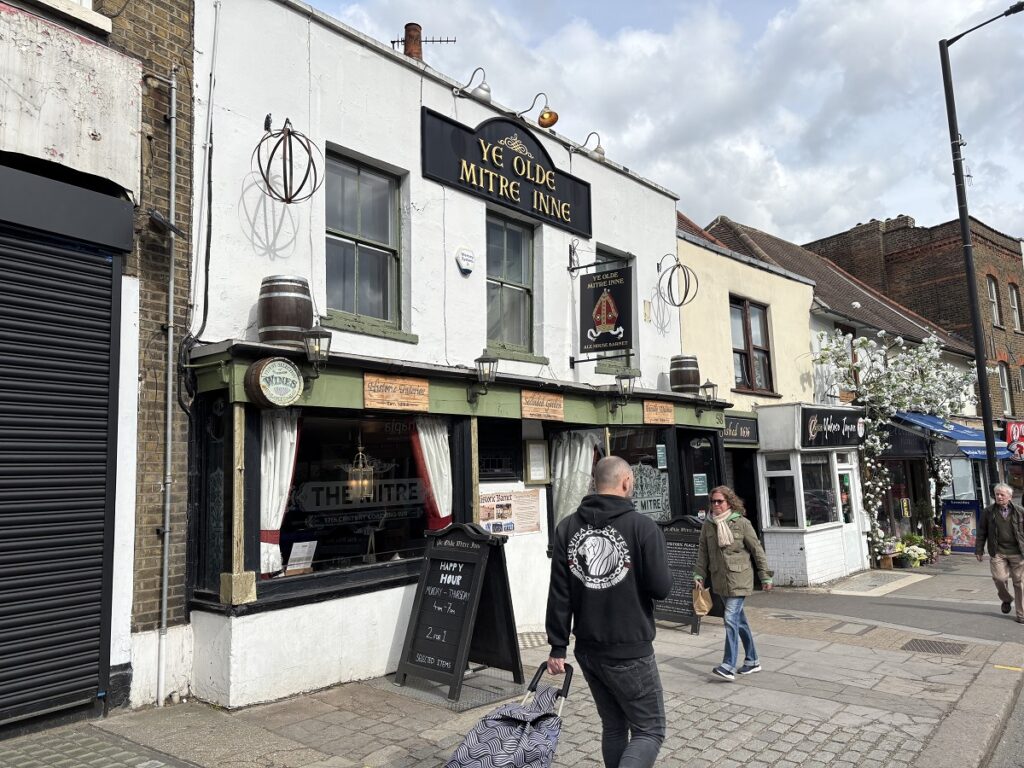
Work is to start in late April on a “makeover” at the town’s oldest coaching inn, The Mitre.

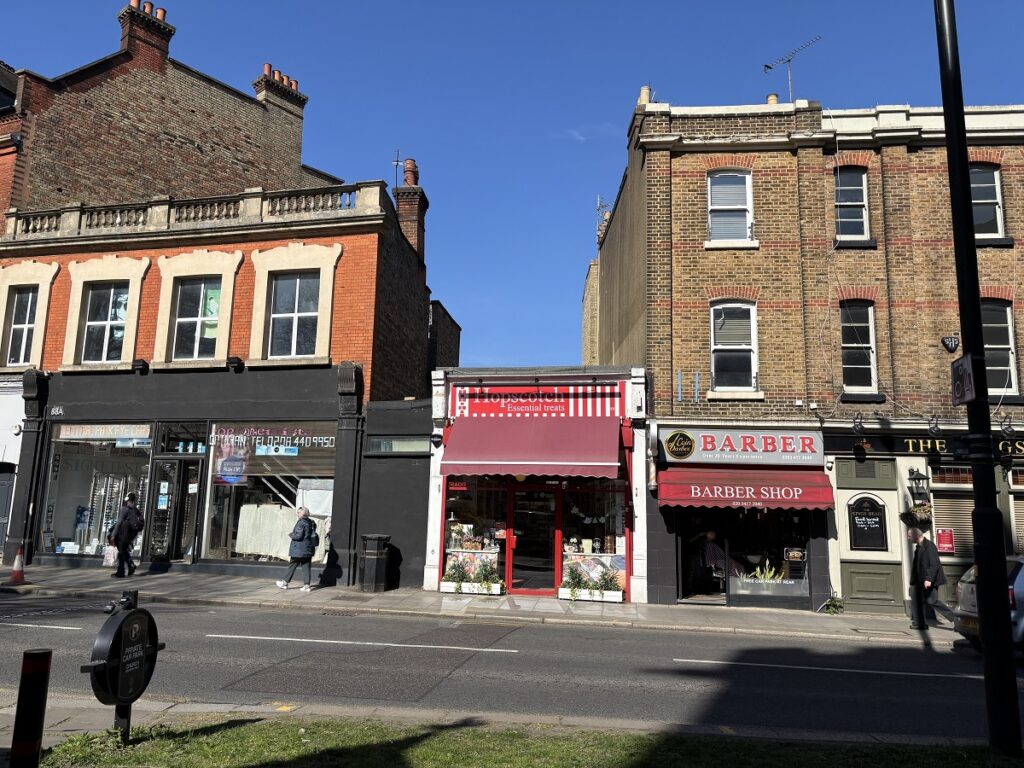
Further up the High Street, closer to the town centre, approval has been given to build a flat above the traditional sweet shop, Hopscotch.

Work has already started converting the first and second floors of the former Barnet Press office – now a Costa Coffee shop – into five self-contained flats.

Refurbishment of the Costa Coffee premises has also resulted – at long last — in the clock at the front of the building telling the right time.

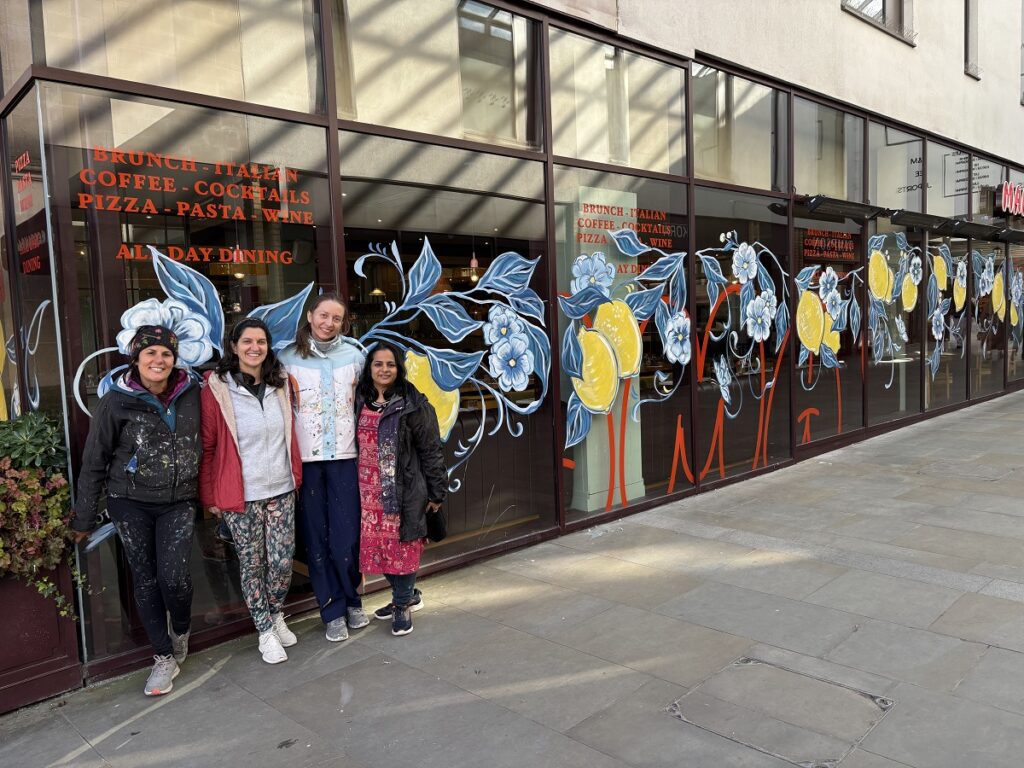
Another very noticeable change is at the Mama Fifi restaurant — at the entrance to The Spires shopping centre – which is now resplendent with a full-length spring display of Sicilian lemon blossom.

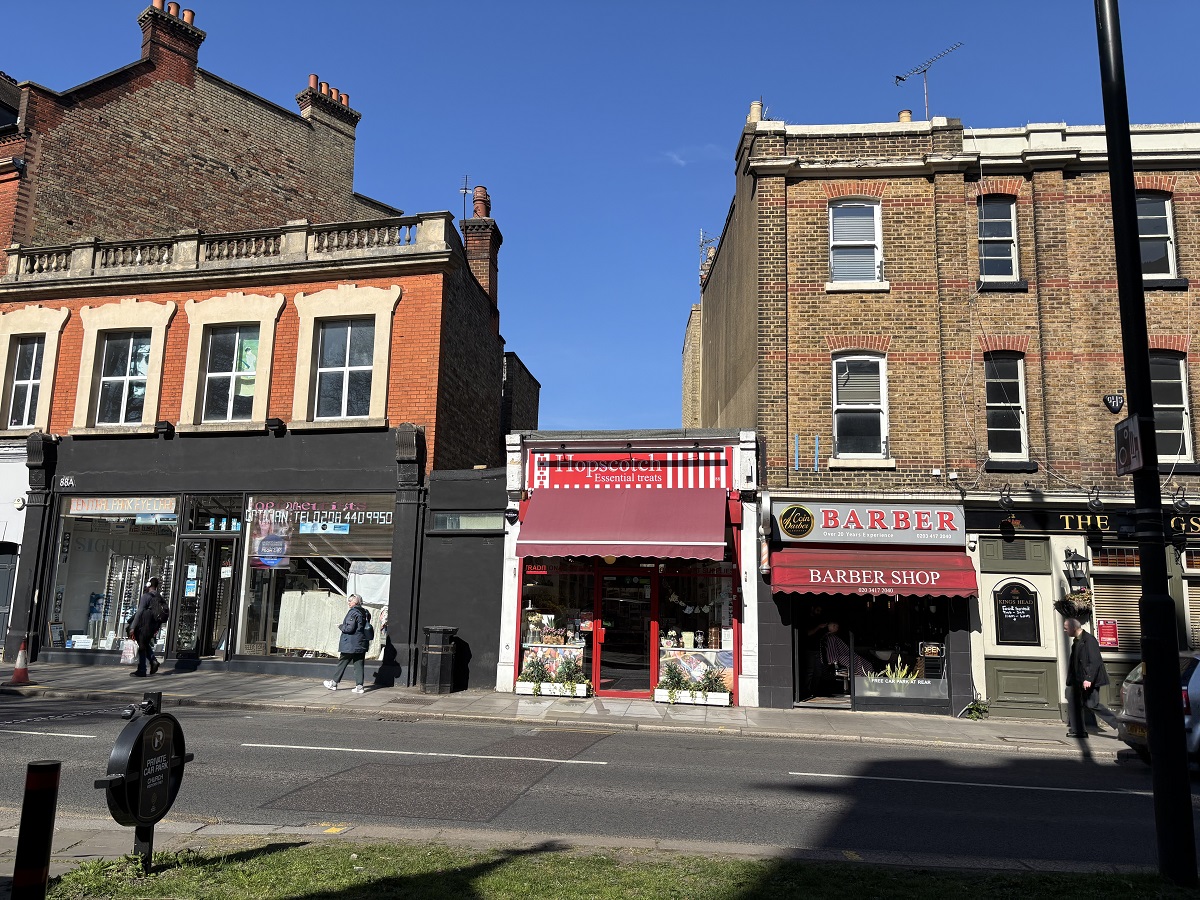
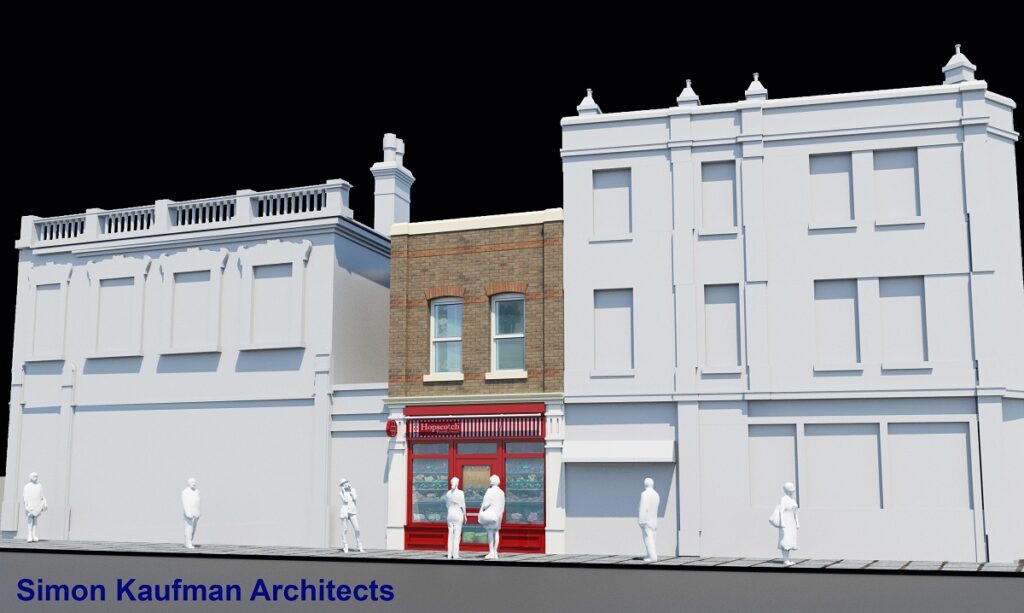
Hopscotch, a single-storey shop constructed in the 1930s, is like a missing tooth along the High Street but, under a design approved by the council, the gap – as seen above – would be filled by the addition of a one-bedroom home over the sweet shop.

Simon Kaufman Architects say the scheme has been carefully designed to preserve the character of the Wood Street Conservation Area and will provide a high-quality living space above the existing retail unit.

The project embraces a lightweight construction approach with only minimal internal strengthening to provide “a cost-effective and sustainable alternative to rebuilding from scratch” which is in full compliance with heritage and conservation policies.

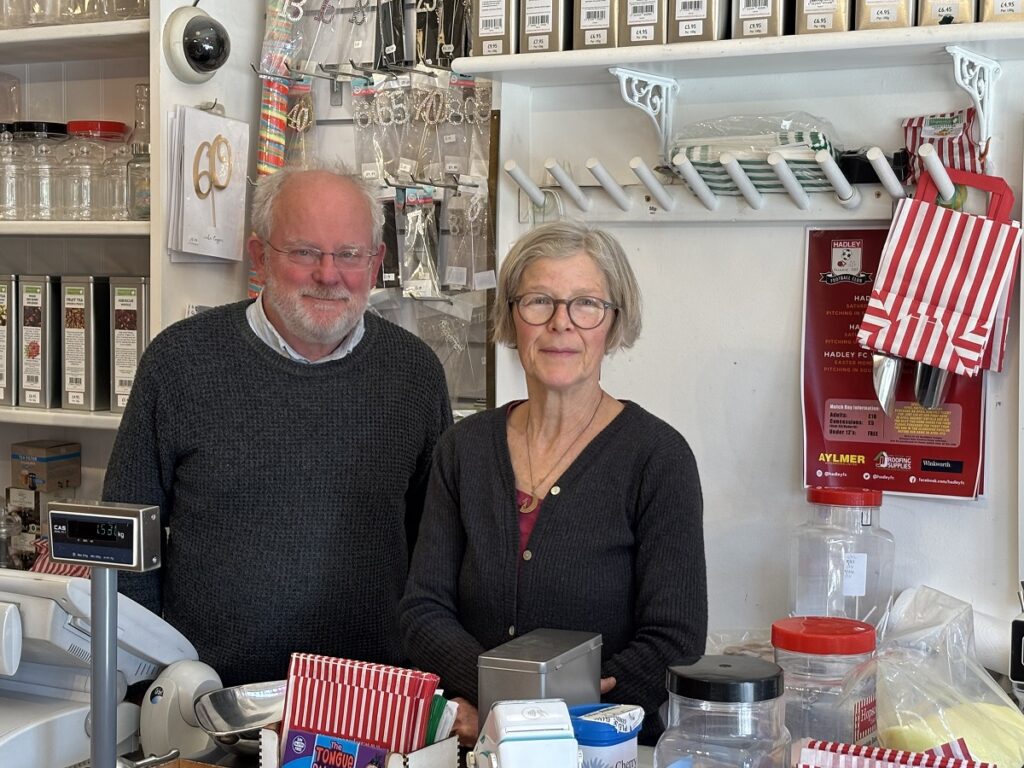
Michael and Alice Kentish, proprietors of Hopscotch, say they are thrilled that planning approval had been given as they believe providing homes above High Street shops is one way of revitalising town centres.

“There are so many under-developed properties along Barnet High Street and there is so much residential accommodation which could be provided within existing buildings.

“What we need is for the government and Barnet Council to adopt a regime which encourages the use of empty space above shops. It would provide much needed homes and help increase business along the High Street.”

Hopscotch and its rear garden are a designated area of archaeological significance as the previous medieval buildings on the site formed part of the narrow street of shops and inns beside Barnet Parish Church which was known as The Squeeze.

Until its demolition in 1933 – and the construction of the present single-storey shop – 88 High Street was a Dutch-style timber building with a gabled façade and distinctive Oriel windows.

Work has already started on the refurbishment of the upper floors of the Costa Coffee shop which will provide five self-contained flats.

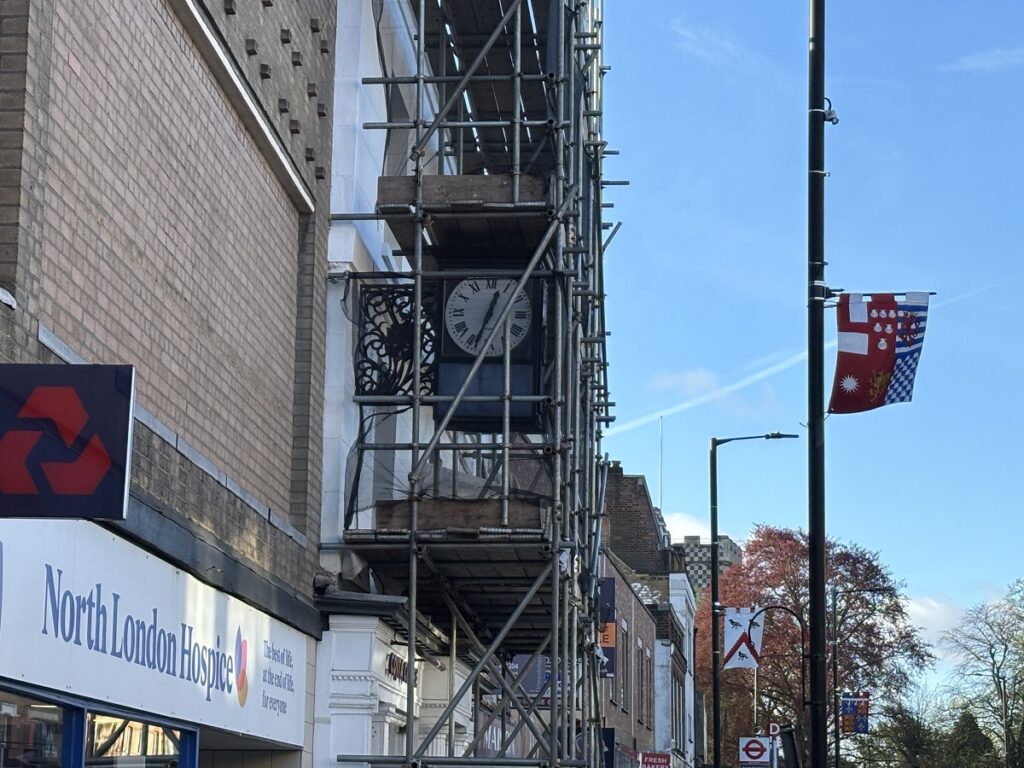
P2M Coffee, which has the High Barnet franchise, says the frontage of the building will be repainted. It promised that the clock, which dates back to the days when it was the home of the Barnet Press, would be repaired as soon as scaffolding was in place to allow access for a clock repairer.

True to their word, the clock was telling the right time within days — although when this picture was taken, the clock face, just visible behind the scaffolding, was still stuck at 12.34 as it had been for several years!

What is described by brewers Greene King as a “makeover” to give The Mitre a “fresh look” will result in the pub being closed from Monday 28 April to Friday 23 May.

Several suggestions made by the Barnet Society regarding the refurbishment were accepted by Greene King and the company’s willingness to engage with local groups was welcomed by Robin Bishop who leads for the society on planning and the environment.

Etched glass bay windows which were going to be removed will now be retained. Although only 20th century, the etched glass is attractive in its own right and illustrates the “fascinating evolution of High Barnet’s oldest inn”.

An investigation to date the timbers in the ceiling and roof has now been conducted by Historic England. If the tests indicate the timbers date from around 1360 — similar to those discovered in the neighbouring building, Elisana Florist — it could be that together with the Mitre, they represent the oldest group of timber-framed buildings in London, predating Westminster Hall.

Enfield and Barnet Campaign for Real Ale has announced that The Mitre has been voted pub of the year for 2025 – and will present the award in May.

Mama Fifi restaurant – which won the 2024 prize for the best High Barnet Christmas window competition – is again attracting plaudits for its latest display.

Mural artist Alessandra Tortone has decorated the side windows in the entrance to The Spires shopping centre with a spring design of Sicilian lemon blossom.

Alessendra is seen with her team after the competition of the mural – from left to right, Alessandra, Roberta Piras, Kateryna Vilkul, and Radhika Ganapathe Ulluru.

Posted on 2 Comments

Decision on future operation of Barnet Post Office is likely by the autumn as part of a switch to franchising the business  

Barnet Post Office is to become a franchise operation along with another 107 crown offices across the country where the Post Office is to cease its own management and staffing.

Applications to run these businesses as a franchise are currently being considered. New owners could be in place by the end of September.

So far there has been no announcement about the precise future for a franchise for the crown office branch in High Street, Barnet.

The Post Office says it hopes that a majority of the remaining 108 crown offices will continue in operation at their existing locations, but some buildings could be closed if a franchise operator moves to different premises.

Over the coming weeks the company hopes to supply local communities and stakeholders with more detailed information.

By switching to a franchise model – which is already the case with other local post offices – the company says it will mean that towns like Barnet which “currently have a directly managed branch in their area will continue to be able to access Post Office services.”

Over 4,000 applications – from 500 different bidders — have already been received to take over the 108 crown offices.

Among the groups which have expressed an interest in taking over some of the larger branches are Tesco and the stationery retailer Ryman.

Dan Tomlinson, Labour MP for Chipping Barnet, welcomed the announcement by the Post Office that it would continue to provide services to the local community in High Barnet.

He said he had spoken to the Communication Workers Union – which represents Post Office staff at Barnet – and he understood their concern about the switch to franchise operation.

“I will continue to work with and support union members as we find out more from the Post Office about the exact nature of future plans.”

Mr Tomlinson declared that it was his petition – “Save Barnet Post Office” which attracted over 2,500 signatures – which had ensured “victory” in his campaign to save the High Street branch from closure.

“This is a tremendous victory for our community after months of campaigning with residents.

“The Post Office is vital to High Barnet and serves thousands of residents. “Working with residents across Barnet, we have demonstrated what can be achieved when a community unites behind an essential service.”  

The closure of the remaining 108 crown offices – which together employ around 1,000 staff but are said to be losing £40 million a year — was announced last November when the management indicated it was seeking applications from franchise operators.

There are mixed views locally about the level of service offered in post offices around High Barnet which are already being operated on a franchise basis but in some cases, it is said to be quicker and more friendly than in the past.

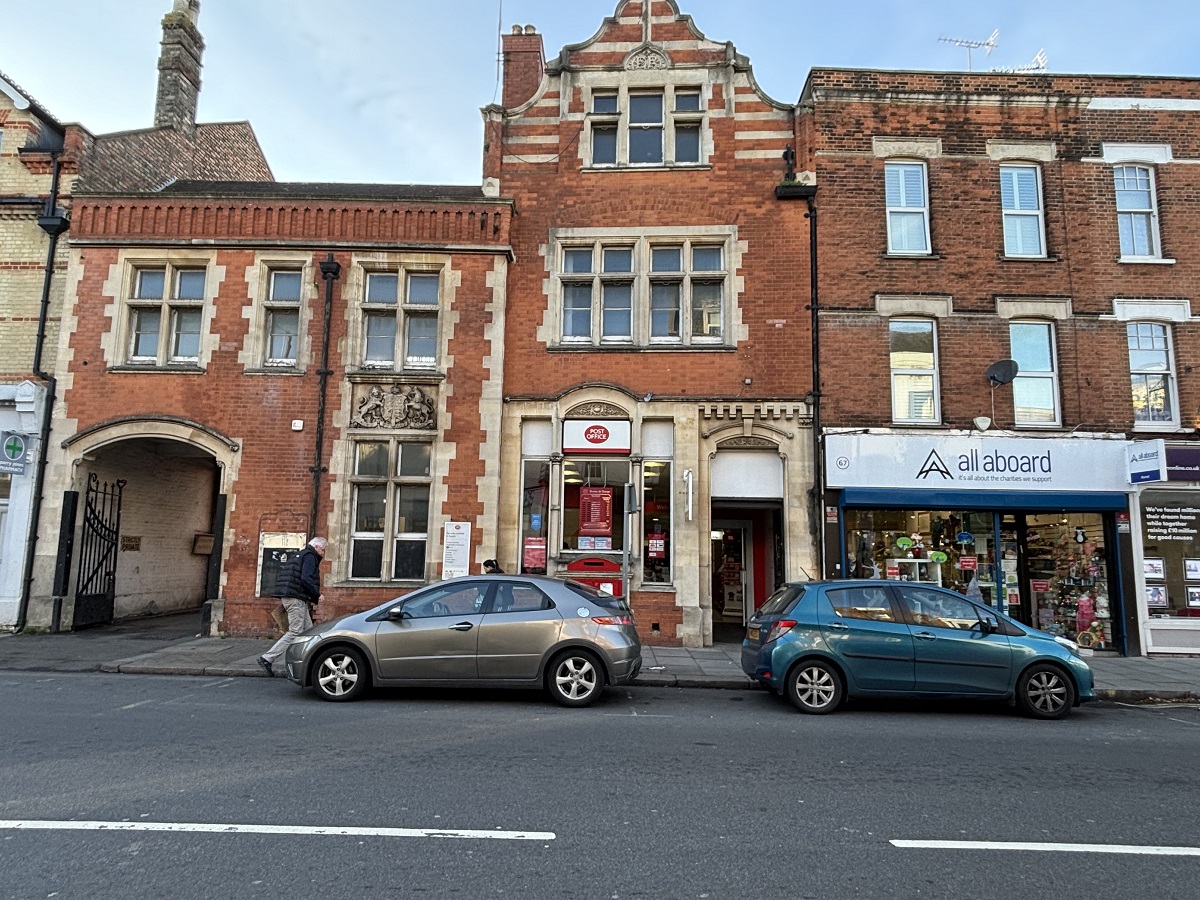
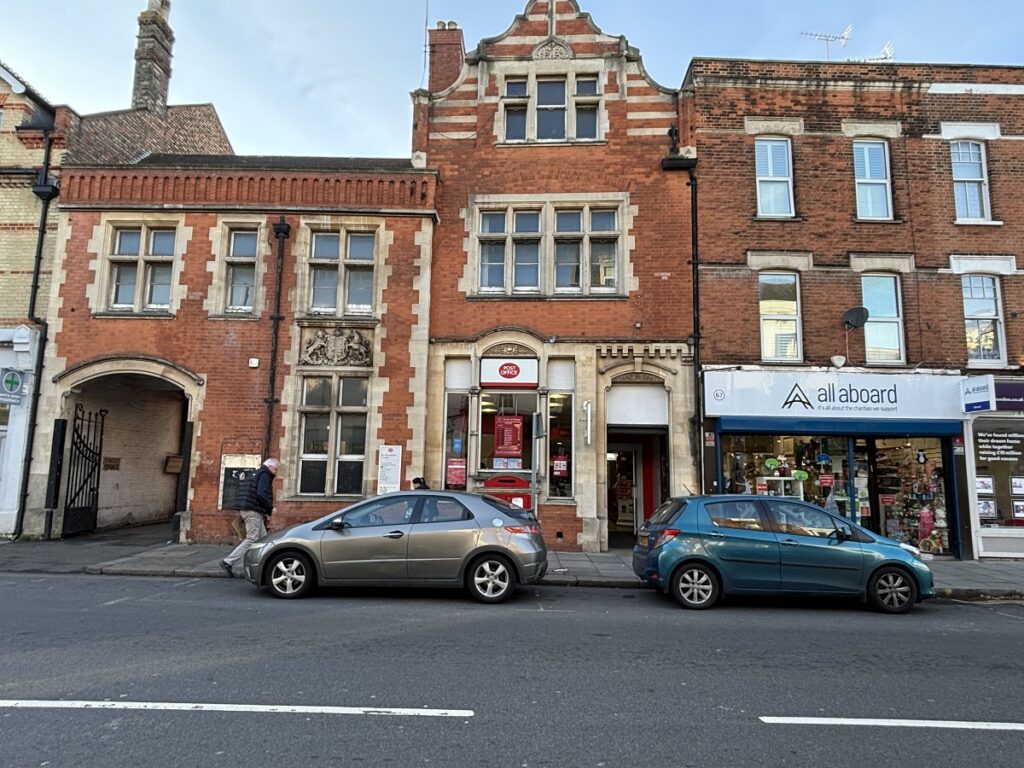
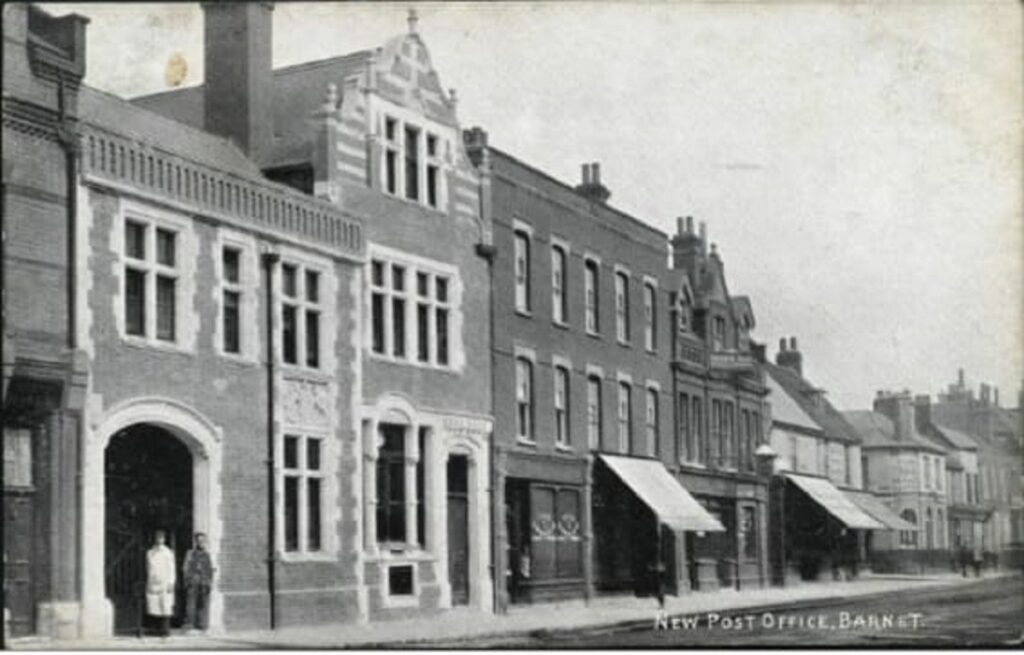
Barnet Post Office – which was rebuilt in 1905 – has a distinguished history having been a regular stopping off point for mail coaches heading out of London for Scotland and the north.

In more recent years it has regained importance following the closure of several High Street banks and the development of the Post Office’s banking services.

The current building, which bears the ER motif of King Edward VII, was designed by Jasper Wagner.

Franchise operator to take over Post Office in High Street Barnet. Future likely to be decided by the autumn.

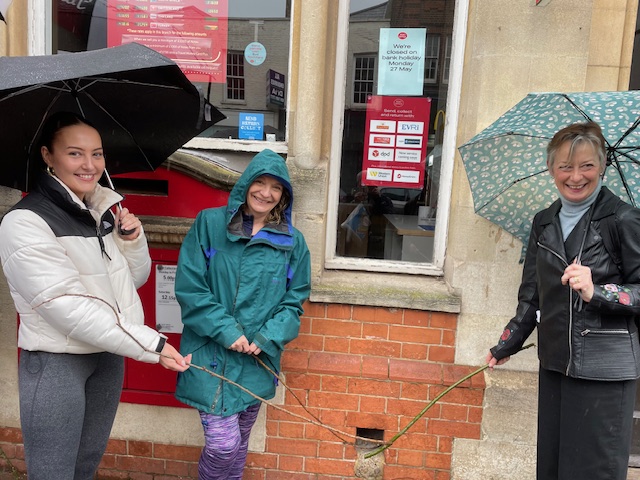
Set in the wall, just above the pavement, between the front door and the letter box, is one of the original boundary stones of the ancient parish of Chipping Barnet – which is pointed out during the annual ceremony to mark the Beating of the Bounds of the parish of Barnet

Until the 1930s Barnet was one of the best-known coaching towns on the outskirts of London.

When the mail coach for Scotland left St Martins-le-Grand one of the first stops on the Great North Road was Barnet post office where it picked up mail

Posted on 1 Comment

Barnet High Street about to become a much-admired showcase once again for the historic Battle of Barnet banners  

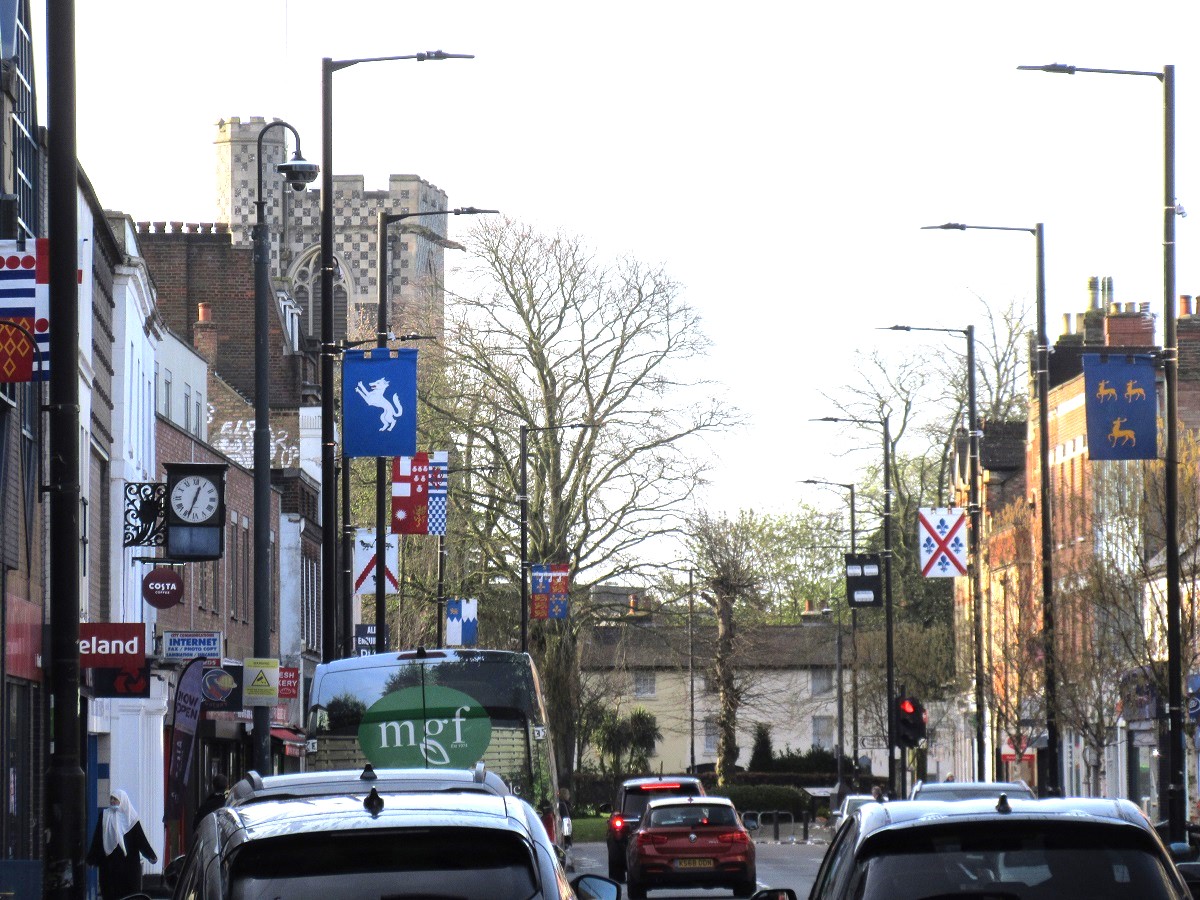
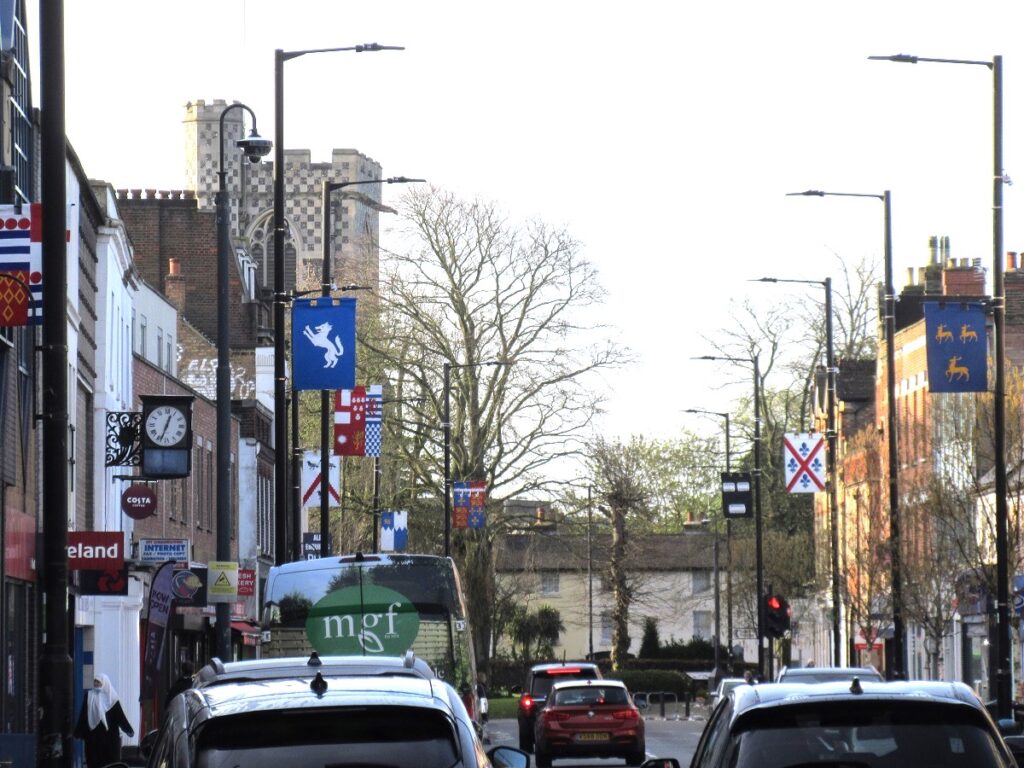
Recently restored and repaired medieval banners commemorating the 1471 Battle of Barnet will once again decorate the High Street during the summer months after Barnet Museum intervened with financial support.

A contractor will start the two-day process of hanging the banners from lampposts the length of the High Street from the evening of Monday 14 April – the 554th anniversary of the battle.

Each of the 76 heraldic banners illustrates the coats of arms of royalty and noblemen whose troops fought in the battle just to the north of Barnet on what is Greater London’s historic battlefield.

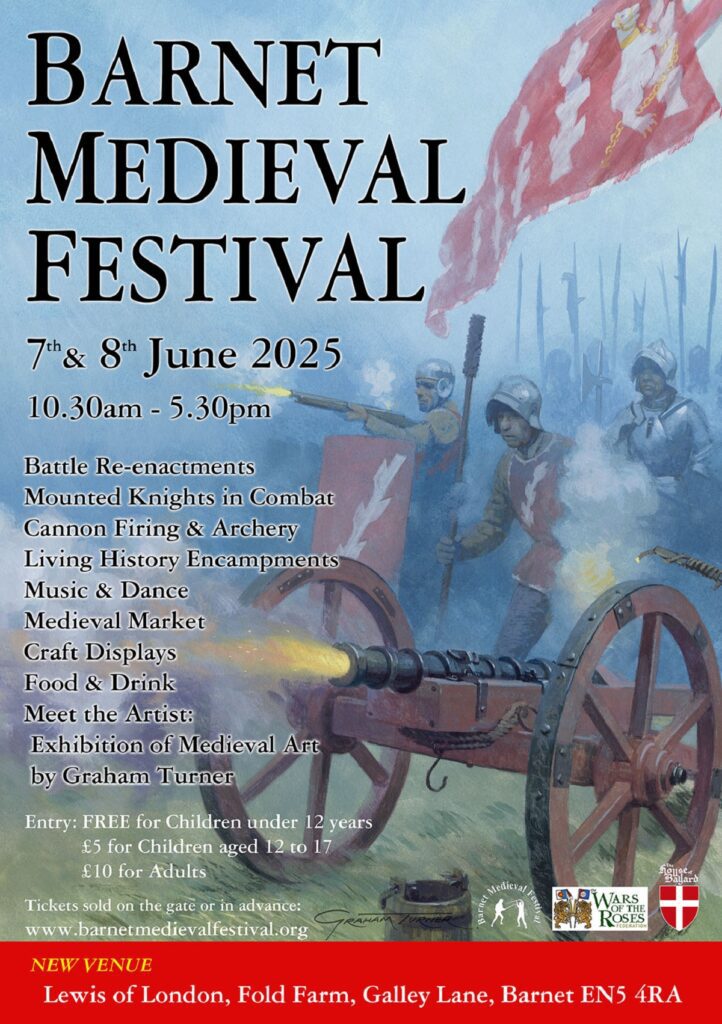
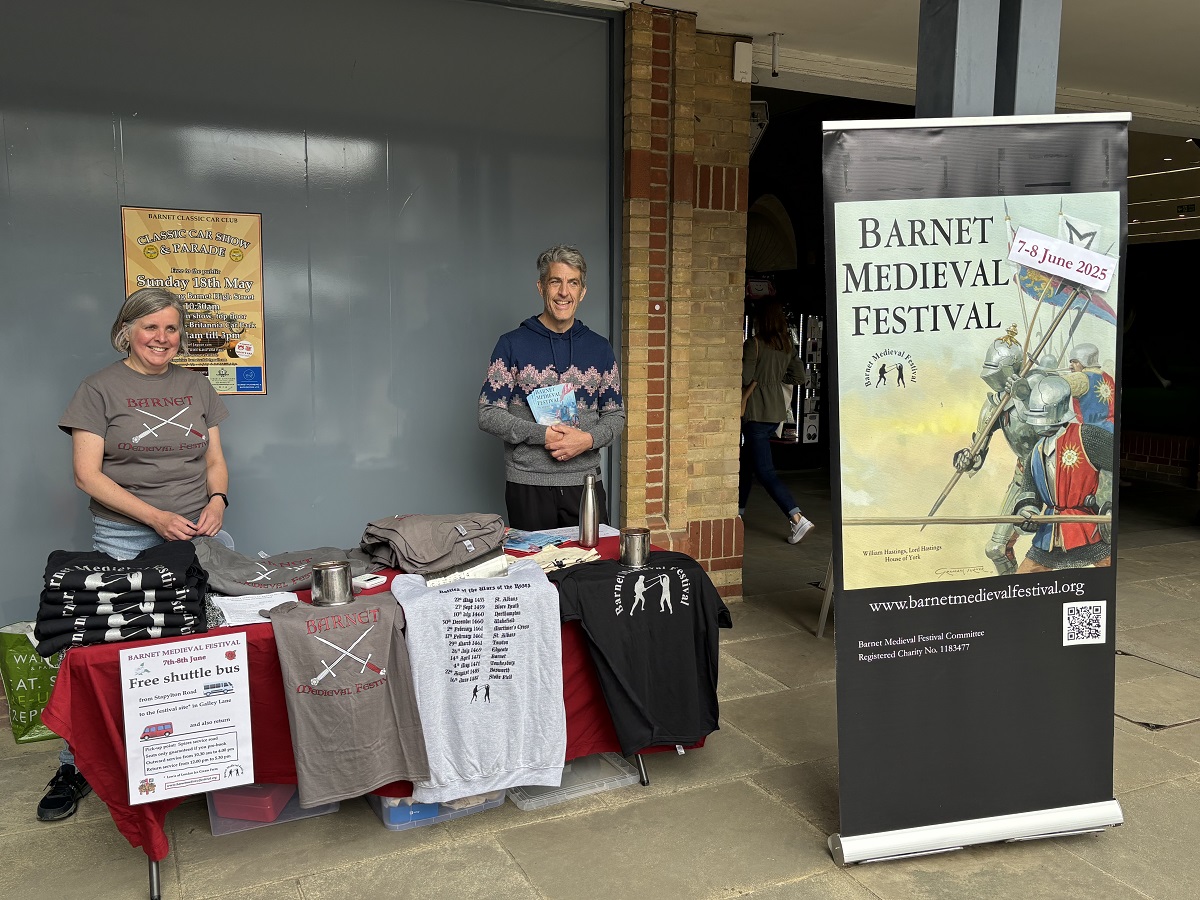
The return of the banners is a timely reminder of the annual Barnet Medieval Festival which is being held over the weekend of Saturday and Sunday June 7 and 8 at a new location on farmland off Galley Lane.

A 12-acre field will offer more space for Wars of the Roses re-enactments and camp sites for the opposing Yorkist and Lancastrian armies.

Organisers hope it will be the largest celebration in the town since the start of the recent events to commemorate the battle as more military re-enactors are expected to attend than ever before.

This summer’s re-appearance of the banners along the High Street had been touch and go because Barnet Council’s street lighting contractor told the museum that it was no longer able to afford the installation cost.

After the council found an alternative contractor who offered to do the work at a much-reduced rate, the museum agreed to fund the work from its reserves on a one-off basis.

Barnet High Street about to become resplendent once again with display of historic banners from 1471 Battle of Barnet

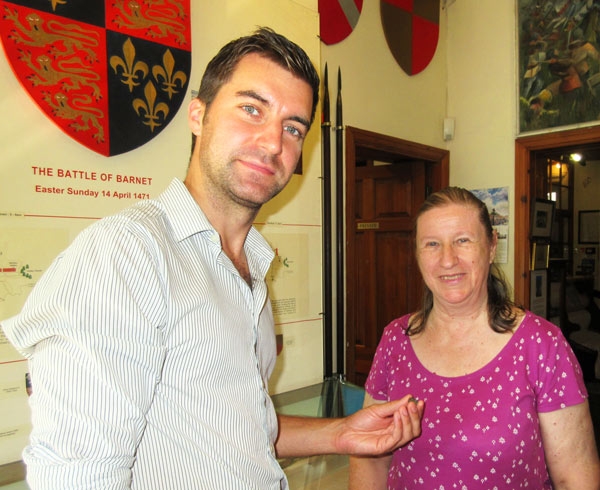
Museum trustee Scott Harrison – seen above in the museum’s shop in The Spires shopping centre – said there had been great uncertainty as to whether it would be possible to hang the banners in the High Street for what will be their sixth year on display.

“We have been so fortunate in the past in having the annual installation cost met by the council’s lighting contractors, but we were told earlier this year that the company had decided this was no longer a sustainable expense.

“Barnet Council found another contractor who would hang the banners at a much-reduced cost, but the museum is having to fund the bill of several thousand pounds.

“We have agreed to pay up this year, but we will have to find a sustainable source of funding. Perhaps we can arrange an appeal each year or find sponsors who will meet the cost.

“We do hope the people of Barnet value the banners so much that they will help to contribute towards the expense involved in hanging them along the High Street.”

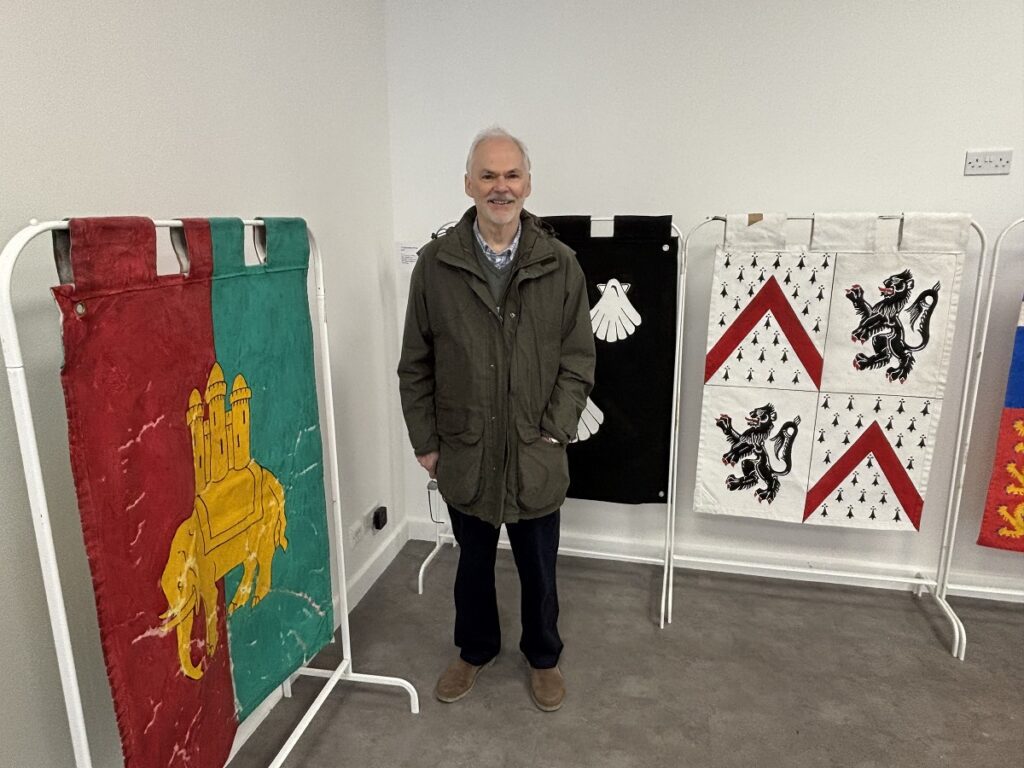
As well as the 76 banners that will decorate the High Street, others from the collection of 107 banners will be on display in The Spires and at the museum.

A team of volunteers led by the museum’s deputy curator Hillary Harrison spent the winter repairing and repainting the banners. Those on display in the High Street are also reglazed each year to given them an extra coat of protection.

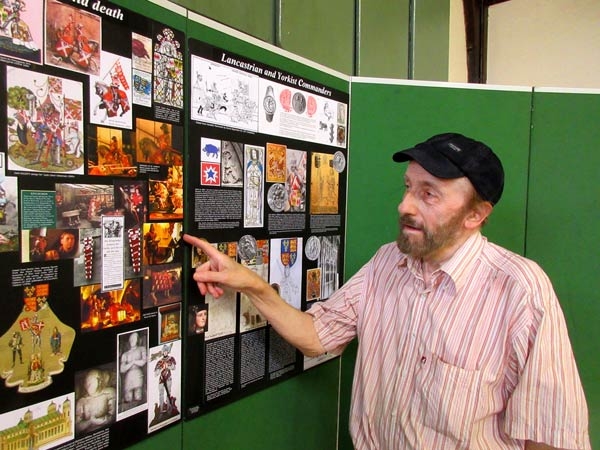
Each banner with its emblems or coat of arms belonged to an individual who took part in the battle and the challenge for the museum’s historians has been to bring to life each member of the royalty, nobility and gentry whose troops fought at Banet.

Sometimes symbols were used to represent people’s names or occupations and indicate their wealth and status.

The research conducted at Barnet – and so vividly displayed each summer in the High Street – has attracted considerable interested.

The latest group to visit Barnet for a walk along the High Street to identify – and admire the banners – are members of the Anglia Heraldry Trefoil Guild who are planning a visit in July.

Barnet Museum’s celebration and commemoration of the Battle of Barnet is not without cost. Currently the museum is applying to the National Heritage Lottery Fund for a £50,000 grant towards the cost of installing a new heating system and repairing leaky windows.

Because of the museum’s inability to maintain the correct humidity an exhibit on loan from the British Museum – displaying the Earl of Warwick’s seal and arrows from the Battle of Barnet – has had to be returned until the heating system has been fixed.     

Posted on

Reliving the argument when Finchley and Hendon lost out to the three Barnets in deciding the name of the London Borough of Barnet

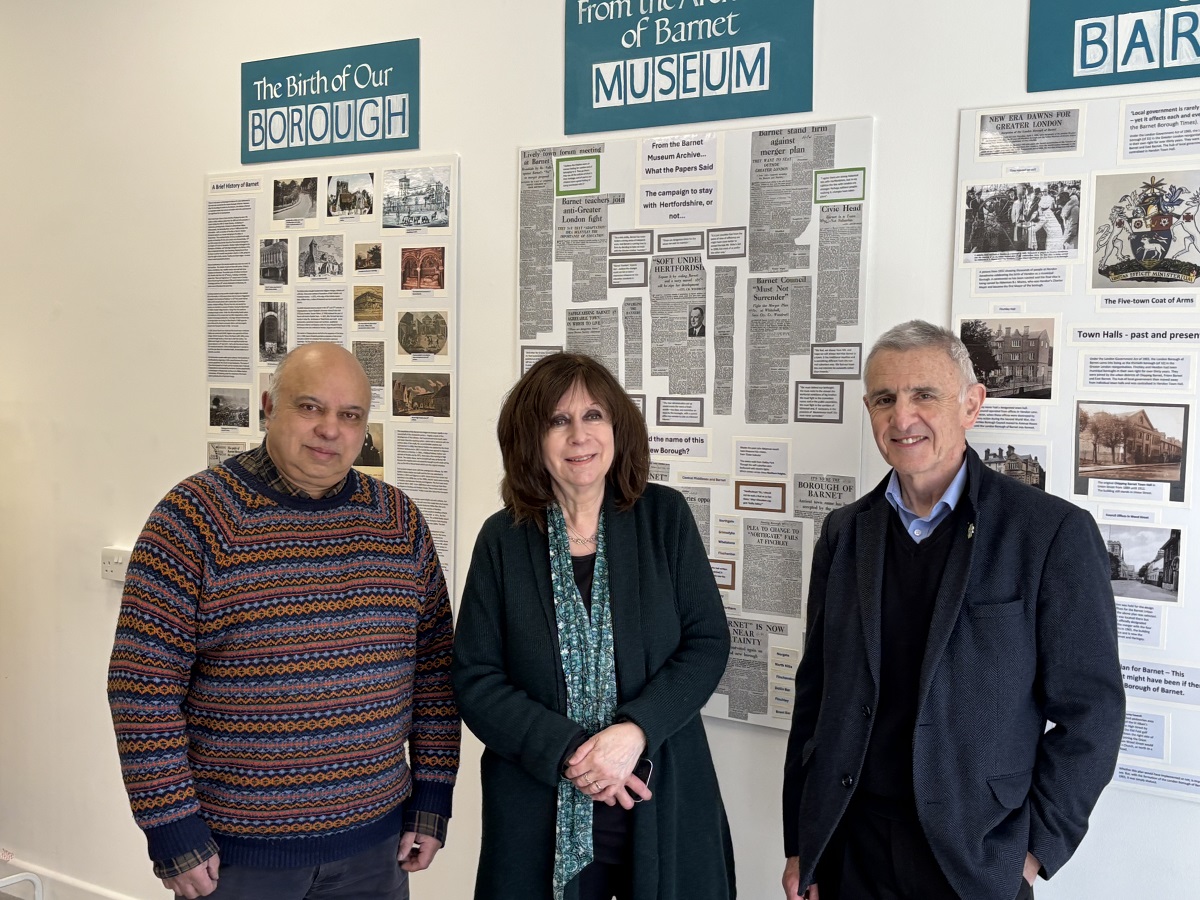
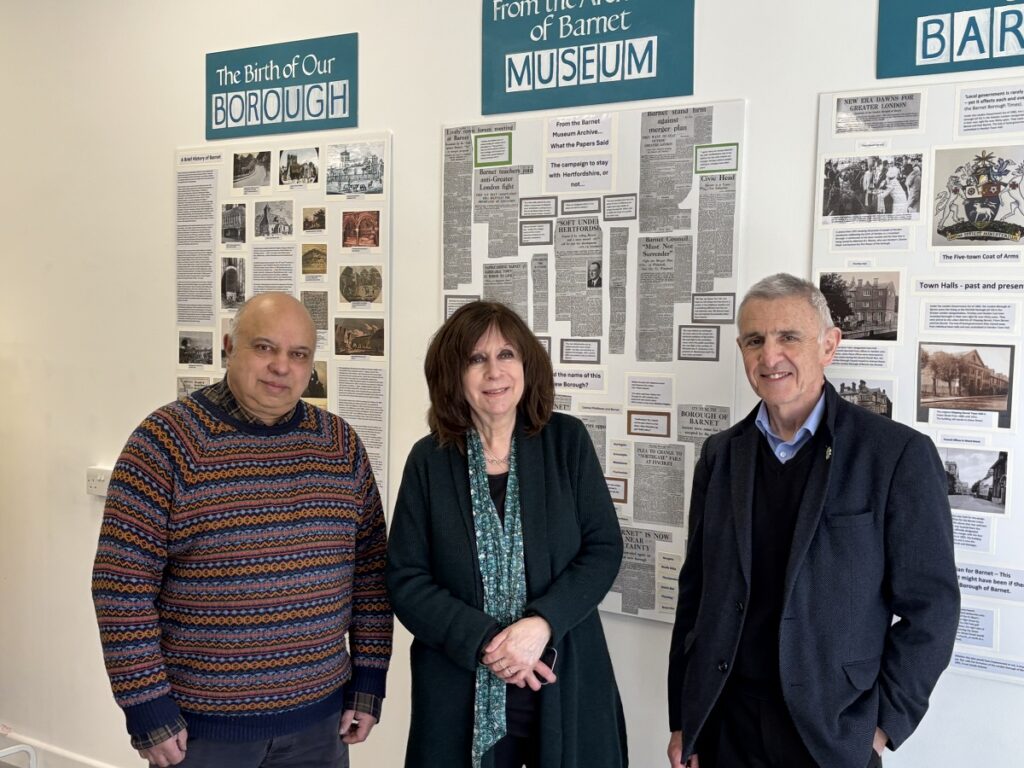
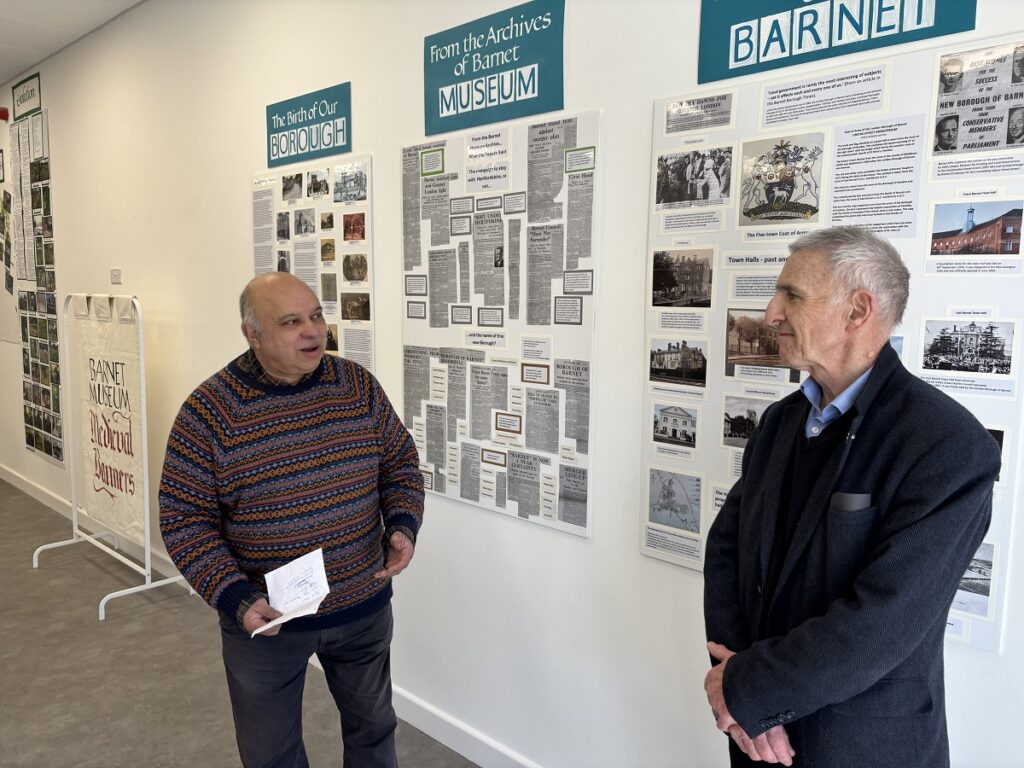
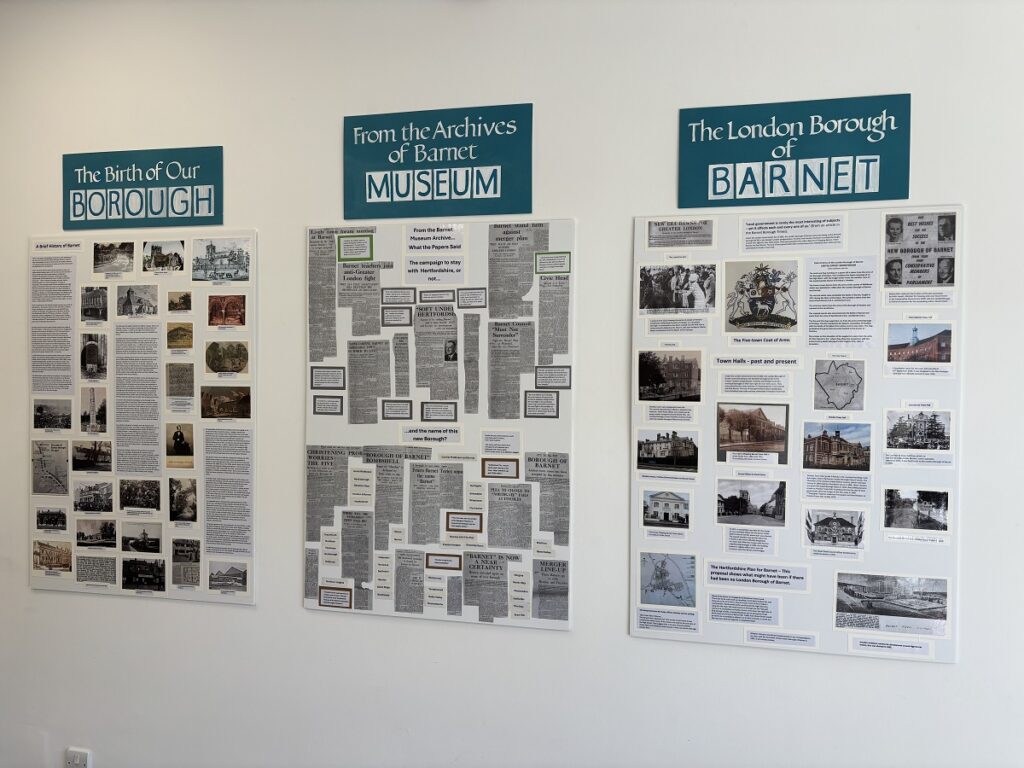
Information boards celebrating the 60th anniversary of the creation of the London Borough of Barnet are on display at Barnet Museum’s shop in The Spires shopping centre and at the Chipping Barnet Library.

Councillor Paul Edwards (above, far right), who opened the Barnet Museum display, recalled what it must have been like at the height of the disagreement about choosing a name for the new borough – especially when there was a real push at the time for Barnet to remain within Hertfordshire rather than become part of Greater London.

He believed that the Conservative minister at the time, Sir Keith Joseph, made the right decision in 1964 when the three Barnet urban district councils – Barnet, East Barnet and Friern Barnet – were amalgamated with Finchley and Hendon to establish what has become the London borough with the second largest population.

“When I used to work at Barnet Council there were still councillors who thought the Barnets should have stayed within Hertfordshire.

“I think it was the right decision to group them together within the Greater London Authority area.

“Keith Joseph made it happen. We can see now why the integration of the boroughs is crucial for the transport system and for the boroughs working together.”

Councillor Edwards was welcomed by museum curator Mike Noronha (above, left) and deputy curator, Hilary Harrison, who organised the collection and assembly of information for the display boards.

Such was the depth of the disagreement about what to call the newly created borough that a wide array of alternative names was put out for consultation – some of them made up from the local place names.

Instead of it being the London Borough of Barnet, it might have been the London Borough of Finchendon, Barnfindon, Northsex, North Ridge, Northern Heights, Dollis Valley or Grimsdyke, to name but a few.

In the end, when the five district councils failed to agree on a name, Sir Keith had to step in.

Both Finchley and Hendon were insisting they should be the borough’s designated name, but the minister opted for Barnet, despite the combined population of the outer districts failing to exceed either Hendon or Finchley.

In welcoming Councillor Edwards, Mike Noronha explained why there was every justification for naming the borough after Barnet.

The town was granted a charter in 1199 to become a market town; in 1471 it was the scene of the Battle of Barnet; in 1588 it gained a charter for Barnet Fair; between the 1820s and 1940s Barnet became an important transport hub for London with the opening of a rail station at New Barnet and then High Barnet; trams and then trolley buses ascending Barnet Hill; the tube station opening in 1940; and became a football town when Barnet won the FA Cup in 1946.

A Royal Commission in 1921 was the first to recommend the amalgamation of the outer districts around London but no action was taken because of World War II and a second Royal Commission established in 1957 by Harold Macmillan made fresh proposals for amalgamation.

In 1963, Sir Keith began the process of choosing a new name for what became the London Borough of Barnet.

After he rejected all the various alternatives – and the claims of Finchley and Hendon – the Queen approved the name Borough of Barnet in January 1964.

The first elections for the new authority were held in May 1964 and they met for the first time on 1 April 1965 – a total of 56 six councillors and nine aldermen.

London Borough of Barnet celebrates 60th anniversary of its foundation with displays featuring controversy about choosing the name

The museum’s display boards for the 60th anniversary feature photographs of the various former town halls – in Union Street and Wood Street, Barnet; and for East Barnet and Friern Barnet.

Among the newspaper cuttings is a feature based on Hertfordshire County Council’s plans to rejuvenate Barnet if the town had stayed within the county: one project was the construction of a town centre by-pass across St George’s Fields from the ponds on Hadley Green direct to Meadway.

Posted on 3 Comments

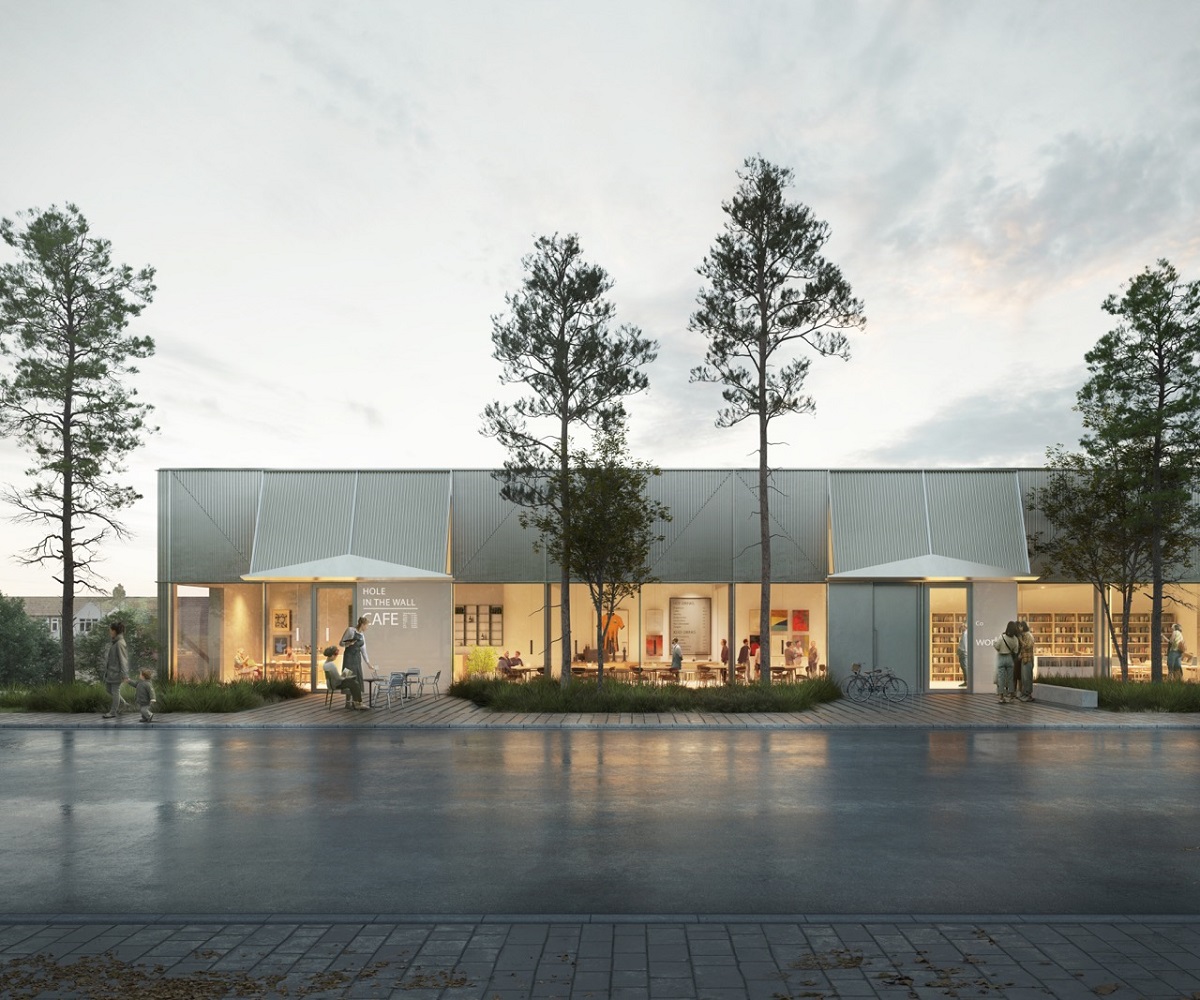
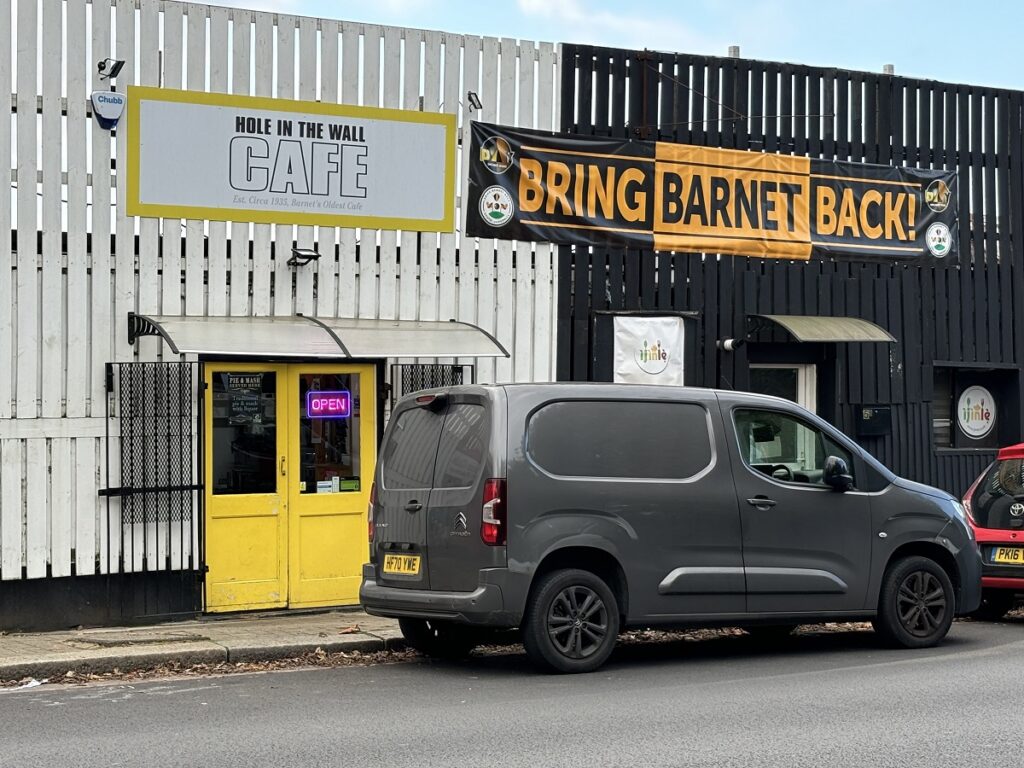
 Emerging from behind hoardings on the Great North Road will be new premises for what is said to be Barnet’s oldest cafe

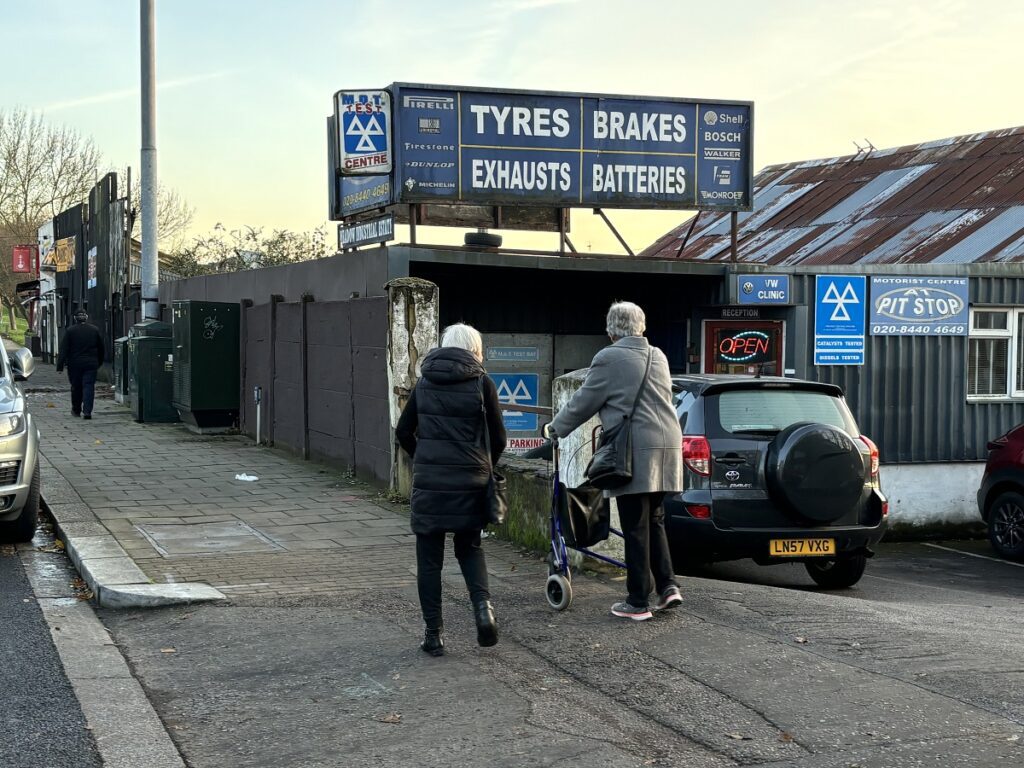
Barnet’s popular roadside cafe, The Hole in the Wall, will have a prominent position on the Great North Road (A1000) if Barnet Council approves plans for redevelopment of the Meadow Works industrial estate at Pricklers Hill.

Instead of being hidden behind a line of hoardings, the cafe would be at the road frontage a new self-storage depot which will replace a group of workshops and other industrial and commercial premises.

An application by Compound Real Estate to regenerate the Meadow Works site with what it says will be a state-of-the-art self-storage facility, co-working spaces, and new premises for the Hole in the Wall Cafe, is now open for comment on the council’s planning website.
Support for the project has been indicated by the Barnet Society.

Robin Bishop, lead on planning and the environment, described the contemporary style of the new structure as “refreshingly restrained” for a self-storage facility, which was “nicely landscaped” along the A1000.

Although the original Meadow Works, midway between High Barnet and Whetstone – which started life as the Meadow Hand Laundry – was of historical interest, the society welcomed the improvement the project would deliver to the Pricklers Hill neighbourhood.

In seeking planning approval, Compound Real Estate say the replacement of a cluster of ageing and dilapidated light industrial buildings with a new self-storage facility and flexible co-working spaces will support local small businesses and entrepreneurs.

It calculates that the scheme will support the creation of up to 140 local jobs and deliver an annual financial uplift of £2.4 million to the local economy.

Compound say their scheme reflects the interests of surrounding residents and businesses by “replacing low-quality, temporary structures with a high-quality permanent development that addresses ground contamination, improves safety and enhances the environment.”

One immediate improvement for nearby residents will be the closure of the Dale Close access to Meadow Works, removing commercial service vehicles, to create a residential cul-de-sac.

Residents and interested parties can comment on the application until late April via the council’s planning portal (planning reference 25/1262/FUL) or by emailing planning.consultation@barnet.gov.uk

Planning application for new self-storage facility on Great North Road now open for comments on Barnet Council website

Kevin Callaghan, owner of the Hole in the Wall – established in 1935 as a popular stop off for traffic heading out of London — says he is delighted that the cafe will have a new permanent home.
“This is a real vote of confidence in small, local businesses. The site needs to be regenerated, and it is great that Meadow Works will be given a new lease of life.”
The switch to a self-storage depot was welcomed by the former owners of Meadow Works, James and Duncan Morris.

“We are pleased that the site will continue its industrial heritage and continue to support small and medium enterprises within Barnet.”

Jo Winter, development manager at Compound which specialises in developing and operating self-storage facilities integrated with co-working light industrial, said the company was committed to working with the local community and Barnet Council.

Posted on 1 Comment

Warm applause for another imaginative drama retelling events from the rich tapestry of High Barnet’s historic past  

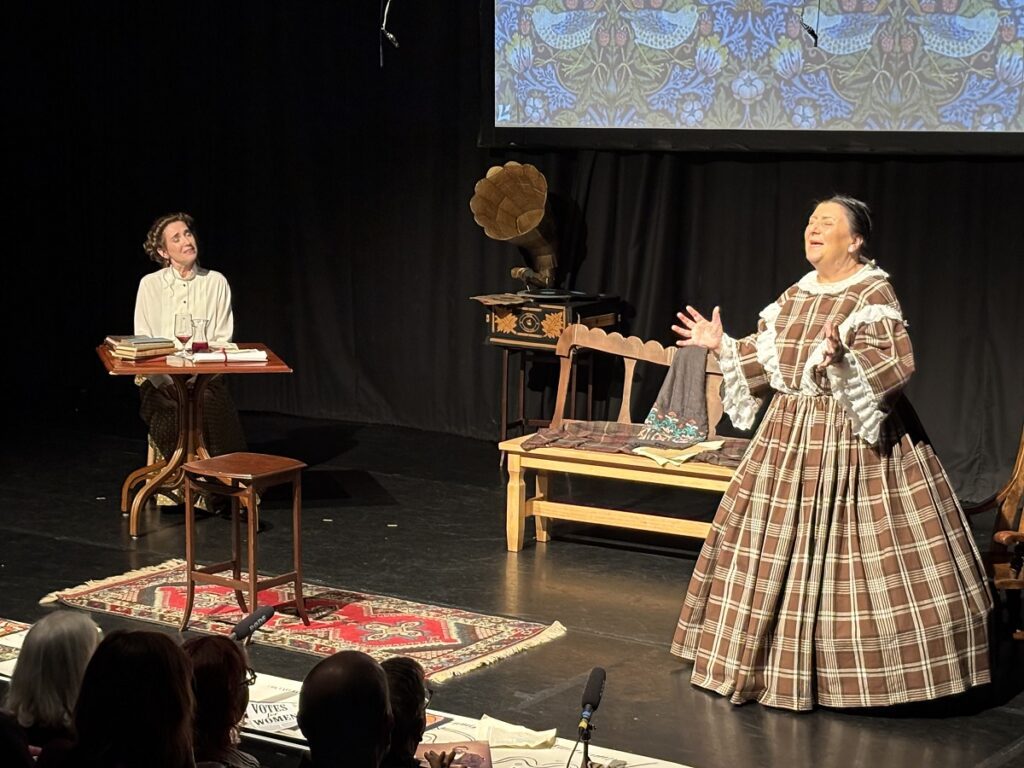
Claire Fisher’s first play – Mary Livingstone, I Presume? – tickles the audience with a joyous array of gossip and small talk between the Hadley Green gentry of yesteryear, their servants and the townspeople of Barnet.

The Bull Theatre was packed with highly appreciative audiences for the latest production by the Blue Door Theatre Company.

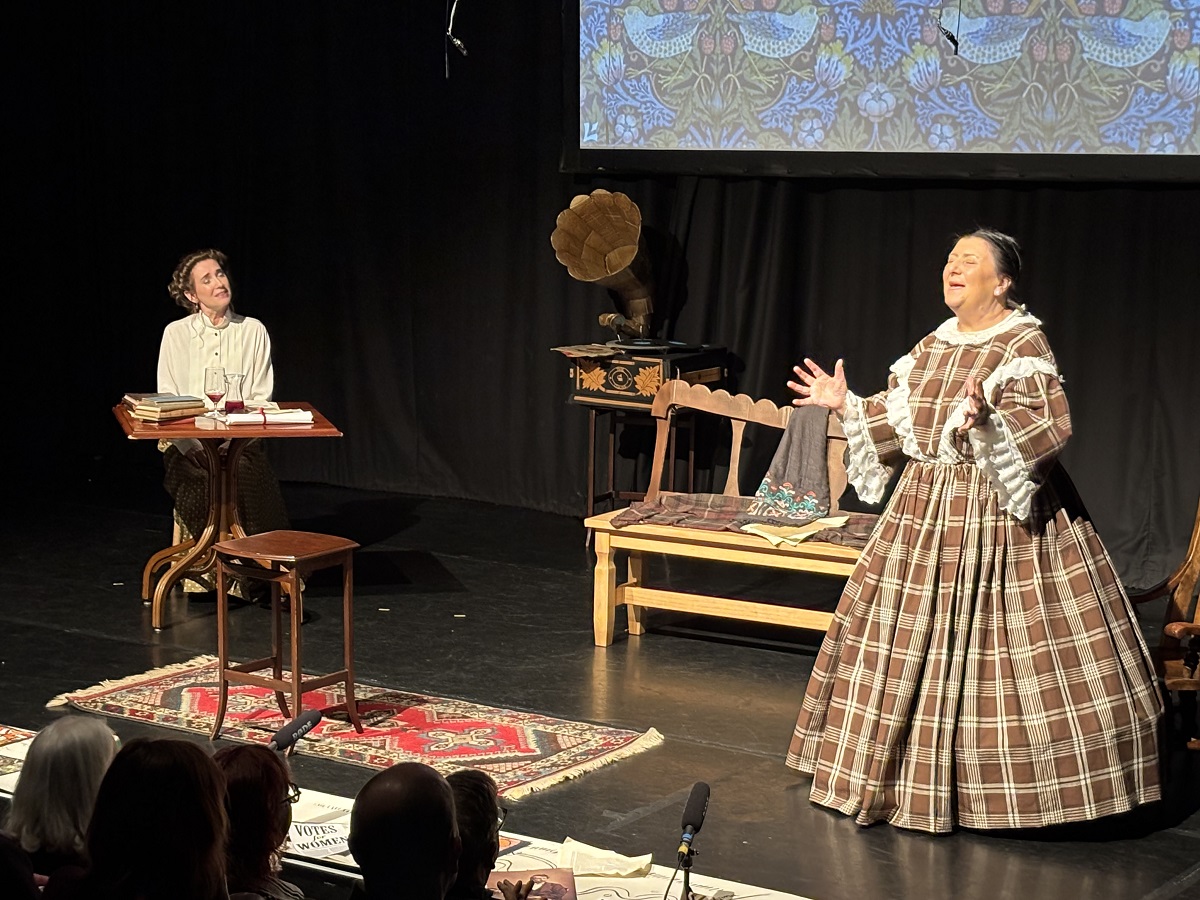
An ingenious script imagines the ghost like presence of Mary Livingstone inside Livingstone Cottage, the house on Hadley Green which in 1857 was the home of the Victorian explorer and missionary Dr David Livingstone, his wife and children.

A plaque dedicated to the centenary of Dr Livingstone’s birth was erected on the front wall of the cottage.

Claire’s story line imagines a sequence of events that led up to the official unveiling ceremony in 1913.

The re-appearance of Mary (played by Sarah Munford, see above) in a magnificent and voluminous crinoline style dress triggers challenging conversations which become the all-absorbing pre-occupation of Isabelle Harrington (Brigid Hekster) who moved into Livingstone Cottage after she returned to the country following the death in South Africa of her mine investor husband.

What actually happened in the everyday reality of today was that Claire Fisher and her family moved into the cottage 11 years ago.

Finding herself living in a house inhabited by such an illustrious famous predecessor developed Claire’s interest in researching how the famous explorer and his family came to live at Hadley Green in the 1850s.

The inspiration for the play – the first she has written and directed – grew out of Claire’s realisation that the role of Dr Livingstone’s wife Mary had been largely ignored.

In fact, it was Mary’s knowledge of local African languages and her standing among local people that was crucial to the success of Dr Livingstone’s travels, yet little was known about her contribution in propelling her husband into the pantheon of historical figures.

Claire started to wonder whether there were any women residing in Barnet in 1913 who had dared to suggest that Dr Livingstone’s wife deserved at least a mention – as there is no reference to her on the commemorative plaque – and her play tries through the drama that unfolds to put the record straight.

Isabelle Harrington, the central character, is the grieving widow who has returned to Hadley Green and who moves into Livingstone Cottage.

While navigating her grief she is determined to find out more about the Livingstone family.

She is also determined to continue working on work on her “causes” – votes for women, and campaigns like the attempt to ban the wearing of ostrich feathers on women’s hats.

Isabelle finds comfort in conjuring up Mary and the repercussions of their imagined conversations interact with the lives of the other women in the play, ranging from Caroline Penman (Val Golding) the formidable mother of her brother-in-law, to their long-standing servant Kitty (Jan Parker) who as a 20-year-old was a servant in the Livingstone household.

Kitty recalls working in the house while Dr Livingstone wrote about his missionary travels. She remembered how the couple’s children used to play on Hadley Common.  

Claire says her aim in the play was to portray the lives of women who had to manage their lives and hopes through the whims of men who treated them as second-class citizens.

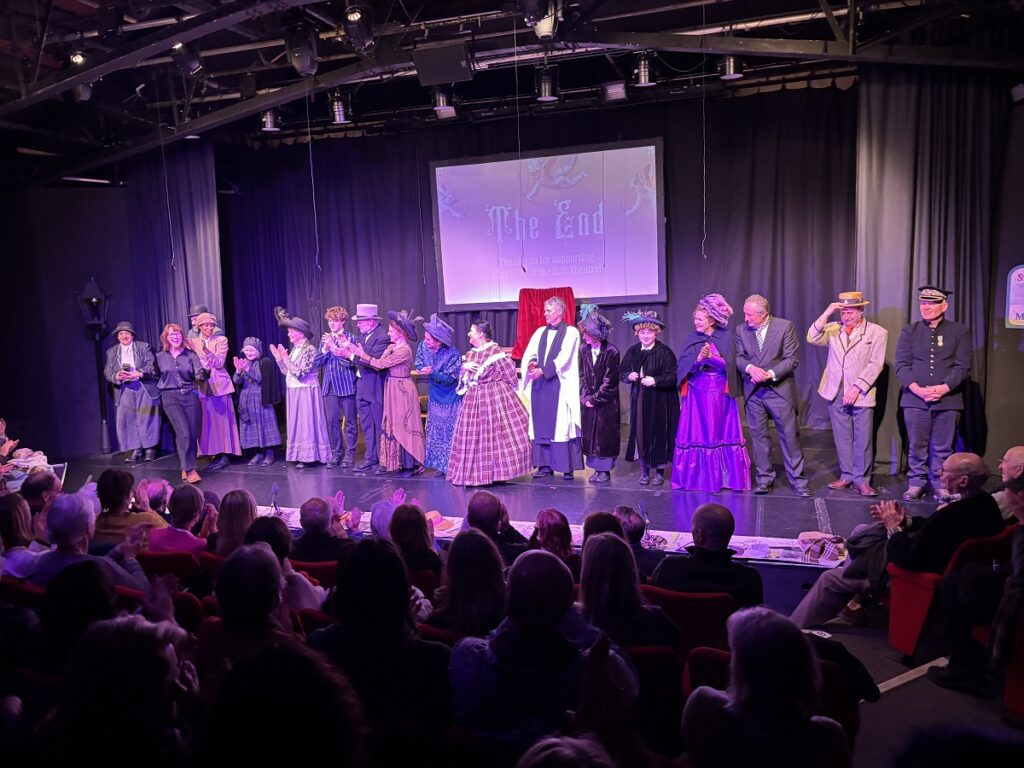
Warm applause at Bull Theatre for another imaginative drama retelling events from rich tapestry of High Barnet's historic past

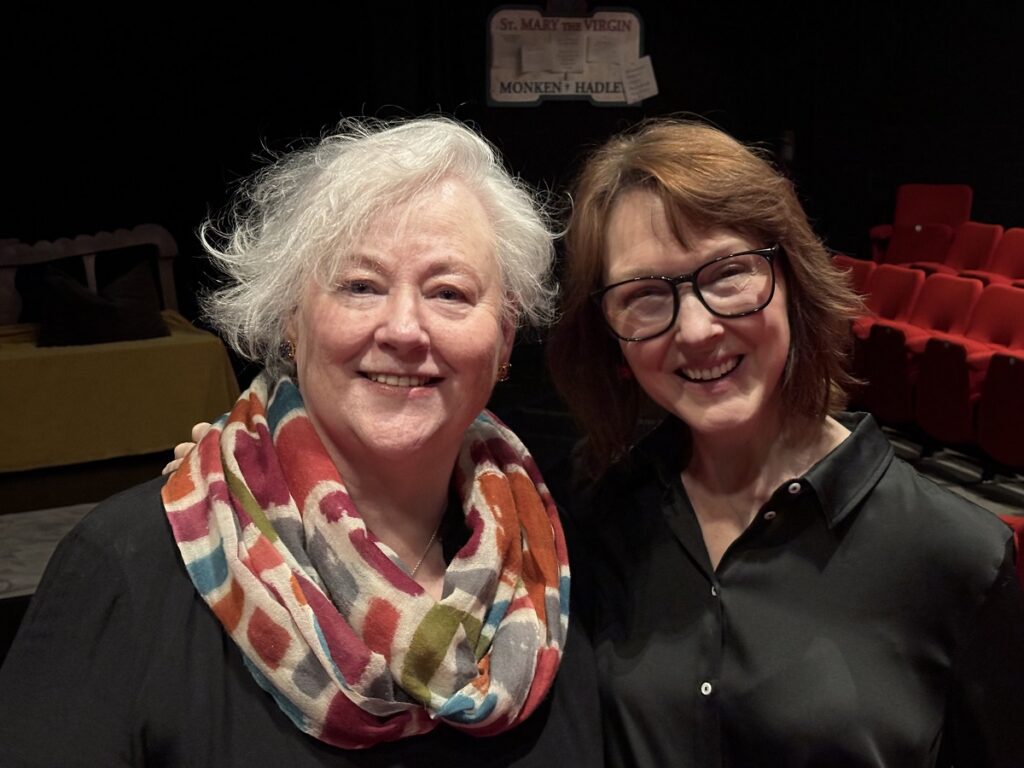
In thanking the cast at the curtain call, Claire (above right) paid tribute to the dedication to the members of Barnet’s successful community theatre group and especially for the encouragement and support she had been given by Siobhan Dunne (left), the artistic director of the Blue Door Theatre Company.

Mary Livingstone, I Presume? is the latest in a series of locally inspired productions including The Boy I Love set in the 1880s in High Barnet around the arrival of the annual Barnet Fair and Fog of War by local playwright James Godwin set in 1471 in the heart of the Battle of Barnet.  

Posted on 3 Comments

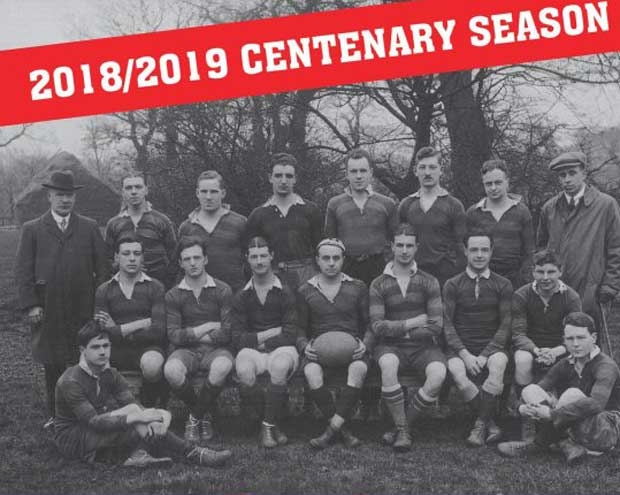
Sporting history for Barnet rugby

Barnet might have lost its football club, but another of the town’s sporting traditions is still making history: Barnet Elizabethans Rugby Football Club is about to start a year of commemorative events to celebrate its centenary.

Continue reading Sporting history for Barnet rugby

Posted on 2 Comments

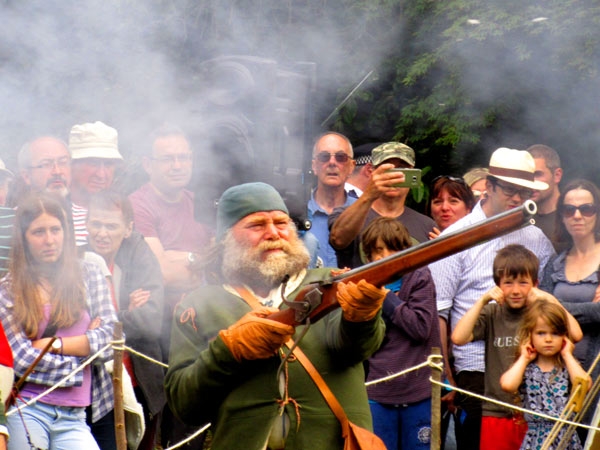
Re-living the Battles of St Albans and Barnet

Scenes from the battles of St Albans (1461) and Barnet (1471) – two of the engagements in the Wars of the Roses – are to be re-created as part of the Barnet Medieval Festival to be held over the weekend of June 9 and 10 at the Byng Road playing fields.

Continue reading Re-living the Battles of St Albans and Barnet