
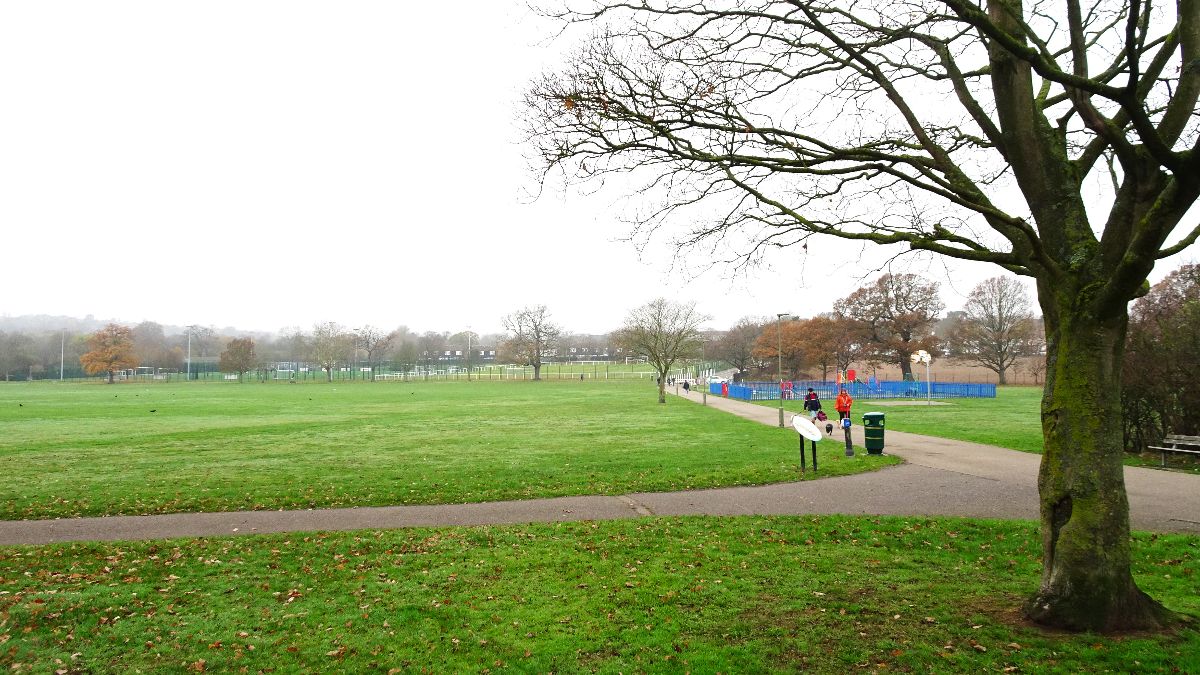
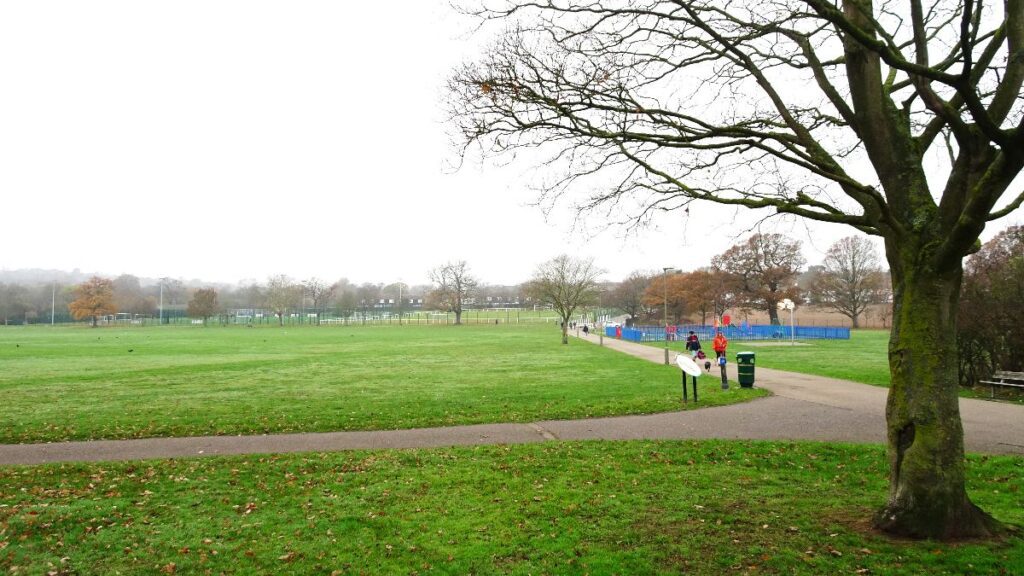
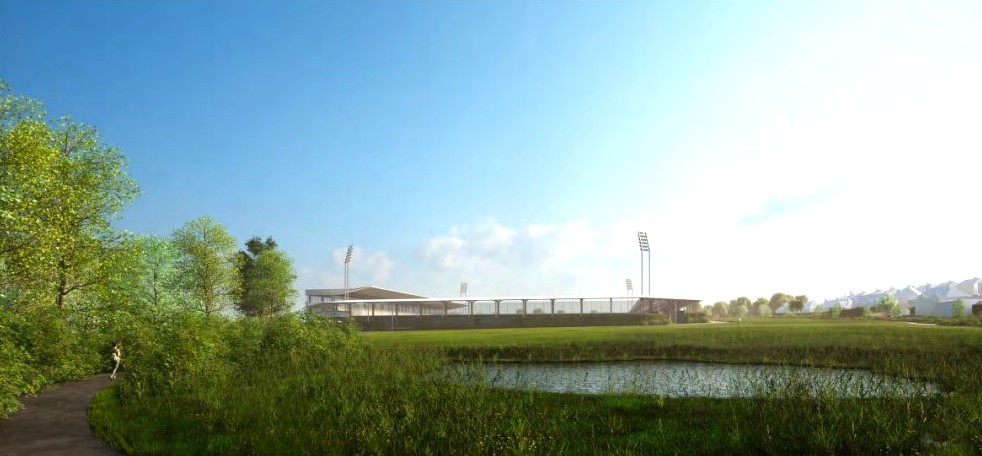
We wholeheartedly support the principle of Barnet Football Club returning closer to its historic roots, and we can see some potential benefits for Chipping Barnet as well as the Club. But we have severe reservations about key aspects of the Club’s case.
We’ve submitted our comments on the Club’s outline planning application to Barnet Council planners, and you can read a slightly abbreviated version below. We’ve focused on four key aspects of the Club’s case: Green Belt and environment, transport and parking, community benefit and economic value.
Green Belt and environment
We oppose building on the Green Belt as a matter of principle. Numerous Green Belt sites in our area have recently been, or currently are, threatened by development. For the Council to approve such a major development on one of Chipping Barnet’s most visible open spaces would set a deeply damaging precedent.
If approved, permission should be subject to a guarantee that, should the football use fail and the site become vacant, the club could not sell the site as brownfield or grey belt and realise a gain in land value. It should revert to Barnet Council or the site be remediated. This must be enforced by a robust legal agreement and/or lease with the Council (both as planning authority and landowner).
We’re not opposed to change of any kind. Although Barnet Playing Fields is a vital link in the lovely chain of greenery along the Dollis valley, its main contribution is its openness and as a popular resource for the leisure and wellbeing of local residents and their dogs. Its contribution to local biodiversity is quite limited, comprising mainly a large grass sward that is unsuitable and little used for the team games for which it was originally intended.
If designed to the latest best practice, new landscaping would support a markedly richer range of plants and wildlife. And it should be perfectly possible to design a range of spaces for exercise, contemplation and socialising, linked by walking, wheelchair, jogging and cycling routes that would be at least as attractive as the present Playing Fields.
The application documents are, however, light on information demonstrating that the new facility would be set within meaningful landscape design, embedded in its context. With such a sensitive site it is imperative that this level of detail is considered, designed and demonstrated.
While we welcome the applicants’ commitment to meeting the Mayor of London’s Biodiversity Net Gain and Urban Greening Factor standards, for such a sensitive site we’d expect higher aspirations.
We also have more detailed concerns including the need for a landscape statement, less hardscape, more biodiversity, a drainage strategy and a link with the Dollis Valley Greenwalk. Careful attention would be essential to lighting, waste disposal and site security
Although the stadium design employs various green strategies, it appears to fall short of net zero standards. Its claims to be fully recyclable must be substantiated robustly, since if the Club fails in its Football League ambitions it would otherwise become a white elephant in the Green Belt.
Transport and parking
We’re aware of historic local concerns about traffic congestion and on-street parking on match days, so we’re puzzled by the Planning Statement’s claim (in paragraph 12.2.10) that ‘The impact of matchday movement will be more significant [than non-matchdays] but will take place infrequently’ – as if that would allay residents’ concerns. It also claims to identify mitigation measures in the Transport Assessment, but we cannot find these in the documents. Information about, and marshalling of, travel routes would be critical, not least for visiting fans travelling via car or public transport.
We’d also expect analysis of the effect on bus services, especially for mid-week games that could affect local schools. The location of a Superloop stop also needs careful consideration (in association with Ark Pioneer Academy).
We can’t find the basis for the quantity of onsite parking of cars and coaches. Although these may be adequate for present attendances at The Hive – and it would be wasteful to leave empty parking spaces for most of the year – we’d expect to see a strategy for future expansion in the event of 7,000-capacity crowds.
How have the levels of bicycle parking been calculated? There doesn’t appear to be adequate provision close to the stadium.
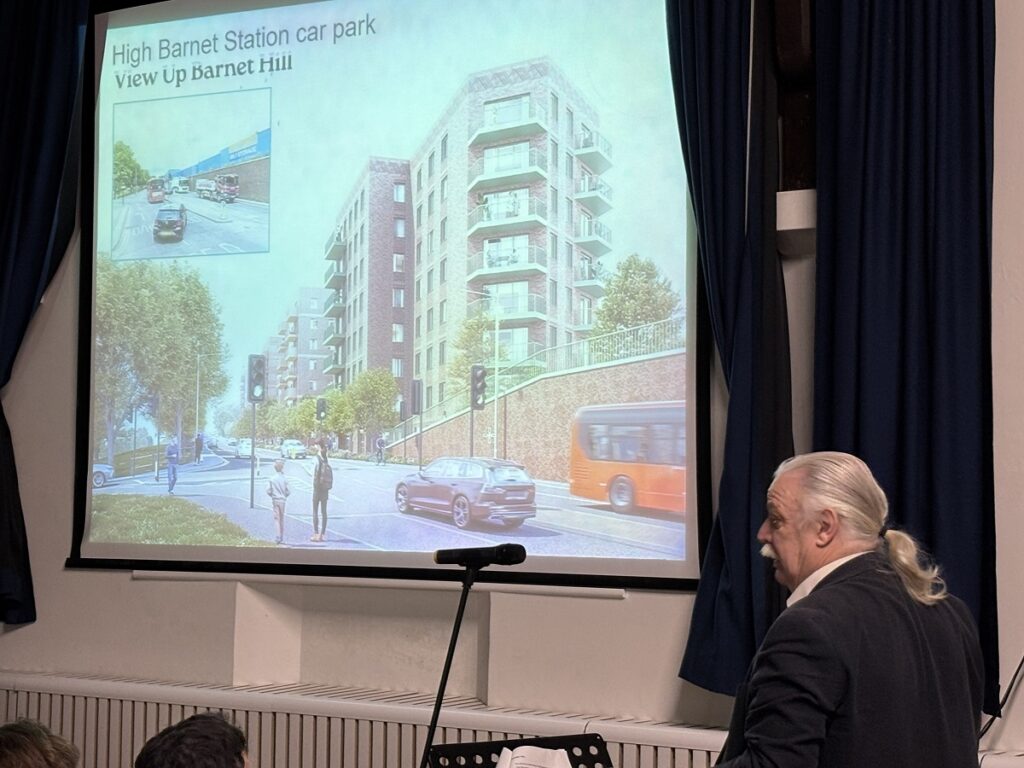
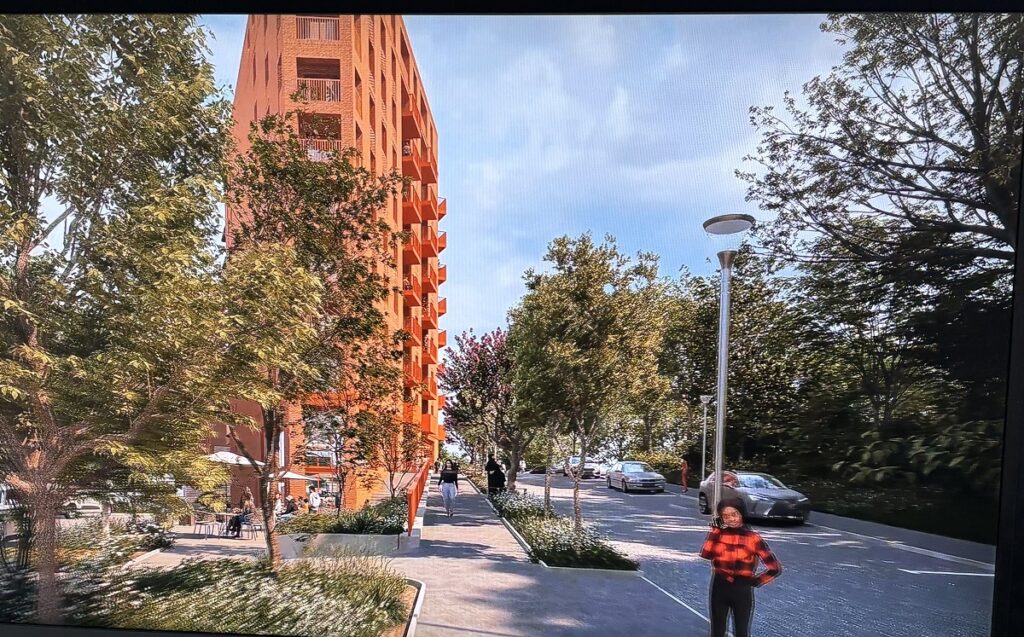
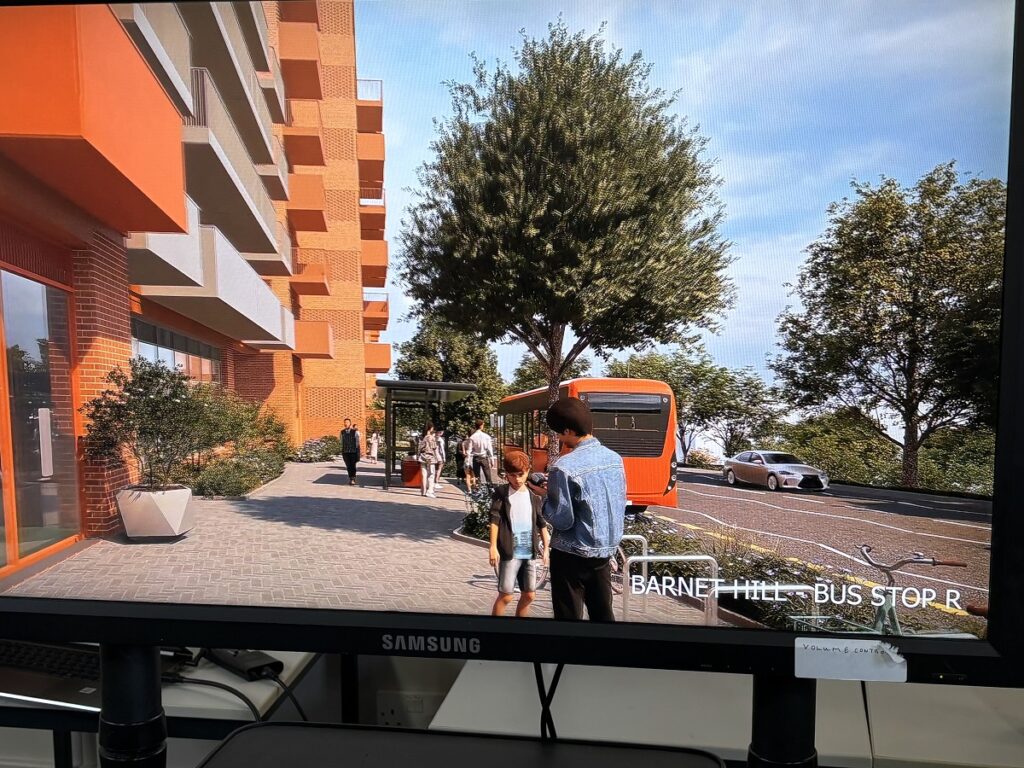
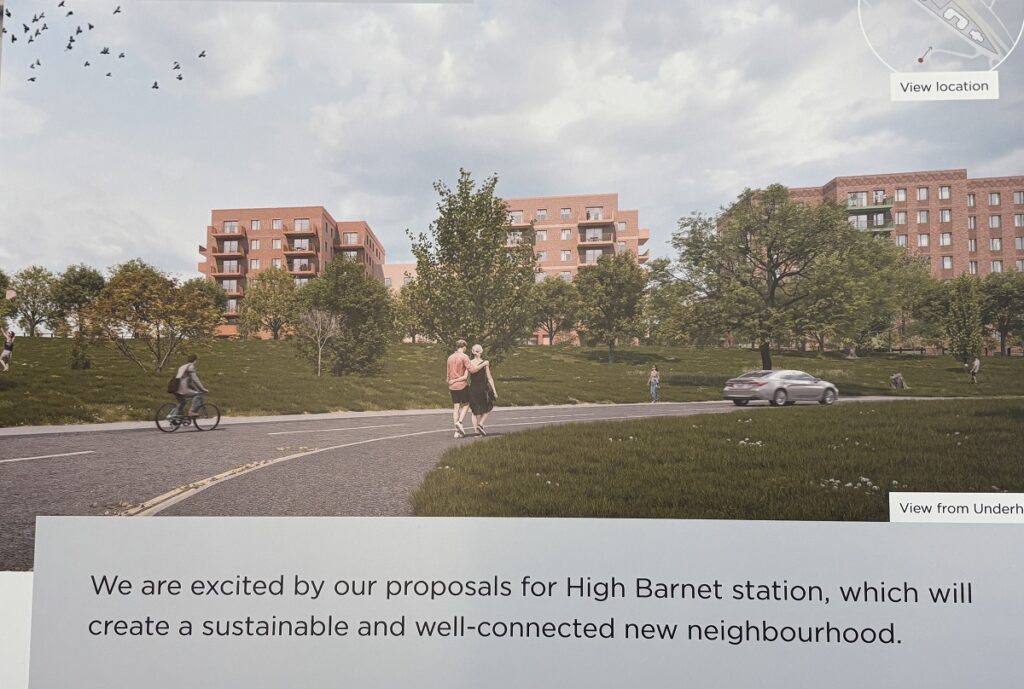
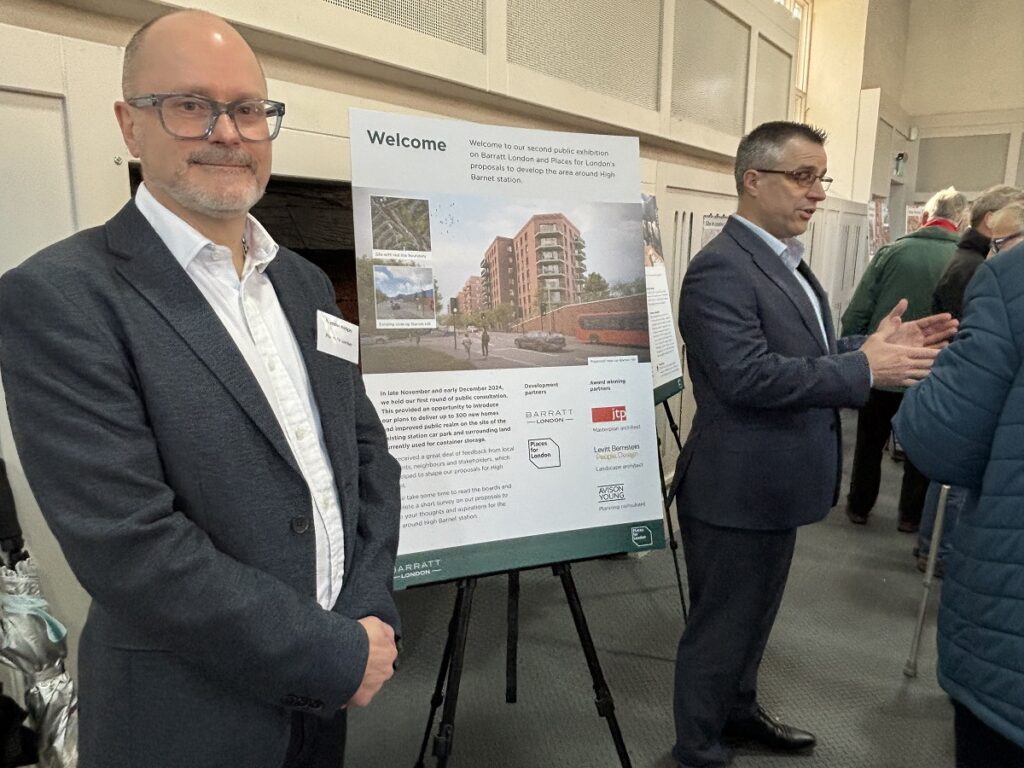
We’d also point out that if the current proposal to build 300 flats on High Barnet Station car park proceeds, there could be an unacceptable increase in construction traffic on roads in and around the town centre.
Community uses & benefits
Our view is that there would be social value in rebuilding a sense of identity of this part of Barnet which older members feel has been lost. But Barnet Community Stadium must bring benefits to the wider community, not just football fans.
The Planning Statement says (in paragraph 1.1.2) that ‘community space’ and a ‘community diagnostic health centre’ will be provided and (in para 10.3.5) that the Club’s Charitable Foundation aims ‘to bring the local community together to encourage participation in sport with a particular focus on promoting physical exercise with older adults, disadvantaged young people and supporting girls into football’.
These all sound splendid, but the plans are diagrammatic and unclear as to how those aims would be delivered. For example, would fully accessible changing rooms be provided for young and old members of the public as well as for the professional footballers? What sort of community activities would be possible, eg playgroups, youth clubs, meetings and parties? And would adequate storage for chairs, tables and equipment be available for different user groups?
Economic value
The Planning Statement states (in para 10.4.4) that the project would deliver £6.0 million Gross Value Added impact, approximately 85 FTE net additional jobs and £350,000 per annum of social value (in addition to construction phase economic impacts). Apparently these calculations are based on standard methodology, but we question whether sufficient local commercial analysis has been carried out.
We accept that match days would generate some additional demand for eating and drinking, but since we understand that franchises would be accommodated in or adjacent to the ground, we doubt that much of fans’ spend would benefit local business.
Conclusion
If we could be satisfied that the matters the Society has raised above have been properly addressed, we would be pleased to support this application.
You can submit your own comments here. The deadline for online comments is Wednesday 19 March.
Mr N M Sanders posted a comment on High Barnet to have two community-inspired public houses within 300 yards of each other and each run by local residents
Disgruntled of Barnet posted a comment on Fiery exchanges as Labour and Conservative councillors clash over accuracy of list of green belt sites for housing around High Barnet
Bruce Mercer posted a comment on High Barnet to have two community-inspired public houses within 300 yards of each other and each run by local residents
Justin Chin posted a comment on Small stretch of Barnet Playing Fields at Underhill set aside for new Dollis Valley community orchard