
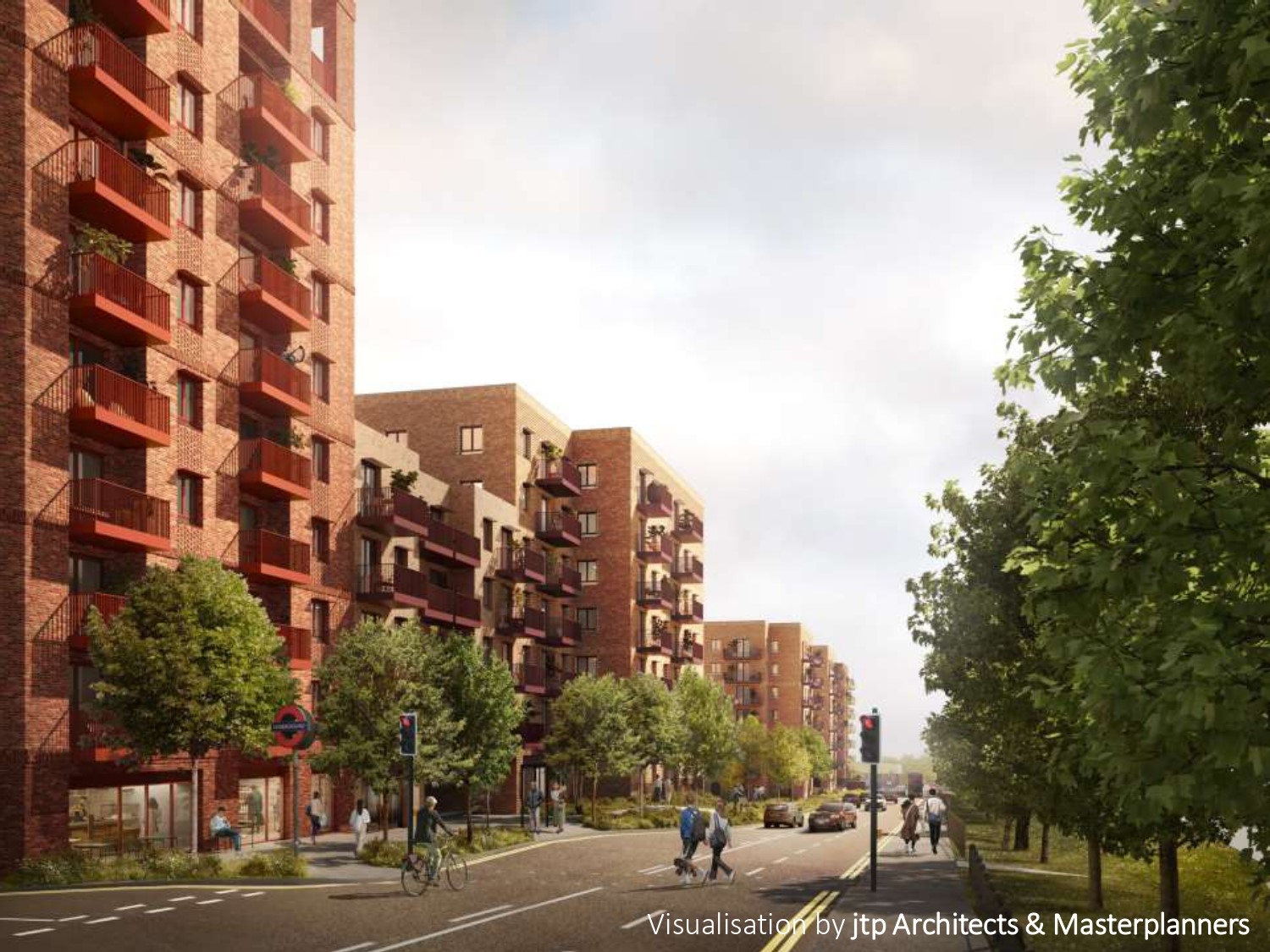
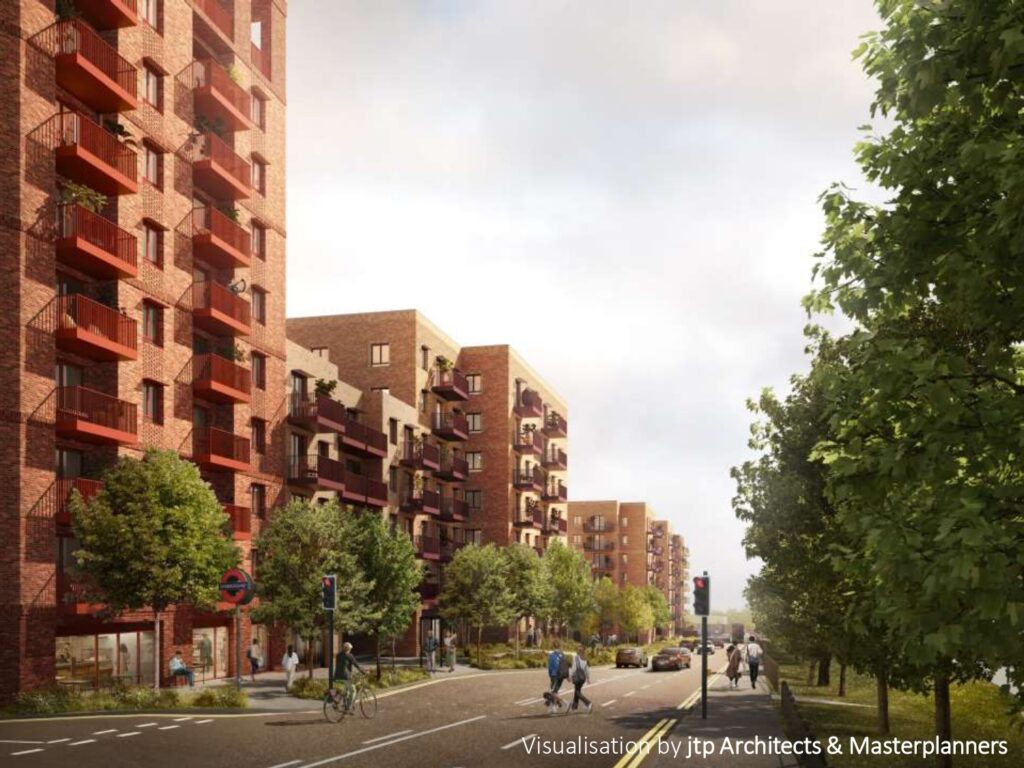
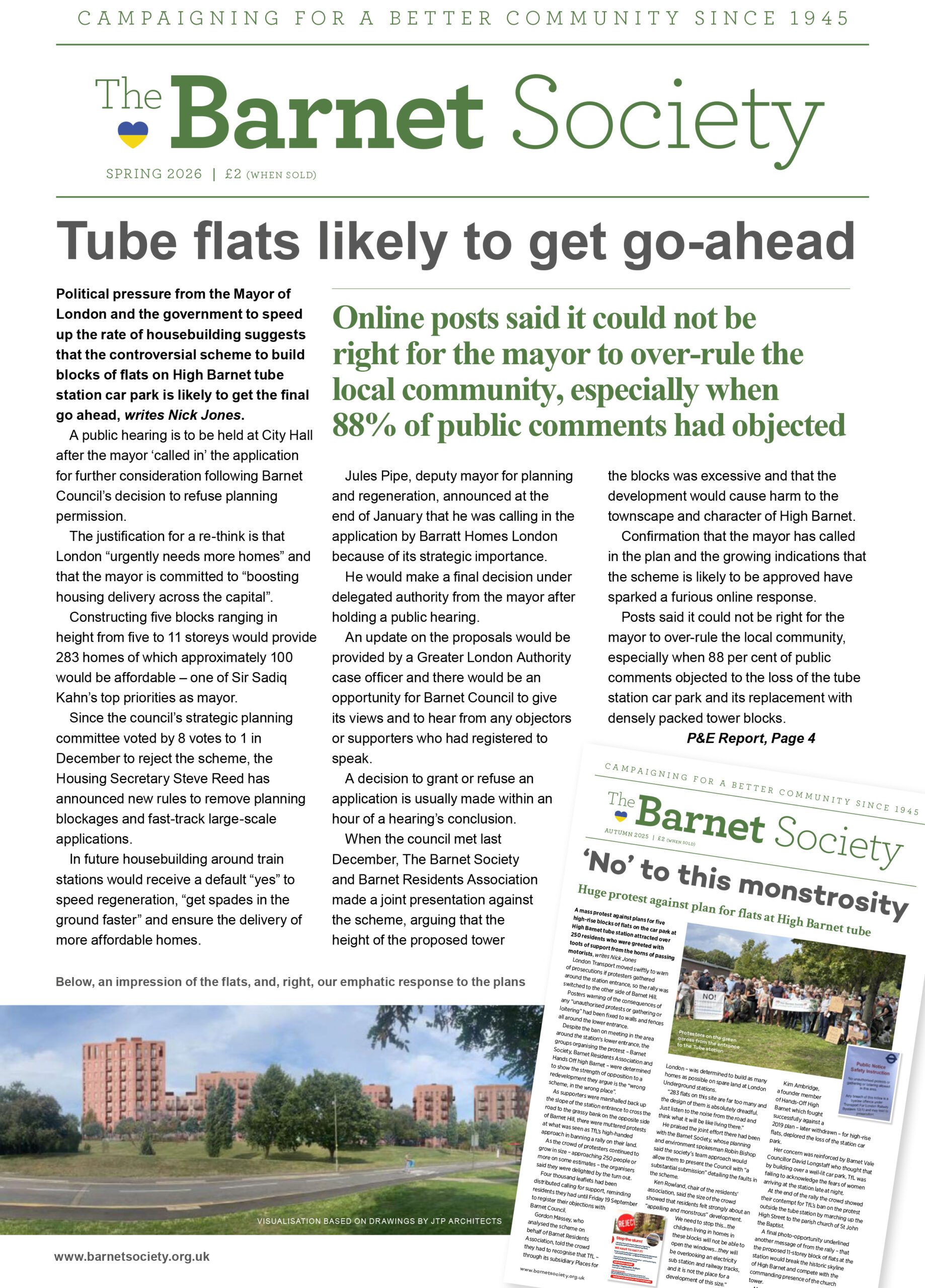
Since Barnet Council decided in December that it was minded to refuse Barratt London’s planning application, the Mayor of London has called it in for review. A public hearing seems likely directly after the local elections on 7 May 2026. The Barnet Society & Barnet Residents Association are greatly concerned that the Mayor’s decision won’t be impartial, and has sent the letter below to our MP, Barnet Councillors and its Greater London Assembly Member.
Readers are urged to make their feelings about the planning application known to Dan Tomlinson MP at dan.tomlinson.mp@parliament.uk and Assembly Member Anne Clarke at anne.clarke@london.gov.uk
We expect candidates seeking election to Barnet Council in May in wards in and around High Barnet will be asked by residents whether they are for or against the blocks of flats being proposed on the tube station car park. For some voters this will be a critical issue.
We are hoping for a clear indication of where candidates of all parties stand. The positions to be taken by our MP and GLA member are of particular interest ahead of polling day.
Dear Dan Tomlinson, Assembly Member Anne Clarke & selected Barnet Councillors
We write on behalf of the Barnet Society & Barnet Residents Association to ask if we can count on your support at the Mayor of London’s representation hearing on this planning application. As you will know, the Mayor called in the application following Barnet Council’s decision on 8 December 2025 that it was minded to refuse it.
The date for the hearing seems likely to be directly after the local elections on 7 May 2026.
Our principal concern at this point is the clear conflict of interest since the Mayor controls Transport for London, which not only owns the site and runs the tube and bus services connecting it to our neighbourhood, but has commissioned the project and stands to profit from its construction. That is setting, writing and marking your own homework.
Although the Mayor has delegated the decision to his Deputy, Jules Pipe, conflict of interest cannot be avoided since Jules Pipe has made statements in support of this and other TfL developments. He has also expressed regret at their refusal when they could not be called in. That is not an unbiased position from which to determine the future character of Chipping Barnet.
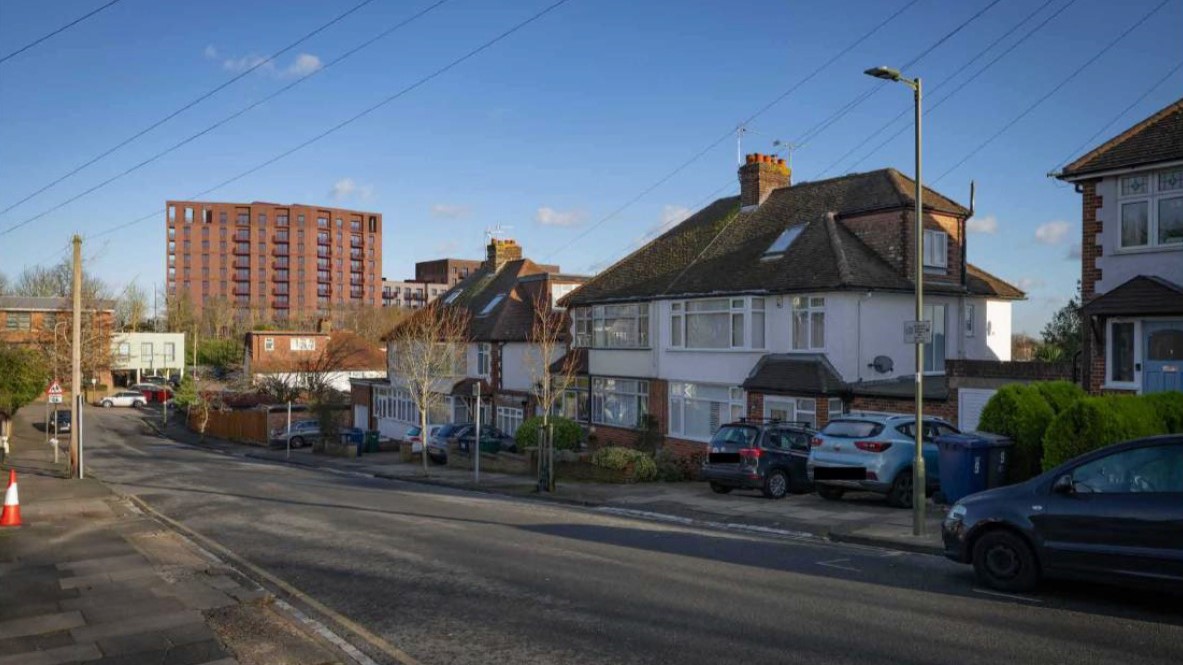
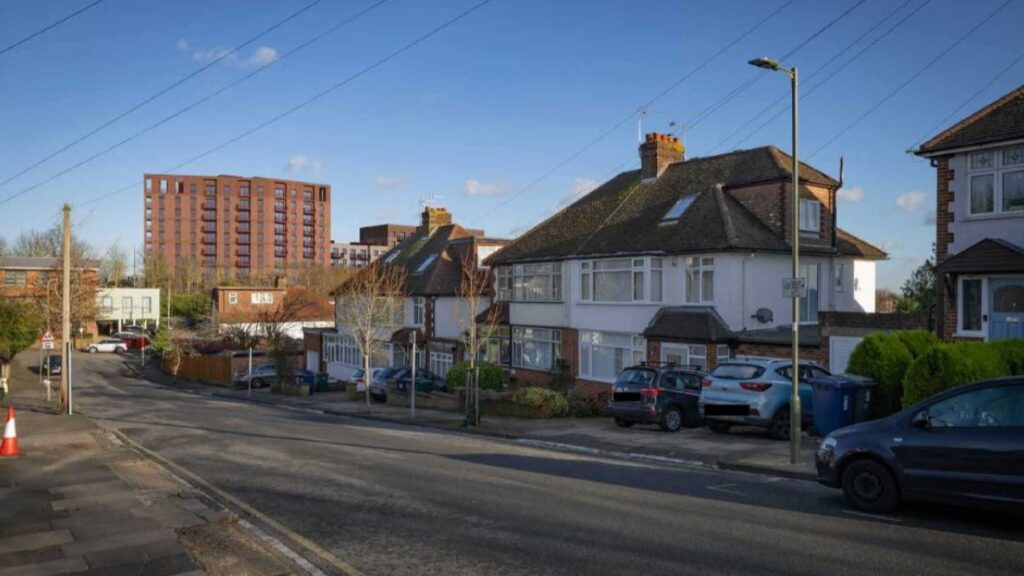
If approved, the application will have a most harmful impact on the town and its nearby green spaces, and set a benchmark for future development in the area. Visualisations in the application were cynically manipulated to downplay its deplorable visual impact.
We’d welcome well-designed homes at an appropriate scale of development. But this proposal grossly exceeds that.
Instead, it would
- breach many policies in Barnet’s recently-adopted Local Plan, including its tall buildings assessment for this site endorsed by the Planning Inspectorate, and make incorrect use of the Hillingdon case to justify a tall building in this location;
- create homes of unacceptably poor safety and quality in terms of layout, detailed design and amenity;
- provide minimal improvements to accessibility and safety that would be negated by loss of the car park;
- exacerbate existing congestion of the set-down and pick-up area, likely causing vehicles to back up onto the busy A1000;
- irreparably harm the identity of the neighbourhood, nearby and from afar;
- be unsustainable by many environmental standards, contrary to the developer’s claims; and
- offer no compensating benefits of significance by way of transport connectivity or new/improved facilities to the existing community.
Our many pages of comments on the application detailed multiple breaches of Borough, London & National policy and guidance (some of them basic matters not revealed in earlier public consultations).
In sum, the site is unsuitable for 1,000 new residents. The resulting excessive height, density and design weaknesses – and the operational difficulties that would beset residents and travellers and the public, commercial and emergency services trying to serve them – risk repeating the mistakes of postwar housing estates. That would be to the lasting cost of our community and the identity and character of Chipping Barnet.
Regards
Robin Bishop
Planning & Environment Lead, the Barnet Society
Gordon Massey
Planning Consultant, Barnet Residents Association
On our website you can read the Barnet Society’s objections to the scheme as well as coverage of the Council’s Planning Committee decision.


Aaron Chenie posted a comment on Yellow line parking restrictions are excessive say residents who believe they have been treated with contempt by Barnet Council
Lolita posted a comment on Yellow line parking restrictions are excessive say residents who believe they have been treated with contempt by Barnet Council
Joe Blake posted a comment on Queen Elizabeth’s School – a Barnet brand name that will soon be appearing on new international schools in India and Dubai
Andrew Jackson posted a comment on Save Chipping Barnet Woodland campaigners delighted by planning refusal for new house in a protected wood close to Hadley Green