
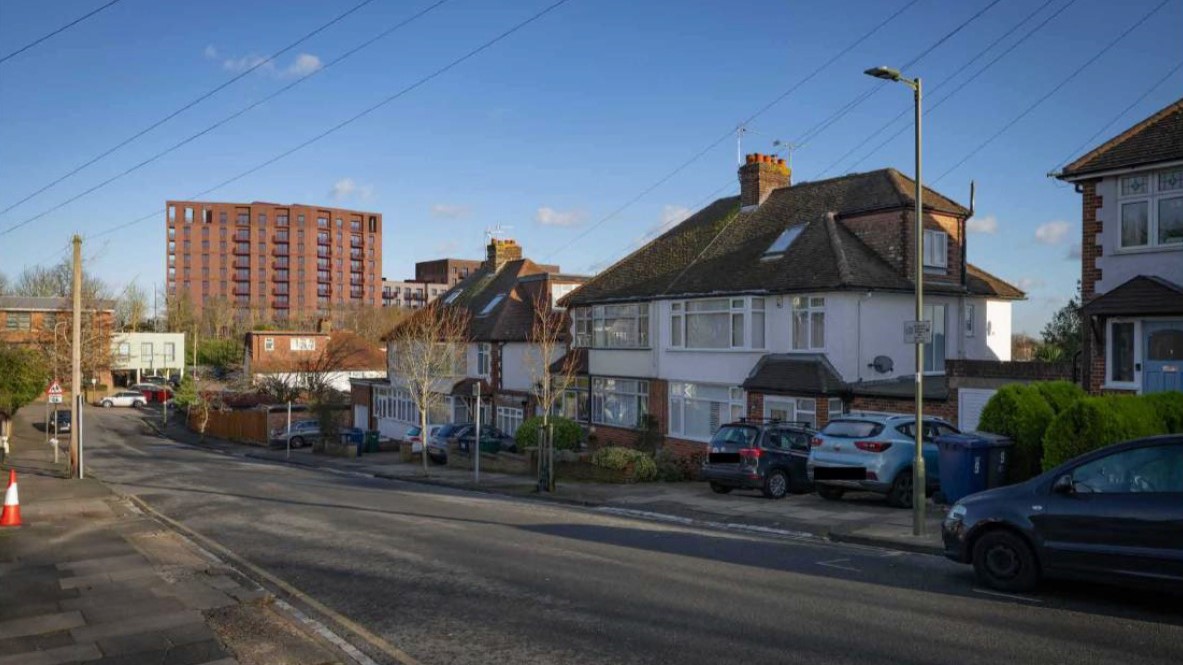
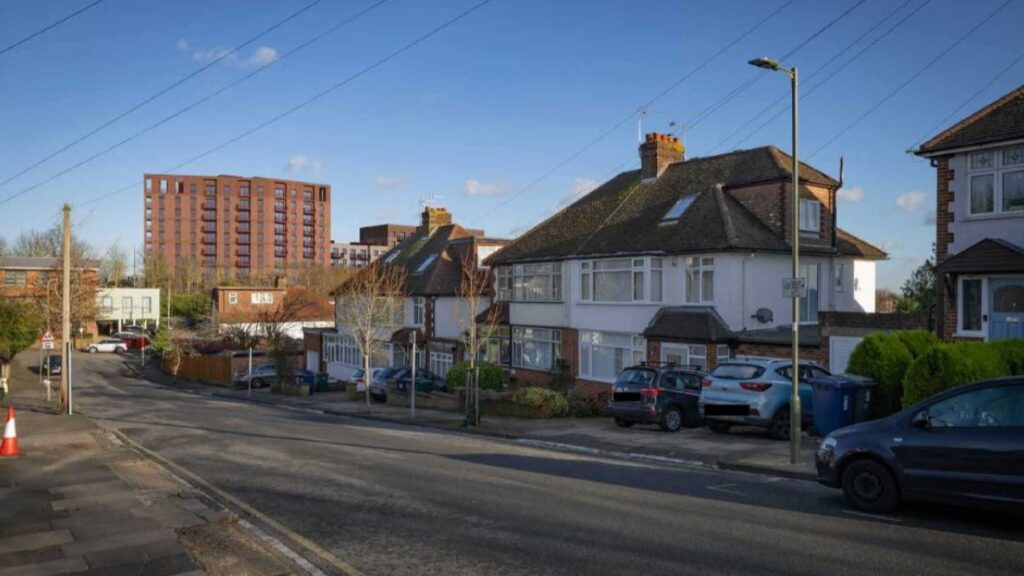
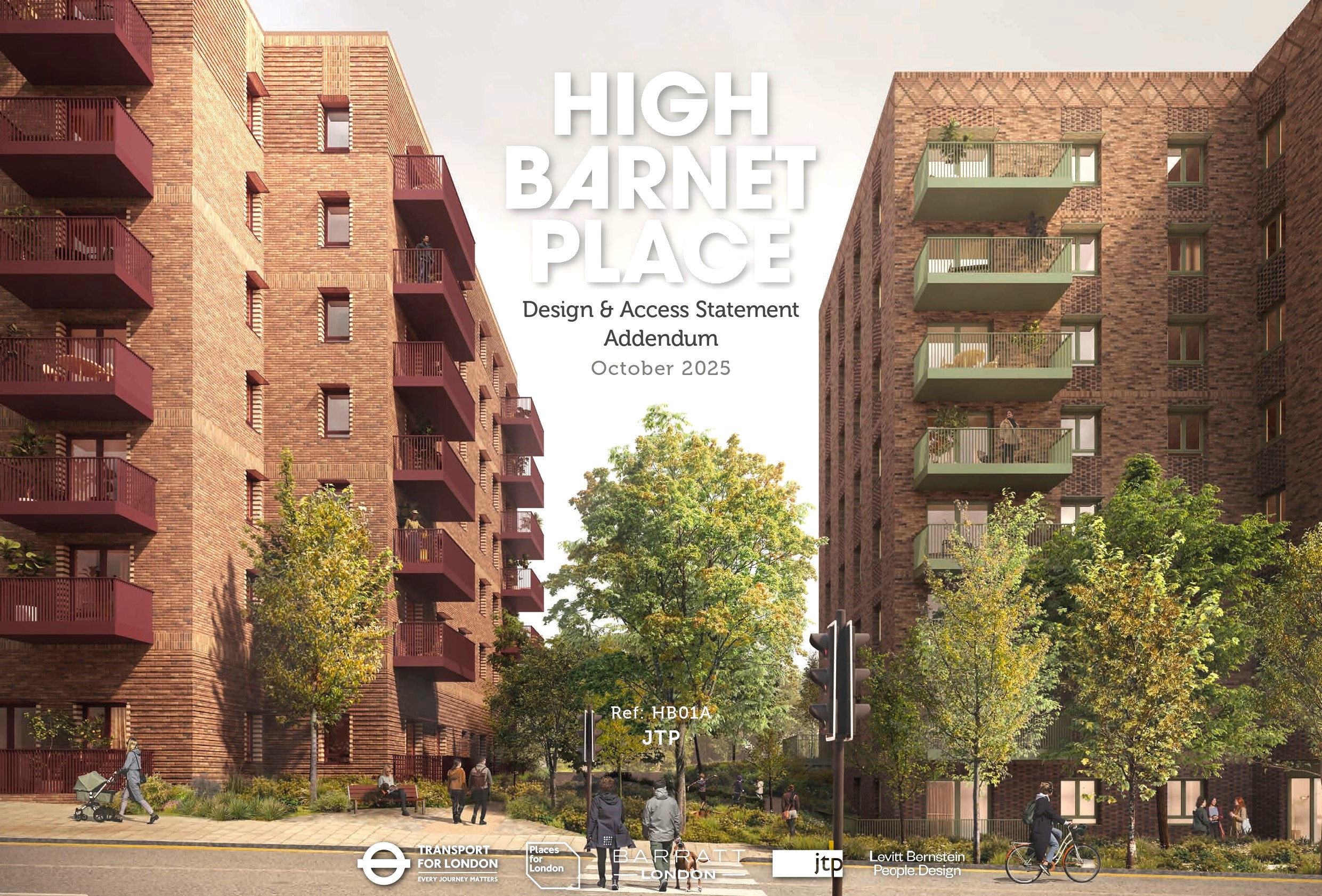
After a nearly three-hour Strategic Planning Committee meeting this evening, Barratt London’s planning application for 283 flats on High Barnet Station car park was refused on grounds of excessive height and harm to local context (see jtp Architects & Masterplanners visualisation above). It’s a magnificent vindication for the 802 Barnet residents who objected to it.
The decision follows last Thursdays’ rejection of a much larger proposal for 1,485 homes plus replacement leisure, sports and other facilities on the site of the former Great North Leisure Park off the A1000 by the North Circular in Finchley. It’s encouraging that the Council is willing to treat cases on their merits instead of simply shooing through every housing project.
The Barnet Society role
The Society had submitted a 64-page critique of the application plus a further 8 pages of comments on recent Barratt amendments. In his report, the Planning Officer summarized our comments in just 10 lines, a feat of compression worthy of a planning award. But that didn’t matter as we had circulated our full comments to all Councillors on the Committee, as well as to the Councillors of Barnet Vale, High Barnet & Underhill wards.
We’d collaborated closely with Barnet Residents Association (BRA) whose submission was broadly aligned with ours; and members of both organisations were kept informed at all stages. Of the 802 individual comments posted on the planning portal, it was notable how many were well argued, detailed and by no means standardized letters – unlike many of those supporting the application.
The meeting
At the meeting the Planning Officer summarized his 100-page report and recommended approval of the application.
Three ward Councillors then addressed the meeting in person (in addition to the nine Councillors on the Committee itself): Cllrs Sue Baker, David Longstaff & Mark Shooter. Though from three different parties, all passionately opposed the application, which may have made an impression on the members of the Committee.
A dozen objectors had asked to speak but Committee rules only allowed one. By prior agreement between them Simon Kaufman, a local architect and Society member, spoke against the scheme, supported when it came to questions from Councillors by Gordon Massey of BRA and Nick Saul of BRA & the Society.
Simon began by circulating some of Barratt’s misleading visualisations, pointing out that the height of several blocks exceeded the limits in Barnet’s Local Plan. He disputed that the design was ‘exceptional’ as Barratt claimed. No Conservation Officer’s view had been obtained on the impact of the design; it would be visually dominant, out of character and harm the settings of St John the Baptist’s Church and High Barnet Station. He deplored the quality of the housing and public realm; the result would not be an inclusive, sustainable community. He noted numerous concerns about personal safety and vehicle congestion. Public consultation had been performative, not collaborative. The scheme offered no tangible community benefits, repeated mistakes of the 1970s and Barnet would inherit the long-term costs.
One young woman, a student of Barnet & Southgate College, spoke in support of the application – but when asked by a Councillor if she would like to live in the development, admitted that she didn’t live in Barnet and probably wouldn’t.
Barratt were represented by project director Martin Scholar and a colleague. They emphasized their experience of delivering similar housing developments and denied that financial viability was their only criterion.
Committee Chair Cllr Nigel Young probed Barratt’s justification for breaching the 7-storey height limit for the site in Barnet’s Local Plan. When they replied that the station would benefit from a tall landmark, he quoted from the Plan’s Examining Inspectors who had identified High Barnet’s skyline as a defining feature of the locality and asked whether they had given that due consideration. Barratt’s representatives didn’t have a satisfactory answer.
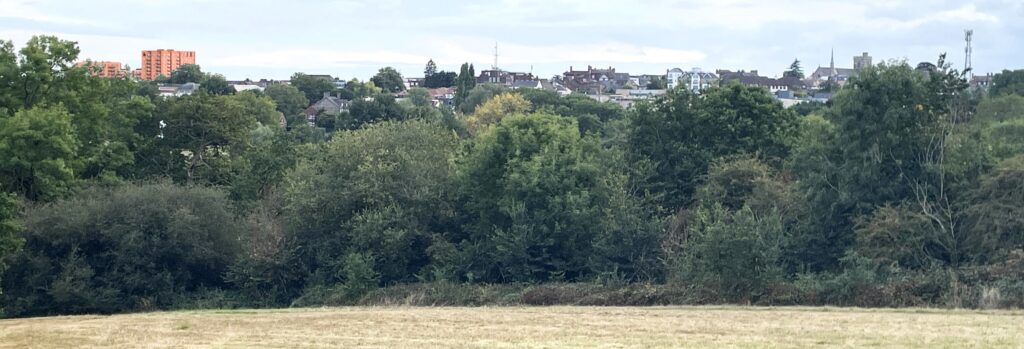
Committee members then debated the proposal between themselves, but when put to the vote the outcome was surprisingly decisive.
What will happen next?
The application, being one of strategic importance to London, must be referred to the Mayor of London, who may call it in or refuse it.
Barratt has the right to appeal to the Planning Inspectorate against the Council’s refusal, but that would entail months of delay with no guarantee of success.
A simpler solution would be for Barratt to slice the tops off blocks over 7 storeys and modify the design to look more in keeping with the existing neighbourhood. That would probably mean offering less than the 40% of affordable housing in the rejected scheme. However, if they could significantly improve interchange and accessibility between all forms of transport around the station – and even provide some car parking – they might surprise themselves by the amount of public support a new scheme could attract.
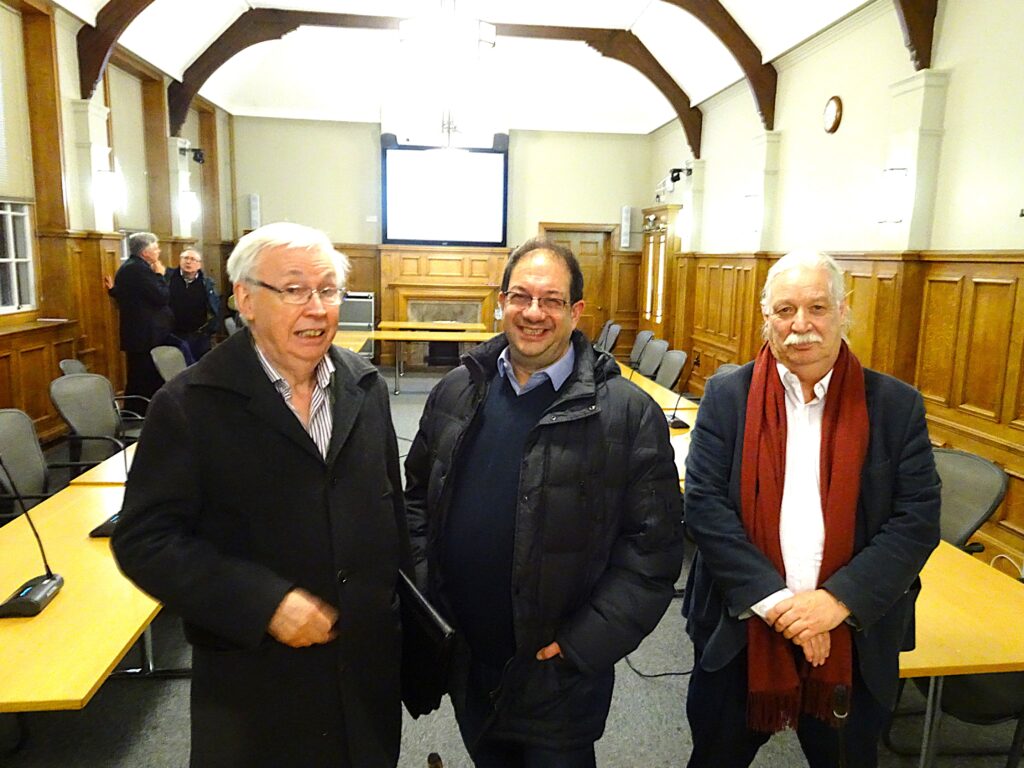
Below (L to R): Gordon Massey (BRA), Simon Kaufman & Nick Saul display three shades of happiness at the scene of their victory.
Justin Chin posted a comment on Small stretch of Barnet Playing Fields at Underhill set aside for new Dollis Valley community orchard
Jim posted a comment on Small stretch of Barnet Playing Fields at Underhill set aside for new Dollis Valley community orchard
Local resident posted a comment on Landmark moment for recently opened Barnet secondary school which is celebrating pupils’ success in gaining places at leading universities
Peter Lyons posted a comment on Small stretch of Barnet Playing Fields at Underhill set aside for new Dollis Valley community orchard