Posted on 1 Comment

A great spotted woodpecker – and a sparrow hawk above – were just two of the species recorded during a Barnet Big Garden Bird Watch.

A sparrow hawk seen hovering and alighting in the trees disrupted the start of the Big Garden Bird Watch which was held at the Barnet Environment Centre in Byng Road.

Once it had flown off and they no longer felt threatened by a bird of prey, smaller birds returned to the centre’s bird table.

At the end of the hour allocated for the watch, a total of 13 different species had been recorded.

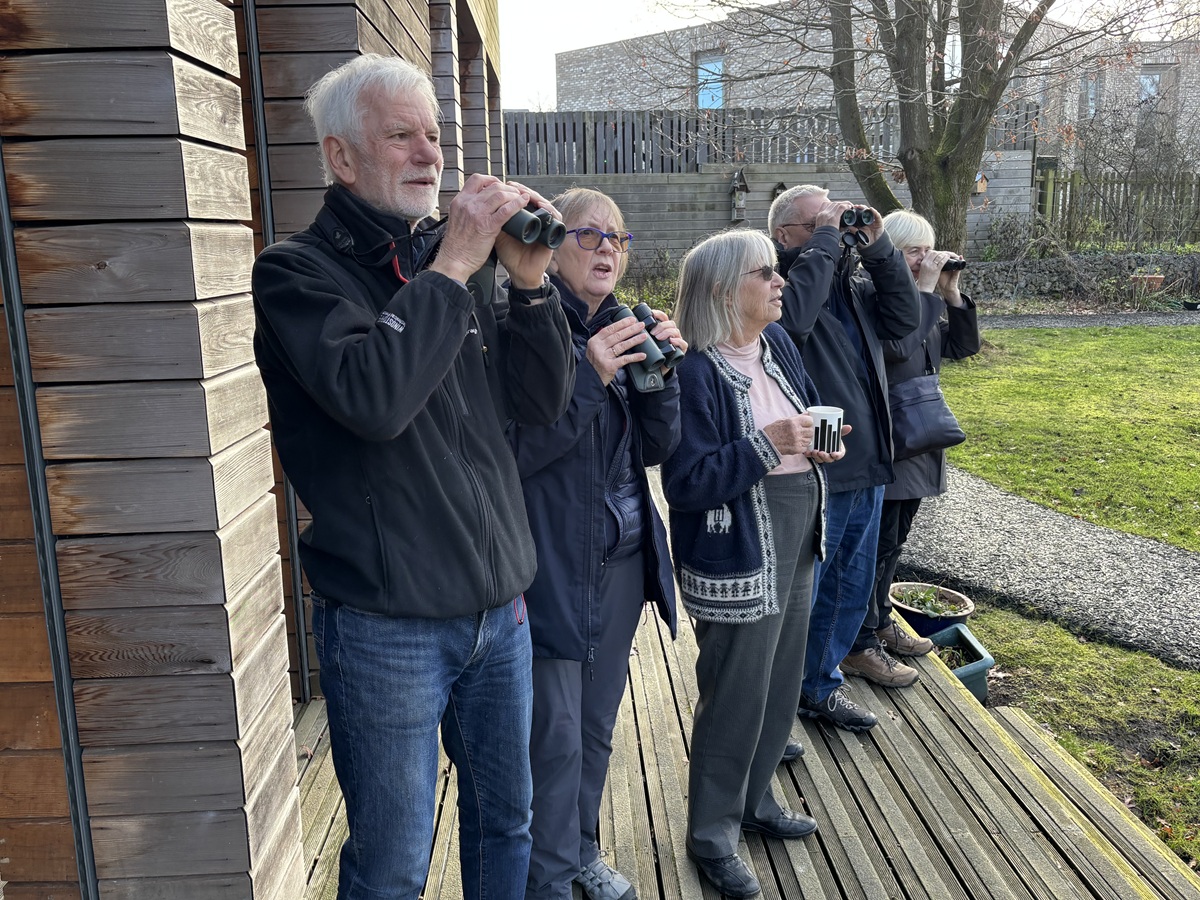
Ian Sharp – above, far left – group leader of the Royal Society for the Protection of Birds for Potters Bar and Barnet – said he was impressed by the centre’s nature reserve.

It was his first visit to the Byng Road centre to assist with a Big Garden Bird Watch, and he was delighted with the range of birds they had seen and identified.

To have seen a sparrow hawk – and the fear it created among smaller birds – was always a special moment and another treat had been to see a great spotted woodpecker.

Other birds seen during the watch included three great tits, four fieldfares, a redwing, a gold finch, and a blackbird, plus two of the inevitable parakeets.

Ian said that so far this winter he had not detected signs of the invasion of redwings, fieldfares and siskins from as far afield as Scandinavia which had been reported in some parts of the country due to hard winter weather in Europe.
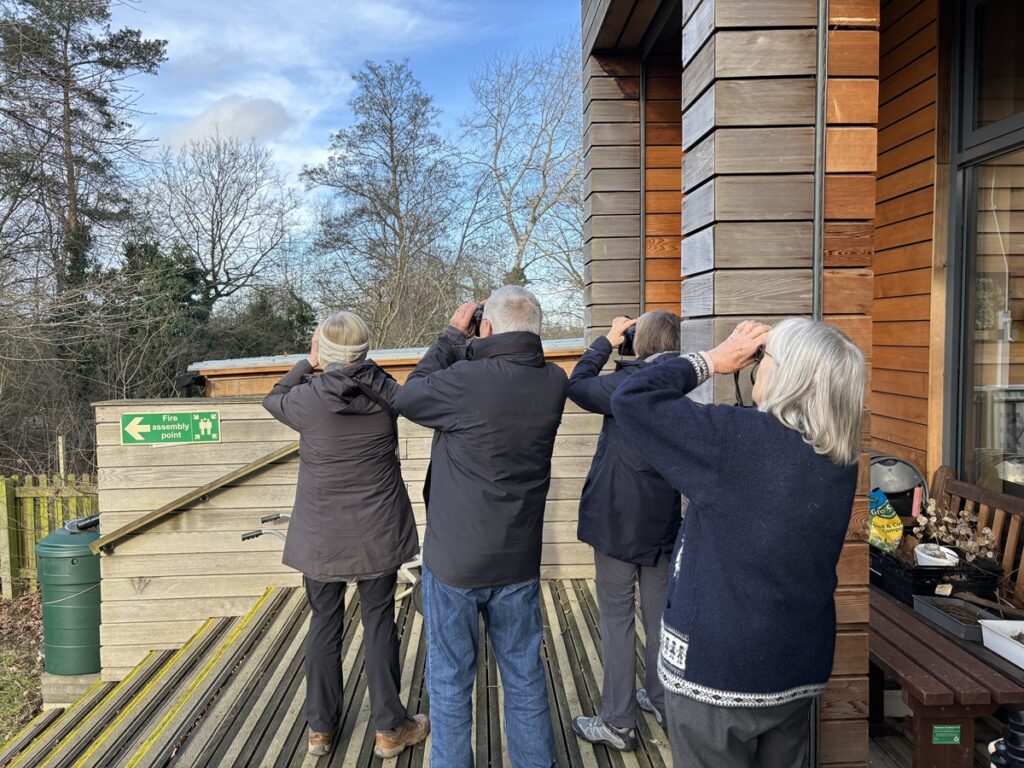
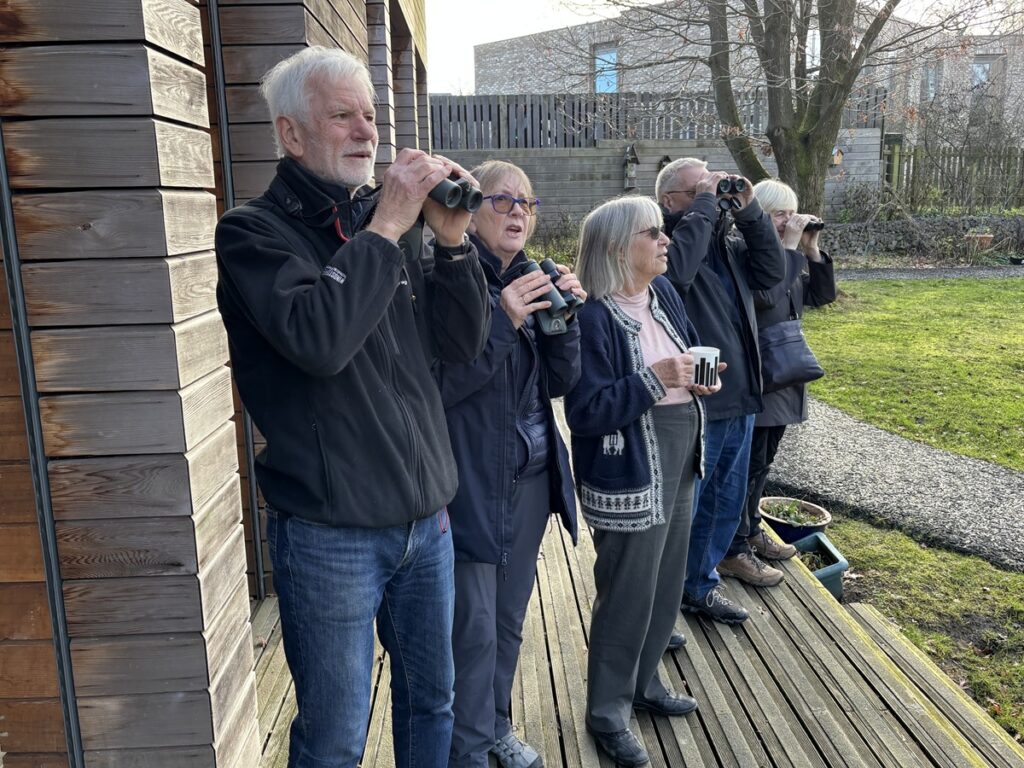
RSPB Big Garden Bird Watch at Barnet Environment Centre records 13 different species including a great spotted woodpecker sparrow hawk

However, just after finishing the one hour allocated for the birdwatch, there was great excitement when a small flock of 11 fieldfares was seen flying into the nature reserve.

What Ian said he had found so encouraging was the environment centre’s success in attracting a younger generation of bird watchers and its extensive programme of visits by pupils from schools around Barnet.
Posted on

Smaller apples than usual but plenty of surplus produce on its way to foodbanks as volunteers tackle fruit-laden trees

A bumper crop of apples and plums is being collected for foodbanks across the London Borough of Barnet by volunteer fruit pickers from Barnet Community Harvesters who save and redistribute surplus produce.

Despite record summer temperatures and a prolonged drought, many trees have been fruiting far better than expected.

On their fifth visit of the season, volunteers picked 103 kilogrammes of cooking and eating apples from three adjoining gardens in Sebright Road, High Barnet.

Three crates with 45 kilogrammes of fruit were delivered to Chipping Barnet Foodbank and the rest went to Colindale Foodbank.

This is in addition to over 200 kilogrammes already donated Colindale and the Finchley Foodbank.

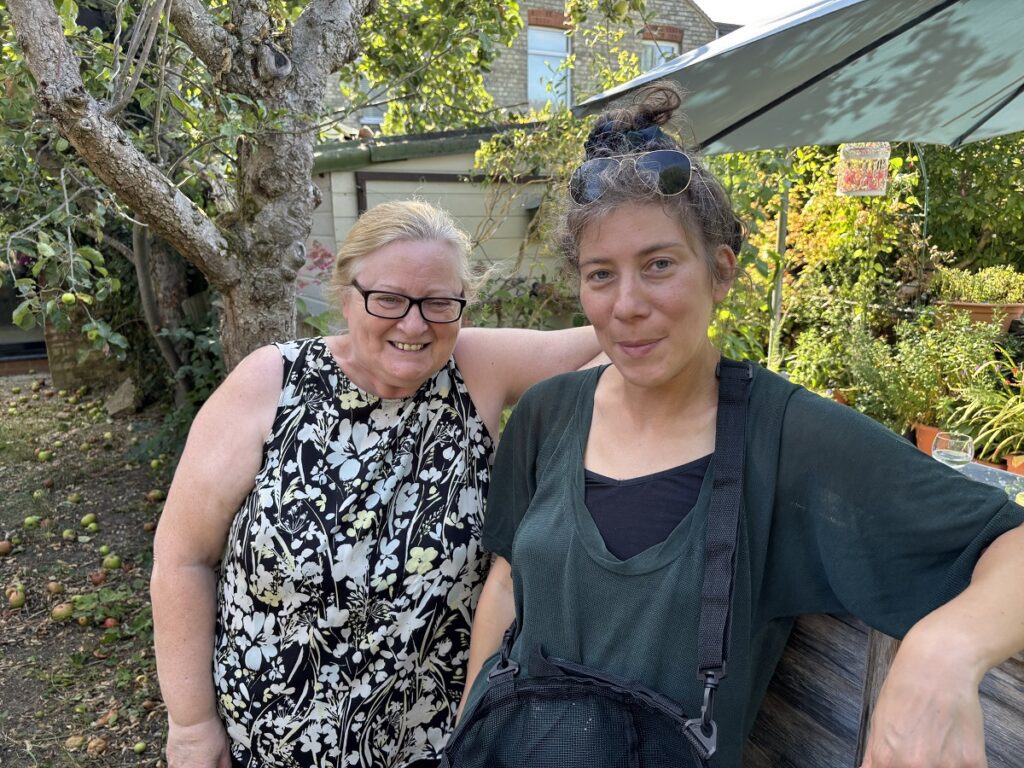
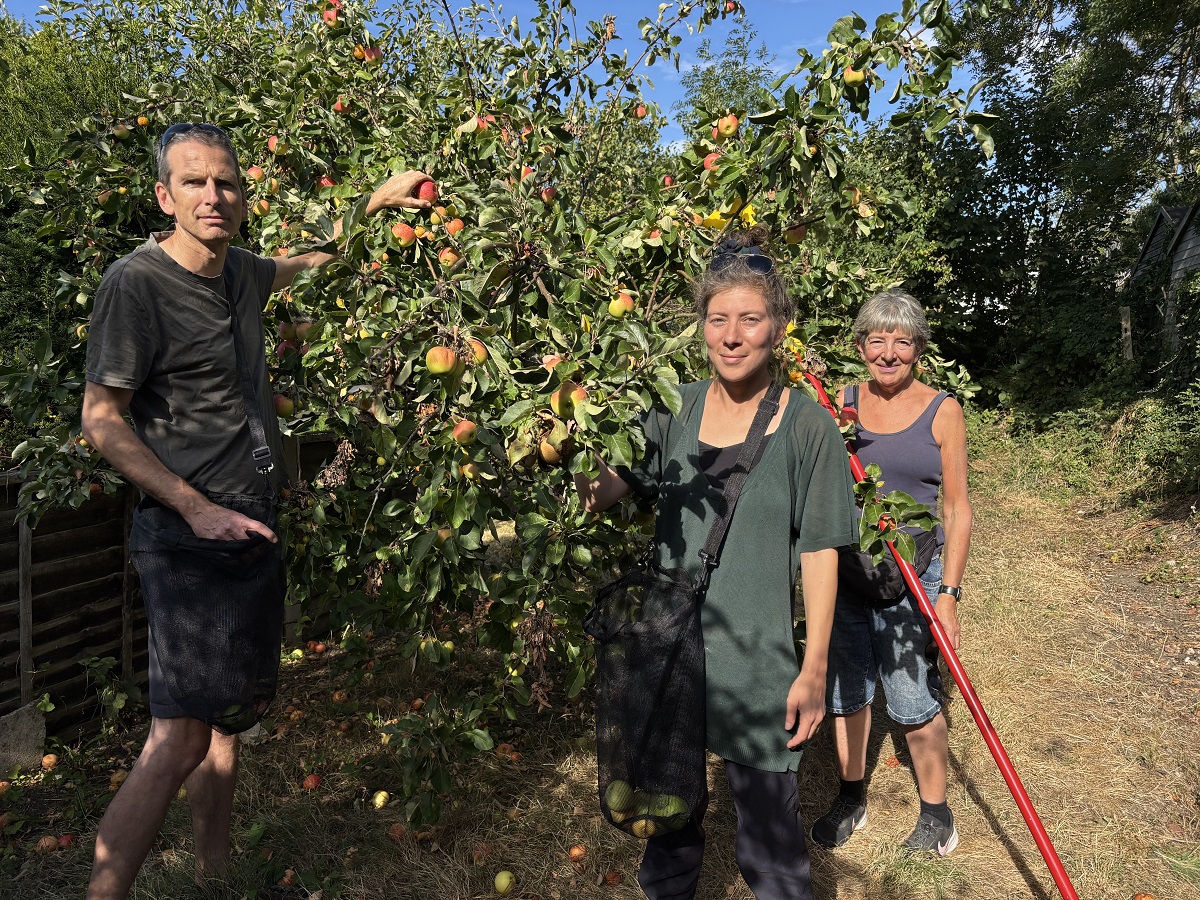
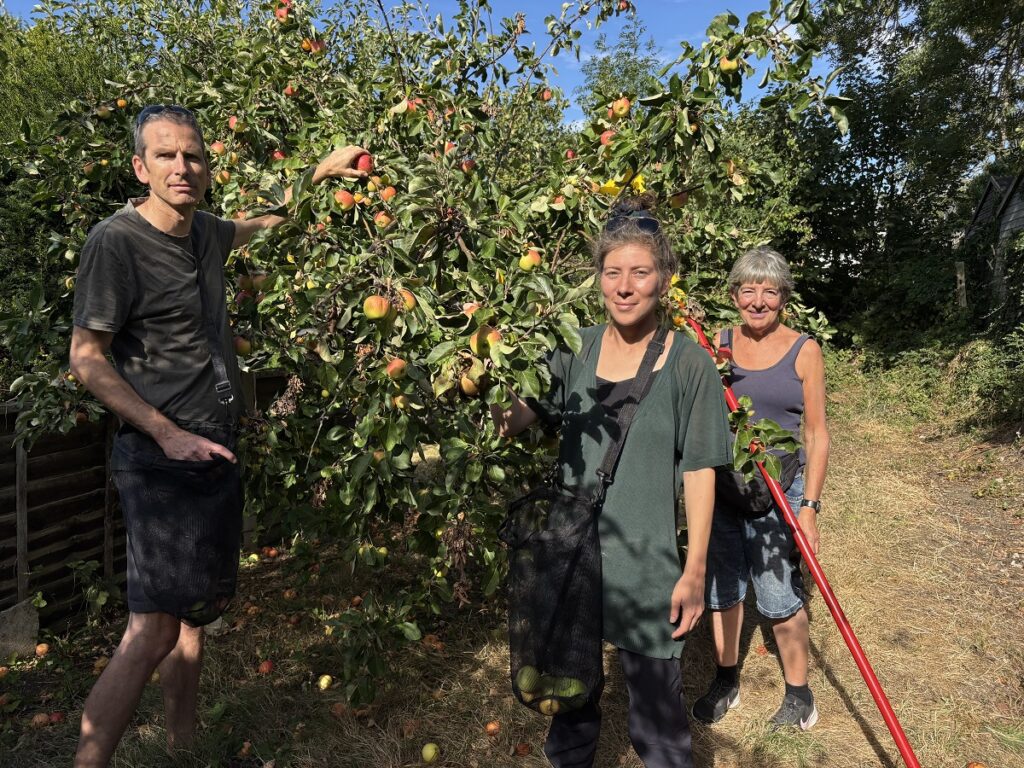
Organiser Daniella Levene (above, centre) who established the group five years ago – seen with volunteers Chris Schwarz (left) and Sue Goodwin – said the exceptionally hot and dry weather had advanced the fruit harvest by at least two weeks.

“Usually, we do our fruit pick at Sebright Road in early September, so to be here in the last week of August just shows the impact of climate change.

“We have noticed how fruit is ready for picking earlier and earlier each autumn but there has been a real change this year.

“When there is a drought, the trees do get stressed and can produce more fruit.”

Daniella said apples they were picking tended to be smaller but often sweeter than usual.

There was plenty of fruit on the trees and especially good crops of plums and damsons.

Surplus apples and plums on their way to Barnet's foodbanks as volunteer fruit pickers from Community Harvesters get to work

The visit to Sebright Road was hosted by Helen Harte (left, above) who was delighted that surplus apples from trees in three adjoining gardens would be going to foodbanks.

“There are far too many apples for us and otherwise they would have to go into our green bins which is such a waste.

“Unfortunately, there is a limit on the amount of fruit we can leave out on our doorsteps, so we are delighted the fruit is being picked in top condition and then going straight to foodbanks.”

Daniella said the fruit collected by Community Harvesters’ volunteers was always gratefully received at the foodbanks.

“Colindale is one of the busiest in London and fresh produce is so expensive in the shops, so our initiative is really appreciated.”

Although delighted by this autumn’s crop of fruit, Daniella doubted the group would match their record year of 2022 when the harvesters donated 1,800 kilogrammes of fruit to local foodbanks.

Posted on 1 Comment

Climate change might be responsible for earliest ever sightings of swifts swooping and squealing over High Barnet

Record hot weather in late April coincided with the earliest reported sightings of swifts who are considered by far High Barnet’s most popular avian visitors each summer.

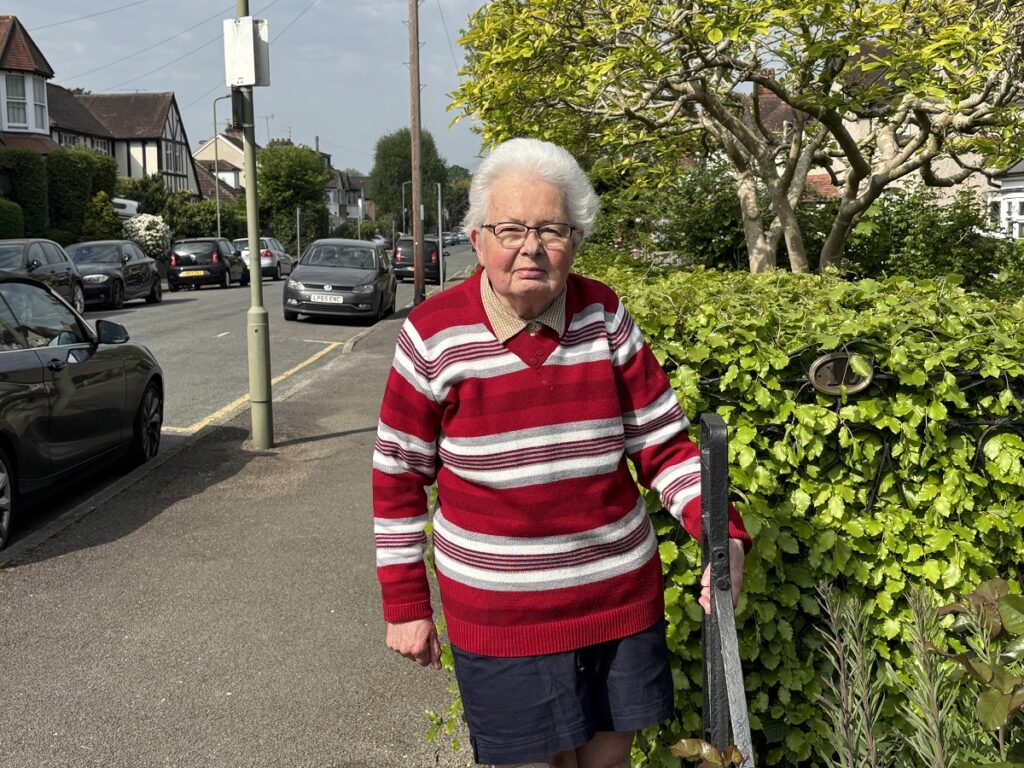
Veteran swift watcher Angela Morris saw four flying above Kings Road at 11.55am on Monday 28 April – her first April sighting in the forty years she has been recording their arrival in her diary.

“Usually, the swifts get here sometime in the first week of May. My latest ever sighting was May 14 and the earliest May 1, but it was a real surprise to have a late April sighting.”

Members of Barnet Swifts Group have also been reporting the swifts’ arrival.

Peter Lyons saw four circling above Manor Road late in the day on 28 April and other sightings were recorded over the following days – Robin Bishop saw several flying above Fitzjohn Avenue and Susan Skedd said she was awoken by their squealing above Leicester Road, New Barnet.

Even more encouraging for swift enthusiasts was the news that a pair have been seen visiting a nest box on a house in Granville Road which offers an array of nesting places including boxes and spaces under the eaves.

In view of the continuing interest in encouraging the provision of nesting boxes for swifts, David Martens, who founded the Barnet Swifts Group, says that north and east facing aspects are best to avoid the hot summer sun.

Playing recordings of swift calls, particularly early in the morning or an hour before sunset, can boost the chance of attracting swifts to a nesting box.

David, who is a now a member of the Welwyn Hatfield Swift Group, says swift news from around the locality can be seen by following the Facebook link to the Hertfordshire Swift Group.

Angela Morris said her interest in swifts dates to when her family moved to Kings Road in the 1950s and she started noting their arrival in her diary.

“I was so relieved to see them back again this year. I heard their screaming first and then saw them flying down Kings Road.

“Years ago, there were many more arriving each summer and they used to nest under the eaves of the Edwardian houses on the north side of Kings Road. Unfortunately, many of their nesting places have gone when people insulated their lofts and sealed off the eaves.

“Usually, I see them first at around 7.30pm in the evening, so to have a morning sighting on April 28 suggested to me they probably arrived the day before.

“The parent swifts tend to head off back to Africa at the end of July, but the new young birds take a time surveying the local scene, but they are off too by mid- August.”