
Conversion of Barnet Post Office into flats means now more homes than shops in High Street
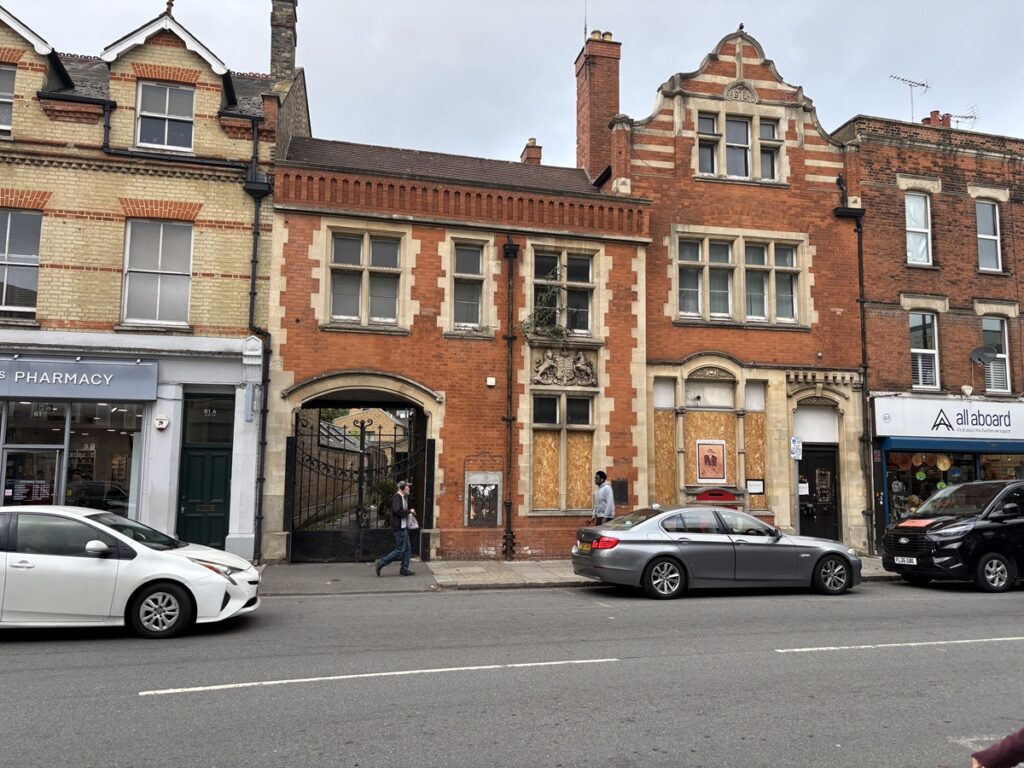
High Barnet’s former Crown Post Office is to be converted into nine self-contained flats if an application is approved by Barnet Council – a change of use which highlights the rapidly changing nature of the High Street.
Consultants for the owners say conversion of its interior and former sorting office into nine one- and two-bedroom flats will have “no impact” on the significance of what is a locally listed building in the Wood Street Conservation Area.
Over recent years vacant space above retail and commercial premises within the town centre has increasingly been converted for residential use.
High Barnet’s High Street now has more homes than shops.
Registration of residential addresses for postal deliveries reveals the scale of a dramatic increase: currently there are a total of 398 residential addresses listed along the High Street, up from around 50 ten years ago.
Longer than many high streets at 0.7 kilometres, it extends from the junction with Meadway and the upper entrance to High Barnet tube station, through the town centre, passed the parish church and The Spires shopping centre and on to Hadley Green.
Most of these homes are flats above retail premises with front door entrances either onto the High Street or at the rear.
The application to convert the Post Office into flats is just one of several conversions and new builds which are currently underway or are about to start.
By far the largest recent development in the High Street was the new Lightfield estate of houses and flats on the site the site of the former Brake Shear House complex of offices and workshops.
But it is the continuing conversion of vacant space above shops and offices which is dramatically increasing the number of people who now live along the High Street – driving the number to levels not seen since before World War II.
Post war expansion of nationally owned retail and business chains led to a dramatic fall in the number of individual shopkeepers and traders who used to live “above the shop”.
This has resulted in much of the accommodation on the upper floors having remained vacant for decades – a trend which is now being rapidly reversed.
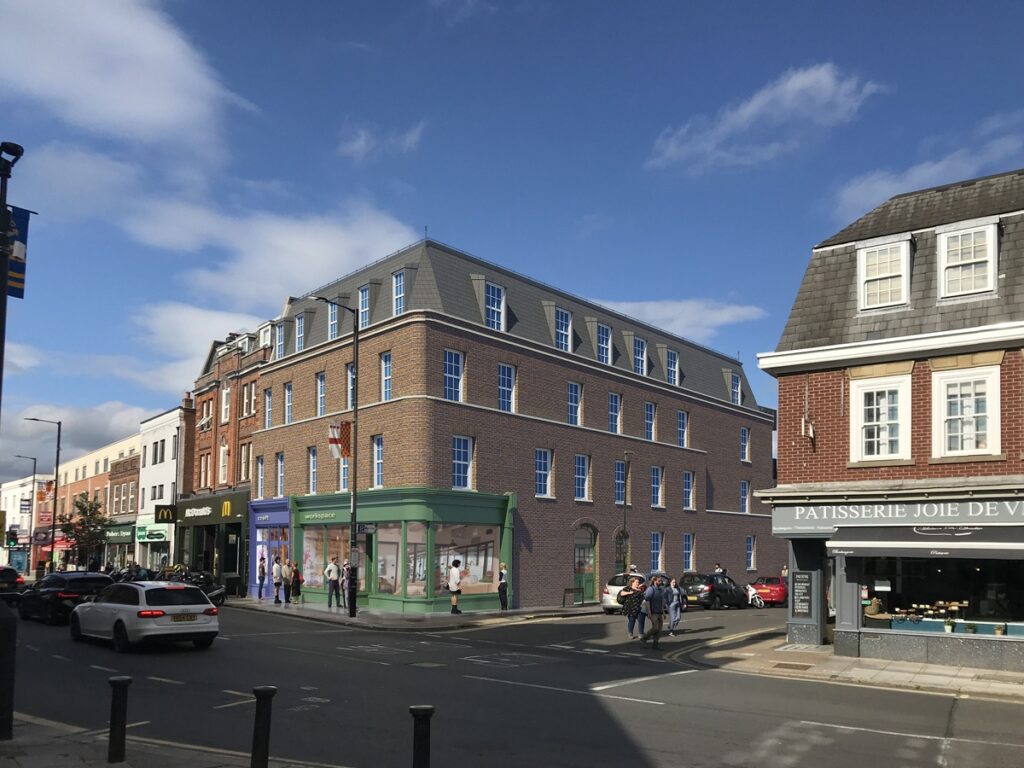
Opposite the Post Office, approval has been obtained for the construction of a new four-storey building with 11 new homes on the site of the former Foxtons estate agency at the corner of the High Street and Moxon Street.
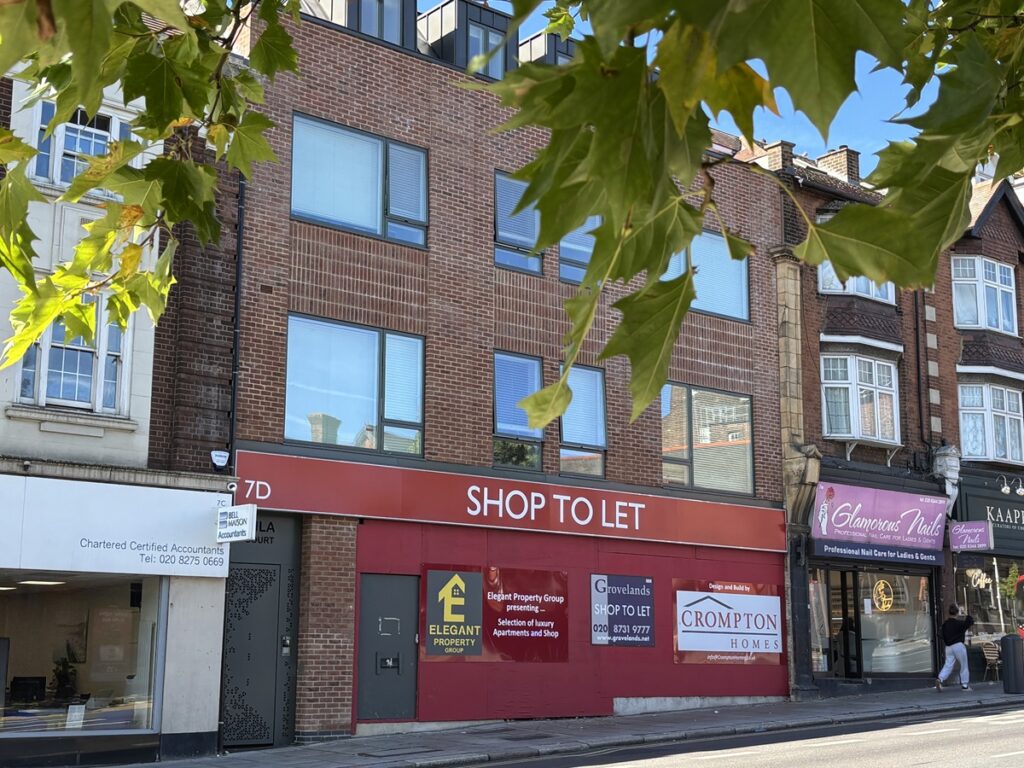
New retail premises with “luxury apartments” above have recently been constructed in the High Street in vacant shop premises opposite Queen Elizabeth’s Girls’ School.
A few doors further up the High Street, the former Barnet Court House was converted into flats some years ago.
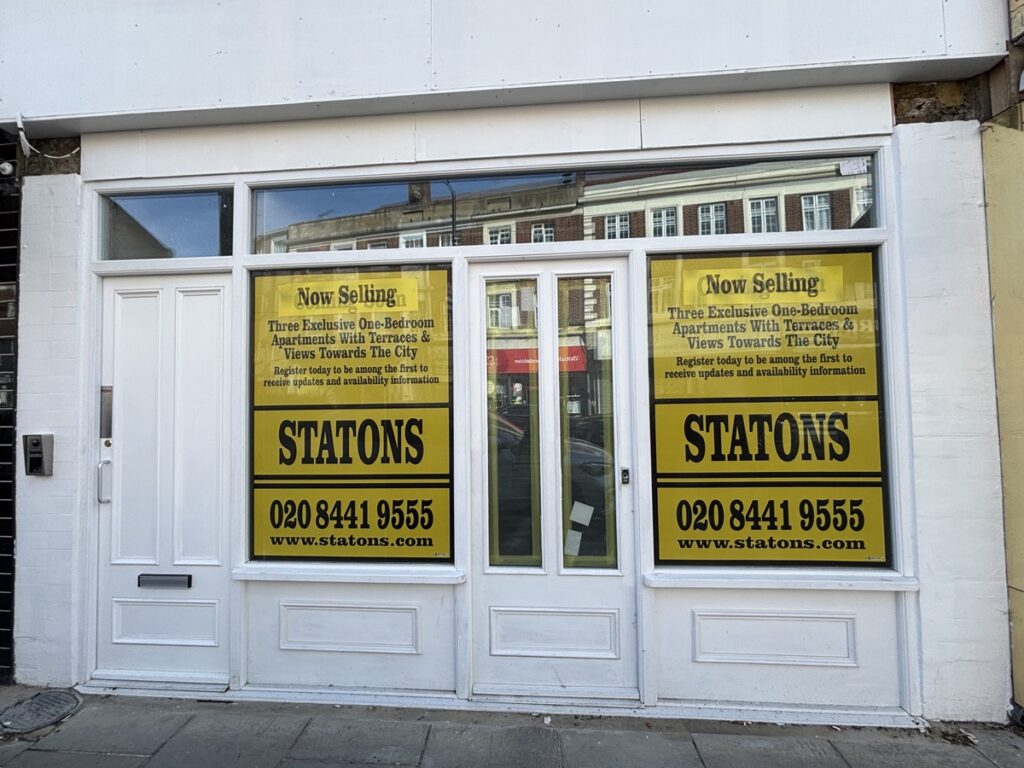
Three one-bedroom apartments “with terraces and views towards the city” are on offer following a conversion nearing completion in a former High Street health store between Rymans and Boots.
However, an application to convert the upper floors of Hadley House – formerly The King George public house – was recently withdrawn.
Robin Bishop, the Barnet Society’s lead on planning and the environment, comments, “The Society has long supported converting unused upper floors in the High Street into homes. We also welcome sensitive roof and rear extensions, provided that they respect the character of the Wood Street and Monken Hadley Conservation Areas. But it’s disappointing that many developers prioritise profit over adding to our historic town centre’s attractive architectural heritage.”
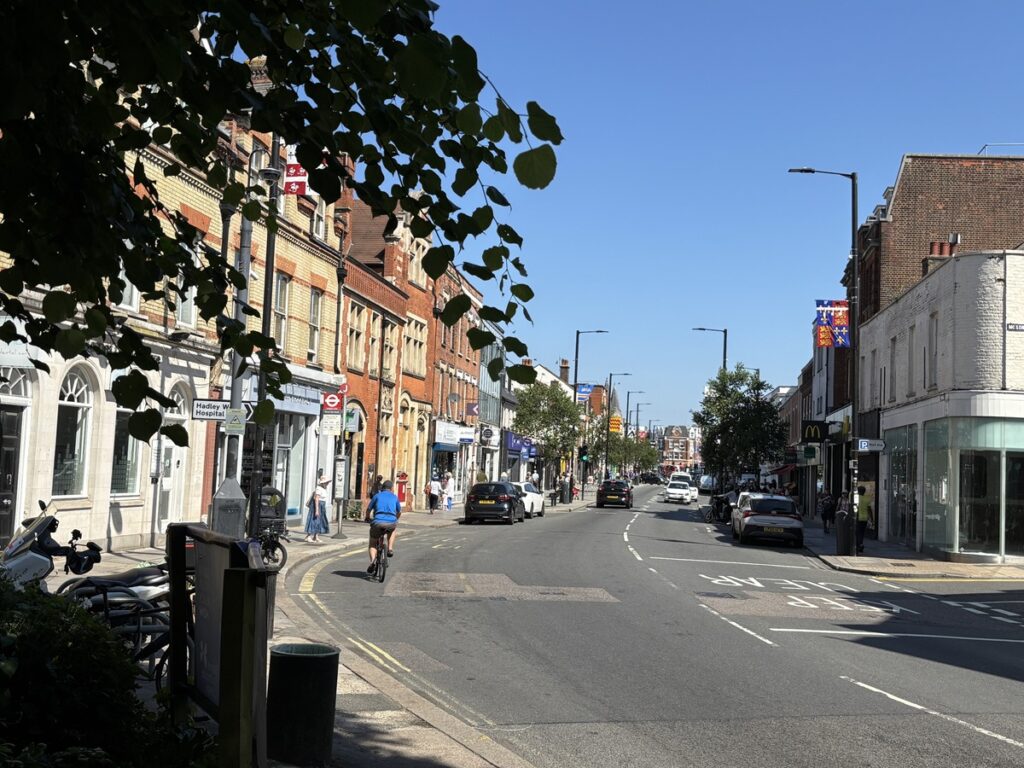
Planning consultants say the former post office, which is sited on a “gentle curve” of the High Street, is “a fine example of Edwardian commercial architecture designed in the Near-Jacobean Revival style”.
It was constructed between 1903 and 1905 to the designs of Jasper Wagner for the Office of Works and by 1925 offered a wide range of functions as an important postal facility– “head post, telegraph, telephone, money order, savings bank, insurance, annuity and parcel post office”.
Noted for its ornate Edwardian architecture, notable features include detailed stonework, a stone carving of the coat of arms, and additional stonework above the top floor windows with the initials ER – the motif of King Edward VII.
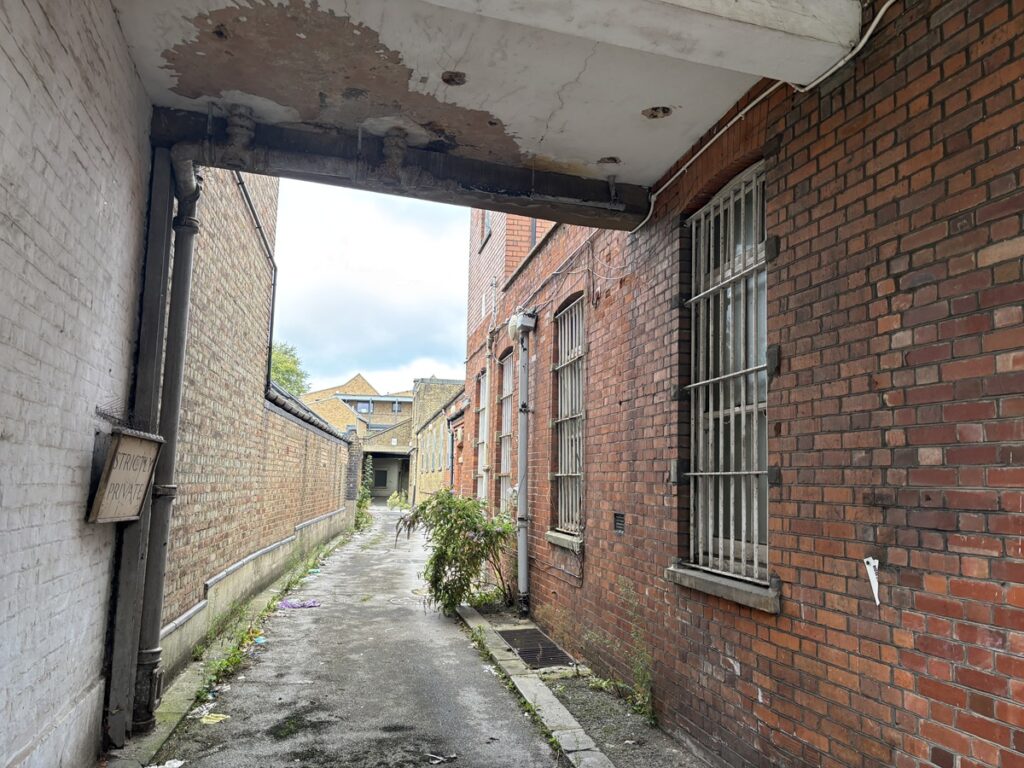
An historic carriageway to the side of the post office reveals ancillary buildings at the rear including the former sorting office.
Architects Alan Cox Associates say the application, made under permitted development rights, is to convert the premises into four one-person studio flats; four two-person one-bedroom flats; and one two-person one-bedroom duplex flat.
There would be a 12-space cycle park at the rear but no car parking space. The applicant states there would be an agreement with Barnet Council that no parking permits could be obtained.
An independent commercial unit, facing on to the High Street, would be remain.
Under a permitted development rights application there can be no changes to the exterior of the existing buildings, so the architects say there will be “no change” to the aesthetic of the building.
“The proposed internal alterations are discreet and will be virtually imperceptible from the public realm.
“Accordingly, the proposals will sustain the heritage significance of the site and its positive contribution to the surrounding historic environment, without resulting in harm to any heritage assets.”
At present, included in the frontage, is an integrated red-letter box which has remained in use since the closure of the crown post office last year when it became a franchised post office with premises on the other side of the High Street, managed by the UOE store group.
Barnet’s crown post office had a distinguished history, originally having been a regular stopping off point for mail coaches heading out of London for Scotland and the north.
Until the 1930s Barnet was one of the best-known coaching towns on the outskirts of London.
When the mail coach for Scotland left St Martins-le-Grand one of the first stops on the Great North Road was Barnet post office where it picked up mail.
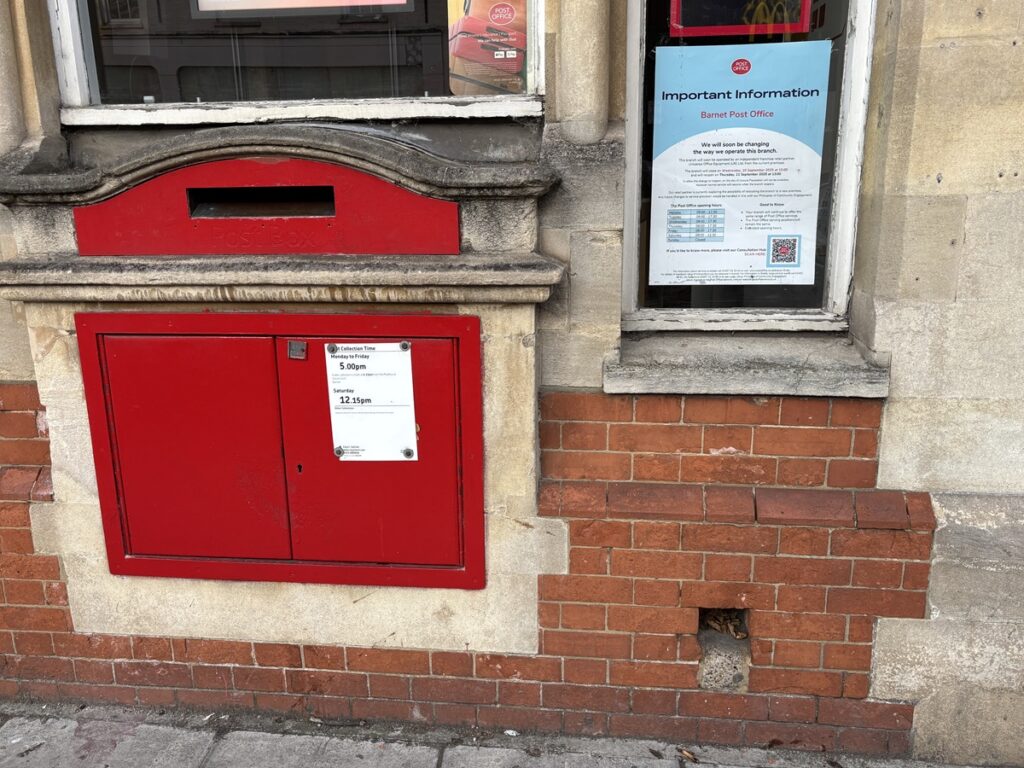
Set in the wall, just above the pavement, between the front door and the letter box, is one of the original boundary stones of the ancient parish of Chipping Barnet – which is regularly pointed out during the annual ceremony to mark the Beating of the Bounds of the parish of Barnet.
Tags: #Barnet Council #Barnet High Street #Development #High Barnet #Planning
4 thoughts on “Conversion of Barnet Post Office into flats means now more homes than shops in High Street”
Why not become a member? Receive our latest newsletter hot off the press four times a year, and support our work with a membership.
If you have some local news, history or want to bring something to our attention please email us.
Beating the bounds is not annual, but just occasional [typically 3-7 years, and often longer]
and I believe the marker stone was added for the ~1937 walk
the old Hertfordshire Middlesex border runs through the building, which has historically been a challenge on these walks.
It’s was sad to see the end of the Crown Post Office in Barnet High Street. I was the manager there from June 2016 right up until my last day on the 11th September 2026 the day we handed it over to UOE now Stamp I believe. This building will always have a special place with me. It does need a new lease of life it’s an amazing building and working there you could feel the history of all the members of the team before us. We still have the picture from the 1920s with all the woman stand under the arch with there bikes! Then by magic we had our picture added (credit to Alan).
I think this is a really positive step for High Barnet. For generations, High Streets worked because shops and businesses were at street level and people lived above them. That brought life, custom and activity throughout the day and evening.
Keeping the ground-floor retail while bringing the upper floors back into use as homes is not the decline of the High Street, it is a return to what made High Streets work in the first place.
Better to have homes than have unlet retail premises. I would object if land was being grabbed for housing as in Potters Bar and the Barnet station car park