
Public excluded from special Barnet Council meeting when councillors probed financial failure of controversial Dollis Valley housing scheme
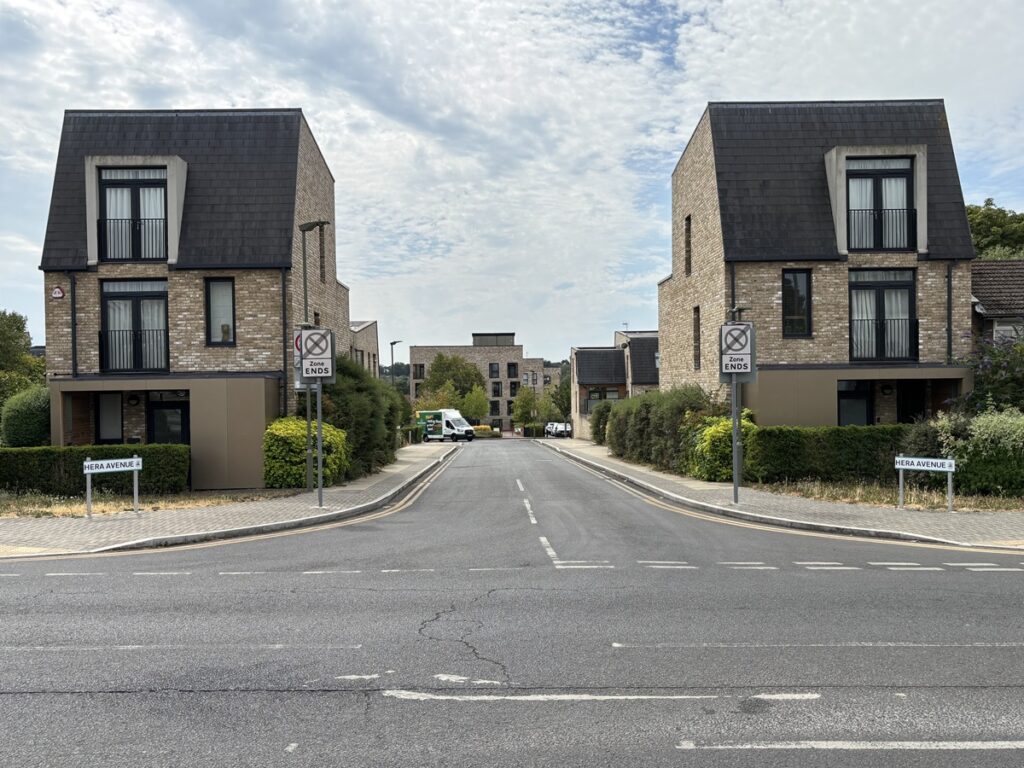
Fresh proposals are unlikely to emerge until at least the New Year for the completion of the Dollis Valley regeneration following the call-in and collapse of a scheme previously agreed by Barnet Council to build 208 new affordable homes on the estate.
Residents from Dollis Valley – and the Barnet Society – were excluded from a part of a special call-in meeting when a sub-committee of councillors considered financial issues surrounding the failed scheme.
Before members of the public were asked to leave, the leader of the Conservative group, Councillor Peter Zinkin, told the meeting why they had called in the deal agreed in July between the Labour-controlled council and developers Vistry.
He said the decision taken by the council’s cabinet was contrary to “financial responsibility and financial sustainability” and in their judgement those issues were “sufficient to go over the line and lack financial responsibility”.
It would be up to the committee to decide whether the judgement of Conservative councillors was correct, but Councillor Zinkin said it was “really important” for the opposition to test whether the deal with Vistry was the “correct decision”, concerns which had prompted them to call in a decision for the first time in 14 years.
In a note setting out their case, the six Conservative councillors said the developers Vistry were under severe financial strain and the council’s cabinet had not been provided with “sufficient assurance as to the financial viability and delivery risk” for the scale of the commitment.
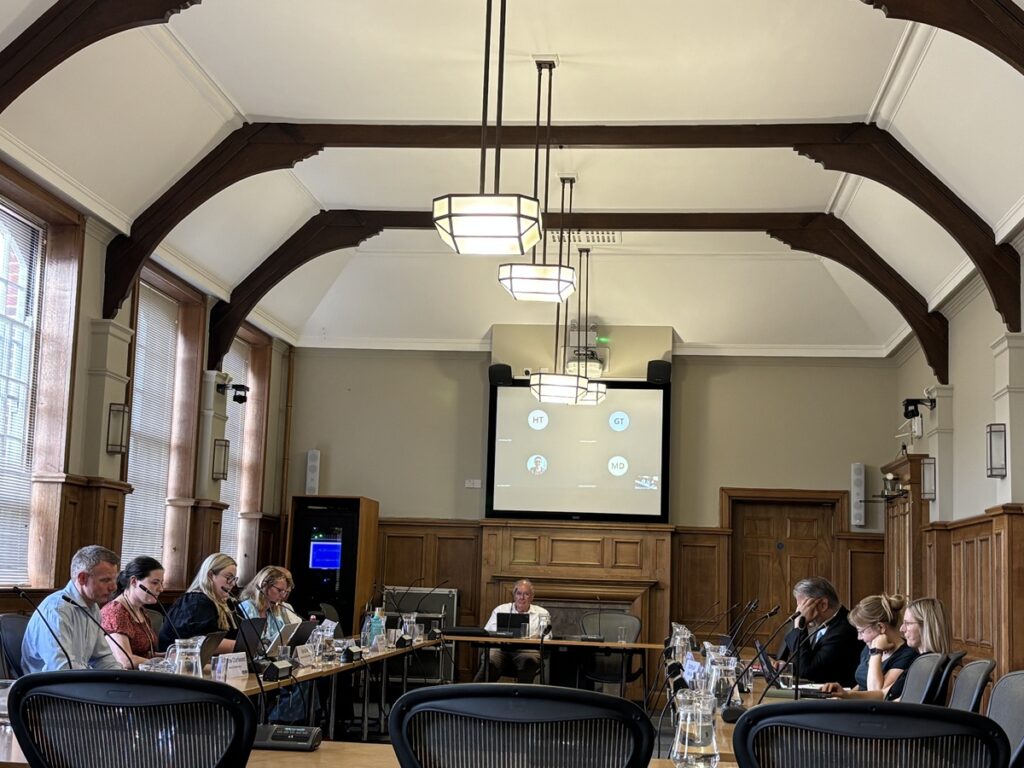
After an hour-and-a-half discussion, the sub-committee decided the council would undertake a comprehensive financial assessment of all future options for completing the Dollis Valley regeneration.
An undertaking was given that future redevelopment would be in the interests of the existing residents whose views would be properly considered through the Dollis Valley Partnership Board.
Complaints about the lack of consultation with residents about the decision to build 208 affordable homes – qualifying for a £58.85 million grant from the Greater London Authority – had triggered a protest petition at an earlier council meeting.
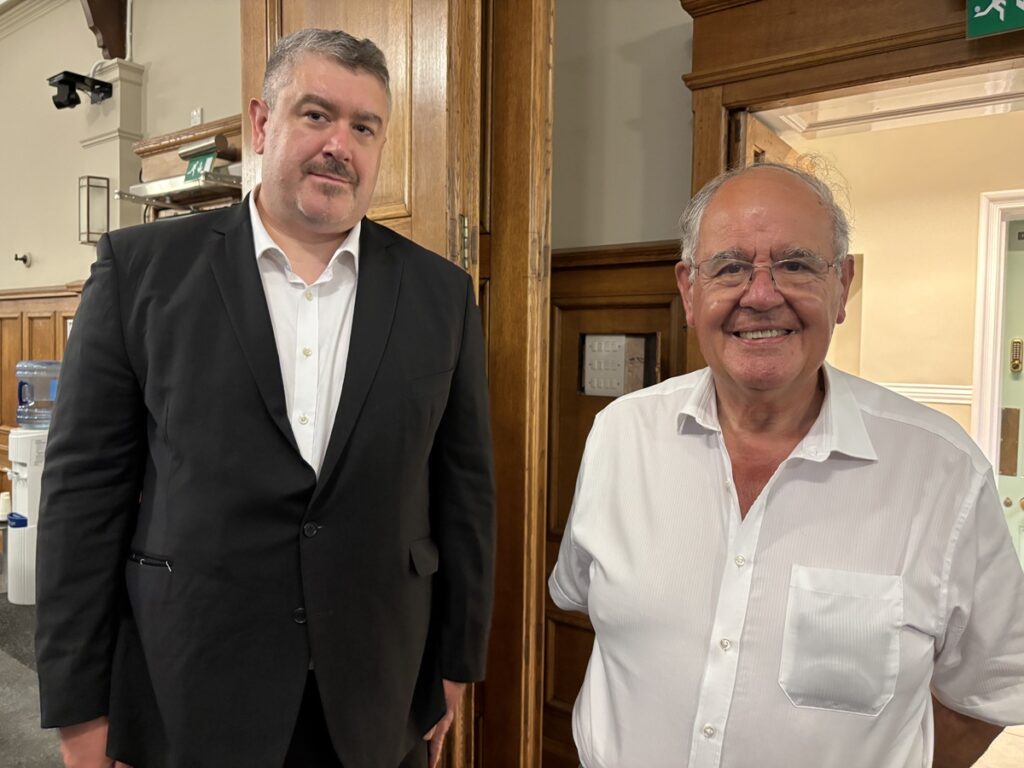
Dollis Valley resident Peter Esposito – above left with Councillor Peter Zinkin – opened the meeting with a question about why residents had been misled about the GLA funding.
The cabinet meeting was told the grant decision was pending but he said council officers knew it had already been approved, and the public had been misinformed.
In his presentation Councillor Zinkin reinforced criticism of the way the cabinet meeting had been conducted.
A scrutiny committee was not called until 24 hours before the decision and a paper answering questions which had been raised was not provided until 17 minutes before cabinet met.
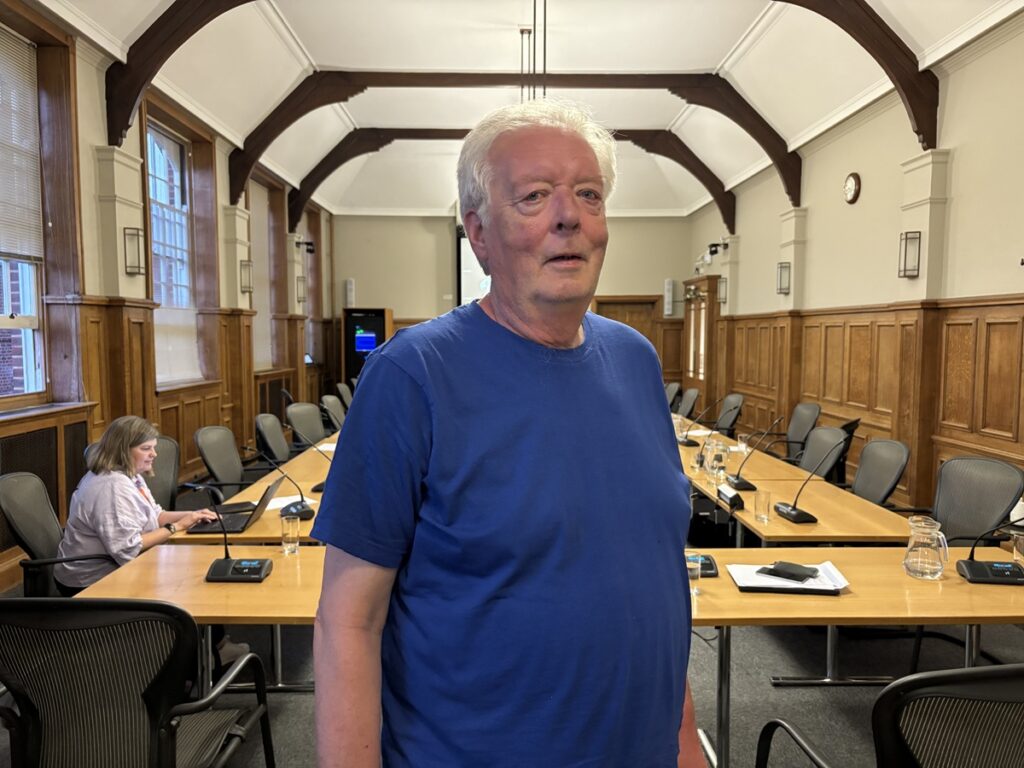
In reply, Councillor Barry Rawlings (above) agreed there should have been more distance between the meetings, but he insisted the issues which came up during the scrutiny process did not “materially affect the decision which was made”.
The deal agreed with Vistry to build 187 homes for social rent and 21 for key workers was the “only one viable option”.
As a result of the call-in and the withdrawal of the £58.85 million GLA grant, the council would have to go over the options once again.
Given the difficult housing market Councillor Rawlings thought it would be difficult to find another viable scheme immediately and it would be next year before a decision could be made on how best to complete the Dollis Valley regeneration.
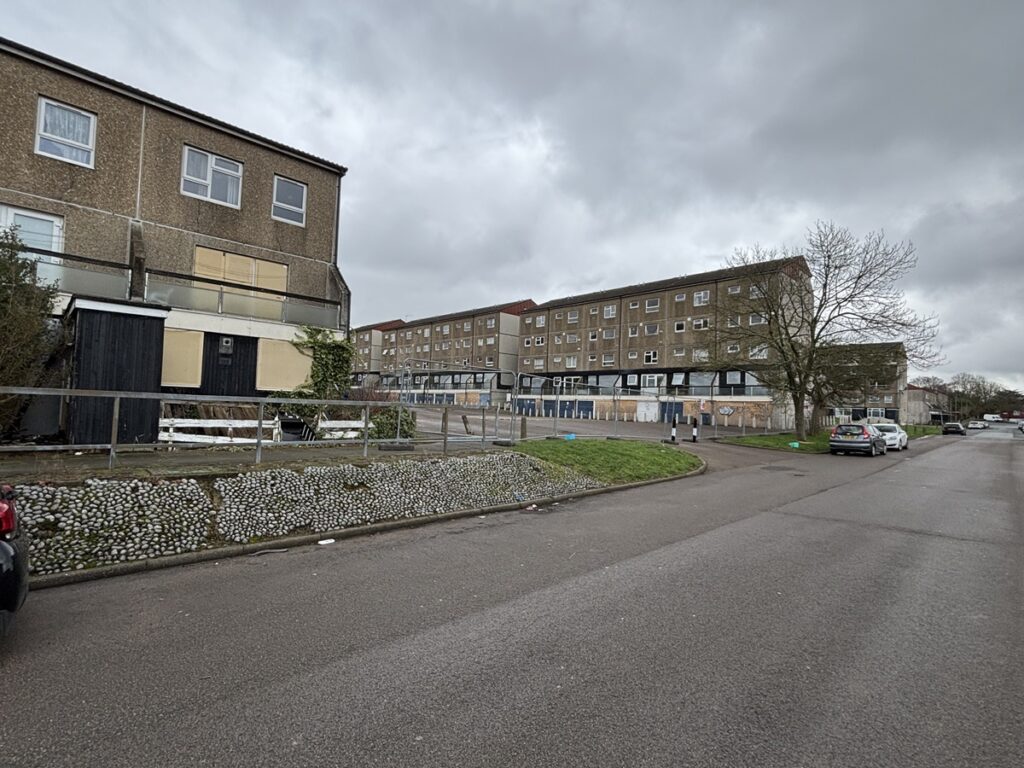
In response to the Barnet Society, Councillor Zinkin said that he thought the best course of action in the circumstances was to demolish the vacant and vandalised blocks of flats and maisonettes which were deemed unfit three years ago.
“The cost of securing the abandoned housing is high. Demolition is definitely the preferred option while the council waits for the housing market to improve.
Councillor Zinkin said it might be possible in the future to get much closer to the original scheme to finish off the Dollis Valley regeneration with 126 new privately-owned and 95 affordable homes – a scheme which Vistry had said was unviable.
Peter Esposito and other Dollis Valley residents agreed that returning to the scheme which was originally approved by Dollis Valley Partnership Board was also their preferred option.
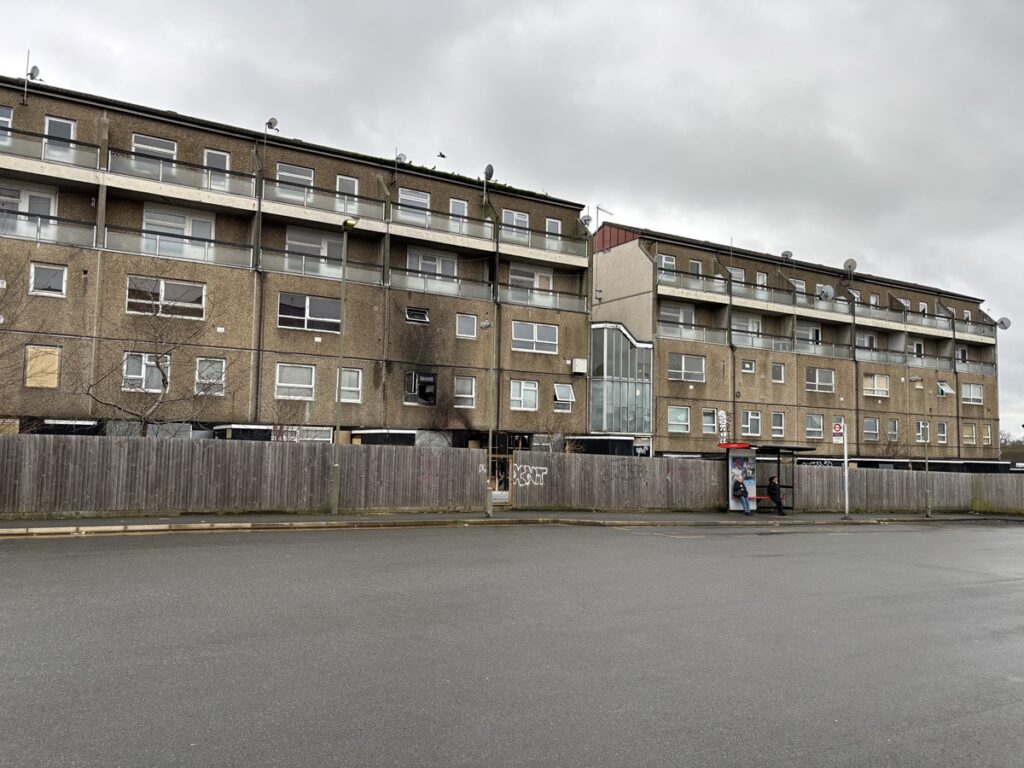
Councillor Rawlings said it was too early to speculate on what action might be taken but the council had estimated that the cost of demolishing the vacant blocks of flats and maisonettes and clearing the site could be as high as £3million.
His concern was that yet another delay in completing Dollis Valley was creating yet more uncertainty for those residents who had been moved out of the “unsafe and leaking flats” and transferred into other temporary council accommodation.
“These residents have been forgotten in all of this. When they were moved away, they were promised they would get a chance to move back to Dollis Valley”.
Councillor Rawlings said the regeneration of Dollis Valley – now known as the Brook Valley Gardens estate – had been a success with the construction of 400 new homes.
“Years back people used to say that Dollis Valley was a no-go estate, but the area has been transformed with regeneration and we are anxious to see that completed.”
Tags: #Barnet Council #Development
2 thoughts on “Public excluded from special Barnet Council meeting when councillors probed financial failure of controversial Dollis Valley housing scheme”
Why not become a member? Receive our latest newsletter hot off the press four times a year, and support our work with a membership.
If you have some local news, history or want to bring something to our attention please email us.
When oh when are they going to build a proper road between Bryant Close and Odysseus Drive?
When are they going to build a proper road between Bryant Close and Odysseus Drive??