
Sad loss of an imposing Victorian villa built when New Barnet was developed after the opening of its main line railway station
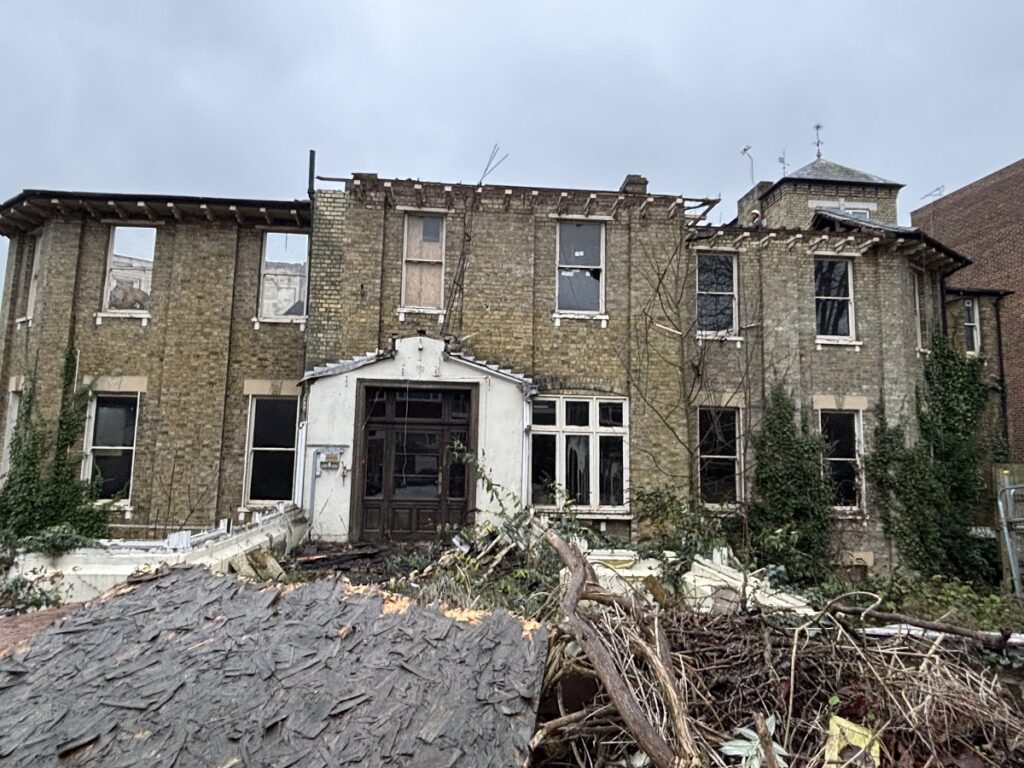
One of New Barnet’s last remaining large Victorian villas – 33 Lyonsdown Road – is being demolished much to the disappointment of community and heritage groups who fear it will be replaced by blocks of flats.
There is no certainty about future development of this prime site as two planning applications by the owners Abbeytown Ltd have been rejected by Barnet Council.
A spirited campaign was launched in 2017 to try to secure the restoration of what was considered one of the last and best examples of the imposing private villas and terraced houses which were constructed after the opening of New Barnet station in 1850.
After failing to secure approval for a five-storey block of flats – and losing two planning appeals – Abbeytown was granted permission in 2022 to demolish 33 Lyonsdown under permitted development rights.
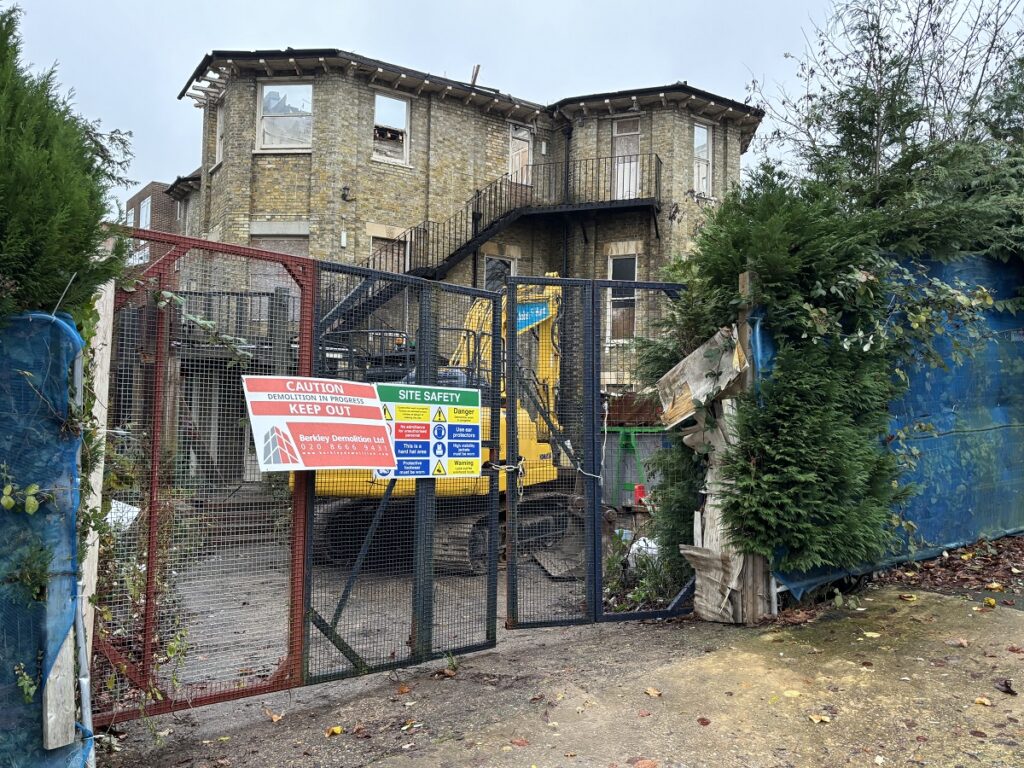
Demolition contractors have finally moved heavy equipment onto the site, and the roof of the building was off within a matter of days.
In his monthly newsletter the Chipping Barnet MP Dan Tomlinson said that residents had raised concerns about the state of the property at a consultation event in Barnet Vale. He said he was “pleased to report that demolition work started this week”.
Robin Bishop, who leads for the Barnet Society on planning and the environment, was appalled by the sad loss of one of the few surviving buildings from the first Victorian settlement at New Barnet.
“Despite being on Barnet’s heritage list, a quirk in the planning law has allowed the owner, Abbeytown, to demolish it without reference to the planning committee.
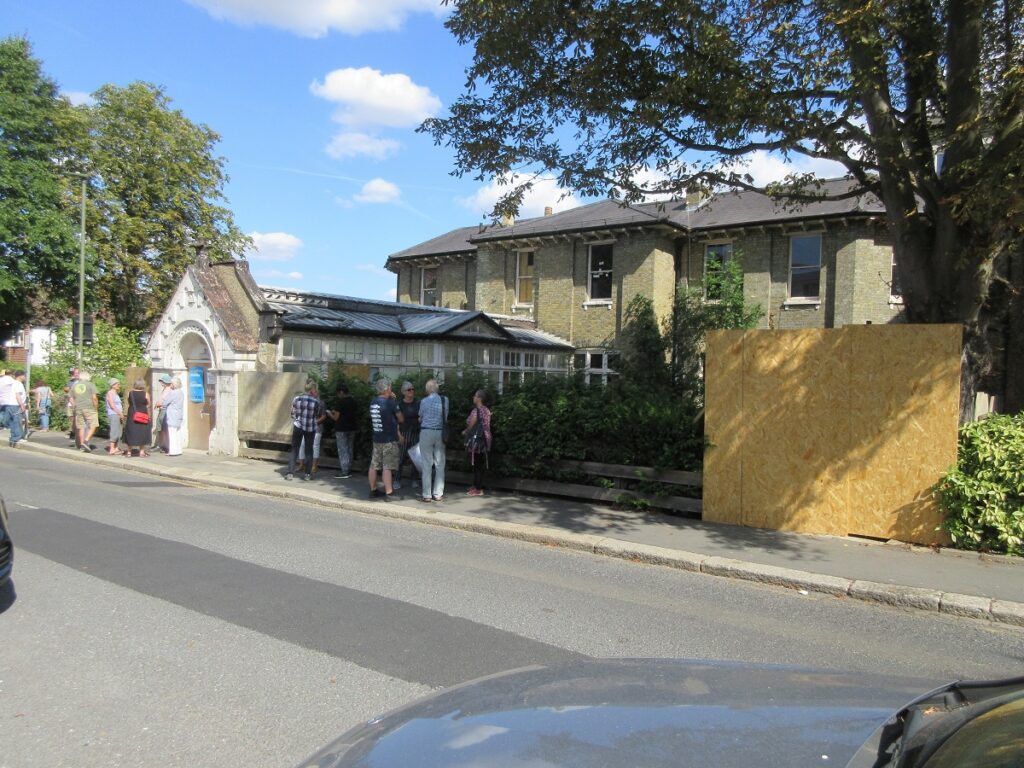
“For five years the local community, together with the society, fought off earlier plans to replace 33 Lyonsdown with characterless blocks of flats.
“We raised substantial funds for top level legal advice and even designed a more acceptable scheme to retain and extend the villa, all without success.
“A new planning application is doubtless already in the pipeline.”
33 Lyonsdown had a chequered history variously having been a private home, an outpost of London’s Foundling Hospital, a women’s refuge and a base for missionary priests.
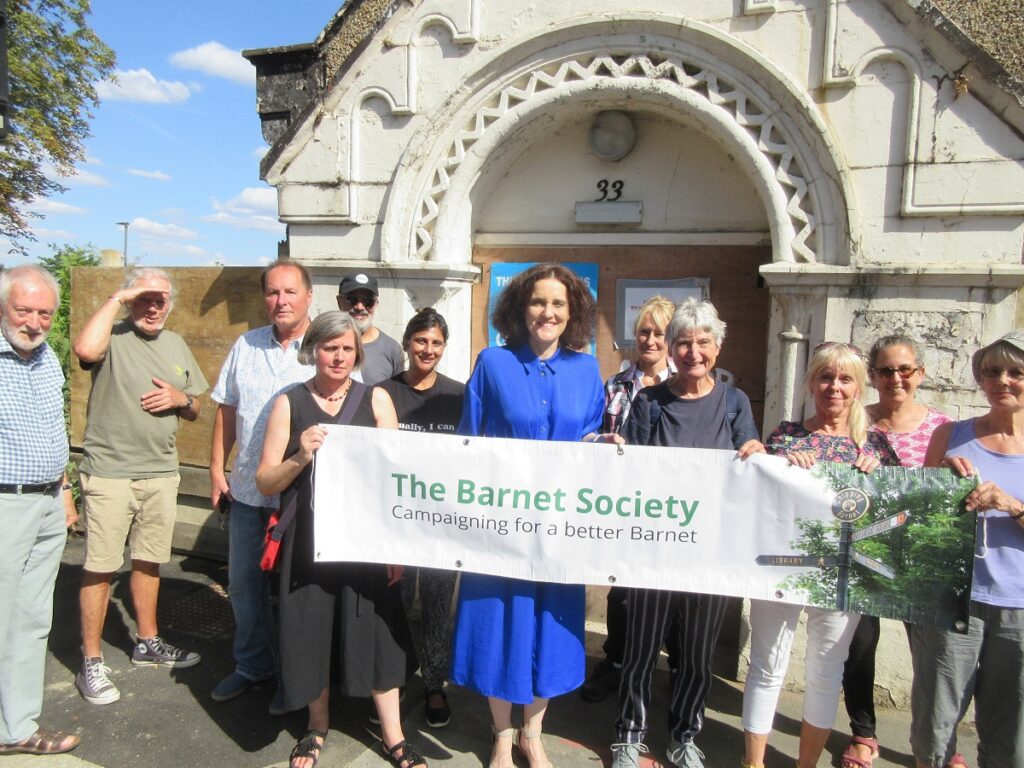
In her time as the Chipping Barnet MP, Dame Theresa Villiers, intervened to prevent the demolition, writing to the development company Abbeytown at the offices of estate agents Martyn Gerrard.
She supported the society’s campaign arguing that it was “sad to see such a beautifully designed villa, which was such a feature of New Barnet”, being threatened with demolition.
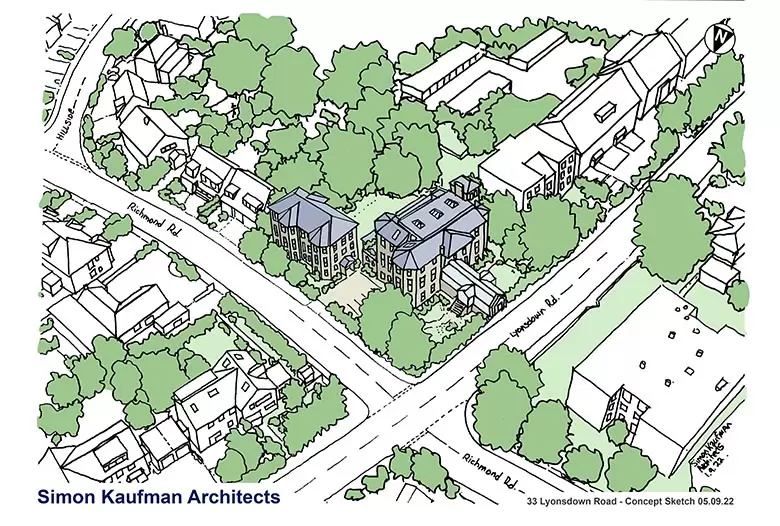
Simon Kaufman Architects prepared a full feasibility study and visibility assessment to demonstrate a more conservation-led approach to retain a building that had become a heritage landmark.
Under the proposal, the existing building would have been converted into apartments, retaining its original richly detailed stone porch, panelled entrance hall and other original feature.
This would have delivered a comparable floor area and improved sales values when set against total redevelopment.
Alongside the restoration, there was a proposal for a modest new-build block within the grounds which would have mirrored key proportions and materials while maintaining distance from neighbouring properties.
Simon Kaufman insisted this alternative vision was supported with site plans, financial appraisals, and heritage justification, and those opposing demolition had been anxious to engage with the owner to promote a design-led conservation strategy that would have protected the unnecessary loss of an important local building.
Tags: #Barnet Council #Planning
1 thought on “Sad loss of an imposing Victorian villa built when New Barnet was developed after the opening of its main line railway station”
Comments are closed.

Why not become a member? Receive our latest newsletter hot off the press four times a year, and support our work with a membership.
If you have some local news, history or want to bring something to our attention please email us.
Dan Tomlinson reporting in his monthly newsletter that he’s “pleased to report demolition work started this week” demonstrates just how little attention and care he is paying to local issues. Local residents wanted to see this restored not demolished. It won’t even help towards his precious growth targets as the landowner hasn’t brought any plans for the site forward.