
Barnet’s very own professor of Punch and Judy hoping to be back inside his booth this summer ready for another show entertaining local children
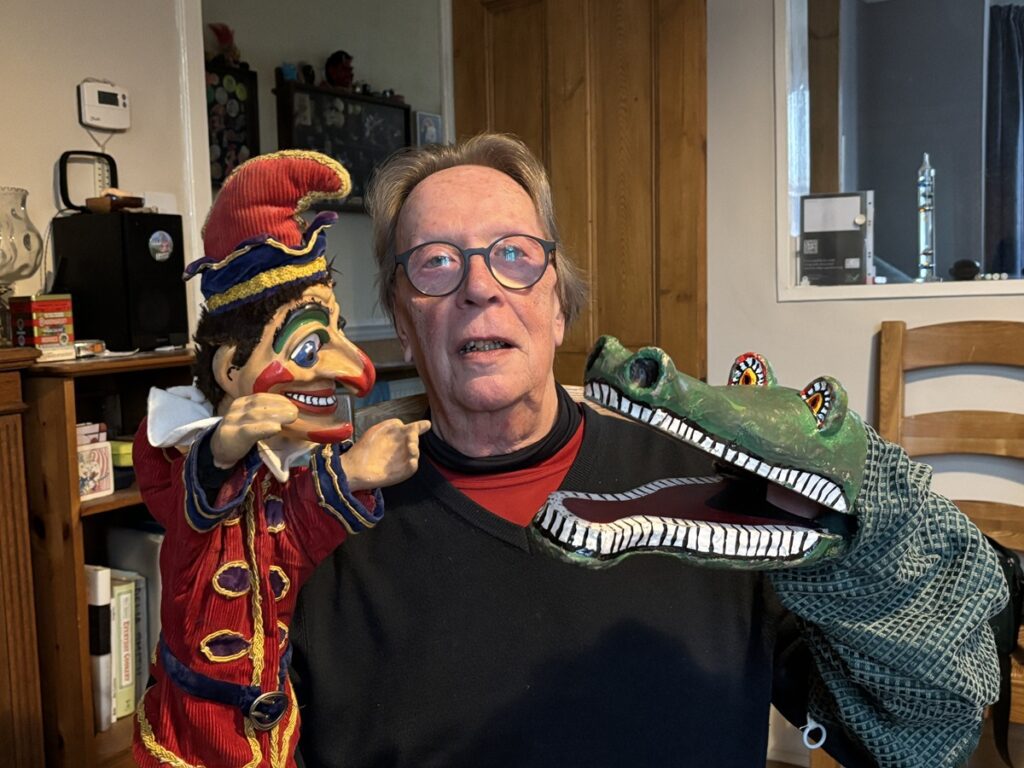
A childhood dream about Punch and Judy led on to a lifetime’s interest in glove puppets which earned the accolade of professor for Barnet’s celebrated Punch and Judy puppeteer Geoff Barrett.
He can look back on fifty years’ entertaining countless generations of local children.
Geoff, whose background was in teaching ceramics, has always made his own puppets and in recent years he has crafted their heads from rubber, finding it a lighter material to work with when giving a show.
His Punch and Judy booth has been a regular sight at fetes, festivals and school events around High Barnet, East Barnet, Potters Bar and further afield.
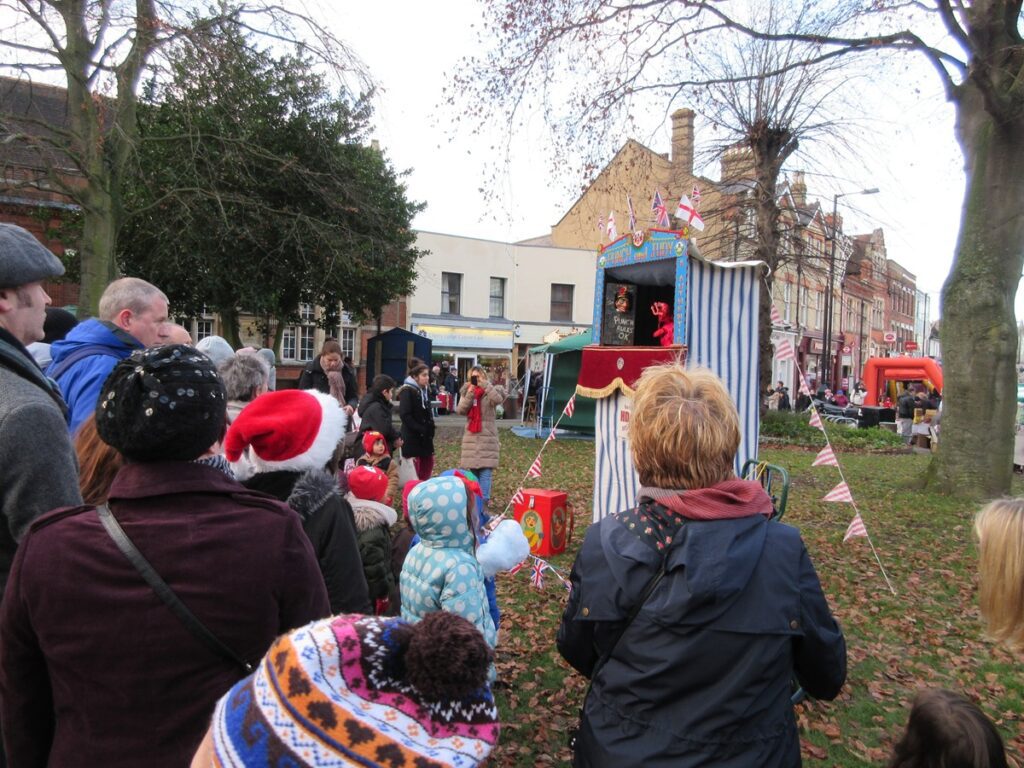
Appearances at Barnet Christmas Fayre and summer parties on the green outside Barnet Parish Church or in the garden at Barnet Museum have regularly attracted appreciative audiences.
Recent ill health has forced Geoff, who is 77, to take it easy but he gave a performance at last year’s summer party for the residents of Byng Road, and he has every intention of setting up his booth for this summer’s get together and entertaining his neighbours and their children once again.
Perhaps the greatest change since Geoff started giving performances in the mid- 1970s has been a softening in the traditional slapstick violence between Punch and his wife Judy and their baby.
Punch and Judy shows have their roots in the 17th century Italian commedia dell’arte and the British tradition has always been considered naughtier, bawdier and funnier than their continental cousins, but the puppeteers recognise that times have changed.
“Gone are the days when Punch can beat his wife to death or throw the baby out of the window,” says Geoff.
“Slapstick is a quick and easy way for Punch to get rid of characters. A quick swipe, and they are gone, but we recognise that violence against women and the mistreatment of children is no longer a cause for amusement, whereas in the past it used to be.
“Today you cannot be cruel. So now Punch can be seen arguing with Judy, he might let the baby run away, and as Punch gets cross, off she goes to get a policeman.
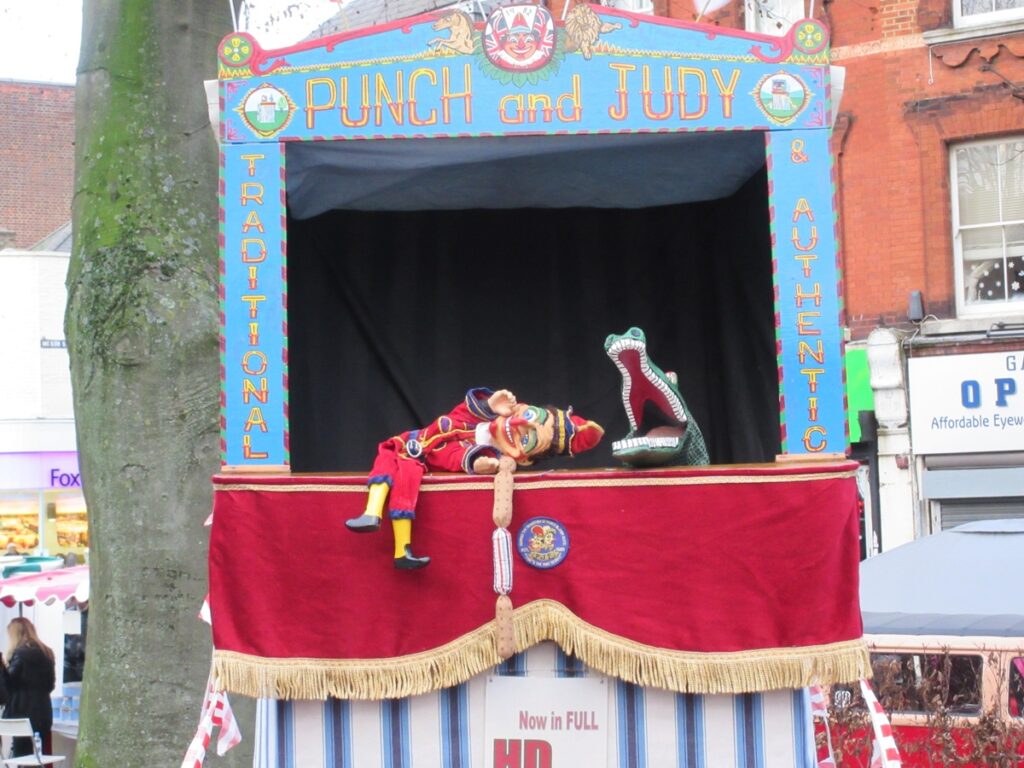
“There might be a bit of fighting here and there with the policeman, and of course, once it appears, the crocodile can happily snap away with his jaws at all and sundry.
“When the clown leaves a string of sausages and Punch falls asleep, the crocodile can steal the sausages and Punch can get his stick out to give the crocodile a whack, so there is still no end of fun to be had but we Punch and Judy professors do our best to avoid frightening children or causing alarm.”
Geoff is a member of the Punch and Judy Fellowship, and puppeteers awarded themselves the title of professor as a way of upstaging other showmen such as the scientists of the 18th and 19th centuries who did magic shows and liked to call themselves doctors.
Punch Day is celebrated by the fellowship on the second Sunday in May with many professors doing numerous shows outside St Paul’s Church in Covent Garden where Samuel Pepys recorded the first performance of Pulcinella in 1662 – an annual event at which Geoff used to be a regular performer.
He has early memories of dreaming as a child about playing in a local park where there was a Punch and Judy booth, but for some reason the performance never started.
His childhood memories were still there when he studied ceramics at Cardiff College of Art.
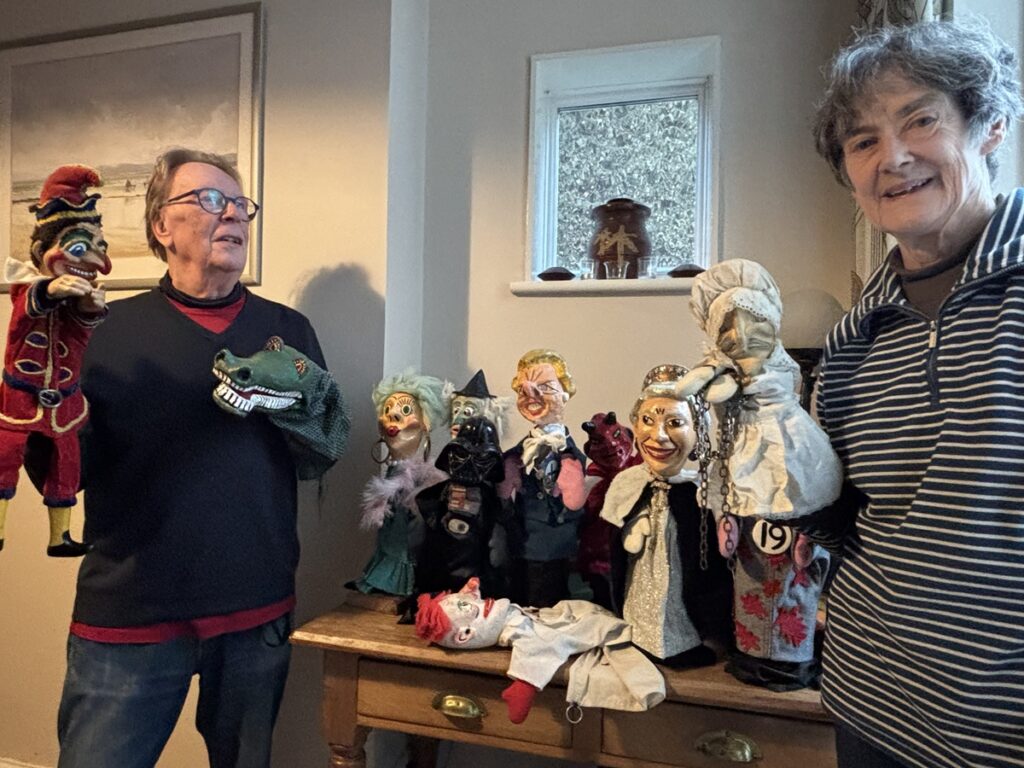
He wanted to make figures which moved but found clay was not ideal and it was not until his wife Ruth – see above – joined a glove puppet class in Bristol that his interest was rekindled.
The couple moved to London in 1974 when Geoff was appointed a lecturer at Hendon College with a brief to set up a ceramics studio for teaching students.
“Ruth started attending a marionette class in London and I was really taken by them and started making some, but marionettes are loose-limbed figures operated with strings, and they didn’t really appeal to me.”
At the time Ruth was a youth worker, running summer schools for children at the Oakmere Centre in Potters Bar.
“She engaged a Punch and Judy performer and that was when I realised the superiority of hand puppets, which unlike marionettes can move quickly, handle objects or even hit other puppets with a slapstick.
“After all, Punch – or Pulcinella to give him his original name – was a marionette to begin with before becoming a hand puppet.”
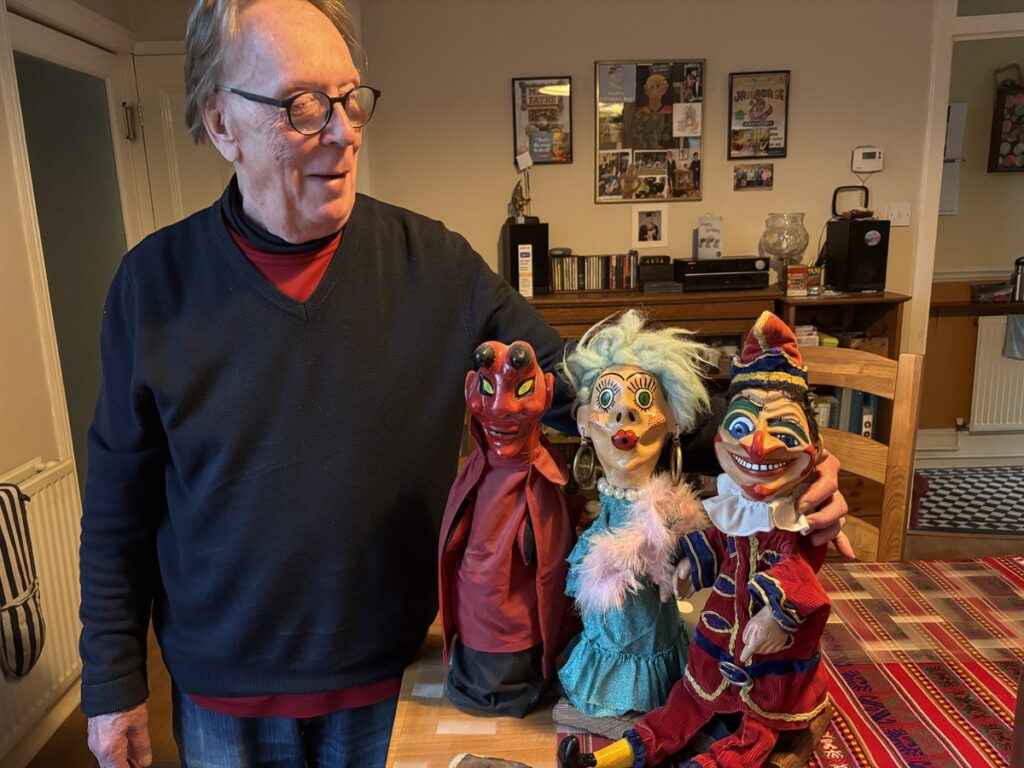
Geoff started making puppets carved from wood and staged his first show at Goldbeaters School in Burnt Oak in around 1975. The headmaster told him it went down well with the children and from then on Geoff was hooked on the world of Punch and Judy.
Over the years he has made various kinds of puppet heads. He found traditional wooden heads were too heavy; he tried papier mache and fibre glass but settled on latex which he finds the lightest and most flexible and allowed him to model in his preferred material clay from which he could make a mould to cast the latex.
Appearances came thick and fast: he remembers that on the day of Queen Elizabeth’s Jubilee in 1977 that he did four shows in Potters Bar. “Unfortunately, it rained so much that the decorated cloth fronting my booth shrank by about eight inches and people could see my shoes and ankles, which wasn’t what I had intended.”
In the decades which followed he reckons he must have entertained many children at parties, fetes and schools. Geoff has also given talks on the history of Punch and Judy.
One of the hardest tasks was finding the right way of holding inside his mouth the contrivance known as a swazzle through which a puppeteer can produce Punch’s distinctive squawking voice.
As Punch dispatches each of his foes in turn he squeaks his famous catchphrase, “That’s the way to do it!” from which the term “pleased as Punch is derived”.
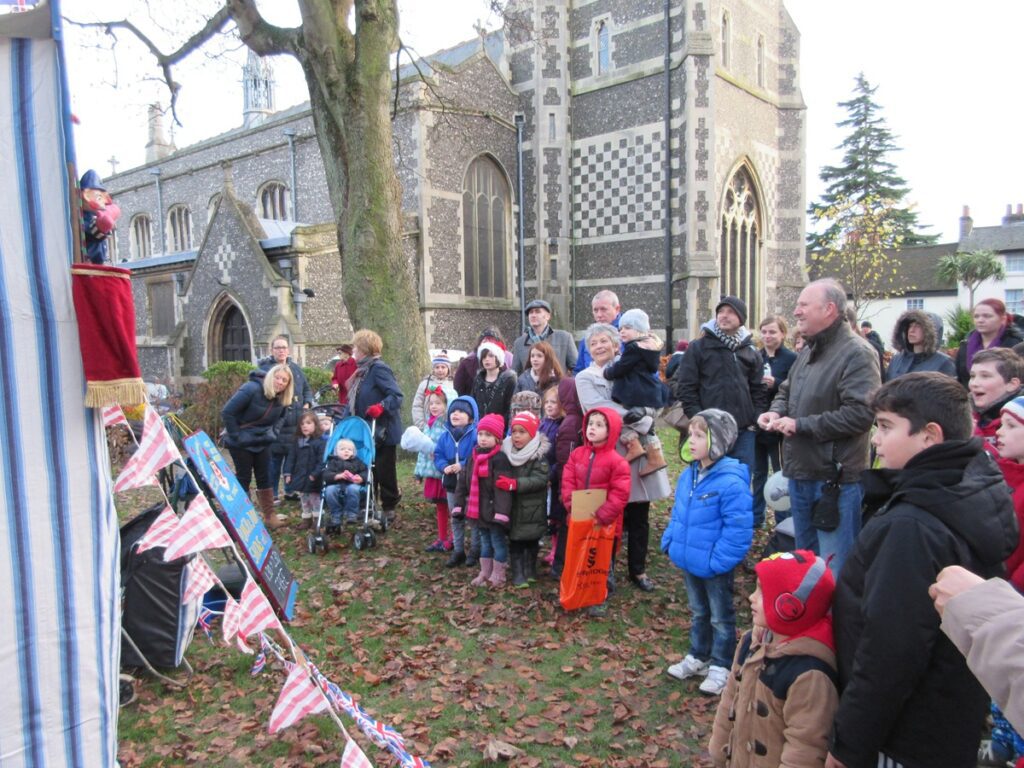
No doubt there are countless local children who can’t wait for Professor Geoff Barrett to get back inside his Punch and Judy booth, to hear his raucous voice and to get ready to deliver the audience’s familiar shout, “He’s behind you!” to warn other characters of what’s afoot as the show proceeds.
2 thoughts on “Barnet’s very own professor of Punch and Judy hoping to be back inside his booth this summer ready for another show entertaining local children”
Comments are closed.

Why not become a member? Receive our latest newsletter hot off the press four times a year, and support our work with a membership.
If you have some local news, history or want to bring something to our attention please email us.
Thank you for this great article. I was fortunate to be taught ceramics by Geoff at Hendon College in the late 80’s and early 90’s and he also put on a performance of Punch and Judy in my sitting room for my children’s birthday party in Finchley ! I had no idea that he was so celebrated and look forward to his return to the profession!
What a great article. Thanks Nick and thank you to Professor Barrett and Ruth for all your service to the local community over the years.