
Historic prayers and verses add a moving to tribute to the men who lost their lives in the 1471 Battle of Barnet
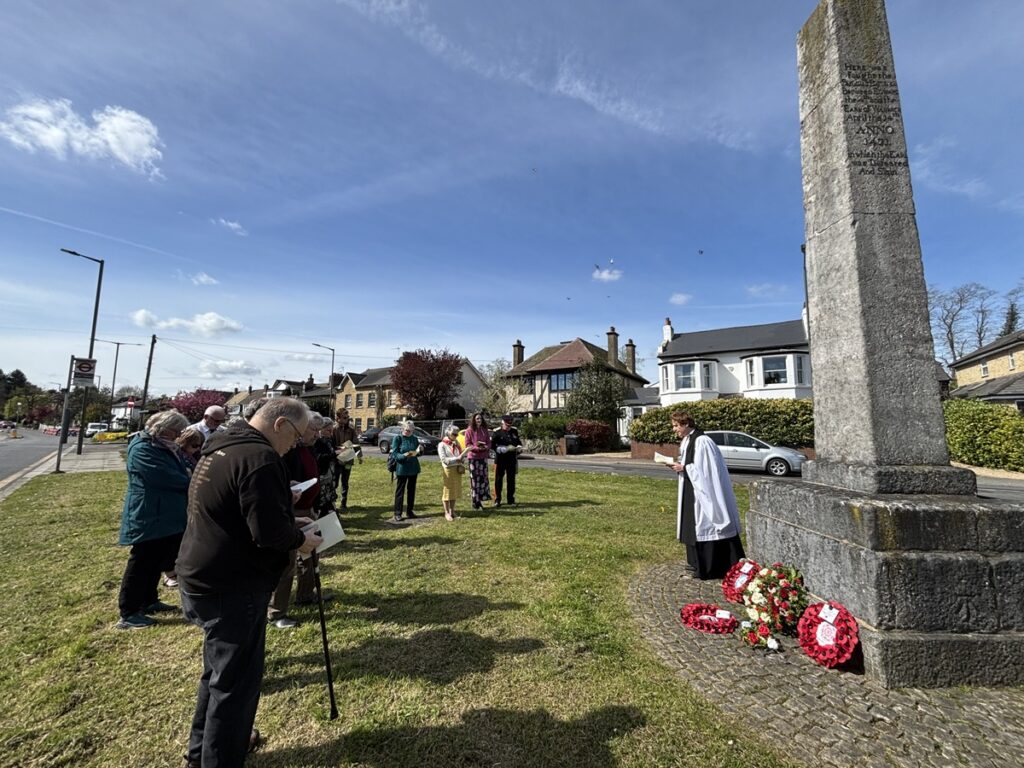
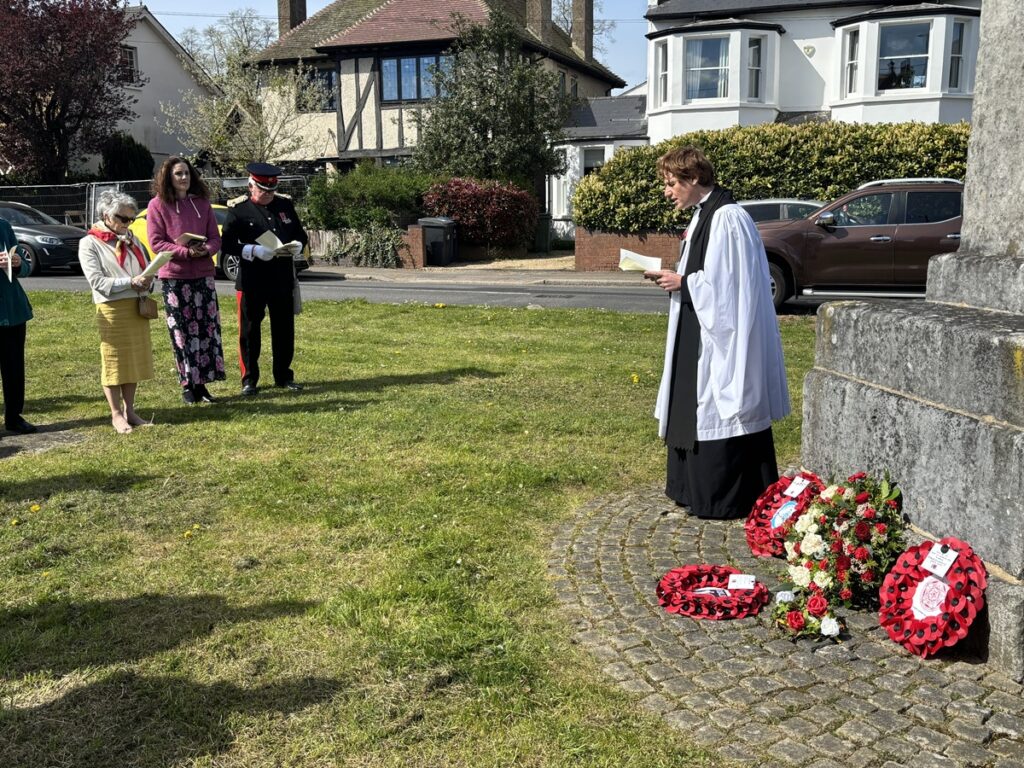
A service of commemoration and laying of wreaths marked the 555th anniversary of the Battle of Barnet – a service researched and devised by the recently appointed rector of Monken Hadley parish church, the Reverend Francesco Aresco.
He read from texts which would have been known by the men who fought in the battle, most of whom left no name and who were buried in unknown graves in the vicinity of Hadley Highstone.
Francesco said the service was a moment to stand at the Highstone and remember their dying before God:
“These men who woke that morning, laced their boots, felt the fog on their faces, and did not come home.”
Whatever divided the Lancastrians and Yorkists on the battlefield, the ground around them received those who died without distinction and “has held them these five hundred and fifty-five years” since the day of the battle, 14 April 1471.
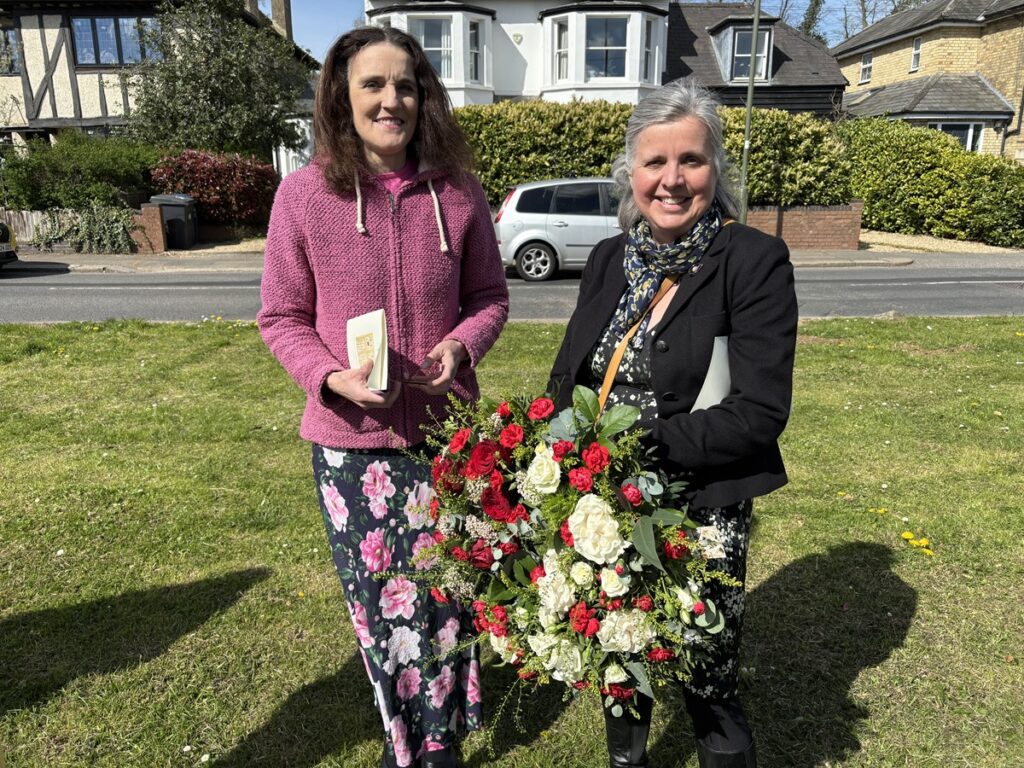
Dr Susan Skedd (above, right) director of the annual Barnet Medieval Festival, led the wreath laying ceremony – seen with Dame Theresa Villiers, the former MP for Chipping Barnet.
Her wreath – made from recycled flowers by Ursula Stone of the Flower Bank community project in New Barnet – included red and white roses and carnations “perfectly arranged” to reflect the colours of the Lancastrians and Yorkists.
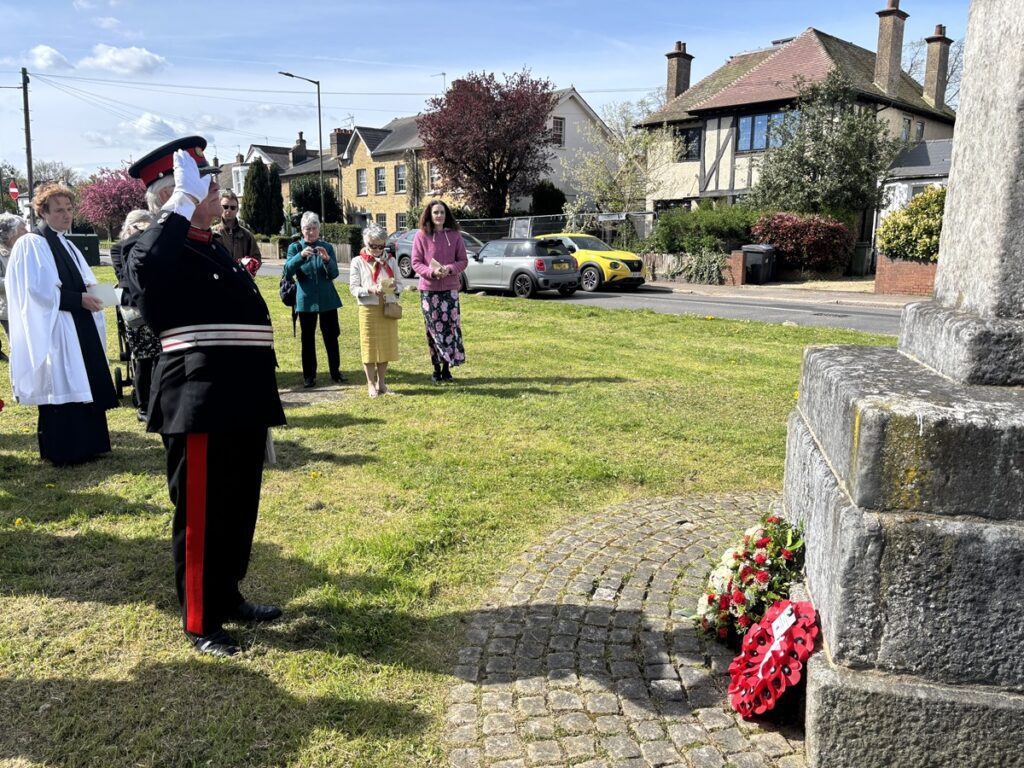
Other wreaths were laid by Martin Russell, Deputy Lieutenant of Greater London; Monken Hadley church; East Barnet Royal British Legion branch and club; and by Barry Swain of the Barnet Tourist Board.
Francesco, who was appointed rector of Monken Hadley parish church in February last year, said that he had carried out his own research into the Battle of Barnet and hoped that the service reflected the momentous events that day.
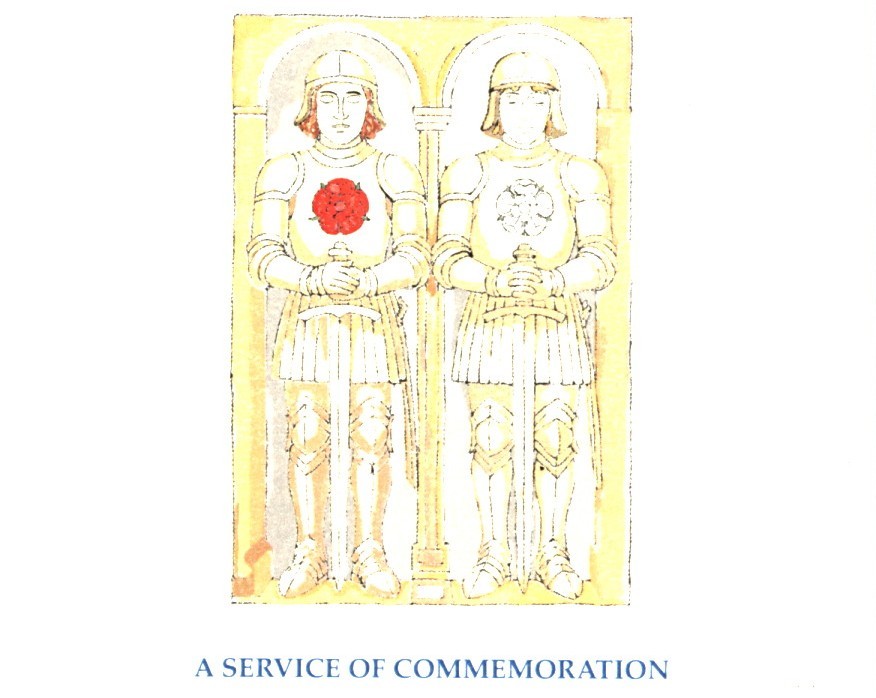
His order of service – see illustration above – began with a prayer which the church of 1471 would have used, in the Latin the men at the battlefield would have known:
“Gloria Patri et Filio
et Spiritui Sancto”
Many of the men who assembled for the battle did not leave. “They were men of a world ordered by oath and obligation, by the faith they owed their lord and the faith they owed their God.”
Martin Russell then read verses which were composed in England some five hundred years before the Battle of Barnet by a poet whose name is lost.
“They were made for exactly this: for standing at the edge of a world that is no more and asking where the dead have gone”:
“The halls have fallen. The rulers lie dead.
Where is the horse gone? Where the young warrior?”
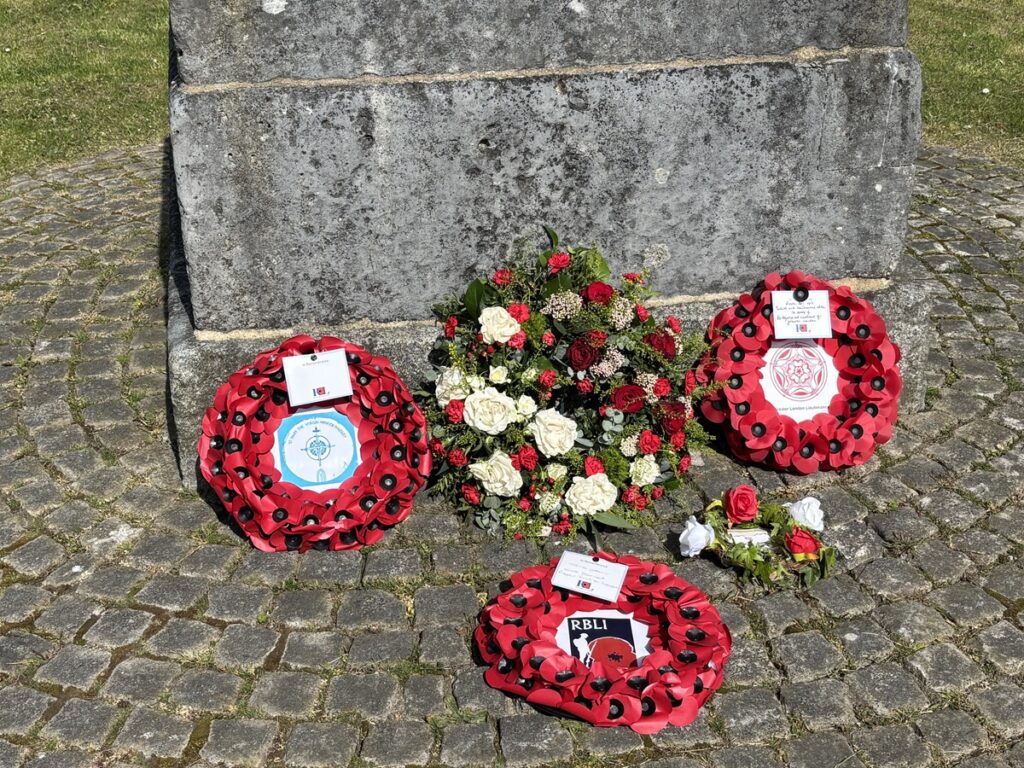
Ursula Stone’s Flower Bank project has been providing a wreath for the Highstone commemoration since the services were introduced in 2021.
“We are always full of admiration for the wreaths which Ursula designs for us and this year the red and white roses and carnations are so appropriate,” said Susan Skedd.
Ursula’s flower arranging classes using surplus flowers from shops and events have been widely praised and her initiative was recognised in 2023 with a Barnet Council award for outstanding service to the community.
The wreath laying ceremony was an opportunity help publicise this year’s Barnet Medieval Festival which is to be held at the Lewis of London Ice Cream Farm, in Galley Lane, Barnet, over the weekend of June 6 and 7.
New attractions this year will include mounted knights in combat and a falconry display.
To highlight this year’s 555th anniversary celebrations, Barnet Tourist Board is hoping to announce a fresh attempt to determine the site of the Battle of Barnet.
Researchers Brian Carroll and Barry Swain have been drawing up plans to enlist a team of metal detectors to conduct a fresh search.
They were looking into new theories about the route taken by Yorkist army as it left London and headed for Barnet to meet the Lancastrians.
Cromer Road Primary School in New Barnet is one of the sites which the Yorkists might have passed and then returned to London after their victory.
“Close to the school is a small wood – which was once of playing field – where there could be a sweep by a team of metal detectors,” said Brian Carroll.
“We think this part of New Barnet is very promising as we know that someone who lived in Clifford Road said their grandfather discovered bit and pieces of a musket in the garden.”
Tags: #Battle Of Barnet #High Barnet #People And Personalities
2 thoughts on “Historic prayers and verses add a moving to tribute to the men who lost their lives in the 1471 Battle of Barnet”
Comments are closed.
Why not become a member? Receive our latest newsletter hot off the press four times a year, and support our work with a membership.
If you have some local news, history or want to bring something to our attention please email us.
The history of the English monarchy is one of a continual struggle between the elite families or even branches of the same ruling family for power and wealth, paid for in the blood of their subservient subjects. And how do the writers of history portray these covetous scheming men and women who sought to have their rivals killed either in battle or by subterfuge — as valiant heroes to be admired and respected as “nobles”.
Born and bred in Whetstone until I left at 21 to marry a Mancunian. I had known of the Battle of Barnet and the wet stone outside the Griffin but had no idea who the warriors were. Thank you for this.