
New museum at Trent Park reveals wartime espionage secrets of fashionable country house which once entertained London high society
A decade long campaign to get Trent Park House open to the public was celebrated with the official opening of the House of Secrets, a new museum within the house which reveals the secrets of espionage during World War II.
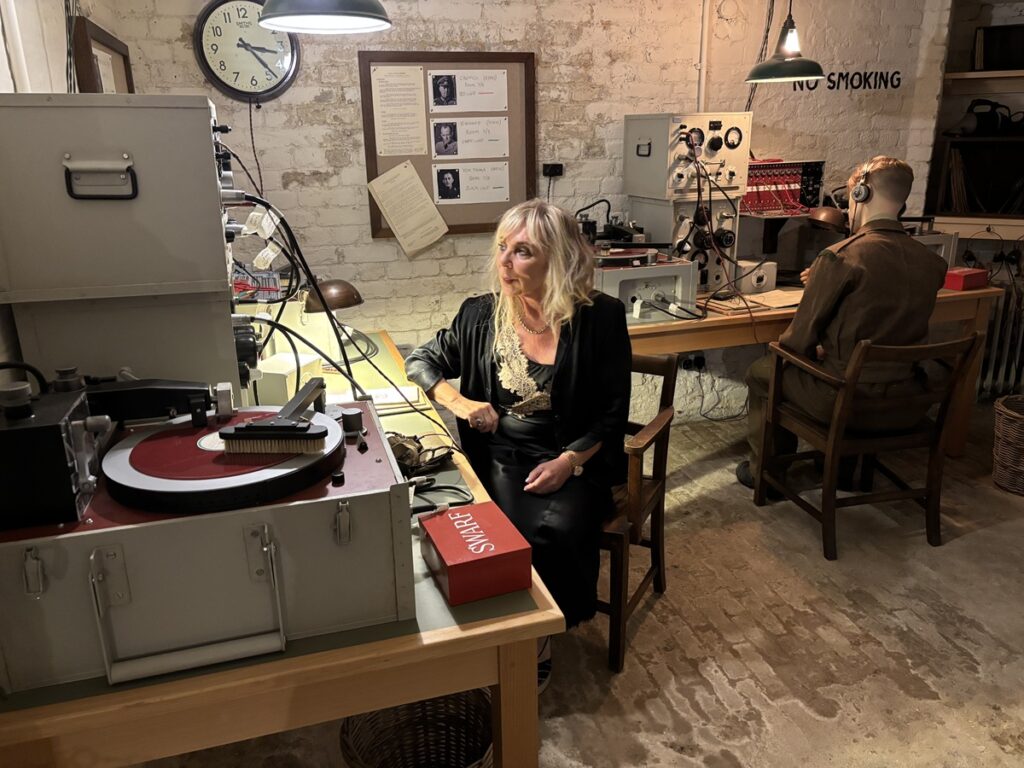
Actress and comedian Helen Lederer – above – sat at the listening station in the basement where her grandfather listened in to the conversations of top German generals to gather information for the British war effort.
Over 80 German generals were held at the former stately house as prisoners of war.
During the 1920s and 1930s Trent Park was visited regularly by British Prime Ministers and royalty who were the guests of Sir Philip Sassoon, one of the wealthiest men in the country.
For several years the fate of the house and grounds – on the border between Enfield and Barnet – hung in the balance after it was vacated by Middlesex University and purchased by the Berkeley Group which obtained planning permission in 2017 to build 262 houses and flats on the site.
A campaign to preserve the house and open it for public benefit had already been launched in 2014 by Enfield councillor Jason Charalambous.
A trust was formed to establish a museum at the house, which had witnessed so many pivotal events and which had made such a significant contribution to wartime espionage and deception.
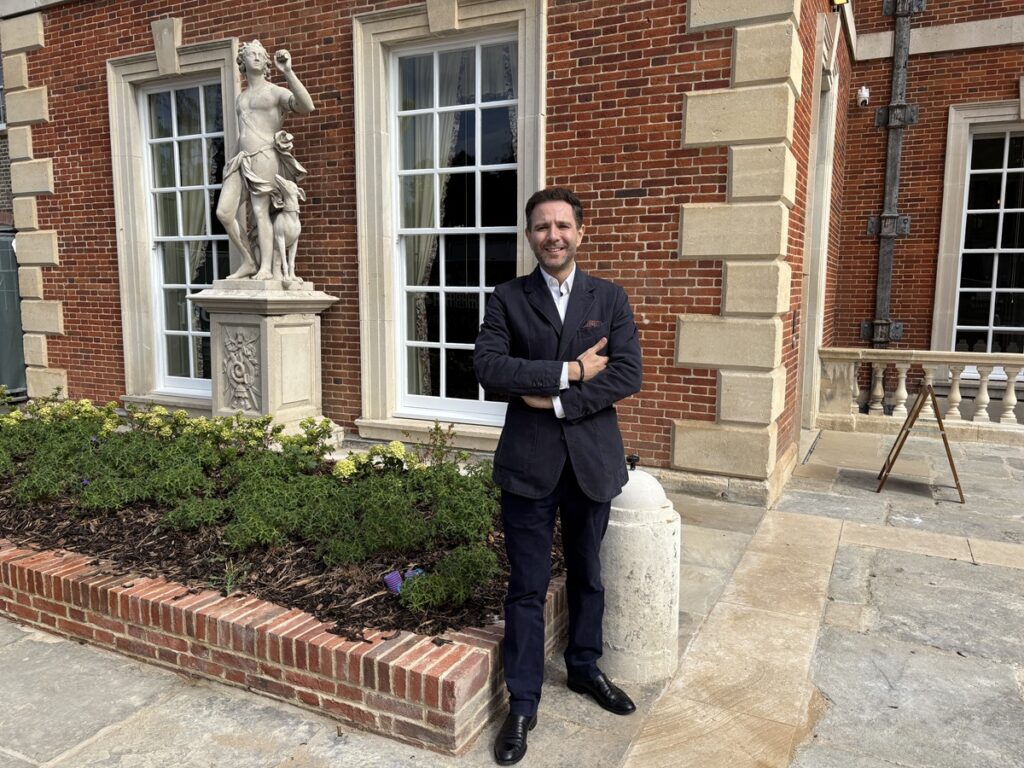
For Mr Charalambous – above – founding trustee and chair, the official opening of the Trent Park House of Secrets was a magnificent illustration of what could be achieved by a campaign which drew widespread support across Enfield, Barnet and further afield.
“It is truly heart warming to see the museum take shape and for Trent Park House to be restored and accessible to the public – our vision of a decade ago has finally become a reality.”
He said negotiations with the Berkeley Group were tough to start with but had ended really well and there was now a “wonderful partnership” of which the developers could be proud.
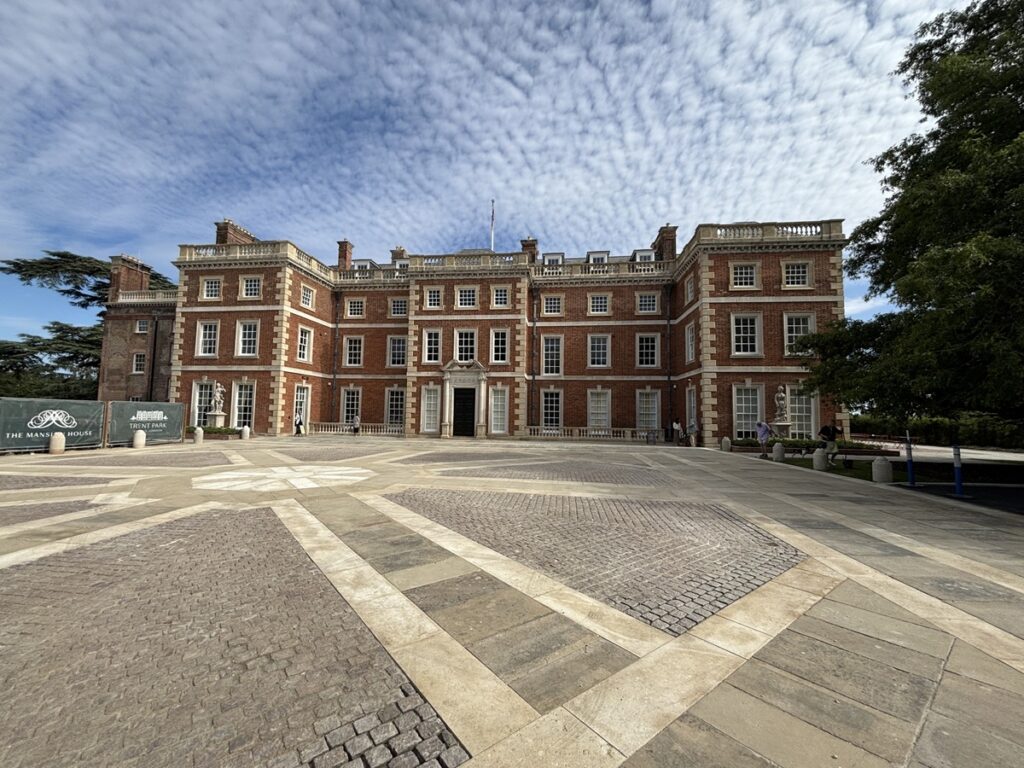
The shell of Trent Park House was restored by the Berkeley Group, and the upper floors are being converted into 17 apartments.
The has museum has taken over both the ground floor, which has been refitted to recreate Sir Philip Sassoon’s grand state receptions room, and the basement, where there has been a painstaking reconstruction of the concealed wartime listening rooms.
“Secret listeners”, many of whom were German-speaking Jewish refugees, recorded conversations between captured German officers and produced crucial intelligence for the Allies.
Helen Lederer’s Czechoslovakian grandfather Ernst spent the First World War in the trenches alongside German and Italian soldiers.
He sent his son to England and arrived himself in 1939 with his wife and daughter following on of the last trains out of Czechoslovakia.
He was recruited by the British Intelligence Corps and posted to Trent Park. Among his tasks was to act as a stool pigeon, to mix among the German generals and manipulate their conversations to tease out information.
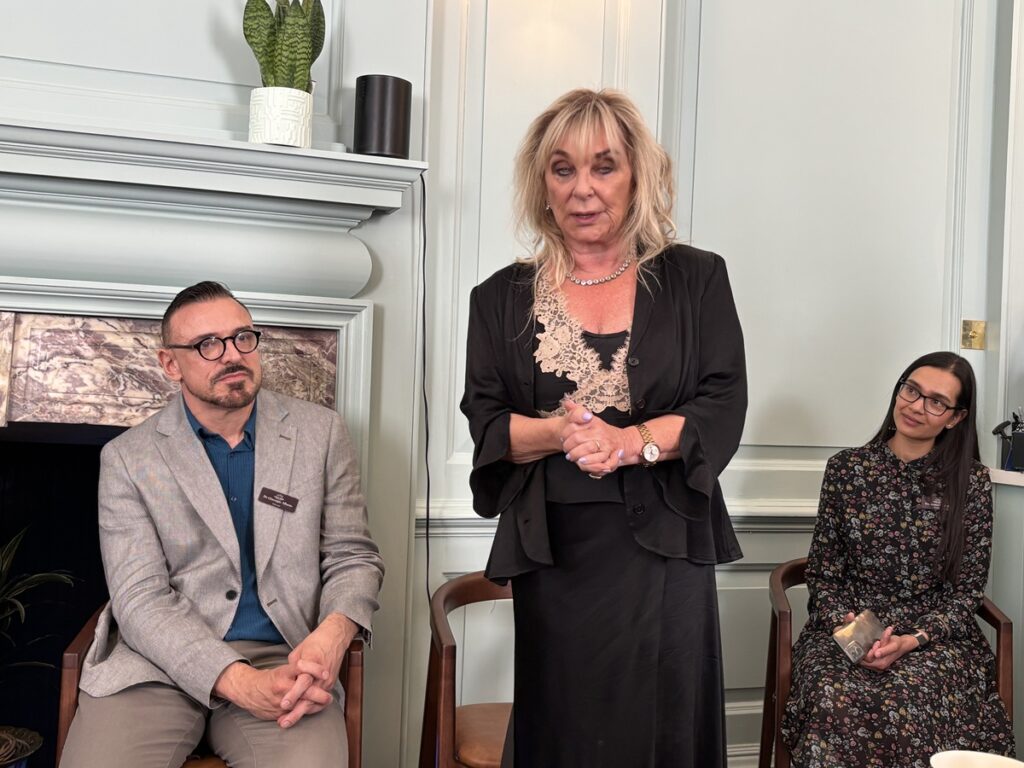
Ms Lederer – see above with Dr Giuseppe Albano, museum director and trustee Francesca Mendes – said returning to the house for the opening, and sitting where her grandfather listened in to conversations, had brought her out in goose pimples once again.
Ernst took the secret that he was a secret listener to the grave. To imagine how he must have felt listening in to conversations of the captive German generals was “as important and it was humbling”.
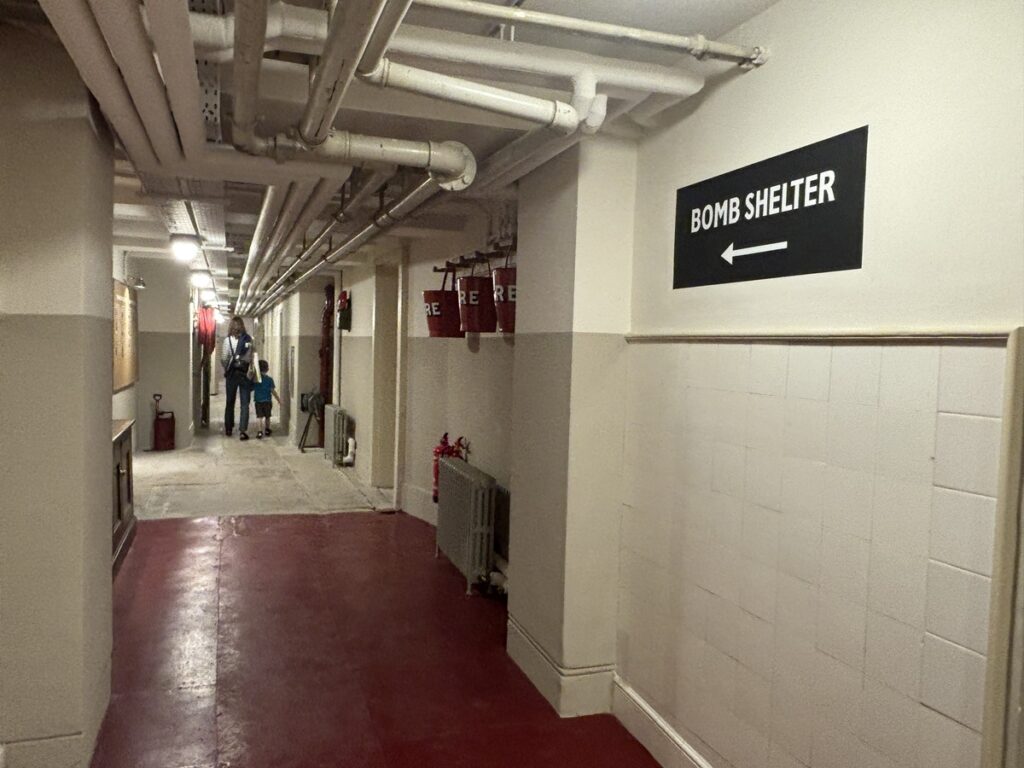
The recreated listening rooms, which are on either side of the basement, were linked to a complex network of miniaturised bugging devices, hidden in every corner including walls, light fittings, plant pots, window ledges, the billiard table and even garden benches.
The German generals held as prisoners of war were encouraged to relax in relative comfort, unaware the site was bugged, and their conversations were providing intelligence.
Under the direction of Lieutenant Colonel Thomas Kendrick, the secret listeners gained critical information from a conversation between a Luftwaffe pilot and a U-boat petty officer about how German Enigma cipher machines coded instructions to U-boats at sea.
In March 1943 a whisphered conversation between two generals, Ludwig Cruwell and Wilhelm von Thoma, revealed that German scientists were developing weapons which could travel “15 km into the stratosphere”. British scientific intelligence staff realised the Germans were developing ballist weapons, V! and V2 rockets.
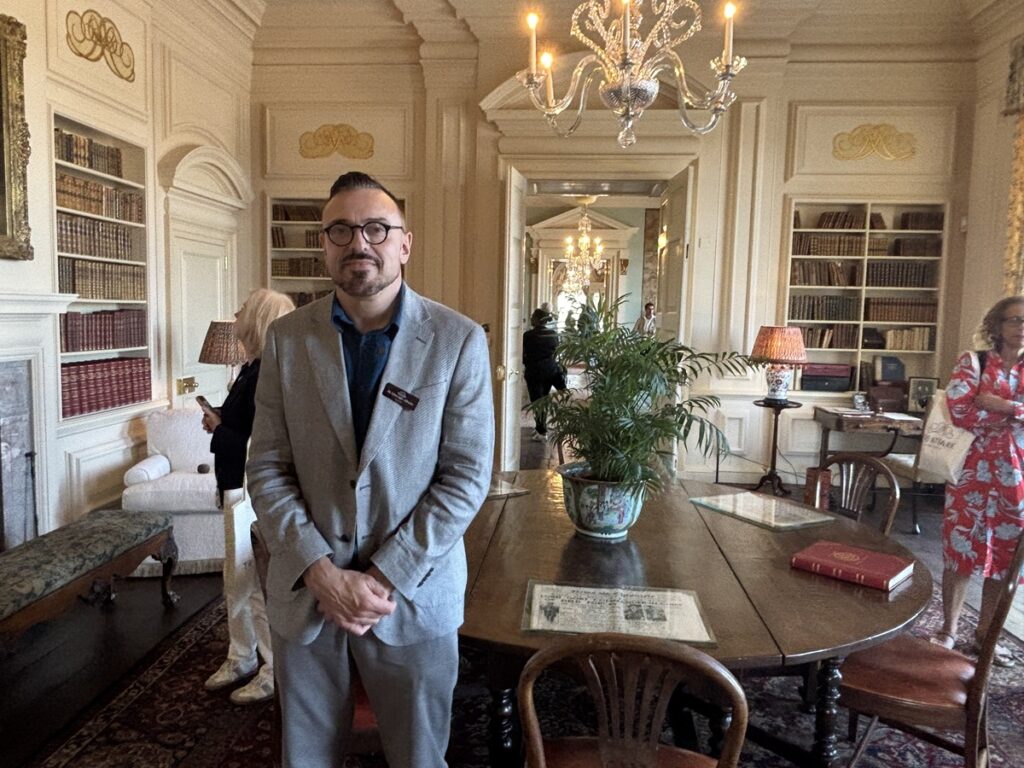
The state rooms on the ground floor have been restored to their 1930s opulence, with artwork and furnishing belonging to the Sassoon banking family which has been returned for the first time since 1939.
During the 1930s Trent Park became one of the most fashionable houses of the era with Edward VIII and Winston Churchill among those entertained at weekends with artists, writers and entertainers including Rex Whistler, George Bernard Shaw, Noel Coward, T.E. Lawrence (Lawrence of Arabia), Charlie Chaplin and Fred Astaire.
The original Trent Park House, with a landscape modelled by Humphry Repton, passed to the Bevan family, who remodelled it into a Victorian mansion.
The house was bought by Sir Edward Sassoon, whose son Philip inherited it in 1912 and remodelled it on the lines of an early Georgian country house.
After Philip died in June 1939, the house was requisitioned the following September and became a site used for holding prisoners of war including high-ranking Germans, of whom more than 100 passed through the house.
David Cholmondeley, the 7th Marquess of Cholmondeley – the great-nephew of Sir Philip – is co-chair of the museum trust.
He said that after a decade of fundraising and restoration work, the trustees were thrilled that the extraordinary stories of Trent Park House could be revealed and inspire and inform future generations.
Museum director Dr Guiseppe Albano (above) said he hoped the opening of the house to the public (from Tuesday 21 July) would prove especially popular in the local community and become an attractive and interesting visit for local schools and history groups.
For more information: enquiries@trentparkhouse.org.uk
Why not become a member? Receive our latest newsletter hot off the press four times a year, and support our work with a membership.
If you have some local news, history or want to bring something to our attention please email us.