
Visiting East Barnet and a chance to admire an English Heritage blue plaque to an eminent philosopher was quite an achievement
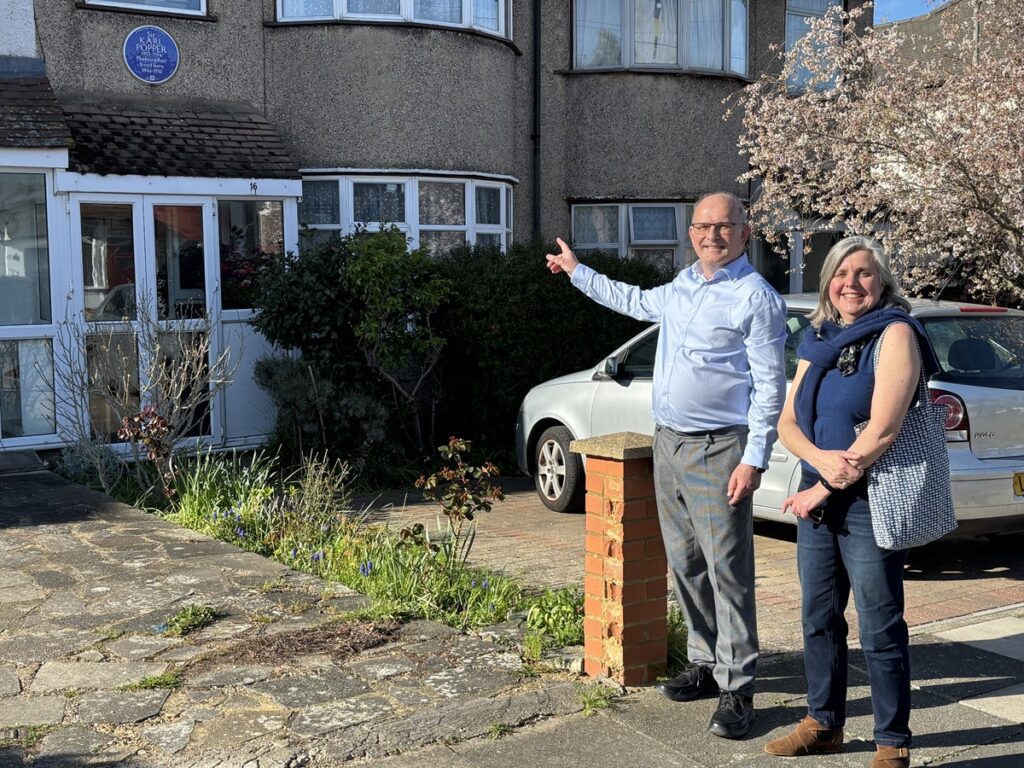
Stopping outside a house in a quiet residential street near Oakleigh Park, East Barnet, was mission accomplished for London Ambulance administrative officer David Sleep who is a lover of history and a great supporter of English Heritage blue plaques honouring the lives of famous people.
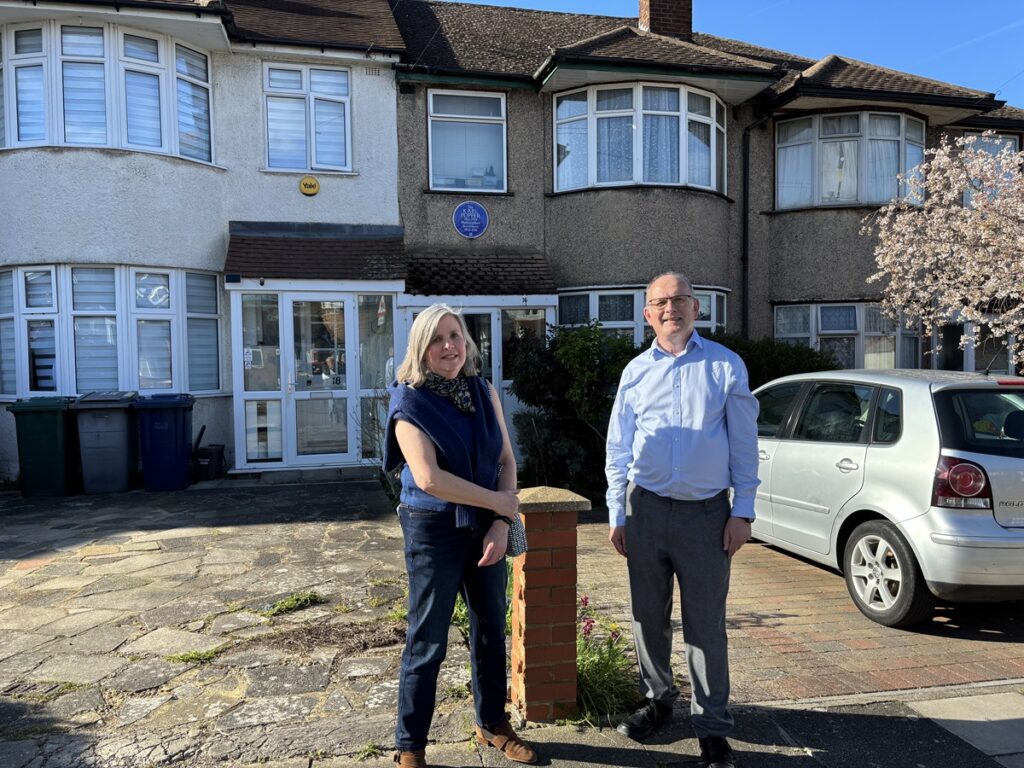
A mid-terrace house in Burlington Rise proudly displays a blue plaque in honour of the philosopher Sir Karl Popper and it was the last on David’s list to see in Greater London.
David has now visited a total of 1,028 blue plaques since being introduced to their significance three years ago on a walk in Clapham and Battersea organised by Dr Susan Skedd (above right) who is a blue plaque historian for English Heritage.
Susan, who is a member of the Barnet Society, and who is Director of Barnet Medieval Festival and who organises history walks in and around High Barnet, said she was delighted to join David for the moment he was able to tick off the last of the blue plaques on his list.
“I met David again in March on a walk in Pimlico and when he told me he had seen nearly every English Heritage blue plaque in Greater London. I promised to join him in Burlington Rise.”
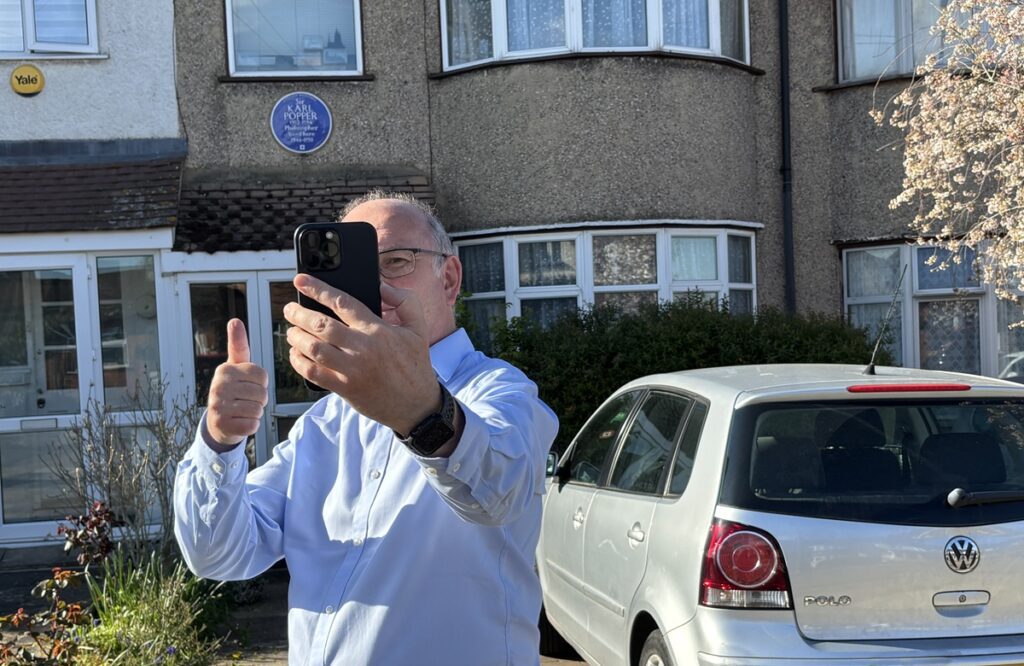
On each visit, David always takes a selfie of himself with the plaque in the background, and his hobby is of great value to English Heritage because it helps staff monitor the condition of the plaques.
“For the last three years I have been going out every weekend to see another plaque on my list – on Good Friday I saw the blue plaque in Parkside, Mill Hill, commemorating the motor racing driver Graham Hill and now on Easter Monday here I am in East Barnet for the Karl Popper plaque.”
David gets great pleasure from learning about the people commemorated by the plaques, about the homes where they lived, and what was happening to them at that time in their lives.
He is a member of English Heritage and a volunteer at Eltham Palace which is close to his home in southeast London.
Sir Karl Popper, who was born in Vienna, is considered to have been one of the 20th century’s most influential philosophers of science.
In 1928 he earned a doctorate in psychology and started work on his first book, which he needed to complete in order to get an academic position in a country safe for people of Jewish descent.
Finally, in 1937, he managed to secure a post as lecturer in philosophy at the University of New Zealand in Christchurch where he wrote his influential work, The Open Society and Its Enemies.
After the Second World War, he moved to the UK in 1946 and became a reader in logic and scientific method at the London School of Economics.
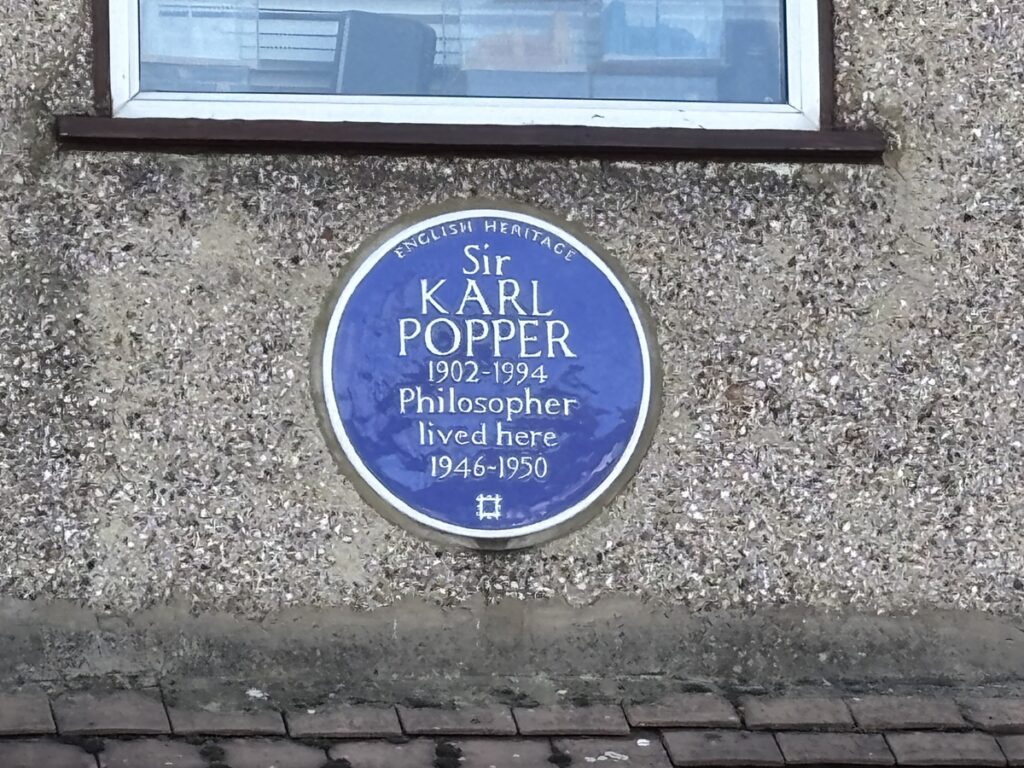
With his wife Josefine, they moved to Burlington Rise, Oakleigh Park, East Barnet, which was their home for four years until 1950 when they moved to Penn in Buckinghamshire.
The Popper plaque in Burlington Rise was installed in 2008 following an upsurge in research into the former residences of famous people out in the London suburbs.
“So many of the English Heritage plaques are all around inner London and the outer boroughs are catching up,” said Susan.
“We unveil a dozen new plaques every year and the first of this year’s new plaques is due to be revealed in April.”
She said the importance of the plaque to Sir Karl was that it captured the time he moved to the United Kingdom when he had established his name as a philosopher and had recently published his highly influential book The Open Society and Its Enemies.
A key conclusion of the book, which Susan came armed with for David’s visit, deserved to be quoted:
“Our fear of admitting responsibility for our ethical decisions is entirely ours and cannot be shifted to anybody else, neither to God, nor to nature, nor to society, nor to history. We cannot shirk this responsibility, whichever authority we may accept, it is we who accept it.”
Why not become a member? Receive our latest newsletter hot off the press four times a year, and support our work with a membership.
If you have some local news, history or want to bring something to our attention please email us.